
What's a CNA? Plain-Language Guide to Becoming a Nurse Aide 2026
A plain-language guide to what CNAs do, where they work, pay, training options, and how to become one. Honest answers about the role and career path. 📚

What's a CNA? The Simple Answer
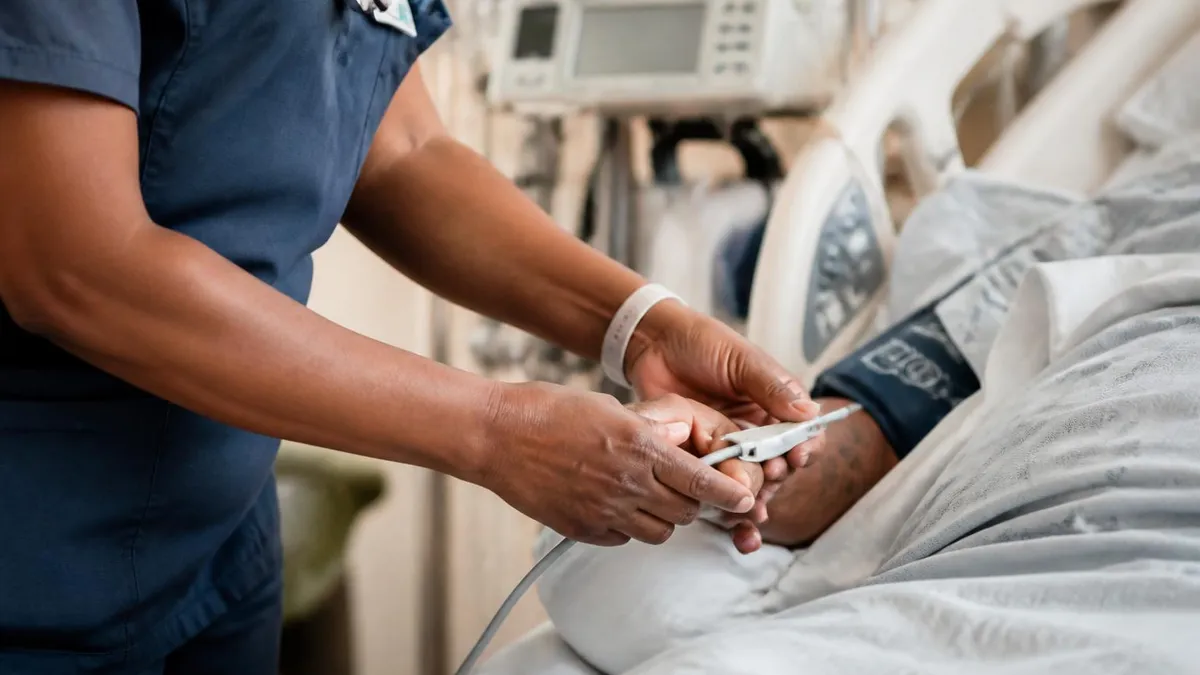
CNA stands for Certified Nursing Assistant. CNAs are the healthcare workers who provide hands-on direct care to patients in nursing homes, hospitals, hospice, assisted living, and home health settings. They help patients with the everyday tasks that illness or age makes difficult — bathing, dressing, eating, walking, using the bathroom — while also taking vital signs (blood pressure, pulse, temperature, breathing rate), making beds, repositioning patients who can't move themselves, and watching for changes that need a nurse's attention. They work under the supervision of licensed nurses (RNs and LPNs). Practice with the free CNA practice test on PracticeTestGeeks (3,000+ questions with answer explanations).
This guide walks through what CNAs actually do day-to-day, what training takes, what they earn, where the jobs are, and how the role fits into broader healthcare careers. It's written for people who are genuinely new to the field — either considering becoming a CNA, hiring one, or curious about the role. If you want to test some of the knowledge content, the CNA practice test covers the basics. For deeper detail on the credential itself, see the CNA meaning guide. For pay details, the CNA pay rate guide covers compensation across settings.
For people unfamiliar with healthcare staffing, the CNA role can be hard to place. They're not nurses but they work alongside nurses every shift. They're not aides in the casual sense — they're state-certified workers with specific scope and accountability. They're not assistants in the office sense — they're hands-on caregivers doing genuinely demanding work.
One reason the role isn't better understood by the public: most CNAs are invisible to people who don't interact with the healthcare system regularly. Hospital visitors meet the doctor and the nurse but rarely focus on the CNA in scrubs helping the patient transition between bed and chair. Yet that CNA is doing some of the most important and demanding work in the building.
The CNA role grew out of mid-20th-century reforms aimed at standardizing the work that nurse aides had been doing informally for decades. Federal regulations in 1987 created the modern certification framework after nursing-home abuse and neglect scandals revealed the need for trained, accountable workers in long-term care settings. Every state runs its own nurse aide registry under this federal framework.
CNA: upcoming dates and official changes
- Aug 1, 2026: Connecticut (Prometric) implements new exam pricing: $48 for written only, $48 for oral only, $125 for bundled written and clinical skills, effective August 1, 2026.[4]
- Jul 1, 2026: Idaho (Prometric) raises CNA exam fees to $34 each for written and oral exams, plus test site fees, effective July 1, 2026.[5]
- Passing score (written or oral): Set per state; no national percentage published.[1]
- Retake policy: Minimum 3 attempts required; aides must be told which areas they failed before each retake.[1]
- Validity: 2 years from issuance in most states.[2]
- Renewal: State-specific; typically 2-year cycles with continuing education requirements (12–24 hours per year) and paid-work requirements.[3]
All verified CNA facts and sources
Numbers in brackets link to the official sources listed under Sources & last verified. Dates that have passed are removed automatically.
Free CNA Study Tools
Interactive CNA resources on PracticeTestGeeks, free to start:
- CNA practice test — 3,000+ questions with instant scoring and answer explanations
- CNA flashcards — review key terms and concepts card by card
- CNA study guide — topic-by-topic overview of what the exam covers
- CNA cheat sheet — one-page printable summary for last-minute review
Bottom Line
CNA stands for Certified Nursing Assistant. They're hands-on caregivers providing direct patient care in nursing homes, hospitals, and similar settings. Training takes 4-12 weeks (federal minimum 75 hours, most states more) and often costs $500-$2,500 — frequently free at nursing homes that sponsor in exchange for employment. Pay runs $14-$25/hour depending on setting and state. The role is physically and emotionally demanding but rewarding for the right people, and serves as a strong entry point into broader healthcare careers.
What CNAs Actually Do
The day-to-day reality of CNA work centers on activities of daily living — the routine tasks healthy people take for granted but patients in care settings often need help with. A typical shift involves bathing patients (full bed bath, partial bath, shower assistance), helping with toileting and incontinence care, feeding patients who can't feed themselves, assisting with mobility (walking, transferring from bed to chair, repositioning), taking vital signs, measuring intake and output, and documenting observations for the nurses to review.
Beyond the physical care, CNAs spend significant time observing patients. They notice changes that medical staff need to know about — a patient becoming confused who wasn't before, skin breaking down where it wasn't before, breathing that sounds different, complaints of new pain. These observations are passed to the nurse, who decides whether they need further investigation or intervention. CNAs are essentially the eyes and hands at the bedside; the nurses are the clinical decision-makers. This division reflects the licensing structure and the legal scope of practice each role has.
The pace of work varies by setting. In nursing homes, you often have many residents whose care must be completed within a shift — bathing schedules, vital signs schedules, meals, repositioning. Time management becomes its own skill. In hospitals, you have fewer patients but more medically complex situations, requiring frequent communication with nurses and faster adaptation when conditions change.
Communication is a quiet but essential CNA skill. CNAs spend hours each shift talking with patients — explaining what they're about to do, calming anxious or confused patients, listening to family concerns, building the trust that makes care possible. Patients often share things with CNAs they don't share with nurses or doctors, which makes CNAs valuable observers of changes in mood or mental status.

What CNAs Don't Do
CNAs don't give medications — that's a nurse's job. Some states have separate Medication Aide certifications that add limited medication-administration authority to CNA work, but standard CNAs do not give meds.
Starting IVs, inserting catheters, performing wound care beyond basic observation — these require licensed nurse credentials. CNAs may observe and report, but the actual procedure work belongs to nurses.
CNAs don't decide care plans, assess clinical changes, interpret labs, or determine treatment. They report observations; nurses and physicians make decisions.
Patient education on disease management, medication compliance, and treatment plans is an RN function. CNAs can reinforce concepts during care, but the structured teaching is nurse-led.
Deciding which patient needs help first in an emergency is a nurse's call. CNAs report what they observe; the nurse decides priority.
Stepping outside the CNA scope (even in good faith trying to help) is a regulatory violation that can end the certification. When in doubt about whether something is within scope, ask the supervising nurse.
Where CNAs Work
Nursing homes (also called long-term care facilities, skilled nursing facilities) employ the largest share of CNAs in the country. The residents are typically elderly, often with chronic conditions, sometimes recovering from surgery or illness. CNA-to-resident ratios at nursing homes are higher than in most other settings — one CNA might care for 8-15 residents during a shift. The work is intense but the population is generally less acute than hospital patients.
Hospitals employ the second-largest share of CNAs, often under the title Patient Care Technician (PCT) or Nursing Assistant. Hospital CNAs typically care for fewer patients per shift (4-8) but those patients are sicker — recovering from surgery, dealing with acute illness, sometimes in critical condition. Hospital work pays more than nursing home work in most regions. Other settings include hospice (end-of-life care, deeply meaningful but emotionally heavy), assisted living (less medically intensive), home health (private care in patients' homes), dialysis centers (specialized chronic-care setting), and adult day care.
Beyond these primary settings, smaller specialties employ CNAs in growing numbers. Dialysis centers need CNAs trained in their specific patient population. Hospice agencies need home-visit CNAs. Memory care units (dementia-specific facilities) need CNAs with additional training in dementia behaviors. Each specialty has its own learning curve but pays modestly above generalist CNA work in most cases.
Wherever you choose to work, the underlying skills transfer easily across settings — making CNA one of the more portable healthcare credentials available.
Day in the Life by Setting
Day starts with handoff from previous shift — what each resident needs, who had a difficult night, any new admissions. You'll typically have 8-15 residents on your assignment. Morning rounds involve waking residents, bathing or shower-assisting those scheduled, dressing them, helping to dining room or bedside breakfast. Mid-shift involves repositioning bedbound residents every 2 hours, taking vital signs on schedule, charting, helping with toileting and snacks. Evening involves prep for bed — bathing, dental care, repositioning, settling residents for sleep. Documentation throughout.
How to Become a CNA
The path is shorter and cheaper than most healthcare careers. Three steps: complete a state-approved CNA training program, pass the state competency exam, and register with your state's Nurse Aide Registry. Total time runs 4-12 weeks for full-time students; longer for part-time. Federal regulations require minimum 75 hours of training (16 supervised clinical), but most states require more — 100-180 hours total is common.
Training programs run at community colleges, vocational schools, hospital systems, nursing homes, and the American Red Cross. Many nursing homes offer free training in exchange for employment commitments — typically the cheapest path to certification. Community college tuition runs $400-$900 for in-state students. Vocational schools cost $1,500-$3,500. Premium programs at Red Cross can cost $1,500-$2,000 but have strong reputations. Beyond tuition, budget $200-$300 for state exam fees, registry application, background check, and uniforms.
Hospital-sponsored programs deserve special attention if you can access one. Larger hospital systems train PCT/CNA candidates through structured 4-8 week programs at no cost in exchange for 6-12 month employment commitments. These programs have higher completion rates, stronger clinical components, and direct paths to hospital employment after graduation. If a hospital in your area runs such a program, it's usually the strongest single entry path.
The hardest part of becoming a CNA isn't usually the academic content — it's the physical demands of clinical training. Long days on your feet, repetitive lifting and transferring of practice patients, demanding instructors who hold you to standards because patient safety depends on it. Plan to take care of yourself physically during training; sleep matters, and proper body mechanics protect you from injury.
The investment pays back quickly once you start working — first paychecks usually arrive within a couple of weeks of certification.
Every state maintains a list of approved CNA training programs through its Nurse Aide Registry. Before paying tuition to any program, verify the program is on your state's approved list. Unapproved programs issue completion certificates that the state won't accept for competency exam eligibility — meaning you'd spend money and weeks of work to receive a worthless piece of paper. This 5-minute verification step prevents the most expensive single mistake new CNA candidates make. Diploma mills exist, particularly online; protect yourself.
The State Competency Exam
After completing training, you take the state competency exam. Every state requires two portions: a written exam (60-100 multiple-choice questions, ~75-80 percent passing) and a skills demonstration (3-5 randomly assigned skills performed in front of a state evaluator). The skills test is where many candidates feel anxious — you arrive at a testing center, are paired with a volunteer or training partner, and perform skills like measuring blood pressure, transferring patient from bed to wheelchair, hand washing, perineal care, or range-of-motion exercises while the evaluator watches and grades.
Critical action steps matter — each skill has specific must-do steps that must be performed correctly. Missing one critical step (forgetting to identify the patient, skipping hand washing, failing to apply gloves) means failing that skill regardless of how well you performed the rest. First-attempt pass rates vary by state, so check your state's official testing vendor page for current figures. If you fail a portion, most states allow component-only retesting. After passing both portions, register with your state Nurse Aide Registry and you're officially certified.
Test anxiety is real for the skills portion. Many candidates know the material but freeze in front of the evaluator. Strategies that help: practice with classmates as observers during training, rehearse the critical action steps until they're automatic, run mental walkthroughs of each skill repeatedly in the days before testing. Don't skip these prep techniques.
If you fail one component on first attempt, don't panic — most states allow component-only retesting at modest additional fees. Many successful CNAs report failing the skills test on first attempt and passing comfortably on second try. The first attempt is partly a familiarity-with-format issue that resolves naturally with experience.
Steps to Get CNA Certified
- ✓Research your state's specific CNA training and exam requirements
- ✓Choose a state-approved training program (verify on state Nurse Aide Registry website)
- ✓Complete classroom theory plus supervised clinical hours (4-12 weeks typical)
- ✓Schedule the state competency exam after program completion
- ✓Study with state-specific practice materials before exam day
- ✓Pass the written portion (60-100 multiple-choice questions, 75-80% passing)
- ✓Pass the skills demonstration (3-5 randomly assigned skills, critical actions required)
- ✓Register with your state's Nurse Aide Registry
- ✓Complete background check and fingerprinting per state requirements
- ✓Apply for CNA jobs — many facilities will hire newly certified CNAs immediately
CNA Pay and Job Outlook
CNA pay varies meaningfully by setting and geography. Nationally, BLS data shows median pay around $18.67 per hour (about $38,830 annually). Entry-level CNAs at nursing homes typically earn $14-$18 per hour. Hospital CNAs and PCTs often earn $18-$25 per hour. California, Massachusetts, Washington, Hawaii, and Alaska pay the highest — coastal blue states with strong unions and high cost of living. Southern states (Mississippi, Louisiana, Alabama, Oklahoma) pay the lowest, often $13-$15/hour for entry-level work.
The job outlook remains strong. BLS projects 4-5 percent growth through 2032 — slower than overall healthcare growth but driven by sustained demand from aging baby boomers. The actual hiring market is much tighter than the projected growth rate suggests because of high turnover at nursing homes. Most metros have ongoing CNA shortages with signing bonuses ($1,000-$5,000) common at understaffed facilities. Hospital systems pay more and have stronger benefits but also more competition for openings. The economic argument for the credential is strong — training-to-earning ratio is favorable compared to other healthcare entry points.
Some hospital systems offer career-ladder programs that promote CNAs into specialty PCT roles, charge CNA positions, or supervisory roles with structured pay increases. These career-ladder programs typically require time in role plus additional training but produce meaningful pay growth without leaving the CNA-equivalent scope.
The job-to-applicant ratio currently favors candidates at most facilities. Most nursing home managers can name several open positions they're struggling to fill. Hospital systems have more competition but still hire actively. New CNAs typically have multiple offers within weeks of certification, with sign-on bonuses and competitive shift differentials.
CNA vs LPN vs RN vs MA vs PCT — Plain Language
Healthcare titles confuse outsiders because related credentials look interchangeable. A Medical Assistant (MA) typically works in ambulatory care (doctor's offices, clinics) doing administrative tasks plus basic clinical work like rooming patients, taking vitals, drawing labs in some states, and managing paperwork. Different scope and setting from a CNA — MAs work in front-office settings, CNAs work in inpatient settings. A Patient Care Technician (PCT) or Patient Care Assistant (PCA) is often a hospital-specific title for a CNA who has added skills like phlebotomy or EKG; sometimes essentially the same as a CNA, sometimes a step up depending on the hospital.
An LPN (Licensed Practical Nurse) is a nurse with 12-18 months of training who administers medications, performs basic clinical procedures, and provides care under RN supervision. LPNs earn $40,000-$55,000 annually — substantially more than CNAs but with substantially more training required. An RN (Registered Nurse) has an associate or bachelor's degree in nursing, makes clinical decisions, supervises CNAs and LPNs, and earns $60,000-$90,000+ annually. Each step up represents broader scope, more autonomy, higher pay, and more education. The CNA-to-LPN-to-RN bridge path is well-trodden for those wanting career progression.

Quick Stats on CNAs
Pros and Cons of CNA Work
Training timeline shorter than most healthcare paths. 4-12 weeks from start to certification. Working within 2 months of beginning training is realistic for committed students.
Training cost is low or free relative to other healthcare paths. Nursing homes and hospitals often pay for training in exchange for employment commitments — the most financially accessible healthcare entry point.
Many CNAs use the role to enter healthcare, gain experience, then bridge to LPN, RN, or specialty positions. The CNA-to-LPN-to-RN path is well-established and supported by many hospital tuition reimbursement programs.
Lifting, transferring, bathing patients all day takes a toll on backs and knees. Long shifts on your feet. Repetitive injury is a real concern over years of practice.
Witnessing suffering, patient deaths, dementia behaviors, and family grief weighs on caregivers over time. Burnout rates are high, especially in nursing homes with high ratios.
Without additional credentials, CNA pay tops out around $20-$25/hour in most markets. Career advancement requires bridging to LPN, RN, or specialty roles. CNAs who stay at CNA level for decades typically plateau financially.
CNA Schedules — What to Expect
Shift schedules vary significantly by setting. Hospitals typically use 12-hour shifts (7am-7pm or 7pm-7am), three days per week — physically demanding but with four days off. Nursing homes more commonly use 8-hour shifts (day, evening, night). Assisted living and home health often use 8-hour shifts with more variation. Weekend and night shifts pay shift differentials at most facilities — typically $1-$3/hour for night shifts and $1-$2/hour for weekends. Holiday shifts pay time-and-a-half or double-time depending on facility policy.
For CNAs prioritizing earnings, the most lucrative scheduling combines night shift, weekend, and occasional holiday work — stacked differentials can add $5-$10/hour above base pay. The trade-off is on lifestyle and health: circadian rhythm disruption from night work, social isolation from weekend shifts, and missed family events on holidays. Many CNAs work night/weekend shifts early in their careers when family commitments are lighter, then transition to day shifts later. The flexibility to choose your schedule is one of the underappreciated benefits of the role.
For working parents, the 12-hour-3-day pattern at hospitals can work surprisingly well. Three long days produce four full days off, which can cover school schedules, doctor's appointments, and family time better than five-day work weeks. The trade-off is the intensity of 12-hour shifts and the need for reliable childcare during work days.
Self-care is non-negotiable in CNA work. Get proper rest between shifts, eat well, stretch and strengthen consistently, and process emotional reactions to difficult situations through trusted peers or counselors. Burnout takes down CNAs who neglect these basics; longevity in the field tracks with self-care discipline.
Is CNA Right for You?
- +You want to enter healthcare quickly without years of school
- +You enjoy hands-on caregiving and don't mind physical work
- +You're comfortable around patients with serious illness
- +You see CNA as a stepping stone to LPN or RN
- +You're reliable, patient, and emotionally steady
- +You want flexible scheduling and shift options
- −You want a 9-to-5 desk job — CNA is hands-on bedside work
- −Physical demands worry you (lifting, long hours standing)
- −Emotional intensity of suffering and death feels overwhelming
- −You expect quick advancement — CNA-to-RN takes years of additional training
- −You can't commit to required training timeline (even 4 weeks is demanding)
- −You need higher starting pay than $14-$25/hour offers
Pros and Cons at a Glance
| Pros | Cons |
|---|---|
| You want to enter healthcare quickly without years of school | Physical demands worry you (lifting, long hours standing) |
| You enjoy hands-on caregiving and don't mind physical work | Emotional intensity of suffering and death feels overwhelming |
| You're comfortable around patients with serious illness | You expect quick advancement — CNA-to-RN takes years of additional training |
Sample CNA Practice Questions
Try these questions from our free CNA practice tests. The correct answer and an explanation follow each question.
The nurse aide is going to help the client walk from the bed to a chair. What should the nurse aide put on the client’s feet?
- A. Nothing
- B. Cloth-soled slippers
- C. Rubber-soled slippers or shoes
- D. Socks or stockings only
Answer: C. Rubber-soled slippers or shoes
When helping a client walk, it is crucial to ensure their footwear provides good traction and stability to prevent falls. Rubber-soled slippers or shoes offer the best grip on various floor surfaces, reducing the risk of slipping. Cloth-soled slippers or socks alone do not provide adequate friction and can be dangerous.
Mr. Lopez is learning to use a walker. What should the nurse aide do?
- A. Have him walk in place for five minutes.
- B. Put padding on the walker in case he falls.
- C. Walk behind him, using a gait belt.
- D. Encourage him to walk by himself.
Answer: C. Walk behind him, using a gait belt.
When a resident is learning to use a walker, the nurse aide should walk behind them while using a gait belt for safety. This position allows the aide to provide immediate support if the resident loses balance or stumbles, preventing falls. Encouraging them to walk alone or putting padding on the walker are not sufficient safety measures.
A patient who has been depressed and complaining of feeling hopeless suddenly appears happier one morning and says that everything is okay now. What should the nurse aide do?
- A. Tell the nurse that the patient is fine.
- B. Call the family with the good news.
- C. Congratulate the patient on getting better.
- D. Notify the nurse and other staff members of the sudden change.
Answer: D. Notify the nurse and other staff members of the sudden change.
A sudden and unexpected improvement in mood in a patient who has been severely depressed and expressed feelings of hopelessness can be a critical warning sign. This change might indicate that the patient has made a decision regarding suicide and feels a sense of relief, potentially increasing their risk. Therefore, it is imperative for the nurse aide to immediately notify the nurse and other staff members so that a thorough assessment and appropriate interventions can be implemented to ensure the patient's safety.
What is the purpose of the Nurse Aide Registry?
- A. To schedule CNA training classes
- B. To track CNA work hours for payroll
- C. To maintain a list of certified CNAs and record any abuse/neglect findings
- D. To issue nursing licenses
Answer: C. To maintain a list of certified CNAs and record any abuse/neglect findings
The Nurse Aide Registry is a state-maintained database that lists all certified nursing assistants in good standing. Employers are required to verify that a CNA's name appears on the registry before hiring them. It also records any substantiated findings of abuse or neglect.
Take the full CNA practice test
Many readers pair this guide with the cna exam practice test to check their readiness before exam day.
Many readers pair this guide with the free cna practice test pdf to check their readiness before exam day.
Many readers pair this guide with the prometric cna practice test free to check their readiness before exam day.
CNA Questions and Answers
Sources & last verified
- Centers for Medicare & Medicaid Services — passing score, retake policy (official source). “The State shall establish the passing standard for the written or oral examination and for the skills demonstration.” Verified Oct 14, 2026.
- archive.regulations.delaware.gov — validity (official source). “CNA certification shall be effective for 2 years following the date of issue and shall expire 2 years following such date” Verified Oct 14, 2026.
- cdph.ca.gov — renewal (official source). “Certificates are renewed every two years, and the required training is 48 hours of in-service training or continuing education” Verified Oct 14, 2026.
- prometric.com — other (official source). “Effective August 1, 2026, the following exam pricing will be implemented” Verified Oct 14, 2026.
- prometric.com — other (official source). “Effective July 1, 2026, the following exam pricing will be implemented: $34 written, $34 oral, plus test site fees” Verified Oct 14, 2026.
How we verify: editorial & fact-checking policy. Report an error: contact us.
How this page was made: written with AI tools. Exam facts are checked against the official sources listed below. Not reviewed by a subject-matter expert. Editorial policy
Sources & references
Exam facts on this page (fees, format, dates, passing scores) are checked against these official sources; the date is our last check. Editorial policy
- floridasnursing.gov — Eligibility, exam format · verified Oct 2026
- law.cornell.edu — Eligibility · verified Oct 2026
- law.cornell.edu — Test delivery · verified Oct 2026
- prometric.com — Exam information · verified Oct 2026