
Florida CNA License 2026 September: Application, Renewal, Lookup & Reciprocity Guide
Florida CNA license guide: AHCA Level 2 background, Prometric exam, $25 app fee, 2-year renewal, registry lookup, and out-of-state reciprocity. 📚

Florida CNA License 2026: Application, Renewal, Lookup & Reciprocity Guide
If you want to work as a nursing assistant in the Sunshine State, you need a Florida CNA license. Not a certificate of completion from a training program. Not a license from another state. An actual Florida CNA license issued by the Florida Department of Health (FDOH) Council on Aging and Long-Term Care, with your number listed on the public state registry.
The process is not the same as in California or Texas. Florida has a unique twist: you can become a CNA here without ever completing a state-approved training program — if you qualify through the equivalency route as a military medic, an LPN, an RN nursing student, or a foreign-trained nurse.
That single rule attracts thousands of applicants every year who would otherwise sit through 75 hours of class. It is also why Florida sees a steady inflow of out-of-state nurses transitioning into CNA roles for semi-retirement or schedule flexibility.
This guide walks you through every step from zero to license in hand. We cover the AHCA Level 2 background screening, the $25 application fee, the Prometric-administered Florida Nurse Aide Exam, the 60-question written test plus 5-skill clinical, and the renewal cycle that requires 8 paid hours of CNA work every two years.
We will also cover what nobody tells you: what happens if your CNA license lapses past the 24-month grace window, how the FDOH handles license suspension hearings, the difference between the FDOH Nurse Aide Registry and AHCA Clearinghouse, and whether your training from Georgia, Alabama, or Texas counts under Florida's reciprocity rules. If you are starting from scratch, see our CNA classes in Florida roundup first, then come back here for the licensure piece.
One last note before we dive in: pay close attention to the difference between the Department of Health (FDOH) — who issues your license — and the Agency for Health Care Administration (AHCA) — who runs the background screening Clearinghouse. Two separate agencies. Two separate logins. Both required. Mixing them up is the number one application error FDOH sees.
Need to verify someone's credentials right now? Skip ahead to our walkthrough of the public registry tools and the cna license lookup options. Looking to transfer in from another state? Jump to the reciprocity tab below.
Florida CNA License Quick Facts
- Issuing body: Florida Department of Health (FDOH), Council on Aging and Long-Term Care
- Background screening: AHCA Level 2 via Live Scan ($75-$98)
- Training requirement: 75-hour state-approved program OR equivalency route
- Exam: Prometric-administered Florida Nurse Aide Exam — 60 written + 5 practical skills
- Exam fee: $130 total ($25 application + $130 exam — pay both at registration)
- Renewal: Every 2 years on your birthday; $35 fee; 8 hours paid CNA work required in past 24 months
- Registry: Public lookup at flcna.com (Prometric) and DOH MQA portal
Who Issues the Florida CNA License?
The Florida Department of Health, through the Council on Aging and Long-Term Care, issues every CNA license in the state. Florida is one of the few states where CNAs are licensed by the same board that licenses RNs and LPNs. Most states delegate CNA certification to a separate registry; Florida folds you in alongside nurses. That structural choice matters.
Your license shows up in the MQA Online Services portal, and any disciplinary action against you follows the same hearing process used for nursing license violations. It also means employers searching for your credentials use the same lookup tool they use for verifying an LPN or RN, which gives Florida CNAs a slight perception bump compared to states with siloed CNA registries.
FDOH vs AHCA — Why Two Agencies?
FDOH issues the license. AHCA (the Agency for Health Care Administration) runs the Background Screening Clearinghouse that every long-term care employer in Florida uses to verify you have a clean record. You will register with both. Your AHCA Clearinghouse number stays with you across jobs — employers re-pull your status rather than re-screening you each time. Your FDOH license number, by contrast, is yours for life unless suspended or revoked.
Who Must Hold the License
Anyone working in a Florida nursing home, assisted living facility, hospital, home health agency, hospice, or rehabilitation center as a nursing assistant must hold an active FL CNA license. Hospitals occasionally hire "nurse techs" or "patient care techs" who are not licensed CNAs, but those roles are limited and usually require enrollment in an RN program. Volunteer work does not count. Family caregiving does not count.
License Number Format
A Florida CNA license number is typically a 6-digit numeric code prefixed with "CNA" — for example, CNA123456. You will see this on your wall certificate, your DOH portal account, and on the public cna license number lookup. Employers verify this number before every hire. The number does not change when you renew; only the expiration date updates. Lose your certificate and you can reprint from the MQA portal anytime.
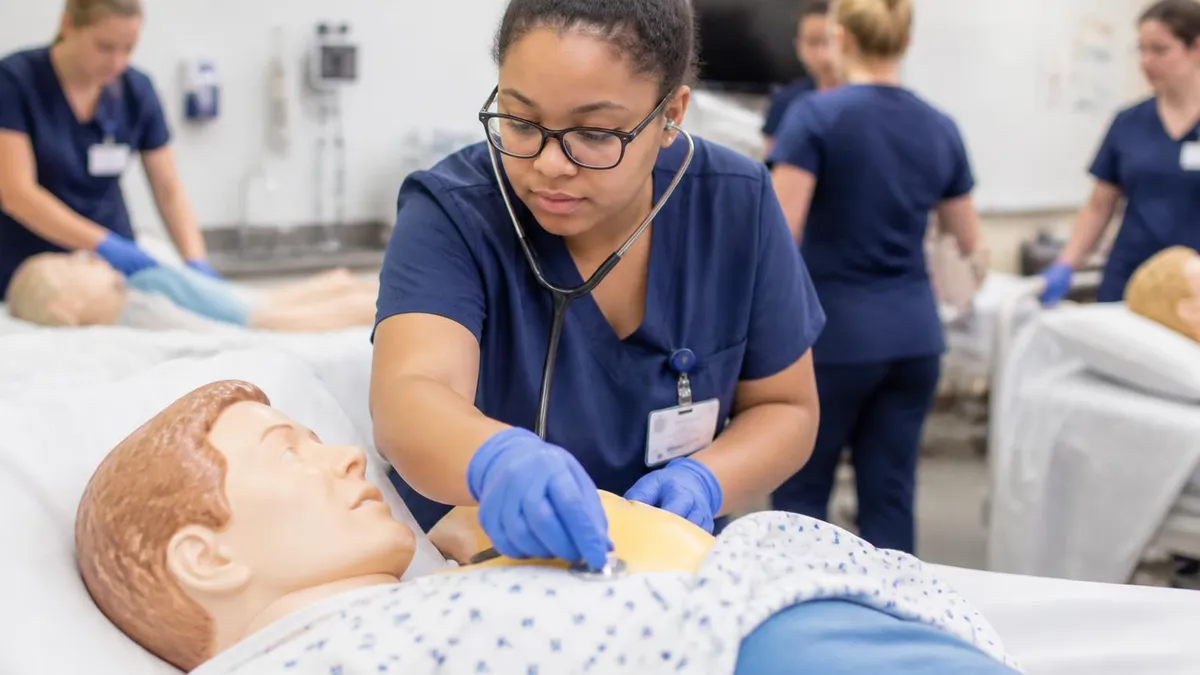
The 5-Step Florida CNA License Process
Step 1: Complete 75-Hour Training (or Qualify for Equivalency)
Step 2: AHCA Level 2 Background Screening
Step 3: Apply to FDOH MQA Online Services
Step 4: Schedule and Pass the Florida Nurse Aide Exam
Step 5: License Issued + Registry Listing
How Much Does It Cost to Get a Florida CNA License?
The line-item costs are smaller than most people expect, but they add up. Plan for $400-$1,800 all-in depending on whether you take a private training program or use a free hospital-sponsored route. Below is the realistic 2026 fee breakdown, then we will look at the renewal numbers, which are dramatically cheaper than the initial licensure.
Training Costs — Where Most of the Money Goes
A state-approved 75-hour program at a Florida community college runs $400-$900. Private vocational schools charge $800-$1,500. Free programs do exist — Hospice of Florida, several nursing home chains (Brookdale, Consulate Health Care, Avante), and Goodwill Industries Florida occasionally offer paid training in exchange for a 6-12 month employment commitment.
See our free cna classes guide for current sponsored programs. The trade-off with sponsored training is real: you sign a work commitment, usually paid at the standard starting CNA rate, and breaking the contract means paying back the training cost (typically $800-$1,200). For applicants without savings or financial aid, sponsorship beats taking out a loan for a vocational school program.
Exam and Application Fees Are Fixed Statewide
The $25 application fee and $130 exam fee are non-negotiable. Background screening costs vary slightly by Live Scan vendor — $75 at FieldPrint locations, $89 at IdentoGO, up to $98 at some private fingerprinting services. If you fail the written or skills portion, you can retake just the failed section for $50-$75 each.
Hidden Costs to Budget For
Scrubs ($30-$60), a stethoscope and watch ($20-$40), TB test or 2-step PPD ($25-$60), CPR/BLS certification ($50-$90, required by most employers), optional liability insurance at $30-$70/year, and transportation to the testing center if you live rurally. Total realistic spend for first-time licensure: $700-$2,000. Snowbird counties like Sarasota and Lee can charge more for everything from training to fingerprinting.
Florida CNA License Fee Breakdown
The Florida Nurse Aide Exam: Format, Skills, and Pass Rates
Prometric runs the Florida Nurse Aide Exam under contract with FDOH. The current Florida pass rate for first-time test-takers hovers around 75-80% — a bit higher than the national average of about 70% but lower than top-performing states like Iowa and Minnesota. Most failures happen on the practical skills portion, not the written.
Written Section — 60 Multiple-Choice Questions
You get 90 minutes for the written portion. Questions cover infection control, safety and emergency procedures, communication, basic nursing skills, residents' rights, mental health and social needs, and basic restorative services. You must score 70% (42 correct out of 60) to pass. Florida uses a randomized question bank, so your test will not be identical to a friend's. Score is available immediately after submission, which spares you the multi-day wait some other states impose.
Practical Skills — 5 Random Skills
This is where candidates trip up. A registered nurse evaluator watches you perform 5 randomly selected skills from a master list of 22 — handwashing is always one. Other commonly tested skills: ambulating with a gait belt, measuring blood pressure, providing perineal care, transferring from bed to wheelchair, dressing a resident with an affected side, and feeding.
You must complete all critical steps correctly to pass each skill. Miss the critical step (like failing to lock wheelchair brakes before a transfer), and you fail that skill regardless of your overall performance. Evaluators are required to follow a standardized checklist, but small differences in evaluator strictness do exist — preparing for the strictest possible evaluator is the safer mindset.
What Happens If You Fail?
You can retake the failed section within 90 days. If you fail the same section three times, you must repeat the 75-hour training program before testing again. After 24 months from your training completion date, your eligibility expires entirely — you must retrain from scratch. For tips on the written portion, our how to get cna license guide has section-by-section question breakdowns.
Apply, Renew, Look Up, or Transfer — Pick Your Path
First-Time Application
Steps to apply for your initial Florida CNA license:
- Create your MQA Online Services account at flhealthsource.gov
- Complete the CNA application form (Section A: personal info, Section B: training/equivalency, Section C: criminal history disclosure)
- Upload your 75-hour program completion certificate (PDF or scan)
- Pay $25 application fee by credit card
- Submit fingerprints via Live Scan within 30 days
- Wait 7-14 business days for FDOH to issue your Authorization to Test
- Register with Prometric at flcna.com and schedule your exam
Approval is conditional on a clean Level 2 background. Disqualifying offenses include felony theft, abuse, neglect, drug trafficking, and any healthcare-related fraud within the past 15 years.
Renewal, Lapse, and License Maintenance
Maintaining your Florida CNA license is straightforward — until it isn't. The biggest mistake we see is CNAs who stop working for 18 months between jobs, then realize at renewal time they cannot prove the required 8 paid hours of work. There is no how to renew cna license requirement in Florida (unlike California's 48-hour CEU rule), but the work requirement bites hard if you have been on a career break.
What Counts as "Work"?
Eight hours of paid CNA work within the 24-month renewal cycle. The work must have been performed in a licensed healthcare facility (nursing home, hospital, hospice, home cna, assisted living, rehab center) under the supervision of a licensed nurse. Agency, per-diem, and private duty all count as long as you were paid and properly supervised. Volunteer work does not count. Family caregiving does not count.
If You Cannot Document the 8 Hours
You have two options. If your license has not yet expired, find any nursing facility willing to schedule you for a single 8-hour shift — this is legal and many facilities will accommodate licensed CNAs as a one-time refresh.
If your license has already expired, you face the re-test pathway: pay the $50 delinquency fee per month past expiration, then retake the Prometric exam. Past 24 months and you must redo the 75-hour training too. Our how to renew cna license walkthrough has screenshots of the MQA renewal portal.
Suspension and Revocation
FDOH suspends or revokes licenses for substantiated findings of abuse, neglect, theft from a resident, drug diversion, falsifying records, or a felony conviction. Suspension is temporary with reinstatement conditions (rehab program, fines, probation).
Revocation is permanent in most cases and follows you onto the federal Nurse Aide Registry, meaning no state will license you. You have the right to a formal administrative hearing under Florida Statute 120.57. Most CNAs hire an attorney for this stage — the hearing is adversarial and procedural mistakes cost cases.
How Public Is Your Disciplinary Record?
Permanent. Once findings are entered onto the registry, they appear in every cna license verification search. Florida does not expunge CNA disciplinary records. Some findings can be sealed after a long probationary period with no further issues, but full removal is rare.
This is one reason why CNAs facing accusations should treat even informal complaints seriously and respond to them in writing through the proper FDOH channels. Document everything: dates, names, witnesses. A clean defense file is the difference between a warning letter and a suspension hearing.
Florida CNA Pay and Job Market
Once licensed, you walk into one of the strongest CNA markets in the country. Pay runs $14-$22/hr depending on county and setting — highest in Miami-Dade, Palm Beach, and Sarasota. Hospital CNAs earn $2-$5/hr more than nursing home CNAs. Our cna hourly pay page has county-level data. Top employers in the state include HCA Florida, AdventHealth, Baptist Health, BayCare, Memorial Healthcare System, Brookdale Senior Living, Consulate Health Care, and Avante Group.
5 Things Every Florida CNA Needs to Know
Once you are screened, your Level 2 background record stays in the Clearinghouse and follows you to every long-term care job. Update it when you change addresses or names — never let it go stale.
- Vendor: AHCA Background Screening Unit
- Cost: $75-$98
- Renewal: Every 5 years for active healthcare workers
Anyone — patients, employers, journalists — can look up your CNA status, expiration, and disciplinary history at flcna.com. Treat your license number like a public credential, not a Social Security number.
- Format: CNA + 6 digits
- Lookup tool: flcna.com or MQA portal
The only way to keep your license active without re-testing. Track your hours yourself — pay stubs, scheduling app screenshots, employer letter. Do not rely on the employer to report them automatically.
- Minimum work: 8 paid CNA hours
- Cycle: Past 24 months at each renewal
Florida does NOT require continuing education hours for renewal — unlike California, Texas, and many other states. You only need work hours plus the $35 fee. Many CNAs still take CEUs voluntarily for career advancement.
- CEU requirement: 0 hours
- Recommended: 20-40 hours over 2 years for advancement
Florida CNAs cannot give medications. A separate 100-hour Medication Aide certification (Certified Medication Aide, or CMA) is required, with its own exam, fees, and renewal cycle. Worth it for the $2-$4/hr pay bump.
- CMA training: 100 hours additional
- Pay premium: $2-$4/hr over standard CNA
Equivalency, Reciprocity, and Scope of Practice
Florida is unusually generous with equivalency. If you fall into one of the recognized categories below, you can skip the 75-hour training program and go straight to the application and Prometric exam. The catch: you must document your equivalent training with official records, not just claim it.
Military Medic, Corpsman, or Active LPN
Honorably discharged Army medics (68W), Navy corpsmen (HM), and Air Force aerospace medical technicians qualify with a DD-214 and Joint Services Transcript. Active LPNs in any US state qualify with a current license verification — an inactive or lapsed LPN license does not count.
RN nursing students who have completed Fundamentals qualify with a letter from their nursing program on official letterhead. Foreign-trained nurses need a CGFNS credential evaluation ($300-$500, 6-12 weeks) showing equivalence to a US LPN or RN. Many Filipino-trained and Indian-trained nurses use this route to begin earning while preparing for the NCLEX.
Out-of-State CNAs Cannot Work Temporarily in Florida
Florida does not honor out-of-state CNA credentials for temporary or per-diem work. Even a 30-day travel contract requires full Florida endorsement first. FDOH compares your home-state training hours to Florida's 75-hour minimum — if short, you must pass the Prometric challenge exam before licensure. This is stricter than the Nurse Licensure Compact for RNs and LPNs, which does allow multi-state practice.
Florida CNA Scope of Practice
FDOH defines what Florida CNAs can and cannot do. Permitted: bathing, dressing, feeding, ambulating, transferring, vital signs (BP, pulse, temp, respirations), turning and positioning, basic perineal care, bowel/bladder training assistance, and observing/reporting changes. Not permitted: giving medications without separate CMA endorsement, inserting catheters or IVs, performing sterile dressing changes, drawing blood, or any act requiring nursing judgment.
Mandatory Reporting and Career Advancement
Florida is a mandatory reporter state. CNAs must report suspected abuse, neglect, or exploitation of vulnerable adults to the Florida Abuse Hotline (1-800-962-2873) immediately. Failure to report is itself a license violation. Reporting is confidential and protected from employer retaliation under Florida Statute 415.111.
After a few years on the job, many Florida CNAs move into LPN or RN programs. Valencia, Miami Dade College, Seminole State, and St. Petersburg College all run bridge programs at $5K-$15K. Pell Grants and employer tuition reimbursement make these affordable. The Florida cna registry lookup will continue to show your CNA license active during nursing school — useful if your employer requires proof while you study.
Florida CNA Application Checklist
- ✓Government-issued photo ID (driver's license, state ID, or passport)
- ✓Social Security card or W-9 acceptable substitute
- ✓Proof of completed 75-hour training OR equivalency documentation (DD-214, LPN license, transcript, or CGFNS report)
- ✓Live Scan fingerprint receipt with TCN number
- ✓$25 FDOH application fee paid via MQA portal
- ✓$130 Prometric exam fee (paid separately at registration)
- ✓Two valid forms of ID on test day — primary photo ID + secondary signature ID
- ✓Authorization to Test letter from FDOH (issued after application approval)
- ✓Current TB test or 2-step PPD within past 12 months
- ✓BLS/CPR certification (required by most employers, not by FDOH itself)
- ✓Mailing address that matches your government ID — no PO boxes accepted
- ✓Working email for FDOH notifications — checked at least weekly during processing
Re-Test vs Reinstatement: Which Is Better If Your License Lapsed?
- +Re-test path: cheaper if you're confident — just $130 exam fee plus any delinquency fees
- +Re-test path: faster — you can test within 30 days of submitting the retake application
- +Re-test path: validates your current knowledge — useful if you're returning after years away
- +Reinstatement: no exam stress — just paperwork and fees
- +Reinstatement: works only within the 24-month grace window
- −Re-test path: risk of failing the exam after years out of practice — would have to retrain entirely
- −Re-test path: requires study time and time off work for the exam
- −Reinstatement: requires documented 8 hours of paid work — hard if you have been away from healthcare
- −Reinstatement: late fees compound monthly at $50/month
- −Reinstatement: not available past 24 months past expiration — past that you must retrain + re-test
Florida CNA Stats at a Glance (2026)
Key Facts at a Glance
| Item | Value | Details |
|---|---|---|
| Required Training Hours | 75 hrs | |
| Renewal Cycle | 2 yrs | |
| Max Level 2 Background Fee | $98 |
CNA Questions and Answers
Related CNA Resources

CNA Jobs in Florida 2026: Salary, Top Employers & Hiring Guide

CNA Classes in Florida 2026: Best Schools, Free Programs & State Exam Guide

CNA License — How to Get Licensed in Your State (2026)

CNA License Lookup: How to Verify Your Certification by State

CNA License Verification: How to Check Your Nursing Assistant License by State

CNA License Renewal: State-by-State Requirements and Process

CNA in Florida: Requirements, Training, Exam, and Salary Guide
About the Author

Registered Nurse & Healthcare Educator
Johns Hopkins University School of NursingDr. Sarah Mitchell is a board-certified registered nurse with over 15 years of clinical and academic experience. She completed her PhD in Nursing Science at Johns Hopkins University and has taught NCLEX preparation and clinical skills courses for nursing students across the United States. Her research focuses on evidence-based exam preparation strategies for healthcare certification candidates.
Join the Discussion
Connect with other students preparing for this exam. Share tips, ask questions, and get advice from people who have been there.
View discussion (8 replies)