
Goodwill CNA Program 2026 September: Free Classes, Costs, Locations, and How to Apply
Goodwill CNA program guide: free classes near you, cost, locations in FL, GA, NYC, eligibility, schedule, and step-by-step application for 2026 September. 🗨️
What is the Goodwill CNA Program?
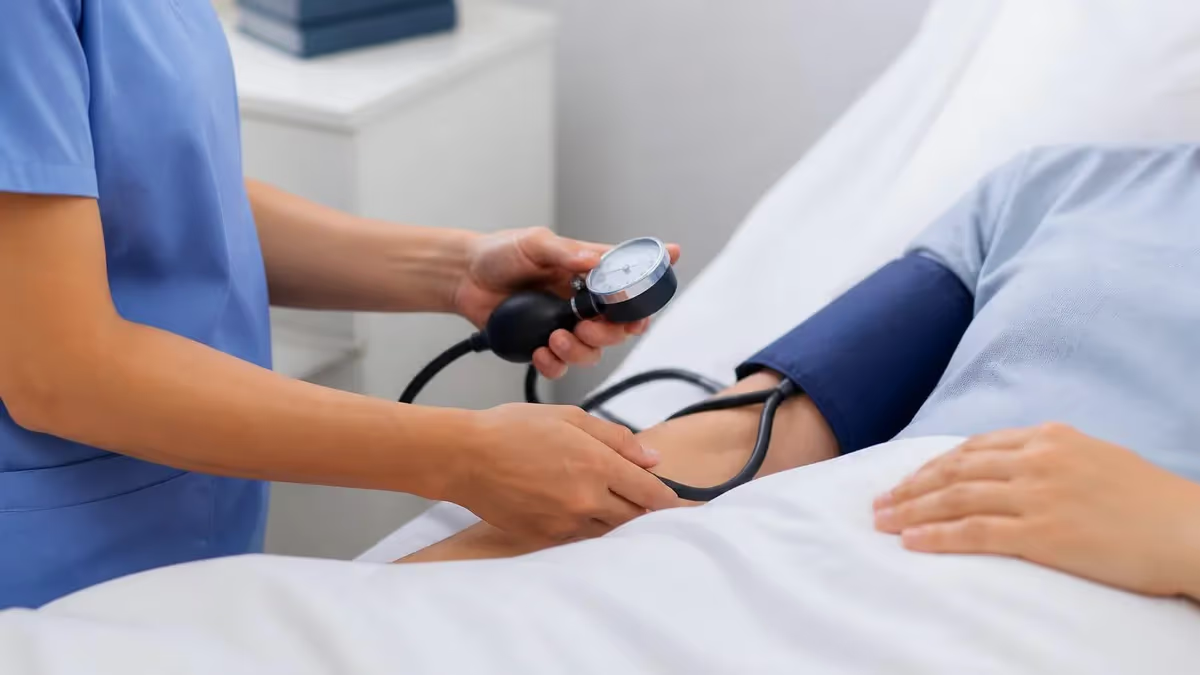
Looking into the Goodwill CNA program? You're not alone. Each month, thousands of people in Florida, Georgia, New York, Michigan, and other states search for Goodwill's free or low-cost Certified Nursing Assistant training. The pull is obvious. Becoming a CNA can take weeks, not years.
Goodwill, through its workforce development arm and partners like TalentBridge and the GoodCare program, helps cover tuition, books, scrubs, and exam fees for qualifying applicants. But not every Goodwill region offers it, and rules shift year to year.
Here's the short version. Goodwill's CNA pathway is real. It is also regional. In some metros it's an in-house career academy. In others it runs through a community college, a nursing home partner, or a state workforce grant.
We'll walk through how the program works, who qualifies, what it costs (often zero), where to find Goodwill CNA classes, and what to do if your local Goodwill doesn't offer one.
How the training works
Goodwill Industries is best known for thrift stores, but a huge chunk of every dollar spent there funds workforce training. Healthcare is the biggest slice. The CNA track usually covers 75 to 120 hours of classroom instruction plus 16 to 40 hours of supervised clinical work, depending on state minimums.
Students prep for the state competency exam, most often a written or oral test plus a hands-on skills demonstration. Pass it and you join your state's nurse aide registry. Then you can work in nursing homes, hospitals, home health, and assisted living.
Goodwill structures the program in three common ways. Direct delivery means Goodwill runs the classroom inside its own career center using state-approved instructors. Atlanta, Tampa, Jacksonville, and parts of Michigan use this model.
The second model is a partnership where Goodwill pays tuition at a nearby community college or vocational school. You attend class on their campus but your bill goes to Goodwill. The third is the GoodCare program — a national initiative blending CNA training with home health aide and direct support professional content.
Goodwill CNA Program by the Numbers (2026)
Key Facts at a Glance
| Item | Value | Details |
|---|---|---|
| Tuition cost when WIOA-funded | $0 | |
| Typical full-time program length | 4-8 wks | |
| Required training hours by state | 75-130 |
Is the Goodwill CNA Program Really Free?
Often, yes. But it depends on funding. Most Goodwill CNA tracks are tuition-free for adults who meet income guidelines or are receiving public assistance.
Common eligibility triggers include SNAP benefits, unemployment, TANF, low household income (usually below 200% of the federal poverty line), being a veteran, or being a single parent. WIOA — the Workforce Innovation and Opportunity Act — funds many of these seats.
Where WIOA covers cost, you also get books, uniforms, a stethoscope, BLS certification, the background check, and your state exam fee. That's a $1,500 to $3,000 value, gone.
But not every applicant is eligible, and not every Goodwill is funded. Some regions run a hybrid: tuition free, but you pay $50 to $300 for supplies and your exam.
Goodwill of Central Florida, for example, has run cohorts where students paid a $150 registration fee. Goodwill of North Georgia's career academy has offered fully funded CNA classes through Wellstar partnerships.
Goodwill Industries of Greater New York has used the GoodCare program to cover the full ticket, including a stipend during training in some grants. Always ask about the current funding cycle when you call.
Where Goodwill offers CNA classes
Active programs in 2026 include Florida (Tampa, Jacksonville, Orlando, Brevard County), Georgia (Atlanta, Columbus, Macon), New York City (GoodCare program, Manhattan and Brooklyn sites), and Michigan (Grand Rapids, Detroit).
Also active: North Carolina (Charlotte, Raleigh), Texas (Houston, San Antonio in partnership), Ohio (Cincinnati, Columbus), Tennessee (Nashville, Knoxville), and parts of Indiana and Kentucky. Not every location runs every cohort year-round.
Most offer 2 to 4 cohorts a year, with about 12 to 25 students per class. Spots fill fast. Wait lists are normal.
Adults who meet at least one of these: receiving SNAP, TANF, or unemployment; household income under 200% of federal poverty line; veteran or military spouse; single parent; or out-of-school adult without a college degree.
Most regions also require a high school diploma or GED enrollment, valid ID, and ability to pass a background check and drug screen.
Three Ways Goodwill Delivers CNA Training
Goodwill runs the classroom in its own career center with state-approved instructors. Common in Atlanta, Tampa, Jacksonville, and parts of Michigan. Most controlled curriculum and schedule.
Goodwill pays your tuition at a nearby community college or vocational school. You attend classes on their campus but Goodwill covers the bill. Common in California, Texas, and Ohio referrals.
National healthcare-workforce initiative blending CNA, home health aide, and DSP training. Often includes paid stipend during training. Most active in NYC, NJ, and parts of the Midwest.
How Long is the Goodwill CNA Program?
Most cohorts run 4 to 8 weeks full-time, or 8 to 16 weeks part-time. Full-time tracks meet Monday through Friday, usually 8 a.m. to 4 p.m. Part-time tracks meet evenings or weekends, designed for working adults.
Atlanta's career academy runs a 6-week daytime program. Tampa often runs a 5-week intensive. NYC's GoodCare cohorts have run 8 weeks with stipend support. Grand Rapids has used 7-week schedules.
Plan to dedicate real hours, because this isn't a self-paced online class. Clinicals happen on-site at a partner nursing home.
What a typical class day looks like
Mornings are usually classroom. You'll cover infection control, resident rights, communication, vital signs, range of motion, transfers, feeding, toileting, and the 22 mandatory skills your state tests.
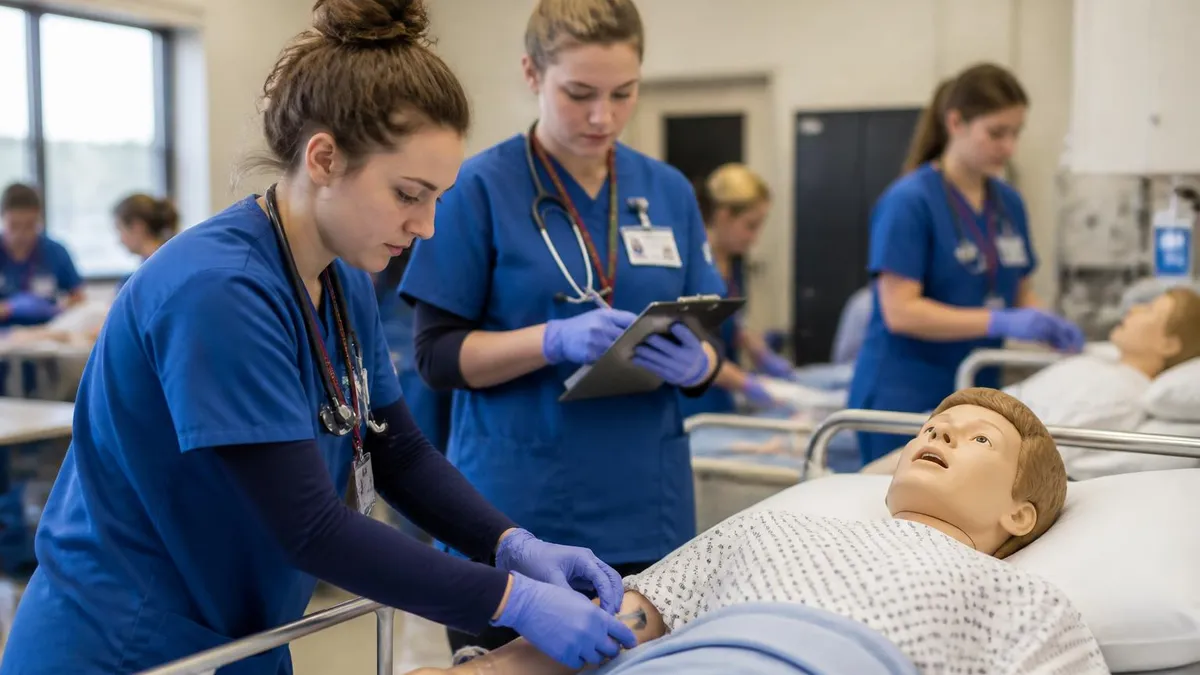
Afternoons shift to lab — practicing on mannequins and on each other. By week three or four, you move to clinicals at a long-term care facility.
You'll work alongside licensed CNAs and nurses, caring for real residents under supervision. Most students say clinicals are the hardest and most rewarding part. It's also where you find out fast whether bedside care fits you.
Total program cost in 2026
When fully funded by WIOA, the program is $0 to the student. When partially funded, expect $100 to $500 out of pocket for items like uniforms, a watch with a second hand, a stethoscope, and the background check.
Tack on the TB test or chest X-ray ($25 to $100) and the state competency exam ($90 to $130 depending on state). If you have to pay full price because you don't qualify for funding, Goodwill rates run $600 to $1,500. That's still well below the $2,500 to $4,000 at a private school.
Background Checks and Eligibility Gotchas
Background checks block more applicants than people expect. Felony convictions involving violence, abuse, theft from a vulnerable adult, or certain drug offenses will almost always disqualify you from CNA work — not just at Goodwill, but in your state registry.
Less serious offenses are sometimes waivable. If you have any criminal history, request a pre-determination from your state nurse aide registry before enrolling.
Some states (Florida, Texas, Illinois) let you petition for an exemption. Goodwill staff can guide you through this, but they can't override state law. Don't pay for a program if your background will keep you off the registry.
Income and ID requirements
Eligibility usually requires at least one of: receiving SNAP, TANF, or public assistance; being unemployed or underemployed; income below 200% of the federal poverty line (about $30,120 for a single adult in 2026); being a veteran or military spouse.
You'll also need a valid government ID, high school diploma or GED (some sites accept enrollment in a GED program), proof of vaccination (often including COVID-19 and flu), and ability to pass a criminal background check.
Felony convictions involving violence, abuse, theft from a vulnerable adult, or certain drug offenses will block you from the state nurse aide registry — not just Goodwill. Some states (Florida, Texas, Illinois) allow exemption petitions.
Request a pre-determination from your state registry BEFORE enrolling. Don't pay any program if your record will keep you off the registry.
Goodwill CNA Application Checklist
- ✓Find your closest Goodwill running CNA training (goodwill.org Career Finder or 1-800-GOODWILL)
- ✓Attend an information session (offered weekly or biweekly at most centers)
- ✓Bring: government ID, Social Security card, GED/high school records, public benefit award letters
- ✓Pass the TABE or CASAS pre-assessment at a 9th-grade reading level
- ✓Submit to background check and drug screen (Goodwill usually covers cost)
- ✓Provide vaccination records: MMR, varicella, hep B, TB test, flu, sometimes COVID
- ✓Sign WIOA enrollment forms and program agreement
- ✓Obtain uniform, watch with second hand, gait belt, stethoscope
- ✓Attend orientation day one (missing it usually voids enrollment)
- ✓Schedule state exam within 6-12 months of graduation
Goodwill CNA by State: What Changes
Florida runs the most active programs. Goodwill Industries-Suncoast in Tampa, Goodwill of Central Florida in Orlando, and Goodwill of North Florida in Jacksonville all run CNA tracks, with cost ranging from free to $250.
Georgia's Helms College and the Goodwill of North Georgia career academy in Atlanta both offer CNA training, often paired with phlebotomy. NYC uses the GoodCare program through Goodwill NY/NJ.
Michigan runs CNA classes in Grand Rapids and Detroit. North Carolina's Goodwill Charlotte offers training, sometimes through hospital partnerships.
Texas and Ohio Goodwills lean toward referral and scholarship support rather than running their own classes. Tennessee's Goodwill Career Solutions offers limited CNA cohorts, mostly in Nashville.
Indiana's Goodwill Industries of Central Indiana runs the Goodwill Excel Center plus healthcare prep tracks. Kentucky's Goodwill in Louisville has run periodic cohorts.
Always check the current Goodwill regional website, because programs open and close based on grant funding. A program offered last spring might not be on the calendar this fall. If you can't find it online, call. Career navigators know which cohorts are upcoming.
Florida specifics
Florida requires 120 hours of training (75 classroom plus 40 clinical, with extra hours often added). Goodwill of Central Florida and Goodwill Industries-Suncoast both run state-approved courses. Expect a 5- to 7-week schedule.
After class, you'll take the Prometric-administered Florida CNA exam ($135). Florida CNAs earn an average of $16.50 per hour. The state registry is run by the Florida Department of Health. See our florida cna license for renewal details.
Georgia specifics
Georgia requires only 85 hours total — among the shortest in the country. Goodwill of North Georgia partners with Helms College and Wellstar Health to deliver cohorts in Atlanta, Decatur, and Columbus. Tuition is typically free for qualifying applicants.
The state exam runs through Headmaster (D&S Diversified Technologies) at about $114. Georgia CNAs average $14.50 to $16 per hour, with hospitals paying $17 to $21.
Goodwill CNA Program by State
Active in Tampa (Suncoast), Orlando (Central FL), and Jacksonville (North FL). 120 training hours required. Cost ranges free to $250. Exam fee $135 via Prometric. Average wage $16.50/hour. Cohorts run year-round.
NYC, Michigan, and Other Regional Notes
New York City: the GoodCare path
New York requires 130 hours (100 classroom plus 30 clinical). The GoodCare program through Goodwill Industries of Greater New York and Northern New Jersey runs cohorts in Manhattan, Astoria, and Brooklyn.
Funding usually covers everything — tuition, uniforms, MetroCard for clinicals, and exam fees. The New York exam is administered by Prometric at $130. NYC CNAs earn $19 to $26 per hour, with hospitals at the higher end.
Some cohorts include a $15-per-hour training stipend funded through state workforce grants. Waitlists run 2 to 4 months. Apply as soon as cohorts open.
Michigan: Grand Rapids and Detroit
Michigan requires 75 hours minimum. Goodwill of Greater Grand Rapids and Goodwill Industries of Greater Detroit both offer CNA tracks, with Grand Rapids the more consistent of the two.
Expect 4 to 6 weeks full-time. The Michigan exam runs through Prometric. Michigan CNAs earn $15 to $19 per hour.
Many grads land jobs at Spectrum Health, Trinity Health, or McLaren facilities. Tuition is typically free when WIOA-funded. Grand Rapids cohorts often include free transportation passes and childcare vouchers.
What if your Goodwill doesn't offer CNA?
If you live in California, Oregon, Washington, or much of the Northeast outside NYC, your local Goodwill probably doesn't run CNA training directly. That's not a dead end.
Goodwill Career Centers in those regions still help with WIOA enrollment, scholarship applications, resume help, and referrals to free state-funded CNA programs. We cover free state options in our CNA programs NYC guide.
Three solid alternatives: ask Goodwill staff to enroll you in a third-party CNA program with WIOA funding, look into free state-funded programs through your local American Job Center, or apply to nursing home-sponsored programs that train and hire.
After You Finish: Jobs and Bridges
Goodwill's job placement rate for healthcare grads is strong. Most regions report 75% to 90% placement within 90 days. You'll get help with your resume, mock interviews, and direct referrals to partner facilities.
Common first jobs: nursing home CNA at $15 to $20 per hour, hospital CNA at $17 to $24 per hour, home health aide at $14 to $18 per hour, or assisted living CNA at $14 to $19 per hour.
Some grads use the credential to step into hospital CNA roles or specialty work like labor and delivery CNA positions.
Bridge programs and pay growth
Many Goodwill grads use the CNA credential as a stepping stone. After 6 to 12 months as a CNA, you can specialize (med tech, restorative aide, dementia care), bridge to LPN, or move to a different healthcare role.
Our CNA to LPN bridge program guide covers timelines and costs. Hourly pay details are in our cna hourly pay.
Hospital CNA roles, travel CNA contracts, and specialty units like ICU or labor and delivery pay 20% to 40% above nursing home rates.
Common myths, debunked
Myth: it's only for low-income applicants. Mostly true, but some regions accept moderate income if you're underemployed. Myth: you have to work at Goodwill afterward. False — no service obligation.
Myth: the certification isn't as good as a college CNA cert. False. The state exam is identical no matter where you train, and your registry listing looks the same. Myth: it only takes a week. False. Federal minimums require 75 hours.
Anyone promising under 4 weeks of full-time training is lying or unlicensed. Legitimate CNA programs always require in-person clinical hours. See our 4-week online CNA program guide for hybrid options.
Where Most Grads Land Their First Job
Skilled nursing and memory care. Largest channel. Entry pay $15-$20/hr. Most stable schedule. Best place to log your first 1,000 patient-care hours.
Trinity, HCA, Wellstar, AdventHealth, Spectrum, regional non-profits. Best pay at $17-$24/hr but usually require 6-12 months prior LTC experience.
Bayada, BrightStar, Visiting Angels, Amedisys. $14-$18/hr, flexible schedule. Often paired with home health aide credential for higher visit count.

Goodwill TalentBridge and Wrap-Around Support
TalentBridge is a Goodwill staffing arm that places workers in healthcare and other industries. In some markets it pairs with the CNA program — you train at Goodwill, then TalentBridge places you at a partner facility for 6 to 12 months.
The placement counts as your employer for benefits purposes, but you work onsite at a nursing home or assisted living. Pay typically starts at $14 to $19 per hour depending on region.
After your placement, you usually move to direct employment with the facility. It's a soft-landing first job that lets you build experience before applying competitively.
Reddit and word-of-mouth
Most Goodwill CNA grads on Reddit report a positive experience with two caveats. First, instructor quality varies wildly between cohorts and locations. A great instructor makes the program. A weak one leaves gaps.
Ask current students or recent grads about your specific site before enrolling. Second, the schedule is tight. If you have unstable childcare, transportation issues, or work obligations, the full-time track can break you.
Part-time evenings are often a better fit even though they take longer. Read graduate reviews on Indeed, Reddit's r/CNA, and Glassdoor's company review for your local Goodwill before committing.
Pitfalls to avoid
Don't pay anyone upfront fees to reserve a Goodwill CNA seat. Legitimate enrollment never requires payment before you're accepted. Don't sign up for a program without confirming it's state-approved.
Call your state's nurse aide registry to verify the training provider is on the approved list. Don't ignore the attendance policy. Don't underestimate clinical hours — the program might be 5 weeks, but you'll be exhausted.
Don't pass on the BLS certification if it's offered as part of your program. Having Basic Life Support boosts your hiring odds significantly. Don't delay the state exam after graduation. Skills get rusty fast.
Documents You'll Need Before Day One
- ✓Government-issued photo ID (driver's license, state ID, or passport)
- ✓Social Security card (original or certified copy)
- ✓High school diploma, GED, or proof of active GED enrollment
- ✓Two years of income proof: tax returns, pay stubs, or benefit award letters
- ✓Vaccination record: MMR, varicella, hep B series, current TB test
- ✓Flu vaccine (current season) and often COVID vaccine documentation
- ✓Background check authorization form (Goodwill provides)
- ✓Pre-determination letter from state registry if you have any criminal history
- ✓Childcare and transportation plan for full-time daytime cohort
Application Walk-Through, Step by Step
Step 1: Find your closest Goodwill that runs CNA training. The easiest path is the Goodwill Career Finder at goodwill.org or calling 1-800-GOODWILL.
Step 2: Attend an information session. These run weekly or biweekly at most career centers. You'll meet the instructor, see the curriculum, and learn the next cohort date.
Step 3: Complete the intake interview. Bring ID, proof of income, Social Security card, GED or high school records, and any public benefit award letters.
Step 4: Pass the pre-assessment. Most sites use the TABE or CASAS, scoring at a 9th-grade reading level. Step 5: Submit to a background check and drug screen.
Step 6: Provide your immunization records — measles, mumps, rubella, varicella, hepatitis B, TB test or quantiFERON, plus flu and sometimes COVID.
Step 7: Sign your enrollment agreement and any WIOA forms. Step 8: Buy or receive your uniform, watch, and gait belt. Step 9: Show up day one. Don't skip orientation — most programs have a strict attendance rule.
Two missed days can mean dismissal. Step 10: Pass your state exam within 6 to 12 months of finishing. Goodwill usually schedules and pays for your first attempt.
Goodwill CNA Program: Pros and Cons
- +Free or near-free tuition when WIOA-funded
- +Fast: 4-8 weeks to a state-recognized credential
- +Wrap-around support: transportation, childcare vouchers, interview clothes
- +Strong job placement rate (75-90% within 90 days)
- +Case manager and resume help included
- +GoodCare cohorts may include paid training stipend
- −Not available in every state or region
- −Spots fill fast; waitlists of 2-4 months in NYC and Florida
- −Strict attendance: two missed days can mean dismissal
- −Instructor quality varies between sites
- −Background check disqualifies many otherwise eligible applicants
- −Limited part-time options in some regions
Final Word
The Goodwill CNA program is one of the most accessible entry points into healthcare in America. Free when WIOA-funded, fast at 4 to 8 weeks, and respected on your state registry.
The catch: regional availability, tight attendance rules, and background check hurdles. If your local Goodwill offers it, apply early because cohorts fill fast. If they don't, let Goodwill funnel you to a partner school anyway.
Either way, you're looking at a legitimate path to a $15-to-$24-per-hour job in weeks, not years. The clinicals will test you. The exam will stretch you. But the credential opens doors that stay open for decades.
CNA Questions and Answers
About the Author

Registered Nurse & Healthcare Educator
Johns Hopkins University School of NursingDr. Sarah Mitchell is a board-certified registered nurse with over 15 years of clinical and academic experience. She completed her PhD in Nursing Science at Johns Hopkins University and has taught NCLEX preparation and clinical skills courses for nursing students across the United States. Her research focuses on evidence-based exam preparation strategies for healthcare certification candidates.
Join the Discussion
Connect with other students preparing for this exam. Share tips, ask questions, and get advice from people who have been there.
View discussion (8 replies)