
4-Week Online CNA Program: Fast-Track Certified Nursing Assistant Training Guide
Find legitimate 4-week online CNA programs, costs, 📚 state approval rules, hybrid clinical requirements, and how to pass the state CNA exam after

Searching for a 4-week online CNA program usually means one thing — you need certification fast, and you want to study from home. The good news is that fast-track CNA training is real. The catch is that no program is fully online. Every state requires hands-on clinical hours with real patients before you can sit the CNA exam, so the honest version of a 4-week program splits theory online and skills in-person at a partner clinical site. That hybrid model is what most reputable providers actually deliver, even when the marketing says "online."
Some training providers compress the classroom portion into two to three weeks of self-paced video lessons, then schedule a focused weekend or week of clinical practice. Others stretch the same content over six to twelve weeks. Either way, what you finish with is the same — eligibility to test for your state CNA license.
This guide walks through what a 4-week program looks like in practice, who actually offers them, how much they cost, and where the speed cuts corners you should not accept. By the end, you should be able to tell a legit fast-track from a scam in under a minute.
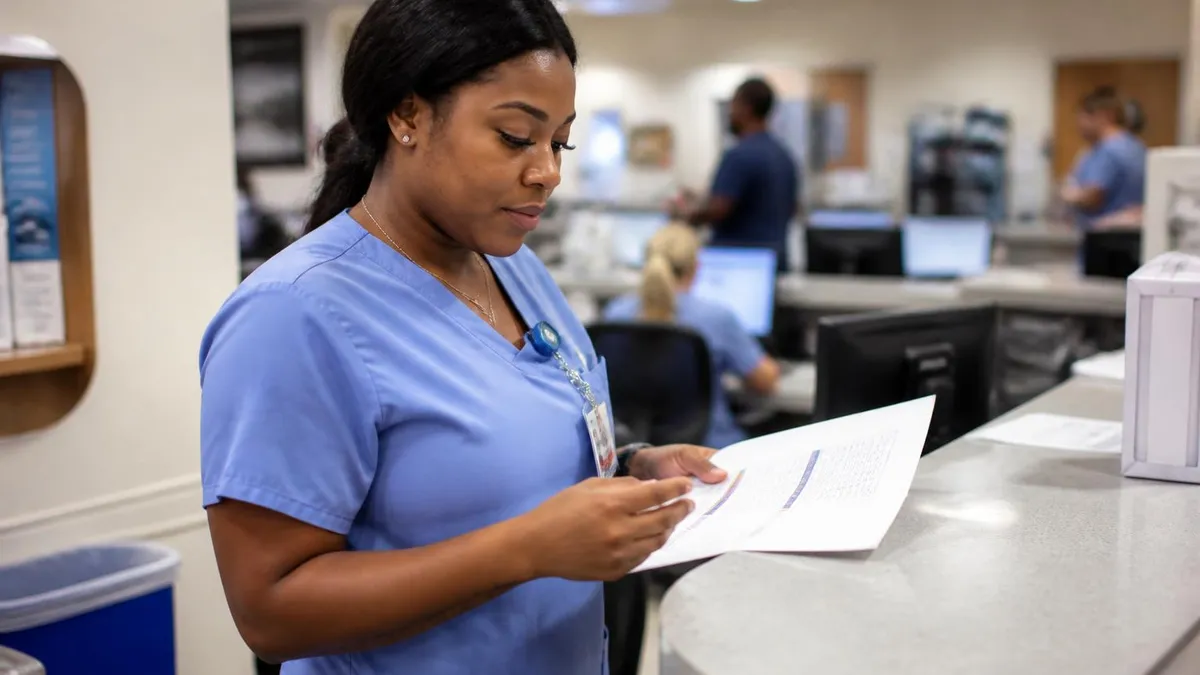
4-Week CNA Program Snapshot
Key Facts at a Glance
| Item | Value | Details |
|---|---|---|
| Required Hours | 75-180 | |
| Clinical Minimum | 16+ | |
| Typical Cost | $400-$1,500 | |
| Realistic Time | 4-8 wks | |
| License Required | 50 states |
The phrase 4-week online CNA program covers three different real-world setups, and you need to know which one you are buying. The first is a state-approved hybrid program that compresses theory into 80 to 120 hours of online study completed in three to four weeks, paired with a weekend skills lab and a week-long clinical placement. This is the legitimate fast track and the only version that leads to a state license.
The second is a non-approved "certificate" course that gives you a paper credential but does not qualify you for the state exam. These cost less but are useless if your goal is a hospital or nursing home job. The third is a continuing education course aimed at existing healthcare workers who want a refresher — also not a path to first-time licensure.
How do you tell them apart? Look for two things on the program website. First, the program must be listed in your state's Nurse Aide Registry or Department of Health approved training list. Second, the program must include a clinical component at a licensed facility. If both boxes check, you are looking at a real fast-track. If either is missing, the four weeks of study will not get you registered to take the CNA practice test through your state, no matter what the certificate says.
No state in the US allows fully online CNA certification. Federal law under OBRA 1987 requires a minimum of 75 training hours including 16 hours of supervised clinical practice on real patients. Programs advertising "100% online CNA certification" are either misrepresenting hybrid programs or selling certificates that do not qualify you for state licensure. Always verify the program appears on your state Nurse Aide Registry approved list before paying.
Federal law sets the floor for CNA training but states set the ceiling, and the gap between them is wide. The Omnibus Budget Reconciliation Act of 1987 requires a minimum of 75 training hours with at least 16 hours of supervised clinical experience before a candidate can be certified to work in a Medicare- or Medicaid-funded nursing home. That 75-hour federal minimum is what makes a 4-week timeline mathematically possible — divide 75 hours over four weeks and you get under 19 hours per week of study, which a motivated learner can finish.
State requirements often double or triple that figure. California requires 160 hours total — 60 classroom and 100 clinical. Maine requires 180 hours. Texas mandates 100 hours including 40 clinical. Florida sits at the federal minimum of 75 hours but still requires a state-approved program. So whether four weeks is realistic depends entirely on which state you plan to test in. In a 75-hour state, four weeks is comfortable.
In a 160-hour state, you would need to study nearly full-time and condense clinical into back-to-back days to hit the deadline. Check your state's Nurse Aide Registry — usually run by the Department of Health or a contracted vendor like Prometric, Pearson VUE, or Headmaster — for the exact hour requirement and the list of approved training providers in your area.
What Fast-Track CNA Programs Cover
Vital signs, infection control, body mechanics, patient transfers, ambulation, range of motion exercises, and basic emergency response procedures including CPR awareness and choking response.
Bathing, grooming, oral care, dressing, toileting, perineal care, and skin assessment for pressure injuries — the everyday tasks that make up most CNA shifts in long-term care settings.
Patient communication, working with cognitively impaired residents, dementia care basics, documentation, reporting changes to nurses, and HIPAA privacy compliance in healthcare settings.
Body systems overview, common age-related changes, basic disease processes, medication awareness (CNAs do not administer drugs but must recognize effects), and end-of-life care principles.
Federal resident rights under OBRA, abuse and neglect recognition, mandatory reporting, restraint policies, dignity preservation, and ethical decision-making in long-term care.
Hands-on practice of the 22 to 25 manual skills tested on the state CNA skills exam — measuring blood pressure, transferring patients, hand hygiene, and bed-making among them.
Picking the right 4-week program comes down to verification, not marketing. Start at the source — your state Department of Health website or your state Nurse Aide Registry. Both publish lists of approved training programs. If a program does not appear on that list, it cannot certify you to take the state exam, full stop. Cross-reference the program name on the approved list against the website you found through Google, because scam operators sometimes mirror legitimate program names.
Once you confirm state approval, evaluate the clinical placement. A legitimate program either runs its own clinical site or partners with a named nursing home, hospital, or assisted living facility within driving distance. The website should tell you where clinicals happen before you pay tuition. If the program is vague about clinical location or says "we will find a site near you later," treat that as a red flag — coordinating clinical placement is the hardest part of accelerated training and any reputable provider has those relationships locked in advance.
Also check the pass rate. State registries publish first-time pass rates for each approved program. Anything below 70 percent suggests the program rushes content. Anything above 85 percent suggests they teach well even under a compressed schedule. The CNA mock test on this site mirrors the format used by Prometric and Headmaster for self-assessment between lessons.
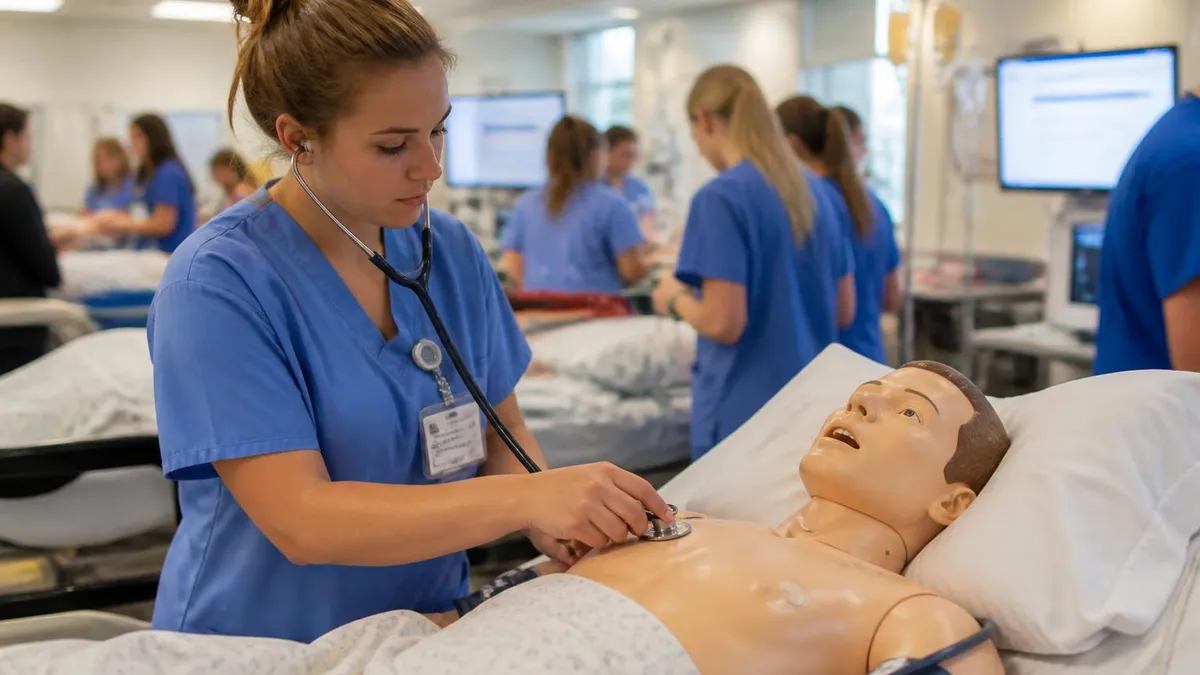
Fast-Track CNA by State
Florida requires 75 training hours minimum — exactly the federal floor — which makes it one of the friendliest states for 4-week completion. Programs in Florida often run as 3-week hybrid courses. The state exam is administered by Prometric and includes a 60-question written test plus a 5-skill clinical evaluation. Florida also allows challenge testing for certain healthcare workers who can skip training entirely if they pass both exam sections on the first try.
Cost ranges across legitimate 4-week programs from about $400 at community-college extension courses to $1,800 at private vocational schools. The price usually bundles tuition, textbooks, a scrub uniform or gait belt, CPR certification (often required), and sometimes the state exam fee — which runs another $100 to $150 separately if not included. Watch for hidden fees on background checks, fingerprinting, drug screens, and TB testing, which collectively add another $100 to $200.
Free CNA training exists if you know where to look. Most large nursing-home chains — Genesis HealthCare, Brookdale, Life Care Centers, Five Star Senior Living, and others — offer free or paid training in exchange for a commitment to work at one of their facilities for six months to a year after certification. Some hospitals run similar programs especially in regions with chronic CNA shortages. Workforce development boards and state-funded programs through the American Job Center network often cover tuition for eligible low-income applicants.
The Workforce Innovation and Opportunity Act funds CNA training in many states for unemployed and underemployed adults. Pell Grants do not typically cover CNA programs because the programs are too short to qualify, but state-level grant programs may. Always ask the program directly if they accept WIOA vouchers or state workforce funding — they usually do not advertise this but will accept it when asked.
Background check matters more than tuition. Every state runs a criminal background check before issuing a CNA license. Disqualifying convictions vary by state but commonly include felonies involving violence, abuse, theft, drug trafficking, and sex offenses. Some states impose lifetime bars while others allow rehabilitation hearings after 5 to 10 years. Check your state's disqualifying offense list before paying tuition if you have any criminal record — many programs do not refund tuition if you fail the background screen after enrollment.
The clinical portion is where 4-week programs concentrate most of the real learning. After three weeks of online theory, students typically report to a partnered nursing home, rehab facility, or hospital for 5 to 10 consecutive days of supervised practice. Days run 8 to 12 hours mirroring a real CNA shift. A licensed nurse instructor supervises the clinical group, usually 8 to 12 students at a time, and signs off on each required skill as students demonstrate competence.
Skills practiced during clinical include the 22 to 25 specific manual procedures tested on the state exam. Common required skills are handwashing, donning and doffing PPE, measuring blood pressure manually, transferring a patient from bed to wheelchair, ambulating a patient with a gait belt, perineal care, denture care, range-of-motion exercises, recording intake and output, and bed-making with an occupied bed.
Each skill has 10 to 30 critical steps that must be performed in the correct order. Missing a critical step — like failing to wash hands before patient contact or failing to provide privacy during personal care — is an automatic failure on that station during the state exam. The clinical week is when these sequences become muscle memory rather than memorized lists, which is why no online program can substitute for the hands-on hours.
Before You Enroll Checklist
- ✓Verify the program appears on your state Nurse Aide Registry approved training list — call the registry directly if unsure
- ✓Confirm the clinical site location and that it is within reasonable commuting distance of your home
- ✓Check the program's first-time state exam pass rate — aim for 75 percent or higher
- ✓Review your state's hour requirement and confirm the program meets or exceeds it
- ✓Calculate total cost including background check, fingerprinting, drug screen, TB test, uniform, and state exam fee
- ✓Ask whether tuition includes the state exam fee and any retake fees if you fail on the first attempt
- ✓Confirm the program issues a state-recognized certificate of completion, not just an internal certificate
- ✓Check your state's disqualifying offense list against your background if you have any criminal history
- ✓Ask about job placement assistance and which facilities hire program graduates regularly
Finishing the program is step one. Passing the state CNA exam is step two, and most states administer it through one of three vendors — Prometric, Pearson VUE, or Headmaster. The exam structure is similar regardless of vendor: a written or oral knowledge test of 60 to 100 multiple-choice questions plus a manual skills evaluation where you perform 5 randomly selected skills in front of an examiner.
Both sections must be passed within a set time window, usually two years, or you must retake training. Most fast-track graduates take the exam within two to four weeks after finishing clinicals while the material is fresh.
The written portion covers the same content blocks taught in class — basic care, communication, resident rights, infection control, anatomy, and emergency response. Most exams allow you to take the written test in English or Spanish, and many states also offer oral testing for candidates who struggle with written English. The skills portion is where most candidates lose marks.
The examiner selects 5 skills randomly from the program list and you must perform each one in the correct sequence while explaining what you are doing aloud. The single most common reason candidates fail is forgetting hand hygiene at the right moments. Using a structured CNA practice test bank for the written section and rehearsing skills in front of a mirror or partner improves pass rates substantially.
Some applicants are not eligible for any CNA program regardless of how fast or slow. Common bars include certain criminal convictions, active substance abuse cases, and outstanding child support orders in some states. Other applicants are eligible but find their first program rejected them — usually because of background-check timing, missing high school documentation, or failing the entrance reading and math assessment that many programs use. The good news is most of these obstacles have workarounds.
If you fail an entrance assessment, study basic math (fractions, decimals, percentages) and 8th-grade reading comprehension for two to three weeks before retaking. Most programs allow a retake after a waiting period. If your background check comes back with a flag, request a copy of the report under the Fair Credit Reporting Act, dispute any inaccurate entries, and ask the program if you can submit a personal statement to the registry.
Some states have a rehabilitation review process that can clear minor or old offenses. If you lack a high school diploma or GED, some programs still accept you if you pass a Test of Adult Basic Education score. Each state and program varies — call the registry and ask before assuming you are blocked. A program that does not have time to explain options is not worth your tuition anyway.
Fast-Track CNA Program Trade-offs
- + —
- + —
- + —
- + —
- + —
- − —
- − —
- − —
- − —
- − —
If a 4-week program does not fit your situation — most often because of high state hour requirements or unreliable internet — alternatives exist that still get you certified faster than the traditional 12-week pace. Many community colleges offer evening and weekend cohorts that complete in 6 to 8 weeks for working adults.
Red Cross CNA programs run 6 to 7 weeks in most chapters and are well-regarded by employers. American Caregivers and other vocational schools run 4-to-8-week cohorts in major metro areas with flexible payment plans. Employer-sponsored training through major nursing home chains usually takes 5 to 8 weeks but covers all costs and guarantees a job after certification.
For applicants with prior healthcare experience — medical assistants, EMTs, military medics, or nursing students who completed first-semester clinicals — some states offer challenge testing. Challenge testing lets eligible candidates skip training entirely and go straight to the state CNA exam. Pass both sections and you are licensed without ever enrolling in a program.
California, Florida, and several other states publish challenge eligibility rules clearly on the registry website. The fee is usually $100 to $150 — the cost of the exam itself — making it the cheapest path for those who qualify. Check eligibility before assuming you must complete training.
Scam Red Flags
Any program claiming you can become a state-licensed CNA entirely online without clinical hours is misleading or fraudulent. No US state permits this. Walk away from any program making this claim regardless of price.
If the program does not appear on your state Nurse Aide Registry approved list, the certificate is not recognized for licensure. Always verify directly with the registry, not the program's own website.
Legitimate programs name their clinical partner facilities upfront. Programs that promise to find a site "near you later" frequently fail to deliver, leaving students unable to complete required hours.
Programs priced under $200 are usually selling non-approved certificates. Legitimate state-approved training costs at minimum $400 because clinical instructor and facility costs are real.
State-approved programs are required to track first-time exam pass rates and most disclose them on request. Refusal to share this data suggests the program either does not track outcomes or has poor results.
Reputable training providers do not use high-pressure sales tactics or limited-time discounts. Take 24 hours minimum to verify any program before paying tuition or putting down a deposit.
The CNA credential is a starting line, not a finish line. Most CNAs work in nursing homes, assisted living facilities, hospitals, home-health agencies, and hospice programs. The median CNA wage in the US sits around $17.50 per hour as of recent BLS data, but rates vary widely — California, Alaska, New York, and Massachusetts pay $20 to $25 per hour in metro areas, while rural Southern states pay $13 to $16. Overtime, weekend, and night differential pay adds 10 to 25 percent for shifts outside weekday daytime hours, which is when most facilities need staff anyway.
Career ladder options open quickly after the first year. LPN (Licensed Practical Nurse) programs take 12 to 18 months and bump pay to $25 to $30 per hour. RN (Registered Nurse) programs through associate or bachelor degrees take two to four years and bump pay to $35 to $50 per hour with substantially more autonomy and specialization options.
Many employers offer full tuition reimbursement for CNAs who commit to working at the same facility while completing LPN or RN coursework, which can mean a debt-free path to RN licensure. Specializations like dialysis technician, medication aide, restorative aide, and patient care technician add $1 to $4 per hour and require only short additional training that employers often pay for directly.
Final thought before you enroll. Pick the program that gets you on the state Nurse Aide Registry, not the program that promises the fastest finish.
A real 4-week hybrid course with a 50 dollar higher tuition and a verified clinical site beats a 4-week internet certificate that ends with no exam eligibility every single time.
CNA Questions and Answers
About the Author

Registered Nurse & Healthcare Educator
Johns Hopkins University School of NursingDr. Sarah Mitchell is a board-certified registered nurse with over 15 years of clinical and academic experience. She completed her PhD in Nursing Science at Johns Hopkins University and has taught NCLEX preparation and clinical skills courses for nursing students across the United States. Her research focuses on evidence-based exam preparation strategies for healthcare certification candidates.
Join the Discussion
Connect with other students preparing for this exam. Share tips, ask questions, and get advice from people who have been there.
View discussion (8 replies)