
CNA in Michigan: Registry, Training, Salary & Certification Guide 2026
🆕 Pass the CNA in Michigan: Registry, Training, exam with confidence. Practice questions with detailed explanations and instant feedback on every answer.

Michigan's healthcare sector employs over 50,000 certified nursing assistants — and demand keeps climbing. If you're exploring michigan cna registry information, considering a career switch, or just trying to figure out what CNAs actually earn in this state, you've landed in the right spot. The registry, managed by the Michigan Department of Licensing and Regulatory Affairs (LARA), tracks every active CNA credential in the state. It's your single source of truth for license verification, renewal deadlines, and employment eligibility. Practice with the free CNA practice test on PracticeTestGeeks (3,000+ questions with answer explanations).
What draws people to CNA work in Michigan? Flexibility, for one. Hospitals, nursing homes, home health agencies, rehab facilities — the settings vary wildly, and so do the schedules. You can pick up 12-hour shifts at a metro Detroit trauma center or work part-time at a rural long-term care home in the Upper Peninsula.
The barrier to entry is low compared to RN or LPN tracks, but the work itself is physically and emotionally demanding. Don't let the short training timeline fool you into thinking it's easy. When it comes to cna salary michigan, compensation depends heavily on your employer type, geographic region, and whether you're working agency or staff.
This page covers everything from registry lookup and certification requirements to salary breakdowns by city, renewal procedures, and the best training programs across the state. Whether you're brand-new to healthcare or transferring your CNA credentials from another state, the information here is current for 2026. Bookmark it — you'll likely need to come back when renewal time hits.
CNA: upcoming dates and official changes
- Aug 1, 2026: Connecticut (Prometric) implements new exam pricing: $48 for written only, $48 for oral only, $125 for bundled written and clinical skills, effective August 1, 2026.[4]
- Jul 1, 2026: Idaho (Prometric) raises CNA exam fees to $34 each for written and oral exams, plus test site fees, effective July 1, 2026.[5]
- Passing score (written or oral): Set per state; no national percentage published.[1]
- Retake policy: Minimum 3 attempts required; aides must be told which areas they failed before each retake.[1]
- Validity: 2 years from issuance in most states.[2]
- Renewal: State-specific; typically 2-year cycles with continuing education requirements (12–24 hours per year) and paid-work requirements.[3]
All verified CNA facts and sources
Numbers in brackets link to the official sources listed under Sources & last verified. Dates that have passed are removed automatically.
Free CNA Study Tools
Interactive CNA resources on PracticeTestGeeks, free to start:
- CNA practice test — 3,000+ questions with instant scoring and answer explanations
- CNA flashcards — review key terms and concepts card by card
- CNA study guide — topic-by-topic overview of what the exam covers
- CNA cheat sheet — one-page printable summary for last-minute review

Let's talk money. CNA salary michigan numbers vary depending on where you work and who signs your checks. The Bureau of Labor Statistics puts the state average around $36,420 per year — roughly $17.51 an hour. That's slightly above the national median for nursing assistants, which sits near $35,740. Hospitals and government facilities generally pay more than private nursing homes. Agency work? Even higher per-hour rates, but you sacrifice benefits and schedule stability.
Geography matters a lot here. CNAs in Ann Arbor and Grand Rapids typically earn 10-15% more than those in Saginaw or Traverse City. Detroit metro sits somewhere in between — decent pay, high volume of openings, fierce competition for the best-paying hospital gigs. If you're willing to commute or relocate within the state, your earning potential shifts significantly. Night and weekend differentials add another $1-3 per hour at most facilities. Some employers offer sign-on bonuses of $1,000-$3,000 for experienced CNAs willing to commit to a 6-month contract.
CNA certification michigan requirements directly affect your paycheck trajectory. A basic CNA certification gets you in the door. But specialized credentials — restorative aide, medication aide, or phlebotomy skills — push your hourly rate up by $2-5. Many Michigan employers reimburse cna certification classes michigan costs if you commit to staying for a year. That's worth investigating before you pay out of pocket.
One thing people overlook: overtime. Michigan nursing homes are chronically understaffed. CNAs who pick up extra shifts can realistically earn $45,000-$50,000 annually. That overtime pay at time-and-a-half adds up fast — especially during holiday weeks and flu season when call-outs spike.
How much does a CNA make in michigan is probably the question that brought you here — and the answer depends on more than just base pay. Benefits packages vary dramatically between employers. Large hospital systems like Beaumont, Spectrum Health, and Henry Ford offer tuition reimbursement, retirement matching, and health insurance starting on day one. Smaller nursing homes might pay a dollar or two more per hour but offer minimal benefits. You've got to do the full math, not just compare hourly rates.
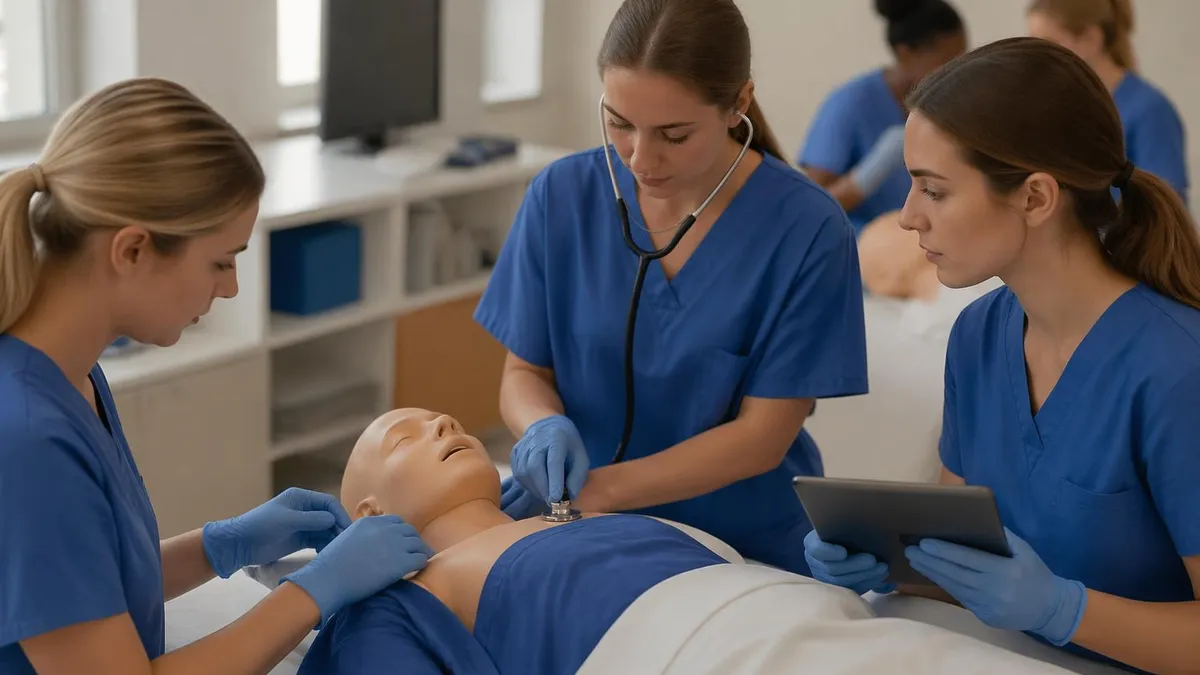
CNA programs in michigan range from community college certificate tracks to employer-sponsored training that costs you nothing. The state requires a minimum of 75 hours of instruction — 16 hours of clinical practice plus 59 hours of classroom and lab work. Most programs finish in 4 to 8 weeks. Some accelerated options compress everything into 3 weeks if you attend full-time. Red Cross chapters across Michigan run affordable programs, and Michigan Works! offices sometimes fund training for eligible residents.
Choosing the right program matters more than you'd think. Accreditation, pass rates on the state competency exam, clinical site quality, and whether the program includes job placement assistance — all of these affect your outcomes. Programs with consistently high pass rates on the Prometric exam tend to have better-structured curricula and more experienced instructors. Ask for pass rate data before enrolling. If a program won't share it, that tells you something.
CNA training michigan timelines also depend on your schedule flexibility. Evening and weekend cohorts take 8-12 weeks. Daytime programs move faster. Online hybrid options exist but the clinical hours must still be completed in person at an approved facility — there's no way around hands-on patient care practice.
CNA Training Options in Michigan
Michigan's community college system offers some of the most affordable CNA training in the Midwest. Schools like Washtenaw Community College, Macomb Community College, and Grand Rapids Community College run state-approved programs ranging from $800 to $1,500 in tuition. Most include textbooks and exam fees in that price. Clinical rotations happen at partnered nursing facilities within a 30-minute drive of campus. Class sizes typically max out at 20 students per cohort, giving you better instructor access than larger programs. Financial aid applies — fill out your FAFSA even if you think you won't qualify.
The michigan registry cna — officially the Michigan Nurse Aide Registry — is maintained by Prometric on behalf of LARA. Every certified nursing assistant in the state appears in this database, along with their certification status, expiration date, and any findings of abuse, neglect, or misappropriation. Employers are legally required to check the registry before hiring you. No exceptions.
CNA license lookup michigan is straightforward. Head to the Prometric website, select Michigan, and enter the person's name or certification number. Results show up instantly. You'll see the certification issue date, expiration date, and whether the individual is in good standing. If your name doesn't appear — or if the status shows expired — you can't legally work as a CNA in Michigan until the issue is resolved. Some employers run registry checks monthly, not just at hire.
What trips people up: the registry isn't the same as your LARA license profile. LARA handles the regulatory side — complaints, investigations, disciplinary actions. The Prometric registry is the verification tool employers actually use day-to-day. You need to be current in both systems. If you've changed your name, moved addresses, or let your certification lapse, update both — not just one.
Registry holds are another issue worth understanding. If a facility reports you for abuse or neglect, LARA places a hold on your registry listing while they investigate. During the investigation — which can take months — your certification shows as "under review" and most employers won't hire you. Even if the allegation is later dismissed, that period of uncertainty costs you employment. Document everything at work. Protect yourself.
CNA certification classes michigan programs exist in nearly every county. The Detroit metro area has the highest concentration — over 30 approved programs within a 45-minute radius. But rural areas aren't left out. Programs operate in Marquette, Traverse City, Alpena, and most mid-sized cities. The Michigan Nurse Aide Training Finder on the LARA website lists every currently approved program by county. That's your best starting point.
CNA classes in michigan follow a standardized curriculum set by federal and state regulations. Every program must cover at least 16 topic areas including infection control, safety and emergency procedures, personal care skills, basic nursing skills, mental health concepts, and residents' rights. What differs between programs is how they deliver this content — some lean heavily on lecture, others incorporate simulation labs and role-playing scenarios. The clinical component always involves real patient contact under instructor supervision.
Cost is a real consideration. Community college programs run $800-$1,500. Private vocational schools charge $1,200-$2,500. Employer-sponsored programs cost nothing but come with work commitments. Some Michigan Works! offices cover full tuition plus exam fees for qualifying residents — that's the best deal available if you're eligible. WIOA (Workforce Innovation and Opportunity Act) funding applies to CNA training as a high-demand occupation in Michigan.
Don't overlook program reputation. Talk to current students or recent graduates. Check online reviews — but weigh them carefully. A program with a consistently strong first-attempt pass rate on the Prometric exam is generally a better choice than one with a weak record, regardless of what their marketing materials claim. Your goal is to pass the exam on the first try and start working immediately. Programs with strong clinical partnerships often lead to same-week job offers after certification.
Pros and Cons of Being a CNA in Michigan
- +Strong job market with 8% projected growth through 2034
- +Multiple training program options including free employer-sponsored tracks
- +Quick entry — most programs take 4 to 8 weeks to complete
- +Flexible scheduling with day, evening, and weekend shifts available
- +Stepping stone to RN or LPN with employer tuition reimbursement
- +Sign-on bonuses of $1,000-$3,000 at many facilities statewide
- −Physically demanding — lifting, transferring, and standing for 8-12 hour shifts
- −Emotionally taxing work with high patient-to-staff ratios
- −Starting pay below $18/hour at many private nursing homes
- −Mandatory overtime during staffing shortages is common
- −Exposure to infectious diseases and workplace injury risk
- −Two-year renewal cycle requires paid employment documentation
Pros and Cons at a Glance
| Pros | Cons |
|---|---|
| Multiple training program options including free employer-sponsored tracks | Emotionally taxing work with high patient-to-staff ratios |
| Flexible scheduling with day, evening, and weekend shifts available | Mandatory overtime during staffing shortages is common |
| Stepping stone to RN or LPN with employer tuition reimbursement | Exposure to infectious diseases and workplace injury risk |
CNA training michigan requirements haven't changed much in recent years, but enforcement has tightened. LARA audits training programs more aggressively now, and programs that fall below minimum standards get shut down — three were decertified in 2024 alone. The 75-hour minimum is exactly that: a minimum. Most quality programs exceed it by 20-40 hours, giving students more clinical time and better preparation for the state exam.
CNA wages in michigan have risen steadily since 2020, driven by staffing shortages across the healthcare industry. The pandemic accelerated a trend that was already underway — facilities compete harder for CNAs now than at any point in the last two decades. Hourly rates jumped about 15% between 2020 and 2025. Some facilities in southeast Michigan now start new CNAs at $18-19/hour, up from $13-14 just five years ago. That's a meaningful increase, though it still doesn't match inflation-adjusted cost of living in metro Detroit.
Wage growth isn't uniform across the state. Rural facilities in northern Michigan and the Upper Peninsula haven't matched the increases seen in urban areas. A CNA in Marquette might earn $15-16/hour while someone doing the same work in Dearborn earns $18-19. Travel CNA assignments through staffing agencies can pay $22-28/hour — but these roles require experience, flexibility, and a willingness to work at unfamiliar facilities with minimal orientation.
Benefits matter as much as hourly pay. Michigan hospitals affiliated with large health systems — Corewell Health, Trinity Health, University of Michigan Health — offer retirement plans, tuition assistance toward nursing degrees, and health insurance with reasonable premiums. Smaller facilities may not match these benefits. When comparing job offers, calculate total compensation, not just the hourly number on the offer letter. A $17/hour job with full benefits often beats a $19/hour position with nothing extra.
CNA Certification Checklist for Michigan
- ✓Verify you meet the minimum age requirement (16 years old in Michigan)
- ✓Pass a criminal background check through LARA
- ✓Enroll in a LARA-approved nurse aide training program
- ✓Complete all 75+ hours of classroom and clinical instruction
- ✓Obtain CPR/BLS certification from an approved provider
- ✓Register for the Prometric competency evaluation exam
- ✓Pass both the written knowledge test and clinical skills test
- ✓Submit your certification application to LARA with all required documents
- ✓Verify your name appears on the Michigan Nurse Aide Registry
- ✓Begin applying for CNA positions within 24 months of certification
CNA renewal michigan happens every two years. Miss the deadline and your certification expires — no grace period, no exceptions. To renew, you must have worked at least one day as a paid CNA during the preceding 24-month cycle. Volunteer work doesn't count. Unpaid clinical hours don't count. It has to be compensated employment at a licensed healthcare facility.
The process for renew cna license michigan involves submitting a renewal application to LARA along with employer verification of paid nursing assistant work. Your employer fills out a verification form confirming dates of employment and that you performed nursing assistant duties. LARA processes most renewals within 2-4 weeks. Apply at least 60 days before your expiration date — delays happen, especially around year-end when renewal volume spikes.
What happens if you let it lapse? You've got options, but none of them are instant. If your certification has been expired for less than 24 months, you may be able to reinstate it by completing a refresher course and retaking the competency exam. Beyond 24 months? You're starting over from scratch — full training program, full exam, new background check. People underestimate how fast two years passes. Set a calendar reminder 90 days before expiration. Don't rely on LARA to remind you — they send notices, but postal mail gets lost and email filters catch state correspondence.
Out-of-state CNAs moving to Michigan face a reciprocity process. Michigan accepts CNA credentials from other states, but you must apply for endorsement through LARA, provide proof of active certification in your home state, pass a Michigan background check, and wait for registry listing. The process takes 4-8 weeks on average. During that time, you cannot legally work as a CNA in Michigan. Plan accordingly if you're relocating for a job — some employers will hold a position for you, others won't wait.
CNA programs in detroit serve one of the largest healthcare markets in the Midwest. The metro area has over 30 approved training programs, ranging from community college certificates to hospital-based training. Wayne County Community College District runs one of the most popular programs — affordable tuition, high pass rates, and strong clinical partnerships with local hospitals. Henry Ford Health System offers employer-sponsored training at several of its Detroit-area facilities, and Beaumont (now Corewell Health) has similar programs at its Dearborn and Taylor campuses.
Michigan works cna training is a funding pathway that many aspiring CNAs overlook entirely. Michigan Works! agencies operate across the state — they're federally funded career centers that provide job training assistance for in-demand occupations. CNA training qualifies. If you meet income eligibility requirements, Michigan Works! can cover your entire training cost plus exam fees, textbooks, scrubs, and sometimes even transportation. The application process takes 2-3 weeks. You'll need to attend an orientation, meet with a career advisor, and document your financial situation. Worth the effort if money is the barrier between you and certification.
Detroit-specific programs worth investigating: Wayne State University's continuing education division, Detroit Employment Solutions Corporation (DESC) partnerships, and several faith-based organizations that sponsor CNA cohorts in underserved neighborhoods. Some of these programs include wraparound support — childcare assistance, bus passes, and tutoring. That matters when you're working full-time and trying to complete training simultaneously. Not every program is created equal, and Detroit has enough options that you can afford to be selective.
The Detroit healthcare job market for CNAs is strong. Hospitals, nursing homes, home health agencies, and rehabilitation centers are constantly hiring. Starting pay in the metro ranges from $16 to $19 per hour depending on facility type and your experience level. Agency work through staffing companies like Maxim Healthcare, AMN Healthcare, or local firms pays even more — $20-25/hour isn't unusual for experienced CNAs willing to float between facilities. The trade-off is inconsistent scheduling and no employer benefits.
Michigan requires criminal background checks for all CNA candidates before registry listing. Certain felony convictions — particularly those involving abuse, neglect, or theft — may permanently disqualify you from certification. Misdemeanor convictions are evaluated case-by-case. If you have a criminal record, contact LARA directly before enrolling in a training program to determine your eligibility. Don't pay $1,500 for training only to discover you can't sit for the exam.
Holding a michigan cna license opens doors beyond traditional nursing home work. Home health is one of the fastest-growing segments — agencies like Maxim, Interim HealthCare, and Help at Home hire hundreds of Michigan CNAs annually for in-home patient care. These roles offer more autonomy, one-on-one patient interaction, and flexible scheduling. Some home health CNAs work with the same patient for months or years, building a caregiving relationship that's impossible in facility settings.
Michigan cna renewal requirements are straightforward, but people still trip up. The two-year cycle resets from your original certification date — not from when you last renewed. So if you were certified on March 15, 2024, your renewal is due by March 15, 2026, regardless of when you submitted your last renewal. Mark it on every calendar you use. Phone, paper, work schedule — everywhere. LARA sends renewal reminders, but they arrive 30-60 days before expiration, which doesn't leave much runway if your employer is slow with the verification paperwork.
Specialty certifications boost both your resume and your renewal prospects. Becoming a Certified Medication Aide (CMA) in Michigan requires additional training and examination but increases your hourly rate by $2-4 and makes you more valuable to employers. Restorative aide certification, wound care specialist credentials, and phlebotomy skills are other add-ons that Michigan employers actively seek. Each additional credential strengthens your position during salary negotiations and makes renewal employment documentation easier to obtain — you're always in demand.
For CNAs considering upward mobility, Michigan offers multiple pathways. LPN bridge programs accept CNA experience as a prerequisite. ADN (Associate Degree in Nursing) and BSN programs at Michigan universities give enrollment preference to applicants with active CNA certification and documented patient care hours. Several Michigan hospitals offer tuition reimbursement of $3,000-$5,000 annually for CNAs pursuing nursing degrees. That's a real career ladder — CNA to RN in 2-4 years while someone else pays for your education.
CNA Practice Test Questions
Prepare for the CNA - Certified Nursing Assistant exam with our free practice test modules. Each quiz covers key topics to help you pass on your first try.
CNA Activities of Daily Living
CNA Exam Questions covering Activities of Daily Living. Master CNA Test concepts for certification prep.
CNA Aging Process
Free CNA Practice Test featuring Aging Process. Improve your CNA Exam score with mock test prep.
CNA Anatomy and Physiology Basics
CNA Mock Exam on Anatomy and Physiology Basics. CNA Study Guide questions to pass on your first try.
CNA Assisting with Daily Living
CNA Test Prep for Assisting with Daily Living. Practice CNA Quiz questions and boost your score.
CNA Assisting with Range of Motion Exercises
CNA Questions and Answers on Assisting with Range of Motion Exercises. Free CNA practice for exam readiness.
CNA Basic Human Anatomy and Age-Related Ch...
CNA Mock Test covering Basic Human Anatomy and Age-Related Changes. Online CNA Test practice with instant feedback.
CNA Basic Nursing Skills
Free CNA Quiz on Basic Nursing Skills. CNA Exam prep questions with detailed explanations.
CNA Basic Nursing Skills 10
CNA Practice Questions for Basic Nursing Skills 10. Build confidence for your CNA certification exam.
CNA Basic Nursing Skills 11
CNA Test Online for Basic Nursing Skills 11. Free practice with instant results and feedback.
CNA Basic Nursing Skills 1
CNA Study Material on Basic Nursing Skills 1. Prepare effectively with real exam-style questions.
CNA Basic Nursing Skills 12
Free CNA Test covering Basic Nursing Skills 12. Practice and track your CNA exam readiness.
CNA Basic Nursing Skills 13
CNA Exam Questions covering Basic Nursing Skills 13. Master CNA Test concepts for certification prep.
CNA Basic Nursing Skills 14
Free CNA Practice Test featuring Basic Nursing Skills 14. Improve your CNA Exam score with mock test prep.
CNA Basic Nursing Skills 15
CNA Mock Exam on Basic Nursing Skills 15. CNA Study Guide questions to pass on your first try.
CNA Basic Nursing Skills 16
CNA Test Prep for Basic Nursing Skills 16. Practice CNA Quiz questions and boost your score.
CNA Basic Nursing Skills 17
CNA Questions and Answers on Basic Nursing Skills 17. Free CNA practice for exam readiness.
CNA Basic Nursing Skills 18
CNA Mock Test covering Basic Nursing Skills 18. Online CNA Test practice with instant feedback.
CNA Basic Nursing Skills 19
Free CNA Quiz on Basic Nursing Skills 19. CNA Exam prep questions with detailed explanations.
CNA Basic Nursing Skills 20
CNA Practice Questions for Basic Nursing Skills 20. Build confidence for your CNA certification exam.
CNA Basic Nursing Skills 21
CNA Test Online for Basic Nursing Skills 21. Free practice with instant results and feedback.
CNA Basic Nursing Skills 2
CNA Study Material on Basic Nursing Skills 2. Prepare effectively with real exam-style questions.
CNA Basic Nursing Skills 3
Free CNA Test covering Basic Nursing Skills 3. Practice and track your CNA exam readiness.
CNA Basic Nursing Skills 4
CNA Exam Questions covering Basic Nursing Skills 4. Master CNA Test concepts for certification prep.
CNA Basic Nursing Skills 5
Free CNA Practice Test featuring Basic Nursing Skills 5. Improve your CNA Exam score with mock test prep.
CNA Basic Nursing Skills 6
CNA Mock Exam on Basic Nursing Skills 6. CNA Study Guide questions to pass on your first try.
CNA Basic Nursing Skills 7
CNA Test Prep for Basic Nursing Skills 7. Practice CNA Quiz questions and boost your score.
CNA Basic Nursing Skills 8
CNA Questions and Answers on Basic Nursing Skills 8. Free CNA practice for exam readiness.
CNA Basic Nursing Skills 9
CNA Mock Test covering Basic Nursing Skills 9. Online CNA Test practice with instant feedback.
CNA Basic Restorative Services
Free CNA Quiz on Basic Restorative Services. CNA Exam prep questions with detailed explanations.
CNA Basic Restorative Services 1
CNA Practice Questions for Basic Restorative Services 1. Build confidence for your CNA certification exam.
CNA Bathing and Dressing
CNA Test Online for Bathing and Dressing. Free practice with instant results and feedback.
CNA Body Mechanics
CNA Study Material on Body Mechanics. Prepare effectively with real exam-style questions.
CNA Career Advancement and Opportunities
Free CNA Test covering Career Advancement and Opportunities. Practice and track your CNA exam readiness.
CNA Career Opportunities and Benefits
CNA Exam Questions covering Career Opportunities and Benefits. Master CNA Test concepts for certification prep.
CNA Care for Residents with Cognitive Impa...
Free CNA Practice Test featuring Care for Residents with Cognitive Impairment. Improve your CNA Exam score with mock test prep.
CNA Care of Cognitively Impaired Residents
CNA Mock Exam on Care of Cognitively Impaired Residents. CNA Study Guide questions to pass on your first try.
CNA Care of Cognitively Impaired Residents 1
CNA Test Prep for Care of Cognitively Impaired Residents 1. Practice CNA Quiz questions and boost your score.
CNA Care Of Cognitively Impaired Residents 4
CNA Questions and Answers on Care Of Cognitively Impaired Residents 4. Free CNA practice for exam readiness.
CNA Common Medical Terms and Abbreviations
CNA Mock Test covering Common Medical Terms and Abbreviations. Online CNA Test practice with instant feedback.
CNA Communication and Interpersonal Skills
Free CNA Quiz on Communication and Interpersonal Skills. CNA Exam prep questions with detailed explanations.
CNA Communication and Interpersonal Skills 1
CNA Practice Questions for Communication and Interpersonal Skills 1. Build confidence for your CNA certification exam.
CNA Communication And Interpersonal Skills 4
CNA Test Online for Communication And Interpersonal Skills 4. Free practice with instant results and feedback.
CNA Eligibility and Qualifications
CNA Study Material on Eligibility and Qualifications. Prepare effectively with real exam-style questions.
CNA Emergency Procedure
Free CNA Test covering Emergency Procedure. Practice and track your CNA exam readiness.
CNA Ethics and Professionalism
CNA Exam Questions covering Ethics and Professionalism. Master CNA Test concepts for certification prep.
CNA Exam Structure and Content
Free CNA Practice Test featuring Exam Structure and Content. Improve your CNA Exam score with mock test prep.
CNA Feeding and Hydration
CNA Mock Exam on Feeding and Hydration. CNA Study Guide questions to pass on your first try.
CNA Infection Control
CNA Test Prep for Infection Control. Practice CNA Quiz questions and boost your score.
CNA Infection Control and Safety
CNA Questions and Answers on Infection Control and Safety. Free CNA practice for exam readiness.
CNA Isolation Precautions
CNA Mock Test covering Isolation Precautions. Online CNA Test practice with instant feedback.
CNA Legal & Ethical Behaviours
Free CNA Quiz on Legal & Ethical Behaviours. CNA Exam prep questions with detailed explanations.
CNA Legal & Ethical Behaviours 1
CNA Practice Questions for Legal & Ethical Behaviours 1. Build confidence for your CNA certification exam.
CNA Legal & Ethical Behaviours 4
CNA Test Online for Legal & Ethical Behaviours 4. Free practice with instant results and feedback.
CNA Mental Health and Social Services Needs
CNA Study Material on Mental Health and Social Services Needs. Prepare effectively with real exam-style questions.
CNA Mental Health and Social Services Needs 1
Free CNA Test covering Mental Health and Social Services Needs 1. Practice and track your CNA exam readiness.
CNA Mental Health And Social Services Needs 4
CNA Exam Questions covering Mental Health And Social Services Needs 4. Master CNA Test concepts for certification prep.
CNA Nutrition and Hydration Management
Free CNA Practice Test featuring Nutrition and Hydration Management. Improve your CNA Exam score with mock test prep.
CNA Patient Care Procedure
CNA Mock Exam on Patient Care Procedure. CNA Study Guide questions to pass on your first try.
CNA Personal Care Skills
CNA Test Prep for Personal Care Skills. Practice CNA Quiz questions and boost your score.
CNA Personal Care Skills 1
CNA Questions and Answers on Personal Care Skills 1. Free CNA practice for exam readiness.
CNA Personal Care Skills 4
CNA Mock Test covering Personal Care Skills 4. Online CNA Test practice with instant feedback.
CNA Personal Care Skills 5
Free CNA Quiz on Personal Care Skills 5. CNA Exam prep questions with detailed explanations.
CNA Personal Hygiene and Grooming
CNA Practice Questions for Personal Hygiene and Grooming. Build confidence for your CNA certification exam.
CNA Practice Test - Basic Nursing Skills #2
CNA Test Online for Practice Test - Basic Nursing Skills #2. Free practice with instant results and feedback.
CNA Practice Test - Basic Nursing Skills #2 1
CNA Study Material on Practice Test - Basic Nursing Skills #2 1. Prepare effectively with real exam-style questions.
CNA Preventing Patient Falls and Injuries
Free CNA Test covering Preventing Patient Falls and Injuries. Practice and track your CNA exam readiness.
CNA Promoting Resident Independence and Ch...
CNA Exam Questions covering Promoting Resident Independence and Choice. Master CNA Test concepts for certification prep.
CNA Proper Hand Hygiene and PPE Usage
Free CNA Practice Test featuring Proper Hand Hygiene and PPE Usage. Improve your CNA Exam score with mock test prep.
CNA Resident Rights and Communication
CNA Mock Exam on Resident Rights and Communication. CNA Study Guide questions to pass on your first try.
CNA Resident’s Rights
CNA Test Prep for Resident’s Rights. Practice CNA Quiz questions and boost your score.
CNA Resident's Rights 1
CNA Questions and Answers on Resident's Rights 1. Free CNA practice for exam readiness.
CNA Resident's Rights 4
CNA Mock Test covering Resident's Rights 4. Online CNA Test practice with instant feedback.
CNA Roles and Responsibilities
Free CNA Quiz on Roles and Responsibilities. CNA Exam prep questions with detailed explanations.
CNA Safety and Emergency Procedures
CNA Practice Questions for Safety and Emergency Procedures. Build confidence for your CNA certification exam.
CNA Safety and Emergency Procedures 1
CNA Test Online for Safety and Emergency Procedures 1. Free practice with instant results and feedback.
CNA Safety And Emergency Procedures 4
CNA Study Material on Safety And Emergency Procedures 4. Prepare effectively with real exam-style questions.
CNA Safety and Infection Control
Free CNA Test covering Safety and Infection Control. Practice and track your CNA exam readiness.
CNA Scope of Practice
CNA Exam Questions covering Scope of Practice. Master CNA Test concepts for certification prep.
CNA Skills and Competencies
Free CNA Practice Test featuring Skills and Competencies. Improve your CNA Exam score with mock test prep.
CNA Supporting Rehabilitation Activities
CNA Mock Exam on Supporting Rehabilitation Activities. CNA Study Guide questions to pass on your first try.
CNA The Nurse Aide's Role and Responsibili...
CNA Test Prep for The Nurse Aide's Role and Responsibilities. Practice CNA Quiz questions and boost your score.
CNA Time Management and Prioritization
CNA Questions and Answers on Time Management and Prioritization. Free CNA practice for exam readiness.
CNA Toileting and Elimination
CNA Mock Test covering Toileting and Elimination. Online CNA Test practice with instant feedback.
CNA Using Adaptive Devices
CNA Practice Questions for Using Adaptive Devices. Build confidence for your CNA certification exam.
The cna pay rate in michigan conversation always comes back to experience and location. Entry-level CNAs with less than one year of experience average $15-16/hour statewide. At the 5-year mark, that climbs to $18-20/hour. CNAs with 10+ years and specialty certifications can push $22-24/hour at the right facility. Those are base rates — overtime, shift differentials, and bonuses add to total take-home pay significantly.
CNA jobs detroit represent the largest concentration of openings in the state. Wayne, Oakland, and Macomb counties combined list 800-1,200 active CNA job postings on any given day across Indeed, ZipRecruiter, and facility websites. The sheer volume means you have use during negotiations — if one facility won't match your rate expectations, three others will. That said, the highest-paying positions also have the highest expectations. Level 1 trauma centers and ICU step-down units want experienced CNAs who can handle acute patients without hand-holding.
Seasonal patterns affect hiring. January through March is peak hiring season — facilities staff up after holiday attrition and budget resets. Summer sees a dip as travel CNAs fill temporary gaps. Fall is another strong hiring period as facilities prepare for flu season and winter staffing challenges. If you're timing your certification completion strategically, finishing your program in December or January positions you to enter the job market at peak demand.
Remote and hybrid CNA work doesn't exist — this is a hands-on profession. But telehealth monitoring roles for experienced CNAs are emerging. Some Michigan home health agencies now hire CNAs for remote patient monitoring programs where you track vitals data from patients' home devices and coordinate with nursing staff via video call. These roles are rare, pay well, and require at least 3 years of clinical experience plus additional training in health informatics. Keep them on your radar as the industry evolves.
Sample CNA Practice Questions
Try these questions from our free CNA practice tests. The correct answer and an explanation follow each question.
A CNA is working in a state where, with additional certification and under specific circumstances, they are permitted to perform certain advanced tasks. Which of these tasks would most likely require this type of special certification?
- A. Performing range-of-motion exercises on a post-stroke resident.
- B. Discontinuing a resident's indwelling urinary catheter.
- C. Assisting a resident with using a metered-dose inhaler.
- D. Documenting a resident's fluid intake and output.
Answer: B. Discontinuing a resident's indwelling urinary catheter.
While specific regulations vary by state, discontinuing (removing) an indwelling urinary catheter is an invasive procedure that is generally outside the standard CNA scope. Some states or facilities may allow a specially trained CNA to perform this task. The other tasks, such as assisting with inhalers (but not administering the medication independently), performing restorative exercises, and documenting I&O, are more commonly within the standard CNA role.
A resident's call light is not working. The CNA should:
- A. Tell the resident to shout for help
- B. Report it to maintenance and check on the resident frequently
- C. Document it and address it at the end of the shift
- D. Move the resident to a room near the nurses' station
Answer: B. Report it to maintenance and check on the resident frequently
A broken call light is a safety hazard; it must be reported immediately and the CNA should check on the resident often until repaired.
A resident's colostomy bag is one-third full. The CNA should:
- A. Empty and rinse the bag and record the output
- B. Wait until the bag is completely full before emptying
- C. Change the entire ostomy appliance immediately
- D. Notify the nurse before doing anything with the bag
Answer: A. Empty and rinse the bag and record the output
Emptying the colostomy bag when it is one-third to one-half full prevents leakage and skin irritation.
The CNA competency evaluation typically consists of which two components?
- A. A physical fitness test and a written exam
- B. A written or oral knowledge test and a clinical skills demonstration
- C. An interview and a background check
- D. A medication administration test and a CPR demonstration
Answer: B. A written or oral knowledge test and a clinical skills demonstration
The CNA competency evaluation includes a written (or oral) knowledge test and a clinical skills test. The written portion tests theoretical knowledge, while the skills test requires the candidate to demonstrate specific hands-on nursing assistant competencies before an evaluator.
Take the full CNA practice test
If you want more targeted practice, the cna plus page covers the same material with additional questions and explanations.
If you want more targeted practice, the prometric cna practice test page covers the same material with additional questions and explanations.
If you want more targeted practice, the cna test page covers the same material with additional questions and explanations.
CNA Questions and Answers
Sources & last verified
- Centers for Medicare & Medicaid Services — passing score, retake policy (official source). “The State shall establish the passing standard for the written or oral examination and for the skills demonstration.” Verified Oct 14, 2026.
- archive.regulations.delaware.gov — validity (official source). “CNA certification shall be effective for 2 years following the date of issue and shall expire 2 years following such date” Verified Oct 14, 2026.
- cdph.ca.gov — renewal (official source). “Certificates are renewed every two years, and the required training is 48 hours of in-service training or continuing education” Verified Oct 14, 2026.
- prometric.com — other (official source). “Effective August 1, 2026, the following exam pricing will be implemented” Verified Oct 14, 2026.
- prometric.com — other (official source). “Effective July 1, 2026, the following exam pricing will be implemented: $34 written, $34 oral, plus test site fees” Verified Oct 14, 2026.
How we verify: editorial & fact-checking policy. Report an error: contact us.
Restorative CNA: Duties, Training, Salary & How to Get Started

CNA Hospital Jobs Near Me: How to Find, Apply & Get Hired in 2026

Goodwill CNA Program: Free Classes, Costs, and How to Enroll

Hospice CNA: Duties, Salary, Per Diem Work & How to Get Started

4-Week CNA Program: Online Options, State Programs & How to Enroll
How this page was made: written with AI tools. Exam facts are checked against the official sources listed below. Not reviewed by a subject-matter expert. Editorial policy
Sources & references
Exam facts on this page (fees, format, dates, passing scores) are checked against these official sources; the date is our last check. Editorial policy
- floridasnursing.gov — Eligibility, exam format · verified Oct 2026
- law.cornell.edu — Eligibility · verified Oct 2026
- law.cornell.edu — Test delivery · verified Oct 2026
- prometric.com — Exam information · verified Oct 2026