
ServSafe Manager Exam Questions: Free 2026 September Practice Test & Answers
💯 Free ServSafe manager exam questions with answers. Realistic practice test covering all 9 domains to help you pass your ServSafe certification on the first try.
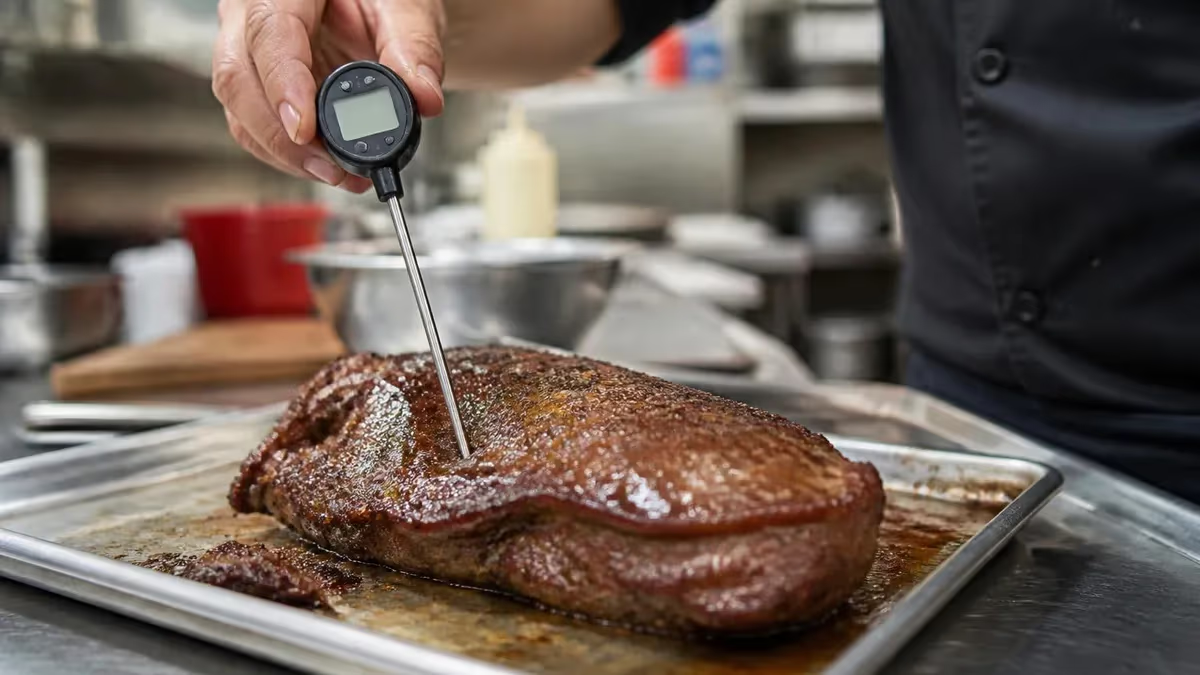
If you are preparing to become a certified food protection manager, the right servsafe manager exam questions are the single most valuable study tool you can use. The official servsafe exam contains 90 multiple-choice questions, but only 80 of them count toward your score, and you need to answer at least 75 percent correctly to earn your servsafe certification. Practicing with realistic questions before exam day helps you recognize the wording, the trick distractors, and the temperature and time numbers the test loves to ask about repeatedly.
The servsafe program, administered by the National Restaurant Association, is the most widely recognized food safety credential in the United States. Earning your servsafe manager certification proves that you understand foodborne illness prevention, time and temperature control, cross-contamination, personal hygiene, cleaning, sanitizing, and pest management. Most states and counties require at least one certified manager on site at every restaurant, so passing the exam is often a non-negotiable step before you can legally operate or be promoted into a supervisory role.
This page gives you free, accurate servsafe manager exam questions modeled on the real test blueprint. Each question mirrors the difficulty and format you will encounter at the testing center or during a proctored online session. You can also explore servsafe test prep resources that walk you through every domain step by step, so nothing on exam day catches you by surprise. Treat this practice as a diagnostic that reveals exactly where your knowledge gaps are.
One reason candidates fail is that they study the textbook but never practice under test conditions. The servsafe manager exam is timed, and many of the questions are scenario-based rather than simple recall. You will be asked what a manager should do in a specific situation, such as when a cook reports vomiting or when a delivery of fish arrives at the wrong temperature. Practicing with applied questions trains you to think like a manager, not just memorize a list of facts and numbers.
Throughout this guide you will find detailed explanations, a realistic exam-format breakdown, study checklists, and pros and cons of different preparation methods. We also link to topic-specific quizzes covering foodborne illness, personal hygiene, cross-contamination, and safe food handling so you can drill the exact areas where you feel weakest. The goal is simple: walk into your exam confident, calm, and fully prepared to pass on your very first attempt without paying for a costly retake.
Whether you are a brand-new line cook stepping up to a shift-lead position, a restaurant owner who must meet a local health code mandate, or a culinary student building credentials, this resource is built for you. Bookmark it, work through every question, and return until you are scoring above 85 percent consistently. That margin gives you a comfortable buffer above the 75 percent passing line and dramatically reduces the chance of an unpleasant surprise when your official results appear on screen.
ServSafe Manager Exam by the Numbers

ServSafe Manager Exam Format
| Section | Questions | Time | Weight | Notes |
|---|---|---|---|---|
| The Importance of Food Safety | 8 | 11 min | 10% | Cost of foodborne illness, manager duties |
| Forms of Contamination | 18 | 24 min | 23% | Pathogens, allergens, the Big 6 |
| The Safe Food Handler | 12 | 16 min | 15% | Hygiene, illness reporting, handwashing |
| Flow of Food (Purchasing to Service) | 26 | 34 min | 32% | Receiving, storage, cooking, holding |
| Cleaning, Sanitizing & Pest Control | 16 | 21 min | 20% | Sanitizer concentrations, facilities |
| Total | 90 | 2 hours | 100% |
The servsafe manager exam questions are drawn from a fixed blueprint, which means you can study strategically instead of randomly. Roughly one-third of the exam focuses on the flow of food, from purchasing and receiving through storage, preparation, cooking, holding, and service. This is the heaviest-weighted domain, so if you master correct receiving temperatures, minimum internal cooking temperatures, and safe cooling procedures, you immediately improve your odds. Candidates who score well almost always report that they over-prepared on the flow of food section specifically.
The second-largest domain is forms of contamination, which covers biological, chemical, and physical hazards. You must know the Big 6 pathogens that are so contagious they require exclusion from the establishment, plus the major food allergens and how cross-contact occurs. Many students underestimate this section because it feels like memorization, but the questions are often scenario-based. For example, you may be asked which pathogen is most associated with ready-to-eat foods touched by bare hands, or how to respond when a guest reports an allergic reaction.
Personal hygiene and the safe food handler domain test your understanding of when employees must wash hands, when they should be excluded or restricted from work, and which symptoms require reporting to a manager. If you want to drill this area specifically, the dedicated servsafe food handlers practice set covers the exact reporting rules and glove-use scenarios the exam emphasizes. Knowing the difference between exclusion and restriction is a frequent exam trap that catches unprepared candidates off guard.
Cleaning, sanitizing, and pest control rounds out the major content areas. Here you will face questions about proper sanitizer concentrations, such as the correct parts-per-million for chlorine solutions, the three-compartment sink washing sequence, and how to store chemicals safely away from food. Pest control questions usually focus on prevention through facility maintenance, proper trash handling, and recognizing signs of an infestation. These details are concrete and easy to memorize once you build a focused study list and review it daily for two weeks.
Finally, the importance of food safety domain frames the whole exam. It covers the financial and human cost of foodborne illness outbreaks, the legal responsibilities of a person in charge, and the role of an active managerial control system. While it is the smallest domain by question count, the concepts thread through every other section. Understanding why food safety matters helps you reason through scenario questions even when you are not certain of a specific number, because you can fall back on the underlying principle of protecting the guest.
Because the blueprint is public, you should allocate your study time in proportion to each domain's weight. Spend the most hours on flow of food and contamination, a solid block on hygiene and cleaning, and a quick review of the importance section. Practicing servsafe manager exam questions in the same proportion trains your brain to expect the test's emphasis, so you are never blindsided by a cluster of difficult questions in an area you barely reviewed the night before your appointment.
ServSafe Manager Practice Test Question Types
Recall questions test whether you have memorized specific food safety facts and numbers. A typical example asks for the minimum internal cooking temperature of poultry, which is 165 degrees Fahrenheit for 15 seconds. These questions are the easiest points on the exam if you have built solid flashcards for temperatures, times, and sanitizer concentrations. Roughly a third of the servsafe manager practice test falls into this category.
The danger with recall questions is overconfidence. Numbers like 41 degrees, 135 degrees, and 165 degrees are easy to confuse under pressure, especially when distractor answers are only a few degrees apart. Build a one-page temperature cheat sheet, review it every morning, and quiz yourself until the numbers are automatic. When you can answer these without hesitation, you free up mental energy for the harder scenario questions later in the exam.

Practice Tests vs. Reading the Textbook Alone
- +Practice questions reveal your weak domains before exam day
- +You learn the exact wording and trick distractors the test uses
- +Scenario drilling builds manager-level judgment, not just recall
- +Free questions let you study without extra cost
- +Immediate answers and explanations reinforce learning fast
- +Timed practice reduces test-day anxiety and pacing mistakes
- +Repeated quizzes push your score safely above 75 percent
- −Practice alone may skip rarely tested but important concepts
- −Low-quality question banks can teach outdated temperatures
- −Memorizing answers instead of reasoning leads to false confidence
- −No hands-on context for cleaning and sanitizing procedures
- −Some free sets lack detailed explanations for wrong answers
- −Over-relying on quizzes can crowd out textbook foundations
ServSafe Manager Exam Study Checklist
- ✓Memorize all minimum internal cooking temperatures and hold times
- ✓Learn the Big 6 highly contagious pathogens by name
- ✓Know the temperature danger zone of 41 to 135 degrees Fahrenheit
- ✓Master the two-stage cooling process and its time limits
- ✓Review the major food allergens and how cross-contact happens
- ✓Understand when to exclude versus restrict a sick employee
- ✓Memorize correct chlorine and quat sanitizer concentrations
- ✓Practice the three-compartment sink washing sequence
- ✓Study proper refrigerator storage order by cooking temperature
- ✓Take at least three full-length timed practice exams
- ✓Review every question you miss until you understand why
- ✓Aim for a consistent practice score above 85 percent
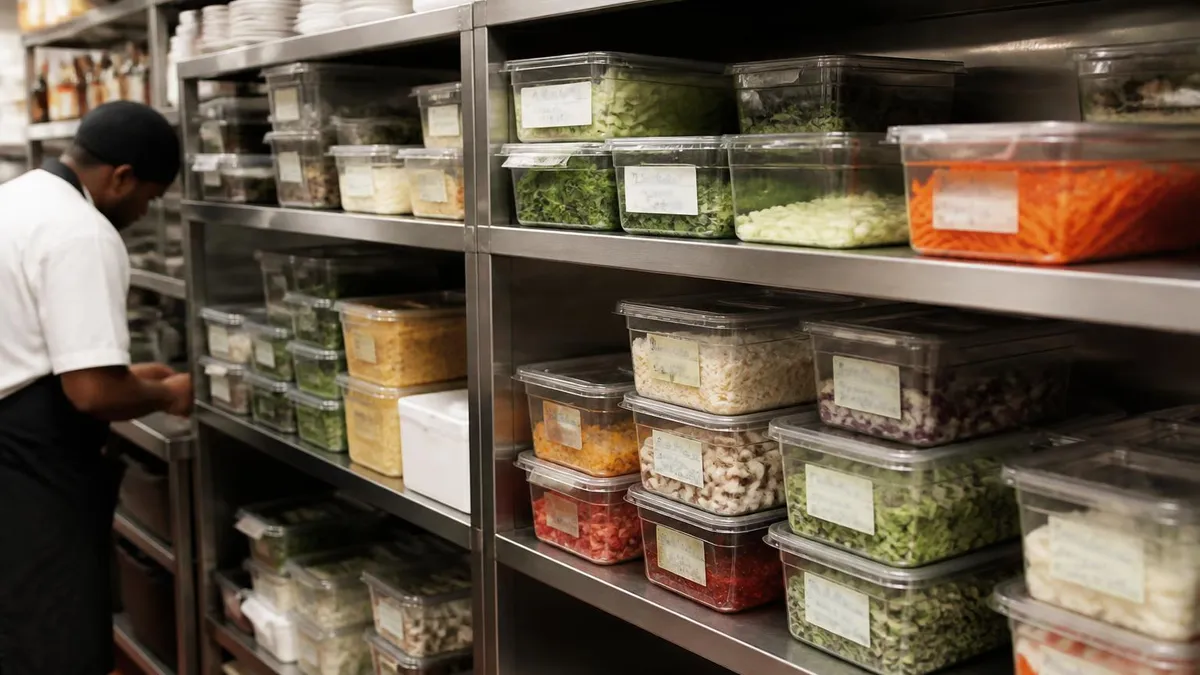
When in doubt, protect the guest
If a scenario question stumps you, choose the answer that most directly prevents a guest from getting sick. The servsafe exam is built around active managerial control, so the safest, most immediate corrective action is almost always the correct choice. This single principle can rescue several points when you are unsure of an exact temperature or rule.
Temperatures are the backbone of the servsafe manager exam, and memorizing them cold is the fastest way to lock in easy points. The temperature danger zone runs from 41 degrees to 135 degrees Fahrenheit, and food should not remain in that range for more than four cumulative hours. Within this zone, pathogens multiply rapidly, which is why managers must monitor receiving, storage, cooking, holding, and cooling so closely. Expect multiple questions that test whether you can identify when food has spent too long in the danger zone.
Minimum internal cooking temperatures appear on nearly every version of the exam. Poultry, stuffing, and dishes containing previously cooked ingredients must reach 165 degrees Fahrenheit for 15 seconds. Ground meat and injected meats must hit 155 degrees for 15 seconds. Seafood, steaks, chops, and eggs cooked for immediate service require 145 degrees for 15 seconds. Roasts can be cooked to 145 degrees but with longer hold times. Build a flashcard for each category and drill until you can recite them instantly without pausing to think.
Receiving temperatures are equally testable. Cold foods should be received at 41 degrees Fahrenheit or lower, while live shellfish and shell eggs have their own specific receiving rules. Hot food should be received at 135 degrees or higher. When you accept a delivery, you must reject any product that arrives outside these ranges, shows signs of thawing and refreezing, or has damaged packaging. The exam frequently presents a receiving scenario and asks whether you should accept or reject the shipment based on its measured temperature.
Cooling is one of the trickiest temperature topics, and it trips up many candidates. Cooked food must be cooled from 135 degrees to 70 degrees within two hours, and then from 70 degrees down to 41 degrees within an additional four hours, for a total of six hours. If the first stage takes longer than two hours, the food must be reheated and the cooling restarted or discarded. Memorize this two-stage rule precisely, because the exam loves to test the specific time limits and the consequence of missing the first benchmark.
Hot and cold holding temperatures round out your temperature knowledge. Cold food on display or in holding must stay at 41 degrees or below, and hot food must stay at 135 degrees or above. Reheating for hot holding requires reaching 165 degrees for 15 seconds within two hours. These numbers feel repetitive, but that repetition is your advantage. Because the same temperatures appear across receiving, cooking, holding, and reheating, mastering a single chart unlocks correct answers across the entire flow of food domain on your exam.
To make these numbers stick, write them on a single sheet and review it at the start and end of every study session for two weeks. Quiz yourself by covering the answers and reciting them aloud. The candidates who pass comfortably are almost always the ones who turned temperatures into automatic reflexes rather than facts they had to reconstruct under pressure. When the numbers are second nature, the entire exam becomes noticeably less stressful and far more manageable.
A common exam trap involves sick employees. Workers with vomiting, diarrhea, jaundice, or a diagnosed illness like Salmonella must be excluded from the establishment entirely. Workers with only a sore throat and fever may be restricted from working with food. Mixing these up costs easy points, so learn the symptom lists carefully before exam day.
Passing the servsafe manager exam on your first attempt comes down to disciplined preparation and smart test strategy. Start by giving yourself at least two to three weeks of consistent study, not a single cram session the night before. Spread your servsafe manager exam questions practice across multiple sessions so the material moves into long-term memory. Cramming may help you recall a few numbers briefly, but applied scenario questions require deeper understanding that only repeated, spaced practice can build over time.
Use a structured study order that matches the exam blueprint. Begin with the flow of food, since it carries the most weight, then move to contamination, hygiene, and cleaning. After each topic, take a short quiz to confirm you have absorbed the material before moving on. If you score below 80 percent on any topic quiz, stop and review that domain again. This checkpoint approach prevents weak spots from following you all the way to the official testing center on exam day.
If you are deciding between testing formats, you can compare in-person proctoring against remote proctoring through servsafe certification online options, which lets you sit the exam from home with a live proctor watching via webcam. Each format has the same questions and passing standard, so choose whichever environment helps you stay calm and focused. Some candidates concentrate better at a quiet testing center, while others prefer the comfort and familiarity of their own home setup.
On exam day, manage your time deliberately. You have two hours for 90 questions, which works out to more than a minute per question, so there is no need to rush. Read each stem completely before glancing at the answer choices, and watch for qualifier words like always, never, first, and best. These words frequently change the correct answer. If a question stumps you, flag it, choose your best guess, and move on, then return with fresh eyes once you have answered everything you know.
Eliminate obviously wrong answers to improve your odds on tough questions. Most servsafe items have at least one or two distractors that you can rule out immediately if you understand the underlying principle. Narrowing four choices down to two dramatically increases your chance of guessing correctly when you are genuinely unsure. Combine this with the protect-the-guest rule, and you can convert many shaky questions into points that push you safely above the 75 percent passing threshold.
Finally, take care of the basics that affect performance. Sleep well the night before, eat a real meal beforehand, and arrive or log in early so technical issues do not rattle you. Bring an accepted form of identification, because the proctor will verify it before unlocking your exam. A calm, rested, well-fed candidate who has practiced realistic questions consistently is the candidate who walks out certified. Preparation removes luck from the equation and replaces it with quiet, earned confidence.
Beyond the core content, a few practical habits separate candidates who barely pass from those who score in the nineties. The first is active recall. Instead of rereading the textbook, close it and try to write down everything you remember about a topic, then check what you missed. This effortful retrieval cements knowledge far better than passive review, and it mirrors what the exam actually demands, since you cannot look anything up during the timed proctored session.
The second habit is teaching the material to someone else, even an imaginary student. If you can explain why poultry must reach 165 degrees, why ready-to-eat food goes on the top shelf, or why a cook with jaundice must be excluded, you truly understand the concept rather than memorizing a fact. Coworkers preparing for the same certification make ideal study partners, and quizzing each other out loud surfaces gaps neither of you noticed while studying alone in silence.
Third, simulate the real exam at least once. Sit down with a full-length timed practice test, no notes, no phone, and a two-hour clock running. This dress rehearsal reveals pacing problems and shows you how mental fatigue affects accuracy in the final stretch. Many candidates discover they rush the last twenty questions, so practicing the full length teaches you to maintain focus and accuracy all the way through to the very last item on the test.
Fourth, keep an error log. Every time you miss a practice question, write down the topic, the correct answer, and the reason you got it wrong. Review this log before your exam. Patterns will emerge quickly, such as repeatedly confusing cooling times or sanitizer concentrations. Targeting your specific recurring mistakes is far more efficient than restudying everything, and it ensures you are not walking into the test with the same blind spots that tripped you during practice.
Fifth, pay attention to vocabulary. The servsafe exam uses precise terms like cross-contact, time-temperature abuse, corrective action, and person in charge. Misreading a single keyword can flip your answer from right to wrong. Make a glossary of these terms and their exact definitions, because the test writers choose words deliberately. Knowing that cross-contact refers specifically to allergens while cross-contamination is broader can be the difference on a tricky multiple-choice question worth a full point.
Finally, do not neglect the why behind the rules. When you understand that the danger zone exists because bacteria double roughly every twenty minutes in warm, moist, protein-rich food, the temperature rules stop feeling arbitrary. That deeper understanding lets you reason your way to correct answers on unfamiliar questions. Combine conceptual understanding with drilled numbers and realistic practice, and you give yourself the best possible chance of earning your servsafe manager certification on the very first try without a costly retake.
ServSafe Questions and Answers
ServSafe Certification by State: Acceptance and Rules Explained
ServSafe Promo Code 2026: Real Discounts (Not Coupon Scams)

ServSafe Certification Online 2026 — Cost, Time & How to Pass
ServSafe Manager Practice Test: Free 2026 Exam Prep

ServSafe Food Manager Certification: Complete Study Guide & Practice Test Prep
About the Author

Registered Sanitarian & Food Safety Certification Expert
Cornell University College of Agriculture and Life SciencesThomas Wright is a Registered Sanitarian and HACCP-certified food safety professional with a Bachelor of Science in Food Science from Cornell University. He has 17 years of experience in food safety auditing, regulatory compliance, and foodservice management training. Thomas prepares food industry professionals for ServSafe Manager, HACCP certification, and state food handler examinations.
Join the Discussion
Connect with other students preparing for this exam. Share tips, ask questions, and get advice from people who have been there.
View discussion (7 replies)