
ServSafe Manager Practice Test 2026 September: Free Questions & Certification Guide
Ace your ServSafe certification with free manager practice tests. Real exam questions, study tips & passing strategies. 🏆 Start practicing now!
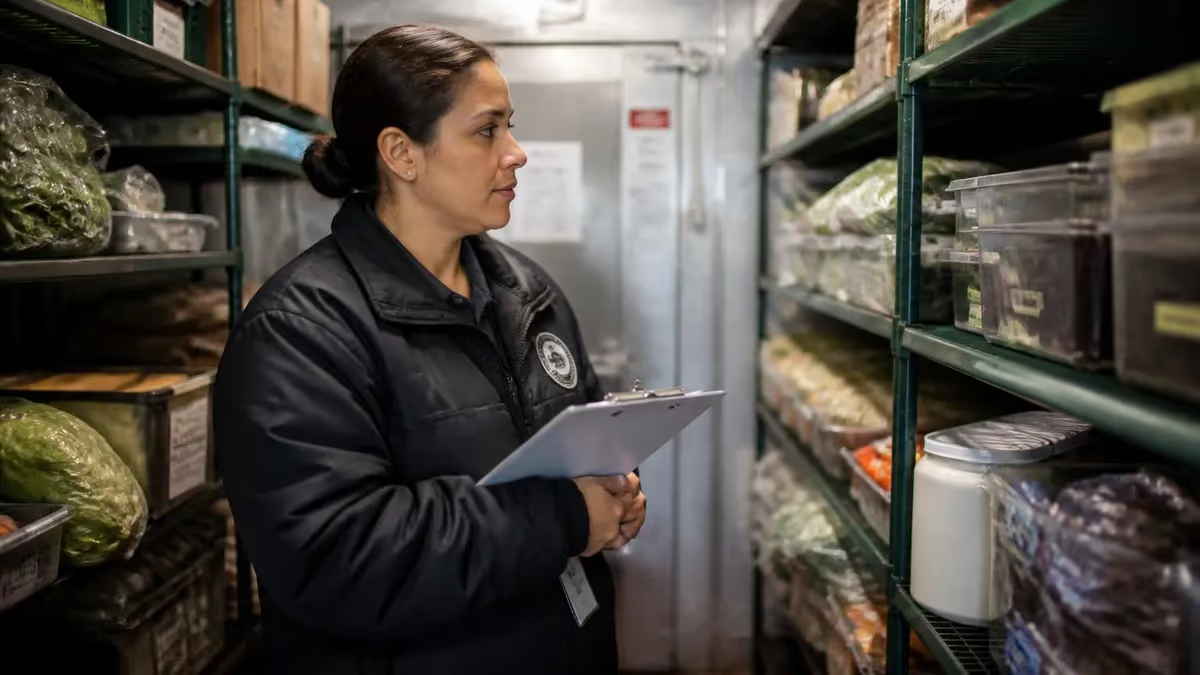
If you are preparing for the ServSafe Manager exam, using a dedicated manager ServSafe practice test 2023 or 2024 resource is the single most effective strategy you can adopt. The ServSafe certification is issued by the National Restaurant Association Educational Foundation (NRAEF) and is widely recognized across all 50 states as the gold standard for food safety management.
Whether you work in a restaurant, hotel, hospital cafeteria, or any other food-service environment, passing this exam demonstrates that you understand how to protect public health. Starting your prep with realistic practice questions will give you a clear picture of the exam format and the topics that carry the most weight.
The ServSafe Manager exam consists of 90 multiple-choice questions, and you must answer at least 75 percent of them correctly to earn a passing score of 70 or above on the scaled scoring system. That translates to roughly 56 correct answers out of 75 scored questions — 15 questions are unscored pilot items that the NRAEF uses to calibrate future exams.
Because you cannot identify which questions are pilot items, you must treat every single question as if it counts. Timed practice tests help you build the stamina and pacing skills needed to complete the full exam within the allotted two-hour window without rushing or second-guessing yourself.
The content spans eight major domains pulled directly from the FDA Food Code and other federal guidelines. These domains include the nature of foodborne illness, proper personal hygiene, time and temperature control, preventing cross-contamination, cleaning and sanitizing, safe facility design, pest control, and food safety management systems such as HACCP. Each domain carries a different question weight on the real exam, so knowing which areas contribute the most points lets you invest your study time where it matters most. Foodborne illness and temperature control together account for a substantial portion of the scored questions.
Using a quality servsafe com study resource alongside timed practice tests is the fastest path to certification. Many candidates underestimate the complexity of the ServSafe Manager exam because food safety concepts can seem like common sense. In reality, the exam tests precise regulatory thresholds — exact temperatures, specific time limits, and nuanced definitions — that require deliberate memorization. A candidate who relies solely on experience working in a kitchen will often miss questions about regulatory specifics, while a candidate who drills practice tests consistently can identify and close those knowledge gaps weeks before exam day.
One of the most powerful aspects of practice testing is the feedback loop it creates. When you miss a question, you have an opportunity to read the explanation, understand why your answer was wrong, and lock in the correct information through repetition.
Research in cognitive psychology consistently shows that retrieval practice — the act of pulling information from memory during a test — produces stronger long-term retention than re-reading notes or watching instructional videos alone. This means that every practice question you attempt, even when you answer incorrectly, is actively building the neural pathways that will serve you during the real exam.
ServSafe certification is required by law in many states, and employers in the food service industry increasingly prefer — or outright require — certified managers on every shift. The certification is valid for five years, after which you must retake the exam to maintain your credentials. Given the investment of time and the exam fee involved, it makes sense to walk in fully prepared rather than hoping to squeak past the passing threshold. Our free practice tests on PracticeTestGeeks cover every domain tested by the NRAEF and are updated regularly to reflect the current ServSafe Manager Study Guide, 7th Edition.
This guide will walk you through the full exam structure, the highest-yield study topics, proven test-taking strategies, and a realistic study schedule so you can approach exam day with genuine confidence. Whether you are taking the ServSafe Manager exam for the first time or retesting after a previous attempt, the resources and strategies below will help you earn your certification efficiently and on the first try.
ServSafe Manager Certification by the Numbers
ServSafe Manager Exam Format & Section Breakdown
| Section | Questions | Time | Weight | Notes |
|---|---|---|---|---|
| Providing Safe Food / Foodborne Illness | 15 | ~20 min | 20% | Highest-yield domain |
| Forms of Contamination | 12 | ~16 min | 16% | Biological, chemical, physical |
| The Safe Food Handler (Personal Hygiene) | 8 | ~11 min | 11% | Handwashing procedures, illness policies |
| Flow of Food: Purchasing Through Serving | 20 | ~27 min | 27% | Temperature control is key |
| Food Safety Management Systems (HACCP) | 10 | ~13 min | 13% | 7 HACCP principles |
| Safe Facilities, Pest Control & Cleaning | 10 | ~13 min | 13% | Sanitation procedures and PPE |
| Total | 90 | 2 hours | 100% |
Understanding which topics carry the most exam weight is the cornerstone of efficient ServSafe study. The flow of food — encompassing purchasing, receiving, storing, thawing, preparing, cooking, cooling, reheating, and serving — accounts for roughly 27 percent of the scored exam content.
This single domain covers more ground than any other section, which is why mastering temperature danger zone rules, minimum internal cooking temperatures, and proper cooling methods is absolutely non-negotiable. For example, most foods must be cooled from 135°F to 70°F within two hours, and then from 70°F to 41°F or below within an additional four hours, for a total cooling window of six hours.
Foodborne illness is the second-highest domain by question weight, contributing approximately 20 percent of scored items. You need to know the Big Six pathogens — Norovirus, Hepatitis A, Salmonella Typhi, E. coli O157:H7, Shigella spp., and Nontyphoidal Salmonella — including their sources, symptoms, and control measures. The exam will test whether you can identify which pathogen is associated with a given symptom cluster or contamination scenario. For instance, Norovirus is the leading cause of foodborne illness in the United States and spreads primarily through the fecal-oral route, making handwashing and employee health policies your primary control tools against it.
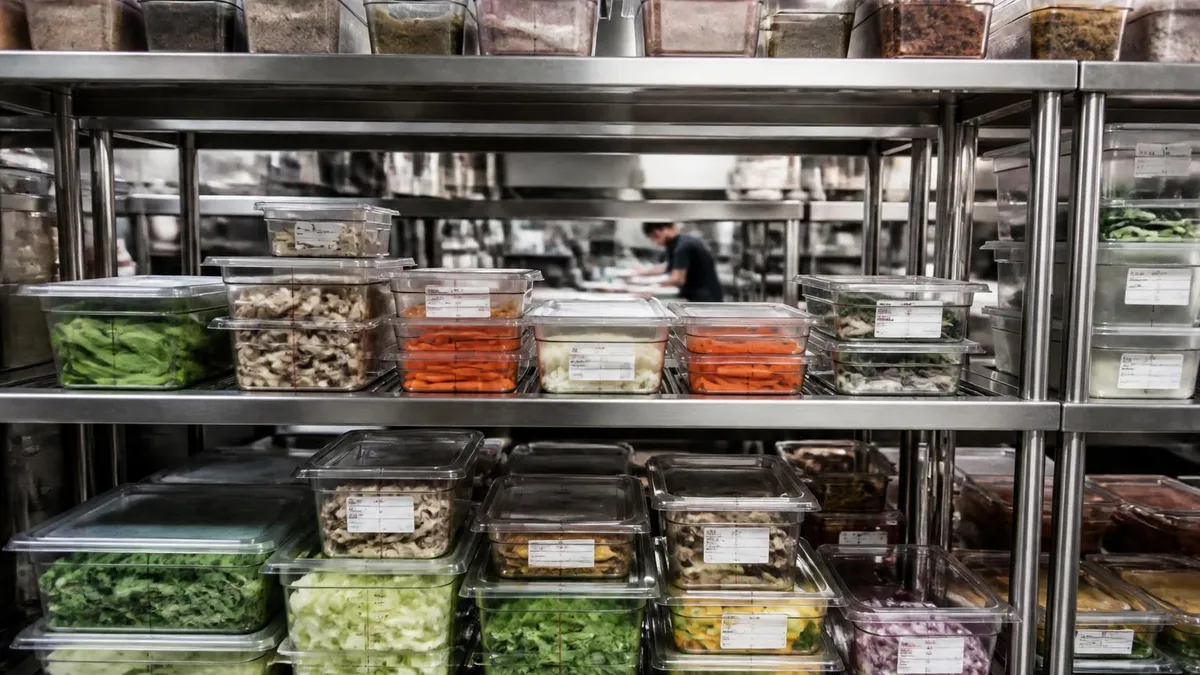
Contamination prevention accounts for 16 percent of exam content and overlaps significantly with the flow-of-food domain. This section covers biological, chemical, and physical contamination, as well as the specific practices that prevent cross-contamination between raw and ready-to-eat foods. Color-coded cutting board systems, proper storage order in refrigerators (raw poultry on the bottom shelf, ground meats above it, whole cuts above ground meats, and ready-to-eat foods on the top shelf), and handwashing protocols between tasks are all frequently tested scenarios. Understanding the servsafe food protection manager certification content helps reinforce these contamination prevention principles.
The HACCP (Hazard Analysis and Critical Control Points) system is tested as a standalone domain worth about 13 percent of the exam. You must be able to name and explain all seven HACCP principles in order: conduct a hazard analysis, determine critical control points, establish critical limits, establish monitoring procedures, establish corrective actions, establish verification procedures, and establish record-keeping and documentation procedures.
The exam frequently presents scenario-based questions where you must identify which HACCP principle is being violated or applied. Understanding that HACCP is a proactive, science-based system — not a reactive one — is essential for answering these questions correctly.
Cleaning and sanitizing, along with safe facility design and pest control, rounds out the remaining 13 percent of exam content. Many candidates overlook this section during study, but it contains precise definitions that frequently appear as trap answers.
The exam distinguishes sharply between cleaning (removing visible dirt and food residue) and sanitizing (reducing pathogens to safe levels). You must know the correct concentration ranges for chemical sanitizers: chlorine solutions should be between 50 and 100 parts per million (ppm), iodine solutions between 12.5 and 25 ppm, and quaternary ammonium compounds (quats) between 200 and 400 ppm. Mixing these up is a common and costly mistake on the real exam.
Personal hygiene questions test your knowledge of when employees must wash hands (after using the restroom, before handling food, after handling raw meat, after touching the face or hair, after taking out trash, and after handling chemicals, among other scenarios), the correct handwashing procedure (wet, lather with soap for at least 20 seconds, scrub, rinse, dry with a single-use towel), and the circumstances under which an employee must be excluded from the food service operation versus when they may be restricted from certain tasks.
The distinction between exclusion and restriction is a high-frequency exam topic that trips up many candidates who have not reviewed it carefully. Referencing servsafe food manager certification study materials will deepen your understanding of these administrative and hygiene policies.
Food allergen awareness has become an increasingly prominent topic in recent ServSafe exam editions. The eight major food allergens recognized by the FDA are milk, eggs, fish, shellfish (crustaceans), tree nuts, peanuts, wheat, and soybeans. A ninth allergen, sesame, was added to the federal list in 2023 under the FASTER Act.
The exam may test whether you know how to respond when a guest informs your staff of an allergy, how to prevent cross-contact (which differs from cross-contamination in that no heat kills allergen proteins), and what information must be disclosed on menus or packaging. Building comfort with allergen scenarios will give you a meaningful edge on the more nuanced questions in this domain.
ServSafe Manager Practice Test: Study Strategies by Learning Style
Visual learners benefit enormously from temperature charts, flow diagrams, and color-coded storage order graphics. Create a one-page reference sheet listing every critical temperature threshold — 41°F (cold holding), 70°F (cooling checkpoint), 135°F (hot holding), 145°F (fish and whole cuts), 155°F (ground meats), 165°F (poultry and reheated items) — and post it where you study daily. Mapping the flow of food as a physical diagram from receiving dock to guest plate helps you visualize contamination risks at each step.
Flashcard apps like Anki are particularly powerful for visual learners because spaced repetition surfaces cards you struggle with more frequently. Create one card per temperature threshold, one per pathogen, and one per sanitizer concentration range. After two weeks of daily review, these numbers will feel automatic. Use color-coding in your physical notes — red for danger zone temperatures, green for safe holding temperatures — to make the information stick faster and reduce the time you spend searching your memory during the timed exam.

ServSafe Manager Certification: Is It Worth the Investment?
- +Nationally recognized credential accepted by health departments in all 50 states
- +Required by law in many states and local jurisdictions for food service managers
- +Increases earning potential — certified managers earn higher average salaries than uncertified peers
- +Valid for five years, providing long-term career value from a one-time exam investment
- +Builds genuine food safety knowledge that protects your customers, staff, and business
- +Demonstrates professional commitment and improves promotion prospects within the food service industry
- −Exam fee of approximately $36 to $75 depending on the proctoring format and provider
- −Requires dedicated study time — most candidates need four to eight weeks of consistent preparation
- −Must be retaken every five years, creating recurring cost and time requirements
- −Exam covers extensive regulatory detail that goes well beyond typical on-the-job experience
- −Some states require additional local certifications on top of ServSafe, adding further complexity
- −Failure results in a waiting period before retesting, potentially delaying employment or promotion timelines
ServSafe Manager Exam Preparation Checklist
- ✓Obtain or access the ServSafe Manager Study Guide, 7th Edition, as your primary reference text.
- ✓Complete at least three full-length, timed ServSafe Manager practice tests before exam day.
- ✓Memorize all critical internal cooking temperatures for each food category.
- ✓Master the two-stage cooling method: 135°F to 70°F in 2 hours, then to 41°F in 4 more hours.
- ✓Know the Big Six pathogens, their sources, symptoms, and primary control measures.
- ✓Study all seven HACCP principles and be able to apply them to scenario-based questions.
- ✓Review correct sanitizer concentrations for chlorine, iodine, and quaternary ammonium compounds.
- ✓Practice the employee exclusion vs. restriction distinction for all illness scenarios.
- ✓Memorize all nine major food allergens including sesame added under the 2023 FASTER Act.
- ✓Schedule your exam at an official NRAEF-approved testing site and arrive 15 minutes early.

41°F to 135°F Is the Zone Where Bacteria Multiply Fastest
Bacteria double in number approximately every 20 minutes when food remains between 41°F and 135°F — the temperature danger zone. Foods held in this range for a cumulative total of four or more hours must be discarded, not just reheated. This single rule explains more ServSafe exam questions than any other concept, making temperature control mastery your highest-return study investment.
Effective test-taking strategy on the ServSafe Manager exam begins with a disciplined approach to reading every question and all four answer choices before selecting your response. The exam frequently uses answer choices that are partially correct or that apply to different scenarios than the one described in the question stem.
A common trap is pairing a true food safety statement with an incorrect context — for example, stating that a food must be reheated to 165°F is true for some foods (poultry, stuffed items, casseroles) but not for all foods. Reading the question carefully to identify exactly which food, which situation, or which regulation is being referenced prevents these traps from costing you points.
Time management during the ServSafe exam is critical. With 90 questions and a two-hour window, you have approximately 80 seconds per question. Most questions can be answered in 30 to 45 seconds if you know the material well, which means you will have surplus time for the longer scenario-based questions that require careful reading.
A practical strategy is to move through the exam at a steady pace, mark any question you are uncertain about, and return to those marked questions after completing the full first pass. This prevents one difficult question from consuming time that would otherwise be used on five easier ones.
The ServSafe Manager exam uses a scaled scoring system rather than a raw percentage. The NRAEF converts your raw score to a scale of 0 to 100, with 70 being the passing threshold. This means that the difficulty of the specific exam version you receive is accounted for in your final score. If your version included unusually difficult questions, the scaling algorithm adjusts upward slightly. However, this scaling should never be treated as a safety net — the vast majority of candidates who fail do so because of inadequate preparation in specific domains, not because of unlucky question selection.
One of the most overlooked aspects of ServSafe exam preparation is familiarity with regulatory language. The exam is written in formal, precise regulatory terminology that differs from everyday kitchen vocabulary. For example, the exam uses the term "time-temperature abuse" rather than "leaving food out too long," and it refers to "ready-to-eat foods" as a specific regulatory category that includes cooked foods, washed produce, and foods that will not receive additional heat treatment.
Candidates who study using informal language often struggle to match their knowledge to the answer choices, even when they understand the underlying concept. Practicing with official ServSafe vocabulary from the study guide and official practice exams closes this gap quickly.
Scenario-based questions, which make up a significant portion of the manager-level exam, test your ability to apply principles rather than simply recall facts. A typical scenario question might describe a food handler who comes to work with vomiting and diarrhea and ask what action the manager must take.
The correct answer is to exclude the employee from the operation entirely (not just restrict them from handling food), because vomiting and diarrhea are symptoms associated with the Big Six pathogens that can be transmitted through food. Getting these scenario questions right requires understanding not just the facts, but the reasoning behind the regulatory rules — which is exactly what practice tests with detailed explanations teach you to do.
Managing test anxiety is a practical component of exam preparation that candidates rarely discuss but frequently need. Arriving at the testing center having already simulated the exact exam conditions — 90 questions, a two-hour timer, no access to notes or phones — dramatically reduces the novelty and stress of the real experience.
Candidates who have completed three or more full-length timed practice tests report significantly lower anxiety on exam day because the experience feels familiar rather than daunting. Pair this familiarity with adequate sleep in the nights leading up to the exam and a light meal on exam morning, and you will perform at the level your preparation deserves.
Reviewing the servsafe manager certification online material covering cleaning agents, sanitizer types, and surface treatments is an area where many candidates pick up easy points that they might otherwise leave on the table. This content is systematic and learnable in a short amount of time, making it one of the best return-on-investment study topics in the final days before your exam. Understanding the difference between a cleaner, a sanitizer, and a disinfectant — and when each is appropriate — positions you to answer a cluster of related questions with confidence.
You must bring a valid, government-issued photo ID to your ServSafe Manager exam appointment. Exams administered through a proctor require pre-registration through the official NRAEF system, and walk-in seating is typically not available. If you miss your scheduled appointment without canceling in advance, you may forfeit your exam fee. Verify your testing site's specific requirements at least one week before your scheduled exam date.
Once you pass the ServSafe Manager exam, the path to receiving and using your certification involves a few important administrative steps that every new certificate holder should understand. Your certificate is issued by the NRAEF, and the official document — rather than a simple score report — is what you will present to your employer and, in some jurisdictions, to your local health department.
The certificate includes your name, the date of certification, and an expiration date exactly five years from the date you passed the exam. Keep a digital scan of your certificate in a secure location so you have a backup if the physical document is lost or damaged.
Many states require that a certified food protection manager be present or on-call during all hours of food service operation, which means your employer may need you to submit a copy of your certificate to their HR file and potentially to the health department. Requirements vary significantly by state and even by county, so it is important to research the specific regulations that apply to your jurisdiction. Your local health department website or the NRAEF's regulatory database can help you identify exactly what is required in your area. Some municipalities accept any ANSI-accredited certification, while others specifically mandate ServSafe.
The renewal process for ServSafe Manager certification requires retaking the full 90-question exam — there is no abbreviated renewal option. The NRAEF recommends beginning your renewal preparation at least eight weeks before your certification expiration date to ensure you have adequate time to study, schedule an exam, and receive your new certificate without a gap in your credentials. Many food service employers will cover the cost of the exam as part of continuing education benefits, so check with your human resources department before paying out of pocket.
For managers who want to expand beyond the core food safety credential, the ServSafe program offers several specialized certifications. ServSafe Alcohol certification covers responsible alcohol service and is required by many state alcohol control boards for anyone who serves or manages the service of alcoholic beverages. ServSafe Food Handler certification is a more basic credential appropriate for frontline employees rather than managers. These additional certifications can strengthen your professional profile and may open doors to management roles in establishments that serve alcohol or operate multiple food service concepts.
Understanding how your ServSafe Manager certification fits into the broader landscape of food safety regulation helps you use the credential effectively throughout your career. The Food Safety Modernization Act (FSMA), signed into law in 2011, shifted federal food safety policy from a reactive model focused on responding to outbreaks toward a proactive model focused on preventing contamination before it occurs.
The HACCP principles tested on the ServSafe Manager exam align directly with this preventive philosophy, which means your certification signals to employers, regulators, and customers that your establishment is operated by someone who understands modern food safety science — not just traditional kitchen practices.
If your role involves managing a large food service operation, a school cafeteria, or a healthcare foodservice department, your servsafe food manager certification may also be a prerequisite for obtaining or renewing certain federal contracts or accreditations. The Joint Commission, which accredits healthcare organizations, looks favorably on certified food protection managers in hospital and long-term care foodservice operations. Similarly, school districts participating in the National School Lunch Program may require certified managers as part of their USDA compliance obligations. Understanding these downstream requirements reinforces the value of investing seriously in exam preparation rather than viewing the certification as a formality.
The five-year validity window of your ServSafe Manager certification gives you time to build deep operational expertise and to stay current with any regulatory updates that may be incorporated into future exam versions. The NRAEF periodically updates the ServSafe curriculum to reflect changes in FDA Food Code interpretations, emerging pathogens, and new food service technologies. Staying engaged with industry publications and attending local health department food safety workshops during your certification period will make your renewal exam significantly easier and will keep your day-to-day management practices aligned with current best practices in food protection.
In the final two weeks before your ServSafe Manager exam, your preparation strategy should shift from broad content review to targeted reinforcement of your weakest domains. Pull up your practice test results and sort your incorrect answers by category.
If you are consistently missing questions about cooling procedures or sanitizer concentrations, dedicate focused daily review sessions to those specific topics rather than re-reading chapters you have already mastered. This targeted approach maximizes the impact of limited study time and prevents the frustrating experience of arriving at the exam still uncertain about the same concepts that tripped you up three weeks earlier.
One highly effective final-week technique is to practice writing out key frameworks from memory without any reference materials. Draw the temperature danger zone on a blank piece of paper, write out all seven HACCP principles in order, list the Big Six pathogens with their associated illnesses, and write out the two-stage cooling process with exact time and temperature parameters.
If you can reproduce all of this information accurately from memory with no prompts, you are ready to answer the exam questions that test these concepts in scenario format. If you hesitate or make errors, you have identified exactly where to focus your final review sessions.
Sleep is an often-underestimated component of exam performance. Memory consolidation — the brain's process of transferring information from short-term to long-term storage — occurs primarily during sleep, particularly during the slow-wave and REM sleep stages. Pulling an all-nighter before the ServSafe exam is counterproductive because it deprives your brain of the consolidation time it needs to make recently studied information reliably retrievable. Instead, maintain a consistent sleep schedule throughout your study period and prioritize a full seven to nine hours of sleep in the two nights immediately before your exam.
On the morning of your ServSafe Manager exam, eat a balanced meal that will sustain your focus and energy for the full two-hour test period. Foods high in refined sugar cause energy spikes followed by crashes that can impair concentration during the second half of the exam. Opt for foods with steady energy release: whole grains, protein, and healthy fats.
Arrive at the testing location at least 15 minutes early to complete check-in procedures without rushing. Bring your photo ID, your registration confirmation, and a pen or pencil if the testing site uses paper-based administration, which is the format for most ServSafe Manager exams.
During the exam itself, trust the preparation you have done and resist the urge to overthink questions. The ServSafe Manager exam is written to test practical food safety knowledge, and the correct answers are almost always consistent with the principles you studied rather than obscure edge cases or trick wording. When two answer choices seem equally correct, identify which one is more complete, more specific, or more directly responsive to the scenario described in the question stem. Broad generalizations tend to be less correct than precise, specific answers in regulatory exams where exact thresholds and defined procedures matter.
After completing your exam, you will typically receive a preliminary score on the same day if you are taking the paper-based version through an instructor or proctor. Official score reports and certificate requests are processed through the NRAEF system, and your certificate will arrive by mail or become available for download within a few weeks of your exam date.
If you did not pass, your score report will include a domain-by-domain breakdown that identifies which areas you need to study before retesting. Use this feedback exactly as you would use practice test results — as a precise, data-driven roadmap for your next round of preparation.
PracticeTestGeeks is committed to providing the highest-quality free ServSafe Manager practice tests available online. Our question bank is developed by food safety experts and updated to reflect the current ServSafe Manager Study Guide, 7th Edition. Every question includes a detailed explanation of the correct answer and why the distractors are wrong, giving you the feedback loop you need to build true mastery rather than simple familiarity. Bookmark this page, work through every practice quiz we offer, and approach your exam day knowing that you have done the preparation that consistently separates first-time passers from repeat test-takers.
ServSafe Questions and Answers

ServSafe Administrative — Complete Guide (2026)

ServSafe Cleaning Agents: Which Cleaning Agent Best Removes Baked-On Food?

Which Is an Example of Possible Chemical Contamination ServSafe: Complete Guide

ServSafe Personal Hygiene: What Is the Step in Practicing Correct Personal Hygiene?

How to Print Your ServSafe Certificate: Complete Step-by-Step Guide
About the Author

Attorney & Bar Exam Preparation Specialist
Yale Law SchoolJames R. Hargrove is a practicing attorney and legal educator with a Juris Doctor from Yale Law School and an LLM in Constitutional Law. With over a decade of experience coaching bar exam candidates across multiple jurisdictions, he specializes in MBE strategy, state-specific essay preparation, and multistate performance test techniques.
Join the Discussion
Connect with other students preparing for this exam. Share tips, ask questions, and get advice from people who have been there.
View discussion (7 replies)