
ServSafe Knowledge Questions: Core Concepts You Have to Lock In 2026 September
✏️ ServSafe knowledge questions explained: temperature danger zone, 3-compartment sink, thermometer calibration, consumer advisory, food defense
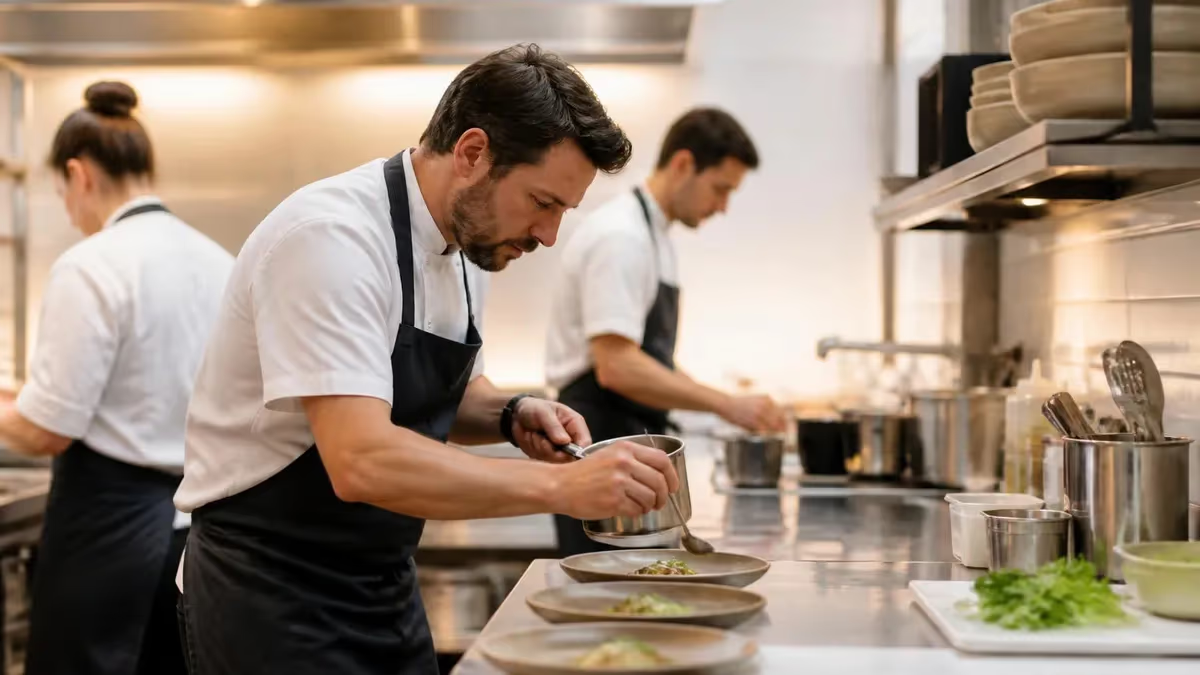
Most candidates who fail the ServSafe Manager exam don't fail because the material is hard — they fail because the question wording sounds harder than it is. The exam likes to dress a simple food-safety rule in a story about a delivery truck or a stainless-steel prep table, and if you only memorised the rule in the abstract you'll second-guess yourself on the day.
That's why the smarter prep route is to learn the concepts behind the questions: temperature danger zone, three-compartment sink procedure, thermometer calibration, consumer advisory triggers, food defense, non-food-contact surface rules, jewelry and acrylic nails, and the umbrella idea of active managerial control. Get those right and the wording stops mattering.
This guide doesn't dump a list of correct answers. It walks through the core knowledge areas the exam circles back to, in plain language, with the numbers and procedures you have to recall under pressure. Some of it overlaps — temperature shows up in transport, in storage, in cooking, in cooling, in holding — and that's by design. The practice tests whether you can apply one rule across many situations. Read this with that in mind: a concept locked in once, recognised in any disguise.
One quick note before we start. ServSafe updates its Manager textbook on a multi-year cycle, and the 9th Edition (used through 2026) keeps the temperature ranges and the three-compartment sink steps you'll see below. The Coursebook chapter numbers shift between editions, but the rules themselves are stable. If a practice question quotes a slightly different number, check it against the current edition you actually paid for — never trust a forum screenshot over your textbook.
You can continue preparing with the servsafe manager practice test free, which includes answer explanations for every question.
You can continue preparing with the safe serve practice test, which includes answer explanations for every question.
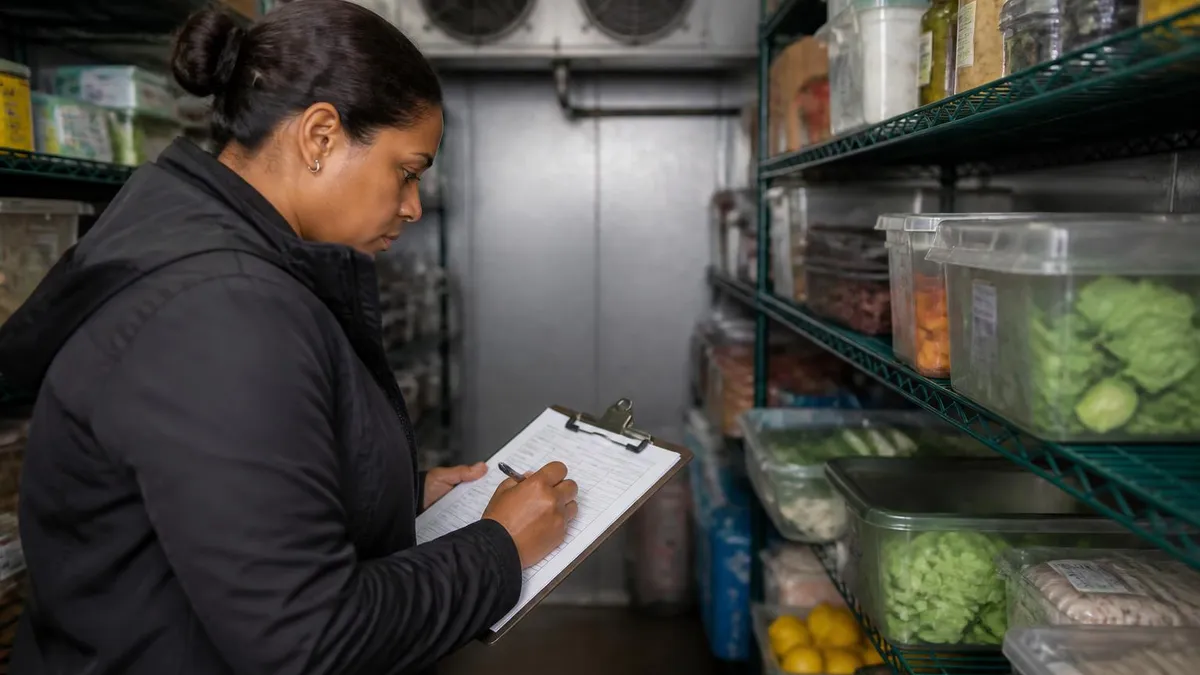
ServSafe Numbers You Have to Memorise
Start with temperature, because more than a third of the Manager exam questions hinge on it. The temperature danger zone (TDZ) runs from 41°F to 135°F. Inside that window, bacteria like Salmonella, Listeria, and E. coli roughly double every twenty minutes. Outside it, growth slows enough to keep food safe for short stretches.
The exam rarely asks you to recite the range — it asks you to apply it. A delivery driver leaves cold milk in a 70°F truck cab for an hour; what's the corrective action? You need to know the milk is now inside the TDZ and the four-hour cumulative clock has started.
That cumulative clock is the next concept candidates miss. ServSafe doesn't reset the timer when food moves between coolers and prep tables. If chicken sits at 50°F for an hour during prep and then another two hours on a buffet, that's three hours of TDZ exposure, and you have one hour left.
Hit the four-hour cap and the food has to be discarded — not reheated, not rapid-chilled, not maybe it's fine if it smells okay. Discarded. The exam loves a question where you add up the time-in-zone across two or three stages and see whether the candidate catches the total.
For cooling hot food, the rule is two-stage and equally strict: from 135°F to 70°F within 2 hours, then from 70°F to 41°F or lower within another 4 hours — six hours total, but the first two hours are non-negotiable. Miss the 2-hour mark and the food's done. You'll see this on the exam phrased as "a cook tried to cool a stockpot of chili overnight in the walk-in," which is a wrong move because a deep pot can't get out of the danger zone fast enough without active cooling (ice paddles, shallow pans, an ice bath).
41°F to 135°F — the temperature danger zone. Bacteria multiply fastest in this window.
4 hours — maximum cumulative time TCS food can spend in the danger zone before it must be discarded. Time doesn't reset between stages.
135 → 70 in 2 hours, 70 → 41 in 4 more hours — the two-stage cooling rule. Six hours total, but missing the first stage means the food is done.
Transport rule: pre-cool the vehicle, load cold food last, and check temps with a calibrated thermometer at the receiving end.
Transport adds another layer. The classic exam question — to prevent time-temperature abuse when transporting food — is really three rules in a trench coat. First, pre-cool the delivery vehicle so the cargo space hits the right temperature before the food goes in. Second, schedule the route so cold loads spend as little time as possible at ambient.
Third, verify on arrival with a calibrated thermometer rather than trusting the truck's dashboard read-out. The exam likes to offer a tempting wrong answer along the lines of "trust the supplier's temperature label" — that's not enough. You verify, every delivery, with your own tool.
Storage runs on the same TDZ math, dressed differently. Walk-in refrigerators should hold TCS food at 41°F or below. Freezers should keep food frozen solid — not partially frozen, which means the unit is failing. How often should a walk-in refrigerator be cleaned?
The textbook answer is when needed and on a regular schedule, but in practical exam terms: shelves, gaskets, and drip pans get weekly attention, while a full deep clean (everything out, walls and floor scrubbed) is at least monthly. ServSafe doesn't pin you to a single number — it asks whether you understand the principle of cleaning before contamination is visible, not after.
Storage order matters too. From top to bottom: ready-to-eat food, then seafood, then whole cuts of beef and pork, then ground meat, then poultry on the bottom shelf. The logic is cooking temperature: foods that require the highest internal cooking temperature go lowest, so their juices can't drip onto food that won't be cooked as hot. You'll see this question phrased a dozen ways, and the answer never changes.
ServSafe Knowledge Pillars
Anything in the 41-135°F window is being abused. The four-hour cumulative cap and two-stage cooling rule cover most exam scenarios across receiving, storage, prep, cooking, holding, and transport.
- ▸TDZ: 41°F to 135°F
- ▸4-hour cumulative discard limit
- ▸Cooling: 135 → 70 in 2hrs, 70 → 41 in 4hrs
- ▸Pre-cool transport vehicles before loading
Three-compartment sink procedure (wash, rinse, sanitise, air-dry) plus surface-by-surface rules for food-contact and non-food-contact items. Sanitiser concentration is tested on most exam papers.
- ▸Wash → rinse → sanitise → air-dry
- ▸Test strips check sanitiser strength
- ▸Non-food-contact surfaces still need a schedule
- ▸Wiping cloths kept in sanitiser between uses
What staff can wear and do on the line: jewelry limits, fingernail rules, illness reporting, glove use. The exam tests whether you can spot a violation in a worked example, not just recite the rule.
- ▸Acceptable jewelry: plain wedding band only
- ▸No acrylic nails (or wear single-use gloves)
- ▸Report Big 6 illnesses to person in charge
- ▸Wash hands before gloving, not in place of gloving
Active managerial control, food defense, consumer advisories, and HACCP-style thinking. These show up as situational questions where the candidate has to pick the system-level response over the one-off fix.
- ▸Active managerial control: prevent, don't react
- ▸Food defense system: ALERT framework
- ▸Consumer advisory for undercooked items
- ▸Manager ServSafe template logs the controls
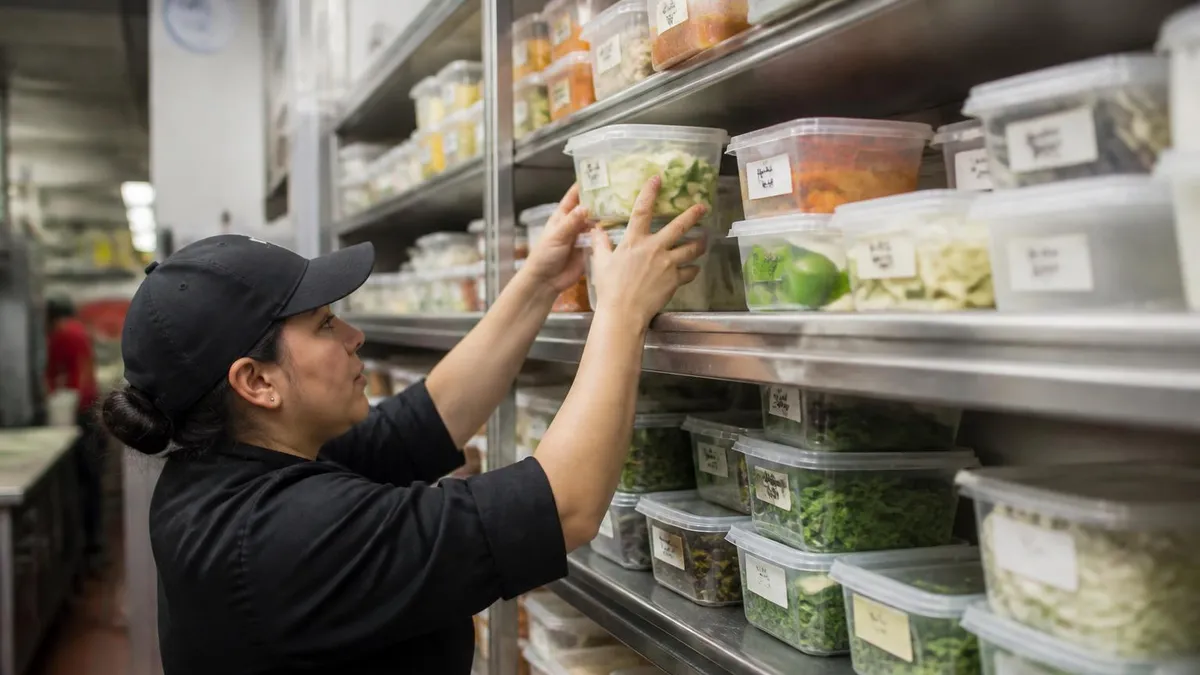
Move on to the three-compartment sink. When washing tableware in a three-compartment sink, the order is fixed: wash, rinse, sanitise, air-dry. Compartment one holds detergent water at 110°F or hotter. Compartment two is clean rinse water. Compartment three holds sanitiser — chlorine, quaternary ammonium, or iodine, each with its own concentration and contact-time spec. After the third dip, items go onto a clean rack to air-dry. Towel-drying is a wrong answer no matter how the question is phrased; the moisture and lint from the towel re-contaminate what you just sanitised.
Each step has a verification check. Wash water gets refreshed when it's visibly dirty or cool. Sanitiser strength is checked with test strips at the start of every shift and any time the load changes — the exam likes to ask which tool verifies sanitiser concentration, and the answer is always test strips, never a thermometer. Air-dry means a fully drained rack with airflow, not a pile of plates stacking water in the middle. Miss any of those and the dishes go back through.
Surface rules differ by use. A non-food-contact surface — the side of a steam table, the legs of a prep table, the inside of a door handle — needs to be smooth, non-absorbent, and cleaned on a posted schedule. It doesn't need sanitising on the same cadence as a food-contact surface, but it can't be neglected either. Food-contact surfaces get cleaned and sanitised every four hours of continuous use, after raw-protein handling, after spills, and at every shift change. The exam tests whether you know the difference between the two categories rather than the exact minute-by-minute clock.
Three-Compartment Sink: Step by Step
Compartment one. Hot water (at least 110°F) plus the correct detergent for the load. Scrape and pre-rinse heavy soil off items first so the wash water stays effective. Change the water when it cools below 110°F or looks visibly dirty, whichever comes first.
Thermometers are the second silent test. How to calibrate a thermometer — the exam expects you to know two methods. The ice-point method fills a glass with crushed ice and a splash of water, lets it stabilise, then submerges the probe (not touching the sides) until the reading settles. A calibrated thermometer reads 32°F. If yours doesn't, adjust the calibration nut on a dial bi-metal thermometer or hit the reset on a digital one. The boiling-point method works at sea level: a calibrated probe in boiling water reads 212°F. Adjust by elevation if you're working at altitude.
Calibration happens before each shift, after any drop, and any time the reading looks off. The Manager exam frames this as a knowledge question and a procedure question — you might be asked which tool calibrates the thermometer (a glass of ice water), or what the reading should be (32°F), or how often you check (at least daily and after impact). All three answers come from the same concept.
Now to the chemicals. How should chemicals be stored? Always in their original labelled containers, in a separate area away from food and food-contact surfaces, and always below any food storage to prevent leak contamination. Working bottles need labels that name the chemical even when it's been decanted, and they get stored locked or in a designated cabinet at the end of the shift.
Cleaning chemicals never share a shelf with food, food-prep tools, or single-use packaging — that's a violation in every jurisdiction. Trash and recyclables follow the same separation principle: covered, away from food, taken out before they overflow, on a schedule rather than at the moment a cook complains about the smell.
Hand sanitiser is not a substitute for handwashing. Wash hands with soap and warm water; sanitiser comes after, not instead.
Smelling or tasting food doesn't verify safety. Pathogens don't change smell or flavour. The exam loves this trap.
Towel-drying after sanitising re-contaminates surfaces. Always air-dry, no exceptions.
The four-hour clock is cumulative. Don't reset it when food moves between stations.
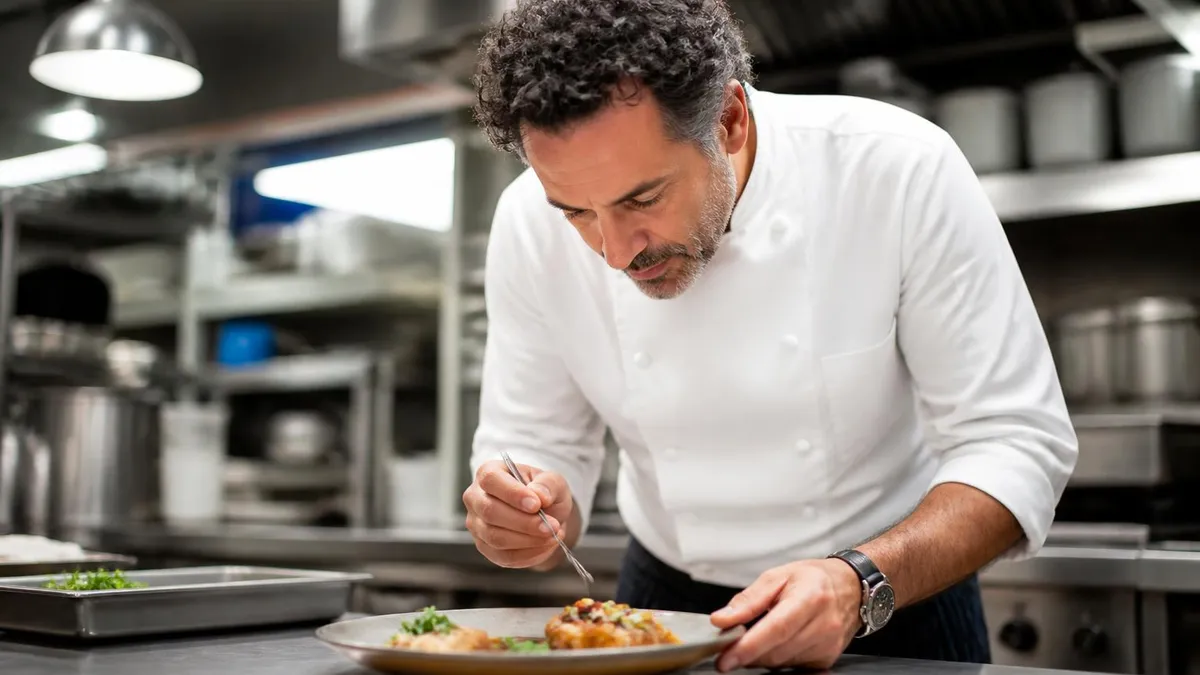
Personal hygiene questions come at you sideways. The exam will describe a line cook in detail — what they're wearing, what's on their hands — and ask you to spot the violation. The acceptable jewelry rule is the one most candidates trip on: only a plain wedding band is allowed. No watches, no bracelets, no rings with stones, no medical alert necklaces tucked under the collar. Anything with a crevice can trap food debris and bacteria, and anything that can fall off (a stone, a charm) is a physical hazard.
Fingernails are the other classic question. Nails stay short, clean, and unpolished. Acrylic nails aren't outright banned, but if a worker has them they must wear single-use gloves whenever handling food. Same with nail polish — it's discouraged because chips become physical hazards. The exam's framing here is usually "a worker with acrylic nails wants to make a salad — what's the corrective action?" The answer is to put on gloves, not to send them home.
Illness reporting follows the FDA's Big 6 list: Norovirus, Hepatitis A, Shigella, Shiga-toxin-producing E. coli (STEC), Salmonella Typhi, and nontyphoidal Salmonella. A staff member with any of these — or with symptoms like vomiting, diarrhoea, jaundice, sore throat with fever, or an infected open wound — must be reported to the person in charge and excluded or restricted from work. The exam expects you to know the symptoms and the action.
ServSafe Knowledge Self-Check
- ✓Can you state the temperature danger zone (41-135°F) and the 4-hour cumulative limit from memory?
- ✓Do you know the two-stage cooling rule (135 to 70 in 2hrs, 70 to 41 in 4hrs)?
- ✓Can you list the three-compartment sink order: wash, rinse, sanitise, air-dry?
- ✓Do you know that the ice-point calibration check reads 32°F on a working thermometer?
- ✓Can you name the only acceptable jewelry on the line (a plain wedding band)?
- ✓Do you know when a consumer advisory is required (anything served raw or undercooked)?
- ✓Can you describe how active managerial control differs from reacting to violations after the fact?
- ✓Do you know the ALERT acronym used for a food defense system (Assure, Look, Employees, Reports, Threat)?
The consumer advisory requirement catches a lot of test-takers because it sounds situational but is actually fixed. Whenever a menu offers food that is served raw or undercooked — runny eggs over toast, seared tuna, steak tartare, oysters on the half shell — the menu must include both a disclosure (telling the customer what they're getting) and a reminder (warning that consuming raw or undercooked food can increase the risk of illness, especially for vulnerable populations). It's not enough to verbalise it; both elements have to be in print on the menu or on a posted notice.
The exam phrasing is usually a consumer advisory is required when serving… followed by a list. The correct answer is anything raw or undercooked of animal origin. Plant foods don't trigger the advisory, and fully cooked items don't either. If the restaurant only serves the food fully cooked, no advisory is needed — but the moment you add a single rare-burger option, the printed menu has to comply.
Underneath all of this sits the umbrella concept of active managerial control. The exam's framing: management's job isn't to catch violations as they happen, it's to design systems that stop violations from happening in the first place. Standard operating procedures, training schedules, temperature logs, a posted cleaning chart, calibrated thermometers in every station — these are the visible artefacts of active managerial control. Without them you're reacting, and reaction is what gets a kitchen shut down by the health inspector.
Active Managerial Control vs Reactive Management
- +Active: written SOPs covering temperature, sanitation, and personal hygiene.
- +Active: scheduled temperature logs, sanitiser checks, and equipment calibration.
- +Active: training records and a Manager ServSafe template documenting controls.
- +Active: prevents violations before they become public-health incidents.
- −Reactive: relies on staff catching mistakes mid-service.
- −Reactive: no paper trail when the health inspector asks for one.
- −Reactive: same violation tends to repeat because the root cause is never fixed.
- −Reactive: higher exposure to closure orders, fines, and reputational damage.
The other system-level concept is food defense. Food safety is about accidental contamination — a cook who didn't wash hands, a chicken stored above lettuce. Food defense is about intentional contamination, whether from a disgruntled employee, a supplier breach, or someone tampering with product at the back door.
The FDA's framework is the ALERT system: Assure that supplies are from safe sources, Look after the security of the products and facility, monitor the security of Employees, keep information available regarding the food defense system, including Reports that can be made about suspicious activity, and develop a plan for what to do and who to contact if a Threat occurs.
The exam framing is rarely "define ALERT." It's usually a scenario — a stranger asks to see the back kitchen, a packaged ingredient arrives with a broken seal — and the candidate has to pick the response that matches a food defense protocol rather than a food safety one. Knowing that food defense is intentional and food safety is accidental is enough to sort most of those questions correctly.
Pulling it together: a strong manager ServSafe template isn't a single document — it's a cluster of logs and SOPs that together prove you're running active managerial control. Temperature checks at receiving, prep, and holding. Sanitiser strength logs by shift. A cleaning schedule with sign-offs. An illness reporting log with the Big 6 named. Training records by employee. A food defense plan with named responsible parties. Health inspectors don't grade on perfection; they grade on whether the systems exist and whether your staff can describe them. The exam's questions mirror that priority.
One last theme that ties the rest together: cleaning frequency. How often should a walk-in refrigerator be cleaned? Daily for spills and obvious soil, weekly for shelves and gaskets, monthly for a deep clean with everything out. The exam won't always quote those numbers — it tests whether you've internalised the principle that scheduled cleaning beats reactive cleaning every time. Same logic applies to fryer filters, hood vents, ice machines, soda gun nozzles, and any food-contact surface that runs for hours between deep cleans.
If you can recite the temperature ranges, walk through the three-compartment sink, calibrate a thermometer, list acceptable jewelry, explain when a consumer advisory triggers, and tell a food safety violation apart from a food defense breach, you've covered most of what the Manager exam throws at you. The rest is wording. Read each question twice, identify which knowledge pillar it's testing, and apply the rule. Candidates who treat the exam as a vocabulary test pass; candidates who try to memorise every possible answer scenario burn out.
Now go run a practice test. Get the pillar wrong, look at why, and re-read the matching section here. The questions below are the ones learners ask after their first practice attempt — short answers, no padding, exam-ready phrasing.
ServSafe Questions and Answers
About the Author

Registered Sanitarian & Food Safety Certification Expert
Cornell University College of Agriculture and Life SciencesThomas Wright is a Registered Sanitarian and HACCP-certified food safety professional with a Bachelor of Science in Food Science from Cornell University. He has 17 years of experience in food safety auditing, regulatory compliance, and foodservice management training. Thomas prepares food industry professionals for ServSafe Manager, HACCP certification, and state food handler examinations.
Join the Discussion
Connect with other students preparing for this exam. Share tips, ask questions, and get advice from people who have been there.
View discussion (7 replies)