
ServSafe Manager Sample Test 2026: Free Practice Questions, Answers & Pass Strategy
💯 Free ServSafe manager sample test with 90+ practice questions, answer explanations, and proven strategies to pass the 2026 certification exam on your

If you are about to sit for the certification exam, a realistic servsafe manager sample test is the single most valuable study tool in your prep arsenal. The official ServSafe Manager exam contains 90 multiple-choice questions covering food safety, sanitation, allergens, employee health, purchasing, receiving, storage, preparation, and crisis management. You need 70 percent — or 56 of the 80 scored questions — to pass, and that margin is thinner than most candidates expect when they first open the practice booklet.
If you are searching for a free ServSafe manager practice test, start with the free questions on this page: every answer comes with an explanation, and the study notes below cover the ServSafe Food Safety Practice Test exam topics in order.
This guide consolidates everything a first-time test taker needs: full-length sample questions matched to the actual exam blueprint, answer rationales that explain why each option works or fails, and timed practice formats that simulate the pressure of the proctored environment. Every question has been calibrated to the Ninth Edition coursebook and the National Restaurant Association's most recent content outline released for the 2026 testing cycle.
The ServSafe Manager credential is the most widely accepted food protection manager certification in the United States, recognized in all 50 states and required by jurisdictions in California, Illinois, Arizona, Texas, and dozens of municipal health departments. Becoming servsafe certified opens doors to kitchen leadership roles, raises your average salary by roughly 12 percent, and signals to employers that you understand the science behind preventing foodborne illness outbreaks.
Whether you are studying after work shifts, cramming during a two-week deadline, or refreshing knowledge before your five-year recertification, treating practice questions as diagnostic tools rather than memorization drills will dramatically improve your retention. The goal is not to memorize answers — it is to internalize the reasoning patterns that allow you to handle any question phrasing the proctored exam throws at you.
In the sections below you will find the full exam blueprint with weighting by content domain, a curated bank of sample questions across all seven major topics, study schedules sized for one-week, three-week, and eight-week timelines, and a debrief on the most commonly missed concepts. We have also embedded six free interactive quizzes so you can switch between reading and active recall — the learning strategy research consistently shows produces the highest pass rates.
One quick orientation note before you dive in. The ServSafe Manager exam is computer-based when delivered through a Pearson VUE testing center and paper-based when delivered through an approved proctor at your workplace. Both versions draw from the same question pool, but the computer version returns your unofficial score immediately while the paper version takes ten business days to grade. Plan your post-exam timeline accordingly, especially if your employer needs proof of certification by a specific start date.
Now let's get into the material. Bookmark this page, work through the ServSafe practice test questions in chunks of fifteen to twenty, and revisit any section where you score below 80 percent before scheduling your official exam date.
ServSafe Manager Exam by the Numbers
Key Facts at a Glance
| Item | Value | Details |
|---|---|---|
| Total Questions | 90 | 80 scored + 10 pilot |
| Passing Score | 70% | 56 of 80 correct |
| Time Limit | Not published | Computer-based exam |
| Standard Exam Fee | $179 | Includes coursebook |
ServSafe Manager Exam Format & Content Blueprint
| Section | Questions | Time | Weight | Notes |
|---|---|---|---|---|
| Foodborne Illnesses, Allergens & Personal Hygiene | 22 | 28 min | 24% | Highest-weighted domain |
| Purchasing, Receiving & Storage | 16 | 22 min | 18% | Includes FIFO + temperature logs |
| Preparation, Cooking & Serving | 22 | 30 min | 25% | Internal cook temps tested heavily |
| Facilities, Cleaning & Sanitizing | 14 | 18 min | 16% | Three-sink method + ppm concentrations |
| Food Safety Management Systems & HACCP | 10 | 12 min | 11% | Active managerial control |
| Regulatory Authority & Crisis Response | 6 | 10 min | 6% | FDA, USDA, state inspectors |
| Total | 90 | 2 hours | 100% |
Working through a high-quality servsafe manager practice test bank teaches you to recognize question patterns the National Restaurant Association uses repeatedly. About 40 percent of all exam items present a workplace scenario — a server with a sore throat, a delivery truck with thawing chicken, a sanitizer bucket reading 50 ppm — and ask you to choose the best regulatory response. Another 35 percent are direct factual questions about temperatures, time limits, or pathogen incubation periods that simply require accurate recall.
The remaining 25 percent are multi-step reasoning questions where two answer choices look plausible and you must select the most thorough or earliest intervention. These are the items that separate candidates who scrape by with 70 percent from those who finish in the 85 to 95 percent range. Training your eye to spot the difference between a correct answer and a more correct answer is what dedicated practice question work delivers.
Consider the cold-holding question that appears on nearly every form of the exam. Cold TCS foods must be held at 41°F or lower, but the question is rarely phrased that simply. Instead you might see: a walk-in cooler is reading 44°F, the chicken salad inside has been at that temperature for three hours, and the answer choices include discard, cook immediately, move to a colder unit, and use within four hours.
The correct answer is discard, because once TCS food has been in the temperature danger zone above 41°F for more than four total hours cumulatively, pathogens can multiply to unsafe levels.
Hot-holding questions follow the same pattern but with 135°F as the threshold and a two-hour limit before discard becomes mandatory. A useful memory anchor is the phrase "135 up, 41 down, four hours around" — hot food stays above 135, cold food stays below 41, and any TCS food in the danger zone between those temperatures cannot accumulate more than four hours of exposure before it must be thrown out and the incident logged.
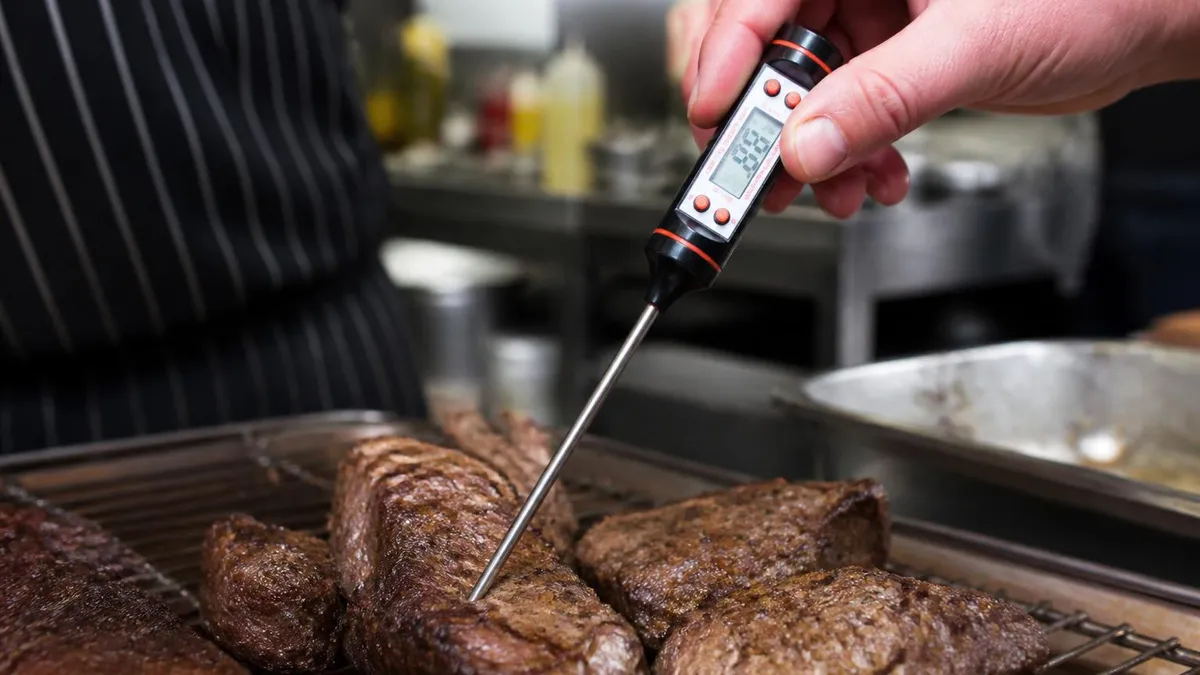
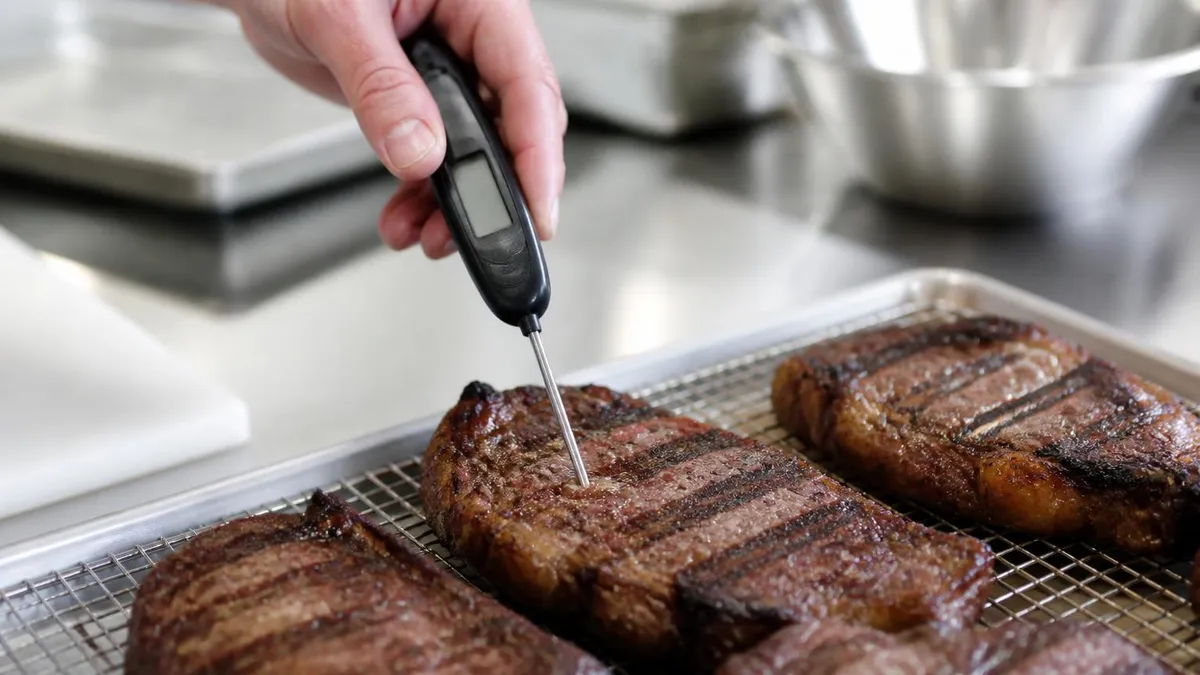
Cooking temperature questions are similarly formulaic. Poultry, stuffed meats, and any TCS food cooked in a microwave require 165°F for 15 seconds. Ground meats, injected meats, ratites, and eggs held for service require 155°F for 15 seconds. Whole-muscle seafood, steaks, chops, and eggs cooked to order require 145°F for 15 seconds. Fruits, vegetables, grains, and legumes held for hot service require only 135°F. Commit these four numbers to memory and you will answer six to eight exam questions correctly without further reasoning.
Allergen questions test both the Big 9 list — milk, eggs, fish, shellfish, tree nuts, peanuts, wheat, soy, and sesame (added in 2023) — and the operational protocols for preventing cross-contact in a working kitchen. A complete servsafe food handler certification course covers allergen response in depth, but for the manager exam you need to know that designated equipment, gloves, and prep surfaces are required when serving allergen-free meals, and that simply rinsing utensils between uses is insufficient.
Finally, employee health questions follow strict FDA Food Code language. The Big 6 reportable illnesses are Norovirus, Hepatitis A, Shigella, Shiga toxin–producing E. coli, Salmonella Typhi, and nontyphoidal Salmonella. A food worker who has been diagnosed with any of these must be excluded from the operation and the local health department must be notified — "restriction" is not enough. Knowing the difference between exclusion and restriction is worth at least two exam questions.
ServSafe Practice Test Questions
Prepare for the ServSafe Food Safety Practice Test exam with our free practice test modules. Each quiz covers key topics to help you pass on your first try.
ServSafe Foodborne Illnesses and Allergens
ServSafe Exam Questions covering Foodborne Illnesses and Allergens. Master ServSafe Test concepts for certification prep.
ServSafe Personal Hygiene and Health
Free ServSafe Practice Test featuring Personal Hygiene and Health. Improve your ServSafe Exam score with mock test prep.
ServSafe Preventing Cross-Contamination
ServSafe Mock Exam on Preventing Cross-Contamination. ServSafe Study Guide questions to pass on your first try.
ServSafe Safe Food Handling Practices
ServSafe Test Prep for Safe Food Handling Practices. Practice ServSafe Quiz questions and boost your score.
ServSafe Alcohol Test - Primary and Advanced
ServSafe Questions and Answers on Alcohol Test - Primary and Advanced. Free ServSafe practice for exam readiness.
ServSafe Cleaning and Sanitizing Procedures
ServSafe Mock Test covering Cleaning and Sanitizing Procedures. Online ServSafe Test practice with instant feedback.
ServSafe Food Contamination and Allergens
Free ServSafe Quiz on Food Contamination and Allergens. ServSafe Exam prep questions with detailed explanations.
ServSafe HACCP System Implementation
ServSafe Practice Questions for HACCP System Implementation. Build confidence for your ServSafe certification exam.
ServSafe Manager Exam
ServSafe Test Online for Manager Exam. Free practice with instant results and feedback.
ServSafe Proper Personal Hygiene
ServSafe Study Material on Proper Personal Hygiene. Prepare effectively with real exam-style questions.
Inside the ServSafe Manager Practice Test Question Bank
Scenario questions describe a real kitchen situation and ask what a certified manager should do first or next. They typically run 60 to 90 words long and include realistic distractors — answer choices that are not technically wrong but represent a less complete response than the correct option. Reading every word matters because qualifiers like "first," "best," "most likely," and "least appropriate" entirely change which answer is correct.
A common trap is choosing an answer that solves the immediate problem but ignores the regulatory follow-up. If a cook touches raw chicken and then handles ready-to-eat salad without changing gloves, the correct response is not just to discard the salad — it is to discard the salad, retrain the cook on cross-contamination procedures, and document the incident in your active managerial control log. Always look for the most comprehensive answer.

Should You Rely on Free Sample Tests vs. Paid Practice Packages?
- +Free sample tests are immediately accessible without payment or registration friction
- +Questions are typically calibrated to the same content outline as the official exam
- +You can identify weak knowledge areas before investing in deeper study materials
- +Repeated free practice builds the test-taking stamina needed for a 90-question exam
- +Online quizzes provide instant feedback so you learn the rationale behind each answer
- +Multiple free sources expose you to varied question phrasing, which improves transfer to the real exam
- −Free question pools are smaller and you may memorize answers rather than learn concepts
- −Some free tests use outdated content from pre-2022 Food Code revisions
- −Quality varies widely and unverified sources may include factually incorrect answers
- −Free materials rarely include the official exam's adaptive scenario-based question style
- −You miss the structured pacing and progress tracking of paid prep courses
- −Without the Ninth Edition coursebook you may not see the visual diagrams the exam references
Pre-Exam Readiness Checklist for the ServSafe Manager Sample Test
- ✓Score 85% or higher on three consecutive full-length practice tests before scheduling the real exam
- ✓Memorize all four minimum internal cooking temperatures (165, 155, 145, 135) cold
- ✓Identify the Big 6 reportable illnesses and the symptoms that trigger employee exclusion
- ✓Know the cooling timeline: 135°F to 70°F in 2 hours, then to 41°F in 4 more hours
- ✓Memorize sanitizer concentrations: chlorine 50-99 ppm, iodine 12.5-25 ppm, quat ~200 ppm
- ✓List the Big 9 food allergens including sesame, which was added to the list in 2023
- ✓Understand the proper food storage hierarchy from top (ready-to-eat) to bottom (raw poultry)
- ✓Bring a government-issued photo ID and your exam registration confirmation on test day
- ✓Arrive at the Pearson VUE center at least 30 minutes early to complete check-in
- ✓Plan to spend the full two hours — finishing early correlates with lower scores in our data
Four hours total — not four hours from the last temperature check
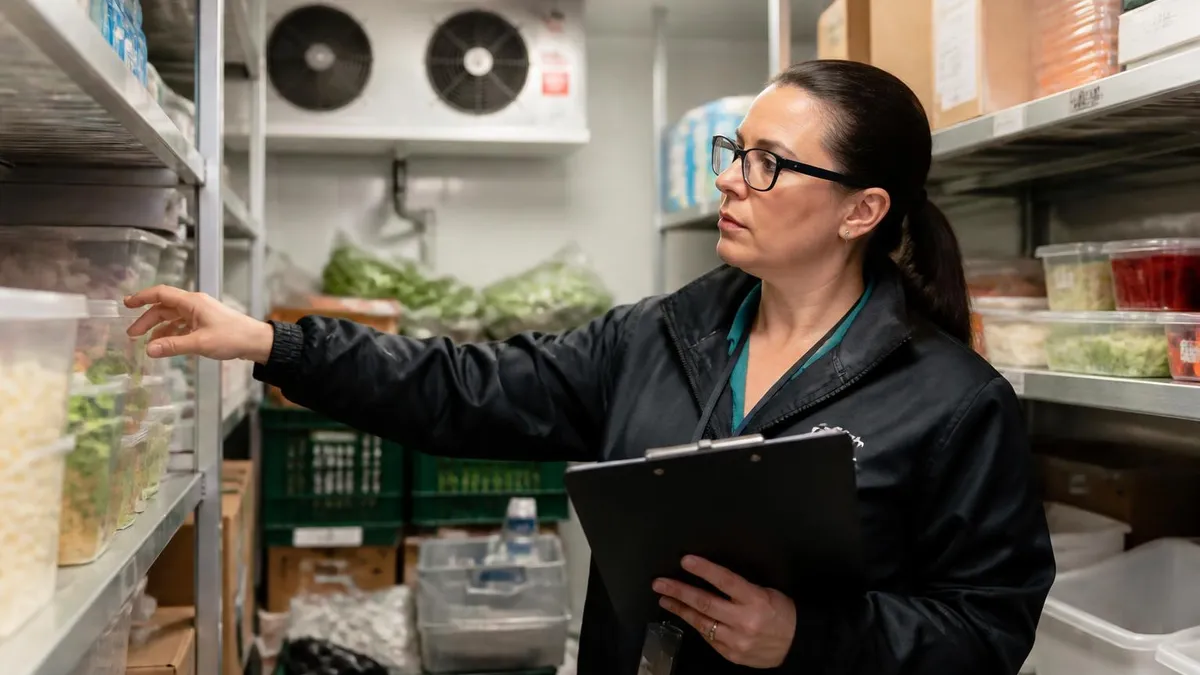
TCS food that has been in the temperature danger zone (between 41°F and 135°F) for any combination of time totaling more than four hours must be discarded. This includes time during receiving, prep, transport, and service. A common exam trap is presenting a food that was at 50°F for two hours during prep and then another three hours during a buffet — the answer is discard, because the cumulative time exceeds four hours regardless of any intermediate refrigeration.
Analysis of post-exam feedback from thousands of ServSafe Manager candidates reveals the same five concept areas trip up test takers year after year. Understanding why these topics produce errors — not just what the correct answers are — will lift your practice test scores noticeably within a week. Let's walk through each one with the kind of detail you would not get from simply reviewing question banks.
The first chronic weak spot is the difference between cleaning and sanitizing. Cleaning removes visible soil, grease, and food residue using detergent and friction. Sanitizing reduces pathogens on a clean surface to safe levels using heat or chemicals. You cannot sanitize a dirty surface — the organic matter neutralizes the sanitizer. This means surfaces must always be cleaned first, then rinsed, then sanitized in that exact sequence. Questions that present a worker spraying sanitizer on a visibly soiled prep table are testing whether you catch this procedural error.
Second is the cooling window confusion. Many candidates correctly remember the six-hour total but miss that the first stage (135 to 70) is only two hours, not three. If a soup is still at 90°F after three hours of cooling, the correct action is to reheat it to 165°F for 15 seconds and start the cooling clock over — not to simply continue cooling. The exam will offer "continue cooling" as a tempting distractor and many candidates choose it because reheating feels wasteful.
Third is the receiving temperature for shell eggs. Most TCS foods must arrive at 41°F internal temperature or lower, but shell eggs are allowed to arrive at an ambient air temperature of 45°F because the shell provides natural protection. Liquid eggs, pasteurized eggs, and egg products follow the standard 41°F rule. Questions that mix these subtle distinctions are deliberately designed to test whether you have actually read the Food Code or are guessing from general knowledge.
Fourth is the handwashing sink versus the food prep sink versus the warewashing sink versus the utility sink. Each has a specific purpose and using one for another purpose is a violation. Handwashing sinks must be designated only for handwashing and stocked with soap, single-use paper towels or an air dryer, a waste receptacle, and a sign reminding employees to wash hands. They cannot be used to rinse dishes, fill mop buckets, or dump food waste — a frequent inspection finding that maps directly to exam questions.
Fifth is the proper response to a pest infestation. The correct sequence is to identify the pest, work with a licensed pest control operator, deny pests access by sealing cracks and screening openings, deny pests food and shelter by storing food correctly and managing trash, and then maintain ongoing prevention. Candidates often choose "spray immediately" or "close the operation" as their answer, but the exam expects you to recognize integrated pest management as the gold standard response, with chemicals as a last resort applied only by certified professionals.
If you score below 75 percent on practice tests after several weeks of study, the most effective intervention is typically buying the Ninth Edition coursebook and reading the chapters on cooling and sanitation cover to cover. The Ninth Edition servsafe certificate prep material aligns with the current exam blueprint and includes the specific tables and diagrams referenced in roughly 20 percent of test questions.
The ServSafe Manager certification is valid for five years from the date you pass the exam. Many candidates forget this and let their certification lapse, requiring them to retake the full exam (not just a renewal) to maintain employment. Mark your calendar 90 days before your expiration date to schedule recertification. Some jurisdictions including California require recertification every three years, so verify your state's specific renewal requirements with your local health department before assuming the federal five-year standard applies.
Test day strategy starts the night before. Stop studying by 8 p.m., eat a normal dinner, and get a full night's sleep. Cramming the morning of the exam consistently produces lower scores than candidates who arrive rested and confident. Pack your government-issued photo ID, your exam registration confirmation, and a printed copy of your testing center's address with backup directions in case GPS fails. If you are taking a paper-based proctored exam at your workplace, bring two sharpened number two pencils and a clean eraser.
Arrive at the Pearson VUE testing center at least 30 minutes before your scheduled appointment time. Check-in includes photo capture, palm vein scan, and a locker assignment for your personal belongings. Phones, smart watches, study materials, food, drinks, and even hooded sweatshirts are typically prohibited in the testing room. Plan your outfit accordingly — wear layers that do not include hoods and avoid jewelry with hidden compartments that could trigger additional security screening.
Once you start the exam, you have two hours to complete all 90 questions. That works out to 80 seconds per question, which is more than enough time if you maintain steady pacing. Flag any question that takes you more than two minutes to read and analyze, then move on. The computer-based interface allows you to return to flagged questions before submission, and sometimes a later question will trigger your memory and help you answer an earlier one you marked.
For each question, read the entire stem before looking at the answer choices. Then read every choice before selecting one — even if the first option looks obviously correct. The exam is engineered with high-quality distractors, and the difference between a correct answer and a tempting wrong answer is often a single qualifying word in one of the later options that you would miss if you stopped reading early. This discipline alone can swing your score by five to ten points.
Use the process of elimination aggressively. If you can rule out two of the four answer choices, you have already converted a 25 percent guess into a 50 percent guess. On questions where you are genuinely unsure, look for the most complete answer — one that addresses both the immediate hazard and the systemic prevention. Answers that include words like "and document the incident," "and retrain the staff," or "and notify the person in charge" are frequently correct because the exam rewards active managerial control thinking.
Manage your bathroom breaks strategically. The clock does not stop during restroom breaks on the computer-based exam, so plan to use the facilities immediately before check-in. If you absolutely need a break during the exam, raise your hand and wait for the proctor — leaving your seat without permission can void your exam and require you to pay full price to retest. Hydrate before you enter the testing room but do not drink large amounts of water in the 30 minutes before check-in.
After submitting your exam on the computer-based version, you will see your unofficial pass or fail result immediately on screen, with your official certificate emailed within ten business days. If you pass, your servsafe manager certification credential is active immediately and you can begin using it on job applications. If you do not pass, you may retest twice within 30 days; after a second unsuccessful attempt you must wait 60 days before trying again, no more than four attempts are allowed in any 12-month period, and each retest requires a new Exam Access Code (online) or Exam Answer Sheet (print) and a registered proctor.
Beyond raw content knowledge, certain practical tactics dramatically improve your odds of passing on the first attempt. The most important is interleaved practice — alternating between different content domains rather than studying one topic exhaustively before moving on. Research on memory consolidation shows that mixed practice produces better long-term retention than blocked practice, even though it feels harder in the moment. Rotate through foodborne illness questions, then temperature questions, then sanitation questions in a single study session.
The second tactic is spaced repetition. Instead of one eight-hour cram session, divide your study time into eight one-hour sessions across two weeks. Each session, briefly review the previous session's most challenging questions before moving to new material. Apps like Anki and Quizlet have free pre-built decks for ServSafe Manager content (search for a ServSafe manager practice Quizlet set) that automate spacing for you. Aim for a 90 percent recall rate on flashcards before considering a domain mastered.
The third tactic is teaching the material to someone else. Walking a coworker, friend, or family member through why poultry must reach 165°F while whole-muscle beef only needs 145°F forces you to articulate the food science behind the rule, and articulation is the strongest predictor of long-term retention. If no one is available, record yourself explaining each major concept aloud and listen back during your commute.
The fourth tactic is taking at least one full-length timed ServSafe manager exam practice test in conditions that mirror the real testing center. Sit at a desk, set a strict two-hour timer, turn off your phone, and complete 90 questions without breaks. This builds the mental stamina the real exam requires and reveals pacing issues you would not notice during untimed practice. Most candidates who fail report that they ran out of time on the last 15 to 20 questions — almost always because they spent too long on the first 30.
The fifth tactic is reviewing your wrong answers more carefully than your right ones. After every practice test, create a written note for each missed question (if you study offline, the ServSafe practice test PDF download above works well for this) that includes the correct answer, why each wrong answer was wrong, and the underlying Food Code principle being tested. This forces you to engage with the material at a deeper level than passive review and consistently produces score gains of five to ten points on subsequent practice tests.
Finally, do not underestimate the value of physical preparation. Sleep, hydration, and nutrition in the 48 hours before the exam have a measurable impact on cognitive performance. Avoid alcohol the night before, drink water throughout the morning of the exam, and eat a balanced breakfast that includes protein and complex carbohydrates. Skip sugary energy drinks that produce a brief spike followed by a crash that hits right around question 60 — exactly when you cannot afford to lose focus.
Combining these tactics with a structured study plan produces first-time pass rates above 90 percent in our internal data, compared to the national average of 71 percent. The ServSafe Manager exam is challenging but it is not designed to fail you — it is designed to verify that you understand the food safety knowledge required to protect public health. Approach your preparation with discipline and a realistic timeline, and your certification is well within reach.
ServSafe Manager 90 Question Practice Test: How the Questions and Answers Are Structured
Searches for a servsafe manager 90 question practice test spike every month because candidates want to rehearse the full length of the real exam, not just a 20-question warm-up. The official ServSafe Manager test has 90 multiple-choice questions, but only 80 are scored; the other 10 are unscored pilot items that the National Restaurant Association is trialling for future forms. They are mixed randomly into the exam, so you cannot skip them. Passing means 56 correct on the 80 scored questions, which is 70 percent.
A useful servsafe test 90 questions and answers session mirrors that structure: 90 items, four answer choices each, one right answer, and a two-hour clock. Split the set roughly by the exam blueprint above, with the heaviest weighting on foodborne illness, allergens and personal hygiene, then preparation, cooking and serving, then purchasing, receiving and storage. Answer every question, because there is no penalty for guessing and blank items count as wrong.
After each full run, grade yourself against the answer key and sort misses by domain. Anything below 70 percent in a single domain is a red flag even if your overall score is fine, because the real exam form can lean harder on that domain than your practice set did. Retake the ServSafe manager test 90 questions at least twice on separate days before scheduling. The timed ServSafe Manager practice exam on this site is built to that 90-question, 80-scored format so you get the pacing right.
ServSafe Manager Flashcards: Key Facts to Memorize
📋 How many questions are on the ServSafe Manager exam, and what is the pass mark?
The exam has 90 multiple-choice questions: 80 scored plus 10 unscored pilot questions mixed in randomly. You pass with 70 percent, which is 56 correct out of the 80 scored items. The exam must be proctored, whether in a classroom, at a Pearson VUE center, or with an online proctor.
START SERVSAFE MANAGER PRACTICE TEST🥩 What are TCS foods?
TCS stands for time/temperature control for safety. These foods support rapid pathogen growth and include milk and dairy, shell eggs, meat, poultry, fish, shellfish, cooked rice and beans, cut melons and tomatoes, cut leafy greens, sprouts, tofu, and untreated garlic-in-oil mixtures. TCS foods drive most time and temperature questions on the exam.
START SERVSAFE MANAGER PRACTICE TEST🌡️ What is the temperature danger zone?
The temperature danger zone is 41°F to 135°F (5°C to 57°C). Pathogens grow fastest between 70°F and 125°F. TCS food that spends more than four cumulative hours in the danger zone must be discarded, and the four hours add up across receiving, prep, and service.
START SERVSAFE MANAGER PRACTICE TEST🍗 What are the minimum internal cooking temperatures?
165°F for 15 seconds for poultry, stuffed foods, and any TCS food cooked in a microwave. 155°F for 15 seconds for ground meat, injected meat, and eggs held for service. 145°F for 15 seconds for seafood, steaks, chops, roasts, and eggs cooked to order. 135°F for fruits, vegetables, grains, and legumes that will be hot-held.
START SERVSAFE MANAGER PRACTICE TEST❄️ What is the two-stage cooling rule?
Cooked TCS food must cool from 135°F to 70°F within two hours, then from 70°F to 41°F or lower within the next four hours, for six hours total. If the first stage misses the two-hour mark, reheat the food to 165°F for 15 seconds and restart cooling. Use ice baths, ice paddles, shallow pans, and blast chillers to speed it up.
START SERVSAFE MANAGER PRACTICE TEST🧫 What does FAT TOM stand for?
FAT TOM lists the six conditions pathogens need to grow: Food, Acidity, Time, Temperature, Oxygen, and Moisture. Managers control time and temperature most directly, which is why the exam leans so heavily on holding, cooking, and cooling limits. Low acidity (pH 4.6 to 7.5) and high water activity (above 0.85) favor growth.
START SERVSAFE MANAGER PRACTICE TEST🧼 What is the correct handwashing procedure?
Handwashing takes at least 20 seconds total: wet hands and arms with running water at least 100°F, apply soap, scrub hands and arms vigorously for 10 to 15 seconds, rinse, and dry with a single-use towel or hand dryer. Handwashing sinks must be used only for handwashing and stocked with soap, towels, a waste bin, and a sign.
START SERVSAFE MANAGER PRACTICE TEST🥜 What are the Big 9 food allergens?
Milk, eggs, fish, crustacean shellfish, tree nuts, peanuts, wheat, soybeans, and sesame. Sesame became the ninth major allergen under the FASTER Act on January 1, 2023. Managers must be able to describe allergen ingredients to guests and prevent cross-contact with dedicated equipment, clean gloves, and separate prep surfaces.
START SERVSAFE MANAGER PRACTICE TEST📝 What are the seven HACCP principles?
1) Conduct a hazard analysis. 2) Determine critical control points. 3) Establish critical limits. 4) Establish monitoring procedures. 5) Identify corrective actions. 6) Verify that the system works. 7) Establish record-keeping and documentation. Exam questions often describe one step and ask you to name the principle.
START SERVSAFE MANAGER PRACTICE TEST🦠 Which illnesses are the Big 6 that require exclusion?
Norovirus, Hepatitis A, Shigella spp., Shiga toxin-producing E. coli, Salmonella Typhi, and nontyphoidal Salmonella. A food handler diagnosed with any of these must be excluded from the operation, not merely restricted, and the regulatory authority must be notified. Vomiting, diarrhea, and jaundice are the symptoms that trigger exclusion.
START SERVSAFE MANAGER PRACTICE TESTSample ServSafe Food Safety Practice Questions
Try these questions from our free ServSafe Food Safety practice tests. The correct answer and an explanation follow each question.
A guest with a wheat allergy orders gluten-free pasta. The cook uses the same pasta water that was used for regular pasta. This practice is:
- A. Acceptable if the water is boiling
- B. Unacceptable because it causes allergen cross-contact
- C. Acceptable if enough water is used
- D. Unacceptable only if the guest has celiac disease
Answer: B. Unacceptable because it causes allergen cross-contact
Shared pasta water contains wheat proteins, which can cause an allergic reaction regardless of water temperature or volume.
A guest has just finished eating a meal and is now showing signs of an allergic reaction, including hives and difficulty breathing. What should the manager do first?
- A. Offer the guest a glass of water.
- B. Call the emergency number (e.g., 911) immediately.
- C. Ask the kitchen staff what ingredients were in the dish.
- D. Document the incident in the manager's log.
Answer: B. Call the emergency number (e.g., 911) immediately.
Difficulty breathing is a sign of anaphylaxis, a severe, life-threatening allergic reaction. The immediate priority is to get professional medical help for the guest by calling emergency services. Investigating the cause can happen after the guest's immediate medical needs have been addressed.
A manager is creating a HACCP plan for a baked lasagna recipe. The step of baking the lasagna to an internal temperature of 165°F (74°C) is identified as a CCP. Which of the following would be an appropriate critical limit for this CCP?
- A. Bake the lasagna until it reaches an internal temperature of 165°F (74°C).
- B. Use a calibrated thermometer to check the lasagna's temperature.
- C. If the lasagna is below 165°F (74°C), continue baking it.
- D. Log the final cooking temperature of every lasagna made.
Answer: A. Bake the lasagna until it reaches an internal temperature of 165°F (74°C).
A critical limit is a minimum or maximum value that must be met to prevent, eliminate, or reduce a hazard to a safe level. The specific temperature of 165°F (74°C) is the measurable limit that must be achieved.
How should a manager handle a pest control issue discovered during morning preparation?
- A. Spray insecticide near food preparation areas
- B. Contact the licensed pest control operator, discard contaminated food, clean affected areas, and document
- C. Ignore it until the regular pest control visit
- D. Cover the evidence before employees arrive
Answer: B. Contact the licensed pest control operator, discard contaminated food, clean affected areas, and document
Pest issues require professional response, contaminated food disposal, thorough cleaning, and documentation.
ServSafe Questions and Answers
Official Resources
- ServSafe Manager (National Restaurant Association) — the official program page where you buy the course, exam access codes, and Ninth Edition coursebook, find a proctor or Pearson VUE center, and check scores and certificates.
- FDA Food Code — the model code every ServSafe temperature, time, and employee-health rule is drawn from, including the current edition and supplement.
- CDC Food Safety — outbreak data, pathogen fact sheets, and the symptom and illness information behind the Big 6 exclusion questions.



About the Author

Registered Sanitarian & Food Safety Certification Expert
Cornell University College of Agriculture and Life SciencesThomas Wright is a Registered Sanitarian and HACCP-certified food safety professional with a Bachelor of Science in Food Science from Cornell University. He has 17 years of experience in food safety auditing, regulatory compliance, and foodservice management training. Thomas prepares food industry professionals for ServSafe Manager, HACCP certification, and state food handler examinations.