
ServSafe Food Handler: Study Guide & Practice Test 2026 September
Complete ServSafe food handler guide: what's on the exam, how to study, pass rates, cost, and free practice questions. 🏆
The ServSafe food handler certification is one of the most recognized food safety credentials in the United States, required by employers across restaurants, cafes, hotels, schools, healthcare facilities, and catering operations. If you work with food — preparing it, serving it, or storing it — your employer likely expects you to hold this certification or complete the program before your first shift. Understanding what the certification covers, how the exam works, and how to prepare efficiently makes the whole process straightforward.
ServSafe is administered by the National Restaurant Association Educational Foundation (NRAEF). The food handler program is distinct from the ServSafe Manager certification — it's designed for front-line food service employees rather than supervisors and managers. The food handler course covers the core knowledge every food worker needs: personal hygiene, temperature control, cross-contamination prevention, proper food storage, and basic sanitation practices.
The exam itself is 40 questions and can be taken online or in person. Most people complete the course and exam in under two hours. You need a score of 75% or higher — 30 out of 40 questions correct — to pass. The certification is valid for three years in most states, though local health department requirements vary and some jurisdictions may impose shorter renewal cycles or additional local requirements.
Don't underestimate the importance of this certification even if your job seems low-risk. A single foodborne illness outbreak traced to a food service establishment can shut down a business, result in significant legal liability, and most importantly, harm the customers you're serving. The ServSafe program exists to give every food worker the knowledge to prevent these outcomes — not just to satisfy a compliance checkbox.
This guide walks you through the complete ServSafe food handler certification process: what topics are covered, how to register, what to expect on exam day, how to study effectively, and what to do after you pass. Whether you're preparing for your first food service job or renewing an expiring certificate, you'll find everything you need here.
The food handler program covers practical knowledge you can apply immediately on the job — it's not theoretical. You'll learn exactly what temperatures kill dangerous bacteria, how long you can leave food in the temperature danger zone before it becomes unsafe, which pathogens are most likely to cause illness in a food service setting, and why certain hygiene habits are non-negotiable.
This knowledge protects not just your customers but also your employer, who faces regulatory action, fines, and reputational damage if a foodborne illness outbreak is traced to their establishment. Workers who understand the reasons behind food safety rules tend to follow them more consistently than those who treat compliance as just box-checking.

ServSafe Food Handler Exam Format
| Section | Questions | Time |
|---|---|---|
| Food Safety Basics | 8 | — |
| Personal Hygiene | 8 | — |
| Temperature Control | 8 | — |
| Cross-Contamination & Allergens | 8 | — |
| Cleaning & Sanitation | 8 | — |
| Total | 40 | — |
ServSafe Food Handler Pass Rate
Most candidates pass on the first attempt. The exam tests practical knowledge covered directly in the course. Candidates who complete the full course material before testing pass at significantly higher rates than those who skip ahead.
The five topic areas on the ServSafe food handler exam reflect the most common sources of foodborne illness in commercial kitchens. Let's break down what each section actually tests and what you need to know going in.
Food Safety Basics covers contamination — biological (bacteria, viruses, parasites), chemical (cleaning agents, pesticides), and physical (bones, glass, metal fragments). The exam expects you to know the Big 6 pathogens: Norovirus, Hepatitis A, Salmonella Typhi, E. coli O157:H7, Shigella, and Nontyphoidal Salmonella. These are the pathogens most associated with foodborne illness outbreaks in food service settings and the ones regulators focus on most heavily.
Personal hygiene is heavily weighted because improper handwashing is one of the top causes of foodborne illness transmission. The exam tests when you must wash your hands (after using the restroom, after touching your face, after handling raw meat, after taking out garbage), how to wash them correctly (20 seconds minimum with soap), and when to use gloves. You'll also need to know the rules for when employees must be excluded from work due to illness — especially the Big 6 pathogens, which require reporting to the manager and potentially exclusion from food handling.
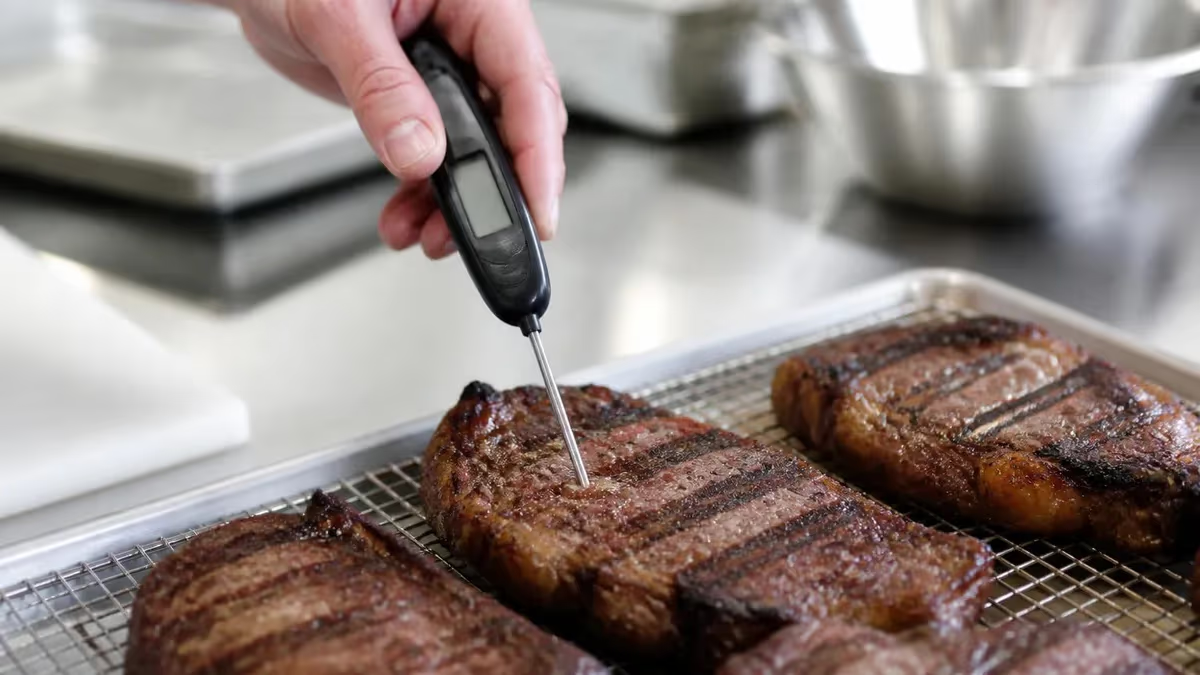
Temperature control questions focus on the temperature danger zone: 41°F to 135°F (5°C to 57°C). Bacteria multiply most rapidly in this range. The exam tests minimum internal cooking temperatures for different proteins — 145°F for whole beef and pork, 155°F for ground beef, 165°F for poultry and stuffed foods — as well as proper cooling procedures. Cooling food correctly from 135°F to 70°F within two hours, then to 41°F within the next four hours, is a common exam topic. Check the ServSafe score requirements to understand exactly what passing means for your certification status.
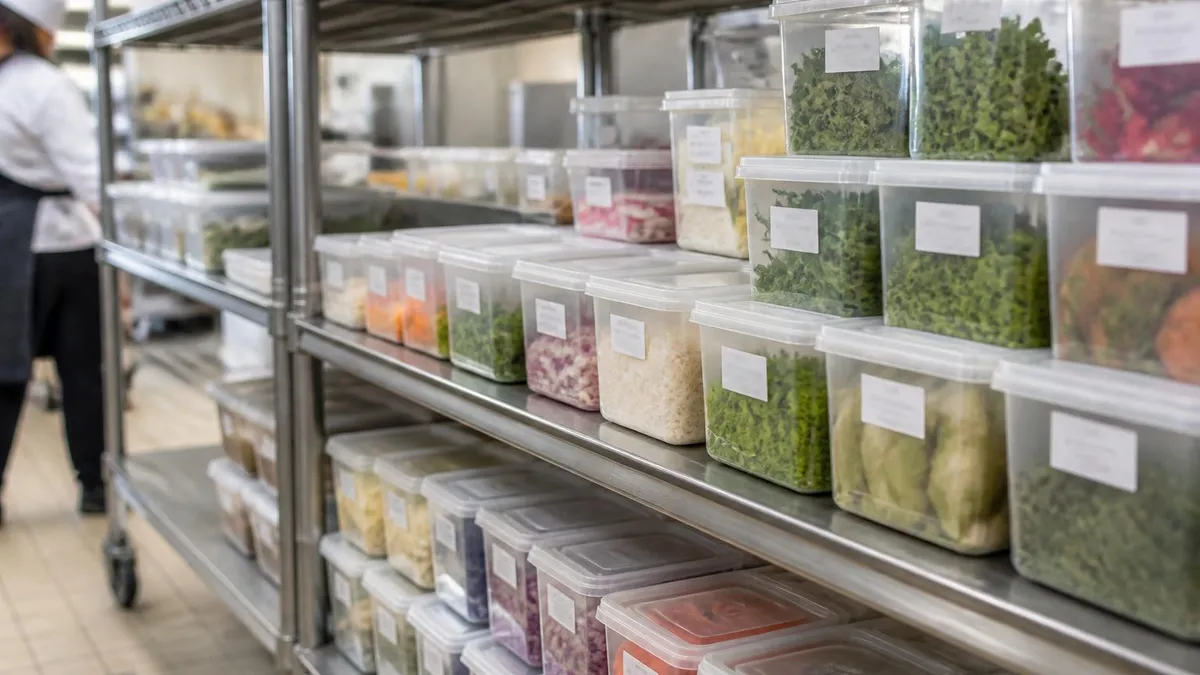
Cross-contamination and allergen awareness are covered together because both require the same discipline: keeping different foods, surfaces, and utensils separated. The exam tests proper storage order in a walk-in cooler (ready-to-eat foods on top, raw meats below, fish and ground meats on correct shelves by cook temperature), the use of color-coded cutting boards, and employee responsibilities when a customer discloses a food allergy. The servsafe covers the Big 9 allergens: milk, eggs, fish, shellfish, tree nuts, peanuts, wheat, soybeans, and sesame — which became a recognized major allergen in January 2023.
Cleaning and sanitation rounds out the exam. You need to know the difference between cleaning (removing visible soil) and sanitizing (reducing pathogens to safe levels) — these are two separate steps that must both occur. The exam covers chemical sanitizer types (chlorine, iodine, quaternary ammonium), their correct concentrations, contact times, and temperature requirements. You'll also see questions about the correct order for washing dishes manually: wash, rinse, sanitize, air dry.
One area candidates frequently overlook is the specific rules around time-temperature abuse. The exam presents scenarios where food has been left out or improperly stored and asks whether it should be used, discarded, or reheated. Knowing the two-hour rule (food left in the danger zone for more than four hours total must be discarded, with no exceptions for reheating) is essential.
Reheating food that was in the danger zone too long doesn't make it safe — it kills bacteria but not the toxins some bacteria have already produced. This distinction surprises many first-time candidates who assume that cooking food hot enough always makes it safe. For the exam and for actual food safety practice, time at unsafe temperatures is the variable that determines whether food is salvageable.
5 Core Food Handler Responsibilities
Wash hands for at least 20 seconds with soap and warm water before handling food, after using the restroom, after touching your face, after handling raw meat or poultry, and after taking out garbage. Handwashing is the single most effective tool for preventing pathogen transmission in a food service environment.
Keep hot food above 135°F and cold food at or below 41°F. Never leave potentially hazardous food in the temperature danger zone (41°F–135°F) for more than four hours total. Use a calibrated thermometer to verify internal cooking temperatures — never guess by appearance or timing alone.
Store raw meats below ready-to-eat foods in refrigerators and walk-in coolers. Use separate cutting boards and utensils for raw proteins versus produce and cooked foods. Clean and sanitize all surfaces between tasks. Never use the same gloved hands to handle raw chicken and then touch cooked food without changing gloves and washing hands.
If you're experiencing symptoms of foodborne illness — vomiting, diarrhea, jaundice, or sore throat with fever — report immediately to your manager before starting your shift. Employees diagnosed with Norovirus, Hepatitis A, Salmonella Typhi, or other Big 6 pathogens must be excluded from food handling until cleared by a health professional.
ServSafe Food Handler Study Plan
- ▸Learn the Big 6 pathogens and their sources
- ▸Understand biological, chemical, and physical contamination
- ▸Review high-risk populations (elderly, pregnant, immunocompromised, young children)
- ▸Memorize handwashing steps and required timing
- ▸Learn illness exclusion rules for the Big 6
- ▸Practice glove use and clothing standards scenarios
- ▸Memorize the danger zone (41°F–135°F)
- ▸Learn minimum internal cooking temperatures for all protein types
- ▸Study proper cooling procedures and time-temperature combinations
- ▸Learn correct storage order in refrigerators and walk-ins
- ▸Review the Big 9 allergens and employee communication responsibilities
- ▸Practice FIFO (first in, first out) rotation scenarios
- ▸Learn cleaning vs. sanitizing distinctions and sanitizer concentrations
- ▸Review manual dishwashing steps in correct order
- ▸Take a full 40-question practice test under exam conditions
Registering for the ServSafe food handler exam is straightforward. You can complete the course and exam entirely online through the ServSafe website, or you can find an in-person class offered by a certified ServSafe instructor in your area. Many employers partner directly with ServSafe to provide training to new hires at no cost or at a reduced rate, so check with your employer before paying out of pocket.
The cost of the food handler program is modest — typically $15 to $20 for online access, which includes both the course and the exam. In-person classes may cost more depending on the provider. Some states offer free or subsidized food handler training through their health departments, particularly for lower-income workers entering the food service industry. Check the ServSafe cost page for current pricing and any available discounts or promo codes.
On exam day — or during your online session — the 40 questions are all multiple choice. There's no essay writing, no practical demonstration, and no time pressure beyond the overall session window. Read each question carefully, especially questions that ask about exceptions ("all of the following EXCEPT") or specific numbers (minimum temperatures, times, concentrations). These are common areas where rushing leads to avoidable errors.
The certification you receive after passing is recognized by most employers across the country. It's different from the food handler certification card required in some states, which is a state or local government credential rather than a national industry credential. Some states — including California, Illinois, Texas, and Arizona — have their own food handler card requirements. Your employer will tell you which credential they need; in many cases, both are required or one satisfies the other.
After passing, download or print your certificate promptly. Store a digital copy in your email or cloud storage so you always have access to it. Your certification number allows employers to verify your credentials directly through the ServSafe database. If you're renewing before expiration, check the ServSafe renewal guide to understand whether a full course retake is required or just the exam.
Compared to the more advanced ServSafe Manager vs. food handler programs, the food handler certification is designed for accessibility — it assumes no prior food safety knowledge and teaches everything you need from the ground up. If you're eventually promoted to a supervisory role, the manager certification will be expected, but the food handler credential is the right starting point for most food service employees.
The ServSafe food handler program is also used by many schools, hospitals, senior care facilities, and other institutional food service operations, not just restaurants. If you're working in one of these environments, you may encounter a slightly higher standard — institutional kitchens serving immunocompromised patients or elderly residents often have stricter internal policies than a general restaurant.
The ServSafe program covers the national baseline; your specific employer's food safety manual will build on it with site-specific protocols. Complete the national certification first, then get familiar with your employer's internal standards during onboarding. The two layers of training together give you a comprehensive picture of what's expected and why it matters in your specific setting.
Temperature danger zone: 41°F – 135°F (must keep food out of this range)
Minimum cooking temps: 145°F (whole beef/pork/fish), 155°F (ground beef), 165°F (poultry, stuffed foods)
Cooling: 135°F → 70°F in 2 hours; 70°F → 41°F in the next 4 hours
Handwashing time: 20 seconds minimum with soap
Passing score: 75% (30/40 correct)
Certification validity: 3 years (most states)
Study strategies that work for the ServSafe food handler exam lean heavily on memorization of specific numbers and practical scenarios rather than conceptual understanding. The exam doesn't ask you to explain why the danger zone exists — it expects you to know the specific temperatures that define it and what to do when food enters that range.
Flashcards work particularly well for the temperature thresholds, the Big 6 pathogens, and the Big 9 allergens. Make one card per fact: front side shows the question ("What's the minimum internal temperature for ground beef?"), back side shows the answer ("155°F"). Run through your deck daily in the days before the exam. Spaced repetition accelerates memorization for these kinds of fact-heavy certifications.
Practice tests are the most efficient final preparation step. The ServSafe practice tests with answers expose you to the question format and help you identify gaps before the actual exam. If you're consistently missing questions on a particular topic, go back to that section in the course material before testing. The goal isn't just to see which questions you missed — it's to understand why you missed them so the same knowledge gap doesn't trip you up on the real exam.
Time management isn't a major concern for most candidates since the exam has no strict per-question time limit within the session window. But don't linger too long on a single question — if you're unsure, make your best choice, flag it mentally, and come back if time allows. For the ServSafe food handler exam, your first instinct is usually correct. Overthinking common food safety scenarios leads to second-guessing answers you actually knew.
Active recall is more effective than passive review. Instead of re-reading your notes, close them and try to recite the minimum cooking temperatures for each protein type from memory. When you get one wrong, that's the signal to review that specific fact.
This technique takes more mental effort than re-reading, but it builds stronger retention — exactly what you need when you're working quickly in a real kitchen and need to recall whether chicken needs to reach 155°F or 165°F without thinking twice. The exam tests the same type of quick, precise recall under moderate pressure, so training your memory with active practice mirrors the actual test experience better than passive reading does.
ServSafe food handler certification doesn't replace state or local food handler card requirements. California, Texas, Illinois, Arizona, and several other states require their own food handler permit or card, often issued through the local health department. Verify what your employer and local health department require before registering. In some jurisdictions, you'll need both credentials.
The ServSafe food handler certification is an investment in your professional credibility and your customers' safety. Employers increasingly list it as a prerequisite in job postings, and holding a current certification signals that you take food safety seriously — something that sets you apart from uncertified candidates in competitive hiring situations.
The material you learn for this exam doesn't stay abstract. You'll use it on every shift: checking that food comes out of the oven at 165°F, washing your hands before putting on gloves, storing raw chicken below ready-to-eat foods in the cooler. These habits become automatic, and they prevent the kind of mistakes that make people sick. That practical impact is what makes the ServSafe program valuable beyond its credential status.
Once certified, build on that foundation. The HACCP principles covered in advanced food safety training give you a systematic framework for hazard analysis that applies in any food service setting, from a small café to a hospital kitchen. The food handler credential is your entry point — treat it as the first step of a longer food safety education, not the last.
Document your certification number and expiration date somewhere you won't lose it — a notes app, a photo in your phone, or a dedicated folder for professional credentials. Keep your certificate visible and accessible throughout your food service career. Employers, health inspectors, and new workplaces may ask to see it. A valid, current ServSafe food handler certification makes onboarding faster, demonstrates professional seriousness, and reduces the training burden on your employer — all of which make you a more attractive hire in a competitive job market where food safety compliance is increasingly scrutinized.
ServSafe Food Handler Fast Facts
Key Facts at a Glance
| Item | Value | Details |
|---|---|---|
| Questions on the food handler exam | 40 | |
| Minimum passing score (30/40 correct) | 75% | |
| Certification validity in most states | 3 years | |
| Typical cost for online course + exam | $15–20 |
Online vs. In-Person Food Handler Training
- +Online: complete at your own pace, any time, any device
- +Online: usually cheaper than in-person instructor-led classes
- +In-person: instructor can answer questions in real time
- +In-person: some employers prefer or require in-person completion
- −Online: no real-time Q&A if you get stuck on a concept
- −Online: requires self-discipline to complete without procrastinating
- −In-person: fixed schedule may conflict with work hours
- −In-person: travel to training site required
ServSafe Questions and Answers
About the Author

Registered Sanitarian & Food Safety Certification Expert
Cornell University College of Agriculture and Life SciencesThomas Wright is a Registered Sanitarian and HACCP-certified food safety professional with a Bachelor of Science in Food Science from Cornell University. He has 17 years of experience in food safety auditing, regulatory compliance, and foodservice management training. Thomas prepares food industry professionals for ServSafe Manager, HACCP certification, and state food handler examinations.
Join the Discussion
Connect with other students preparing for this exam. Share tips, ask questions, and get advice from people who have been there.
View discussion (7 replies)