
ServSafe Certification by State: Acceptance and Rules Explained 2026
ServSafe by state: which states accept the ServSafe Manager, CFP-approved alternatives, passing score 70%, 5-year validity & state spotlights. 🟢
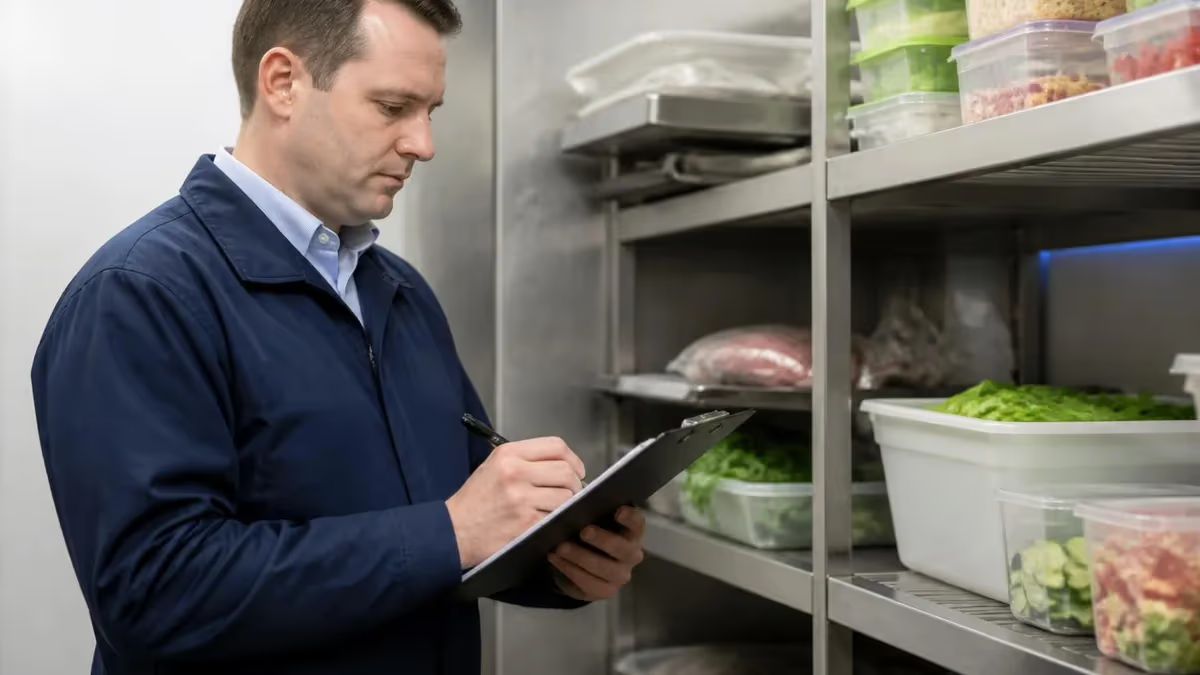
The ServSafe Manager certification is the most recognised food safety credential in the United States — but it isn't legally mandated by name in every state. What states actually require is a nationally accredited food protection manager certification from a programme approved by the Conference for Food Protection (CFP). ServSafe meets that bar. So do a handful of alternatives. The result? Almost every state accepts ServSafe, but several also accept other ANSI-CFP-accredited exams as full substitutes.
This guide walks through how ServSafe certification by state actually works in 2026. You'll see which states require any certified manager on duty, and which only require certification in chain or higher-risk establishments.
We'll cover the dozen state-by-state spotlights people search for most — ServSafe certification Colorado, ServSafe certification Iowa, ServSafe certification Maryland, ServSafe Utah, ServSafe certification Virginia, ServSafe Arizona, ServSafe certification Alabama, ServSafe certification Georgia, ServSafe Idaho, ServSafe Massachusetts, ServSafe Oregon, and Louisiana ServSafe certification. You'll also see online vs in-person proctoring rules, the 70% passing score, and the five-year validity window that catches managers off guard.
One thing to flag up front. ServSafe Manager and ServSafe Food Handler are different exams. Most state laws covered here refer to the Manager-level certificate — the one held by the person in charge (PIC) of food safety at a restaurant or institution. Food Handler cards are usually county-level requirements aimed at line cooks, servers, and bussers. Don't confuse them when you're checking your state's rules.
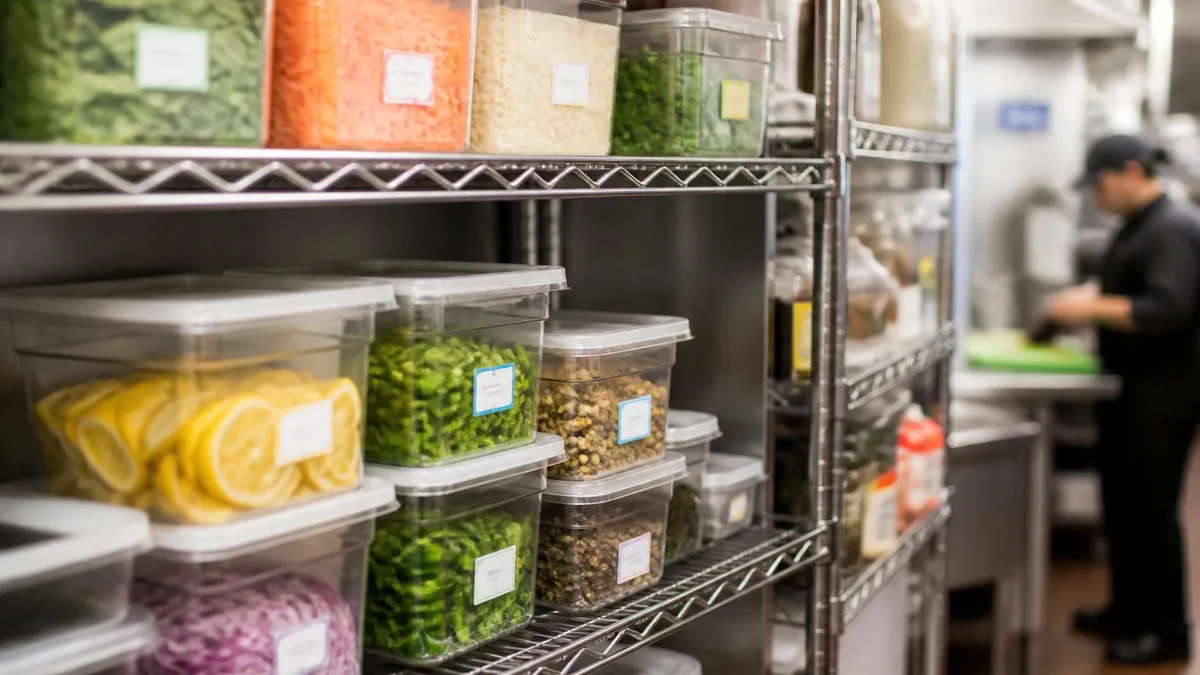
ServSafe Certification by the Numbers
Key Facts at a Glance
| Item | Value | Details |
|---|---|---|
| Passing score on the ServSafe Manager exam — 56 of the 80 scored scored items correct | 70% | |
| Certificate validity from the date of issue before full retest is required | 5 years | |
| Total questions on the Manager exam, with 10 unscored field-test items mixed in | 90 items |
The vast majority of US states fall into one of three camps. Camp one: every food establishment must have at least one Certified Food Protection Manager (CFPM) on staff at all times. Camp two: certification required only in specific establishment types (restaurants with hot-held foods, schools, healthcare). Camp three: no state-level mandate at all — local jurisdictions decide. Florida, Idaho, and Wyoming fall into camp three at the state level, though most counties within those states still require certification through local health codes.
Within camp one, the dominant pattern is: one CFPM per facility, certification from any ANSI-CFP-accredited programme, valid for five years, with the certificate posted on-site and available to inspectors. ServSafe is the largest provider — administered by the National Restaurant Association — but it's joined by Prometric (Food Protection Manager Certification), Above Training/StateFoodSafety (Certified Food Protection Manager), 360training (Learn2Serve Food Protection Manager), and AAA Food Handler. All five are ANSI-CFP accredited. All five are accepted in every state that names CFPM as a requirement.
ServSafe's structure is fairly consistent across delivery formats. The Manager exam is 90 multiple-choice questions, with a 70% passing score (so 68 correct out of 90 — though only 80 of those questions are scored; ten are unscored field-test items). You sit it either at a Pearson VUE testing centre (in-person proctored) or via remote online proctoring through ProctorU. Both delivery methods are accepted nationally. Certification, once earned, is valid for five years from the issue date — not from the exam date, which can be one to two weeks earlier depending on the proctoring path.
Retake rules matter. If you fail on the first attempt, you can retake the exam after a 24-hour waiting period — but you'll need a new exam access code, which costs around $36-$58 depending on the channel you buy through. Most candidates who fail pass on the second sitting. There's no annual retake cap, though most state boards expect you to maintain a valid certificate continuously, not let it expire and re-test from scratch.
Cost structure is reasonably uniform. The ServSafe Manager exam access code alone runs $36 for the online proctored version, $58 for the paper exam at an in-person Pearson VUE centre. Bundled study materials (textbook + practice tests) add $50-$110 depending on edition and language. Total typical out-of-pocket: $100-$170 for a first-time candidate going the recommended route with study materials included. Renewal at the five-year mark costs the same as a new sitting — there's no shortcut recertification path that's cheaper than full re-test.
Three State Patterns for CFPM Rules
States generally fall into three groups. Pattern A: every food establishment must have at least one Certified Food Protection Manager on staff at all hours — this is the most common framework, covering Colorado, Iowa, Maryland, Virginia, Georgia, Massachusetts, Louisiana, and Utah. Pattern B: certification required only in chain operations or higher-risk establishments such as healthcare and schools — Oregon and Alabama lean closer to this model. Pattern C: no state-level mandate, with local health districts deciding — Idaho, Wyoming, and Florida apply this approach, though most populated counties within those states do still require it through local health code.
State spotlights time. Let's run through the dozen states people most often Google for ServSafe rules — starting with the western-mountain block then sweeping east.
ServSafe Arizona: Arizona requires every permitted food establishment to have at least one CFPM. ServSafe is fully accepted. Maricopa County (Phoenix metro) additionally requires food handlers — not just managers — to hold a county-issued Food Handler Card, which is a separate exam typically delivered online through eFoodHandlers or eTrain at $7-$11. Don't confuse the two. Statewide ServSafe Manager certification is good across all 15 counties.
ServSafe Utah: Utah requires a CFPM in every food establishment, with the certificate posted visibly. Utah additionally runs its own state food handler permit programme — separate from the manager requirement — administered by local health departments. ServSafe Manager satisfies the manager rule statewide. Salt Lake County and Utah County both accept the same ServSafe credential, with no county-level upgrade required.
ServSafe Idaho: Idaho doesn't mandate certification at the state level. Local health districts make the call. Central District Health (Boise area), Eastern Idaho Public Health, and Panhandle Health all currently require a CFPM in food establishments serving the general public — and ServSafe satisfies it. Smaller rural districts may not enforce it on every establishment but most do. Check your specific county before assuming you don't need one.
Five ANSI-CFP Accredited Provider Options
Administered by the National Restaurant Association. Largest provider with the deepest study material catalogue. $36 online proctored exam, $58 in-person Pearson VUE. Available in English, Spanish, Mandarin, Korean, and large-print English.
Food Protection Manager Certification programme. Slightly cheaper than ServSafe at $32-$45 depending on channel. Less in-house study material — pair with third-party prep books. Strong in healthcare and institutional sectors.
Certified Food Protection Manager exam delivered online with remote proctoring. $99 typical bundled price with training included. Popular in Utah and Western states. Mobile-first study app.
Food Protection Manager Certification online with proctored remote exam. $99-$140 bundle. Strong reach in Texas, Louisiana, and Florida. Includes a Spanish-language track widely used by chain operators.
Newer entrant to the CFPM accredited list. $45-$75 typical pricing. Mostly used in California, Arizona, and Oregon. Limited brand recognition outside the western US — adoption is growing.
Separate companion exam to ServSafe Manager. 40 questions, 70% pass, $22 typical fee. Required in 10 states alongside the manager certificate — Massachusetts, Michigan, Illinois, Rhode Island, Virginia, and others.

ServSafe certification Colorado: Colorado requires a CFPM in retail food establishments under the Colorado Retail Food Establishment Rules, harmonised with the FDA Food Code. Tri-County Health (Denver metro), Boulder County, and Mesa County all enforce this requirement. ServSafe Manager is the most-used certificate by Colorado restaurant managers. Marijuana-infused food product manufacturers fall under additional state cannabis food safety rules — but the underlying CFPM requirement uses the same ServSafe-eligible standard.
ServSafe certification Iowa (also queried as servsafe iowa and iowa servsafe): Iowa requires every food establishment with five or more employees to have a CFPM on site during all hours of operation. Smaller establishments (under five staff) are exempt from the mandate but still encouraged. ServSafe is the dominant choice statewide. Iowa Department of Inspections and Appeals (DIA) tracks compliance — the inspector will ask to see the certificate during routine inspections.
ServSafe certification Maryland (also ServSafe certification md): Maryland requires a CFPM in every food service facility under COMAR 10.15.03. Certificate must be displayed publicly. Baltimore City, Montgomery County, and Prince George's County all enforce this strictly — Baltimore City Health Department audits roughly 6,000 food establishments annually for compliance. ServSafe is fully accepted. Some Maryland counties additionally require an Allergen Awareness certificate stacked on top, satisfied by ServSafe Allergens (a separate $22 online course and exam).
ServSafe certification Virginia: Virginia adopted CFPM requirements in 2018 under the Virginia Department of Health rules. All restaurants, mobile units, and temporary food vendors with potentially hazardous food must have a CFPM on staff. Fairfax County, Henrico County, and Norfolk all enforce. ServSafe Manager fully satisfies the rule. Virginia also recognises Prometric and 360training as equivalent — managers can pick whichever provider they prefer. Cottage food operators (home-baked goods sold direct) are exempt from the CFPM requirement.
ServSafe certification Alabama: Alabama doesn't have a statewide CFPM mandate but most local health departments — including Jefferson County (Birmingham) and Mobile County — require certification for permitted food establishments. ServSafe is accepted across all enforcing counties. Alabama state law does require ServSafe Allergens or equivalent allergen awareness training as part of restaurant food safety compliance, separate from the manager certificate.
ServSafe certification Georgia: Georgia requires a CFPM in every food service establishment under DPH Rule 511-6-1.04. Certificate must be posted on premise. Fulton County, DeKalb County, Cobb County, and Gwinnett County all enforce strictly with regular inspections. ServSafe Manager fully meets the requirement. Georgia additionally mandates a Person In Charge (PIC) be present during all hours of operation — that PIC must hold the CFPM certificate, not just be designated.
State Spotlights: Rules at a Glance
Colorado requires a CFPM in every retail food establishment under harmonised FDA Food Code rules. Denver metro, Boulder, and Mesa enforce strictly. Utah requires a CFPM on staff with the certificate posted, plus a separate state-administered food handler permit for line staff. Salt Lake and Utah counties enforce uniformly without county-specific add-ons. ServSafe Manager satisfies both states without modification.
ServSafe Massachusetts: Massachusetts is one of the strictest CFPM states in the country. Every food establishment must have a Certified Food Protection Manager on staff, with the certificate filed with the local board of health within 60 days of issuance or renewal. Boston, Cambridge, Worcester, and Springfield all enforce. ServSafe is the dominant provider statewide. Massachusetts also requires an allergen awareness training certificate displayed alongside the CFPM — TIPS or ServSafe Allergens both satisfy this. The 2019 Massachusetts food allergen amendment made this requirement explicit.
ServSafe Oregon: Oregon takes a different approach. Instead of requiring CFPM certification, Oregon requires every food worker (not just managers) to hold an Oregon Food Handler Card, which is a separate state-administered programme through Multnomah County or Oregon.gov. ServSafe Manager isn't required by state law — but most chain restaurants and institutional kitchens use it voluntarily to standardise training. Some Oregon counties (Multnomah, Washington) do require CFPM in healthcare food service. Otherwise, the Food Handler Card is the universal Oregon requirement.
Louisiana ServSafe certification: Louisiana requires a CFPM under Louisiana Department of Health Sanitary Code Title 51. All food establishments must have a certified manager designated and on site. ServSafe is fully accepted statewide. New Orleans Health Department audits restaurants quarterly for compliance. Louisiana additionally requires Food Handler training for line staff — ServSafe Food Handler (separate from Manager) covers this, as do several Louisiana-specific online courses.
Online proctored ServSafe exams have grown rapidly since 2020. The format is identical to in-person — 90 questions, 70% pass, two-hour limit — but you sit it from your home computer with ProctorU monitoring through webcam, microphone, and screen-share. Identity verification happens at the start: you'll show photo ID and pan the webcam around the room to confirm no notes or other people present. Mid-exam bathroom breaks are allowed but the timer keeps running.
Most candidates find the online format slightly more stressful — the surveillance feels intense — but more convenient. You skip the drive to a Pearson VUE centre, you can schedule evenings and weekends more flexibly, and your certificate is issued digitally within 24 hours of passing instead of waiting on mailed paperwork. In-person testing remains the better choice if your home internet is unreliable or if you struggle with on-screen reading for two hours.
Translation options exist. ServSafe Manager is delivered in English, Spanish, Mandarin Chinese, Korean, and large-print English. The exam content is identical across languages — the test items are direct translations, validated by ServSafe's psychometric team. Spanish is the second-most-taken language, used by roughly 12% of ServSafe Manager candidates nationally. Korean and Mandarin together account for under 3%.
ServSafe Manager and ServSafe Food Handler are different exams. State CFPM rules apply to the Manager-level credential — held by the person in charge of food safety at a facility. Food Handler cards are typically county-level requirements aimed at line cooks, servers, and bussers. If your state rule says "certified manager" or "CFPM," passing the Food Handler exam doesn't satisfy it. Always verify which credential the rule names before you book.
Reciprocity between states is automatic for any ANSI-CFP-accredited certificate. If you earned ServSafe Manager in Texas and move to Maryland mid-career, your existing certificate remains valid until its five-year expiry. You don't need to re-test. The receiving state's health department simply records your certificate number and tracks the expiration. The same holds in reverse — a Maryland-issued certificate is fully valid in Texas, California, Florida, or any other state with a CFPM rule.
The exception is if you let your certificate lapse. Once expired, there's no grace period in most states. You re-test from scratch. A few states (notably Massachusetts and New York City for its local CFPM rule) offer a short renewal window where a recertification course is sufficient instead of full re-test — but the rules vary and the window is tight. Best practice: schedule your renewal exam 90 days before expiration to avoid lapse.
Multi-state operators standardise around ServSafe for exactly this reason. A national chain with locations in 20 states gets uniform compliance through a single training and exam platform. Operators who try to mix providers (ServSafe in some states, Prometric in others) usually end up with confused HR records and harder corporate audits. Pick one provider, train consistently, log certificate numbers in a central HR database with expiration dates. The five-year renewal cycle becomes a recurring calendar event.
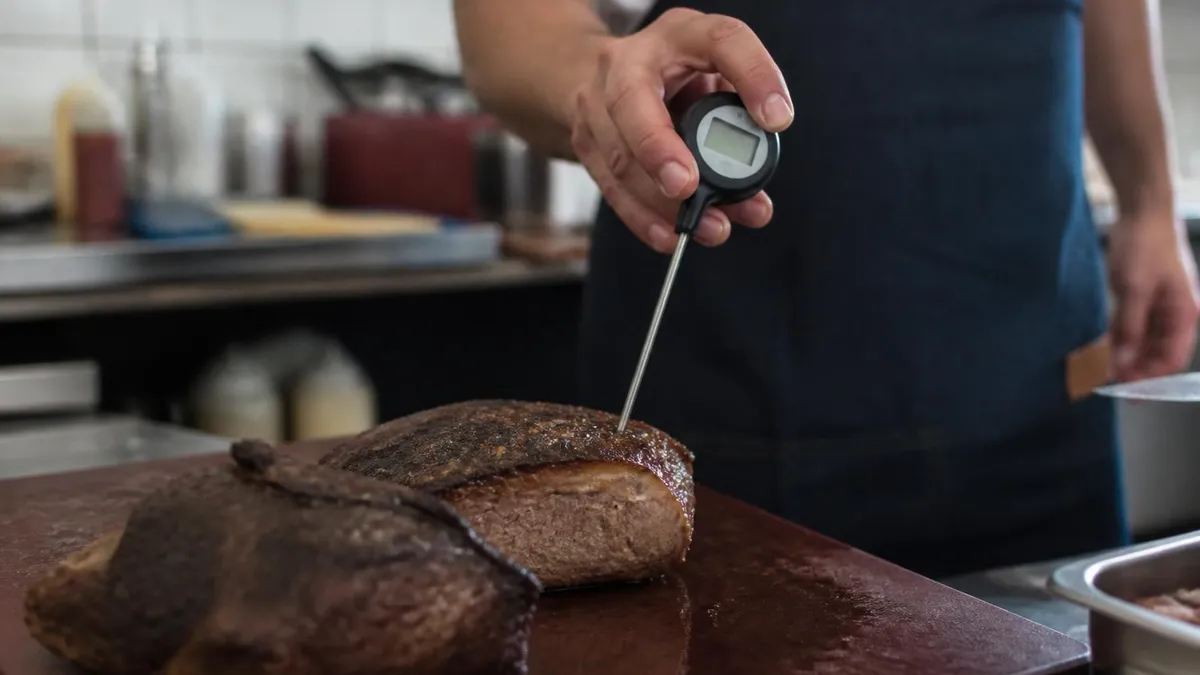
What You Need Before Sitting the Manager Exam
- ✓Valid government-issued photo ID — driver's licence, passport, or state ID accepted at Pearson VUE
- ✓Exam access code purchased through ServSafe or an approved instructor at $36-$58 depending on path
- ✓Quiet test environment with reliable broadband if sitting the online proctored version through ProctorU
- ✓Webcam plus working microphone — required for remote identity check and live monitoring throughout
- ✓Two-hour uninterrupted window — the timer keeps running during any mid-exam bathroom breaks
- ✓Recent study from the ServSafe Manager textbook or online practice tests covering all eight content domains
- ✓Confirmation that your state accepts ServSafe (every state with a CFPM rule does) plus any local add-ons
- ✓Calendar reminder set five years ahead to renew before expiration — no grace period in most states
Don't lose sight of what the certification actually tests. ServSafe Manager covers the FDA Food Code domains: foodborne illness recognition, time and temperature controls, cross-contamination prevention, personal hygiene, cleaning and sanitising, integrated pest management, facility design, and food safety management systems including HACCP basics. The exam is heavier on time-temperature questions than candidates expect — roughly 25% of all items hinge on cooking temperatures, hot-holding minimums, cold-holding maximums, and cooling rates.
The biggest knowledge gap most candidates have on first sitting is the cooling rule: cooked hot foods must move from 135°F down to 70°F within two hours, then from 70°F down to 41°F within an additional four hours, for a total cooling window of six hours. Many candidates mix up the temperatures, the time splits, or both. If you only memorise one rule cold for the exam, make it this one.
ServSafe vs Competing Providers
- +Largest catalogue of study material — textbook, online practice tests, instructor-led classes
- +Multi-language exam delivery in English, Spanish, Mandarin, Korean, and large-print English
- +Accepted in every state with a CFPM rule — no state-specific incompatibility issues
- +Online proctoring through ProctorU available with same-day scheduling in most states
- +Recognised brand name carries weight with corporate HR and chain operator compliance audits
- −Slightly higher exam fee than Prometric or AAA Food Handler at $36-$58 per attempt
- −Five-year recertification requires full retest — no shortened renewal path available nationally
- −Field-test items mixed in with scored questions add stress without contributing to your final result
- −Study materials add $50-$110 on top of exam fee for first-time candidates buying the full bundle
- −Online proctoring surveillance feels intense for candidates new to remote-monitored exams
Allergen training is the fastest-growing add-on. As of 2026, ten states require allergen awareness certification alongside the CFPM credential — Massachusetts, Michigan, Illinois, Rhode Island, Virginia, Maryland, and four others. ServSafe Allergens is a separate exam ($22, 40 questions, 70% pass, valid five years). Take it at the same time as your Manager exam to consolidate the renewal cycle.
What about HACCP-specific certification? Most state CFPM rules don't require HACCP separately — the ServSafe Manager exam covers HACCP basics. But seafood processors, juice manufacturers, and meat processors fall under FDA HACCP rules that require additional accredited training (often a 16-hour AFDO HACCP Manager course). If you work in those sectors, ServSafe Manager is the floor — not the ceiling — of your food safety credentials.
Take a few moments to test what you've learned about ServSafe state rules and exam structure with the practice quizzes below — they'll cement the detail.
One last practical note for anyone choosing between providers. Some smaller food operators favour Prometric or 360training because the pricing comes in $5-$10 cheaper than ServSafe — but the trade-off is study material quality. ServSafe's textbook and online practice tests are widely considered the most thorough preparation material on the market. If you're a first-time test-taker, the extra spend on ServSafe usually pays back in confidence and pass rate. Returning re-testers who already know the content cold can save by using Prometric.
And if you're hiring a manager who already holds a non-ServSafe credential, don't ask them to retake under ServSafe just because it's the brand you recognise. Any ANSI-CFP-accredited certificate is legally equivalent. Forcing a switch is a waste of money and the manager's time.
Sample ServSafe Food Safety Practice Questions
Try these questions from our free ServSafe Food Safety practice tests. The correct answer and an explanation follow each question.
When food is removed from its original container and placed in a new container, what information must be included on the label?
- A. Only the date it was transferred
- B. Only the type of food
- C. The food name and the use-by or discard date
- D. No label is needed if used within 24 hours
Answer: C. The food name and the use-by or discard date
Food removed from original containers must be labeled with both the food name and use-by or discard date to ensure proper tracking and prevent foodborne illness.
When must a food handler change gloves?
- A. Every 4 hours regardless of task
- B. When switching between handling raw and ready-to-eat foods
- C. Only when gloves appear visibly soiled
- D. At the beginning and end of each shift
Answer: B. When switching between handling raw and ready-to-eat foods
Gloves must be changed when switching tasks — especially between handling raw proteins and ready-to-eat foods — to prevent cross-contamination.
A food handler needs to drink water while working in the kitchen prep area. What is the correct procedure?
- A. They can drink from an open cup as long as it is kept away from food.
- B. They must leave the kitchen and drink in a designated break area.
- C. They can drink from a covered container with a straw.
- D. They are not allowed to drink anything while in the kitchen.
Answer: C. They can drink from a covered container with a straw.
To prevent saliva from contaminating hands, surfaces, or food, employees may drink from a covered container with a straw in food prep and dishwashing areas, if allowed by the local regulatory authority. Otherwise, eating, drinking, and smoking must be done in designated areas away from food preparation.
A large pot of chili was cooked to the correct temperature. According to the two-stage cooling process, what is the first step and its time limit?
- A. Cool from 135°F to 70°F within 4 hours
- B. Cool from 165°F to 70°F within 2 hours
- C. Cool from 135°F to 70°F within 2 hours
- D. Cool from 145°F to 41°F within 6 hours
Answer: C. Cool from 135°F to 70°F within 2 hours
The first stage of the two-stage cooling process requires that food be cooled from 135°F to 70°F within two hours. This is the most critical period because bacteria grow fastest in this upper range of the temperature danger zone. The second stage is to cool the food from 70°F to 41°F or lower in the next four hours, for a total cooling time of six hours.
ServSafe Questions and Answers
About the Author
Registered Sanitarian & Food Safety Certification Expert
Cornell University College of Agriculture and Life SciencesThomas Wright is a Registered Sanitarian and HACCP-certified food safety professional with a Bachelor of Science in Food Science from Cornell University. He has 17 years of experience in food safety auditing, regulatory compliance, and foodservice management training. Thomas prepares food industry professionals for ServSafe Manager, HACCP certification, and state food handler examinations.