
ServSafe Manager Study Guide: Everything You Need to Pass in 2026 September
🔎 Complete ServSafe manager study guide with key topics, practice tests, study schedule, and exam tips to earn your ServSafe certification in 2026 September.

The ServSafe manager study guide is the single most important tool you can use before sitting for one of the most recognized food safety credentials in the United States. Whether you are a restaurant manager, a kitchen supervisor, or a foodservice professional stepping into a leadership role, understanding how to study for the ServSafe Manager exam gives you a genuine competitive advantage. The exam is administered by the National Restaurant Association Educational Foundation and is accepted in nearly every state as proof of managerial food safety competency.
ServSafe certification is not merely a box to check. Many states legally require at least one certified food protection manager on the premises during all hours of operation, meaning your credential can directly affect whether a business stays open or faces regulatory action. The ServSafe Manager exam tests 90 questions drawn from eight core content areas, and a passing score requires at least 75 percent — 68 correct answers out of 90. That threshold sounds manageable, but without structured preparation, many candidates underestimate the depth of knowledge required.
Understanding the full scope of what ServSafe covers helps you allocate study time intelligently. Topics range from biological, chemical, and physical hazards to proper cooking temperatures, HACCP principles, employee hygiene, facility sanitation, and pest control. Each of these domains demands more than surface-level familiarity. You need to know specific temperature thresholds, time-temperature abuse windows, and the regulatory reasoning behind safe food handling protocols. Earning your servsafe certificate is achievable with the right preparation strategy.
One of the most effective preparation strategies is combining content review with active recall through practice testing. Research consistently shows that retrieval practice — forcing yourself to recall information rather than passively re-reading — dramatically improves long-term retention. For ServSafe specifically, working through practice questions helps you internalize the exact phrasing the exam uses, which matters because some questions hinge on precise terminology like the difference between a food allergy and a food intolerance, or between sanitizing and cleaning.
This guide is structured to give you everything in one place: a study schedule, the exam format, high-yield topic breakdowns, a preparation checklist, and answers to the questions candidates ask most often. We have organized the content to mirror the actual ServSafe Manager exam blueprint so that as you work through each section, you are building toward test-day readiness rather than reviewing information in an arbitrary order.
If you are new to the food safety space, do not let the breadth of material intimidate you. Most of what ServSafe tests reflects common-sense food safety principles that become intuitive once you understand the underlying science. Cold food must stay at 41°F or below. Hot food must be held at 135°F or above. The temperature danger zone between those two points is where bacteria multiply fastest — doubling every 20 minutes under ideal conditions. Once you anchor abstract rules to concrete reasoning, the content becomes much easier to retain and apply on exam day.
Throughout this guide you will find components designed to accelerate your preparation: a week-by-week study schedule, tabbed topic breakdowns, a pre-exam checklist, and curated practice quizzes aligned to real exam domains. Use them in sequence or jump to the sections most relevant to your current knowledge gaps. Either way, consistent and deliberate preparation is the difference between candidates who pass confidently and those who walk out of the testing center unsure of their result.
ServSafe Manager Exam by the Numbers
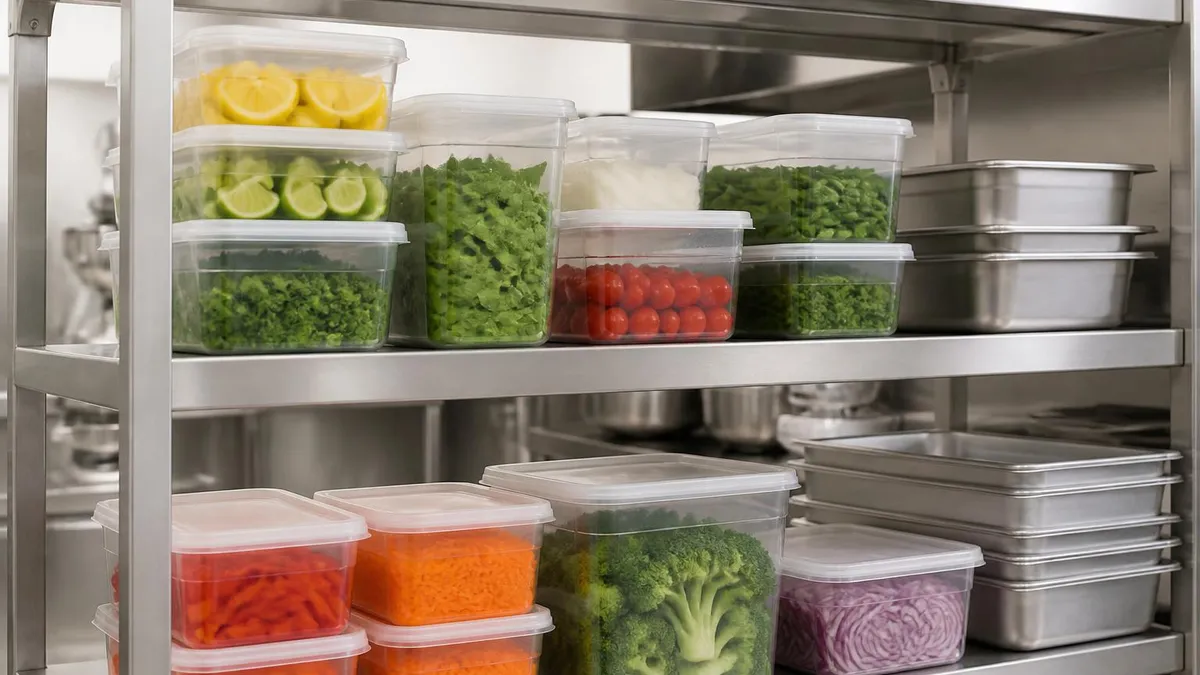
Study Schedule
- ▸Read ServSafe Manager Coursebook chapters 1–2 on foodborne illness and hazards
- ▸Learn the Big 9 allergens and the Big 6 pathogens (Salmonella, Norovirus, Shigella, E. coli, Hepatitis A, Typhoid)
- ▸Memorize temperature danger zone: 41°F–135°F
- ▸Complete 25 practice questions on foodborne illness and allergens
- ▸Study handwashing procedures: 20-second minimum, steps 1–5
- ▸Learn when employees must be excluded vs. restricted from work
- ▸Understand cross-contamination pathways: biological, chemical, physical
- ▸Complete 25 practice questions on hygiene and contamination prevention
- ▸Review receiving, storage, thawing, cooking, cooling, reheating protocols
- ▸Memorize minimum internal cooking temperatures for all protein categories
- ▸Study the two-stage cooling method: 135°F to 70°F in 2 hrs, then 70°F to 41°F in 4 hrs
- ▸Complete 30 practice questions on the flow of food
- ▸Learn all 7 HACCP principles in order from hazard analysis to record-keeping
- ▸Understand correct sanitizer concentrations: chlorine 50–99 ppm, iodine 12.5–25 ppm, quat 200–400 ppm
- ▸Review facility design, ventilation, plumbing, and pest control methods
- ▸Take a full-length 90-question timed practice test and review every missed answer
The ServSafe Manager exam draws questions from eight officially defined content areas, and understanding the relative weight of each helps you prioritize your study time. The largest section covers the flow of food — purchasing, receiving, storage, preparation, cooking, holding, cooling, and reheating — which collectively accounts for the greatest share of exam questions. Candidates who invest the most study time in this domain consistently report higher confidence on test day because the questions are concrete and testable through memorization of specific numbers and procedures.
Foodborne microorganisms and allergens represent the second most heavily tested area. You need to know the Big 6 pathogens by name, the illnesses they cause, their sources, and their specific control measures. For example, Norovirus is the leading cause of foodborne illness in the United States and is primarily controlled through strict handwashing and excluding sick employees.
Hepatitis A contaminates food through fecal-oral transmission and has a particularly long incubation period of 15 to 50 days, making tracing outbreaks especially challenging. The Big 9 allergens — milk, eggs, fish, shellfish, tree nuts, peanuts, wheat, soybeans, and sesame — must be memorized precisely because the exam tests both identification and proper allergen management procedures.
Personal hygiene and health policies form a critical third domain. The exam tests when food handlers must wash their hands (after using the restroom, handling raw meat, touching the face, taking out trash, or returning from a break), and the precise steps: wet, apply soap, scrub for 10–15 seconds, rinse, dry with a single-use towel or air dryer.
Equally important is knowing the distinction between restricting an employee (limiting their work to tasks that don't involve touching food or food-contact surfaces) versus excluding them entirely from the operation. Employees with Salmonella Typhi, Shigella, Shiga toxin-producing E. coli, Norovirus, or Hepatitis A must be excluded, not merely restricted.
ServSafe tests managers on their ability to understand and implement HACCP — Hazard Analysis and Critical Control Points. This systematic, science-based approach to food safety identifies points in the production process where hazards can be controlled or eliminated. The seven HACCP principles are tested in sequence: (1) conduct a hazard analysis, (2) identify critical control points, (3) establish critical limits, (4) establish monitoring procedures, (5) identify corrective actions, (6) verify the system works, and (7) establish record-keeping procedures. Candidates who memorize these principles in order and understand how they apply to a real kitchen workflow find this section significantly easier.
Facilities, cleaning, and sanitizing is another area that rewards memorization of specific numbers. Sanitizers are only effective within defined concentration ranges. Chlorine-based sanitizers must read 50–99 parts per million (ppm) on a test strip. Iodine sanitizers work at 12.5–25 ppm. Quaternary ammonium sanitizers require 200–400 ppm. Water temperature also matters — most sanitizers work best between 55°F and 120°F. The exam also covers the difference between cleaning (removing physical dirt and food residue) and sanitizing (reducing pathogens to safe levels), and the fact that a surface must be cleaned before it can be effectively sanitized.
Pest control, employee training, and food defense round out the remaining exam domains. For pest control, the exam focuses on integrated pest management (IPM): denying pests food, water, and shelter; sealing entry points; working with a licensed pest control operator; and never applying pesticides near food or food-contact surfaces. The food defense section, which grew in prominence after the Food Safety Modernization Act (FSMA), tests managers on vulnerability assessments and mitigation strategies for intentional contamination of food. To explore how these concepts connect, review servsafe certification online materials aligned to the 7th edition coursebook.
A common mistake candidates make is treating each content domain as isolated from the others. In practice, ServSafe scenarios on the exam often blend multiple domains into a single question. A scenario might describe a food handler who cuts raw chicken, then slices tomatoes without changing gloves or washing hands, and asks you to identify both the hygiene violation and the type of contamination that occurred.
Being able to recognize these multi-domain intersections is the mark of a well-prepared candidate and the reason that reading the coursebook cover to cover — rather than skimming individual topic summaries — consistently produces better outcomes.
ServSafe Manager Practice Test Strategy by Topic
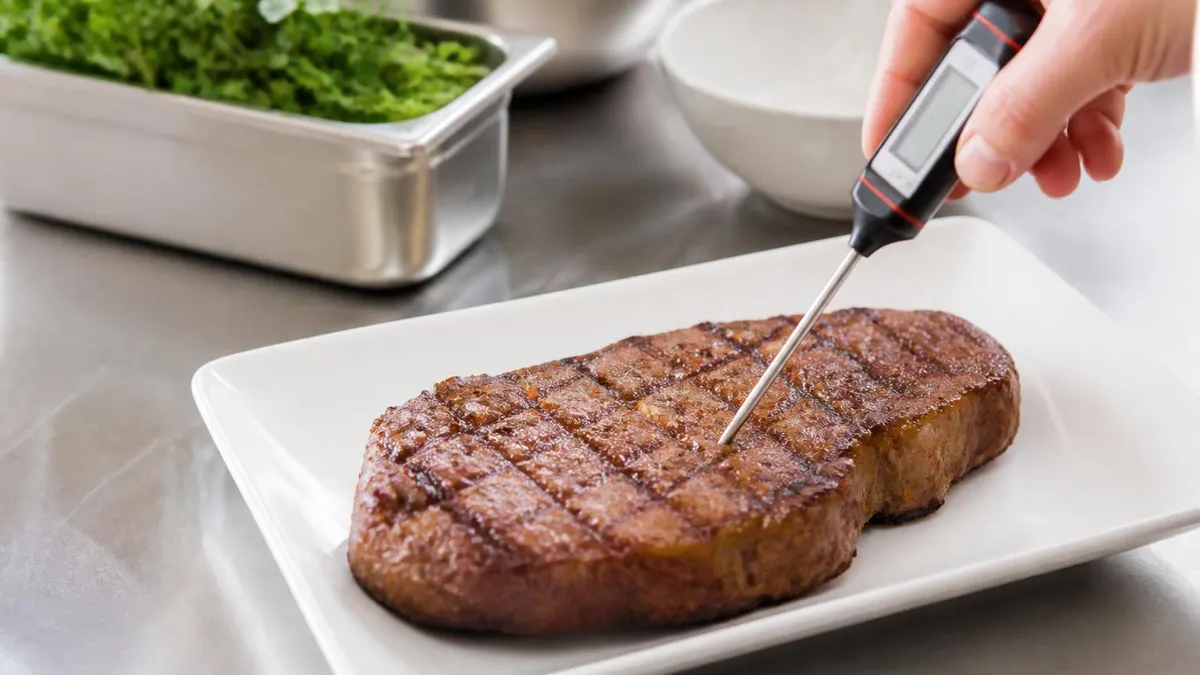
Temperature control is the highest-yield category on the ServSafe manager practice test, and candidates should approach it by building a complete temperature reference chart from memory. The danger zone runs from 41°F to 135°F. Raw ground beef and pork must reach 155°F for 15 seconds. Whole poultry requires 165°F for 15 seconds. Seafood and whole cuts of beef need 145°F for 15 seconds. Stuffed foods and dishes containing previously cooked ingredients must hit 165°F regardless of protein type.
The cooling process is tested with particular rigor because improper cooling is one of the leading causes of foodborne illness outbreaks. Food must drop from 135°F to 70°F within two hours, then continue cooling from 70°F to 41°F within an additional four hours — a total cooling window of six hours. Acceptable cooling methods include using an ice-water bath, adding ice as an ingredient, using a blast chiller, dividing food into shallow pans no deeper than two inches, or using ice paddles. Candidates frequently miss questions about reheating: food reheated for hot-holding must reach 165°F within two hours, not the standard cooking temperature for that protein.

Is the ServSafe Manager Certification Worth It?
- +Accepted in all 50 states, making it portable across employers and locations
- +Required by law in many states for at least one manager per food establishment
- +Demonstrates credible food safety knowledge to employers, inspectors, and guests
- +Increases earning potential — certified managers typically earn more than uncertified peers
- +Valid for five years, offering a long return on your study investment
- +Prepares you for real health department inspections by aligning with FDA Food Code standards
- −Exam fee plus proctoring can total $150–$200 depending on how you register
- −The coursebook costs an additional $50–$90 unless provided by your employer
- −Requires genuine study time — most candidates need 20–40 hours of preparation
- −Must be proctored, meaning you cannot take it at home without an approved remote option
- −Recertification every five years adds ongoing cost and time commitment
- −Does not replace a food handler card in jurisdictions that require both credentials
ServSafe Manager Exam Prep Checklist
- ✓Obtain the ServSafe Manager Coursebook 7th Edition (print or digital) before starting your study plan.
- ✓Memorize all minimum internal cooking temperatures for beef, pork, poultry, seafood, and reheated foods.
- ✓Learn the two-stage cooling method: 135°F→70°F in 2 hours, then 70°F→41°F in 4 more hours.
- ✓Study the Big 6 pathogens: Norovirus, Salmonella, Shigella, E. coli O157:H7, Hepatitis A, and Typhoid.
- ✓Memorize the Big 9 allergens including sesame, which was added under the FASTER Act in 2023.
- ✓Practice all 7 HACCP principles in sequence until you can recite them without prompts.
- ✓Know correct sanitizer concentration ranges for chlorine (50–99 ppm), iodine (12.5–25 ppm), and quat (200–400 ppm).
- ✓Complete at least two full-length 90-question timed practice tests before your exam date.
- ✓Review every wrong answer on practice tests and trace the error back to the relevant coursebook chapter.
- ✓Register for your exam through an approved proctor and confirm your testing location at least one week in advance.
75% Is the Magic Number — But Only 80 Questions Are Scored
The ServSafe Manager exam contains 90 questions, but 10 of them are unscored pilot questions used to develop future exams. You cannot tell which questions are pilot questions, so treat every question as if it counts. Your passing score of 75% applies only to the 80 scored questions, meaning you need 60 correct answers — not 68 — to pass. Understanding this distinction helps calibrate your performance expectations during timed practice tests.
Developing a sustainable passing strategy means going beyond reading the coursebook and hoping information sticks. The most effective ServSafe candidates combine spaced repetition, active recall, and scenario-based practice into a coherent system. Spaced repetition means reviewing the same material at increasing intervals — study temperature thresholds today, review them again in two days, then again in five days, then ten. This technique exploits the psychological spacing effect, which consistently produces stronger long-term memory than massed study sessions crammed into the night before an exam.
Active recall is the complement to spaced repetition. Rather than highlighting passages in your coursebook, close the book and try to write down everything you know about a topic from memory. This forces your brain to retrieve information rather than passively recognize it, which is the actual cognitive process required during an exam. Flashcards are a popular active recall tool for ServSafe because the exam tests many discrete facts: temperatures, ppm ranges, pathogen names, HACCP steps. Digital flashcard apps that automatically schedule reviews based on your performance history are especially efficient for this type of content.
Scenario-based practice is the third pillar of effective preparation. The ServSafe exam does not simply ask you to recite facts — it presents realistic kitchen situations and asks you to apply your knowledge to identify violations, determine corrective actions, or choose the safest procedure.
For example, a question might describe a food handler who receives a delivery of ground beef at 46°F and asks whether the shipment should be accepted or rejected (it should be rejected — ground beef must arrive at 41°F or below). Candidates who train only on fact recall often struggle with scenario questions because they haven't practiced the translation from knowledge to application.
Time management during the exam is worth addressing explicitly. You have 120 minutes for 90 questions, which works out to 80 seconds per question. Most questions take significantly less time than that, but scenario questions with longer stems can consume two to three minutes each. The best approach is to answer every question you are confident about first, mark uncertain questions for review, and return to them once you have completed the rest. Leaving questions unanswered is never advantageous — there is no penalty for guessing, so commit to an answer even when unsure.
Understanding how to interpret ServSafe question stems is a skill that pays dividends across the entire exam. Pay close attention to qualifying words like MOST likely, BEST, FIRST, or EXCEPT. These words fundamentally change the answer. A question asking which pathogen is MOST commonly associated with improperly cooled rice has a specific answer (Bacillus cereus) that is different from simply asking what pathogens can contaminate rice. Questions using EXCEPT ask you to identify the one option that does not fit the pattern, which is a common source of careless errors when candidates scan too quickly.
For candidates who want to understand deeper conceptual material rather than just memorize facts, reviewing what is servsafe certified content helps build the reasoning skills that make scenario questions intuitive rather than guesswork. When you understand why certain temperature thresholds exist — that 165°F destroys Listeria, Salmonella, and most other pathogens in the time frame specified, while lower temperatures require longer hold times — the numbers become logical rather than arbitrary, and you are far less likely to confuse them under exam pressure.
One practical strategy many candidates overlook is forming a study group with other food service professionals preparing for the same exam. Teaching a concept to someone else is one of the most powerful ways to consolidate your own understanding.
If you can explain the two-stage cooling method, the rationale behind it, and three acceptable techniques for achieving it to a colleague who has never heard of it before, you have achieved a depth of knowledge that will carry you through even the toughest exam scenario. Study groups also create accountability — knowing that others are counting on you to show up prepared increases the consistency of your study sessions.
The ServSafe Manager certification and the ServSafe Food Handler certification are two separate credentials with different exam formats, passing thresholds, and regulatory purposes. The Manager exam is 90 questions, requires a 75% passing score, and must be proctored. The Food Handler assessment is shorter, does not require a proctor, and typically meets requirements for line-level employees rather than supervisors. Check your state and local health code to confirm which credential — or both — your role legally requires before you register.
Test day preparation begins long before you walk into the testing center. In the 48 hours before your exam, shift your focus from learning new material to consolidating what you already know. Review your flashcards, skim your notes on the highest-yield topics, and take one final timed practice test to confirm your readiness. Avoid introducing new material during this window because your brain needs time to consolidate information through sleep, and cramming new facts the night before often displaces content you already know reliably.
Sleep is not optional. Research on memory consolidation consistently demonstrates that the brain processes and strengthens memories during deep sleep cycles. Candidates who sacrifice sleep to study more hours the night before an exam almost universally perform worse than those who stop studying at a reasonable hour, sleep a full seven to nine hours, and arrive at the testing center rested. Set two alarms, eat a protein-rich breakfast, and arrive at your testing location at least 15 minutes early to allow time for check-in procedures without feeling rushed.
On the day of the exam, bring the identification your testing provider requires. For most ServSafe proctored sessions, you will need a government-issued photo ID. If your exam is being administered through a third-party testing provider, confirm any additional requirements — some locations require two forms of ID, while others restrict certain personal items from the testing room. Arrive hydrated, having eaten a reasonable meal. Hunger and dehydration both impair cognitive function and increase susceptibility to careless errors.
During the exam itself, read every question completely before evaluating the answer choices. A common error is beginning to formulate an answer after reading only the first sentence of the question stem, then realizing mid-answer that the full scenario changes the correct response. ServSafe question writers are skilled at including detail in the final sentence that reframes the entire question. Treat each question as a fresh problem and resist the urge to pattern-match to a question you saw in practice — scenario details matter, and a small change in the setup can mean a different correct answer.
After completing the exam, most candidates receive their pass/fail result immediately if testing at a Pearson VUE or other computerized testing location. Your ServSafe certificate is issued by the National Restaurant Association Educational Foundation and will arrive by mail or become available digitally depending on your registration method. Keep a digital copy accessible because employers and health departments increasingly request proof of certification at the time of inspection rather than relying on wall-mounted paper certificates.
If you do not pass on your first attempt, ServSafe allows you to retake the exam. There is no mandatory waiting period, but you will need to pay the exam fee again. Before rescheduling, invest time in diagnosing which content areas cost you points. Most proctored administrations provide a score breakdown by content domain.
Use that breakdown to focus your additional study on the weakest areas rather than re-reviewing content you already mastered. For servsafe food handlers who are advancing to the manager credential, the biggest gaps are usually in HACCP principles, cooling procedures, and regulatory compliance topics that are not covered in the handler assessment.
Recertification every five years is a requirement that many long-tenured managers let slip until a health department inspection surfaces an expired certificate. Set a calendar reminder at the four-year mark to allow yourself a full year of lead time. The ServSafe recertification process mirrors initial certification — you study the current edition of the coursebook, which is updated to reflect changes to the FDA Food Code and emerging food safety research, then pass the proctored exam again. This ensures that certified managers stay current with evolving standards rather than applying knowledge from an outdated framework.
Beyond the exam itself, earning your ServSafe manager certification opens practical doors in day-to-day food service operations. Certified managers are better equipped to train their teams effectively because they understand not just the rules but the science behind them.
When a line cook asks why cooked chicken that looks and smells fine still needs to be discarded after sitting in the danger zone for more than four hours, a certified manager can explain the invisible microbial reality: pathogen counts can reach dangerous levels without any sensory indicators. This kind of authoritative, evidence-based communication builds a stronger food safety culture than rule-posting alone ever could.
Health department inspections are another domain where your ServSafe credential delivers tangible value. Inspectors recognize ServSafe as the industry standard and often view a certified manager on-site as a positive risk signal that reduces the depth or frequency of scrutiny. More importantly, a manager who has studied ServSafe thoroughly recognizes violation risks before an inspector does — a walk-through with ServSafe eyes spots improper storage order in the walk-in cooler, unlabeled ready-to-eat foods prepared more than 24 hours ago, or a hand sink blocked by a delivery box before these issues become written citations.
Staff training programs are more effective when grounded in ServSafe principles. The certification provides a common vocabulary and a recognized framework that employees can reference when they have questions. Posting ServSafe temperature charts, distributing allergen management guides to servers, and running team meetings that reinforce HACCP critical control points all become more credible and impactful when the manager leading them holds a nationally recognized credential. Some operations use ServSafe certification as a milestone in their internal promotion pathways, creating a visible incentive for kitchen staff to advance their own food safety knowledge.
The digital transformation of the food service industry has also made ServSafe credentials more traceable and verifiable than ever before. Health departments in many jurisdictions can query the National Restaurant Association Educational Foundation's certification database directly, meaning your certification record is linked to your legal name and employer.
This creates accountability that benefits the entire industry — it becomes harder for operations to falsely claim certified management when regulatory systems can verify credentials in real time. For individual managers, this traceability means your credential is genuinely yours and travels with your professional identity, not just a paper certificate that sits in a filing cabinet.
For food service entrepreneurs opening their first establishment, ServSafe certification is often required before a business license or health permit is issued. Understanding the ServSafe framework from the perspective of a business owner rather than an employee adds another dimension to how you apply the knowledge.
You are not just following procedures set by someone else — you are designing the food safety management system for your own kitchen, writing your own SOPs, training your own staff, and bearing legal responsibility for the outcomes. That context makes the investment of 20 to 40 hours of study time an obvious business decision rather than a compliance burden.
Community college and vocational culinary programs increasingly integrate ServSafe preparation into their curricula, recognizing that graduates who enter the workforce already certified are more immediately valuable to employers. If you are a student in such a program, take full advantage of any instructor-led review sessions, practice exams, or study materials provided through your school. The coursebook is the same regardless of how you access it, but classroom discussion of complex scenarios and real-world application examples can deepen comprehension in ways that solo study cannot fully replicate.
Whether you are a first-time candidate, a manager whose credential recently expired, or a servsafe food handlers professional advancing your credentials, the path to a passing score is straightforward: study the right material, practice retrieval regularly, understand the science behind the rules, and approach exam day with a clear head and a structured plan. The knowledge you build for this exam will serve you — and the people who eat the food your operation produces — for years beyond the test itself.
ServSafe Questions and Answers

ServSafe Manager Online Course: What's Included, How Long It Takes, and How to Pass

ServSafe Manager Practice Test 2026

ServSafe Knowledge Questions: Core Concepts You Have to Lock In
ServSafe Food Handler: Study Guide & Practice Test

Pearson VUE Flushing Queens Location ServSafe Exam: Complete Testing Center Guide
About the Author

Registered Sanitarian & Food Safety Certification Expert
Cornell University College of Agriculture and Life SciencesThomas Wright is a Registered Sanitarian and HACCP-certified food safety professional with a Bachelor of Science in Food Science from Cornell University. He has 17 years of experience in food safety auditing, regulatory compliance, and foodservice management training. Thomas prepares food industry professionals for ServSafe Manager, HACCP certification, and state food handler examinations.
Join the Discussion
Connect with other students preparing for this exam. Share tips, ask questions, and get advice from people who have been there.
View discussion (7 replies)