
Pearson VUE Flushing Queens Location ServSafe Exam: Complete Testing Center Guide
ServSafe exam locations and proctoring explained: Pearson VUE Flushing Queens, online proctoring, ID rules, scheduling, and what to expect on test day. 🗨️
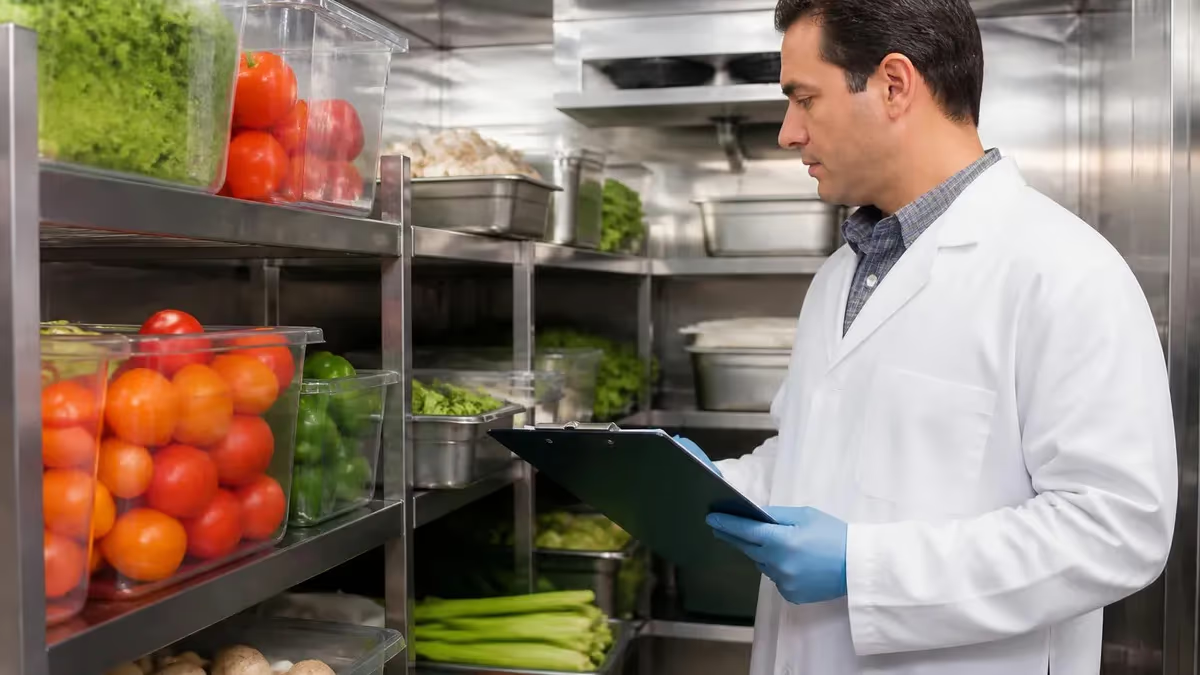
Finding the right Pearson VUE Flushing Queens location ServSafe exam testing center is one of the most stressful pieces of certification logistics for New York food service workers, and it should not be. Whether you are studying for the ServSafe Manager exam, the ServSafe Food Handler assessment, or the ServSafe Alcohol primary test, the proctoring environment can make a measurable difference in your score. This guide breaks down every aspect of exam locations, proctor requirements, and what to expect from check-in through final score release.
The ServSafe certification program is operated by the National Restaurant Association, but the high-stakes Manager-level exam is delivered through third-party proctoring channels. The most common delivery network is Pearson VUE, which operates physical test centers in cities across the country, including the Flushing Queens area of New York City. Other sessions are administered by registered ServSafe instructors at private classroom locations, while a growing number of candidates choose online remote proctoring through ProctorU or similar services for at-home convenience.
Choosing where to take the test affects more than just commute time. Your testing environment determines what materials are allowed in the room, how breaks are handled, the speed of your score release, and even the retake policy if you fall short of the 75 percent passing threshold. Becoming servsafe certified requires not only mastering the curriculum but also navigating the administrative process with confidence so test-day anxiety does not derail months of preparation.
The Pearson VUE testing center in Flushing is one of dozens in the New York metro region. Candidates typically book a seat one to three weeks in advance through the official ServSafe.com portal. The Queens location is popular because of subway accessibility from the 7 line, ample parking compared to Manhattan centers, and a reliable record of on-time start times. Many local restaurant groups send their entire kitchen leadership team to this center because of the consistent quality of administration.
Online remote proctoring has grown significantly since 2020, particularly among candidates working in smaller cities without convenient Pearson VUE coverage. Remote proctors monitor your webcam, microphone, and screen for the entire duration of the exam, and they enforce environmental rules that are arguably stricter than the in-person testing room. Both pathways are legitimate and produce the same nationally recognized credential, but candidates often perform better in one environment versus the other depending on their personality and study habits.
Understanding the differences before you book is essential. Once a session is scheduled and you are within 24 hours of the start time, rescheduling fees and policy restrictions kick in. Walking into the wrong type of location, forgetting to bring a second form of ID, or failing to clear your desk for a remote session can result in immediate disqualification with no refund. This guide is built around the questions candidates email the most after booking but before testing day arrives.
By the end of this resource you will know how to find the nearest authorized testing site, what to expect at check-in, how the proctor handles bathroom breaks, what items you can and cannot bring, and how to dispute scoring irregularities if something goes wrong. We also cover the differences between Manager-level Pearson VUE proctoring and Food Handler exams that can typically be completed from any browser without proctor supervision.
ServSafe Proctoring by the Numbers
- The ServSafe Food Handler assessment contains 40 questions. (National Restaurant Association / National Restaurant Association Solutions, LLC)
- The ServSafe Food Protection Manager examination contains 90 questions, comprising 80 scored questions and 10 unscored pilot questions. (National Restaurant Association / National Restaurant Association Solutions, LLC)
- The ServSafe Food Handler assessment has no time limit. (National Restaurant Association / National Restaurant Association Solutions, LLC)
- The standard ServSafe Food Handler passing score is at least 75%, although some jurisdictions have different requirements. (National Restaurant Association / National Restaurant Association Solutions, LLC)
- Passing the ServSafe Food Protection Manager examination requires at least 70%, equivalent to 56 correct answers out of 80 scored questions. (National Restaurant Association / National Restaurant Association Solutions, LLC)
- ServSafe charges $10 USD to mail a certificate directly to its recipient. (National Restaurant Association / National Restaurant Association Solutions, LLC)
- Scheduling a ServSafe Manager ProctorU examination less than 24 hours before the selected appointment incurs an additional $12 USD fee. (National Restaurant Association / National Restaurant Association Solutions, LLC)
- Each ServSafe Food Protection Manager retake requires purchasing a new examination. (National Restaurant Association / National Restaurant Association Solutions, LLC)
- ServSafe Food Protection Manager candidates may attempt the examination twice within 30 days, must wait 60 days after a second failed attempt, and may make no more than four attempts within 12 months. (National Restaurant Association / National Restaurant Association Solutions, LLC)
Facts verified Oct 15, 2026 against National Restaurant Association / National Restaurant Association Solutions, LLC. Dates that have passed are removed automatically.
ServSafe Exam at a Glance
| Item | Detail | Official source |
|---|---|---|
| Number of questions (ServSafe Food Handler) | 40 questions | National Restaurant Association / National Restaurant Association Solutions, LLC |
| Number of questions (ServSafe Food Protection Manager) | 90 questions: 80 scored and 10 unscored pilot questions | National Restaurant Association / National Restaurant Association Solutions, LLC |
| Time limit (ServSafe Food Handler) | No time limit | National Restaurant Association / National Restaurant Association Solutions, LLC |
| Passing score (ServSafe Food Handler) | 75%; jurisdiction-specific requirements may differ | National Restaurant Association / National Restaurant Association Solutions, LLC |
| Passing score (ServSafe Food Protection Manager) | 70%; at least 56 of 80 scored questions correct | National Restaurant Association / National Restaurant Association Solutions, LLC |
| Exam fee (ServSafe — mailed certificate) | $10 for a mailed certificate | National Restaurant Association / National Restaurant Association Solutions, LLC |
| Exam fee (ServSafe Manager — ProctorU Take It Now scheduling) | $12 extra for scheduling less than 24 hours ahead | National Restaurant Association / National Restaurant Association Solutions, LLC |
| Exam fee (ServSafe Manager — ProctorU Take It Soon scheduling) | $8 extra for scheduling 24–72 hours ahead | National Restaurant Association / National Restaurant Association Solutions, LLC |
| Retake fee (ServSafe Food Protection Manager) | A new examination purchase is required | National Restaurant Association / National Restaurant Association Solutions, LLC |
| Retake policy (ServSafe Food Protection Manager) | Two attempts within 30 days; 60-day wait after the second failure; maximum four attempts in 12 months | National Restaurant Association / National Restaurant Association Solutions, LLC |
| Validity (ServSafe Food Handler certificate) | 3 years; local or company rules may require earlier renewal | National Restaurant Association / National Restaurant Association Solutions, LLC |
| Validity (ServSafe Food Handler — started online course) | Complete within 60 days of starting | National Restaurant Association / National Restaurant Association Solutions, LLC |
| Validity (ServSafe Food Protection Manager certification) | 5 years; local requirements may differ | National Restaurant Association / National Restaurant Association Solutions, LLC |
| Validity (ServSafe Manager — started online course) | Complete within 90 days of starting | National Restaurant Association / National Restaurant Association Solutions, LLC |
| Validity (ServSafe online courses — unused access) | 1 year from purchase | National Restaurant Association / National Restaurant Association Solutions, LLC |
| Renewal (ServSafe Food Protection Manager) | Pass the certification examination again and meet local requirements | National Restaurant Association / National Restaurant Association Solutions, LLC |
| Delivery (ServSafe Food Handler — online assessment) | Online; no proctor required | National Restaurant Association / National Restaurant Association Solutions, LLC |
| Delivery (ServSafe Food Protection Manager) | Proctored examination; print and online options | National Restaurant Association / National Restaurant Association Solutions, LLC |
| Delivery (ServSafe Manager — online proctoring) | Remote online proctoring included | National Restaurant Association / National Restaurant Association Solutions, LLC |
| Delivery (ServSafe Manager — Pearson VUE testing center) | Online examination at a Pearson VUE testing center | National Restaurant Association / National Restaurant Association Solutions, LLC |
| Score release (ServSafe Manager — online examination) | Immediate pass/fail result | National Restaurant Association / National Restaurant Association Solutions, LLC |
Facts verified Oct 15, 2026 against National Restaurant Association / National Restaurant Association Solutions, LLC. Dates that have passed are removed automatically.
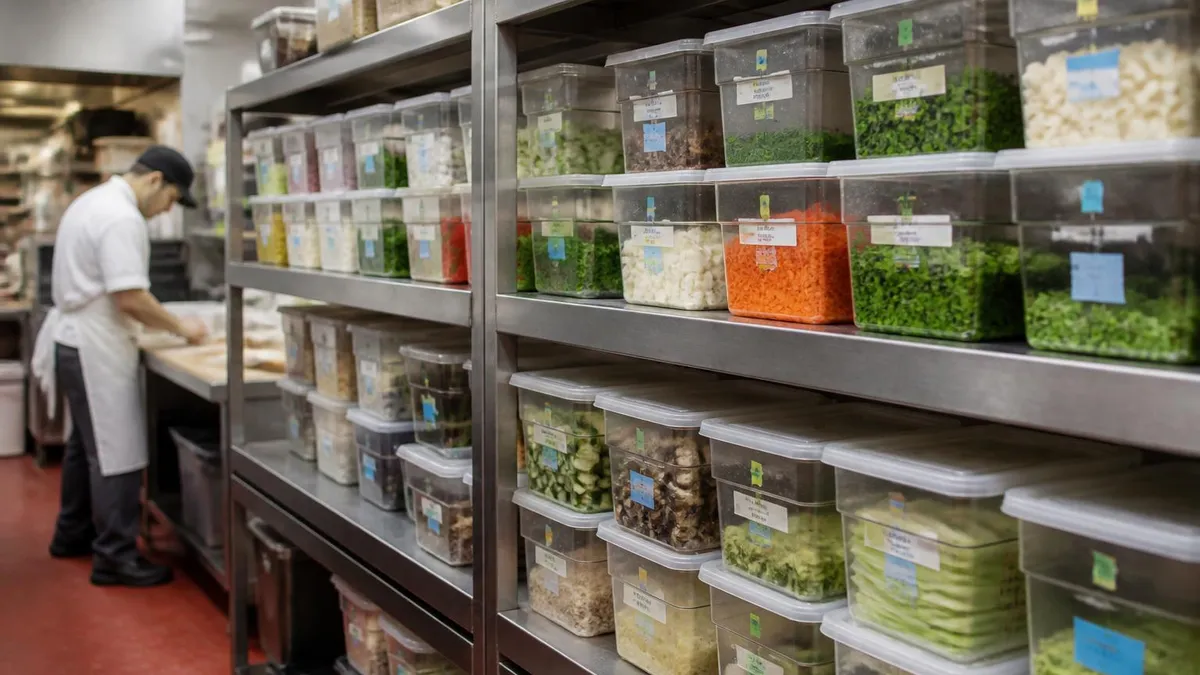
Where You Can Take the ServSafe Exam
Dedicated commercial testing centers including the Flushing Queens location. Quiet, monitored rooms with assigned workstations, lockers for personal belongings, and bathroom breaks handled by on-site staff.
Group classroom proctoring led by a Registered ServSafe Instructor or Proctor. Often offered immediately following an 8-hour Manager training course at restaurants, hotels, or community colleges.
Take the exam from your home or office. A live proctor monitors your webcam, microphone, and screen the entire session through ProctorU or the ServSafe online platform.
Large restaurant groups and hospitality chains host private sessions at internal training facilities. The exam runs identically to a public Pearson VUE site under the same security protocols.
The ServSafe Food Handler entry-level credential does not require an in-person proctor. Candidates complete a short web-based assessment from any computer with no live monitoring.
Choosing between online and in-person proctoring is one of the most consequential decisions you will make after registering. Both pathways yield the same exact certificate when you pass, but the test-day experience differs in meaningful ways that affect comfort, focus, and even pacing. A growing share of candidates earn their servsafe food handler certification through remote channels, while the more demanding Manager-level exam is split roughly sixty-forty between online and physical centers.
In-person testing at the Pearson VUE Flushing Queens center begins with arrival at least thirty minutes before your scheduled start. You check in at the front desk, present two forms of identification, sign a digital roster, and receive a noteboard and dry-erase marker for scratch work. A staff member escorts you to your assigned workstation in a quiet testing room shared with other candidates taking unrelated exams. Cameras monitor the room continuously, and staff conduct periodic walkthroughs.
Online proctoring starts on your own device. Roughly fifteen minutes before the exam, you log in to the ServSafe portal, run a system check, and connect with a live proctor through a video chat window. The proctor asks you to pan your webcam around the entire room, show under your desk, and confirm that no second monitors, phones, or notes are within arm's reach. Once cleared, you launch the exam in a secured browser that locks down your machine for the duration.
One subtle advantage of in-person testing is the predictability of the technology stack. The Pearson VUE workstation is a controlled environment with a known operating system, monitor, and keyboard. Your home setup might suffer from a flaky webcam, an unreliable router, or an aggressive screensaver that interrupts the session. If your internet connection drops during an online exam, the proctor will pause the timer, but reconnecting can be stressful and occasionally leads to forced reschedules.
Comfort is the strongest argument in favor of remote testing. Many candidates find that taking the exam from their kitchen table, wearing comfortable clothes, with water already at hand, lowers their physiological stress response significantly. Studies of high-stakes credentialing exams have shown small but measurable performance gains for candidates in familiar environments, particularly for those with documented test anxiety. Travel-related stress, parking concerns, and unfamiliar surroundings can subtract several percentage points from a borderline performer.
Cost is essentially identical between the two modes. The Manager exam is currently bundled at $179 to $195 depending on whether you purchase the exam alone or paired with the online course and book. Some Pearson VUE centers add a small administrative fee, though Flushing Queens does not at the time of this writing. The online proctored option occasionally runs promotions through Servsafe.com that include a free retake voucher, which is worth tracking if you suspect you might need a second attempt.
One final consideration: the score release timing is the same for both. Manager exam scores appear in your ServSafe.com dashboard within four hours of completion, and the official printable certificate is available within ten business days. So while the testing experience itself differs, the downstream certification timeline is identical regardless of whether you visited Flushing Queens or stayed home in your slippers.

ServSafe Practice Test Questions
Prepare for the ServSafe Food Safety Practice Test exam with our free practice test modules. Each quiz covers key topics to help you pass on your first try.
ServSafe Foodborne Illnesses and Allergens
ServSafe Exam Questions covering Foodborne Illnesses and Allergens. Master ServSafe Test concepts for certification prep.
ServSafe Personal Hygiene and Health
Free ServSafe Practice Test featuring Personal Hygiene and Health. Improve your ServSafe Exam score with mock test prep.
ServSafe Preventing Cross-Contamination
ServSafe Mock Exam on Preventing Cross-Contamination. ServSafe Study Guide questions to pass on your first try.
ServSafe Safe Food Handling Practices
ServSafe Test Prep for Safe Food Handling Practices. Practice ServSafe Quiz questions and boost your score.
ServSafe Alcohol Test - Primary and Advanced
ServSafe Questions and Answers on Alcohol Test - Primary and Advanced. Free ServSafe practice for exam readiness.
ServSafe Cleaning and Sanitizing Procedures
ServSafe Mock Test covering Cleaning and Sanitizing Procedures. Online ServSafe Test practice with instant feedback.
ServSafe Food Contamination and Allergens
Free ServSafe Quiz on Food Contamination and Allergens. ServSafe Exam prep questions with detailed explanations.
ServSafe HACCP System Implementation
ServSafe Practice Questions for HACCP System Implementation. Build confidence for your ServSafe certification exam.
ServSafe Manager Exam
ServSafe Test Online for Manager Exam. Free practice with instant results and feedback.
ServSafe Proper Personal Hygiene
ServSafe Study Material on Proper Personal Hygiene. Prepare effectively with real exam-style questions.
ServSafe Certification Identification and Check-In Rules
Pearson VUE requires one government-issued photo identification document with your full legal name, a recent photograph, and a signature. Acceptable primary IDs include a US driver's license, a state-issued non-driver ID card, a current US passport or passport card, a military ID, or a US permanent resident card. The name on this ID must exactly match the name you used when registering on ServSafe.com.
If the names do not match, even by a middle initial, the center may refuse to admit you. The most common problems are nicknames, recently changed last names after marriage, and registrants who used a hyphenated name on the website but their license uses a single surname. Bring marriage certificates or court orders if you have recently changed your legal name and your ID has not yet been updated.
Pearson VUE Flushing Queens vs Online Proctoring
- +Quiet, distraction-free testing room with monitored security
- +Predictable, professionally maintained computer workstations
- +On-site technical support if hardware malfunctions
- +Free locker storage for phones, wallets, and personal items
- +Convenient subway access from the 7 train
- +Standardized check-in process with experienced staff
- +Bathroom breaks handled by staff without timer interference
- −Requires travel time and potentially parking fees
- −Limited seat availability during peak weekends
- −Strict 30-minute early arrival requirement
- −Shared room means quiet sniffles or coughs from neighbors
- −Cannot wear bulky outerwear or hats during testing
- −Two physical IDs must be presented in person
- −Rescheduling penalty if you cancel within 24 hours
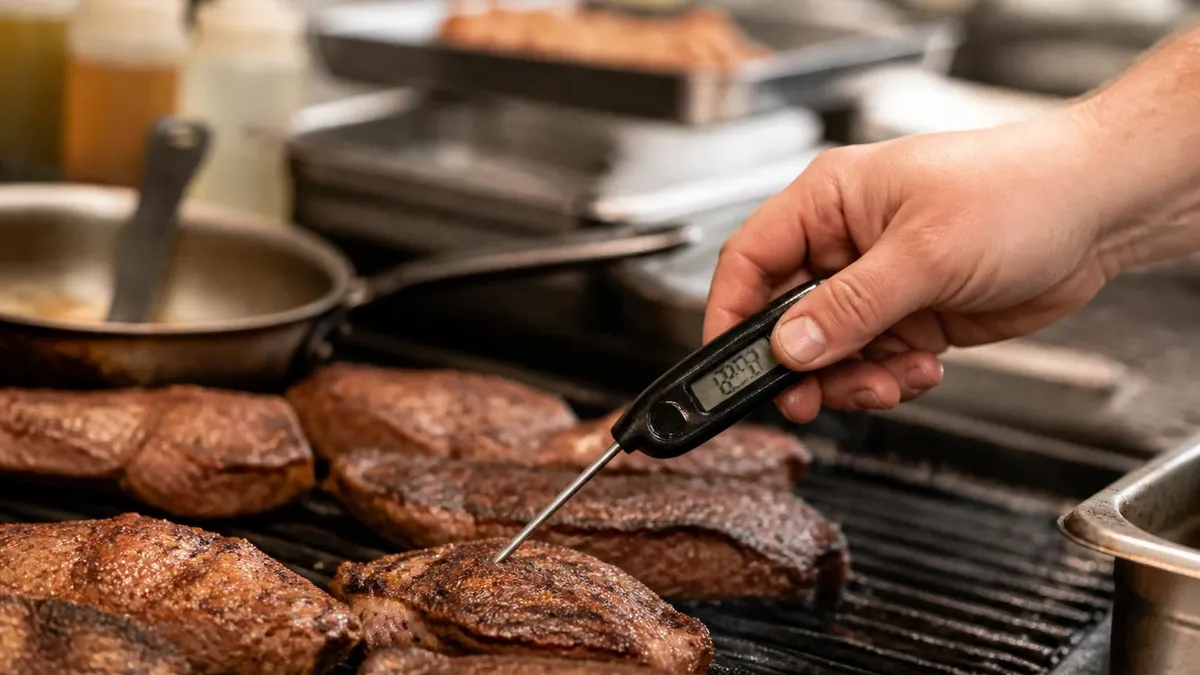
ServSafe Test Day Checklist for Pearson VUE
- ✓Confirm your appointment time and location 48 hours in advance
- ✓Pack your primary government-issued photo ID and check the expiration date
- ✓Pack a secondary ID with photo or signature in a separate location
- ✓Print your appointment confirmation email or save it offline on your phone
- ✓Plan your route and arrive 30 minutes before the scheduled start time
- ✓Eat a substantial meal 60 to 90 minutes before the exam to maintain focus
- ✓Wear comfortable layered clothing without hats, hoods, or thick sweaters
- ✓Use the bathroom immediately before check-in to avoid mid-exam breaks
- ✓Leave study notes, phones, smartwatches, and food in the provided locker
- ✓Take a deep breath, read each question fully, and trust your preparation
Book the first session of the day
The 8:00 AM Saturday and 9:00 AM weekday sessions at Pearson VUE Flushing Queens consistently start within five minutes of the scheduled time. Afternoon sessions can run 15 to 20 minutes late due to cascading delays from earlier exams. Booking the first session of the day also means a quieter room, fresher staff, and easier parking on side streets near the testing center.
Mistakes during ServSafe exam administration are surprisingly common, and most of them are completely preventable with a few hours of preparation. The Pearson VUE network reports that roughly four percent of all candidates arrive on test day with an issue that delays or disqualifies them. At the Flushing Queens location specifically, the rate hovers around three percent thanks to detailed pre-test communication from the center, but new candidates without a proctored testing background remain the most vulnerable group. Knowing the patterns of failure ahead of time gives you a meaningful edge.
The single most frequent disqualification cause is identification mismatch. Candidates register through ServSafe.com using their work email and a casual version of their name, then arrive at the center with a passport bearing their formal legal name and an unrecognized middle initial. Proctors are required to enforce exact name matching with no judgment calls allowed. A mismatch results in an inability to start the exam, no refund, and the requirement to reschedule for a future date after updating your account profile to match official documents.
Arriving late is the second most common problem. Pearson VUE policy gives candidates a fifteen-minute grace window from the scheduled start time, after which the workstation is reassigned and your seat is considered forfeit. The Flushing area subway can experience signal delays on the 7 train, and Queens Boulevard traffic during rush hour is notoriously unpredictable. Build at least sixty minutes of buffer into your travel plan, especially for morning sessions where you cannot afford to wait for the next available appointment slot.
Bringing prohibited items into the testing room is another recurring issue. Smartwatches in particular trip up candidates who forget they are wearing one. Apple Watches, Fitbits, Garmins, and even fitness tracker rings must all be stored in your locker. The same applies to medical devices such as continuous glucose monitors with smartphone connectivity, though proctors will accommodate these with prior notice and a doctor's letter. Submit any accommodation request at least two weeks before your scheduled exam date.
Misunderstanding the open-book versus closed-book rules causes problems for candidates who took an instructor-led course where the textbook was permitted during practice. The official ServSafe Manager exam is closed-book under every administration channel, including online proctoring. No notes, study guides, formula cards, or coursebook excerpts are allowed within the testing area. Some candidates have heard from older mentors that the exam was open-book years ago. That has not been true since the 6th edition coursebook was retired in 2014.
Technical failures during online proctoring affect approximately two percent of remote sessions. The most common cause is a webcam driver issue or a router that resets in the middle of the exam. Before your session, run the official ServSafe system check from the same exact computer, browser, and location you will use on exam day. If your home internet is unreliable, consider booking a Pearson VUE seat instead, or set up a mobile hotspot as a backup connection that you can switch to within a few minutes.
Finally, do not underestimate the cognitive load of the proctored environment itself. Some candidates who scored consistently in the high 80s on the servsafe certificate practice tests are surprised to score in the low 70s on the real proctored exam. The novelty of being watched, the unfamiliar workstation, and the time pressure combine to reduce performance unless you have explicitly practiced in conditions that mimic the real environment. Take at least two timed full-length practice exams without notes before booking your seat.
Pearson VUE and ServSafe enforce a strict 24-hour cancellation policy. If you miss your scheduled appointment or reschedule within 24 hours of the start time, the exam fee is forfeited and you must purchase a new exam voucher to test again. Mark the rebooking deadline on your calendar the moment you confirm your appointment, and contact ServSafe customer support immediately if a true emergency prevents attendance.
Once you click Submit on your final question, the proctored portion of your ServSafe journey is essentially over, but several important administrative milestones still lie ahead. Understanding the post-exam scoring timeline, certificate delivery process, and retake policies helps you plan downstream activities like submitting proof of certification to a new employer, applying for a managerial promotion, or registering for higher-level credentials such as the servsafe manager certification annual renewal cycle.
The Manager exam is scored automatically by the secure testing engine within seconds of submission, but Pearson VUE and ServSafe enforce a brief verification window before the score is released to your account dashboard. For in-person testing at the Flushing Queens center, your unofficial pass-fail status often appears on the screen immediately, while the percentage score posts to ServSafe.com within four hours. Online proctored candidates see results in the same dashboard within four to six hours of session completion.
The passing threshold for the ServSafe Manager exam is 75 percent, calculated as 60 correct answers out of the 80 scored questions on the form. There are an additional 10 unscored experimental questions mixed into the exam, but candidates cannot identify which are which, so every question deserves your full attention. Below the 75 percent threshold the result is a fail, and your dashboard will list the topic areas where you scored weakest so that you can target your retake preparation effectively.
If you do not pass, you may retake the exam up to two additional times within a 30-day window from your original test date. After the second failed attempt, ServSafe requires a 60-day waiting period before any additional retakes, and recommends completing additional formal coursework before testing again. The retake fee is a new $36 exam voucher for the online version or full price for an in-person Pearson VUE booking. Some employers cover retake costs as part of their training benefits, so check with HR before paying out of pocket.
Once you pass, your official certificate becomes available as a downloadable PDF in your ServSafe.com account within ten business days. The certificate is valid for five years from the date of the exam, after which you must retake the full Manager exam to remain in compliance. Some states such as Illinois, California, and Texas require additional state-specific certificates that build on top of the national ServSafe credential, so verify local requirements with your county health department.
Employers, health inspectors, and franchise compliance teams can verify your credential through the ServSafe.com lookup tool by entering your certificate number and date of birth. The certificate number is essentially a permanent ID that follows you across jobs, so save the PDF and the number itself in multiple secure locations. Many candidates upload the PDF to LinkedIn, store it in a personal cloud drive, and email a copy to themselves so it is always retrievable when starting a new role.
The Pearson VUE Flushing Queens location, like every authorized site in the network, handles the proctoring portion only. All scoring, certificate issuance, and verification questions must be directed to ServSafe customer support at 1-800-765-2122 or through the help portal on ServSafe.com. The proctor cannot release scores manually, override results, or expedite certificate delivery. Knowing the right channel for each post-exam question will save you hours of frustration during what is otherwise a celebratory milestone.
With all the logistical and administrative details out of the way, the final piece of the puzzle is practical day-of preparation. The candidates who walk into the Pearson VUE Flushing Queens location ready to perform their best share several habits that go beyond raw content mastery. They optimize sleep, hydration, nutrition, and mindset in the 48 hours leading up to the exam. They also rehearse the physical and emotional flow of the testing day, so nothing about check-in or proctoring catches them off guard during their actual attempt.
Sleep is the single highest use variable. Two consecutive nights of seven to nine hours of sleep before the exam will improve recall, reasoning, and stress tolerance more than any amount of last-minute cramming. Avoid the temptation to study past 9:00 PM the night before the test. Cramming activates short-term memory pathways that interfere with the consolidated long-term recall you have built over weeks of studying. A light review of flashcards or a quick scan of weak topics is fine; an all-nighter is actively harmful.
Hydration and blood sugar regulation are next. Drink steady water throughout the day before the exam, but taper your fluid intake about two hours before check-in to avoid mid-exam bathroom runs. Eat a balanced meal containing protein, complex carbohydrates, and a small amount of fat 60 to 90 minutes before your scheduled start. Oatmeal with eggs and fruit, or a turkey sandwich with whole grain bread and an apple, are common high-performance pre-exam meals. Avoid heavy fried foods, sugary energy drinks, and excessive caffeine.
Mental rehearsal matters more than most candidates realize. The night before the exam, close your eyes and walk yourself through the entire morning step by step. Visualize waking up, eating breakfast, packing your IDs, traveling to Flushing, checking in at the front desk, sitting at the workstation, and confidently working through the first ten questions. Sports psychologists have used this technique with Olympic athletes for decades because it primes your brain to handle each step calmly when it actually happens.
During the exam itself, employ a strict time management strategy. The Manager exam gives you two hours for 90 questions, which works out to roughly 80 seconds per question. Read each question fully before scanning the answers, and eliminate obviously wrong choices first. Flag any question where you are unsure and return to it during the final review pass. Most candidates finish the first pass in 70 to 80 minutes, leaving 40 minutes for flagged questions and a final review.
Avoid second-guessing your initial answer unless you find new evidence in a later question that genuinely changes your reasoning. Studies of multiple-choice test behavior consistently show that first instincts are correct more often than revised answers. Trust your preparation, mark your answer, and move on. Spending five minutes agonizing over a single question burns time you will need for later items where your knowledge gap is more pronounced and the stakes of choosing carefully are higher.
Finally, on the way home from the Flushing Queens center or after closing your laptop on a remote session, do not obsess over questions you got wrong. The exam is over, the score is locked in, and worrying about it changes nothing. Celebrate the completion of months of preparation, treat yourself to a meal, and wait for the score release. Whatever the result, you are now part of a community of millions of food service professionals who have invested in their craft, and that investment pays dividends for the rest of your career.
Sample ServSafe Food Safety Practice Questions
Try these questions from our free ServSafe Food Safety practice tests. The correct answer and an explanation follow each question.
Which location is NOT appropriate for storing food in a food establishment?
- A. Walk-in refrigerator
- B. Approved dry storage room
- C. Locker room
- D. Approved freezer unit
Answer: C. Locker room
Food must never be stored in locker rooms, restrooms, garbage rooms, or mechanical rooms because these areas pose significant contamination risks.
A food manager is conducting a hazard analysis for a new menu item. Which type of hazard must be considered during this step?
- A. Biological, chemical, and physical hazards
- B. Only microbial contamination
- C. Only allergen cross-contact
- D. Temperature abuse and time violations
Answer: A. Biological, chemical, and physical hazards
Hazard analysis requires evaluating all three hazard categories: biological (pathogens), chemical (toxins, cleaners), and physical (bones, glass).
Which action is an example of cross-contamination during food prep?
- A. Cooking fish to 145°F before serving
- B. Using the same unwashed cutting board for raw shrimp and salad greens
- C. Storing raw beef below cooked pasta in the refrigerator
- D. Thawing chicken in the refrigerator overnight
Answer: B. Using the same unwashed cutting board for raw shrimp and salad greens
Using the same cutting board for raw shrimp and ready-to-eat salad greens without cleaning and sanitizing it between uses transfers pathogens directly to the greens.
What is the minimum internal temperature for cooking ground beef patties?
- A. 145°F
- B. 155°F
- C. 165°F
- D. 135°F
Answer: B. 155°F
Ground beef must reach 155°F for 15 seconds to destroy pathogens that may have been introduced during grinding.
ServSafe Questions and Answers

ServSafe Knowledge Questions: Core Concepts You Have to Lock In

ServSafe Manager Online Course: What's Included, How Long It Takes, and How to Pass

ServSafe Manager Sample Test 2026: Free Practice Questions, Answers & Pass Strategy

ServSafe Manager Practice Test 2026
ServSafe Food Handler: Study Guide & Practice Test
About the Author

Registered Sanitarian & Food Safety Certification Expert
Cornell University College of Agriculture and Life SciencesThomas Wright is a Registered Sanitarian and HACCP-certified food safety professional with a Bachelor of Science in Food Science from Cornell University. He has 17 years of experience in food safety auditing, regulatory compliance, and foodservice management training. Thomas prepares food industry professionals for ServSafe Manager, HACCP certification, and state food handler examinations.