
ServSafe Food Manager Certification: Complete Study Guide & Practice Test Prep
✅ Complete guide to ServSafe food manager certification: exam format, study tips, practice tests, and what to expect on test day. Pass on your first attempt.

The ServSafe food manager certification is the most widely recognized food safety credential in the United States, required by law in dozens of states and accepted by health departments in all 50. If you work in food service management — running a restaurant, overseeing a cafeteria, managing a catering operation — this certification signals to employers, inspectors, and customers that you understand how to prevent foodborne illness at a professional level. Earning it takes preparation, but with the right study plan you can walk into the proctored exam fully confident.
Developed and administered by the National Restaurant Association Educational Foundation, ServSafe has been setting the standard for food safety education since 1919. The manager-level certification is separate from the food handler card that line employees carry. Where a what is servsafe certified food handler course covers basic personal hygiene and safe temperatures, the manager exam goes much deeper — it tests your ability to design, implement, and oversee a complete food safety management system across an entire operation.
The exam consists of 90 multiple-choice questions, and you must answer at least 75% of them correctly — a score of 75 or higher — to earn your certificate. The test is offered in a proctored online format and at Pearson VUE testing centers nationwide. Most candidates who walk in underprepared discover the material is more technical than they expected: specific temperature ranges, precise time thresholds, pathogen incubation periods, HACCP principles, and regulatory compliance details all appear regularly on the exam.
Understanding the scope of the exam is the first step to passing it. ServSafe breaks the manager content into eight core domains: Providing Safe Food, Forms of Contamination, The Safe Food Handler, The Flow of Food, Food Safety Management Systems, Safe Facilities and Pest Management, Cleaning and Sanitizing, and Serving Safe Food. Each domain carries a different weight on the exam, so knowing where to focus your study time makes a measurable difference in your final score.
Preparation resources vary widely in quality. The official ServSafe Manager coursebook (7th edition) is the gold standard reference — every question on the real exam draws from content covered in that book. However, reading alone is rarely sufficient. Active recall through practice tests consistently outperforms passive review in exam research, which means working through realistic multiple-choice questions is not optional; it is the core of an effective study strategy.
This guide walks you through everything you need to know: the exact exam format, the highest-yield topics to master, a week-by-week study schedule, tips that separate first-time passers from repeat test-takers, and links to free practice questions so you can start testing your knowledge right now. Whether you are sitting for the exam in two weeks or two months, this resource gives you a structured path to your ServSafe manager certification.
ServSafe Manager Certification by the Numbers
Key Facts at a Glance
| Item | Value | Details |
|---|---|---|
| Exam Questions | 90 | Multiple choice format |
| Passing Score | 70% | Must answer 56 of the 80 scored correctly |
| Time Allowed | 2 hrs | Approximately 80 seconds per question |
| Certification Valid | 5 years | Renewal required every 5 years |

ServSafe Manager Exam Format
| Section | Questions | Time | Weight | Notes |
|---|---|---|---|---|
| Providing Safe Food & Contamination | 18 | ~24 min | 20% | Foodborne illness, pathogens, allergens |
| The Safe Food Handler & Flow of Food | 27 | ~36 min | 30% | Personal hygiene, receiving, storage, cooking temps |
| Food Safety Management Systems | 18 | ~24 min | 20% | HACCP, active managerial control, audits |
| Facilities, Cleaning & Pest Management | 27 | ~36 min | 30% | Sanitizing, pest control, equipment design |
| Total | 90 | 2 hours | 100% |
The ServSafe manager exam tests a different category of knowledge than most food service workers encounter day to day. Rather than simply knowing that chicken must be cooked to 165°F, you need to understand why that temperature kills Salmonella, how long it takes, and what happens if a manager allows the temperature to fluctuate during resting. The exam is designed to assess decision-making under realistic conditions, which is why so many questions are scenario-based rather than purely definitional.
Foodborne illness is the heaviest-tested area across all question categories. You will see questions about the Big 9 allergens, the Big 6 pathogens (Norovirus, Hepatitis A, Salmonella Typhi, Shigella spp., Shiga toxin-producing E. coli, and Nontyphoidal Salmonella), and the conditions that allow each to thrive. Memorizing the specific symptoms, incubation periods, and food vehicles associated with each pathogen is not optional — expect multiple scenario questions where identifying the pathogen determines the correct management response.
Temperature control is the second major domain where candidates consistently lose points. The Temperature Danger Zone runs from 41°F to 135°F, and you need to know it cold. Beyond the range itself, you need to understand time-temperature abuse — how long food can safely remain in the danger zone (no more than four hours cumulative), what happens to spore-forming bacteria even at correct cooking temperatures, and how cooling procedures must work to move cooked food safely through the danger zone without creating a new hazard.
HACCP — Hazard Analysis and Critical Control Points — shows up throughout the exam and deserves dedicated study time. You should be able to identify the seven HACCP principles in order, define what constitutes a Critical Control Point versus a control point, and explain how corrective actions differ from preventive measures. Many candidates skip deep HACCP study because it feels abstract, then lose four or five questions on exam day as a result.
Personal hygiene questions cover handwashing procedures, when employees must be excluded from work versus restricted from working with food, and how a manager should respond to specific illness scenarios. For example: an employee reports jaundice — what does the manager do? (Exclude immediately and notify the local regulatory authority.) An employee has a minor cut on their hand — what is the protocol? (Restrict from working with ready-to-eat food, apply a bandage and single-use glove.) These scenario questions reward candidates who have internalized the protocols rather than simply memorized facts.
Cleaning and sanitizing is another area where precision matters. You must distinguish between cleaning (removing visible dirt and food residue) and sanitizing (reducing pathogens to safe levels), understand the three approved sanitizing methods (heat, chemical, and UV), and know the correct concentrations for chlorine, quaternary ammonium, and iodine sanitizers. Off-ratio solutions — too weak or too strong — are not acceptable. A servsafe certificate holder is expected to manage these details operationally, not just recall them for a test.
Regulatory compliance and active managerial control round out the content picture. You should understand the FDA Food Code's role, how to conduct an internal inspection, how to train and verify staff food safety practices, and what a written food safety plan must include. These management-level questions separate the ServSafe manager credential from a basic food handler card — they confirm you can run a safe operation, not just perform safe tasks within one.
ServSafe Practice Test Questions
Prepare for the ServSafe Food Safety Practice Test exam with our free practice test modules. Each quiz covers key topics to help you pass on your first try.
ServSafe Foodborne Illnesses and Allergens
ServSafe Exam Questions covering Foodborne Illnesses and Allergens. Master ServSafe Test concepts for certification prep.
ServSafe Personal Hygiene and Health
Free ServSafe Practice Test featuring Personal Hygiene and Health. Improve your ServSafe Exam score with mock test prep.
ServSafe Preventing Cross-Contamination
ServSafe Mock Exam on Preventing Cross-Contamination. ServSafe Study Guide questions to pass on your first try.
ServSafe Safe Food Handling Practices
ServSafe Test Prep for Safe Food Handling Practices. Practice ServSafe Quiz questions and boost your score.
ServSafe Alcohol Test - Primary and Advanced
ServSafe Questions and Answers on Alcohol Test - Primary and Advanced. Free ServSafe practice for exam readiness.
ServSafe Cleaning and Sanitizing Procedures
ServSafe Mock Test covering Cleaning and Sanitizing Procedures. Online ServSafe Test practice with instant feedback.
ServSafe Food Contamination and Allergens
Free ServSafe Quiz on Food Contamination and Allergens. ServSafe Exam prep questions with detailed explanations.
ServSafe HACCP System Implementation
ServSafe Practice Questions for HACCP System Implementation. Build confidence for your ServSafe certification exam.
ServSafe Manager Exam
ServSafe Test Online for Manager Exam. Free practice with instant results and feedback.
ServSafe Proper Personal Hygiene
ServSafe Study Material on Proper Personal Hygiene. Prepare effectively with real exam-style questions.
ServSafe Manager Practice Test: Study Strategies That Work
Active recall — retrieving information from memory rather than re-reading it — is the single most effective study technique supported by learning research. For ServSafe manager prep, this means working through practice questions from day one, not after you've finished reading the coursebook. Every time you answer a question incorrectly, you create a stronger memory trace than passive review ever could, because the error triggers your brain to encode the correct information more deeply.
The practical approach: read one chapter of the ServSafe coursebook, then immediately answer 20 practice questions on that chapter's content before moving on. When you miss a question, write out the correct answer in your own words and note which page in the coursebook covers that concept. Reviewing your mistake log two days later compounds the benefit — spaced repetition of your weak spots turns confusion into reliable knowledge before exam day.

ServSafe Manager Certification: Is It Worth It?
- +Nationally recognized and accepted by health departments in all 50 states
- +Required by law for food service managers in many states and municipalities
- +Demonstrates professional competence to employers, increasing hiring and promotion potential
- +Reduces liability risk for food service operations by proving staff were properly trained
- +Valid for 5 years — a long certification window relative to many food safety credentials
- +Improves operational food safety, which measurably reduces foodborne illness incidents and health inspection violations
- −Exam fee of approximately $36 plus proctoring fees adds up, especially for retakes
- −The 90-question exam covers significant technical depth — underprepared candidates frequently fail on the first attempt
- −Coursebook purchase adds another $50-$70 to preparation costs if buying new
- −Certification must be renewed every 5 years, requiring ongoing commitment of time and money
- −State and local requirements vary — some jurisdictions require additional or different credentials beyond ServSafe
- −Online proctoring technical requirements can create barriers for candidates with limited technology access
ServSafe Manager Exam Day Prep Checklist
- ✓Confirm your exam appointment and testing location or online proctoring link at least 48 hours before your scheduled time
- ✓Bring a valid government-issued photo ID — the name must exactly match your registration
- ✓Review the Big 6 pathogens, their symptoms, incubation periods, and associated food vehicles one final time
- ✓Drill all critical temperature thresholds: 41°F, 70°F, 135°F, 145°F, 155°F, 165°F, and 41°F-to-70°F cooling within 2 hours
- ✓Review the seven HACCP principles in order and be able to give an example of each
- ✓Practice at least 50 scenario-based questions within the 48 hours before your exam to keep recall sharp
- ✓Confirm the correct chemical sanitizer concentrations: chlorine (50-100 ppm), quaternary ammonium (200 ppm), iodine (12.5-25 ppm)
- ✓Review employee exclusion vs. restriction policies for the six reportable conditions (jaundice, vomiting, diarrhea, sore throat with fever, infected wounds, Big 6 diagnoses)
- ✓Get a full night of sleep the night before — fatigue measurably impairs multiple-choice test performance
- ✓Arrive 15 minutes early (or log in 15 minutes early for online) to complete any check-in procedures without rushing
The 75% Passing Threshold Means You Can Miss 22 Questions
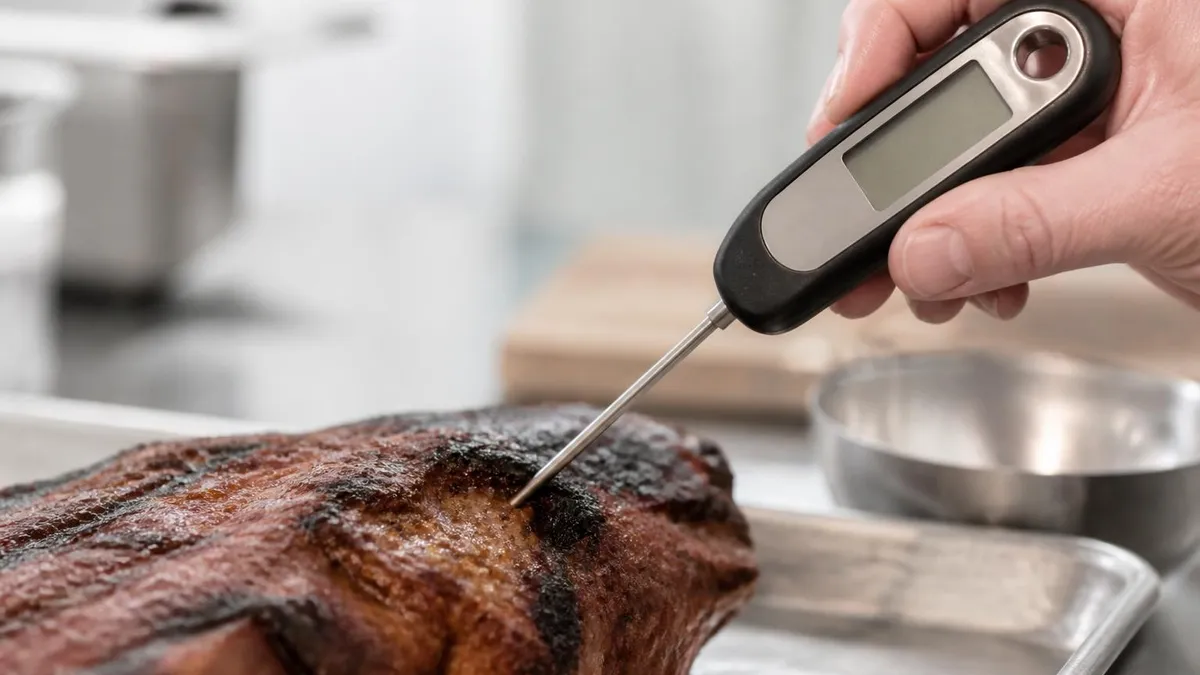
Many candidates psyche themselves out thinking they need a near-perfect score. You need 68 correct answers out of 90 — meaning you can miss 22 questions and still pass comfortably. Focus your energy on locking in the high-frequency topics (temperatures, pathogens, HACCP, and personal hygiene) rather than achieving mastery in every corner of the material. Covering the high-yield areas thoroughly is a more efficient path to a passing score than spreading study time evenly across all topics.
The highest-yield study topics for the ServSafe manager exam are not equally distributed across the eight content domains. Analysis of the official exam blueprint reveals that four areas generate the most questions and carry the highest weight in determining your final score. Investing disproportionate study time in these areas gives you the best return on your preparation hours, especially if you have a limited window before your exam date.
Foodborne illness prevention is the single heaviest topic area. This includes understanding the characteristics of biological hazards (bacteria, viruses, parasites, fungi), chemical hazards (pesticides, cleaning agents, toxic metals), and physical hazards (glass, metal fragments, bone). Within biological hazards, the Big 6 pathogens demand thorough memorization: know the specific symptoms associated with each, the typical incubation window, the foods most commonly contaminated, and what management action a foodborne illness outbreak investigation would reveal about control failures.
The flow of food — how food moves from receiving through storage, preparation, cooking, holding, cooling, and serving — generates approximately 30% of exam content. Every step of the flow has specific requirements. At receiving, you need to know acceptable temperatures for each food category, how to inspect for spoilage, and when to reject a shipment. During storage, you need to know proper refrigerator shelf order (ready-to-eat food on top, raw poultry on the bottom), temperature monitoring protocols, and FIFO — First In, First Out — labeling requirements.
Cooling procedures trip up more candidates than almost any other single topic because the requirements are counterintuitive. You cannot simply put a large pot of hot soup in the refrigerator and call it done — the FDA Food Code requires food to be cooled from 135°F to 70°F within two hours, then from 70°F to 41°F within an additional four hours, for a total cooling time of six hours maximum.
Methods to achieve safe cooling include ice-water baths, blast chillers, shallow pans, and adding ice as an ingredient. Knowing the methods and the rationale behind the two-stage requirement will serve you on multiple exam questions.
Cleaning and sanitizing accounts for a significant share of questions that trip up candidates who conflate the two terms. Cleaning removes food residue and dirt but does not kill pathogens. Sanitizing reduces pathogens to safe levels but works best on surfaces that have already been cleaned. The correct procedure is always clean first, then sanitize. Food-contact surfaces must be cleaned and sanitized after each use, after any interruption that may have contaminated equipment, and at least every four hours for equipment in continuous use during the same day.
If you have access to a servsafe food handler certification prep course, use it as a supplement to the coursebook rather than a replacement. Video instruction and instructor-led Q&A can clarify concepts that are difficult to absorb from text alone, particularly HACCP design, which involves creating flowcharts and identifying control points in a process. Visual learners especially benefit from seeing a HACCP plan built step by step before answering questions about it under timed conditions.
Past exam takers consistently report that the most surprising aspect of the test is the number of questions that require applying multiple concepts simultaneously. For example: a question might describe an employee arriving at work with a sore throat and fever, then describe a food preparation task they are assigned to, and ask whether the manager should exclude or restrict the employee — and if restrict, what additional controls apply. Answering correctly requires knowing both the illness policy and the food safety risk of the specific task. Practice questions that mirror this style are the best preparation tool available.
Use a timed practice exam within one week of your scheduled test date to simulate real conditions. Set a 120-minute timer, answer 90 questions without looking anything up, then score yourself and review every incorrect answer with the coursebook open. This simulation reveals not just gaps in your knowledge but also whether your pacing is sustainable for the full exam. Many candidates who know the material still struggle on timed exams because they spend too long on scenario questions early and rush through easier questions at the end, making careless errors.
Many readers pair this guide with the servsafe food manager certification to check their readiness before exam day.
If you want more targeted practice, the servsafe certification online page covers the same material with additional questions and explanations.
If you want more targeted practice, the servsafe food handler certificate page covers the same material with additional questions and explanations.
Passing the ServSafe manager exam earns you the certification, but your state or local jurisdiction may impose additional requirements before you can legally serve as a certified food protection manager. Some states require registration with a state agency, a separate state-issued card, or proof of employment in a qualifying role. Check with your local health department before your exam date to ensure you complete every required step — failing to register a passing score with the correct authority can delay your official certification even after you pass.
Once you earn your ServSafe certification, the document itself carries significant professional and regulatory weight. In states where a certified food manager is required by law to be on premises during all hours of operation, your certificate must be available for inspection upon request from a health department official. Many operators frame and post their certificate visibly in the kitchen — it communicates food safety commitment to staff and signals compliance to inspectors before they ask a single question.
Your certification is valid for five years from the date of the exam, not from the date your certificate is printed and mailed. Mark your renewal date in your calendar immediately after passing. Renewal requires retaking the exam — there is no continuing education pathway that substitutes for the proctored test. Because food safety regulations and the FDA Food Code are updated periodically, the renewal exam may include content that was not on your original exam, so treat each renewal as a fresh study cycle rather than a formality.
Employers in food service — restaurants, hotels, healthcare facilities, schools, catering companies — increasingly list ServSafe manager certification as a required or preferred qualification in job postings. Holding an active certification makes you more competitive for management and supervisor roles and can support requests for higher starting wages. In states where the certification is legally mandated, employers may reimburse your exam and study material costs as a condition of employment, so it is worth asking about reimbursement before you register for the exam.
If you manage multiple locations or train other staff, the ServSafe Instructor and Proctor program allows certified managers to teach the coursebook content and administer exams within their own organization. This option is particularly valuable for large food service operators who need to certify multiple managers on a regular schedule. Becoming an instructor requires additional training and an agreement with the National Restaurant Association, but the cost-per-certification drops significantly at scale compared to sending individual managers to external proctored exams.
The servsafe certification online pathway has expanded significantly in recent years. Online proctored exams allow candidates to test from home using a webcam and Examity or a similar remote proctoring service. The exam content is identical to the in-person version, but the technical setup requirements — reliable internet connection, functioning webcam and microphone, a private room — must be verified before exam day. Technical failures during online proctoring that interrupt the exam do not automatically result in a passing score; document any issues and contact ServSafe support immediately if a technical problem affects your test session.
Beyond the professional benefits, the knowledge you gain preparing for and passing the ServSafe manager exam has direct operational value. Managers who deeply understand food safety principles catch problems before they escalate into health code violations, customer complaints, or worse — actual foodborne illness outbreaks. A single outbreak can close a restaurant permanently. The time you invest in studying for this exam is not just an investment in a credential; it is an investment in the safe, sustained operation of your food service business.
For candidates who do not pass on the first attempt, ServSafe allows retakes with no mandatory waiting period between attempts. However, you must pay the exam fee again, and repeated failures without changing your study approach rarely produce different results. If you fail, request your score report, identify the content domains where you lost the most points, and target those areas specifically before retesting. Most candidates who fail the first time do so in the HACCP or foodborne illness domains — focused remediation on those two areas improves pass rates dramatically on subsequent attempts.
Building a realistic, week-by-week study schedule before you begin preparing is the single organizational step that separates candidates who pass on the first attempt from those who cram ineffectively in the final days. Most candidates who work full time in food service should plan for three to four weeks of structured preparation, dedicating five to seven hours per week to study. That totals 15-28 hours of preparation — enough to work through the entire coursebook and complete several full practice tests with review time built in.
In the first week, focus entirely on the two heaviest content areas: foodborne illness and the flow of food. Read chapters one through three of the ServSafe Manager coursebook carefully, taking notes on the Big 6 pathogens and all temperature thresholds. By the end of week one, you should be able to recite the Big 6 pathogens and their associated food vehicles from memory and state the Temperature Danger Zone boundaries without hesitation. Complete at least 40 practice questions on foodborne illness before moving to week two content.
In the second week, shift focus to HACCP and food safety management systems. The seven HACCP principles — Conduct a Hazard Analysis, Identify Critical Control Points, Establish Critical Limits, Monitor CCPs, Establish Corrective Actions, Verify the System Works, and Keep Records — must be memorized in sequence and understood conceptually. Work through at least one HACCP plan example, identifying biological, chemical, and physical hazards for a simple process like cooking and holding chicken. Understanding how to build the plan makes the exam questions about it significantly easier.
Week three should cover personal hygiene, cleaning and sanitizing, and facilities management. These chapters are more procedural than conceptual, which makes them efficient to study — once you learn the correct handwashing procedure (wet, lather, scrub for 20 seconds, rinse, dry with single-use towel) you are unlikely to forget it. Chemical sanitizer concentrations require more drilling because the specific numbers are easy to confuse under pressure. Make a sanitizer concentration cheat sheet and review it daily during week three.
In the final week before your exam, shift from new content learning to review and practice testing. Complete at least two full 90-question timed practice exams and review every question you missed. By exam week, you should be consistently scoring above 80% on practice tests — that buffer above the 75% passing threshold accounts for the added pressure of real exam conditions, which causes most candidates to perform slightly below their practice test average.
The night before the exam, do not cram new material. Light review of your most challenging topics — a 30-minute pass through your notes on HACCP or pathogen details — is fine, but heavy studying the evening before typically increases anxiety without meaningfully improving retention. Prepare your ID, confirm your appointment details, and get to bed at a reasonable hour. Cognitive performance on multiple-choice exams is measurably better when you are well-rested, and no amount of last-minute review compensates for exhaustion on a 90-question exam.
On exam day, read every question carefully before selecting an answer. ServSafe manager questions are often written to include plausible distractors — answers that are partially correct or correct in a different context but wrong for the specific scenario described. The most common error pattern is selecting the first answer that seems right without reading all four options.
Budget your time at roughly 80 seconds per question, flag any question you are unsure about, and return to flagged questions after you have answered everything you know confidently. This approach ensures you never run out of time on questions you could have answered correctly.
Sample ServSafe Food Safety Practice Questions
Try these questions from our free ServSafe Food Safety practice tests. The correct answer and an explanation follow each question.
A food handler wearing single-use gloves is chopping raw onions for a salad. The manager asks them to take a box of raw chicken from the walk-in cooler to the prep line. What is the correct procedure for the food handler to follow?
- A. Handle the raw chicken box with the same gloves and then continue chopping the onions.
- B. Remove the gloves, handle the raw chicken box, then put the same gloves back on.
- C. Remove the gloves and discard them, wash hands, handle the raw chicken box, then wash hands again and put on new gloves to continue chopping onions.
- D. Keep the gloves on, handle the chicken box, and then rinse the gloved hands under running water.
Answer: C. Remove the gloves and discard them, wash hands, handle the raw chicken box, then wash hands again and put on new gloves to continue chopping onions.
Gloves are a potential source of cross-contamination and must be changed before beginning a different task. Handling a box of raw chicken could contaminate the gloves. The correct procedure is to remove and discard the current gloves, wash hands, perform the new task, and then wash hands again and don a fresh pair of gloves before returning to handle ready-to-eat food like onions.
How should a manager respond to a confirmed norovirus case among kitchen staff?
- A. Send the affected employee home and continue normally
- B. Exclude the ill employee, identify exposed staff, initiate enhanced cleaning with high-concentration chlorine, and notify the health department
- C. Close the restaurant for one day
- D. Give anti-nausea medication and let them finish the shift
Answer: B. Exclude the ill employee, identify exposed staff, initiate enhanced cleaning with high-concentration chlorine, and notify the health department
Norovirus requires aggressive multi-step response due to its extreme contagiousness.
A food handler has a sore throat and a fever. What is the most appropriate action for the manager to take?
- A. Tell the employee to wear a mask while working.
- B. Restrict the employee from working with or around food.
- C. Allow the employee to work in a non-food-handling position.
- D. Send the employee home and tell them they can return tomorrow if they feel better.
Answer: B. Restrict the employee from working with or around food.
According to ServSafe guidelines, a food handler with a sore throat and fever should be restricted from working with or around food. If the operation primarily serves a high-risk population, the employee must be excluded from the operation altogether.
What should you do if your manager orders you to serve a drunk customer "since he is a regular'?"
- A. pour the customer’s drink only half strength
- B. refuse to serve the customer and leave the bar
- C. ask the manager to serve the customer
- D. follow the manager’s directions
Answer: B. refuse to serve the customer and leave the bar
Servers have a legal and ethical responsibility to refuse service to visibly intoxicated individuals, regardless of their status as a 'regular' or a manager's directive. Following a manager's illegal order can result in personal liability for the server under dram shop laws. If a manager insists on illegal service, the server should refuse and consider their employment options.
ServSafe Questions and Answers

ServSafe Manager Online Course: What's Included, How Long It Takes, and How to Pass

ServSafe Manager Practice Test 2026

ServSafe Knowledge Questions: Core Concepts You Have to Lock In
ServSafe Food Handler: Study Guide & Practice Test

Pearson VUE Flushing Queens Location ServSafe Exam: Complete Testing Center Guide
About the Author

Registered Sanitarian & Food Safety Certification Expert
Cornell University College of Agriculture and Life SciencesThomas Wright is a Registered Sanitarian and HACCP-certified food safety professional with a Bachelor of Science in Food Science from Cornell University. He has 17 years of experience in food safety auditing, regulatory compliance, and foodservice management training. Thomas prepares food industry professionals for ServSafe Manager, HACCP certification, and state food handler examinations.