
ServSafe Managers Practice Test 2026: Free Questions, Answers & Pass Strategy
⏳ Free ServSafe managers practice test with 2026 answers, explanations, and pass strategy. Score 70%+ on your first try with realistic exam questions.
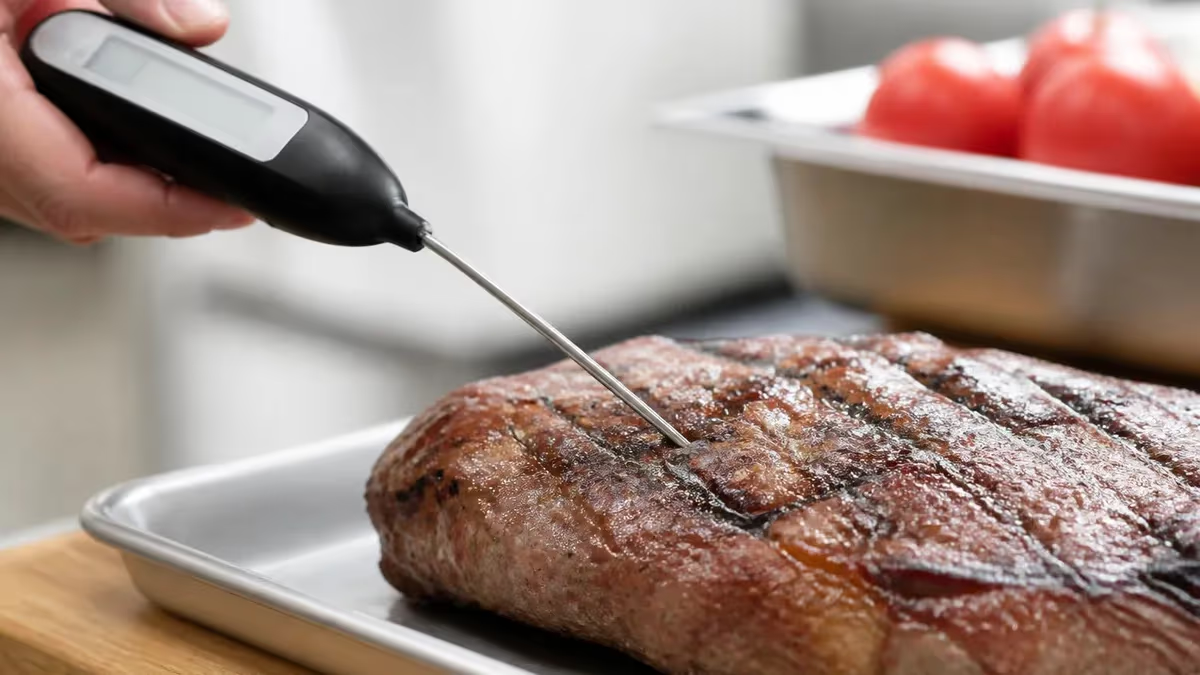
The servsafe managers practice test is the single most reliable predictor of whether you will pass the real ServSafe Food Protection Manager exam on your first attempt. If you can consistently score 80% or higher on full-length practice tests that mirror the actual 90-question format, you are statistically very likely to pass the 70% threshold required for certification. This guide gives you the questions, the answers, the explanations, and the study plan to get there in two to three weeks of focused preparation rather than two to three months of scattered reading.
ServSafe certification is required or strongly preferred in 46 US states for anyone supervising food preparation. That includes restaurant managers, executive chefs, kitchen leads, catering supervisors, school food service directors, and senior staff at hotels, hospitals, and corporate cafeterias. The credential is issued by the National Restaurant Association and recognized by health departments nationwide. Once you become servsafe certified, your certificate stays valid for five years in most jurisdictions, though a handful require renewal every three years.
The manager exam is significantly harder than the food handler test. Where the handler exam asks 40 surface-level questions about handwashing and temperature danger zones, the manager exam digs into HACCP plans, active managerial control, supplier verification, allergen labeling under the FDA Food Code, and the legal responsibilities of a Person in Charge. You are expected to manage risk, not just follow procedures, and the questions reflect that shift in cognitive load.
National pass rates for the ServSafe manager exam hover around 70 to 70% for first-time test takers who complete the official course, but drop below 60% for candidates who only skim the textbook the night before. The difference between passing and failing almost always comes down to how many practice questions you worked through and whether you actually read the explanations for the ones you got wrong. Passive reading does not work. Active retrieval through realistic practice questions does.
This article is structured to give you that active retrieval. You will get a breakdown of the eight exam domains and how many questions to expect from each, six full-length practice quizzes mapped to those domains, a two-week study schedule, and answer keys with explanations for the questions most candidates miss. Every question included here was written to match the difficulty, phrasing style, and answer-choice traps of the live 2026 exam.
One housekeeping note before you dive in. The free practice questions on this site are not the official ServSafe questions, which would violate copyright. They are independently written items that test the same FDA Food Code concepts using the same multiple-choice format the National Restaurant Association uses. Hundreds of candidates have reported back that scoring 85%+ on these questions translates directly to passing the real exam, often with margin to spare. Bookmark this page, work through the quizzes in order, and come back when you are stuck on a specific domain.
If you have not yet purchased your exam voucher or signed up for the course, you can do that through your local ServSafe instructor or directly through the National Restaurant Association portal. The exam costs $36 standalone or $179 bundled with the online course, and most test takers pass within 90 minutes of the allotted two-hour window. Now let us look at exactly what you are walking into on test day.
ServSafe Manager Exam by the Numbers
Key Facts at a Glance
| Item | Value | Details |
|---|---|---|
| Total Questions | 90 | 80 scored + 10 unscored pilot |
| Passing Score | 70% | 56 of the 80 scored scored correct |
| Time Limit | Not published | Most finish in 75-90 min |
| Certificate Validity | 5 yrs | 3 yrs in some states |
| Exam Voucher Cost | $36 | Standalone retake price |

ServSafe Manager Exam Format & Domain Weights
| Section | Questions | Time | Weight | Notes |
|---|---|---|---|---|
| Providing Safe Food | 10 | 13 min | 11% | Foodborne illness fundamentals |
| Forms of Contamination | 15 | 20 min | 17% | Biological, chemical, physical, allergens |
| Personal Hygiene | 10 | 13 min | 11% | Handwashing, reporting illness, gloves |
| Flow of Food: Purchasing & Receiving | 8 | 11 min | 9% | Suppliers, receiving temps, rejection |
| Flow of Food: Preparation | 18 | 24 min | 20% | Thawing, cooking, cooling, reheating temps |
| Food Safety Management | 12 | 16 min | 13% | HACCP, active managerial control |
| Sanitary Facilities & Pest Control | 9 | 12 min | 10% | Cleaning, sanitizing, integrated pest management |
| Regulatory Authorities | 8 | 11 min | 9% | Inspections, FDA Food Code |
| Total | 90 | 2 hours | 100% |
The ServSafe manager exam draws every question from the eight domains listed above, but the weighting matters more than most candidates realize. Forms of Contamination and Flow of Food: Preparation together account for roughly 37% of your score. If you walk into the exam shaky on TCS food temperatures, allergen cross-contact, or the four hour rule for cooling, you have already given up more than a third of the test. Conversely, scoring perfectly on Regulatory Authorities only nets you nine questions, so prioritize accordingly when you allocate study hours.
Providing Safe Food sounds introductory but actually contains some of the most-missed questions on the entire exam. Candidates assume the section is about general food safety awareness and skim it. In reality, it tests specific populations at highest risk for foodborne illness, including elderly diners over 65, children under five, pregnant women, and the immunocompromised. The exam also tests the six conditions pathogens need to grow, summarized by the acronym FATTOM: Food, Acidity, Time, Temperature, Oxygen, and Moisture. Memorize FATTOM and you will own three to four questions automatically.
Forms of Contamination is the heaviest domain by question count and the one where the most candidates lose ground. You need to know the big six foodborne pathogens that must be reported to your regulatory authority: Norovirus, Hepatitis A, Shigella, Shiga toxin-producing E. coli, Salmonella Typhi, and nontyphoidal Salmonella. You also need to recognize the big nine allergens recognized by the FDA: milk, eggs, fish, shellfish, tree nuts, peanuts, wheat, soybeans, and sesame, which was added in 2023. The servsafe food handler certification covers similar territory but at less depth than the manager-level exam.
Personal Hygiene questions get specific. Handwashing must take at least 20 seconds with soap and warm running water at 100 degrees Fahrenheit, and the procedure has five distinct steps the exam loves to test in order. Hands must be washed before starting work, after using the restroom, after handling raw meat, after touching the face or hair, after coughing or sneezing, and after handling garbage or chemicals. Single-use gloves are not a substitute for handwashing; they are a barrier used in addition to clean hands.
Flow of Food: Purchasing and Receiving is shorter but high yield. Approved suppliers must be inspected and meet local, state, and federal laws. Receiving temperatures are tested constantly: cold TCS food at 41 degrees Fahrenheit or below, hot TCS food at 135 degrees Fahrenheit or above, frozen food received frozen and solid, shellstock tags kept for 90 days from the last shellfish used, and milk at 45 degrees Fahrenheit or lower received and cooled to 41 within four hours. These numbers appear on almost every practice exam.
Flow of Food: Preparation is the single largest domain. Internal cooking temperatures are non-negotiable memorization: 165 degrees for poultry, stuffed foods, and reheated leftovers, 155 for ground meat and ground seafood, 145 for whole cuts of beef, pork, lamb, and seafood, and 135 for commercially processed ready-to-eat foods being hot held. Cooling rules use the two-stage method: 135 to 70 within two hours, then 70 to 41 within an additional four hours, for a total cooling window of six hours.
Food Safety Management is where management thinking gets tested. Active managerial control means the manager is intervening before problems happen, not just reacting to them. HACCP has seven principles in a specific order: conduct hazard analysis, determine critical control points, establish critical limits, establish monitoring procedures, identify corrective actions, verify the system works, and establish recordkeeping procedures. Expect at least two questions on identifying which step of HACCP a given scenario represents.
ServSafe Practice Test Questions
Prepare for the ServSafe Food Safety Practice Test exam with our free practice test modules. Each quiz covers key topics to help you pass on your first try.
ServSafe Foodborne Illnesses and Allergens
ServSafe Exam Questions covering Foodborne Illnesses and Allergens. Master ServSafe Test concepts for certification prep.
ServSafe Personal Hygiene and Health
Free ServSafe Practice Test featuring Personal Hygiene and Health. Improve your ServSafe Exam score with mock test prep.
ServSafe Preventing Cross-Contamination
ServSafe Mock Exam on Preventing Cross-Contamination. ServSafe Study Guide questions to pass on your first try.
ServSafe Safe Food Handling Practices
ServSafe Test Prep for Safe Food Handling Practices. Practice ServSafe Quiz questions and boost your score.
ServSafe Alcohol Test - Primary and Advanced
ServSafe Questions and Answers on Alcohol Test - Primary and Advanced. Free ServSafe practice for exam readiness.
ServSafe Cleaning and Sanitizing Procedures
ServSafe Mock Test covering Cleaning and Sanitizing Procedures. Online ServSafe Test practice with instant feedback.
ServSafe Food Contamination and Allergens
Free ServSafe Quiz on Food Contamination and Allergens. ServSafe Exam prep questions with detailed explanations.
ServSafe HACCP System Implementation
ServSafe Practice Questions for HACCP System Implementation. Build confidence for your ServSafe certification exam.
ServSafe Manager Exam
ServSafe Test Online for Manager Exam. Free practice with instant results and feedback.
ServSafe Proper Personal Hygiene
ServSafe Study Material on Proper Personal Hygiene. Prepare effectively with real exam-style questions.
ServSafe Manager Practice Test Difficulty Tiers
Beginner-level practice questions test direct recall of a single fact. Example: What is the minimum internal cooking temperature for poultry? The answer is 165 degrees Fahrenheit for 15 seconds. These questions account for roughly 30% of the real exam and are the easiest points on the test. If you cannot answer these in five seconds, you are not ready to sit for the actual exam yet.
Start here if you have not opened the ServSafe textbook in the past month. Spend 30 to 45 minutes on beginner sets before progressing. Track which facts you miss in a notebook and review them again the next morning. Recall improves dramatically when you space your reviews 12 to 24 hours apart rather than cramming consecutively.

Should You Take Online vs In-Person Manager Practice Tests?
- +Online practice tests are available 24/7 and let you study around shift work
- +Instant scoring shows weak domains immediately so you can target studying
- +Question banks are larger online, often 500+ items versus 80 in a workbook
- +Many free options exist, including this site, with no purchase required
- +Mobile-friendly so you can drill questions during commutes or breaks
- +Explanations are typically more detailed and link to source FDA Food Code sections
- −No proctored conditions, so test anxiety on exam day catches you off guard
- −Quality varies widely; some sites have outdated 2017 Food Code references
- −Easy to game by re-taking the same questions until you memorize answers
- −No instructor to clarify confusing scenarios or regional health code variations
- −Screen fatigue after 90 questions in one sitting is harder than paper
- −Some sites require account creation or push paid upgrades aggressively
ServSafe Manager Pre-Exam Readiness Checklist
- ✓Score 85% or higher on three consecutive full-length 90-question practice tests
- ✓Memorize all internal cooking temperatures: 165, 155, 145, 135 degrees Fahrenheit
- ✓Know the two-stage cooling rule: 135 to 70 in 2 hours, 70 to 41 in 4 more hours
- ✓Recite the big six reportable pathogens from memory without hesitation
- ✓List all nine FDA major allergens including sesame added in 2023
- ✓Identify each of the seven HACCP principles in correct sequential order
- ✓Understand active managerial control versus reactive management examples
- ✓Know minimum handwashing time of 20 seconds and water temperature of 100 degrees
- ✓Bring a government-issued photo ID matching the name on your exam registration
- ✓Arrive at the Pearson VUE test center 30 minutes before your scheduled appointment
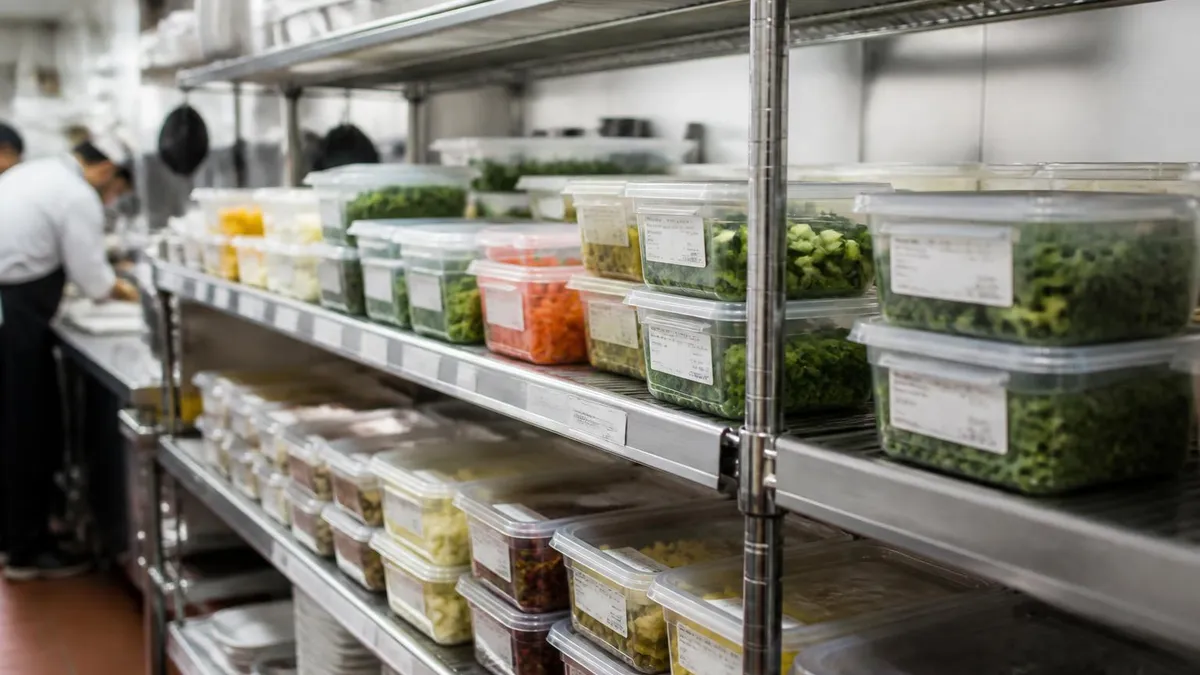
The 75% Threshold Is Closer Than You Think
You need 56 of the 80 scored scored questions correct to pass. That means you can miss 20 questions and still earn your certificate. But if you walk in shaky on cooling temperatures alone, that one topic appears in roughly 8 to 10 questions, which is half your error budget gone before you account for any other weak area.
A realistic two-week study schedule for the ServSafe managers practice test assumes you can dedicate 90 minutes per day, five days per week, with longer review sessions on weekends. Candidates who try to cram the material in three days routinely fail and pay $36 to retake. Candidates who spread their study across 14 days at a moderate pace pass at rates above 85%. The math is simple: spaced repetition works, and panic studying does not.
Week one focuses on content acquisition. Days one and two cover Providing Safe Food and Forms of Contamination, including all big six pathogens, all nine allergens, and the differences between biological, chemical, and physical hazards. Days three and four cover Personal Hygiene and Purchasing and Receiving, with heavy emphasis on receiving temperatures and the big eight reasons to reject a delivery. Day five drills Flow of Food: Preparation, the largest single domain on the exam. Use the weekend to take your first full-length 90-question practice test and identify the three weakest domains.
Week two focuses on weakness elimination and exam simulation. Days six and seven hit Food Safety Management, including HACCP and active managerial control, both of which appear in scenario form. Day eight covers Sanitary Facilities and Pest Control: cleaning versus sanitizing, three-compartment sink procedures, and integrated pest management. Day nine handles Regulatory Authorities including FDA, USDA, CDC, and state and local health departments. Day ten is dedicated to your weak domains identified at the end of week one.
Days eleven through thirteen are simulation days. Take one full-length practice test per day under timed conditions: two hours, no breaks, no notes, no phone. Score each test, review every missed question, and write the correct answer plus a one-sentence explanation in a notebook. By test day you should have a notebook of 30 to 60 explanations representing every question you have missed across the two-week study cycle. Read that notebook the morning of the exam.
Day fourteen is rest day. Do not study the night before. Do not take a final practice test. Eat dinner early, sleep eight hours, and arrive at the test center 30 minutes before your appointment. Anxiety burns through more passing scores than ignorance does. Candidates who walk in calm and well-rested outperform candidates who studied an extra two hours that morning by an average of six percentage points, according to instructor surveys conducted across multiple ServSafe training programs.
If you only have one week instead of two, compress the schedule but do not skip the simulation days. The single most predictive factor for passing is whether you have completed at least two full-length 90-question practice tests under timed conditions. Reading the textbook three times without ever doing timed practice produces consistent failures. The reverse, two timed practice tests with light textbook reading, produces consistent passes. Active retrieval beats passive review every time.
Your servsafe certificate will be emailed to you within 10 business days of passing, but the proctor will tell you your pass/fail status before you leave the test center. That immediate feedback is one of the few benefits of the computer-based format over older paper exams. If you fail, you can schedule a retake immediately, but you will need to wait at least 24 hours and pay the $36 retake fee. Most candidates who fail on the first attempt pass on the second after reviewing their weakest domains for one additional week.
The 2026 ServSafe manager exam reflects the 2022 FDA Food Code, including the addition of sesame as the ninth major allergen and updated employee health reporting requirements. If your textbook or practice materials reference only eight allergens or list a 2017 Food Code edition, you are studying outdated content and will miss two to four guaranteed questions on test day.
Test day strategy starts the night before. Lay out your photo ID, exam confirmation email, and directions to the Pearson VUE testing center. ServSafe manager exams are increasingly delivered through Pearson VUE rather than paper-based instructor administration, which means you sit at a computer terminal with a digital clock counting down from two hours. The interface is straightforward but worth previewing on the Pearson VUE website if you have never tested with them before.
Arrive 30 minutes early. Pearson VUE check-in includes photo capture, palm vein scanning, and a search of your pockets and belongings. Phones, smartwatches, hats, and outerwear go into a locker. You are issued a small whiteboard or scratch paper plus a marker. Use this paper immediately upon starting the exam to write down the temperatures you have memorized: 165, 155, 145, 135, 41, 70, 135 to 70 in 2, 70 to 41 in 4 more. Dumping these from memory onto paper in the first 60 seconds frees your working memory for the harder scenario questions.
Read each question twice before looking at the answer choices. Read the question stem, cover the choices with your hand or look away, and predict the answer in your head. Then look at the four options and find the one that matches your prediction. This technique prevents the most common trap on the exam: distractors that are factually true but do not answer the specific question asked. About 15% of exam questions have at least one trap distractor of this type.
Use the flag for review feature liberally. If a question takes more than 60 seconds, flag it and move on. You can return to flagged questions after completing the rest of the exam, often with a fresh perspective. Most candidates flag 8 to 15 questions on the first pass and resolve them confidently on the second pass. Do not change answers on the second pass unless you have a concrete reason; first instincts are correct about 70% of the time on ServSafe questions.
Manage your pacing. At 60 minutes in, you should be on question 45 or further. If you are behind that pace, increase your speed on the remaining questions even at the cost of slight accuracy loss. Running out of time and leaving 10 questions blank guarantees those 10 are wrong. Guessing on 10 questions in the final minute yields an expected 2.5 correct, which is two extra points toward passing.
If English is not your first language, request the exam in Spanish, Chinese, Korean, Japanese, French Canadian, or one of the other supported languages when you register. The translated versions test identical content and have similar pass rates. You can also request additional time as a testing accommodation if you qualify under ADA provisions; contact ServSafe at least three weeks before your exam date to arrange this.
You can register and schedule directly through servsafe.com or through your local ServSafe instructor. Both routes use the same exam content and same Pearson VUE delivery network. The instructor route is preferable if you want classroom support or if your employer is covering the course as a training expense. The direct route is faster if you are already prepared and just need to book the exam itself.
Final practical tips for the day of the exam come down to nutrition, hydration, and mental state. Eat a balanced meal two hours before your appointment that includes complex carbohydrates and protein. Oatmeal with eggs, a turkey sandwich on whole grain, or rice with chicken all work well. Avoid sugar crashes by skipping pastries, sweetened coffee drinks, and energy drinks. The two-hour exam window is long enough that a sugar high at minute 20 turns into a fog at minute 90 when you are working through your hardest scenario questions.
Hydrate before you enter the test center because you cannot bring water inside. Use the restroom immediately before check-in. Pearson VUE allows unscheduled breaks during the exam but the clock keeps running, so a five-minute bathroom break costs you five minutes of testing time. Most candidates can complete the 90-question exam without a break if they prepared correctly. If you find yourself needing a break, take 60 seconds at most, splash cold water on your face, and return to your seat.
If you finish early, do not leave immediately. Use any remaining time to revisit flagged questions and double-check questions involving temperatures, time limits, and numeric values where transcription errors are common. Misreading 41 as 45 or 135 as 155 is the kind of small mistake that costs candidates the 75% threshold by a single question. A four-minute review pass at the end of the exam typically catches one to two of these errors.
After you submit the exam, the screen displays your pass or fail status within 30 seconds. Passing candidates receive a printed score report from the proctor and can download an official certificate from the ServSafe portal within 10 business days. The certificate PDF includes your name, certification number, issue date, and expiration date, plus the National Restaurant Association seal. Print two copies: one for your workplace records and one for your personal files. Many health inspectors will ask to see the physical certificate during inspections, not just a photo on your phone.
If you fail, do not panic. The score report breaks down your performance by domain, showing exactly which areas dragged you below 75%. Most failed candidates are within five questions of passing and need to shore up only one or two specific topics, usually cooling temperatures, allergen rules, or HACCP application questions. Schedule your retake for 10 to 14 days out, spend a week reviewing your weak domains using targeted practice quizzes, and approach the second attempt with the confidence of someone who has already seen the test format.
Once certified, your responsibilities expand beyond passing a test. As a certified manager you become the Person in Charge during shifts you supervise, with legal authority and accountability for food safety decisions. Health inspectors will ask you specific questions during inspections about employee health policies, supplier verification, and corrective actions for critical violations. Your certification is your credential to answer those questions confidently. Keep your training materials accessible for the first six months of certification while the procedures become second nature.
Renewal varies by state. California, Illinois, and Texas accept ServSafe for five years. New York City requires the local Food Protection Certificate which is similar but separate. Florida accepts ServSafe for five years statewide. Check your specific city and county requirements through your local health department, because some metropolitan areas like Los Angeles, Chicago, and New York have additional local certification requirements layered on top of the state recognition of ServSafe. Plan to renew at least 60 days before your expiration date to avoid lapses that could put your employment at risk.
Sample ServSafe Food Safety Practice Questions
Try these questions from our free ServSafe Food Safety practice tests. The correct answer and an explanation follow each question.
What is the PRIMARY reason gluten-free dishes must be prepared with dedicated utensils?
- A. Gluten causes bacterial growth on shared utensils
- B. Even trace amounts of gluten from cross-contact can harm celiac patients
- C. Gluten-free foods spoil faster when mixed with regular flour
- D. Health codes require color-coded utensils for all special diets
Answer: B. Even trace amounts of gluten from cross-contact can harm celiac patients
For people with celiac disease, even trace gluten from cross-contact on shared utensils can trigger a serious immune response.
When a restaurant runs out of the allergen-free oil specified in a recipe and substitutes peanut oil without updating the menu, this creates which type of hazard?
- A. A documented substitution that is acceptable under ServSafe guidelines
- B. An undeclared allergen hazard that could cause a severe reaction
- C. A chemical hazard from mixing different oil compositions
- D. A physical hazard from differences in oil viscosity
Answer: B. An undeclared allergen hazard that could cause a severe reaction
Substituting peanut oil without disclosing it introduces an undeclared major allergen, violating food safety and labeling standards.
A chemical sanitizer test kit should be used to check:
- A. The pH of the wash water
- B. The concentration of the sanitizing solution
- C. The hardness of the rinse water
- D. The temperature of the drying area
Answer: B. The concentration of the sanitizing solution
Test kits verify that sanitizer concentration is within the effective range required by the manufacturer.
Which method of thawing frozen food is NOT acceptable according to ServSafe guidelines?
- A. In the refrigerator at 41°F or below
- B. On the counter at room temperature
- C. Under cold running water at 70°F or below
- D. As part of the cooking process
Answer: B. On the counter at room temperature
Thawing food on a counter at room temperature allows the outer surface to enter the temperature danger zone while the interior remains frozen, promoting bacterial growth.
ServSafe Questions and Answers
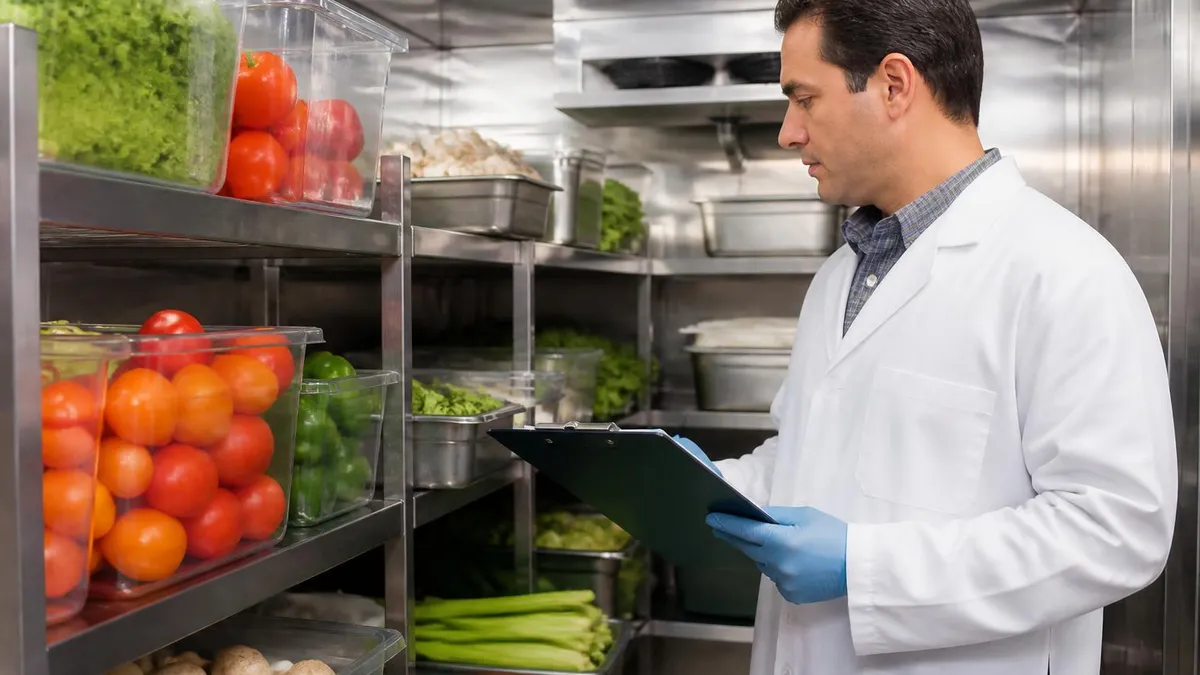
Pearson VUE Flushing Queens Location ServSafe Exam: Complete Testing Center Guide

ServSafe Knowledge Questions: Core Concepts You Have to Lock In
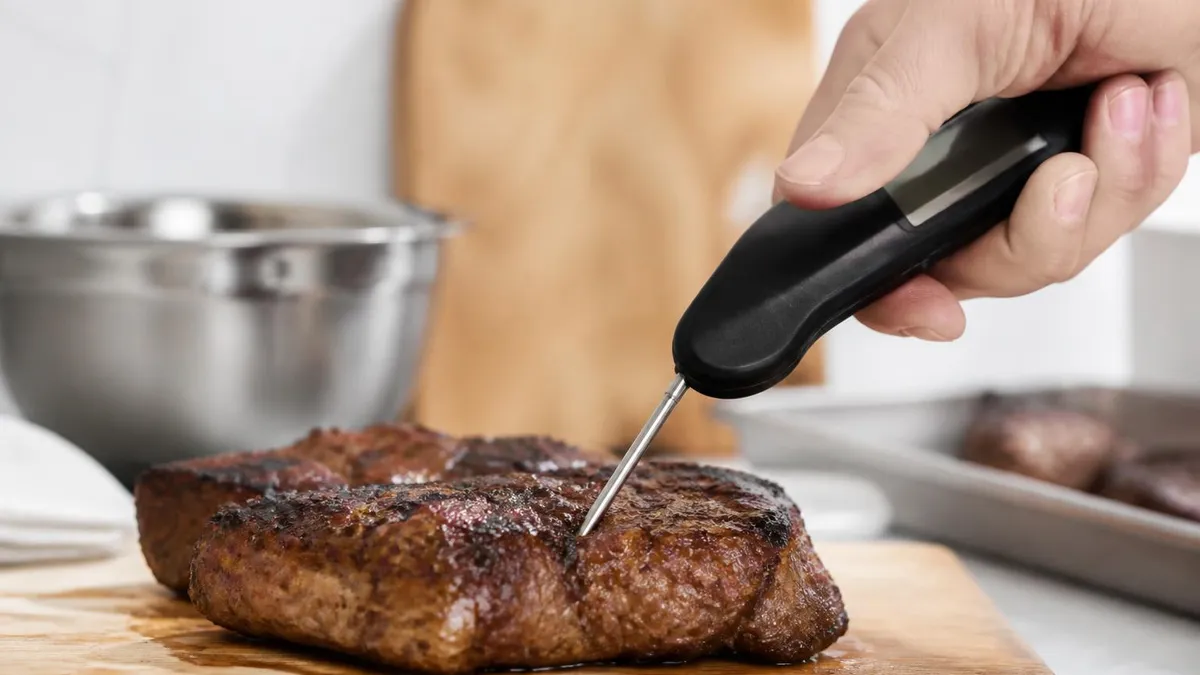
ServSafe Administrative — Complete Guide (2026)

ServSafe Manager Online Course: What's Included, How Long It Takes, and How to Pass

ServSafe Manager Sample Test 2026: Free Practice Questions, Answers & Pass Strategy
About the Author

Registered Sanitarian & Food Safety Certification Expert
Cornell University College of Agriculture and Life SciencesThomas Wright is a Registered Sanitarian and HACCP-certified food safety professional with a Bachelor of Science in Food Science from Cornell University. He has 17 years of experience in food safety auditing, regulatory compliance, and foodservice management training. Thomas prepares food industry professionals for ServSafe Manager, HACCP certification, and state food handler examinations.