
ServSafe Certification Cost: Complete 2026 Pricing Guide for Food Handlers and Managers
How much does ServSafe certification cost in 2026? 🎯 Food handler, manager, and alcohol pricing, exam fees, and money-saving tips explained.
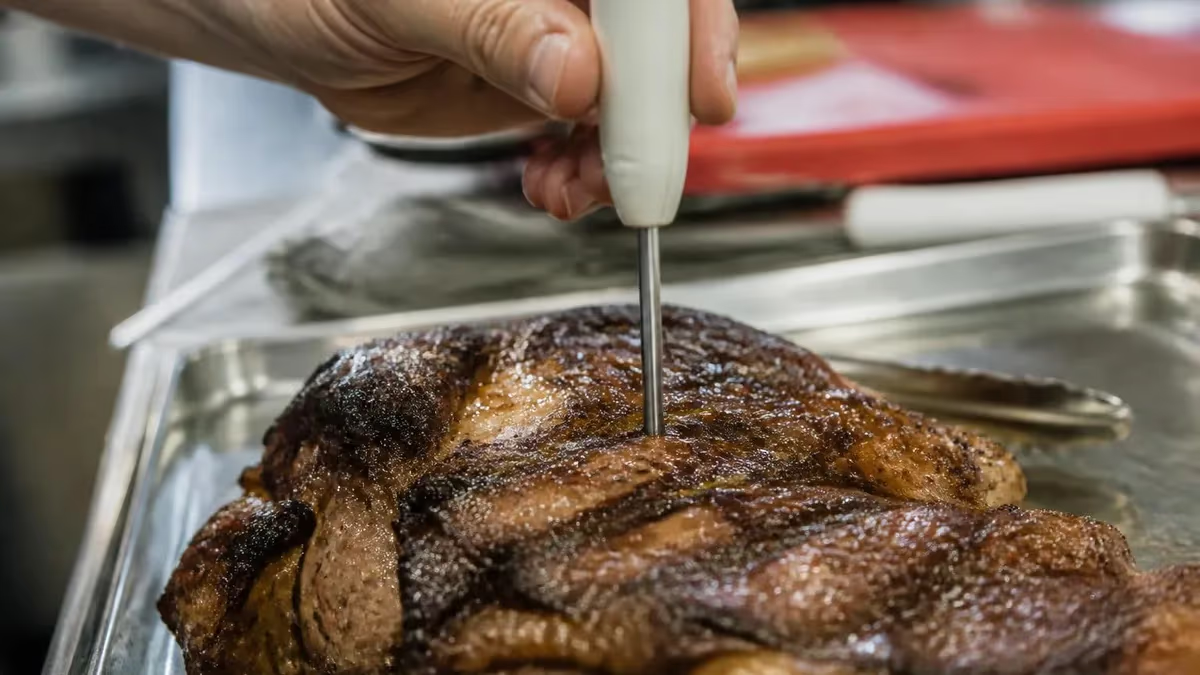
Understanding the servsafe certified cost is one of the first questions food service workers and managers ask when they begin the certification journey. ServSafe, administered by the National Restaurant Association Educational Foundation (NRAEF), is the gold standard for food safety credentials in the United States. Whether you work at a fast-food counter, manage a fine dining kitchen, or own a catering company, knowing exactly what you will pay — for the course, the exam, and the certificate — helps you budget confidently and avoid surprises on enrollment day.
The total servsafe certified cost varies depending on which credential you pursue. The ServSafe Food Handler certificate is the entry-level option, typically required for line cooks, servers, and prep staff. The ServSafe Manager certification is the advanced credential required in most states for at least one employee per food establishment. Each pathway has its own course fee, proctored exam fee, and optional study material costs that stack together into your final out-of-pocket expense.
For the ServSafe Food Handler path, most online self-paced courses cost between $15 and $22 when purchased directly through the ServSafe website. The assessment included at the end of that course is bundled into the same fee, making it a low-barrier entry point for hourly employees. If your employer purchases bulk licenses, you may pay nothing at all — many restaurant groups subsidize or fully cover this certification as a condition of hire.
The ServSafe Manager certification carries a higher price tag that reflects its more rigorous content and proctored examination requirement. The online course alone ranges from $175 to $195 when purchased individually, while the proctored exam — which must be administered by an approved proctor — adds another $36 to $54 depending on the testing center. When you add an optional printed textbook (around $120 retail) or flashcard sets, total costs can reach $300 or more for a self-study candidate who buys everything separately.
Classroom-based ServSafe Manager courses offered through community colleges, restaurant associations, or approved training providers often bundle the course, textbook, exam, and proctoring into a single flat fee. These bundled packages typically range from $125 to $250 per person, sometimes including a retake voucher. If your state or city has a culinary workforce development grant program, you may qualify for fully subsidized enrollment — a significant benefit worth investigating before paying retail.
If you are wondering how to get servsafe certified step by step, it helps to know that the certification process always ends with an official exam, and exam scores — not just course completion — determine whether you earn your credential. The ServSafe Manager exam is 90 questions and must be passed with a score of 70% or higher. Failing and retaking the exam costs another proctor fee, so investing in quality study resources upfront is a financially smart decision, not just an academic one.
Beyond the initial certification, renewal costs deserve attention in your long-term budget planning. ServSafe Manager certifications are valid for five years, after which you must retake the full proctored exam. Food Handler certificates vary by jurisdiction — some expire in two years, others in three. Keeping track of renewal deadlines prevents the added cost of letting your certification lapse and having to retake a full course rather than a shorter refresher assessment.
ServSafe Certification Cost by the Numbers
Key Facts at a Glance
| Item | Value | Details |
|---|---|---|
| Manager Online Course Fee | $175–$195 | Individual purchase |
| Proctored Manager Exam Fee | $36–$54 | Per attempt |
| Manager Certification Validity | 5 Years | Renewal requires re-exam |
| Passing Score Required | 70% | Manager exam (90 questions) |

ServSafe Certification Cost Breakdown by Credential
Several factors influence what you ultimately pay for your servsafe certification, and understanding each variable lets you make smarter purchasing decisions. The most significant cost driver is whether you choose an online self-paced course or an in-person instructor-led class. Online courses purchased directly from the ServSafe website tend to be the most affordable option for individuals, but they require self-discipline and give you no live instructor to answer questions. In-person classes cost more but often include everything — materials, exam, proctoring — in one bundled price.
Geographic location plays a surprisingly large role in what you pay. Some states, counties, and cities mandate ServSafe training and either subsidize costs through workforce development funds or negotiate bulk pricing with training providers. California, for example, has strong food safety training infrastructure through community college continuing education programs where an accredited food handler course can cost as little as $10. Other states leave pricing entirely to the free market, meaning candidates in rural areas may pay premium rates to access an approved proctor.
The ServSafe food handler certification is governed differently depending on where you live. In states like Illinois and California, third-party accredited alternatives to ServSafe are accepted, which creates price competition and can drive costs down. In other jurisdictions, ServSafe is specifically named in the health code, making it the only acceptable credential. Always check your local health department requirements before enrolling to ensure the certificate you earn will satisfy your employer's or regulator's requirements.
Employer sponsorship is the single biggest factor that can reduce your personal out-of-pocket cost to zero. Large restaurant chains, hotel groups, and institutional food service operators routinely pay for ServSafe training and exam fees as part of onboarding. Some employers require employees to reimburse costs if they leave within a certain period, typically 90 days to one year, so review any training agreement carefully before signing. If your employer does not currently offer sponsorship, asking HR is worth the conversation — especially for the Manager certification, which directly benefits the business's compliance status.
Retake fees are a cost that many candidates overlook when budgeting. The ServSafe Manager exam allows candidates who fail to retake the exam, but each retake attempt requires paying the proctor fee again ($36–$54) plus potentially rebooking through the testing center. Some course packages include one free retake voucher, which can save you $50 or more if you do not pass on the first attempt. Investing in thorough exam preparation — including taking a servsafe practice test multiple times — is the most reliable way to avoid this hidden cost.
To understand what is servsafe at a foundational level before choosing your course, it helps to know that ServSafe is not just a certificate — it is a comprehensive food safety education program that covers foodborne illness prevention, personal hygiene, cross-contamination, temperature control, cleaning and sanitizing, and pest management. The curriculum is designed to change behavior in professional kitchens, which is why regulators and employers trust it. Knowing the scope of what you are learning also clarifies why the Manager course takes significantly more time and costs more than the Food Handler version.
Study material costs are optional but can meaningfully affect your pass rate. The official ServSafe Manager Book (7th Edition) retails for approximately $120 new, though used copies and e-book versions can reduce that cost considerably. Free online resources, including the free servsafe practice tests available on sites like PracticeTestGeeks, can supplement your preparation without adding expense. Many candidates who rely exclusively on free practice exams and the online course content pass on the first attempt, demonstrating that high spend on materials is not always necessary if you use quality free resources strategically.
ServSafe Food Handler vs. Manager vs. Alcohol Certification Pricing
The ServSafe Food Handler certification is the most affordable and accessible credential in the ServSafe family. The online course and bundled assessment costs between $15 and $22 when purchased individually. No proctor is required — the assessment is taken at the end of the self-paced online course, and results are delivered instantly. Most food service employees can complete the entire course and assessment in four to six hours, making it a practical option for new hires who need certification quickly without taking a full day off work.
Food Handler certificates are typically valid for two to three years depending on state regulations, after which a renewal assessment is required at a similar cost. Many employers purchase bulk licenses at a discounted rate — sometimes as low as $10 per employee — when enrolling large teams simultaneously. If your employer enrolls you, you likely pay nothing directly. The low cost of this credential makes it the most widely obtained food safety certificate in the country, with millions issued every year to restaurant, grocery, and catering workers across all fifty states.
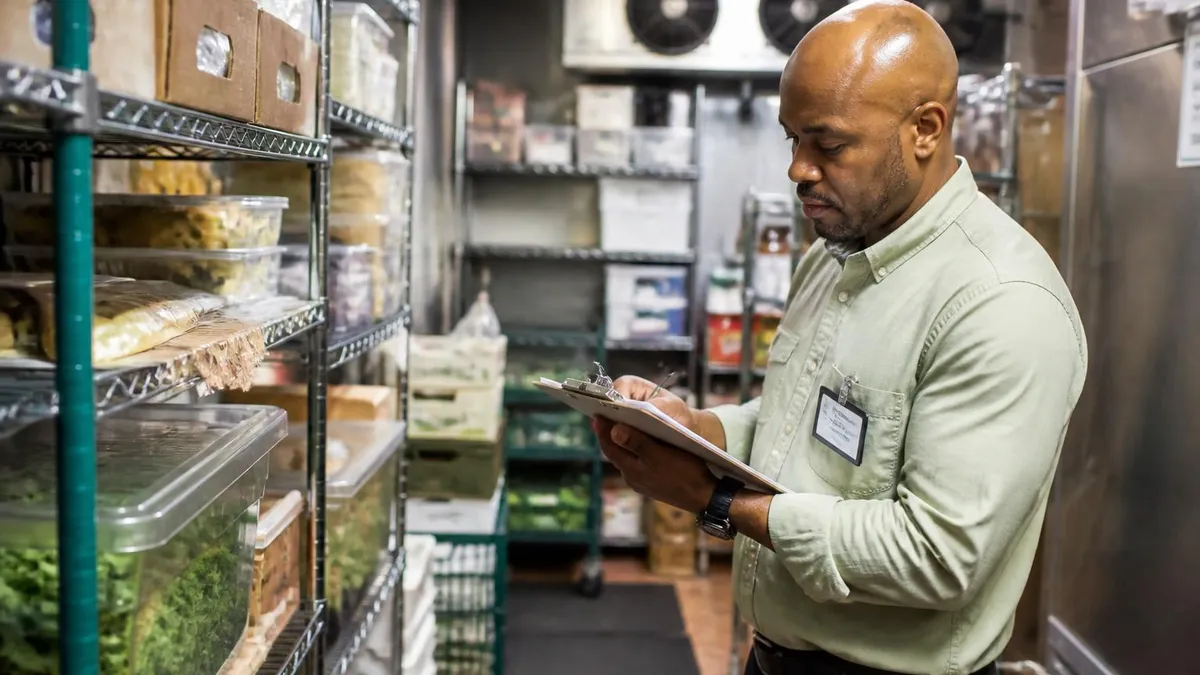
Is Paying for ServSafe Certification Worth It?
- +Nationally recognized credential accepted in all 50 states and by virtually every major food service employer
- +Legally required for management roles in most states, making the cost a necessary career investment
- +Five-year validity for Manager certification gives strong return on a one-time exam investment
- +Employer sponsorship is common — many food service businesses pay the full cost for qualified employees
- +Food Handler certification costs as little as $15, making entry-level compliance extremely affordable
- +Certified managers typically earn higher wages, with the credential justifying salary negotiations
- −Manager certification total cost can reach $300+ when paying retail for course, exam, and textbook separately
- −Proctored exam must be rescheduled and repaid if you fail, adding $36–$54 per retake attempt
- −No universal online proctoring option — some candidates must travel to an approved testing center
- −Certification does not transfer automatically if you change states with stricter local requirements
- −Textbook is frequently updated, and older editions may not fully align with current exam content
- −No partial credit or modular exams — you must pass the full 90-question Manager exam in one sitting
ServSafe Certification Pre-Exam Checklist
- ✓Confirm which ServSafe credential your employer or local health department requires (Food Handler, Manager, or Alcohol).
- ✓Check whether your employer offers sponsorship or reimbursement before purchasing any course or exam materials.
- ✓Verify that your state accepts ServSafe or mandates a specific alternative accredited program.
- ✓Purchase the correct course edition — ensure the online course matches the current 9th edition Manager content.
- ✓Schedule your proctored exam date at an approved testing center at least two weeks in advance.
- ✓Complete at least three full-length servsafe manager practice tests and review every missed question before exam day.
- ✓Study all eight content domains: foodborne illness, personal hygiene, purchasing and receiving, storage, preparation, service, facilities, and food safety management systems.
- ✓Bring two valid forms of government-issued photo ID to your proctored exam appointment.
- ✓Avoid scheduling your exam during peak stress periods — give yourself at least one full study day immediately before the test.
- ✓Save your certificate PDF and request a printed wallet card from ServSafe after passing — many employers require both.
Bundle Packages Can Cut Manager Certification Costs by 40%
Candidates who purchase an instructor-led classroom bundle from a community college or restaurant association often pay $125 to $250 all-in — including course, textbook, exam, and proctoring — compared to $300+ when buying each component separately. Always compare bundled classroom rates in your area before purchasing individual components online, especially if you also want the structure of in-person instruction to improve your first-attempt pass rate.
Lowering your ServSafe certification cost is entirely achievable with a few targeted strategies, and many candidates end up spending far less than the retail price suggests. The most powerful cost-reduction move is to ask your employer directly whether they cover certification expenses. In the food service industry, this is far more common than most new employees realize. Large chains like McDonald's, Darden Restaurants, and Marriott International routinely pay for both Food Handler and Manager certifications as a standard operating requirement tied to their health inspection compliance obligations.
Community college continuing education programs are among the best-kept secrets for affordable ServSafe Manager training. Across the country, community colleges partner with ServSafe to offer accredited instructor-led courses that bundle the textbook, online course access, proctored exam, and sometimes a retake voucher into a single enrollment fee. These programs frequently cost $125 to $175 per person — well below the retail cost of purchasing each component individually. Some programs even qualify for workforce development grants that reduce or eliminate cost for eligible students in certain income brackets.
Workforce development grants and employer training funds represent another avenue that many candidates overlook. The federal Workforce Innovation and Opportunity Act (WIOA) provides funding through local American Job Centers for eligible workers in industries including food service. If you are unemployed, underemployed, or transitioning careers into food service management, you may qualify for free or heavily subsidized ServSafe Manager training through a WIOA-funded program. Contact your nearest American Job Center or state workforce agency to explore eligibility before paying retail.
Group enrollment discounts are available directly through the ServSafe platform for organizations purchasing five or more licenses at once. If you know several colleagues who also need the same certification, coordinating a group purchase can yield meaningful savings per person. Restaurant associations at the state and local level — such as the Illinois Restaurant Association or the California Restaurant Association — also negotiate member discounts on ServSafe courses and exams that can reduce costs by 10% to 20% compared to general public pricing.
For the servsafe food manager certification, one of the smartest financial decisions is to invest heavily in free practice resources before your first exam attempt, reducing the likelihood of a costly retake. Free servsafe manager practice test platforms like PracticeTestGeeks provide full-length simulated exams covering all eight content domains with instant scoring and detailed answer explanations. Candidates who complete five or more full practice tests and review their incorrect answers systematically consistently report higher first-attempt pass rates than those who rely solely on reading the textbook.
If you are exploring your options for servsafe food manager certification, it is worth knowing that the official ServSafe website occasionally runs promotional discounts on course and exam bundles, particularly in January (new year promotions) and September (National Food Safety Month). Signing up for the ServSafe email list or checking their website during these periods can yield savings of $10 to $30 on the Manager course bundle. While not a massive discount, every dollar saved on the course is a dollar you can put toward quality study materials.
Finally, do not overlook the e-book version of the ServSafe Manager textbook as a cost-saving measure. The digital edition of the 7th Edition Manager Book is typically priced at $30 to $50 less than the printed version and contains identical content. If you are comfortable studying from a screen, the e-book delivers every concept, diagram, and practice question in the physical book at a fraction of the cost. Pairing the e-book with free online practice tests creates a highly cost-effective study package that has helped thousands of candidates pass the Manager exam without spending $300 or more on materials.
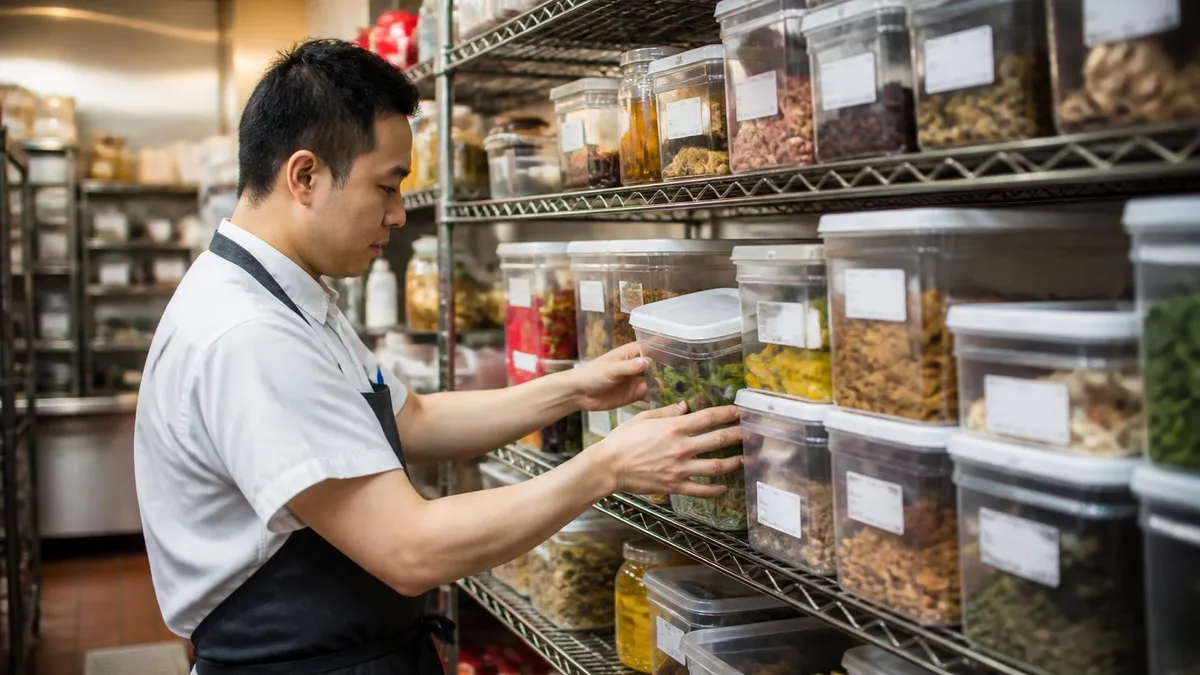
Third-party sites that sell what appear to be ServSafe certificates for $5 to $10 are not legitimate — only certificates issued through the official ServSafe platform (servsafe.com) are recognized by health departments and employers. Additionally, certificates obtained from outdated course versions (pre-7th Edition) may not satisfy current local health code requirements. Always verify your certificate's validity date and confirm it was issued through an NRAEF-approved program before presenting it to a regulator or employer.
Once you hold your ServSafe certification, understanding the long-term return on investment helps contextualize the upfront cost. The ServSafe Manager credential in particular is directly tied to compensation in the food service industry.
Certified food safety managers earn measurably more than their non-certified counterparts — according to Bureau of Labor Statistics data and industry salary surveys, food service managers with a recognized safety certification earn an average of $5,000 to $8,000 more annually than those without one. Viewed through this lens, the $200 to $300 cost of Manager certification is recovered within the first few weeks of earning a certified manager's salary.
Compliance value is another dimension of ROI that is harder to quantify but equally real. A single health department violation resulting from a food safety lapse can cost a restaurant $1,000 to $10,000 in fines, remediation costs, and lost business during closure. The ServSafe Manager curriculum is specifically designed to prevent the most common violations — improper cooling, inadequate handwashing protocols, cross-contamination from raw proteins, and temperature abuse during holding. An establishment with certified managers statistically has fewer critical violations on health inspections, a benefit that more than justifies the certification investment.
Career mobility is a third ROI dimension worth calculating. In many states, health codes require that every food establishment maintain at least one ServSafe certified manager on staff at all times during operating hours. This regulatory requirement creates consistent, durable demand for certified managers across the entire food service sector — from hospital cafeterias to theme parks to airline catering. Holding a current Manager certification opens doors at employers who cannot operate without it, giving you use in salary negotiations and job searches that non-certified candidates simply do not have.
Renewal planning is part of maximizing the value of your initial investment. Since the Manager certification is valid for five years, setting a calendar reminder 12 months before your expiration date gives you enough time to schedule a retake without pressure. Some candidates choose to retake the exam six months early if a new edition of the curriculum is upcoming, ensuring their certificate reflects the most current food safety standards. Others wait until the final months of validity, relying on their accumulated kitchen experience to carry them through the retake with minimal additional study.
For those who manage teams, the business case for getting employees ServSafe certified extends beyond individual ROI. Health departments in most jurisdictions grant inspection leniency to establishments that demonstrate a culture of food safety through staff certification records. Some states even offer expedited permitting or reduced inspection frequency to establishments where all managers are ServSafe certified. These regulatory benefits translate into time and money saved on compliance management at the organizational level, making manager certification a smart business decision, not just a personal career investment.
If you are ready to prepare for your exam and want structured online access, exploring servsafe manager certification online resources can help you understand exactly what the exam covers and how questions are structured. The official exam draws from eight content domains with varying weights, and knowing which domains carry the most questions — food safety management systems and foodborne microorganisms are consistently the heaviest-weighted sections — allows you to allocate your study time efficiently and maximize your score without spending extra hours on lower-yield topics.
The total value proposition of ServSafe certification is compelling at every price point. For $15 to $22, a Food Handler certificate opens the door to food service employment in a regulated market. For $200 to $300, the Manager certification qualifies you for supervisory and management roles with meaningfully higher compensation.
Over a five-year certification cycle, the per-year cost is modest compared to the salary premium, compliance protection, and career mobility the credential provides. When you add the availability of employer sponsorship, community college bundles, and free practice resources, the actual out-of-pocket expense for many candidates is far lower than the sticker price suggests.
Many readers pair this guide with the servsafe proctor to check their readiness before exam day.
Many readers pair this guide with the servsafe certification lookup to check their readiness before exam day.
Building an effective, budget-conscious study plan is the final piece of the ServSafe certification puzzle. The most successful candidates combine the official course content with free external practice resources, spaced repetition review, and realistic timed practice exams to build both knowledge and exam-day confidence. Start your preparation at least three to four weeks before your scheduled exam date — cramming in the final days before a 90-question proctored exam rarely produces passing results, especially in domains like food safety management systems that require conceptual understanding rather than simple memorization.
Begin your study plan by reading or watching through the full course content once, taking brief notes on the eight content domains. Pay particular attention to the temperature danger zone (41°F to 135°F), proper cooling methods (from 135°F to 70°F within two hours, then to 41°F within four more hours), and the Big 9 food allergens (milk, eggs, fish, shellfish, tree nuts, peanuts, wheat, soybeans, and sesame). These are among the highest-frequency topics on the actual exam and appear in scenario-based questions that require you to apply the rule, not just recall the fact.
During the second and third weeks of preparation, shift your focus to timed practice exams. Take one full-length 90-question practice test under real exam conditions — no notes, no pausing, within the 2-hour time limit — and then spend as much time reviewing missed questions as you spent taking the test. Understanding why a wrong answer is wrong is more valuable than simply noting the right answer. The question logic on ServSafe exams frequently tests priority-setting (what to do first when multiple food safety issues occur simultaneously) and regulatory thresholds (exact temperatures, times, and percentages).
In your final week of preparation, focus on your weakest domains as revealed by your practice test scores. If you consistently miss questions on HACCP (Hazard Analysis Critical Control Points), spend dedicated time on the seven HACCP principles and practice applying them to real kitchen scenarios. If allergen management questions trip you up, review the Big 9 allergens, cross-contact prevention protocols, and the distinction between food allergies and food intolerances. Targeted weakness remediation in the final week consistently produces more score improvement than broad review of material you already understand.
On exam day, arrive at your testing location at least 15 minutes early with two forms of government-issued photo ID. Most proctored ServSafe Manager exams are administered on paper at approved testing centers, though some providers offer computer-based testing. Read every question carefully — many questions include qualifiers like "MOST likely," "FIRST," or "BEST" that significantly change the correct answer. If you are unsure on a question, eliminate obviously wrong answers and make your best educated choice rather than leaving it blank, since there is no penalty for guessing on the ServSafe Manager exam.
After passing your exam, your score report will indicate whether you passed with a score of 70% or higher (56 of the 80 scored questions correct). ServSafe processes and mails your certificate within four to six weeks of passing. Many employers accept a passing score report as interim proof of certification while you wait for the official certificate. Download and save a digital copy of your score report immediately after testing — losing it creates delays if you need proof of certification before your printed certificate arrives in the mail.
Ongoing professional development beyond your initial certification maximizes the long-term value of your ServSafe investment. The food safety field evolves continuously — new pathogens emerge, regulatory thresholds change, and best practices are updated. Staying current through industry publications, state health department bulletins, and continuing education keeps your operational knowledge sharp between certification renewals. The five-year certification cycle aligns well with major curriculum updates, so when renewal time arrives, retaking the exam with fresh study materials ensures you are current on the latest food safety science and regulatory standards rather than relying on five-year-old knowledge.
Sample ServSafe Food Safety Practice Questions
Try these questions from our free ServSafe Food Safety practice tests. The correct answer and an explanation follow each question.
A food handler notices their coworker tasting food with their finger and then continuing to prep without washing hands. The food handler should:
- A. Ignore it since only managers can address hygiene issues
- B. Report the behavior to a manager
- C. Do the same since it is a common kitchen practice
- D. Only intervene if a customer is watching
Answer: B. Report the behavior to a manager
Food handlers have a responsibility to report unsafe hygiene practices to management to protect food safety.
What training must a food safety manager ensure all food handlers receive?
- A. Only fire safety and evacuation
- B. Comprehensive food safety training covering hygiene, cross-contamination, temperature control, allergens, and cleaning
- C. Training is only required for managers
- D. Training is only needed at initial hire
Answer: B. Comprehensive food safety training covering hygiene, cross-contamination, temperature control, allergens, and cleaning
All food handlers need comprehensive, job-specific, and ongoing food safety training.
How far off the floor should food and food-contact equipment be stored in a food establishment?
- A. At least 4 inches (10 cm)
- B. At least 6 inches (15 cm)
- C. At least 8 inches (20 cm)
- D. At least 12 inches (30 cm)
Answer: B. At least 6 inches (15 cm)
Food and equipment must be stored at least 6 inches (15 cm) off the floor to prevent contamination and allow thorough cleaning of the floor beneath.
When must food handlers change their single-use gloves during food preparation?
- A. Only when switching between raw meat and raw poultry
- B. After handling money, touching their face, or switching between different food tasks
- C. Every 60 minutes during a shift
- D. Only when the gloves appear visibly dirty or torn
Answer: B. After handling money, touching their face, or switching between different food tasks
Gloves must be changed whenever they could have become contaminated — including after touching non-food surfaces, the face, or switching between food types.
ServSafe Questions and Answers
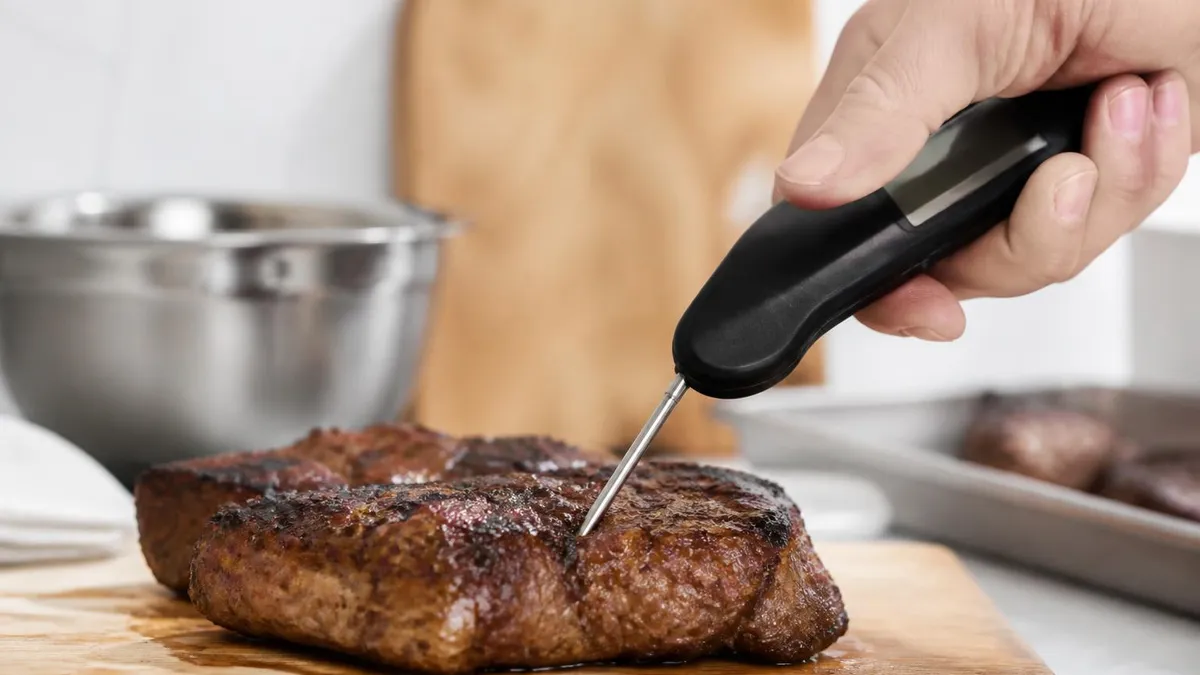
ServSafe Administrative — Complete Guide (2026)

ServSafe Cleaning Agents: Which Cleaning Agent Best Removes Baked-On Food?

ServSafe Manager Practice Test 2026: Free Exam Prep & Study Guide
ServSafe Manager Exam Questions: Free 2026 Practice Test & Answers

ServSafe Study Guide PDF: Complete Certification Prep Hub for 2026
About the Author

Registered Sanitarian & Food Safety Certification Expert
Cornell University College of Agriculture and Life SciencesThomas Wright is a Registered Sanitarian and HACCP-certified food safety professional with a Bachelor of Science in Food Science from Cornell University. He has 17 years of experience in food safety auditing, regulatory compliance, and foodservice management training. Thomas prepares food industry professionals for ServSafe Manager, HACCP certification, and state food handler examinations.