
Phlebotomy License vs Certification: Complete Guide to State Requirements, Credentials & Career Paths
🟢 Phlebotomy license vs certification explained: state rules, credential types, costs, salary impact, and how to choose the right path for your career.
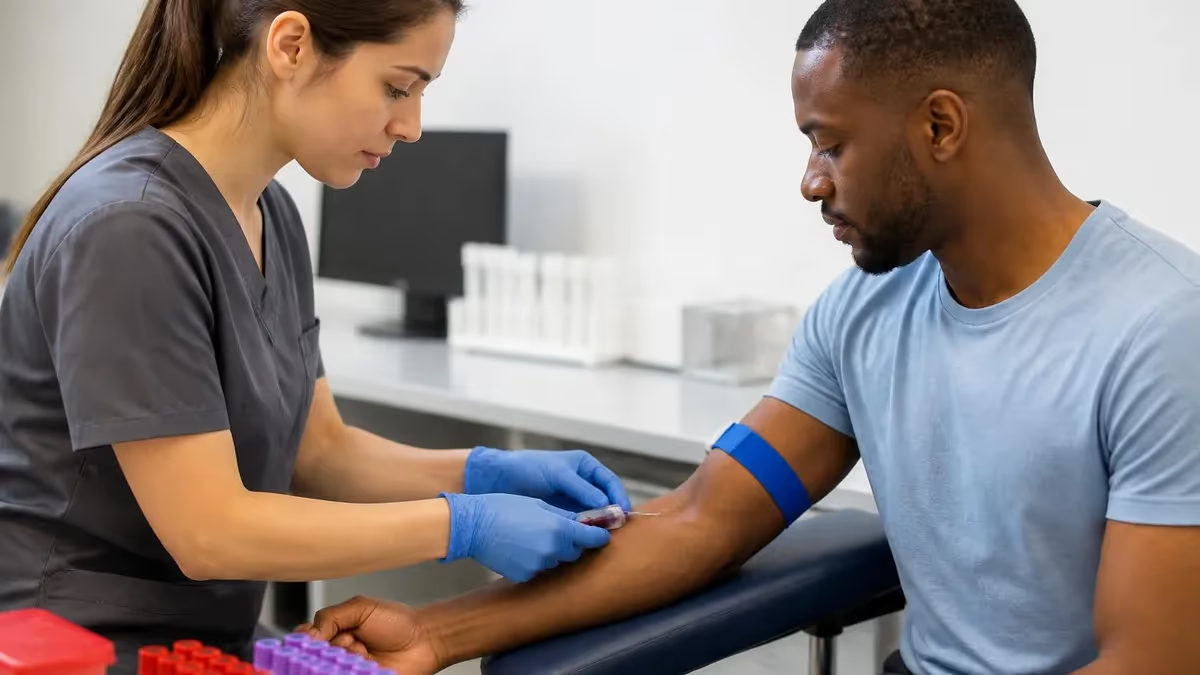
Understanding the difference between a phlebotomy license vs certification is one of the first hurdles every new blood-collection professional faces, and getting it wrong can delay your career by months. A license is a legal credential issued by a state government that grants permission to practice phlebotomy within that jurisdiction, while a certification is a voluntary credential awarded by a private professional organization that verifies your competency against a national standard. Both prove you know what you are doing, but only one is enforceable by law.
Right now, only four states formally license phlebotomists: California, Louisiana, Nevada, and Washington. Every other state relies on employer-driven certification requirements, which means a hospital in Texas may demand the same credentials a state law would in California, even though the legal framework is entirely different. This patchwork system confuses students searching for phlebotomy classes near me who assume the rules are uniform nationwide.
The financial stakes are real. A certified phlebotomy technician working in a licensed state earns an average of $44,510 annually, while uncertified draw-station workers in unregulated states often start near $30,000. The credential gap can mean $14,000 or more per year in salary, plus access to hospital-based roles that simply will not interview candidates without an NHA, ASCP, or AMT certification on file.
This guide breaks down exactly what each credential requires, how the four licensing states differ, which national certifications carry the most weight, what classes and training hours you need, and how to sequence your applications so you spend the least money for the highest career return. We will also cover renewal cycles, continuing education, and what happens when you move between states.
Whether you are a high school graduate exploring healthcare, a medical assistant adding a specialty skill, or a career-changer drawn by the short training timeline, the license versus certification question will shape every decision you make. Phlebotomy training specialists at community colleges and vocational schools structure their programs around these credentials, so picking the right path before you enroll saves both tuition dollars and study hours.
By the end of this article, you will know whether you need a license, which certification fits your job goals, how to study for the exam, and what to expect from your first three years on the job. We will use real data from the Bureau of Labor Statistics, the four state licensing boards, and the six major certifying organizations to keep every recommendation grounded in current 2026 standards.
Phlebotomy License vs Certification by the Numbers

License vs Certification: Core Differences
A license is issued by a state government agency and is required by law to practice. Working without one in California, Louisiana, Nevada, or Washington is a misdemeanor offense that can result in fines and permanent disqualification.
Certification comes from private bodies like the NHA or ASCP. It is voluntary unless your employer demands it, but in practice 87% of hospital phlebotomy job postings list certification as mandatory for new hires.
A California license is valid only in California, while an NHA Certified Phlebotomy Technician (CPT) credential is recognized in all 50 states. Certifications travel with you across state lines; licenses do not.
Licenses require state-board renewal with continuing education documented through approved providers. Certifications renew through the issuing body with CE credits and a renewal fee, typically every two years.
State licenses cost $75 to $200 for application plus exam fees. National certifications range from $90 (NHA) to $135 (ASCP) for the exam, with renewal fees of $40 to $80 every two years.
California, Louisiana, Nevada, and Washington are the only states with phlebotomy-specific licensure laws on the books in 2026, and each one structures its rules differently. California, regulated by the Laboratory Field Services division of the Department of Public Health, offers three tiers: Limited Phlebotomy Technician (LPT) for skin punctures only, Certified Phlebotomy Technician I (CPT I) for both skin and venipuncture, and Certified Phlebotomy Technician II (CPT II) which adds arterial draws. Each tier has separate training and clinical hour minimums.
Louisiana requires registration through the State Board of Medical Examiners and pairs it with a mandatory national certification from an approved body. You cannot register in Louisiana with state training alone; you must also hold an NHA, ASCP, AMT, NCCT, or ACA certification. This dual requirement makes Louisiana one of the strictest jurisdictions for new phlebotomists, though it ensures portability if you ever relocate.
Nevada operates through the Office of Laboratory Services and treats phlebotomy as a category of laboratory assistant licensure. Applicants need 80 hours of classroom instruction, 80 hours of clinical practice, and a passing score on a recognized national exam. The license is renewed every two years with proof of 12 continuing education contact hours, and the state maintains a public lookup tool to verify any practitioner's credential status.
Washington uses a Medical Assistant-Phlebotomist (MA-P) credential issued by the Department of Health. Unlike pure phlebotomy licenses elsewhere, the MA-P bundles blood collection with limited medical assistant duties, which expands scope but also extends training to approximately 70 didactic hours. Washington allows endorsement from other states under reciprocity rules, so a California CPT I holder can often transfer with minimal additional testing.
If you live outside these four states, your path is simpler but less standardized. Employers in New York, Texas, Florida, and most other states set their own bars, which typically means a high school diploma, completion of an accredited phlebotomy program, and one of the major national certifications. Some states like Massachusetts and Pennsylvania have voluntary registration databases that employers consult but do not legally require. Researching phlebotomy certification near me options gives you the clearest picture of what local hospitals actually hire.
Reciprocity between the four licensing states is partial and inconsistent. California will accept Louisiana certifications toward training hour requirements but still mandates the California-specific written exam. Nevada has the most flexible endorsement pathway, while Washington requires a separate state jurisprudence exam covering its specific patient-rights and documentation laws.
Knowing which state you plan to work in before you start training is essential. Enrolling in a 40-hour program when California requires 80 wastes months and forces you to re-enroll. Always pull the current state board website rules before paying tuition, and verify the school you choose is on the state's approved provider list.

Phlebotomy Practice Test Questions
Prepare for the Phlebotomy Test exam with our free practice test modules. Each quiz covers key topics to help you pass on your first try.
Phlebotomy American Medical Certification ...
Phlebotomy Exam Questions covering American Medical Certification Association Phlebotomy. Master Phlebotomy Test concepts for certification prep.
Phlebotomy American Medical Technologists ...
Free Phlebotomy Practice Test featuring American Medical Technologists Phlebotomy. Improve your Phlebotomy Exam score with mock test prep.
Phlebotomy American Society for Clinical P...
Phlebotomy Mock Exam on American Society for Clinical Pathology Phlebotomy. Phlebotomy Study Guide questions to pass on your first try.
Phlebotomy Association of Phlebotomy Techn...
Phlebotomy Test Prep for Association of Phlebotomy Technicians. Practice Phlebotomy Quiz questions and boost your score.
Phlebotomy National Center for Competency ...
Phlebotomy Questions and Answers on National Center for Competency Testing Phlebotomy. Free Phlebotomy practice for exam readiness.
Phlebotomy National Healthcareer Associati...
Phlebotomy Mock Test covering National Healthcareer Association Phlebotomy. Online Phlebotomy Test practice with instant feedback.
Phlebotomy Order of Draw and Additives
Free Phlebotomy Quiz on Order of Draw and Additives. Phlebotomy Exam prep questions with detailed explanations.
Phlebotomy Legal and Ethics
Phlebotomy Practice Questions for Phlebotomy Legal and Ethics. Build confidence for your Phlebotomy certification exam.
Phlebotomy Safety and Infection Control
Phlebotomy Test Online for Safety and Infection Control. Free practice with instant results and feedback.
Phlebotomy Special Collection Procedures
Phlebotomy Study Material on Special Collection Procedures. Prepare effectively with real exam-style questions.
Phlebotomy Specimen Processing and Handling
Free Phlebotomy Test covering Specimen Processing and Handling. Practice and track your Phlebotomy exam readiness.
Phlebotomy Test Arterial Blood Gas Collection
Phlebotomy Exam Questions covering Test Arterial Blood Gas Collection. Master Phlebotomy Test concepts for certification prep.
Phlebotomy Test Capillary and Dermal Puncture
Free Phlebotomy Practice Test featuring Test Capillary and Dermal Puncture. Improve your Phlebotomy Exam score with mock test prep.
Phlebotomy Test Pediatric Blood Collection
Phlebotomy Mock Exam on Test Pediatric Blood Collection. Phlebotomy Study Guide questions to pass on your first try.
Phlebotomy Test Phlebotomy Anatomy and Phy...
Phlebotomy Test Prep for Test Phlebotomy Anatomy and Physiology. Practice Phlebotomy Quiz questions and boost your score.
Phlebotomy Test Phlebotomy Exam Simulation
Phlebotomy Questions and Answers on Test Phlebotomy Exam Simulation. Free Phlebotomy practice for exam readiness.
Phlebotomy Test Phlebotomy Patient Identif...
Phlebotomy Mock Test covering Test Phlebotomy Patient Identification and Communication. Online Phlebotomy Test practice with instant feedback.
Phlebotomy Test Point of Care Testing
Free Phlebotomy Quiz on Test Point of Care Testing. Phlebotomy Exam prep questions with detailed explanations.
Top National Phlebotomy Certification Bodies
The National Healthcareer Association offers the Certified Phlebotomy Technician (CPT) credential, widely regarded as the most accessible national certification. Eligibility requires a high school diploma plus either completion of an NHA-approved training program within the last five years or one year of supervised phlebotomy work experience. The exam is 100 scored questions plus 20 pretest items, delivered in two hours at PSI test centers nationwide.
NHA pass rates hover around 75%, and the credential renews every two years with 10 continuing education credits and a $179 renewal fee. Employers across major hospital systems including HCA, Quest Diagnostics, and LabCorp accept NHA CPT as their default credential. The exam fee is $117, making it the most budget-friendly of the major bodies.
State License vs National Certification: Which Path Fits You?
- +State licenses carry legal authority and protect your job from employer policy changes
- +Licensed states often pay 8% to 15% more than unlicensed jurisdictions
- +National certifications transfer across all 50 states without re-testing
- +Certifications open doors to specialty roles like therapeutic phlebotomy and donor centers
- +Holding both credentials maximizes salary ceiling and job mobility
- +Certification renewal builds continuing education habits that improve patient safety
- +Dual credentialing signals professionalism to hiring managers and improves interview rates
- −Licenses require state-specific exams that do not transfer if you relocate
- −Application processing can take 6 to 12 weeks in California, delaying job starts
- −Certification fees and renewals add $200 to $400 in ongoing career costs
- −Some certifying bodies require recertification every year, adding administrative burden
- −Licensing states have stricter clinical hour minimums, extending training timelines
- −Failed exams require waiting periods of 30 to 90 days before retesting

Eligibility Checklist for License and Certification
- ✓Confirm you have a high school diploma or GED equivalent on file
- ✓Verify your phlebotomy training program is accredited by NAACLS, ABHES, or your state board
- ✓Document at least 40 hours of classroom instruction in anatomy, safety, and procedures
- ✓Complete the minimum supervised clinical hours required by your state (40 to 120)
- ✓Perform and log 100 successful venipunctures and 25 skin punctures on live patients
- ✓Pass a criminal background check through your state board or certifying agency
- ✓Obtain current Basic Life Support (BLS) certification from the American Heart Association
- ✓Submit application with transcripts, clinical logs, and processing fees
- ✓Schedule your written exam at a PSI, Pearson VUE, or Prometric testing center
- ✓Pass the exam with the minimum scaled score required by your chosen body
- ✓Pay the credentialing fee and receive your wallet card and digital badge
- ✓Enroll in continuing education to meet renewal requirements before expiration
Hold one license AND one national certification for maximum mobility
Phlebotomists who maintain both a state license (where applicable) and a recognized national certification report 23% higher starting salaries and qualify for roles in research labs, plasma centers, and traveling phlebotomy teams. The combined annual upkeep cost is roughly $150, but the lifetime earnings difference exceeds $50,000 over a 20-year career. Stack credentials early while training is fresh.
The cost-versus-return math on phlebotomy credentials favors investment heavily. A typical accredited training program runs between $700 and $1,400, with community colleges charging on the low end and private vocational schools on the high end. Add certification exam fees of $90 to $135, application costs, background checks at $25 to $75, and your total out-of-pocket investment is usually under $1,800 before your first paycheck arrives.
Compare that to the salary uplift. The Bureau of Labor Statistics reports the median annual phlebotomy salary at $44,510 for 2024, with the top 10% earning over $59,000. Entry-level uncertified positions in unregulated states often start at $32,000, meaning a certified hire recovers their full training investment in roughly two months of work. Few healthcare credentials offer this fast a payback period.
Geography matters enormously. California phlebotomists earn the highest median in the country at $54,820 annually, partly because of cost-of-living adjustments and partly because the state license signals verified competency. New York, Massachusetts, and Washington follow closely. Rural areas and Southern states pay less but also require lower upfront training costs, so the relative return can still be strong.
Specialty roles command premiums beyond the base salary. Therapeutic phlebotomy positions in hematology clinics pay 12% to 18% more than standard hospital draws. Plasma donor center collection technicians earn similar premiums plus performance bonuses. Mobile phlebotomy contractors who service nursing homes and insurance physicals can clear $65,000 in busy markets by combining base pay with per-draw stipends.
Certification stacking accelerates earning power. Phlebotomists who add an EKG technician credential through NHA or AMT typically see a $3,000 to $5,000 annual raise. Adding a Medical Assistant credential extends the career path into clinic management, where senior roles cross the $60,000 line. Many employers fully reimburse the cost of additional certifications, making the marginal investment effectively zero.
Mastering core technical skills like the correct order of draw phlebotomy sequence, proper tourniquet release timing, and tube inversion counts is what separates certified hires who advance from those who plateau. Employers track first-stick success rates and patient complaint logs, and phlebotomists with clean records get promoted into lead, supervisor, and trainer roles within 18 to 24 months.
Long-term, the credential combination you choose at the start of your career shapes every promotion decision afterward. Picking a low-cost certification just to clear the entry bar may save $50 in 2026, but the same choice can cost you $5,000 in salary by 2030. Spend the extra exam fee for ASCP if you have any interest in hospital lab work; the prestige differential pays dividends for decades.
Allowing a state license or national certification to expire creates serious consequences. California requires phlebotomists with lapsed licenses to retake the full exam after one year, costing roughly $200 plus lost work time. Most national bodies charge late renewal penalties of $50 to $150 and may require remediation coursework if you wait beyond 90 days past expiration. Calendar your renewal dates the day you receive your credential.
Renewal cycles differ between licensing states and certifying bodies, so building a tracking system is critical the moment you receive your initial credential. California CPT licenses renew every two years and require six hours of continuing education in approved phlebotomy or laboratory topics. Nevada also runs a two-year cycle with 12 contact hours, while Louisiana requires verification of an active national certification alongside its state registration renewal.
National certifications follow their own schedules. NHA CPT renews every two years with 10 CE credits and a $179 fee. ASCP PBT runs a three-year cycle requiring 9 Credential Maintenance Program points. AMT RPT renews annually, which is more administrative work but spreads costs into smaller annual installments. NCCT and AMCA both use two-year cycles similar to NHA. Most CE credits cost between $10 and $30 per hour through online providers like MedCerts, AAPC, or your professional society.
Moving between states is where the license-versus-certification divide matters most. A national certification follows you wherever you work without any reapplication. State licenses do not. If you hold a California CPT I and accept a job in Washington, you must apply for the Washington MA-P credential separately, document your training equivalence, and possibly take a Washington-specific jurisprudence exam covering local patient privacy laws.
Reciprocity agreements exist but are narrow. California and Nevada have a partial agreement that accepts each other's clinical hour documentation but still requires the destination state's written exam. Washington accepts national certifications from NHA, ASCP, AMT, and NCCT toward its MA-P training equivalence, simplifying transitions for already-certified phlebotomists. Louisiana mandates a national certification regardless of where you trained.
For phlebotomists planning to work in multiple states or via travel contracts, holding one of the broadly recognized national certifications is non-negotiable. ASCP and NHA top the list for traveling phlebotomy agencies, which place workers in 13-week assignments across hospital networks. Travel rates range from $1,400 to $2,200 per week plus housing stipends, making the credential investment particularly valuable.
Continuing education topics that satisfy renewal requirements range from updated CDC bloodborne pathogen guidelines to newer technique modules covering butterfly needle techniques for pediatric and geriatric patients. Many phlebotomists complete their CE through a single weekend conference each renewal cycle, combining socialization with credit hours. Look for offerings from your state society or the American Society for Clinical Laboratory Science. Searching for a phlebotomy program near me can also lead you to local CE providers approved by your credentialing body.
Finally, document everything. Save digital and paper copies of every CE certificate, exam result, and employer verification letter. State boards and certifying agencies have been known to audit randomly, and a missing document during audit can trigger suspension. A simple cloud folder labeled by year with subfolders for each credential prevents 95% of renewal problems.
Choosing the right credential path requires honest reflection on your career goals, geographic preferences, and budget. If you plan to stay in one of the four licensing states permanently, start with the state credential because employers there will require it regardless. Layer a national certification on top within your first year of work to future-proof your mobility. The combined cost is modest and the benefits compound.
If you live in an unregulated state, the strategic question becomes which national certification employers in your target hospitals actually prefer. Call the human resources departments at three large hospitals within 30 miles of your home and ask directly which phlebotomy credentials they accept and which they prefer for new hires. This 15-minute research project frequently saves students thousands of dollars in misdirected training fees.
Study strategy matters as much as credential choice. Allow 80 to 120 hours of focused exam preparation in the four weeks before your test date. Use practice questions daily, especially in domains where you score below 75%. The NHA, ASCP, and AMT all weight their exams toward safety, anatomy and physiology, specimen handling, and procedural technique, with the highest single domain typically being specimen collection at 30% to 40% of the total score.
Hands-on practice trumps memorization for clinical content. Volunteer for extra venipunctures during your externship, request feedback from preceptors on tourniquet placement and needle angle, and log every encounter in detail. Phlebotomists who enter the workforce with 150-plus documented sticks consistently outperform peers with only the minimum 100, both in their first-year evaluations and in long-term advancement.
Network with current phlebotomists before you finish training. Join your state's clinical laboratory science society as a student member for $15 to $25 annually, attend one chapter meeting, and exchange contact information with three working professionals. These contacts often lead to job referrals when you graduate, bypassing the standard online application process that filters out 80% of resumes before a human ever sees them.
Plan your renewal calendar the day you pass your exam. Mark your two-year or three-year cycle in three separate places: your phone calendar, a wall planner, and an email reminder set 90 days before expiration. Order your CE credits during the first 12 months to spread the workload, and prioritize courses that directly improve your clinical skills rather than the cheapest available options.
Finally, think long-term about your career arc. Phlebotomy is an excellent standalone career but also serves as a launching pad for medical laboratory science, nursing, and physician assistant programs. The clinical patient-contact hours you accumulate count toward many advanced healthcare program prerequisites. Even if you never use the credential outside of one job, the discipline of credential maintenance builds professional habits that serve every healthcare role.
Phlebotomy Questions and Answers
Phlebotomy Exam 2026: Complete Certification Study Guide & Practice
Phlebotomy: Classes, Certification, Salary & Career Guide
Phlebotomy Test 2026: Complete Practice Exam Prep Guide
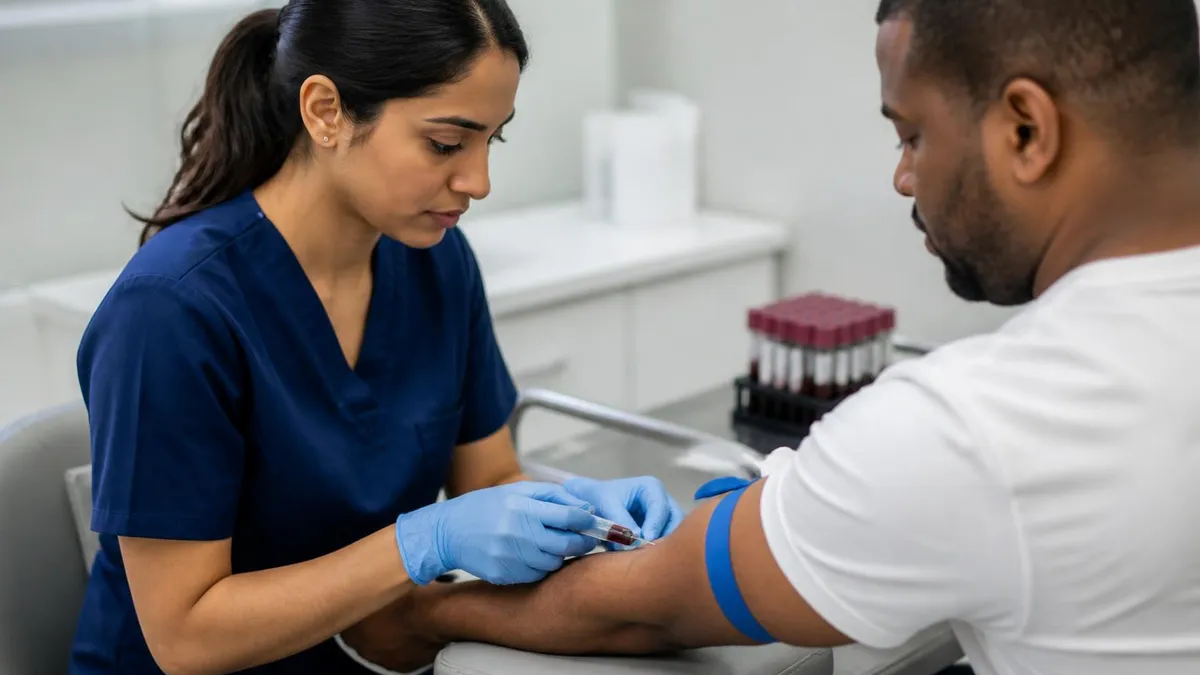
Phlebotomy Tube Colors: Complete Guide to the Order of Draw, Additives & Lab Tests
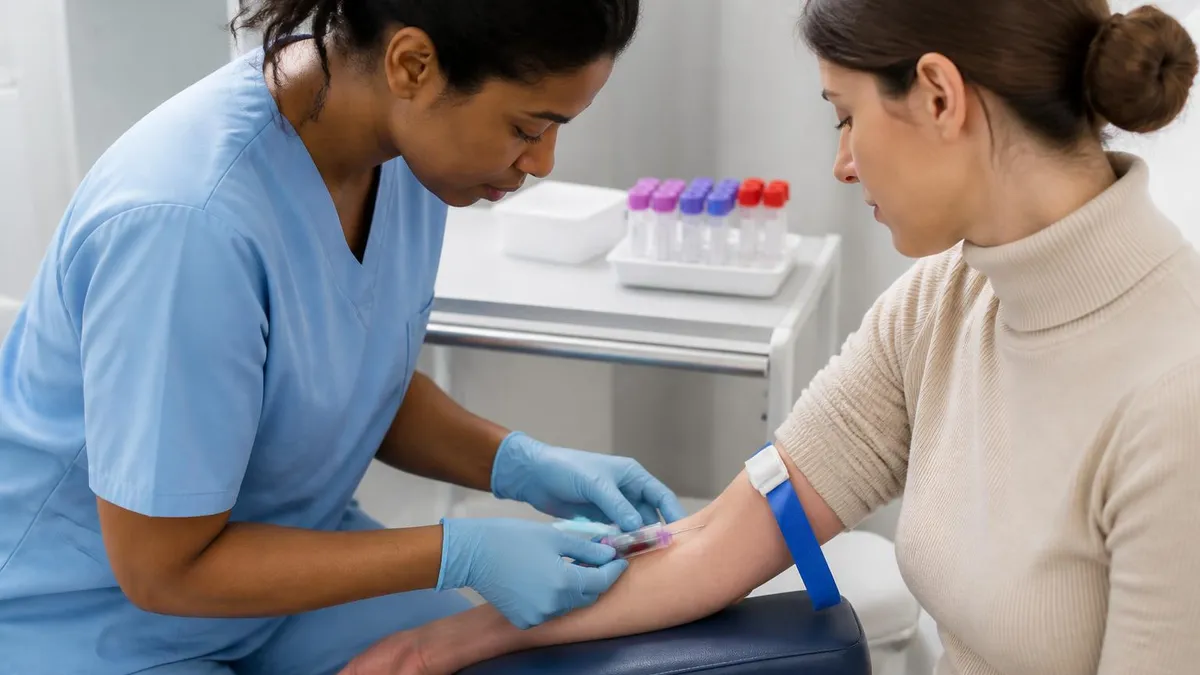
Phlebotomy Knowledge: Order of Draw, Tubes & Procedures
About the Author

Registered Nurse & Healthcare Educator
Johns Hopkins University School of NursingDr. Sarah Mitchell is a board-certified registered nurse with over 15 years of clinical and academic experience. She completed her PhD in Nursing Science at Johns Hopkins University and has taught NCLEX preparation and clinical skills courses for nursing students across the United States. Her research focuses on evidence-based exam preparation strategies for healthcare certification candidates.