
HVAC Definition: What It Means, Components, and How Systems Work 2026 September
HVAC definition: 🎯 Heating, Ventilation, Air Conditioning. Components, residential vs commercial systems, efficiency ratings (SEER, AFUE), recent trends.
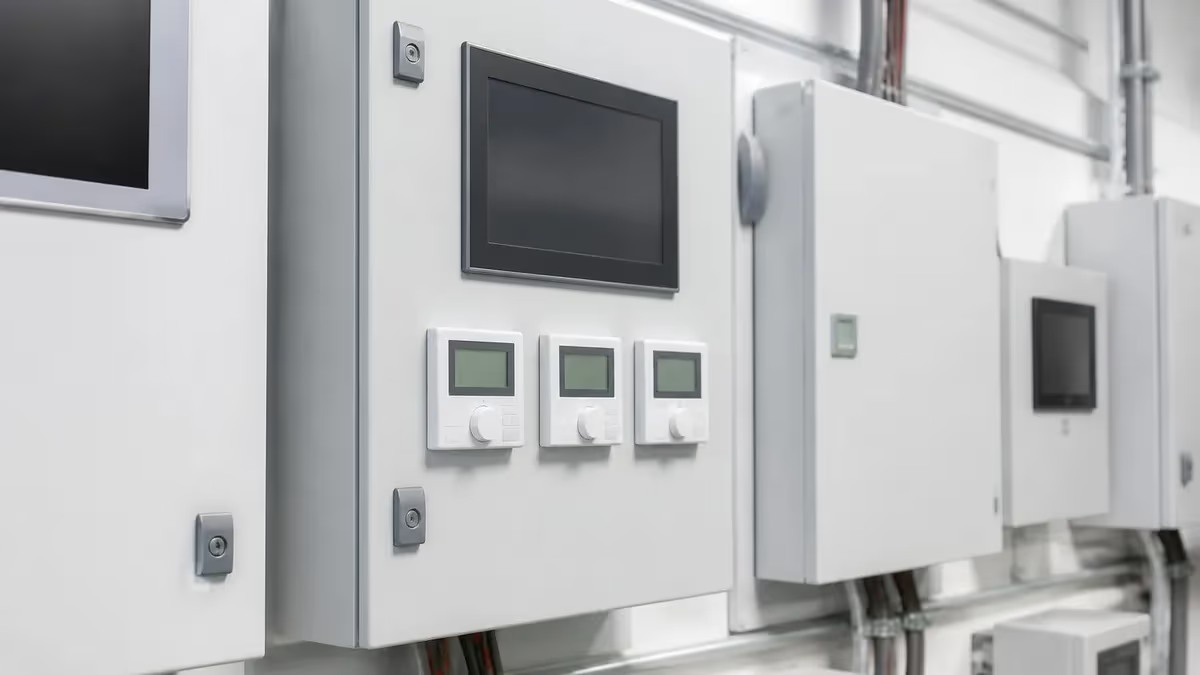
HVAC Definition: What the Acronym Means
HVAC stands for Heating, Ventilation, and Air Conditioning. The acronym describes the technology and systems that control indoor environmental comfort and air quality across residential, commercial, and industrial buildings. HVAC systems regulate temperature, humidity, air freshness, filtration, and circulation. The combination of these functions makes buildings habitable across climate extremes and supports indoor air quality important for health. Modern HVAC systems consume substantial energy — approximately 50 percent of typical residential energy use in cold climates and roughly 30 percent overall in mixed climates — making efficiency improvements important for both household budgets and environmental sustainability.
The three letters represent three different but interconnected functions. Heating raises indoor temperature through furnaces, heat pumps, boilers, or radiant systems. Ventilation manages air exchange and circulation through fans, vents, and increasingly sophisticated mechanical ventilation systems that recover heat or moisture from outgoing air. Air Conditioning lowers indoor temperature and removes humidity through refrigeration cycles using compressors, condensers, and evaporators. Each function requires specific equipment but they often work together as integrated systems — a typical residential HVAC system combines all three through a central furnace with air conditioning coils, ductwork, and thermostat control.
HVAC matters across nearly every building type. Residential HVAC keeps homes comfortable through summer heat and winter cold. Commercial HVAC supports office buildings, retail spaces, hospitals, schools, and other commercial facilities. Industrial HVAC handles factory environments with specific temperature and air quality requirements. Vehicular HVAC keeps cars, trucks, trains, and aircraft cabins comfortable. The professions involved include HVAC technicians (install and repair), mechanical engineers (design large systems), system designers (specify equipment for buildings), project managers (oversee commercial installations), and energy auditors (evaluate efficiency). The HVAC industry employs hundreds of thousands of workers across these specialisations.
The HVAC industry has grown alongside building modernisation and improving comfort expectations. Early 20th century buildings had limited heating (coal furnaces, fireplaces, radiators) and no air conditioning. Mid-20th century saw widespread residential and commercial air conditioning adoption, transforming building design and habitable climate zones. Late 20th century brought efficiency-focused designs and zoning capabilities. Early 21st century has emphasised electrification, smart controls, and indoor air quality. Each generation has produced more capable HVAC systems with substantially different equipment than previous generations.
HVAC Quick Reference
HVAC stands for: Heating, Ventilation, and Air Conditioning. Functions: Temperature control + humidity management + air quality + circulation. Major components: Furnace or boiler, heat pump, air conditioner, ductwork, thermostat, ventilation fans, filters. Residential typical: Furnace + AC + thermostat + ductwork. Heat pumps: Both heating and cooling, increasingly adopted as US electrifies. Efficiency ratings: SEER2 (AC), HSPF2 (heat pump heating), AFUE (furnace). Energy use: 30-50% of residential energy depending on climate. 2025 refrigerant transition: R-410A to A2L refrigerants (R-32, R-454B).
The Three HVAC Functions Explained
Heating uses energy to raise indoor air temperature above ambient. Several technologies exist. Furnaces burn fuel (natural gas, oil, propane) or use electric resistance heating to warm air, which then distributes through ductwork. Heat pumps move heat from outdoor air or ground into the building rather than generating heat through combustion or resistance — this approach is substantially more energy-efficient than resistance heating in moderate climates. Boilers heat water that circulates through radiators or radiant floor systems. Each heating technology has cost, efficiency, and climate appropriateness trade-offs.
Ventilation manages air movement in and out of the building. Bathrooms and kitchens use exhaust fans to remove moisture and odors. Whole-house ventilation systems exchange indoor and outdoor air to prevent stale air buildup and to dilute indoor pollutants. Heat Recovery Ventilators (HRV) and Energy Recovery Ventilators (ERV) recover heat or moisture from outgoing air, making mechanical ventilation more energy-efficient. Natural ventilation through opened windows still plays a role in many homes despite the rise of mechanical systems. Building tightness has increased substantially over decades, making mechanical ventilation more important than it was in older drafty homes.
Air conditioning lowers indoor temperature and removes humidity. Most residential AC uses the vapor-compression refrigeration cycle — a compressor pressurises refrigerant, which absorbs heat from indoor air at the evaporator coil, then releases heat outdoors at the condenser coil. The cycle moves heat from inside to outside, leaving cooler air indoors.
Split systems have indoor and outdoor components connected by refrigerant lines; window units combine everything in a single package. Evaporative coolers ("swamp coolers") work differently — they cool air through water evaporation, effective in dry climates but ineffective in humid ones. Mini-split heat pumps combine cooling and heating in single systems without ductwork.
The functions interact in complex ways. Cooling typically dehumidifies as a side effect (water condenses on the cold evaporator coil). Heating sometimes adds humidity (combustion produces water vapor) or removes it (electric heating dries air). Ventilation can offset some heating and cooling losses or add to them depending on outdoor conditions. Integrated HVAC design considers all three functions together rather than optimising each in isolation. Modern smart controls coordinate the functions for optimal comfort and efficiency.

Major HVAC Components and Their Roles
Most common residential heating source in the United States. Burns natural gas, propane, or oil, or uses electric resistance heating. Heat exchanger transfers combustion heat to circulating air. Blower fan moves heated air through ductwork to rooms. Modern high-efficiency furnaces achieve 90-98% Annual Fuel Utilization Efficiency (AFUE). Standard furnaces typically 80-83% AFUE. Lifespan 15-25 years with proper maintenance.
Outdoor condenser unit plus indoor evaporator coil connected to the furnace's air handler. Uses refrigerant in vapor-compression cycle to move heat from indoors to outdoors. SEER2 (Seasonal Energy Efficiency Ratio 2) rates efficiency — minimum 14 SEER2 in most US, higher efficiency available up to 20+ SEER2. Lifespan 10-20 years. Recent refrigerant transitions from R-410A to A2L refrigerants like R-32, R-454B.
Single system providing both heating and cooling by reversing refrigerant flow. Heats by extracting heat from outdoor air or ground; cools like standard AC. Air-source heat pumps most common in residential. Geothermal/ground-source heat pumps more expensive but very efficient. Increasingly adopted as US electrifies. IRA tax credits subsidise heat pump installation. HSPF2 (Heating Seasonal Performance Factor 2) rates heating efficiency.
Network of metal, fiberglass, or flexible ducts that distributes heated/cooled air from the furnace/AC throughout the home. Sizing and design substantially affect system efficiency and comfort. Leaky or poorly designed ducts waste 20-30% of HVAC energy. Properly designed and sealed ductwork dramatically improves system performance. Lifespan typically matches home structure but seal repairs and modifications happen over time.
Control device that signals when heating or cooling is needed based on temperature setpoint. Programmable thermostats save 10-15% energy through automated setbacks during sleep or absence. Smart thermostats (Nest, Ecobee, Honeywell, others) add remote control, learning algorithms, and integration with home automation. Most homes can upgrade from basic thermostat to smart thermostat through DIY installation for $100-$300.
Filters air entering the system, capturing dust, pollen, and other particles. MERV rating (Minimum Efficiency Reporting Value) indicates filtration performance — higher MERV captures smaller particles. Most homes use MERV 8-13 filters; HEPA filtration available for specific air quality concerns. Filter changes monthly or quarterly typical depending on use, pet presence, and air quality. Dirty filters reduce system efficiency and lifespan substantially.
How HVAC Systems Actually Work
The vapor-compression cycle drives both air conditioners and heat pumps. The cycle has four key components: compressor (raises refrigerant pressure), condenser (releases heat to outdoor air), expansion valve (rapidly lowers refrigerant pressure), and evaporator (absorbs heat from indoor air). The refrigerant cycles through these components continuously while the system runs.
The compressor and condenser are typically housed in the outdoor unit; the evaporator coil sits inside the air handler indoors. Heat pumps reverse this cycle for heating mode — the outdoor coil becomes the evaporator (absorbing heat from outdoor air) and the indoor coil becomes the condenser (releasing heat into the home).
Furnaces work differently using combustion or resistance heating rather than heat transfer. Gas furnaces draw air across a heat exchanger heated by gas combustion in a sealed chamber; the cleaned combustion products vent through a flue. Electric furnaces use heating elements similar to large toasters to warm passing air. Both types use a blower fan to push heated air through ductwork to rooms. The simpler design of furnaces produces lower equipment cost than heat pumps but typically higher operating costs in regions with mild winters where heat pumps perform efficiently.
Air distribution through ductwork carries conditioned air to each room. Supply ducts deliver heated or cooled air; return ducts bring air back to the furnace for re-conditioning. Register vents allow adjusting airflow to individual rooms. Properly designed duct systems achieve balanced airflow without uncomfortable hot or cold spots. Poorly designed or installed ducts waste substantial energy and produce comfort issues. Many older homes have undersized or leaky ductwork that limits HVAC system performance regardless of equipment quality. Duct sealing and modification are common HVAC improvement projects.
Indoor air quality has become a more prominent HVAC consideration since 2020. COVID-related concerns about airborne disease transmission expanded interest in ventilation rates, filtration quality, and air purification technologies. ASHRAE (American Society of Heating, Refrigerating and Air-Conditioning Engineers) updated ventilation standards reflecting these concerns. Many residential and commercial buildings have upgraded filtration (higher MERV filters) and added air purifiers. The longer-term emphasis on indoor air quality continues affecting HVAC design choices.
Common HVAC System Types
Most common US residential HVAC setup. Indoor furnace with air handler plus outdoor air conditioning unit connected by refrigerant lines. Single ductwork system distributes both heating and cooling. The furnace provides heat; the AC provides cooling; sharing ductwork keeps installation cost reasonable. Variations: gas furnace + AC, electric furnace + AC, dual-fuel (gas furnace + heat pump). The standard reference for residential HVAC across most US climate zones.
Efficiency Ratings: SEER, HSPF, AFUE
Efficiency ratings help compare HVAC equipment. SEER2 (Seasonal Energy Efficiency Ratio 2) rates air conditioner and heat pump cooling efficiency — higher SEER2 means better efficiency. Minimum SEER2 in most US is 14 (15 in Southeast and Southwest); high-efficiency systems reach 20-25+ SEER2. The transition from SEER to SEER2 happened in 2023 with stricter testing protocols producing somewhat lower numerical ratings for equivalent equipment. HSPF2 (Heating Seasonal Performance Factor 2) rates heat pump heating efficiency similarly — higher HSPF2 better. Modern cold-climate heat pumps achieve 10+ HSPF2.
AFUE (Annual Fuel Utilization Efficiency) rates furnace efficiency. Higher AFUE percentage means more of the fuel energy goes to heating versus being lost. Standard furnaces typically 80-83% AFUE; high-efficiency condensing furnaces achieve 90-98% AFUE. The Federal minimum AFUE varies by region and equipment type. High-efficiency furnaces cost $1,000-$3,000 more than standard but recover the extra cost over 5-15 years through fuel savings depending on usage and fuel prices. Recent regulations have phased out lowest-efficiency equipment, raising the floor across all categories.
The IRA (Inflation Reduction Act of 2022) substantially expanded tax credits and rebates for high-efficiency HVAC equipment. Heat pumps qualify for federal tax credits up to $2,000 plus various state and utility rebates. High-efficiency furnaces and air conditioners qualify for smaller credits. Income-qualified rebate programs are emerging for heat pump installation in many states. The financial incentives can substantially reduce the net cost of high-efficiency equipment. Documentation requirements vary; working with installers familiar with current incentive programs ensures proper application for credits and rebates.
Energy use awareness has grown substantially among homeowners. Many homeowners now understand their HVAC system's efficiency rating and the cost implications. Pre-2010s, most homeowners did not know their AC's SEER rating or their furnace's AFUE; today these metrics appear in sales conversations, energy audits, and home renovation discussions. The information availability supports better purchasing decisions when equipment is replaced.

The HVAC industry is transitioning from R-410A refrigerant to A2L refrigerants (mildly flammable, lower global warming potential) including R-32, R-454B, and others. The transition started in 2025 for new equipment manufacturing. Existing R-410A systems continue operating normally — the transition affects new equipment only. R-410A will remain available for service of existing systems for years, though prices will rise as production decreases. The change reflects environmental concerns about R-410A's global warming potential (2,088x CO2). The new A2L refrigerants have much lower environmental impact (R-32 at 675x CO2, R-454B at 466x CO2). Service technicians need additional training and equipment for A2L refrigerants because of their mild flammability. Households with R-410A systems do not need to act immediately but should be aware of the transition when planning major HVAC upgrades.
Residential vs Commercial HVAC
Residential HVAC and commercial HVAC differ substantially in scale and equipment types. Residential systems typically have single furnace/AC combinations serving the whole house, with ductwork distributing air. Total cooling capacity typical 2-5 tons (24,000-60,000 BTU/hour). Single-zone or limited multi-zone systems. Equipment costs $3,000-$15,000 typical for new residential installations. Service is usually handled by local HVAC companies with technicians per house.
Commercial HVAC scales to larger buildings with substantially different equipment. Rooftop units (RTU) serve smaller commercial buildings — packaged units combining heating and cooling on the roof feeding ductwork below. Chillers serve larger buildings — central chilled water systems with cooling towers for heat rejection, distributed to air handlers throughout the building.
Variable Air Volume (VAV) systems balance airflow across many zones. Building Automation Systems (BAS) coordinate complex equipment networks. Total cooling capacity ranges from tens to thousands of tons depending on building size. Equipment costs scale to tens of millions for large commercial projects. Service typically involves dedicated facility engineers or specialised commercial HVAC firms.
The skills required for residential versus commercial HVAC differ substantially. Residential technicians work mostly with similar equipment across many homes — split systems, packaged systems, mini-splits, residential heat pumps. Commercial technicians work with more diverse equipment including chillers, cooling towers, large rooftop units, and complex control systems. Career paths within HVAC typically focus on residential or commercial specialisation, though some technicians work across both segments. The skill specialisation produces different career trajectories within the broader HVAC industry.
Basic HVAC Maintenance for Homeowners
- ✓Change air filter monthly (or per manufacturer recommendation)
- ✓Annual professional inspection and service (typically spring for AC, fall for furnace)
- ✓Keep outdoor condenser unit clear of leaves, grass, debris
- ✓Check thermostat operation and programming periodically
- ✓Listen for unusual noises from HVAC system
- ✓Monitor energy bills for sudden increases suggesting efficiency loss
- ✓Clean condensate drain line annually to prevent overflow
- ✓Verify proper airflow at supply registers throughout home
- ✓Replace batteries in thermostat annually
- ✓Schedule duct cleaning every 3-5 years or as needed
- ✓Replace aging equipment proactively before failure
Common HVAC Problems
Refrigerant leaks are common AC and heat pump issues. Slow leaks reduce cooling capacity gradually over years; rapid leaks produce immediate cooling failure. Locating and repairing leaks requires HVAC technician with EPA refrigerant handling certification. Adding refrigerant to a leaking system without fixing the leak is illegal under EPA refrigerant management rules — environmentally harmful and legally non-compliant. Proper repair locates the leak, repairs it, then refills the system to specification.
Dirty air filters are the single most common HVAC issue affecting performance. Clogged filters restrict airflow, force the blower fan to work harder, reduce heating and cooling capacity, and can damage equipment over time. Monthly filter checks with replacement when dirty prevents most filter-related problems. Many performance complaints attributed to equipment failure actually resolve through filter replacement. Thermostat issues (incorrect settings, dead batteries, faulty wiring) cause apparent system failures that resolve through thermostat troubleshooting. Capacitor failures in outdoor AC units are common older-equipment issues; replacement is straightforward for trained technicians.
Duct leaks waste 20-30 percent of HVAC energy in many homes — heated or cooled air escapes into unconditioned spaces (attics, crawlspaces) before reaching living areas. Duct sealing through aerosol-based products (Aeroseal and similar) can substantially reduce duct leakage without invasive repairs. Energy auditors and HVAC contractors offer duct testing services that quantify leakage and identify problem areas. Investing in duct improvements often produces faster ROI than equipment upgrades because the existing equipment performance improves dramatically once delivered air actually reaches living spaces.
Preventive maintenance produces substantial benefits over reactive repair. Annual professional service catches developing issues before they produce failures or comfort problems. The typical $100-$250 cost of annual service is small compared to the cost of emergency repairs or premature equipment replacement. Most HVAC service contracts include priority response, equipment inspection, and preventive component replacement. The contract economics favour customers who use HVAC heavily; lighter-use households may not need annual service at the same intensity.
Recent HVAC Trends
Heat pump adoption has accelerated dramatically through the IRA's incentive structure. Federal tax credits up to $2,000 for qualifying heat pumps, plus state and utility rebates totalling $4,000-$10,000+ in some markets, plus the broader electrification movement, have made heat pumps the fastest-growing residential HVAC category. New construction increasingly defaults to heat pumps rather than gas furnaces in many regions. Existing homes adopting heat pumps during equipment replacement cycles produce gradual fleet transition. Some states have set goals for heat pump adoption that accelerate this transition substantially.
Smart thermostats and home automation have transformed how families interact with HVAC. Nest, Ecobee, Honeywell T-series, and similar smart thermostats provide remote control, learning algorithms, integration with voice assistants, and detailed energy reports. Many utilities offer rebates ($50-$150) for smart thermostat installation. The energy savings from automated setbacks typically pay back the smart thermostat cost within 1-3 years. Recent additions include geofencing (adjusting HVAC based on phone location), weather adaptation, and integration with whole-home energy management platforms.
Building electrification policies in some jurisdictions are accelerating the heat pump transition. Several US cities and states have announced policies limiting new gas furnace installations after specific dates. These policies remain controversial — supporters cite climate and air quality benefits; critics cite cost, reliability, and choice concerns. The policy landscape varies substantially across jurisdictions. Homeowners considering long-term HVAC choices should be aware of policy directions in their region, particularly when planning equipment replacement that might be subject to future restrictions.

HVAC Numbers
Choosing the Right HVAC System
Heat pumps excel in moderate climates (warm summers, mild winters); their efficiency drops in extreme cold though modern cold-climate models perform well. Furnaces with AC suit colder climates with substantial heating needs. Dual-fuel systems (heat pump + gas furnace backup) combine benefits for very cold climates. Evaporative coolers work in dry climates but not humid ones. Local climate determines optimal system type more than national trends.
Natural gas service availability affects furnace economics. Propane is alternative where natural gas is unavailable. Electric heat (resistance or heat pump) works everywhere. Compare 10-15 year fuel cost projections rather than current prices alone — fuel prices change but operating cost differences compound substantially over equipment lifetime. Heat pump's higher efficiency typically wins on cost over time even when initial equipment costs more.
Oversized HVAC equipment short-cycles (turns on and off frequently), reduces efficiency, increases humidity in cooling mode, and stresses equipment. Properly sized equipment runs longer cycles, dehumidifies better, and lasts longer. Manual J load calculations performed by qualified HVAC contractors size equipment based on specific home characteristics rather than rules of thumb. Larger is not better in HVAC sizing.
Equipment efficiency matters less if ductwork wastes the conditioned air. Older homes often have undersized, leaky, or poorly designed ductwork that limits any equipment's performance. Duct sealing and modification during equipment replacement substantially improves system performance. Inspecting ductwork condition before specifying new equipment helps identify whether duct improvements should be part of the project.
HVAC Careers
The HVAC industry offers diverse career paths. HVAC technicians install and repair systems — entry-level technicians earn $40,000-$60,000 typically; experienced master technicians earn $70,000-$100,000+ with overtime and service work. Mechanical engineers design commercial and industrial HVAC systems — typical salaries $70,000-$130,000+ depending on experience and project scope. System designers and estimators specify equipment for projects. Project managers oversee commercial installations. Energy auditors evaluate efficiency. Sales representatives sell HVAC equipment and services. The diversity supports many career paths within the industry, with technician-to-engineer-to-management trajectories possible over careers.
HVAC career entry typically happens through trade schools, community college programs, or apprenticeships sponsored by employers or trade unions. Programs typically run 6-24 months covering theoretical knowledge and hands-on skills. EPA Section 608 certification is required for refrigerant handling — a basic credential most HVAC technicians earn early in their careers. State licensing requirements vary substantially. The career path can be physically demanding but offers stable employment, good earning potential, and increasing demand as HVAC complexity grows.
Modern HVAC Systems: Honest Assessment
- +Substantial comfort and air quality benefits over previous generations
- +High-efficiency equipment reduces energy bills meaningfully
- +Smart thermostats add convenience and additional savings
- +Heat pump adoption provides both heating and cooling efficiently
- +IRA tax credits and rebates substantially offset upgrade costs
- +Modern equipment lifespans 15-25 years with proper maintenance
- +Improved air filtration supports indoor air quality post-2020
- −Upfront equipment costs substantial ($5,000-$15,000+ residential)
- −Refrigerant transitions (R-410A to A2L) create complications
- −Heat pumps perform less well in extreme cold without proper sizing
- −Existing ductwork often limits new equipment performance
- −Ongoing maintenance required for proper operation and warranty
- −Energy cost still substantial despite efficiency improvements
- −Equipment recycling and refrigerant disposal have environmental impact
HVAC Questions and Answers
About the Author

NATE Certified HVAC Technician & Licensing Exam Trainer
Universal Technical InstituteMike Johnson is a NATE-certified HVAC technician and EPA 608 universal-certified refrigerant handler with a Bachelor of Science in HVAC/R Technology. He has 19 years of commercial and residential HVAC installation and service experience and specializes in preparing technicians for NATE certification, EPA 608, A2L refrigerant safety, and state HVAC contractor licensing examinations.