
Geothermal HVAC: How Ground-Source Heat Pumps Work, Cost, Savings, and Tax Credits
🗨️ Geothermal HVAC explained: how ground-source heat pumps work, loop types, install cost, lifespan, savings, and the 30% federal tax credit through 2026 September.
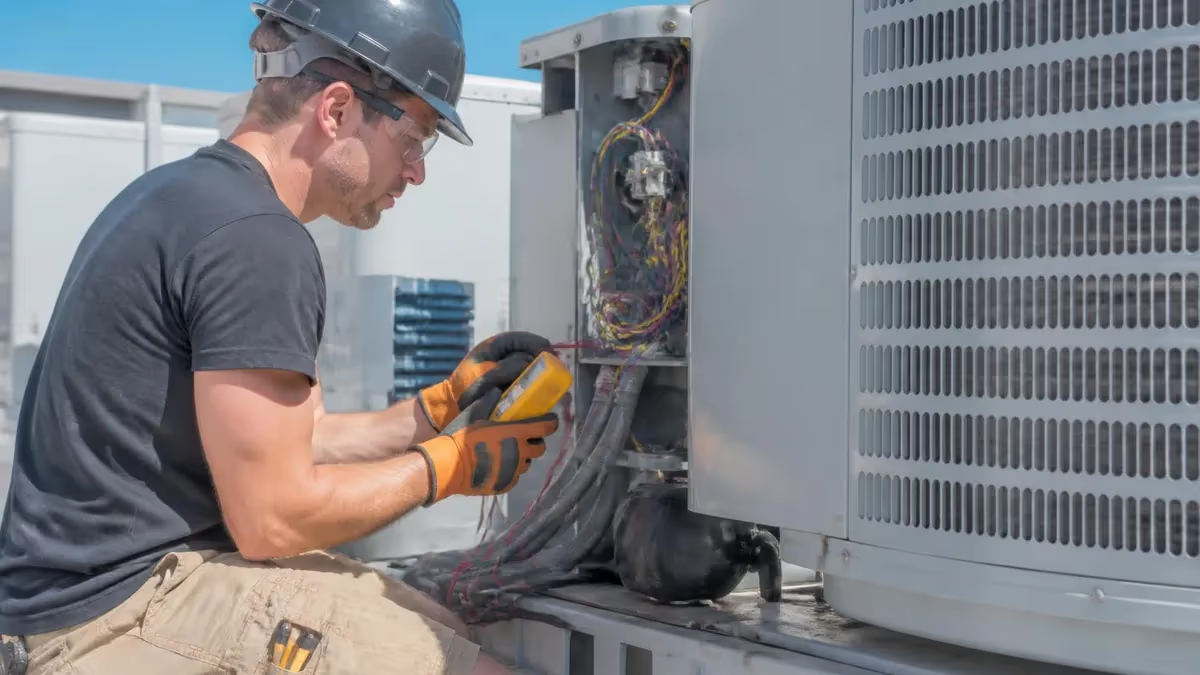
Geothermal HVAC sounds exotic, but the core idea is simple. A few feet under your lawn, the soil sits at a steady 50 to 55 degrees Fahrenheit all year. A geothermal system, also called a ground-source heat pump, taps into that buried reservoir of mild temperature to heat your home in winter and cool it in summer. You're not burning gas or pumping refrigerant against 95-degree outdoor air. You're just moving heat between your house and the dirt.
That single difference is why geothermal can hit efficiencies of 350 to 500 percent, slash heating and cooling bills by 30 to 70 percent, and qualify for a 30 percent federal tax credit through 2032. It's also why a system can cost $20,000 to $40,000 installed. This guide walks you through how it works, what it costs, and when it actually makes sense for your home.
The 30-second version
A geothermal HVAC system uses a buried loop of pipe to swap heat with the ground. In winter it pulls warmth from the soil into your home. In summer it dumps heat from your home back into the ground. Because soil temperature stays near 55 degrees year-round, the system runs at 3 to 5 times the efficiency of a conventional furnace or air conditioner. Federal tax credits cover 30 percent of total project cost through 2032 with no annual cap.
Geothermal HVAC by the Numbers
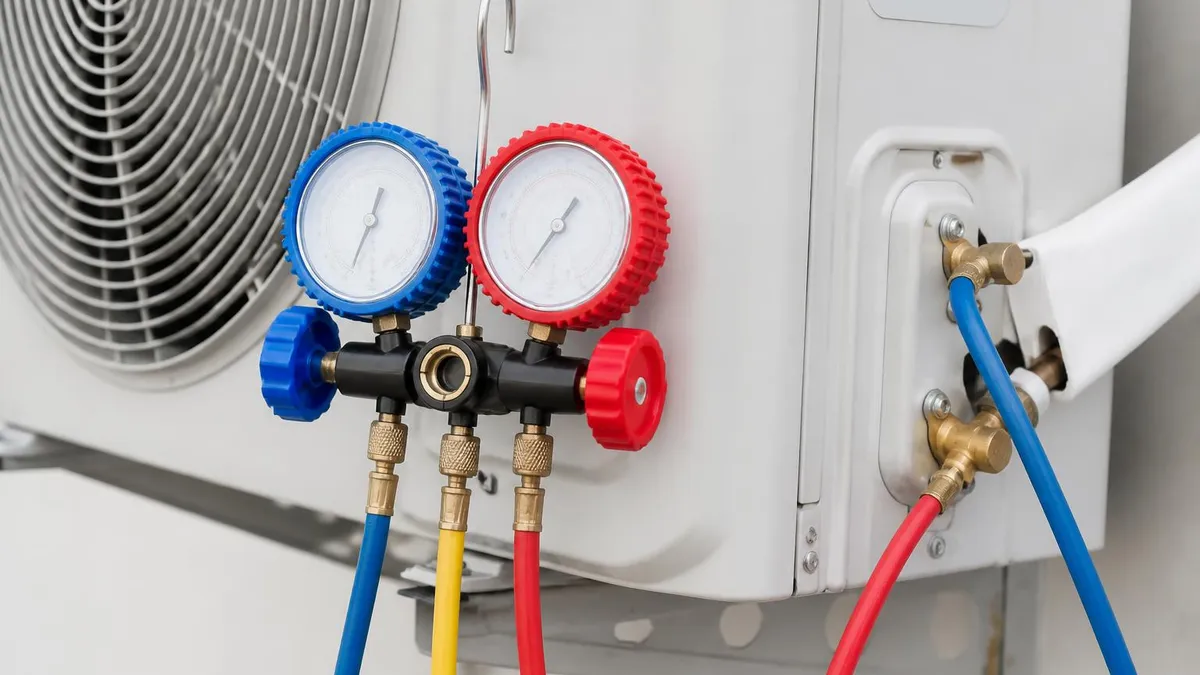
Most homeowners run into geothermal when they're staring down a furnace replacement, building new, or chasing the tax credit before it sunsets. If any of that's you, keep reading. We'll cover the four loop types, real 2026 pricing, where geothermal beats an air-source heat pump, and the situations where it just isn't worth the trench.
You'll also see why geothermal has the longest service life in the residential HVAC world, why it pairs perfectly with rooftop solar, and what to grill your installer on before signing a contract. The goal is simple: by the end, you'll know whether geothermal is the right move for your home, your climate, and your timeline — or whether a different system makes more sense.
Let's start with the physics, because once you see it, the marketing claims stop sounding like magic. A heat pump doesn't create heat. It moves heat. Even soil at 50 degrees has thermal energy in it; it's well above absolute zero. A geothermal heat pump uses a refrigerant cycle, the same basic process as your fridge, to extract that low-grade warmth and concentrate it into the 100 to 120-degree air or water that warms your house.
In summer the cycle runs backwards. The system grabs heat out of your indoor air and shoves it down into the ground, which acts like a giant heat sink. Compared to an air conditioner that has to dump heat into 95-degree outside air, dumping into 55-degree dirt is a much easier job. That's where the efficiency advantage comes from.
Why does soil hold such a steady temperature? Below about 6 feet, daily and seasonal weather barely reaches the dirt. The mass of the earth around your loop dampens swings the way a thick stone wall in an old farmhouse does. By 30 or 40 feet down, ground temperature essentially equals the average annual air temperature for your region. In Minneapolis that's roughly 45°F. In Atlanta it's closer to 62°F. Either way, far more comfortable to push heat against than the swing between -10°F and 100°F you face above ground.
The Four Geothermal Loop Types
- Depth: 4-6 feet below grade
- Land needed: Large yard, ~1/4 acre+
- Install cost: $10K-$20K (cheapest closed)
- Best for: Rural or suburban lots with open ground
- Depth: 100-400 ft boreholes
- Land needed: Small footprint, fits tight lots
- Install cost: $15K-$30K+ (drilling drives price)
- Best for: Urban lots, rocky soil, no horizontal room
- Depth: 8 ft minimum water depth
- Land needed: Adjacent body of water (yours)
- Install cost: $8K-$15K (cheapest overall)
- Best for: Lakefront homes with deep enough water
- Source: Well water from aquifer
- Land needed: Productive well + discharge point
- Install cost: $10K-$20K, plus well permits
- Best for: Properties with abundant clean groundwater
Closed loops circulate the same water-antifreeze mix in a sealed pipe forever. Open loops pull fresh well water through the heat exchanger and then discharge it to a return well, pond, or surface. Open is cheaper to install and slightly more efficient, but it depends on a clean, generous aquifer and faces tighter regulation in some states. Most new residential installs in 2026 are closed loop vertical, simply because most lots can't fit horizontal trenches anymore.
Once you pick a loop, the indoor side looks familiar. A heat pump cabinet sits where your old furnace lived. It connects to ductwork or to a hydronic distribution system (radiant floors, hydronic baseboards). Many systems also include a desuperheater, a small heat exchanger that grabs waste heat during cooling season and dumps it into your water heater. Free hot water from June through September is a nice perk.
One detail people miss: closed-loop pipe is high-density polyethylene fused at the joints, not glued. Heat-fusion welds are stronger than the pipe itself, which is why loops routinely outlast the houses they were installed under. Open-loop systems use copper or stainless heat exchangers because they're handling raw groundwater, and water chemistry matters. If your well water is high in iron or sediment, you'll want filtration upstream of the heat pump.
How a Geothermal System Operates
Liquid in the loop circulates through the buried pipe and absorbs heat from the surrounding soil, leaving the ground at roughly 40-50°F. That fluid passes through a heat exchanger inside the heat pump, where refrigerant boils and the compressor concentrates the heat. The hot refrigerant then heats your home's air or water. Even when it's -10°F outside, the loop keeps feeding the system that steady underground warmth, so heating capacity doesn't crash like an air-source heat pump's would.
Now the question every homeowner asks first: what does it cost? The honest answer is that geothermal pricing has more spread than almost any other home upgrade. A vertical-loop install on a tight urban lot in the Northeast can run $40,000+. A horizontal-loop install in rural Tennessee with an excavator already on site can come in under $20,000. Compare both numbers to the $30 per linear foot drilling rate, the $4,000 to $10,000 equipment range, and the geology of your specific lot before you assume any quote is right.
Three factors swing pricing harder than anything else. First, geology. Solid rock is slow and expensive to drill; loose, sandy soil is fast and cheap. Second, system size. A 5-ton system needs roughly 1,500 linear feet of horizontal pipe or 800 feet of vertical borehole. Smaller homes need less. Third, distribution. If your existing ductwork is sized for a heat pump, you save thousands. If it needs upsizing because your old furnace ran much hotter supply air, that's a separate line item.
What You Pay For: Cost Breakdown
- Range: $4,000 - $10,000
- Drives price: Tonnage, two-stage vs variable
- Notes: Includes indoor cabinet + controls
- Horizontal: $10,000 - $20,000
- Vertical: $15,000 - $30,000+
- Drilling rate: $15-$30 per linear foot
- Reuse existing duct: $1,500 - $4,000
- New ductwork: $5,000 - $10,000
- Desuperheater add-on: $300 - $700
- Permits: $200 - $1,500 (varies by state)
- Soil thermal test: $1,500 - $3,000 (vertical)
- Yard restoration: $500 - $3,000

For broader context on heating and cooling project pricing, see our breakdown of HVAC installation cost across system types. Geothermal sits at the high end on day one and the low end on lifetime cost. Most homeowners reach payback in 5 to 15 years, depending on local electricity rates and what fuel they're displacing.
State and utility incentives can reshape that math fast. New York's NYSERDA program, for example, has historically paired with the federal credit to knock 50 percent or more off net cost. Massachusetts, Connecticut, and several Midwestern co-ops offer comparable programs. Always pull your installer's incentive worksheet for your zip code before assuming a payback period; the numbers swing more than you'd expect.
The Residential Clean Energy Credit covers 30% of total project cost — equipment, ground loop, labor, and permits — through 2032. There is no annual or lifetime cap. A $30,000 install becomes $21,000 net. Many states and utilities stack additional rebates of 15-30% on top. Get IRS Form 5695 from your installer and keep every receipt.
Let's talk efficiency, because the COP and EER numbers on a geothermal spec sheet are wild compared to conventional gear. COP, or Coefficient of Performance, measures heating efficiency. A COP of 4.0 means 4 units of heat delivered for every 1 unit of electricity consumed. Top-tier geothermal hits 5.0. A 96% efficient gas furnace, by comparison, is essentially COP 0.96. Even an air-source heat pump in mild weather peaks around COP 3.0 and falls fast as outdoor temps drop.
EER, or Energy Efficiency Ratio, measures cooling. Geothermal systems land between 16 and 30. Most central air conditioners sit at 12-15. The reason geothermal wins both contests is the same: 55-degree soil is a much friendlier heat source and sink than outdoor air that swings from -10°F to 100°F over the year.
Quick translation for the bill side. Say your home uses 30,000 kWh-equivalent of heating energy per year. With a 96 percent gas furnace at $1.40/therm, that's roughly $1,500. With a geothermal system at COP 4.0 and electricity at $0.14/kWh, you'd burn 7,500 kWh — about $1,050. Now run the same comparison against electric resistance heating at 100 percent efficiency: 30,000 kWh at $0.14 equals $4,200, while geothermal stays at $1,050. Displacing electric resistance is where geothermal hits home runs.
Is Geothermal Right For You?
- ✓You're staying in the home 7+ years (payback window)
- ✓You heat with electricity, propane, or oil (high displacement value)
- ✓You're building new or doing a major remodel (cheaper to install during construction)
- ✓Cold-climate location with long heating season
- ✓You qualify for the 30% federal tax credit (have tax liability to absorb it)
- ✓Your lot can fit a horizontal loop OR you can drill vertical boreholes
- ✓You want low-maintenance, long-life equipment
Flip the script and the picture is just as clear. Geothermal isn't always the right call. There are real situations where the upfront premium never recovers, and we'd rather you skip it than overpay. Look at the next checklist as a sanity check — if more than two items match your situation, lean toward an air-source heat pump or a high-efficiency furnace plus AC instead.
When Geothermal Doesn't Pay Off
- ✓Tiny urban lot with no drilling access
- ✓Short-term ownership (under 5 years)
- ✓Cheap natural gas already plumbed to the house
- ✓Mild climate with low total HVAC load
- ✓No tax liability to claim the 30% credit against
- ✓Existing ductwork is undersized and replacement is cost-prohibitive
Lifespan is where geothermal quietly destroys the competition. The indoor heat pump cabinet runs 20 to 25 years, beating a conventional AC's 15-year service life. The buried ground loop is rated 50 years and routinely lasts 100+ because polyethylene pipe in stable soil simply doesn't degrade. Compare that to replacing an AC condenser every 15 years and a furnace every 15-20 years — over a 50-year window, you'd cycle through three or four conventional systems while the geothermal loop keeps humming.
That long horizon is also why some buyers think of geothermal as a building investment, not an appliance. The loop you put in this year will still be serving the next owner, and the one after that. Listings in mature geothermal markets like Vermont and Iowa increasingly call out the system in marketing copy, and appraisers in those zip codes have started crediting it on resale. It's not a guaranteed dollar-for-dollar return, but the buyer pool clearly notices.
The Install Process Step by Step
Site evaluation & load calc
Design & permits
Loop installation
Indoor unit & ductwork
Commissioning & startup
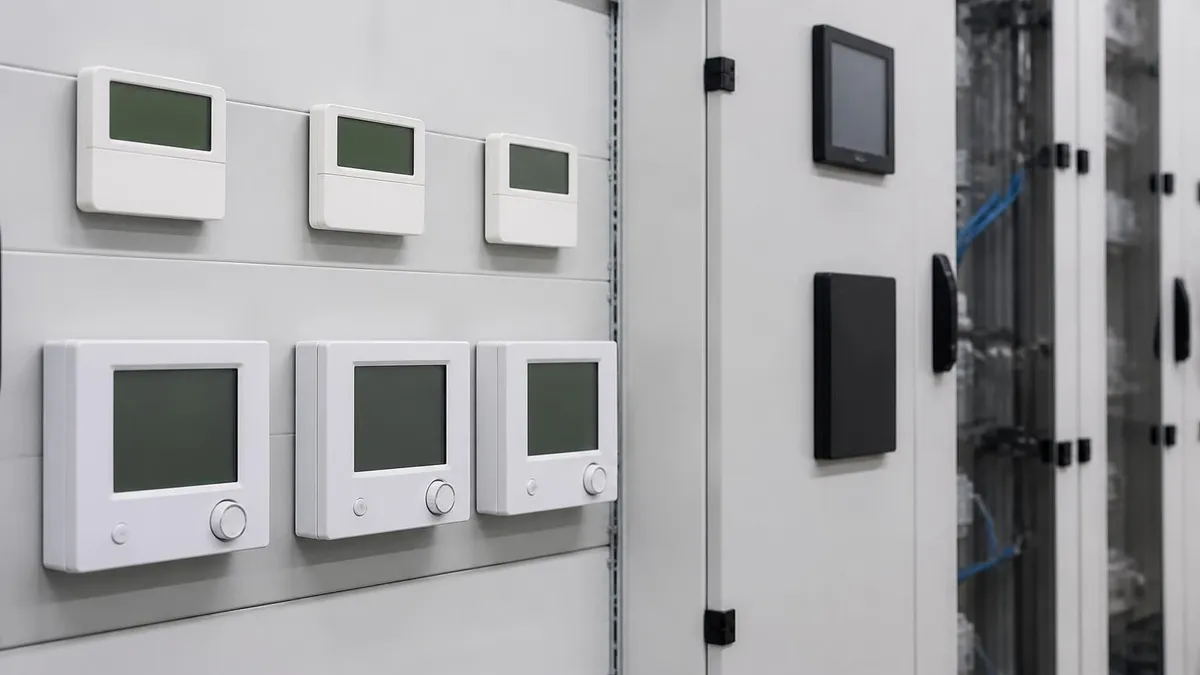
Maintenance is one of the best-kept secrets of geothermal. There's no outdoor condenser to corrode, no flame to inspect, no flue to clean. Your annual checklist is genuinely short: change the air filter quarterly, have a technician verify refrigerant charge and loop pressure once a year, and keep an eye on the desuperheater if you have one. The ground loop itself needs nothing. For routine indoor work, a standard HVAC servicing visit covers it.
If you ever do need diagnostic work, any competent hvac service co career-trained pro who's worked with heat pumps can read pressures and troubleshoot. Geothermal-specific training helps for loop issues, but they're rare.
The one failure mode worth flagging: loop pressure loss. If a buried fitting weeps over time, your system's circulator will slowly lose efficiency. Most modern installs include a pressure sensor and an alert in the smart thermostat, so you'll know long before performance suffers. A repair, if needed, usually means digging up a single fitting at the manifold — not the entire loop. Plan to budget a few hundred dollars in your fifteenth or twentieth year for a precautionary loop inspection.
Geothermal Compared to Other HVAC Options
- Heating efficiency: COP 3.5-5.0 (350-500%)
- Install cost: $20K-$40K
- Lifespan: 20-25 yrs unit / 50+ yrs loop
- Best for: Long-term owners, cold climates, new builds
- Heating efficiency: COP 2.0-3.5 (drops in cold)
- Install cost: $5K-$12K
- Lifespan: 12-15 yrs
- Best for: Mild climates, lower upfront budget
- Heating efficiency: 90-98% (COP ~0.95)
- Install cost: $7K-$15K
- Lifespan: 15-20 yrs furnace / 15 yrs AC
- Best for: Cheap natural gas areas, short-term ownership
One pairing worth highlighting: geothermal plus rooftop solar. Solar panels generate electricity at roughly $0.05-$0.10 per kWh over their lifetime. Geothermal converts each of those kilowatt-hours into 3-5 kWh of delivered heat. Together they create a near-zero-energy home for HVAC. If you're already considering both upgrades, doing them in the same project lets one electrician size the panel for the heat pump load and one tax filing claim both 30% credits.
Battery storage adds another layer. With a battery and a smart inverter, your heat pump can run on stored solar overnight, even during a grid outage. That kind of resilience is becoming a real selling point in regions with frequent storms or rolling blackouts. The capital stack is steep — $50K to $80K for solar plus battery plus geothermal — but the combined federal credits, state incentives, and energy savings can pay it back inside a decade in the right market.
Geothermal HVAC Pros and Cons
- +350-500% efficiency, lowest operating cost of any HVAC system
- +30% federal tax credit through 2032, no cap
- +30-70% reduction in heating and cooling bills
- +Ground loop lasts 50+ years, often 100+
- +Quiet — no outdoor condenser unit
- +Both heating and cooling from one system
- +Free or cheap hot water with a desuperheater
- +No combustion, no carbon monoxide risk, no fuel deliveries
- +Pairs perfectly with solar PV for a net-zero home
- −High upfront cost ($20K-$40K typical)
- −Requires yard space or drilling access
- −Payback period of 5-15 years
- −Limited contractor pool in some regions
- −Complex permitting for open-loop systems in certain states
- −Needs sufficient tax liability to claim the full 30% credit
- −Retrofit ductwork sometimes needs upsizing for lower supply temps
A few misconceptions worth busting. First, "geothermal" in the HVAC sense has nothing to do with volcanic geothermal power plants in Iceland or California. Residential geothermal taps shallow soil temperature, not deep magma. Second, you don't need deep wells everywhere — horizontal loops 6 feet down work in any climate where you can install below the frost line. Third, geothermal works in extreme cold; the loop is below the freeze zone and the soil temperature stays the same whether it's -20°F or +20°F outside.
Fourth myth: geothermal is too noisy or too quiet. Reality? It's just quiet. There's no outdoor condenser fan whining at 2 a.m. when the AC kicks on, and the indoor cabinet runs at the volume of a modern fridge. Fifth, the ground will get "cold" or "hot" over time and the system will degrade. A properly sized loop balances heat extraction in winter against heat rejection in summer, and the soil resets each shoulder season. Undersized loops can drift, but that's a design defect, not a geothermal limitation.
If you're cross-shopping equipment categories before settling on geothermal, browse our overview of HVAC unit types and the dedicated residential HVAC guide. Geothermal is one option among several, and the right answer depends on your climate, fuel prices, and how long you'll own the home.
Major Geothermal Manufacturers
- Strength: Largest US-only geothermal brand
- Notable models: Series 7, Series 5, 7 Series 700A11
- Strength: Wide commercial + residential lineup
- Notable models: Trilogy 45 Q-Mode, Tranquility 30
- Strength: Strong warranty, European engineering
- Notable models: Greensource CDi, SM Series
- Strength: Familiar brands, large dealer network
- Notable models: Carrier GT-PX, Trane EXL Series
A note on warranty when you're picking a manufacturer. Most major brands offer 10-year limited parts warranties on the heat pump itself, with extended options up to lifetime on the compressor. The ground loop carries its own 50-year warranty from the loop installer or pipe manufacturer. Read both contracts. The weak link is almost always labor coverage in years 6-10, where some installers quietly stop covering site visits unless you bought an extended plan up front.
Pick an installer who's done at least 50 geothermal jobs. Ask for two reference customers from the last three years. Verify they pulled permits on those jobs. The geothermal trade has a small minority of underqualified contractors riding the tax-credit wave, and they're the ones whose loops fail in year three. The good installers are easy to spot: they show their math, they walk your lot before quoting, and they'll happily explain why they're recommending a specific loop type for your soil.
So, should you do it? Here's a quick decision framework. If you live in a cold climate, plan to stay 7+ years, currently heat with electric resistance, propane, or oil, and have either yard space or budget to drill — geothermal is almost certainly your lowest lifetime-cost option, especially with the 30% credit. If you have cheap natural gas, a small heating load, or you'll move soon, an air-source heat pump or a high-efficiency furnace and AC will likely beat geothermal on net cost.
Get at least three quotes, ask for the Manual J load calculation in writing, confirm the loop sizing and warranty terms, and verify the installer's geothermal-specific experience. Walk away from any contractor who won't show you their math or hands you a one-page quote with no breakdown. The system you put in this year will still be running well into the 2050s — it deserves a serious comparison shop.
One last reminder. The 30 percent federal credit is currently scheduled through 2032, but legislative timelines have a habit of moving. If geothermal is on your shortlist, getting a quote in hand this year locks in a real number you can plan around. Even if you don't pull the trigger immediately, having the bid lets you compare against what installers quote in 2027 and 2028, and gives you leverage if costs creep. Your future self will thank you for starting the conversation now.
Geothermal HVAC Questions and Answers
About the Author

NATE Certified HVAC Technician & Licensing Exam Trainer
Universal Technical InstituteMike Johnson is a NATE-certified HVAC technician and EPA 608 universal-certified refrigerant handler with a Bachelor of Science in HVAC/R Technology. He has 19 years of commercial and residential HVAC installation and service experience and specializes in preparing technicians for NATE certification, EPA 608, A2L refrigerant safety, and state HVAC contractor licensing examinations.