
Commercial HVAC Service: Maintenance, Repair and Vendor Guide 2026 October
✅ Commercial HVAC service — preventive maintenance schedules, common repairs, vendor selection, contracts and the difference from residential HVAC work.
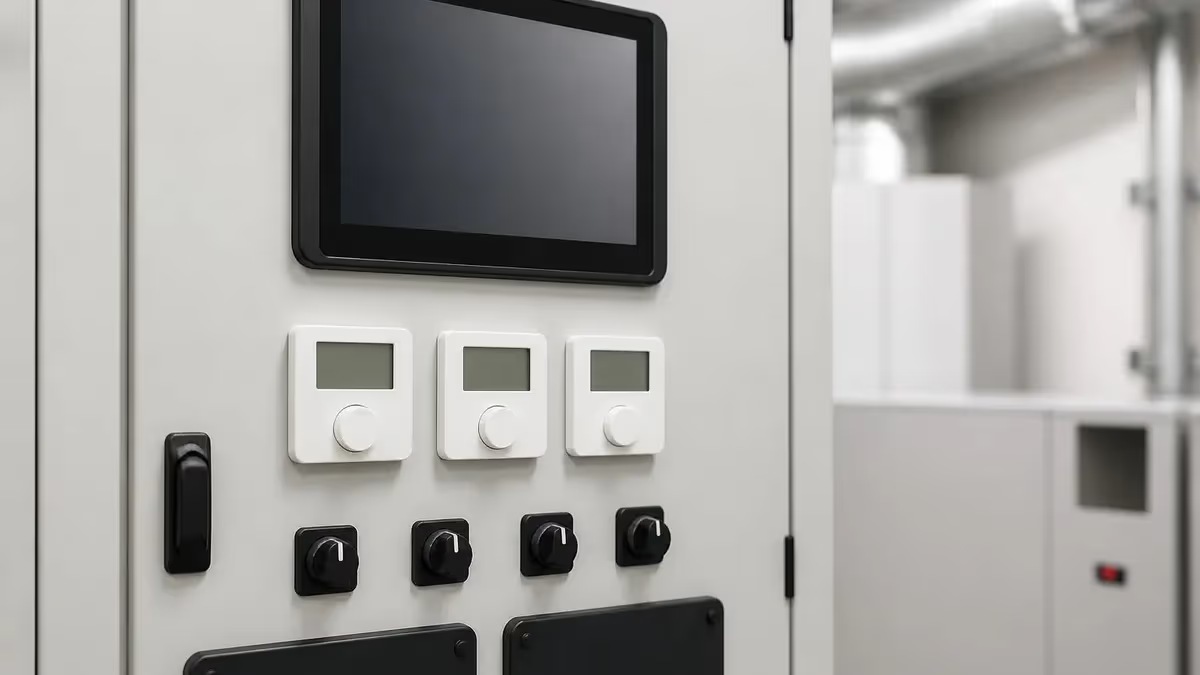
What Commercial HVAC Service Actually Covers
Commercial HVAC service is the catch-all term for the inspection, maintenance, repair and replacement work that keeps heating, ventilation and air conditioning systems running in offices, retail spaces, restaurants, schools, hospitals, hotels and industrial facilities. The technical scope overlaps with residential HVAC, but the equipment is bigger, the failure modes are more expensive, and the consequences of downtime are far steeper.
A residential air conditioner failure inconveniences a family for a day. A rooftop unit failure on a 50,000-square-foot retail store can cost thousands per hour in lost sales, spoiled inventory and customer complaints, which is why commercial service contracts and emergency response standards exist as a distinct category.
This guide walks through what commercial HVAC service actually involves day to day, the standard maintenance schedules, common repairs and their typical costs, how to choose a service contractor, what kinds of contracts are available, and how the work differs from the residential side of the trade. The aim is to give facility managers, building owners and aspiring HVAC technicians a clear map of the territory before any conversation with a vendor or any decision about a contract.
The commercial side of the trade is also where careers grow fastest. A residential service technician with five years of experience usually maxes out as a senior technician or a lead. The same five years on the commercial side opens doors to mechanical project management, field supervision, energy auditing, controls programming, and equipment sales engineering. Pay scales reflect the difference: commercial techs typically earn 15 to 30 percent more than their residential counterparts at the same experience level, and senior commercial techs working on chillers or controls routinely break six figures.
Geography matters too. Major metropolitan markets — Chicago, New York, Dallas, Atlanta, the Bay Area — have deep commercial portfolios with year-round work. Rural and small-city markets lean residential, with commercial work concentrated in a handful of schools, hospitals and grocery stores. Technicians serious about specialising in commercial work usually settle near a metro area where the equipment density supports steady employment.
Commercial HVAC at a glance
Equipment scale: 5–500 ton rooftop units, chillers, boilers, VRF systems, packaged systems, custom AHUs. Service tiers: planned maintenance, on-call repair, full coverage contracts. Industry standard: quarterly preventive maintenance for most systems, monthly for high-stakes facilities. Average commercial service tech earns 15–30% more than residential equivalent.
Preventive Maintenance: The Heart of the Service Business
The bulk of profitable commercial HVAC service work is preventive maintenance, not emergency repair. A typical maintenance contract obligates the service provider to inspect, clean and tune the system at scheduled intervals — quarterly for most office and retail buildings, monthly for hospitals and data centres, twice a year for very small commercial spaces.
Each visit follows a checklist that covers refrigerant pressures, electrical contactors, motor amp draws, belt tension, filter condition, drain pan integrity, condensate lines and control system response. Many contractors now use field service software that timestamps each checklist item so the building owner can see exactly what was inspected.
Done properly, preventive maintenance pays for itself many times over by catching problems while they are still cheap. A condenser fan motor that draws slightly above nameplate amps is showing the early signs of bearing failure. Replacing it during a planned visit costs a few hundred dollars and a half-hour of labour. Letting it run to failure on a 95-degree afternoon means an emergency call-out at premium rates, refrigerant loss, possible compressor damage, and tenant complaints — easily five to ten times the proactive cost.
The frequency of visits is calibrated to the consequence of failure. A small office building with two rooftop units serving a 4,000 square foot space is fine on a twice-a-year schedule because tenants can tolerate a few hours of discomfort. A medical office building with imaging equipment that requires precise temperature and humidity needs monthly checks, sometimes weekly during the cooling season. Industrial facilities with process cooling can require daily logging of refrigeration parameters by their own staff with monthly contractor visits to interpret trends.
Documentation is the unsung hero of preventive maintenance. Without a clear written record of every visit, baseline readings, parts replaced and conditions observed, the service contract becomes a black box. Building owners who treat preventive maintenance as a true asset-management discipline insist on standardised reports with comparable data points across visits, which is what allows them to spot a slowly deteriorating component long before it fails outright.
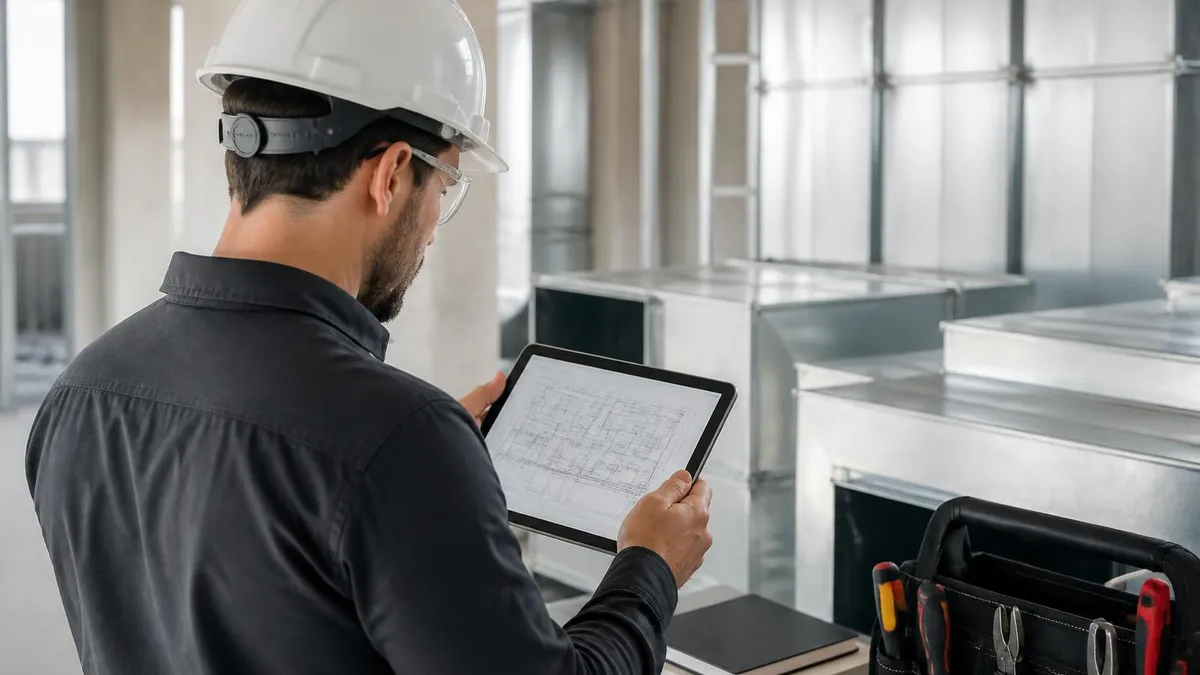
Standard Commercial Maintenance Tasks
Most common task. Pleated filters every 30–90 days. HEPA and bag filters less often but more expensive. Skipped filters cause coil fouling, motor overload and indoor air quality complaints.
Condenser coil cleaning twice a year, evaporator coil annually. Pressure wash with non-acid coil cleaner. Dirty coils are the single biggest cause of high energy bills in cooling systems.
Inspect, tension and lubricate belts and bearings on AHUs, exhaust fans and rooftop units. Annual replacement for high-cycle systems. Worn belts whip and break unexpectedly.
Pressure and superheat readings on every visit. EPA-certified technician required. Leak detection mandatory for systems above 50 lb refrigerant charge under Section 608 rules.
Tighten contactor terminals, check disconnect switches, megger insulation resistance on motors. Loose lug bolts cause arc faults that destroy compressors.
Test thermostats, BAS sensors, economiser dampers and freeze stats. Out-of-calibration sensors waste energy silently. Common discovery on first PM after a building changes hands.
Service Contracts: Knowing What You Are Buying
Commercial HVAC contracts come in three broad tiers, with significant variation between providers. The cheapest is a basic preventive maintenance agreement, sometimes called a planned maintenance or PM-only contract. It covers the scheduled visits but bills repairs separately at the contractor's normal rates. This works well for buildings with newer equipment under manufacturer warranty, where the contract acts mostly as a check-and-clean service.
The middle tier is preventive maintenance plus parts. The contract covers all scheduled work and any parts needed during repairs, but bills labour for repairs at agreed rates. Most office buildings and standard retail facilities sit at this tier. The premium tier is full coverage, sometimes called planned service or guaranteed performance. The contractor takes on full responsibility for the system, replacing failed components at no additional charge in exchange for a higher annual fee. Hospitals, data centres and high-rise office towers often choose this tier because predictable costs are worth more than the small premium over time.
Contract length is another variable worth negotiating. One-year contracts are standard but offer little price protection in inflationary markets. Three-year and five-year agreements typically lock in pricing in exchange for a small annual escalator. The longer term also gives the contractor more incentive to invest in technician training on the building's specific equipment and to keep parts in stock locally. The catch is that long-term contracts make it harder to switch contractors if service quality drops, so termination clauses with 30 to 60 day notice should always be included.
How a Typical Service Visit Goes
Technician arrives at scheduled time, signs in at building security or front desk, collects roof access keys or badge clearance. Many sites require contractor lockout/tagout briefing on arrival. Documentation begins immediately — site name, system numbers, conditions on arrival.
Emergency Service: When Things Break
Even with strong preventive maintenance, things break. The emergency response side of the commercial HVAC service business is where margins are highest and where contractor reputations are made or destroyed. A good service company guarantees response times — typically 4 hours during business hours, 6 to 8 hours nights and weekends — backed by penalties in the contract. The technician dispatched to an emergency call should arrive with diagnostic equipment, common refrigerants and a tractor-load of standard repair parts to maximise first-trip resolution.
Common emergencies fall into a predictable shortlist. Compressor failures, refrigerant leaks, blower motor seizures, electrical control board failures and condensate drain backups account for the majority of urgent calls in summer. Winter brings boiler ignition failures, frozen condensate lines, gas valve faults and pump seal leaks. The good news is that most of these conditions are repairable on the day if the technician has parts in stock; the bad news is that compressor and major heat exchanger replacements often require equipment to be ordered and lead times of one to several weeks for unusual capacities.
Spare parts strategy makes a meaningful difference in emergency outcomes. A contractor with a parts truck stocked for the buildings they service — capacitors, contactors, fan motors, ignition modules and common refrigerants in the right grades — resolves a high percentage of emergencies on the first visit. A contractor that has to drive to a supply house mid-call adds two to four hours to every emergency, and supply houses close on weekends precisely when emergencies happen most. Asking a prospective contractor what they keep on the truck is a useful proxy for how seriously they take emergency response.
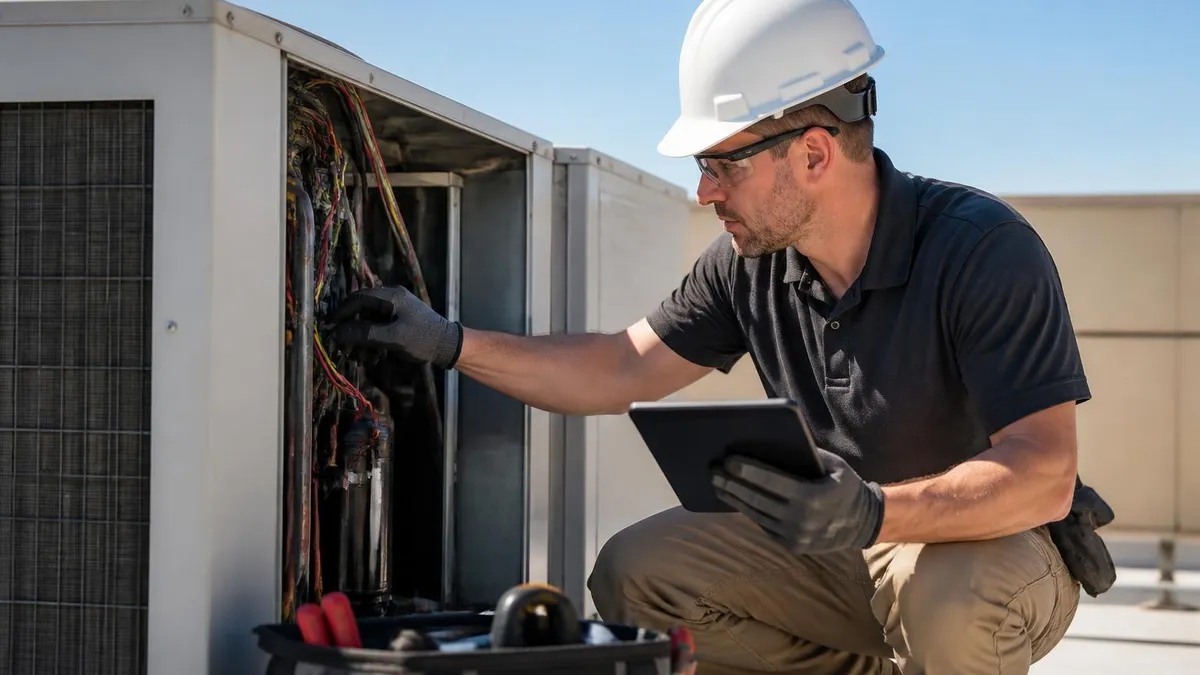
EPA Section 608 governs refrigerant handling in the United States. Service technicians must be certified, leaks above 30% annual loss in commercial systems must be fixed within 30 days, and refrigerant recovery is mandatory before any system is opened. Skipping these requirements exposes building owners to significant fines and triggers contractor liability. Every legitimate service report should include refrigerant accounting.
How Commercial Differs from Residential HVAC Service
The casual assumption is that commercial HVAC is just bigger residential HVAC. It is not. The technology overlap is real — both use vapour compression, both move air through ducts, both rely on thermostats — but the equipment design philosophy, control complexity, code requirements and labour expectations are different enough that most successful commercial technicians are full specialists rather than crossovers.
Commercial systems are usually three-phase electrical, compared to single-phase residential. Refrigerant charges range from 30 to over 1,000 pounds, compared to typical residential charges under 10 pounds. Building Automation System integration, BACnet and Modbus protocols, variable frequency drives, energy recovery wheels and dedicated outdoor air units are everyday equipment in commercial work and rarely seen in homes.
Code requirements also differ. Commercial systems must meet stricter ventilation rates set by ASHRAE 62.1 for indoor air quality, energy efficiency targets in ASHRAE 90.1, and life safety requirements like smoke control sequences in NFPA codes. Residential systems live under simpler IECC and IRC rules. The paperwork around every service visit is heavier — pre-task safety meetings, scaffolding plans for rooftop work, hot work permits for brazing — and most building owners require specific contractor insurance, certified payroll and OSHA 30 training. None of that applies to a residential service truck.
Tooling is also a meaningful difference. A residential service van carries a manifold gauge set, recovery machine, basic electrical meter and hand tools — perhaps fifteen thousand dollars of equipment. A commercial service truck carries all of that plus oscilloscopes for VFD diagnostics, BACnet network testers, data loggers, calibrated combustion analysers, megohmmeters, large recovery cylinders and specialised ladder and use equipment. The tool inventory routinely passes thirty to fifty thousand dollars per truck, and contractors recover the investment through higher commercial billing rates.
Choosing a Commercial HVAC Service Contractor
- ✓Verify EPA 608 universal certification for all field technicians, not just the lead
- ✓Confirm the contractor carries general liability of at least $2 million per occurrence
- ✓Check licensure with the state mechanical contractor board
- ✓Ask for references from buildings of similar size and equipment type
- ✓Review sample service reports for completeness and clarity
- ✓Confirm in-house parts inventory rather than reliance on supply houses
- ✓Require written response time guarantees with explicit penalties
- ✓Verify technician training on your specific equipment manufacturer (Trane, Carrier, Daikin etc.)
- ✓Ask about 24-hour dispatch and on-call rotation depth
- ✓Get pricing in writing — labour rates, after-hours premiums, parts markup
Common Commercial HVAC Repairs and Cost Ranges
Pricing varies widely by region, but typical commercial repair costs cluster in predictable ranges. A capacitor replacement on a packaged rooftop unit usually runs $200 to $400 including the call-out. Contactor replacement is $300 to $600. Condenser fan motor swaps range from $500 to $1,200 depending on horsepower and drive type. Compressor replacements on a 5 to 10 ton unit typically cost $3,500 to $8,000 including labour, refrigerant and warranty handling. Larger compressors push beyond $15,000.
Coil replacements are expensive because they involve refrigerant recovery, brazing, evacuation and recharging. A typical evaporator coil swap on a 10-ton unit runs $4,500 to $9,000. Heat exchanger replacements on natural gas furnaces or rooftop units are similarly expensive once labour is included. The largest single-item expenses in commercial HVAC service come from chiller and boiler component replacements — chiller bearing rebuilds, boiler section replacements and large compressor swaps can run into the tens of thousands of dollars and require specialised crews.
The financial calculus that drives many service decisions is repair-versus-replace. Once a unit is past 75 percent of its expected service life, accumulated repair costs often exceed the cost of a new high-efficiency replacement, especially when energy savings are factored in. A good service contractor will run the numbers transparently rather than simply maximising the parts and labour invoice. Building owners who suspect they are being padded should request detailed line items and a second opinion from another contractor.
Warranty handling is its own subject. Manufacturer warranties on commercial equipment usually cover parts but not labour, and the warranty is contingent on the equipment being maintained per the manufacturer's schedule. A service contractor that documents preventive maintenance properly preserves the warranty automatically; one that skips documentation can void warranties unintentionally and cost the building owner thousands in unrecoverable repair fees. Reputable contractors include warranty registration and claim handling as part of their PM contract scope.
That same documentation discipline pays dividends when the building is sold or refinanced — buyers and lenders treat detailed maintenance records as evidence of an asset that has been properly cared for, and the appraisal benefit can outweigh the cost of the contract.
Energy Performance and Rebates
Modern commercial HVAC service is increasingly tied to energy performance rather than just keep-the-system-running maintenance. Utility companies offer significant rebates for upgrades — high-efficiency chillers, variable speed drives on AHU fans, demand-control ventilation, economiser repairs — and the savvy service contractor builds those programmes into ongoing client conversations. A retro-commissioning project, sometimes called a tune-up audit, can identify 5 to 15 percent energy savings on a typical commercial building without any capital expenditure beyond the audit fee. Local utility programmes often pay for the audit itself if the building meets size or rate-class thresholds.
Refrigerant transitions add another dimension. The phase-down of high-GWP refrigerants like R-410A is reshaping equipment selection and service practices, and service contractors need to plan parts inventory and technician training years in advance. Many service contracts now include refrigerant transition planning clauses to manage the cost of inevitable equipment replacement.
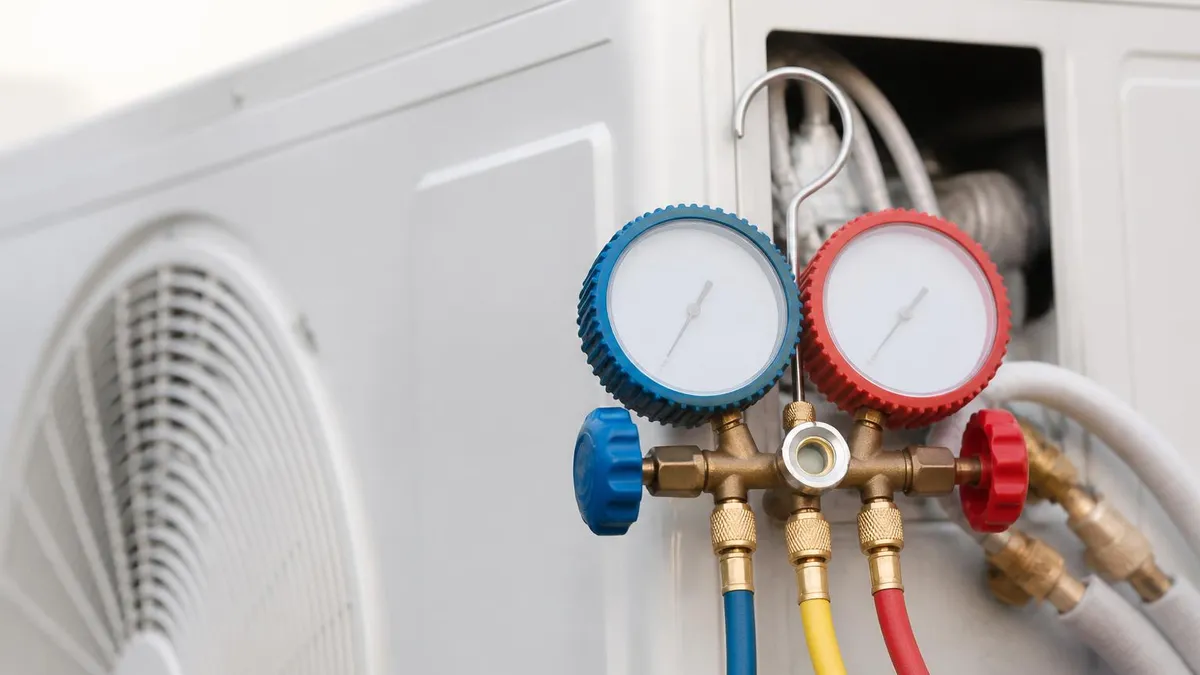
Commercial HVAC Service Benchmarks
Common Equipment Categories Serviced
5–50 ton single-package units on flat commercial roofs. Most common commercial cooling equipment in the United States. Filters, belts, controls and coils dominate maintenance.
Outdoor condensing unit + indoor air handler. Common in older buildings, smaller spaces and renovations. Refrigerant lines are field-installed and a known leak risk.
Centralised cooling for medium and large buildings. Air-cooled or water-cooled, scroll, screw or centrifugal compressor types. Specialised technicians required for major service.
Hot water or steam generation. Gas, oil or electric. Annual combustion analysis and safety testing mandatory. Large boilers need licensed boiler operators.
Variable Refrigerant Flow multi-zone systems. Common in mid-sized commercial buildings and retrofits. Manufacturer-specific training is essential — Daikin, Mitsubishi, LG.
Custom and packaged AHUs in mechanical rooms. Coils, dampers, fans and filters. Often integrated with energy recovery wheels and humidification systems.
Working Safely on Commercial Equipment
Commercial HVAC service involves higher hazards than residential work. Three-phase electrical at 480 volts is routine, refrigerant exposure under pressure is constant, and rooftop work introduces fall hazards that account for a disproportionate share of HVAC injuries every year. OSHA 30 training is the minimum entry standard for most commercial sites, and many contractors require additional Site Specific Safety Training before any technician sets foot on a project. Ladders, uses and rooftop tie-off points are reviewed at every visit by the technician — and increasingly by the building's own safety staff.
Lockout/tagout procedures exist for a reason. A condenser fan that energises during service can amputate fingers; a contactor that re-engages while a tech is checking electrical can deliver a fatal shock. Following the manufacturer's lockout sequence is non-negotiable, and any contractor who tolerates corner-cutting on it should be replaced. Building owners can audit safety practice by requesting copies of the contractor's job hazard analyses and incident reports — anyone unwilling to share is signalling that their programme is thin.
PM Contract vs Time-and-Materials
- +Predictable annual budgeting for facility owners
- +Lower lifetime equipment costs through early intervention
- +Priority response when emergencies do occur
- +Documentation supports warranty claims with manufacturers
- +Stronger client-contractor relationship over time
- −Higher upfront cost than reactive-only service
- −Some contracts include parts caps that can be exceeded by major failures
- −Quality varies — a poor contractor charges for visits without delivering value
- −Building manager must verify checklist compliance, not assume it
- −Contracts can renew automatically with rate increases if not reviewed annually
HVAC Questions and Answers
About the Author

NATE Certified HVAC Technician & Licensing Exam Trainer
Universal Technical InstituteMike Johnson is a NATE-certified HVAC technician and EPA 608 universal-certified refrigerant handler with a Bachelor of Science in HVAC/R Technology. He has 19 years of commercial and residential HVAC installation and service experience and specializes in preparing technicians for NATE certification, EPA 608, A2L refrigerant safety, and state HVAC contractor licensing examinations.