
HVAC Supply House: Complete Guide for Contractors 2026 September
HVAC supply house guide — what they offer, major chains, opening accounts, trade pricing, technical support, and contractor relationships. 🔎

An HVAC supply house is a wholesale distributor specializing in heating, ventilation, air conditioning, and refrigeration equipment, parts, and supplies sold primarily to licensed HVAC contractors and trade professionals. Unlike retail stores serving general consumers, supply houses serve the industry's installation and service contractors with the specialized equipment, hard-to-find parts, technical expertise, and trade pricing that make HVAC work efficient and economical. The supply house relationship is one of the foundational business connections every working HVAC technician and contractor builds across their career.
This guide walks through what HVAC supply houses are, how they differ from retail home improvement stores, what they offer that other channels don't, how to establish supply house accounts, the major national chains and regional players, and how to maximize the supply house relationship for your career or business. Information here applies broadly to U.S. HVAC supply distribution. Whether you're a new HVAC technician learning the industry, an established contractor optimizing supplier relationships, or an HVAC business owner managing inventory and procurement, this overview covers the essentials of the HVAC supply distribution channel.
The HVAC supply house industry consists of national chains operating hundreds of locations alongside regional and local independent suppliers serving specific geographic markets. National chains like Ferguson, Johnstone Supply, Carrier Enterprise, Lennox PartsPlus, and various others provide consistent product availability across geographic regions. Local independents often specialize in specific product lines, brands, or customer segments. Most contractors maintain accounts with multiple supply houses to access different brands, take advantage of pricing competition, and ensure backup options when primary suppliers are out of stock on critical parts.
HVAC Supply House Quick Facts
Customers: Licensed HVAC contractors, technicians, and trade professionals (B2B). Some serve facility maintenance buyers. Major chains: Ferguson, Johnstone Supply, Carrier Enterprise, Lennox PartsPlus, Munch's Supply, Behler-Young, R.E. Michel. Account requirements: Business documentation (license, insurance, EIN, resale certificate). Personal accounts generally not available. Hours: Open early (6-7 AM typical) to support contractor morning starts. Pricing: Trade pricing well below retail. Volume discounts for larger contractors. Services: Equipment, parts, tools, technical support, training, will-call orders, delivery.
The fundamental difference between HVAC supply houses and retail stores like Home Depot or Lowe's is the customer base and product depth. Supply houses serve B2B trade customers — established HVAC contractors, plumbers (for HVAC-related plumbing), facility maintenance companies, and various other commercial buyers. They don't generally serve individual homeowners or DIYers. Pricing reflects trade discounts substantially below retail. Product depth substantially exceeds retail — supply houses stock extensive parts catalogs supporting nearly any HVAC service scenario, while retail stores carry only the most common consumer-grade items.
The product range at HVAC supply houses includes complete HVAC equipment (residential furnaces, AC units, heat pumps, ductwork, ventilation), commercial equipment for larger applications, refrigeration equipment for food service and industrial cold storage, replacement parts (compressors, motors, capacitors, contactors, thermostats, ignitors, sensors, gas valves, expansion valves, etc.), refrigerants in various sizes and types, copper tubing and fittings, ductwork supplies, controls and thermostats, tools and instruments, safety equipment, and various consumables. The breadth supports the variety of work HVAC contractors perform across residential, commercial, and industrial settings.
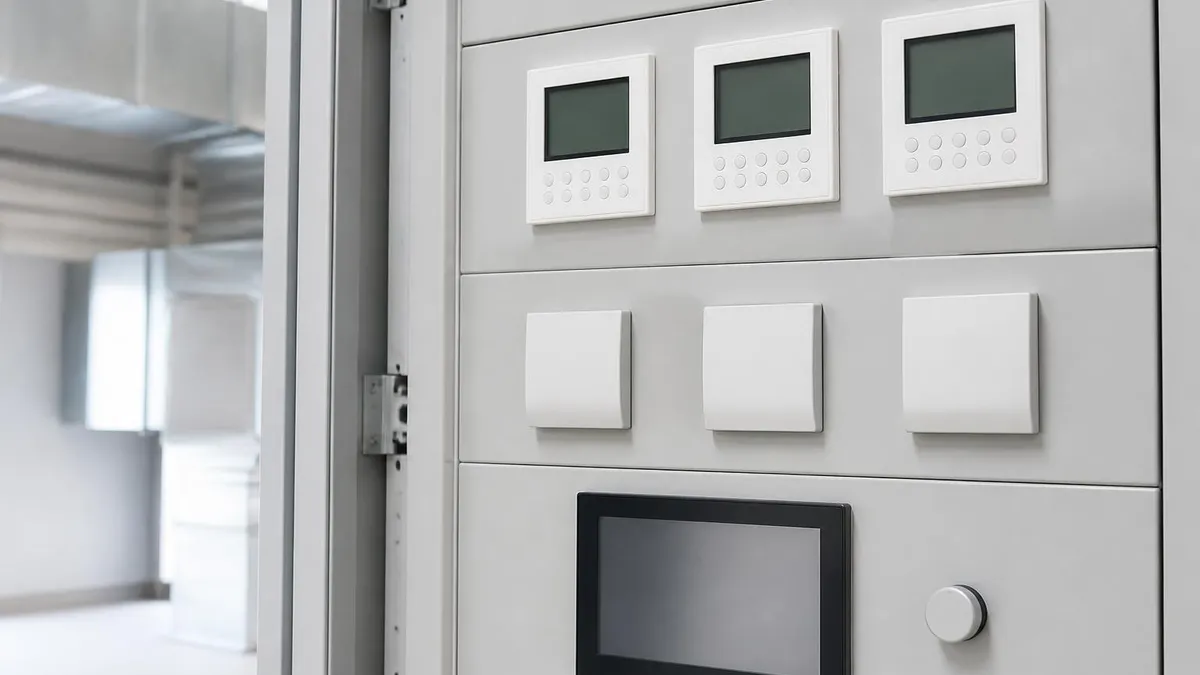
What HVAC Supply Houses Provide
Furnaces, AC units, heat pumps, air handlers, ductwork, refrigeration. Residential and commercial.
Compressors, motors, capacitors, contactors, valves, sensors. Extensive parts catalogs.
All common refrigerants (R-410A, R-454B, R-32, R-22 reclaimed, others). Copper, brazing supplies.
Manifold gauges, vacuum pumps, recovery machines, leak detectors, multimeters, specialty tools.
Counter staff with technical expertise. Manufacturer training. Application engineering for complex jobs.
Will-call pickup, jobsite delivery, equipment financing for contractors, special orders.
Establishing an HVAC supply house account requires demonstrating your business legitimacy through documentation. Typical requirements include current state HVAC contractor or technician license (varies by state), business registration documentation (LLC, sole proprietorship, etc.), Federal Employer Identification Number (EIN) or Tax ID, sales tax resale certificate (allows tax-exempt purchases for items resold to customers), business liability insurance certificate, and business credit application for potential credit terms. Some supply houses accept individual technician accounts; others require business entity status. Verify specific requirements with your local supply house before applying.
For new HVAC technicians not yet established as independent contractors, several pathways to supply house access exist. Working as employee for established contractor — you use the employer's account during work duties. Establishing personal trade account at supply houses that allow individual technician accounts (some do, some don't). Joining technician cooperative buying groups that aggregate purchasing across members. Working with a manufacturer's authorized dealer relationship that provides procurement access. Each path has trade-offs around independence, pricing, and convenience that affect your day-to-day work as you build your career in the industry.
Pricing at HVAC supply houses follows tiered structures based on contractor volume and account history. New accounts typically start at base trade pricing (still substantially below retail). Volume discounts apply at various purchase thresholds — annual volume across $10K, $25K, $50K, $100K+ progressively unlocks better pricing. Special pricing applies to large project quotes or competitive situations. Manufacturer rebate programs reward contractors meeting volume targets across specific equipment lines. Supply houses also offer cash discounts for prompt payment and various other negotiated arrangements with established customers.
Ferguson: Largest U.S. plumbing and HVAC supply chain. Hundreds of locations. Strong inventory across plumbing-HVAC integration. Johnstone Supply: Major HVAC-focused chain. Strong technical support and training. Carrier Enterprise: Carrier's distribution arm with Carrier brand focus. Lennox PartsPlus: Lennox brand parts and equipment. R.E. Michel: Major Eastern U.S. presence. Strengths: Consistent inventory, professional services, financing programs.
Counter staff at HVAC supply houses provide substantial value beyond just product fulfillment. Experienced counter staff often have decades of HVAC experience and can help diagnose problems, suggest parts, recommend appropriate equipment for specific applications, and troubleshoot installation issues. The counter conversation is often as valuable as the parts themselves — identifying the right replacement part, suggesting compatible alternatives when items are out of stock, recommending tools you might not have known existed, and providing application advice based on their broad exposure to many contractors' work over the years.
Build relationships with specific counter staff at supply houses you frequent. Knowing your counter person by name, them knowing your typical equipment lines and customer base, and the trust developed over many transactions translates into faster service, better recommendations, and occasional favors when timing matters. Counter staff who know you'll call back about a problematic installation work harder to find the right parts the first time. Counter staff who know your typical jobs anticipate needs and sometimes proactively share information about new products or pricing relevant to your work patterns.
Hours at HVAC supply houses typically accommodate contractor schedules — opening at 6-7 AM to support morning equipment pickup before contractors head to job sites. Closing times vary, usually 4-5 PM, supporting afternoon parts runs after morning installations encounter unexpected issues. Saturday hours vary substantially across chains and locations. Sunday closures are nearly universal. Plan your week around supply house hours — order parts in advance when possible, identify backup suppliers for after-hours emergencies, build relationships with multiple supply houses for redundant access especially for critical service work that cannot wait until next business day.
Refrigerant purchases require EPA Section 608 certification verification at HVAC supply houses. Reality: Supply houses must verify your certification before selling regulated refrigerants. Bring your Section 608 card on first visit; some supply houses keep it on file. Common mistake: New technicians attempting to purchase refrigerant before completing certification. Some supply houses accept proof of program enrollment with planned exam date; others require completed certification before any refrigerant sales. Plan ahead: Get certified before you need refrigerant, not after — this avoids project delays and confusion at the supply house counter.
Inventory management considerations at HVAC supply houses affect contractor workflow substantially. Supply houses stock common parts in depth — typical service parts like contactors, capacitors, common motor sizes, ignitors, and similar high-volume items are usually in stock for immediate purchase. Specialty parts (specific OEM-only parts, less common motor sizes, unusual control boards) often require ordering from regional warehouses or manufacturer fulfillment, with delivery typically 1-3 business days. Plan accordingly — emergency service work depends on stocked parts, while planned installations can accommodate special orders without disruption.
For contractors managing inventory across multiple jobs, several strategies help. Maintain truck inventory of common service parts — contactors, capacitors, ignitors, common-size motors, refrigerant for top-up service — so first-call diagnostic visits often complete repairs without supply house trips. Build relationships with supply houses for emergency parts access — knowing the supply house manager's mobile number for after-hours requests can be invaluable for emergency service work. Use online ordering and will-call systems to pre-order parts for next-day pickup, supporting more efficient morning scheduling than counter waits during peak morning hours.
Supply house websites and online ordering systems have improved substantially in recent years. Most major chains now offer comprehensive online catalogs with real-time stock checking, online ordering with will-call pickup or delivery, account history showing past purchases for easy reorder, technical specifications and installation manuals. Use these systems to streamline procurement — checking stock before driving to the counter, placing orders at end of day for next-morning pickup, comparing pricing across multiple supply houses without phone calls. Modern supply house technology supports more efficient contractor procurement than traditional counter-only operations of the past.
Establishing HVAC Supply House Accounts
- ✓Obtain HVAC contractor or technician license per state requirements
- ✓Establish business entity (LLC, sole prop) if planning independent practice
- ✓Obtain Federal EIN and state resale certificate
- ✓Maintain current business liability insurance
- ✓Get EPA Section 608 certification for refrigerant purchases
- ✓Identify supply houses serving your area (Ferguson, Johnstone Supply, regional)
- ✓Apply for accounts at multiple supply houses for backup options
- ✓Provide required documentation during account application
- ✓Begin small purchases to establish account history
- ✓Build relationships with counter staff for better service over time
For new HVAC contractors starting their businesses, supply house relationships become foundational to operational success. Cash flow management is supported by net-30 credit terms common at supply houses for established accounts — buy parts now, install today, get paid by customer this week, pay supply house in 30 days. The credit terms effectively provide working capital. Volume rebates and manufacturer programs reward consistent purchasing, building long-term financial benefits to selecting primary suppliers and maintaining loyalty rather than constantly bouncing between sources for small price differences on individual transactions.
Equipment purchases for new installations represent substantial value at supply houses. Volume discounts on equipment can save thousands of dollars annually for active contractors. Manufacturer rebates and incentive programs apply to qualifying installations of specific equipment lines — Carrier rebates for Carrier dealers, Lennox programs for Lennox dealers, etc. Extended warranties through supply house programs add value for customers and support contractor competitiveness. Financing programs through supply house affiliates support customer purchases of premium equipment at attractive payment terms, supporting larger sales for the contractor.
For training and continuing education, supply houses provide substantial resources beyond just product distribution. Manufacturer training sessions on new equipment and updates happen frequently at supply house locations or partner facilities. Technical seminars from product specialists, refrigerant updates, code changes, and various other training keep contractors current. Some supply houses operate dedicated training centers with hands-on equipment for skill development. Take advantage of training opportunities — they typically don't cost the contractor and provide valuable professional development supporting career growth and business competitiveness throughout the industry.
Common challenges with HVAC supply houses include several recurring issues experienced contractors learn to navigate. Inventory variability between locations — items in stock at one Ferguson location may be out at another nearby branch. Phone or online checking before driving saves wasted trips. Price variations between supply houses on identical items — multiple bids on larger orders helps optimize pricing.
Counter wait times during peak hours (early morning rush 7-9 AM, lunch hour, end-of-day) — schedule visits during off-peak hours when possible. Special order delays during peak season (early summer for AC work, early fall for furnace) can disrupt project schedules — plan ahead for known seasonal demand spikes.
For homeowners and DIY enthusiasts wondering about supply house access, the reality is that most HVAC supply houses don't serve general consumers. Some accept walk-in cash sales of common items. Most won't sell refrigerant without Section 608 certification verification. Equipment warranties typically void if installed by non-licensed parties. Residential HVAC permits in most jurisdictions require licensed installation. The supply house channel is fundamentally trade-oriented; alternatives for DIY users include online suppliers like SupplyHouse.com, eBay business sellers, and various other channels that don't require trade credentials.
For users transitioning from working at established contractors to independent practice, the supply house relationship transition is significant. Your former employer's accounts don't transfer to you. Establishing your own accounts requires the documentation discussed above. Volume pricing tiers reset to entry levels when you start fresh.
Building relationships with counter staff takes time — you're known initially as a new contractor rather than experienced veteran. Plan for this transition by establishing accounts before fully launching independent practice, building relationships gradually, and recognizing that supplier relationships are part of building any new HVAC business along with marketing, customer relationships, and technical capabilities required for success.
The bottom line on HVAC supply houses: they're foundational business infrastructure for every working HVAC contractor. Establish accounts at multiple suppliers (national chain plus local independent typically), build relationships with counter staff over time, take advantage of credit terms and volume rebates, attend training sessions when offered, and use online tools for efficient procurement. The supply house relationship grows in value over years of consistent business, supporting both day-to-day operational efficiency and long-term business profitability through accumulated supplier benefits beyond just immediate part purchases.
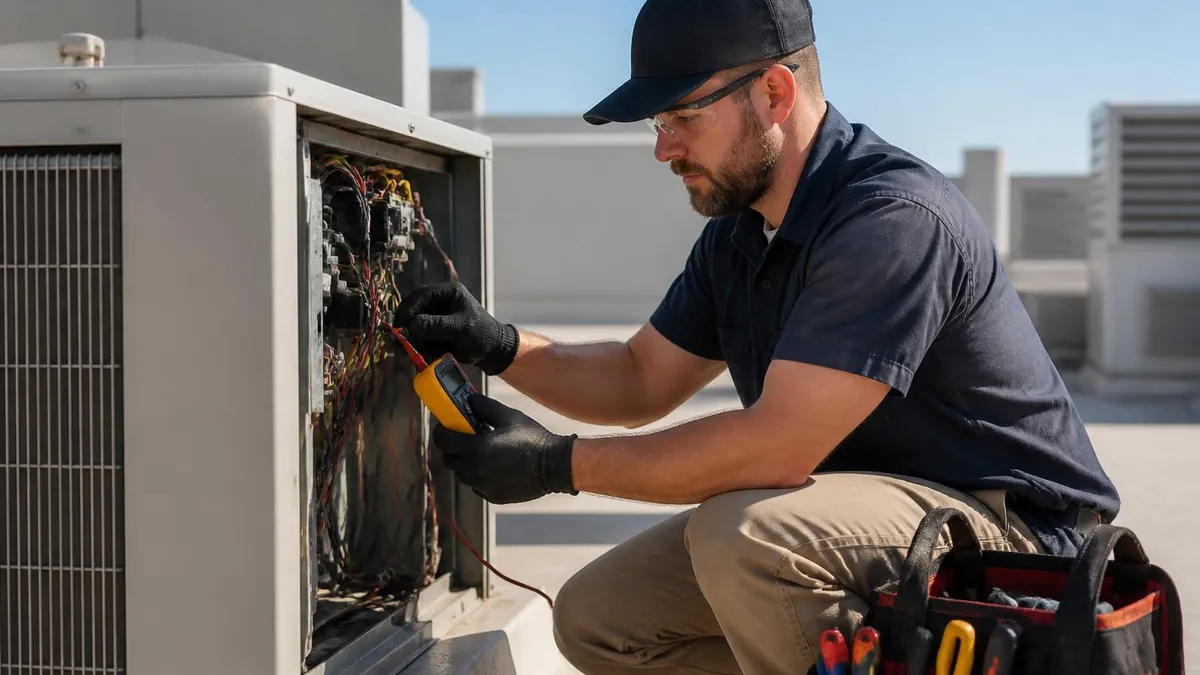
HVAC Supply House Quick Reference
Major HVAC Supply House Chains
Largest U.S. plumbing and HVAC supply chain. Hundreds of locations. Strong national presence.
HVAC-focused chain with strong technical support and training programs across regions.
Carrier's distribution arm. Strong on Carrier brand equipment and parts.
Lennox brand parts and equipment distribution. Authorized dealer network.
Major Eastern U.S. presence. Strong service contractor focus and parts availability.
Midwestern regional chain. Strong customer service focus and competitive pricing for regular accounts.
Looking forward, HVAC supply distribution continues evolving with technology and industry changes. Online ordering with same-day fulfillment is expanding, with some chains offering 2-hour delivery in major metros. Mobile apps for inventory checking and ordering are becoming standard. Manufacturer-direct sales programs are expanding, with some equipment going direct from manufacturers to large contractors bypassing traditional distribution. Refrigerant transitions to lower-global-warming-potential gases (R-32, R-454B replacing R-410A) require supply house adaptation as inventory shifts to newer products while supporting legacy equipment with declining-availability legacy refrigerants.
Industry consolidation continues at the supply house level with major chains acquiring regional independents. Ferguson's growth through acquisition has been substantial. Johnstone Supply expansion continues. Several other chains have grown through M&A activity in recent years. The consolidation provides advantages (broader inventory, consistent pricing, professional services) but reduces the personal relationship advantages that local independents historically offered. Mixed sourcing strategies — using national chains for consistency plus local independents for specific situations — supports contractors balancing the trade-offs between scale and personalized service.
For users considering HVAC supply distribution as a career direction, several paths exist. Counter sales positions provide entry-level entry into the industry with potential progression to outside sales, branch management, and corporate roles. Outside sales for major distributors involves travel between contractor accounts building relationships and supporting business growth. Branch management requires combination of technical knowledge, sales capability, and operational management. Corporate roles in major chains involve product management, marketing, financial analysis, and various other functions supporting broader organization beyond individual branch operations. The HVAC supply industry employs many career professionals beyond just the visible counter staff.
The HVAC supply house ultimately represents the supply chain backbone of the entire HVAC service industry. Without supply houses, individual contractors couldn't access the breadth of equipment and parts required for diverse work. The relationships between contractors and their supply houses span decades for successful businesses, with the trust and mutual support developed over time providing competitive advantages that newer relationships cannot match. Take supply house relationships seriously — they're not just transactional vendor arrangements but rather strategic partnerships supporting long-term success in HVAC contracting throughout careers in the industry.
HVAC Supply Houses: Pros and Cons
- +Trade pricing substantially below retail
- +Extensive parts inventory beyond retail availability
- +Technical support from experienced counter staff
- +Credit terms supporting cash flow management
- +Manufacturer training and rebate programs
- −Account requirements limit access to licensed contractors
- −Inventory variability between branches
- −Counter wait times during peak hours
- −Special order delays during seasonal peaks
- −Volume pricing favors larger contractors over small operators
HVAC Questions and Answers
About the Author

NATE Certified HVAC Technician & Licensing Exam Trainer
Universal Technical InstituteMike Johnson is a NATE-certified HVAC technician and EPA 608 universal-certified refrigerant handler with a Bachelor of Science in HVAC/R Technology. He has 19 years of commercial and residential HVAC installation and service experience and specializes in preparing technicians for NATE certification, EPA 608, A2L refrigerant safety, and state HVAC contractor licensing examinations.