
Ham Radio Equipment for Sale: What to Buy Before and After Getting Your License
Shopping for ham radio equipment for sale? 🎓 Learn what gear to buy, where to find it, and how to pass your Technician license exam first.

If you have been searching for ham radio equipment for sale, you are already thinking like an amateur radio operator — but before you spend a single dollar on gear, the most important step is earning your ham radio license. The Technician class license is the entry point for all new hams in the United States, and it unlocks access to a wide range of frequencies, modes, and equipment categories. Understanding what gear you actually need will save you hundreds of dollars and weeks of frustration as you build your station.
The amateur radio hobby spans an enormous range of equipment types, from inexpensive handheld radios that cost under fifty dollars to sophisticated base station transceivers that rival professional broadcast gear. Knowing your operating goals before you shop is critical. A new Technician licensee who wants to chat on local repeaters has very different equipment needs than someone who plans to chase satellite contacts or build a portable emergency communications kit. The good news is that entry-level ham radios have never been more affordable or capable.
Understanding ham radio bands is foundational knowledge that directly shapes your equipment choices. Technician licensees have full privileges on all amateur bands above 50 MHz, which includes the popular 2-meter (144–148 MHz) and 70-centimeter (420–450 MHz) bands. These VHF and UHF bands are where most new hams start because the equipment is compact, inexpensive, and there is an enormous infrastructure of repeaters across the country to extend your range far beyond what a modest handheld radio could achieve on its own.
Shopping for ham radio equipment today means navigating a mix of new and used markets. Major retailers like Ham Radio Outlet carry full inventories of new gear from brands like Yaesu, Icom, Kenwood, and Baofeng. Meanwhile, platforms like eBay, QRZ.com classifieds, and local ham radio club swap meets offer excellent used equipment at significant discounts. Many experienced operators argue that buying used is one of the smartest moves a new ham can make, since the resale market for amateur radio gear is deep, active, and generally honest.
Your ham radio license test preparation should run parallel to your equipment research. The FCC Technician exam covers topics including radio theory, antenna fundamentals, operating procedures, and FCC regulations — all of which directly inform the kind of station you will build and operate. Many exam questions specifically address equipment specifications, safety practices, and technical concepts that will help you make smarter purchasing decisions once you are licensed. Think of studying for the exam as free education in how to spend your equipment budget wisely.
The ham radio prep process has been streamlined significantly in recent years. Study apps, online practice exams, and video courses make it possible for motivated individuals to pass the 35-question Technician exam in as little as one to two weeks of focused study. The question pool is publicly available, which means there are no surprises on exam day. Many prospective hams begin shopping for equipment while studying for their license, using their growing technical knowledge to evaluate options and narrow down their first radio purchase before they even sit for the test.
This guide will walk you through every major category of ham radio equipment for sale in 2026, explain what each type of gear does, help you set a realistic budget, and give you the preparation resources you need to earn your license quickly and confidently. Whether you are drawn to emergency communications, casual ragchewing, digital modes, or contesting, there is a perfect starter station waiting for you — and it probably costs less than you think.
Ham Radio Equipment & Licensing by the Numbers
Main Categories of Ham Radio Equipment for Sale
Portable, battery-powered radios covering VHF and UHF bands. Perfect for new Technician licensees accessing local repeaters. Range from budget Baofeng models at $25 to feature-rich Yaesu and Kenwood HTs at $150–$300.
Designed for vehicle installation, mobile radios offer higher power output (25–75 watts) and better audio than handhelds. Popular for everyday driving and emergency communications. Typical price range: $150–$500 for VHF/UHF models.
Full-featured desktop transceivers for home station operation. Entry-level HF/VHF/UHF all-band radios from Icom and Yaesu start around $700, opening up HF privileges once you upgrade to General class.
The antenna is often the most important investment in your station. VHF/UHF vertical antennas for home use start under $50. Coax feedline quality directly impacts signal strength and should never be skimped on.
Power supplies, SWR meters, microphones, headsets, logging software, and programming cables round out a complete station. Budget $50–$200 for essential accessories when setting up your first ham radio station.
Knowing where to buy ham radio equipment for sale is just as important as knowing what to buy. Ham Radio Outlet, commonly abbreviated as HRO, is the largest chain of amateur radio specialty retailers in the United States, with physical stores in major cities and a comprehensive online catalog. HRO stocks virtually every major brand and product category, employs knowledgeable staff who are licensed hams themselves, and offers competitive pricing with legitimate warranty support. For new hams making their first significant purchase, buying from a reputable dealer like HRO provides peace of mind that cheap online marketplaces cannot always match.
Beyond HRO, other major online retailers include DX Engineering, GigaParts, and Universal Radio. Each carries a slightly different product mix and price structure, so it pays to comparison-shop before committing to a major purchase. Many operators find that DX Engineering excels in antenna systems and accessories, while GigaParts offers strong selection and frequent sales on handheld and mobile radios. Building a relationship with a local ham radio dealer, if one exists near you, also pays dividends — knowledgeable local dealers can help you evaluate used equipment and answer installation questions in person.
The used equipment market deserves serious attention from budget-conscious buyers. QRZ.com, the largest ham radio community website in the world, hosts a classifieds section where thousands of operators list equipment for sale every week. The eHam.net swap and shop is another active marketplace with a strong reputation for honest transactions within the ham community. eBay remains a viable option for finding equipment, though buyers should research seller feedback carefully and understand the difference between equipment listed by licensed hams versus general resellers who may not accurately describe technical condition.
Local ham radio clubs frequently organize swap meets, sometimes called hamfests, where operators buy, sell, and trade equipment in person. The Dayton Hamvention, held annually in Ohio, is the largest hamfest in the world and attracts vendors and attendees from across the globe. Smaller regional hamfests happen throughout the year in virtually every state. Attending a local hamfest before buying your first radio lets you handle equipment, ask questions of experienced operators, and often find bargains that never appear online. The ARRL website maintains a calendar of upcoming hamfests across the country.
When evaluating a handheld ham radio for purchase, pay close attention to a few key specifications. Transmit power output, measured in watts, determines how well your signal reaches a repeater or another station. Receive sensitivity, measured in microvolts or dBm, determines how weak a signal your radio can decode. Dual-band capability — covering both 2 meters and 70 centimeters — is essentially standard on modern HTs and dramatically expands the number of repeaters and operators you can reach. Battery capacity, measured in milliamp-hours (mAh), determines how long the radio operates between charges in the field.
Pricing trends in 2026 continue to favor the buyer. Chinese manufacturers, particularly Baofeng and its competitors, have driven entry-level HT prices to historic lows, making it possible for new licensees to get on the air for under $30.
The mid-range market, dominated by Yaesu, Kenwood, and Icom handhelds priced between $150 and $350, offers significantly better build quality, audio performance, and feature sets that justify the higher cost for operators who use their radios frequently. The premium segment, including fusion and D-STAR capable digital radios, runs $300 to $600 and opens up digital voice and data modes unavailable on budget radios.
Before making any purchase, verify that the equipment is legal to use on amateur frequencies with an FCC amateur radio license. Some inexpensive radios sold online are technically capable of transmitting on frequencies outside the amateur bands, which is illegal without appropriate authorization. Responsible amateur radio operators purchase equipment from reputable sources, program their radios to stay within licensed frequency allocations, and understand the FCC regulations governing amateur radio operation. Your Technician license exam preparation will cover these regulations in detail, giving you the legal knowledge to operate your equipment correctly from day one.
Understanding Ham Radio Frequencies and Equipment Compatibility
VHF (Very High Frequency) spans 30–300 MHz and includes the popular 2-meter amateur band at 144–148 MHz. UHF (Ultra High Frequency) spans 300–3000 MHz and includes the 70-centimeter band at 420–450 MHz. Technician licensees have full privileges on both bands, making this the natural starting point for new operators. Dual-band handheld radios covering both 2 meters and 70 centimeters are the most popular first radio purchase because they access the widest variety of local repeaters at a low cost.
Equipment designed for VHF and UHF is compact, relatively inexpensive, and widely available. A typical dual-band HT weighs under 200 grams and fits easily in a shirt pocket. Mobile radios for VHF and UHF typically output 25–75 watts, dramatically extending range compared to the 5-watt output of most handheld radios. Antennas for these bands are small enough to install on a vehicle magnetic mount or a simple home vertical without the space and structural requirements of HF antenna systems.
Buying New vs. Used Ham Radio Equipment: What's the Better Choice?
- +Full manufacturer warranty coverage protects your investment against defects
- +Latest firmware and features ensure compatibility with current repeater systems
- +Reputable dealer support provides expert guidance for new operators
- +New radios come fully programmed and ready to configure out of the box
- +No hidden damage or wear from previous owner misuse or modification
- +Financing options available at major retailers like Ham Radio Outlet for larger purchases
- −New radios cost 30–60% more than comparable used equipment in good condition
- −Depreciation is steep — a new radio loses significant value the moment you use it
- −Budget new radios may offer less value than premium used equipment at the same price
- −Limited availability of discontinued but highly regarded models like classic Kenwood rigs
- −Some new Chinese-brand radios have poor quality control that warranty service barely covers
- −Buying new eliminates the learning opportunity of evaluating and testing used equipment
Ham Radio Equipment Buying Checklist for New Technician Licensees
- ✓Pass your FCC Technician license exam before purchasing any transmitting equipment
- ✓Identify your primary operating interest — local repeaters, emergency communications, digital modes, or satellite
- ✓Set a realistic starter budget of $100–$300 covering a radio, antenna, and essential accessories
- ✓Research dual-band handheld radios from Yaesu, Kenwood, Icom, or Baofeng within your price range
- ✓Read reviews on eHam.net and QRZ.com forums before committing to any specific model
- ✓Verify the radio covers both 2-meter (144–148 MHz) and 70-centimeter (420–450 MHz) bands
- ✓Purchase a quality programming cable and install CHIRP software to simplify repeater programming
- ✓Buy a spare battery pack or external battery bank if you plan to use your HT in the field
- ✓Research local repeaters on RepeaterBook.com before buying to confirm active infrastructure in your area
- ✓Join your local amateur radio club for access to experienced mentors and equipment loan programs
Your Antenna Matters More Than Your Radio
Experienced hams consistently emphasize that a mediocre radio with an excellent antenna outperforms an excellent radio with a mediocre antenna. Before upgrading your transceiver, invest in a quality VHF/UHF vertical antenna for your home or vehicle. A $40–$80 outdoor antenna improvement will transform your signal more dramatically than a $300 radio upgrade, and the difference is immediately audible on both ends of every contact you make.
Earning your ham radio license is the essential first step before operating any amateur radio equipment, and the process is more accessible than most people expect. The FCC Technician class license requires passing a 35-question multiple-choice exam drawn from a publicly available question pool of approximately 400 questions. You need to answer at least 26 questions correctly — a 74% score — to pass. There is no Morse code requirement. The exam covers five broad subject areas: FCC rules and regulations, operating procedures, radio wave characteristics, amateur radio practices, and electrical principles including basic electronics.
The ham radio license test is administered by Volunteer Examiner (VE) teams affiliated with the ARRL, ARRL-VEC, or other VEC organizations. Sessions are held regularly in communities across the United States, often at public libraries, community centers, and amateur radio club meeting locations. Since 2020, online testing has been widely available through organizations like the ARRL, making it possible to earn your license without leaving your home. The exam fee is typically $15 at in-person sessions, while online testing fees vary by administrator — usually in the $14–$40 range.
Ham radio prep resources have proliferated significantly over the past several years. The ARRL Ham Radio License Manual is the traditional study guide, providing thorough coverage of all exam topics in an accessible format designed for self-study. Online platforms like HamStudy.org offer free flashcard-based study tools with spaced repetition algorithms that adapt to your performance. Ham Radio Prep is a popular paid course that combines video instruction with practice questions and claims a high first-time pass rate among its students. Many learners find that a combination of video instruction and extensive practice testing produces the best results.
One question that occasionally circulates in online discussions — particularly on pop culture forums — is whether historical figures or fictional characters ever used amateur radio equipment for clandestine communication. The question did ed gein talk to ilse on a ham radio appears in certain creative and educational contexts, reflecting popular curiosity about the history of amateur radio and its role in mid-twentieth century communication. While this is not a Technician exam topic, it illustrates how amateur radio has captured the public imagination across generations and continues to attract new operators today.
Study time varies considerably based on your technical background. Individuals with experience in electronics, communications, or IT typically find the Technician exam material familiar and may be ready to test in one to two weeks of moderate study. Complete beginners with no technical background should plan for three to four weeks of consistent daily study to feel confident across all topic areas. The key is not to simply memorize answers but to understand the underlying concepts — particularly for questions about electrical safety, antenna theory, and FCC regulations, where conceptual understanding prevents costly mistakes in actual operation.
Practice exams are the single most effective study tool available to Technician candidates. The complete question pool is public, which means practice exam platforms can present you with questions drawn from the actual pool you will see on exam day. Aim to consistently score 85% or higher on full-length 35-question practice exams before scheduling your test session. This buffer above the 74% passing score accounts for test-day nerves and any unfamiliar questions. Tracking your performance by topic area helps you identify and target weak areas for focused review in the final days before your exam.
Once you pass your exam, the VE team submits your results to the FCC, and your new amateur radio license typically appears in the FCC database within 24 to 72 hours. You are legally authorized to transmit on amateur frequencies as soon as your license appears in the FCC Universal Licensing System database — you do not need to wait for a physical license document to arrive by mail, and in fact the FCC no longer mails paper licenses automatically.
Download a PDF copy from the FCC website and save it on your phone for reference. You are now officially a licensed amateur radio operator, and the world of ham radio equipment for sale is officially open to you.

Operating amateur radio equipment on ham radio frequencies without a valid FCC license is illegal and can result in significant fines and equipment confiscation. Even if a radio is set up and ready to transmit, you must hold a valid FCC amateur radio license and have your call sign appear in the FCC database before making any transmission on amateur frequencies. Receiving transmissions requires no license, but any use of the transmit function does.
Setting up your first ham radio station is one of the most rewarding experiences the hobby offers. The process of choosing equipment, installing an antenna, programming repeaters, and making your first contact transforms abstract exam knowledge into practical operating skill. Most new Technician licensees start with a handheld transceiver and a local repeater system, then gradually expand their station as their interests and budget grow. Understanding how each component of your station interacts with the others is the foundation of becoming a capable and effective operator.
Antenna selection for a new home station deserves careful consideration. A ham radio antenna for VHF and UHF can be as simple as a $30 vertical mounted on a window frame or as sophisticated as a $200 dual-band beam antenna on a rooftop mast. For most Technician licensees operating from a house with outdoor access, a quarter-wave or five-eighths-wave vertical antenna mounted as high as practical provides excellent omnidirectional coverage of local repeaters. Apartment dwellers may need to explore magnetic loop antennas, indoor vertical antennas, or attic installations — all of which involve compromises but can still produce useful results.
Feedline quality is a topic that trips up many new operators who focus exclusively on the radio and antenna while overlooking the cable connecting them. Low-quality coaxial cable introduces significant signal loss, particularly at UHF frequencies — losses that rob your transmitted signal of effective power and degrade your received signal quality. For runs under 25 feet, standard RG-8X or RG-58 coax performs acceptably. For longer runs or installations where maximum performance matters, invest in low-loss coax like LMR-400 or equivalent. The cost difference is modest compared to the signal improvement, and quality coax lasts decades when properly weatherproofed.
Power supplies are the unsung hero of any base station setup. A regulated 13.8-volt DC power supply rated for at least 20 amperes is the standard choice for powering mobile-class transceivers in a home station. Brands like Astron and MFJ have served the amateur radio community for decades and offer reliable supplies at competitive prices.
Avoid cheap switching power supplies that generate radio frequency interference (RFI) — the noise they inject into the receive chain can make an otherwise excellent station nearly unusable on sensitive receive modes. A quality linear power supply eliminates this problem entirely and typically lasts twenty or more years with normal use.
Programming your radio to access local repeaters is often the first technical challenge new operators encounter. Modern ham radios can store dozens or hundreds of memory channels, each configured with the repeater's output frequency, offset, CTCSS tone, and other parameters.
The CHIRP programming software, available free for Windows, Mac, and Linux, simplifies this process enormously — you connect your radio via a USB programming cable, download the current configuration, edit it using a spreadsheet-like interface, and upload the changes. RepeaterBook.com provides a comprehensive database of repeaters organized by location that you can import directly into CHIRP for most supported radio models.
Emergency communications is one of the most socially valuable roles that amateur radio operators play in their communities, and Technician licensees are fully qualified to participate. Organizations like ARES (Amateur Radio Emergency Service) and RACES (Radio Amateur Civil Emergency Service) coordinate volunteer operators to provide communication support during disasters when commercial infrastructure fails.
Joining your local ARES group connects you with experienced operators, provides training in emergency communication procedures, and gives your new hobby immediate real-world relevance. Many ARES groups also loan equipment to new members, which is an excellent way to evaluate different radio types before making your own purchasing decisions.
As your skills and interests develop, you will naturally begin to explore equipment categories beyond your starter station. Digital mode operation via FT8, PSK31, or Winlink requires only a computer with a soundcard and a simple interface cable connecting the audio jacks of your radio to your computer's microphone and headphone ports — hardware that costs under $30.
Satellite operation adds a directional antenna and some practice tracking orbital passes, but uses the same dual-band radio you already own. Each new operating mode you explore expands your appreciation for the remarkable range of communication capabilities that an amateur radio license unlocks.
Practical preparation for your Technician exam goes beyond reading study guides and taking practice tests. Building hands-on familiarity with actual radio equipment — even before you are licensed — accelerates your understanding of technical concepts in a way that reading alone cannot match. Many communities have amateur radio clubs that welcome prospective licensees to club meetings and operating events, giving you the opportunity to handle different types of equipment, listen to on-air conversations, and ask questions of experienced operators who can contextualize what you are studying. This kind of mentorship has always been central to the amateur radio culture.
Time management during the actual exam matters more than many candidates expect. The 35-question Technician exam has no official time limit under the current VE administration structure, but most sessions last between 30 and 60 minutes. Read each question carefully before looking at the answer choices, since the FCC question pool occasionally includes questions with subtly tricky wording.
Answer the questions you are confident about first, then return to uncertain questions with fresh eyes. If you are genuinely uncertain between two answers after careful consideration, trust your preparation and commit to the more technically sound choice rather than second-guessing yourself repeatedly.
After passing your exam, the learning does not stop — it accelerates. Many new Technician licensees report that actual on-air operation teaches them more in the first month than all their pre-exam study combined. Making your first contact, learning proper radio etiquette, troubleshooting a feedline problem, or finding a distant repeater through careful antenna positioning all provide practical education that deepens your understanding of every topic covered on the exam. The Technician license is not an endpoint but a foundation — a gateway to a lifetime of technical exploration, community service, and global communication.
Budget planning for your ham radio station benefits from a phased approach. Phase one — your first six months — should focus on a quality dual-band HT, a better-than-stock antenna (either a longer whip or a home base antenna), a programming cable, and joining a local club. Phase two — months six through eighteen — might include a mobile rig for your vehicle, an outdoor antenna for your home, and studying for the General class upgrade exam.
Phase three — after your General upgrade — opens the exciting world of HF operation and the global contacts that come with it. This gradual approach prevents the equipment paralysis that afflicts many new hams who try to plan their ultimate station before understanding what they actually enjoy doing.
The ham radio community is remarkably welcoming to newcomers at every level of technical sophistication. Online communities on QRZ.com forums, Reddit's r/amateurradio, and countless local club websites provide resources, advice, and encouragement. Experienced operators generally understand that everyone starts somewhere and are willing to answer beginner questions with patience and detail. Introducing yourself as a new Technician licensee in virtually any ham radio context will reliably produce offers of assistance, equipment recommendations, and invitations to join nets and activities that match your interests.
One often-overlooked aspect of ham radio equipment shopping is the software ecosystem that surrounds modern amateur radio. Programs like FLdigi enable dozens of digital modes on any SSB-capable transceiver. WSJT-X handles FT8, FT4, and other weak-signal modes that have revolutionized HF contesting and DXing. JS8Call extends FT8 into a keyboard-to-keyboard messaging system capable of store-and-forward messaging across relay stations. Winlink enables email over radio without internet infrastructure. Many of these programs are completely free, work with modest hardware, and dramatically expand what a basic transceiver can accomplish — yet they receive little attention in equipment-focused discussions because they cost nothing.
Finally, remember that the best ham radio equipment for sale is the equipment you will actually use. The most sophisticated and expensive radio gathering dust in a closet because it is too complicated or too heavy for your actual operating style provides far less value than a simple, reliable dual-band HT that goes with you everywhere and makes contacts every day.
Define your operating goals clearly, research equipment that fits those goals, set a realistic budget, earn your license, and get on the air. The rest will follow naturally as your experience, skills, and enthusiasm grow through actual operation in this remarkable global community of licensed amateur radio operators.
Ham Radio Technician Questions and Answers
Ham Radio Test Online: Complete Study Guide for the Technician License Exam
Ham Radio Technician
Ham Radio Transceiver Guide: Choosing Your First Radio for the Technician License
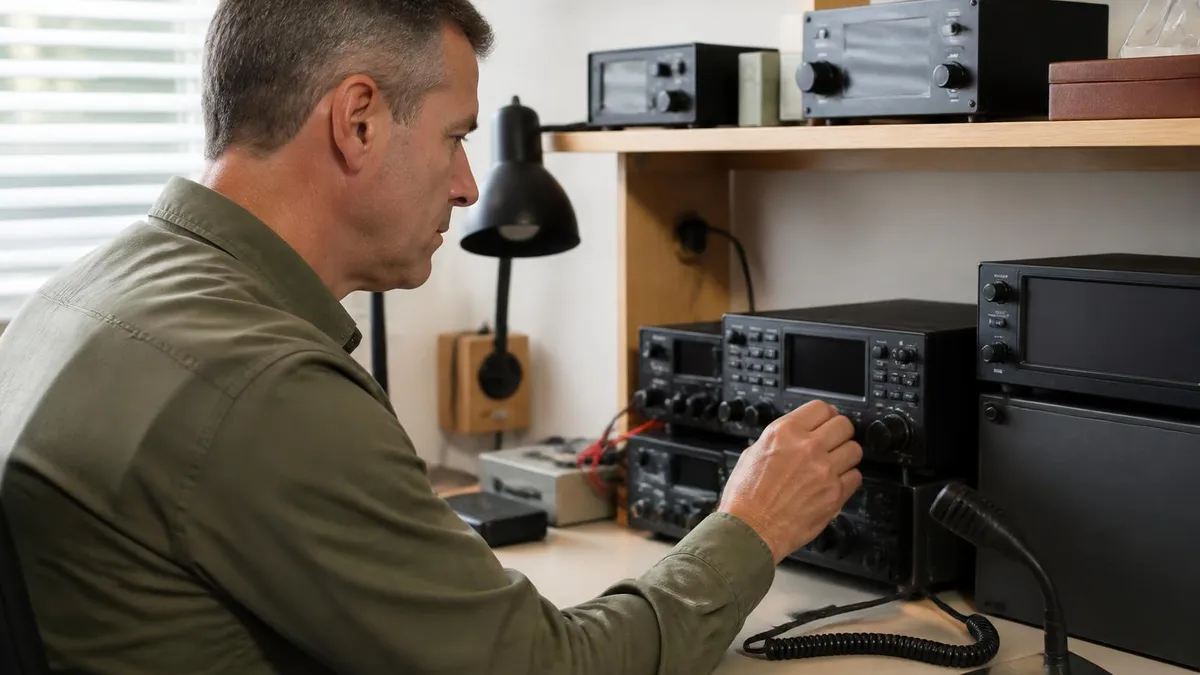
Ham Radio License Online: The Complete Guide to Getting Licensed in 2026
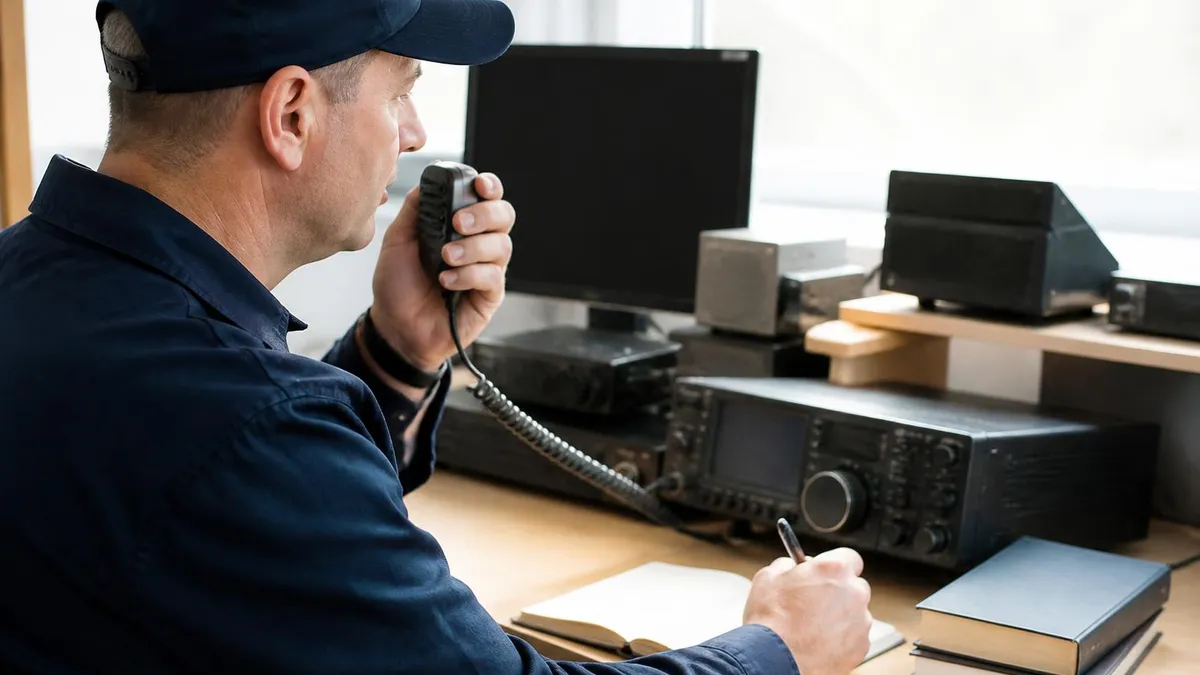
Ham Radio Repeaters: Complete Guide for Technician License Holders
About the Author

Educational Psychologist & Academic Test Preparation Expert
Columbia University Teachers CollegeDr. Lisa Patel holds a Doctorate in Education from Columbia University Teachers College and has spent 17 years researching standardized test design and academic assessment. She has developed preparation programs for SAT, ACT, GRE, LSAT, UCAT, and numerous professional licensing exams, helping students of all backgrounds achieve their target scores.
Join the Discussion
Connect with other students preparing for this exam. Share tips, ask questions, and get advice from people who have been there.
View discussion (3 replies)