
Ham Radio Mobile: Complete Guide to Getting Your Ham Radio License and Operating on the Go
Get your ham radio license and go mobile. Learn frequencies, equipment, antennas, and prep tips for the Technician exam. 🎯 Start here.

Ham radio mobile operation is one of the most exciting and practical ways to use your ham radio license after passing the Technician exam. Whether you're commuting across town, embarking on a cross-country road trip, or simply driving to work, a properly installed mobile station lets you stay connected to repeaters, nets, and fellow amateur radio operators every mile of the journey. The freedom of mobile ham radio operation is unmatched by any other communications mode.
Getting started with ham radio mobile begins before you ever mount a single piece of ham radio equipment to your vehicle. You must first hold a valid FCC amateur radio license — the entry-level Technician class license opens access to all VHF and UHF frequencies, which are the bread and butter of mobile operating. Without that license in hand, transmitting on any amateur band is illegal, regardless of whether you're parked in your driveway or rolling down the interstate.
Once you have your license, the next step is understanding the ham radio frequencies available to Technician-class operators. On VHF, the 2-meter band (144–148 MHz) is the most popular mobile band in the United States, hosting thousands of local repeaters that extend your range far beyond simplex line-of-sight limits. The 70-centimeter band (420–450 MHz) is the second most popular, offering dual-band capability when paired with a 2-meter rig. Both bands are ideal for mobile use because compact, affordable antennas perform excellently at these wavelengths.
Choosing the right ham radio antenna for your vehicle is one of the most important decisions you'll make as a mobile operator. Antenna placement affects signal strength, SWR (standing wave ratio), and overall transmission quality more than nearly any other factor in a mobile installation. A mag-mount antenna placed on the roof gives you an excellent ground plane and clean radiation pattern. Permanently mounted antennas using NMO mounts drilled into the roof or trunk lip offer even better electrical performance and mechanical stability over time.
The ham radio outlet and retail ecosystem has grown dramatically in recent years, making it easier than ever to find quality mobile-specific transceivers, mounts, cables, and accessories. Major manufacturers like Yaesu, Kenwood, Icom, and Wouxun offer dedicated mobile rigs ranging from single-band VHF units to full-featured HF/VHF/UHF all-band radios. Understanding what features matter — wattage output, memory channel capacity, scanning speed, display readability in sunlight — will help you spend your budget wisely and avoid buyer's remorse.
Ham radio prep is crucial if you want to earn your license quickly and start operating mobile as soon as possible. The Technician exam covers topics directly relevant to mobile operation: antenna theory, RF safety in vehicles, frequency allocations, operating procedures, and FCC regulations. Dedicated study using practice tests and question pools dramatically improves your pass rate. Most candidates who study consistently for two to four weeks pass on their first attempt, making the ham radio license test far less intimidating than it initially appears.
This guide covers everything you need to know about ham radio mobile operation — from passing your license exam to selecting gear, installing antennas, programming repeaters, and operating safely on the road. Whether you're a brand-new amateur radio enthusiast or an experienced operator upgrading to a more capable mobile station, the information here will help you get on the air faster and operate more effectively every time you turn the key.
Ham Radio Mobile by the Numbers

How to Get Your Ham Radio License and Go Mobile
Study the Technician Question Pool
Take Practice Exams Until Consistent
Find a Local VE Session
Receive Your FCC Callsign
Purchase and Install Mobile Equipment
Program Repeaters and Start Operating
Selecting the right ham radio equipment for mobile use requires balancing power output, size, features, and budget against your actual operating needs. A 50-watt dual-band VHF/UHF mobile transceiver is the most practical starting point for most new Technician-class operators. Radios in this class — like the Yaesu FT-65R, Kenwood TM-V71A, or Icom ID-5100A — provide enough power to hit local repeaters reliably while drawing only 8–12 amps from your vehicle's electrical system.
Power wiring is one of the most overlooked aspects of a mobile installation. Running the radio's power leads directly to the battery — rather than tapping into the fuse box — eliminates the alternator noise and voltage drops that plague poorly wired mobile stations. Use appropriately sized wire (typically 12–14 AWG for a 50-watt radio) with in-line fuses close to the battery. Routing the positive and negative leads together through the same grommet into the passenger compartment minimizes RF noise pickup and electrical interference.
The coaxial cable connecting your transceiver to the antenna deserves careful attention. Low-loss coax like LMR-240 or RG-8X is preferred over the cheap RG-58 that often ships with budget antenna kits. At VHF and UHF frequencies, cable loss is significant — every 3 dB of line loss cuts your effective radiated power in half. Keeping cable runs as short as practical and using quality PL-259 connectors with proper weatherproofing will preserve every watt your radio generates.
Many operators choose a handheld ham radio as their first mobile radio, using a mag-mount antenna adapter to boost performance over the stock rubber duck antenna. While a handheld lacks the power and ergonomic advantages of a dedicated mobile rig, it offers the advantage of dual-use portability — the same radio serves in your car, at a public service event, or hiking a trail. A 5-watt handheld with a proper mobile antenna will outperform a 50-watt radio with a terrible antenna, so prioritize the antenna system first regardless of which transceiver you choose.
Digital modes are increasingly popular in mobile ham radio operation. Fusion (Yaesu's digital protocol), D-STAR (Icom's system), and DMR (Digital Mobile Radio, used across multiple brands) all allow mobile operators to connect through internet-linked repeaters called hotspots, dramatically extending your effective range. A digital-capable radio lets you talk to operators across the country or around the world while commuting locally. The learning curve is steeper than analog FM, but the connectivity benefits are substantial for operators who travel frequently.
Noise — both received and transmitted — is a persistent challenge in mobile ham radio installations. Modern vehicles generate significant RF interference from engine management computers, LED lighting systems, ignition systems, and entertainment electronics. Common noise-reduction techniques include ferrite chokes on power and audio cables, proper bonding of the vehicle chassis, and star-grounding the antenna coax shield. Some operators install noise filters on the radio's power leads. Methodically identifying and eliminating noise sources makes the difference between a frustrating mobile experience and a clean, enjoyable one.
Radio mounting ergonomics matter more than most new operators expect. You must be able to adjust volume, change channels, and read the display without taking your eyes off the road for more than a brief glance. Remote head mounts — available for most modern mobile radios — let you position the display and controls within easy reach while routing the main radio body under a seat or in a trunk. Consider your vehicle's layout carefully before purchasing to ensure the radio you select can be mounted safely and legally in your specific installation.
Ham Radio Frequencies and Bands for Mobile Operation
The 2-meter band, spanning 144 to 148 MHz, is the most widely used ham radio frequency range for mobile operation in the United States. Nearly every populated area has at least one 2-meter repeater within range of a mobile station, making this band the default choice for local and regional communication. The 146.520 MHz simplex calling frequency is monitored by operators across the country, providing an instant calling channel when traveling through unfamiliar territory.
Mobile antennas for the 2-meter band are compact and efficient — a quarter-wave vertical at 146 MHz measures just 19 inches, making it practical for roof or trunk-lip mounting on virtually any vehicle. Higher-gain antennas like the 5/8-wave vertical add 3 dB of gain along the horizon, which translates to nearly double the effective power in the direction you need it most. For mobile use, a 5/8-wave antenna balanced by a proper ground plane is the most popular high-performance choice among experienced operators.

Is Ham Radio Mobile Worth It? Pros and Cons
- +Stay connected during road trips using thousands of local repeaters nationwide
- +Emergency communications capability when cell networks are congested or down
- +Low entry cost — a quality dual-band mobile radio costs $100–$150 new
- +Technician license opens all VHF/UHF mobile frequencies needed for local operation
- +Large, welcoming community of operators on local nets and repeater systems
- +Mobile radios double as base station radios when connected to a home power supply
- −Antenna installation requires drilling or using temporary mounts that compromise performance
- −Vehicle electrical noise can make weak-signal reception frustrating without mitigation
- −Programming repeater frequencies and CTCSS tones has a steep learning curve for beginners
- −High-power transmissions near passengers raise RF exposure compliance questions
- −HF mobile requires a General or higher license upgrade beyond the entry Technician class
- −Distracted driving risk if radio controls are not ergonomically positioned within the vehicle
Ham Radio Mobile Installation Checklist
- ✓Obtain your FCC Technician class ham radio license before transmitting on any frequency.
- ✓Choose a dual-band 2m/70cm mobile transceiver with at least 25 watts output.
- ✓Select an antenna mount appropriate for your vehicle — mag-mount, lip mount, or NMO drilled.
- ✓Use low-loss coaxial cable (LMR-240 or equivalent) to minimize signal loss.
- ✓Wire radio power leads directly to the vehicle battery with properly rated in-line fuses.
- ✓Keep power lead runs as short as possible and route positive and negative together.
- ✓Test SWR with an antenna analyzer before operating to verify proper antenna resonance.
- ✓Program local repeaters with correct frequencies, offsets, and CTCSS/DCS tones.
- ✓Mount the radio control head where it is visible without taking eyes off the road.
- ✓Add ferrite chokes to power and audio cables to reduce alternator and ignition noise.
Your Antenna System Matters More Than Your Radio
A $50 mobile antenna properly installed on a clean ground plane will outperform a $200 antenna mounted poorly with lossy coax. Before upgrading your transceiver, invest in quality coaxial cable, a proper antenna mount, and a solid electrical ground. Most signal problems in mobile ham radio trace back to the antenna system, not the radio itself.
Operating a mobile ham radio station effectively requires more than just good equipment — it demands solid operating habits, knowledge of local repeater systems, and an understanding of amateur radio protocols. New mobile operators often discover that the social and community aspects of ham radio are just as rewarding as the technical side. Joining a local ham radio club, checking into a morning or evening net, and participating in public service events like marathons or parades are excellent ways to build operating skills while contributing to your community.
Repeater etiquette is essential knowledge for any mobile operator. Always listen before transmitting on a repeater frequency to avoid doubling with an existing QSO (conversation). Identify yourself by callsign at the beginning and end of every transmission and every ten minutes during extended contacts — this is required by FCC regulations, not just courtesy. When accessing a repeater for the first time, briefly identify with your callsign and announce your presence; many repeater controllers will announce the repeater's callsign in response, confirming access.
Mobile operators on long drives benefit enormously from understanding the anatomy of a repeater system. A standard VHF repeater receives on one frequency (the input) and retransmits simultaneously on another (the output), with a standard 600 kHz offset between them on the 2-meter band.
Most repeaters also require a subaudible CTCSS tone — also called a PL tone — transmitted with your signal to activate the repeater. Without the correct tone programmed, your signal will reach the repeater but it won't open the squelch, leaving you unheard. Resources like RepeaterBook.com list all known repeaters with their frequencies, offsets, and required tones.
Emergency preparedness is one of the strongest motivations for mobile ham radio operation. Amateur radio operators have been critical in disaster communications during hurricanes, earthquakes, and wildfires when cellular infrastructure failed. As a licensed ham radio operator with a mobile station, you can provide real value to ARES (Amateur Radio Emergency Service) and RACES (Radio Amateur Civil Emergency Service) teams. Registering with your local ARES group and participating in simulated emergency tests (SETs) prepares you to serve effectively when disasters strike.
Curious pop-culture questions sometimes bring people to amateur radio research — for instance, did ed gein talk to ilse on a ham radio is a question that surfaces in true crime and historical discussions, reflecting how ham radio has been woven into American cultural history. While such questions are far removed from practical operating, they demonstrate the broad cultural footprint that amateur radio has maintained across generations. The hobby has real history worth exploring as you deepen your involvement in the amateur radio community.
Weather monitoring and skywarn operations represent another valuable application of mobile ham radio. The National Weather Service coordinates a network of trained storm spotters who report real-time weather observations via amateur radio during severe weather events. Mobile operators can serve as skywarn spotters while driving, providing ground-truth data to meteorologists tracking developing severe weather. Training is free through the NWS and takes just a few hours. Equipped with a mobile rig and proper spotter training, you become a valuable link in the public safety communications chain during threatening weather.
Satellite operation is a lesser-known but fascinating application available to Technician-class operators. Several amateur radio satellites in low Earth orbit carry FM linear transponders that mobile operators can access with a handheld or mobile VHF/UHF radio. Tracking passes with a smartphone app, you can make contacts across hundreds of miles through a spacecraft overhead — a compelling demonstration of what your ham radio license makes possible beyond the typical repeater contact. Even basic mobile equipment is sufficient for satellite contacts during strong overhead passes.

High-power HF mobile transmissions can expose vehicle occupants to RF fields exceeding FCC Maximum Permissible Exposure (MPE) limits, especially with antennas mounted near the passenger compartment. Always perform an RF exposure evaluation as required by FCC Part 97 rules before operating above 50 watts on HF mobile. Keep passengers clear of the antenna when transmitting, and never operate a high-power HF mobile installation with the antenna inside the vehicle.
The ham radio license test is the gateway to all mobile operating privileges, and approaching it with a structured study plan significantly increases your chance of passing on the first attempt. The Technician exam consists of 35 questions drawn from a published pool of 423 questions organized into ten subelements covering FCC regulations, operating procedures, radio wave propagation, electrical principles, circuit components, signals and emissions, antennas, RF safety, and practical station operation. Nothing on the exam is secret — the entire question pool is publicly available, making comprehensive preparation entirely achievable.
Ham radio prep resources have never been more accessible. Free websites like HamStudy.org, QRZ.com's exam practice section, and the ARRL's online study tools offer unlimited practice tests that draw from the actual question pool. Many aspiring hams also use the ARRL Ham Radio License Manual, a comprehensive printed study guide that walks through every topic with clear explanations and illustrations. Combining a structured manual with daily practice exams is the most effective preparation strategy for most learners, building both conceptual understanding and pattern recognition for the exam format.
Understanding ham radio bands is particularly important exam preparation for aspiring mobile operators. The Technician question pool tests your knowledge of which frequency ranges are allocated to which amateur bands, what modes are permitted in different parts of each band, and what power limits apply. For mobile VHF/UHF operation, know that 2 meters runs from 144 to 148 MHz, 70 centimeters spans 420 to 450 MHz, and the maximum power for a Technician on these bands is 1,500 watts PEP — though most mobile operations use far less.
Finding a ham radio outlet for exam registration is straightforward. The ARRL's exam session locator, available on their website, lists upcoming VE sessions by zip code. Most metropolitan areas host multiple sessions monthly, often at ham radio club meetings, libraries, or community colleges. Remote online testing has also become widely available since 2020, allowing candidates to take the exam from home via video-proctored sessions. This option is particularly convenient for those in rural areas without a nearby in-person session.
The callsign you receive after passing your Technician exam is more than just an FCC identification requirement — it becomes your identity in the amateur radio community. Understanding how what is a ham radio callsign means, how it's structured, and how to look up other operators' licenses in the FCC database enriches your understanding of the hobby and helps you navigate the community more effectively. Your callsign identifies your license class and the FCC call district where you were first licensed, creating an instantly readable signal about who you are on the air.
After passing your Technician exam, consider setting a timeline for upgrading to General class. The General class license unlocks HF privileges, dramatically expanding your mobile operating possibilities to include worldwide contacts on the 40, 20, 15, and 10-meter bands. Many operators find that momentum from passing the Technician exam carries directly into General study — the question pools overlap significantly in topics like electrical principles, propagation, and operating procedures. Studying for General within the first six months of getting your Technician license leverages your fresh knowledge base most efficiently.
Maintaining your license is simple but mandatory. Your ham radio license is valid for ten years, after which it must be renewed through the FCC's Universal Licensing System online. There is no re-examination required for renewal — you simply file online, pay the current renewal fee, and your license is extended for another ten years. Keeping your address and contact information current in the FCC database ensures you receive important communications about your license status. Setting a calendar reminder two years before your license expiration date gives you ample time to complete the renewal without entering the 2-year grace period.
Practical operating tips can shorten the learning curve for new mobile ham radio operators significantly. One of the most valuable habits you can develop early is keeping a log of your contacts — the date, time (in UTC), frequency, mode, callsign of the station you contacted, and signal report. While logging is no longer required by FCC regulations for most amateur operations, the practice builds awareness of propagation patterns, helps you track your progress, and provides documentation useful for award programs like ARRL's Worked All States (WAS) or the DX Century Club (DXCC).
Learning to use a repeater directory app while driving safely will transform your mobile operating experience. Apps like RepeaterBook and CHIRP (for programming radios) allow you to quickly identify and access active repeaters in any area you're traveling through. Before a long road trip, spend fifteen minutes downloading and programming repeaters along your route into your radio's memory channels. Labeling each memory channel with the city name or repeater club callsign makes navigation between channels intuitive, even in unfamiliar territory where you won't remember specific frequencies.
Audio quality matters more in mobile environments than many operators anticipate. Road noise, wind, and HVAC systems create significant background noise that can make your voice difficult to copy on a repeater. Speaking clearly and directly into the microphone at a consistent distance, using the radio's internal noise-reduction features, and upgrading to an external speaker microphone rated for mobile use all improve your audio intelligibility. A poorly understood transmission wastes airtime and frustrates other operators; clear audio earns positive signal reports and makes every contact more productive.
Scan mode is one of the most useful features of modern mobile transceivers. Programming your radio to scan a list of local repeater output frequencies keeps you monitoring active conversations even when you're not actively operating. Most radios let you designate certain channels as priority channels, which are checked more frequently during scanning. Setting your local emergency communications repeater as a priority channel ensures you'll catch emergency traffic even when scanning through a long list of other frequencies during a routine drive.
Power management becomes relevant for mobile operators who also operate portable or SOTA (Summits on the Air) style. Many mobile transceivers can operate from external batteries, making them versatile for both vehicular and portable deployment. Lithium iron phosphate (LiFePO4) batteries offer excellent energy density, low self-discharge, and good performance in cold temperatures, making them popular choices for operators who want one battery system to serve both their vehicle and portable operations. Understanding your radio's power consumption at various output levels helps you size a portable battery bank appropriately for a day of operating away from shore power.
Traffic nets deserve special mention as a unique aspect of mobile ham radio culture. Formal traffic nets are organized groups that relay messages — called radiograms — across the country using a standardized message format developed by the ARRL's National Traffic System (NTS). While digital messaging has reduced the practical necessity of radiogram traffic, participating in traffic nets develops disciplined operating habits, improves your ability to copy accurately under pressure, and connects you to a community of operators who take the communications mission of amateur radio seriously.
Many experienced mobile operators check into traffic nets regularly during their morning or evening commutes.
Finally, invest time in understanding your radio's programming software. Most modern mobile transceivers support computer-aided programming via free software like CHIRP or the manufacturer's proprietary application. Learning to build and manage radio codeplugs — the files that define all memory channels, scan lists, and radio settings — allows you to back up your programming, share configurations with other operators, and quickly reconfigure your radio when traveling to a new area. An hour spent mastering your radio's programming software saves dozens of hours of frustration over the life of the radio.
Ham Radio Technician Questions and Answers
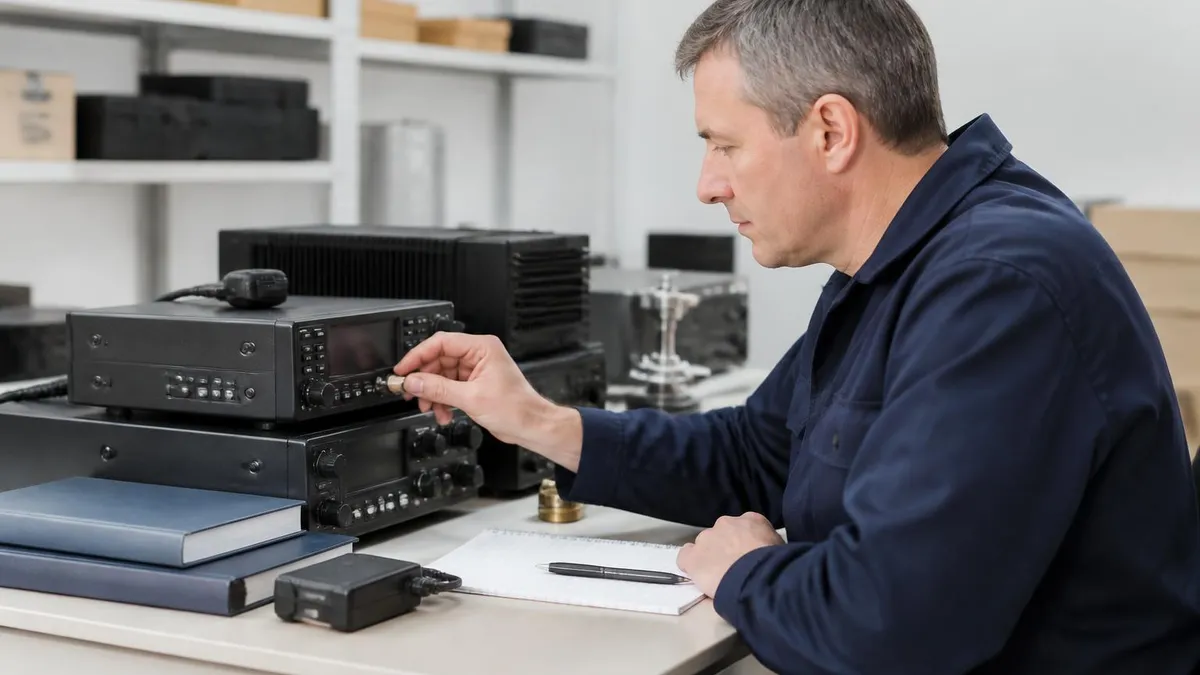
Ham Radio License Renewal: How to Keep Your Technician License Active, Avoid the Grace Period, and Renew Through the FCC
Ham Radio Technician

Ham Radio Cost: Complete Guide to Licensing, Equipment, and Getting Started
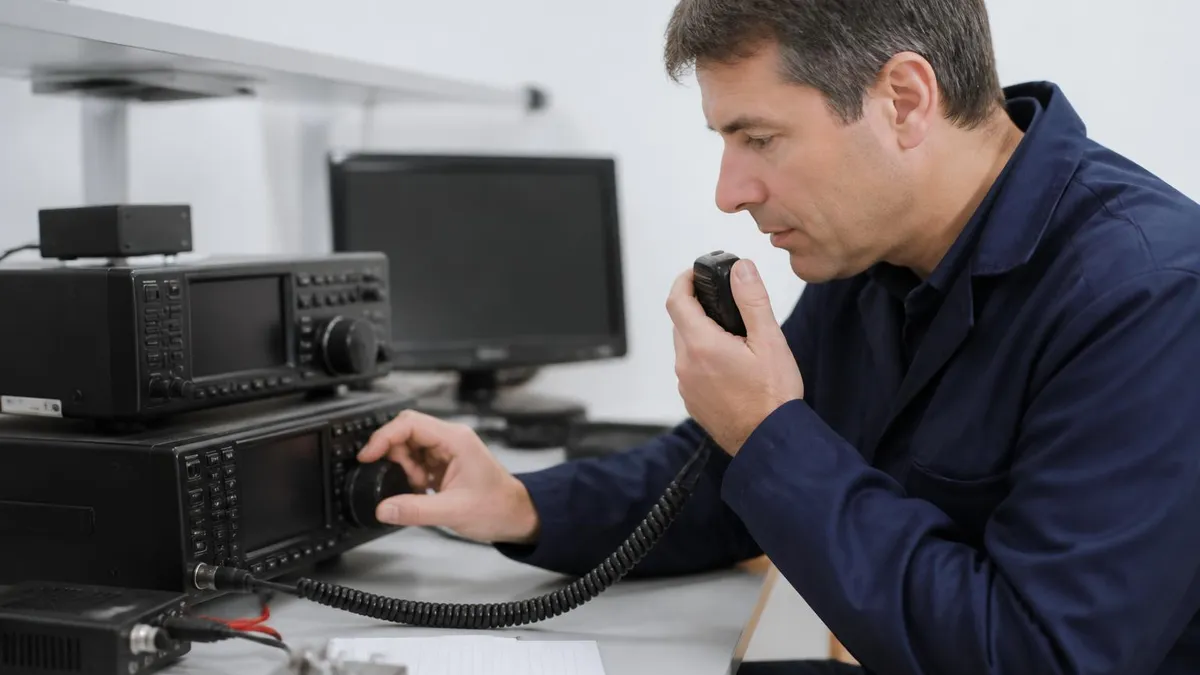
Ham Radio Callsign Lookup: How to Find, Verify, and Use Amateur Radio Call Signs

Ham Radio Q Codes: The Complete Guide to QTH, QSL, QRZ and Every Q Signal Operators Use
About the Author

Educational Psychologist & Academic Test Preparation Expert
Columbia University Teachers CollegeDr. Lisa Patel holds a Doctorate in Education from Columbia University Teachers College and has spent 17 years researching standardized test design and academic assessment. She has developed preparation programs for SAT, ACT, GRE, LSAT, UCAT, and numerous professional licensing exams, helping students of all backgrounds achieve their target scores.
Join the Discussion
Connect with other students preparing for this exam. Share tips, ask questions, and get advice from people who have been there.
View discussion (3 replies)