
Control Operator Ham Radio: Complete Guide to Ham Radio Operations, Licensing, and On-Air Procedures
🗨️ Master control operator ham radio duties, frequencies, equipment, and operations. Covers FCC rules, Technician bands, and free exam practice questions.
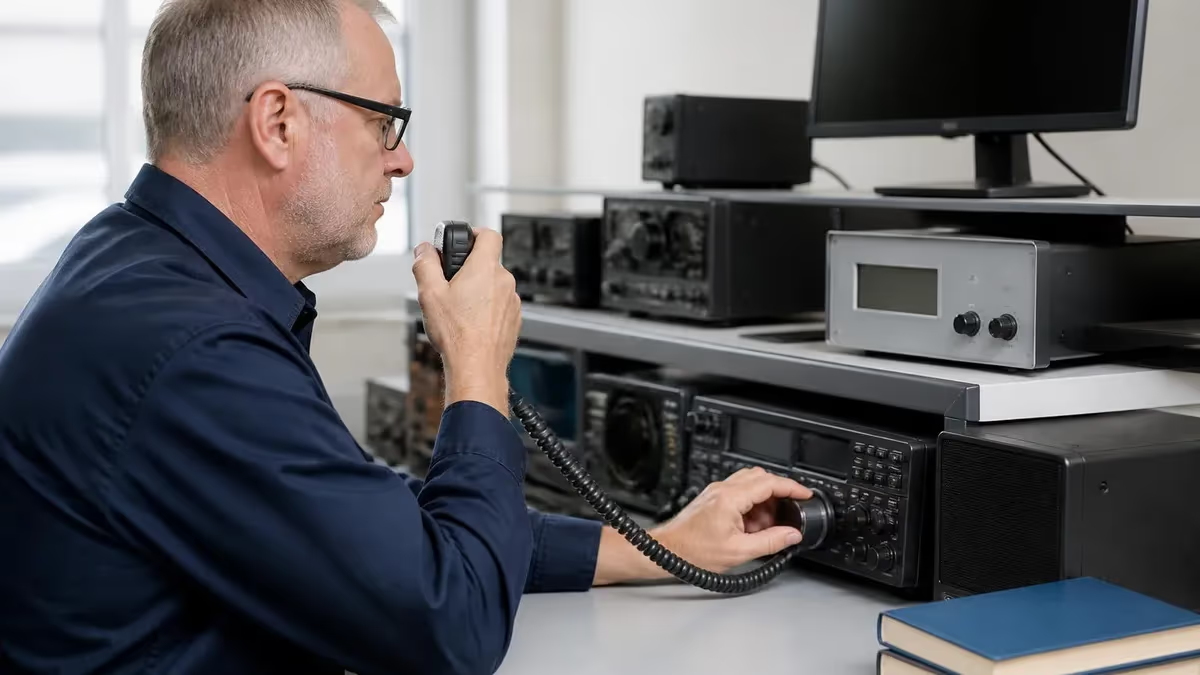
The control operator ham radio designation is one of the foundational concepts every aspiring amateur radio operator must understand before getting on the air. Every amateur radio station in the United States requires a designated control operator who holds a valid ham radio license to ensure that all transmissions comply with Federal Communications Commission regulations. Whether you are a brand new Technician class licensee or preparing to upgrade to General or Amateur Extra, understanding your operational responsibilities will shape how you use your station every single day on the amateur bands.
Amateur radio has experienced a significant resurgence of interest in recent years, with tens of thousands of new operators earning their licenses annually across the country. The hobby offers far more than casual conversation over the airwaves. From emergency communications support during natural disasters to experimenting with cutting edge digital modes and satellite communications, ham radio operations encompass an incredibly wide range of activities. Each of these activities requires the control operator to maintain proper station identification, observe power limits, and stay within authorized frequency allocations at all times.
If you are currently studying for your ham radio license test, understanding the role of the control operator is absolutely essential because the FCC examination question pool includes multiple questions on this topic. The Technician class exam specifically tests your knowledge of who may serve as a control operator, what privileges apply to each license class, and how third party communications are handled under the rules. Mastering these concepts not only helps you pass the exam but also prepares you for real world operating situations you will encounter regularly.
Many aspiring operators begin their journey by visiting a ham radio outlet to explore available ham radio equipment and learn from experienced operators behind the counter. These retail locations and online vendors serve as valuable community hubs where newcomers can ask questions about everything from selecting their first handheld transceiver to choosing the right ham radio antenna configuration for their specific property. The knowledge you gain from seasoned operators at these outlets supplements your formal exam preparation and accelerates your overall learning curve significantly.
This comprehensive guide covers every essential aspect of ham radio operations that a Technician class operator needs to know for both the licensing exam and actual on air practice. We will explore the specific duties and legal obligations of the control operator, examine the different ham radio bands available to Technician licensees, discuss proper operating procedures and station identification requirements, and review the ham radio equipment essentials that enable effective communication. Each section is designed to build upon the previous one for a thorough understanding.
Beyond the technical requirements and regulatory framework, successful ham radio operations depend on understanding the culture and etiquette that have developed over more than a century of amateur radio tradition. Proper operating practices include everything from standard phonetic alphabet usage and signal reporting conventions to contest operating procedures and emergency communication protocols. By the time you finish reading this guide, you will have a thorough understanding of what it truly means to be a responsible and effective control operator in the amateur radio service.
The amateur radio community is remarkably welcoming to newcomers, and understanding these operational fundamentals will help you integrate smoothly into local and national ham radio networks. Many new operators find that the technical knowledge they gain through studying ham radios extends into their professional careers and other technical hobbies. The skills you develop as a licensed control operator, including RF propagation knowledge, electronic troubleshooting ability, and emergency communication readiness, are valuable assets that serve you well beyond the amateur radio bands for years to come.
Ham Radio Operations by the Numbers
Key Facts at a Glance
| Item | Value | Details |
|---|---|---|
| Technician Exam Questions | 35 | From a pool of approximately 400 |
| Minimum Passing Score | 74% | 26 out of 35 questions correct |
| Standard Exam Fee | $15 | Set by NCVEC, valid through 2025 |

How to Become a Licensed Control Operator
Study the Technician Question Pool
Find a Local Exam Session
Pass the Technician Exam
Receive Your FCC Call Sign
Set Up Your Station and Get On the Air
The control operator is the licensed amateur radio operator who bears direct responsibility for the proper operation of the station at all times when transmissions are being made. Under FCC Part 97 rules, every amateur station must have a designated control operator whenever the station is actively transmitting on any authorized frequency. This individual bears full legal responsibility for ensuring that every transmission complies with applicable regulations, including correct frequency selection, power output limitations, station identification intervals, and permissible communication content throughout the entire session.
One of the most frequently tested concepts on the ham radio license test involves understanding the critical difference between the station licensee and the control operator. The station licensee is the individual whose call sign is assigned to the station, while the control operator is the person actually making or directly supervising the transmissions.
These can be the same person, but they do not have to be under current FCC rules. A guest operator with a valid amateur radio license can serve as the control operator at another licensee's station, provided they operate within the privileges granted by their own license class.
Understanding ham radio frequencies and knowing which bands you are authorized to use is a critical component of control operator responsibility that directly impacts your daily operations. Technician class licensees enjoy full privileges on all amateur frequencies above 30 megahertz, which includes the popular two meter and seventy centimeter bands used extensively for local communications through repeater systems. Additionally, Technicians have limited privileges on certain high frequency bands, including CW operations on portions of the 80, 40, and 15 meter bands, and both CW and SSB privileges on a segment of the 10 meter band.
The three types of station control defined by FCC regulations are local control, remote control, and automatic control. Local control means the control operator is physically present at the control point of the station equipment. Remote control involves the control operator indirectly manipulating the station through a control link such as the internet or a dedicated radio link from a distant location. Automatic control allows the station to transmit without a control operator being present at the control point, which is commonly used for repeaters and certain digital mode stations operating on specifically designated frequencies.
Third party communications represent another important area of control operator knowledge that appears regularly on the Technician class exam and in real world operations. A third party is any person who participates in amateur radio communications without holding a valid amateur license. The control operator must be present at the control point whenever third party traffic is being passed, and international third party communications are only permitted with countries that have specific third party agreements with the United States government. The control operator always remains legally responsible for all transmissions.
Power output limitations are among the most practical aspects of control operator responsibility that every new ham must understand and follow. The general rule under FCC regulations requires amateur operators to use the minimum power necessary to maintain reliable communications at all times. Technician class operators are typically limited to 200 watts PEP output on the HF bands where they hold privileges, and may use up to 1500 watts on VHF and UHF frequencies where they have full operating privileges. Understanding these limits helps prevent harmful interference with other stations.
Station identification requirements mandate that every amateur station transmit its assigned call sign at least once every ten minutes during an ongoing communication and at the end of the final transmission in a series. The call sign must be transmitted using the English language or by sending the call sign characters using international Morse code. When operating through a repeater system or acting as a control operator at another person's station, proper identification procedures become slightly more nuanced but remain an absolute requirement under all operating conditions and circumstances.

Ham Radio Technician Practice Test Questions
Prepare for the Ham Radio Technician Test exam with our free practice test modules. Each quiz covers key topics to help you pass on your first try.
Ham Radio Technician Antennas & Feedlines
Ham Radio Technician Exam Questions covering Antennas & Feedlines. Master Ham Radio Technician Test concepts for certification prep.
Ham Radio Technician Basic Electronics & C...
Free Ham Radio Technician Practice Test featuring Basic Electronics & Circuitry. Improve your Ham Radio Technician Exam score with mock test prep.
Ham Radio Technician Equipment & Tools Usage
Ham Radio Technician Mock Exam on Equipment & Tools Usage. Ham Radio Technician Study Guide questions to pass on your first try.
Ham Radio Technician Amateur
Ham Radio Technician Test Prep for Amateur. Practice Ham Radio Technician Quiz questions and boost your score.
Ham Radio Technician General
Ham Radio Technician Questions and Answers on General. Free Ham Radio Technician practice for exam readiness.
Ham Radio Technician III
Ham Radio Technician Mock Test covering III. Online Ham Radio Technician Test practice with instant feedback.
Ham Radio Technician II
Free Ham Radio Technician Quiz on II. Ham Radio Technician Exam prep questions with detailed explanations.
Ham Radio Technician I
Ham Radio Technician Practice Questions for I. Build confidence for your Ham Radio Technician certification exam.
Ham Radio Technician License
Ham Radio Technician Test Online for License. Free practice with instant results and feedback.
Ham Radio Technician Licensing Regulations...
Ham Radio Technician Study Material on Licensing Regulations & Standards. Prepare effectively with real exam-style questions.
Ham Radio Technician Operating Procedures ...
Free Ham Radio Technician Test covering Operating Procedures & Etiquette. Practice and track your Ham Radio Technician exam readiness.
Ham Radio Technician Radio Wave Propagatio...
Ham Radio Technician Exam Questions covering Radio Wave Propagation & Modulation. Master Ham Radio Technician Test concepts for certification prep.
Ham Radio Technician Safety Procedures & R...
Free Ham Radio Technician Practice Test featuring Safety Procedures & Risk Management. Improve your Ham Radio Technician Exam score with mock test prep.
Ham Radio Bands and Frequencies by Operating Segment
The VHF spectrum between 30 and 300 megahertz is where most Technician class operators spend the majority of their operating time. The two meter band centered around 146 megahertz is the single most popular amateur radio band for local and regional communications. Thousands of linked repeater systems provide reliable coverage across metropolitan areas, rural highways, and even mountain corridors. FM voice remains the dominant mode on two meters, though SSB and CW operations are popular on the lower portion of the band for weak signal contacts.
The six meter band from 50 to 54 megahertz is often called the magic band because of its unpredictable propagation characteristics that occasionally allow worldwide communication. Technician licensees have full privileges on six meters and can experience sporadic E skip openings during late spring and summer months that enable contacts exceeding one thousand miles. The 1.25 meter band at 222 megahertz offers additional repeater access with generally less congestion than two meters, making it an excellent choice for operators seeking quieter communications.
Benefits and Challenges of Ham Radio Operations
- +Full access to VHF and UHF bands provides extensive local and regional communication capability immediately after licensing
- +Emergency communication skills make you a valuable community asset during disasters when cellular and internet infrastructure fails
- +No recurring subscription fees or monthly charges for unlimited use of amateur radio frequencies worldwide
- +Growing digital mode ecosystem including FT8 and Winlink enables modern data communications alongside traditional voice operations
- +Active community of over 770,000 US licensees provides mentoring through Elmering programs and local club activities
- +Gateway to advanced technical skills in electronics, antenna design, RF engineering, and computer networking
- −Initial ham radio equipment investment can range from $30 for a basic handheld to several thousand dollars for a full HF station
- −The Technician exam requires genuine study of FCC rules, basic electronics, and radio wave propagation theory
- −HF privileges for Technician licensees are limited compared to General and Amateur Extra class operators
- −Effective antenna installations may face homeowner association restrictions and local zoning ordinances in some residential areas
- −Learning proper operating procedures, phonetics, and band plans requires practice and patience for new operators
- −Radio frequency interference issues with neighbors and household electronics occasionally require troubleshooting expertise
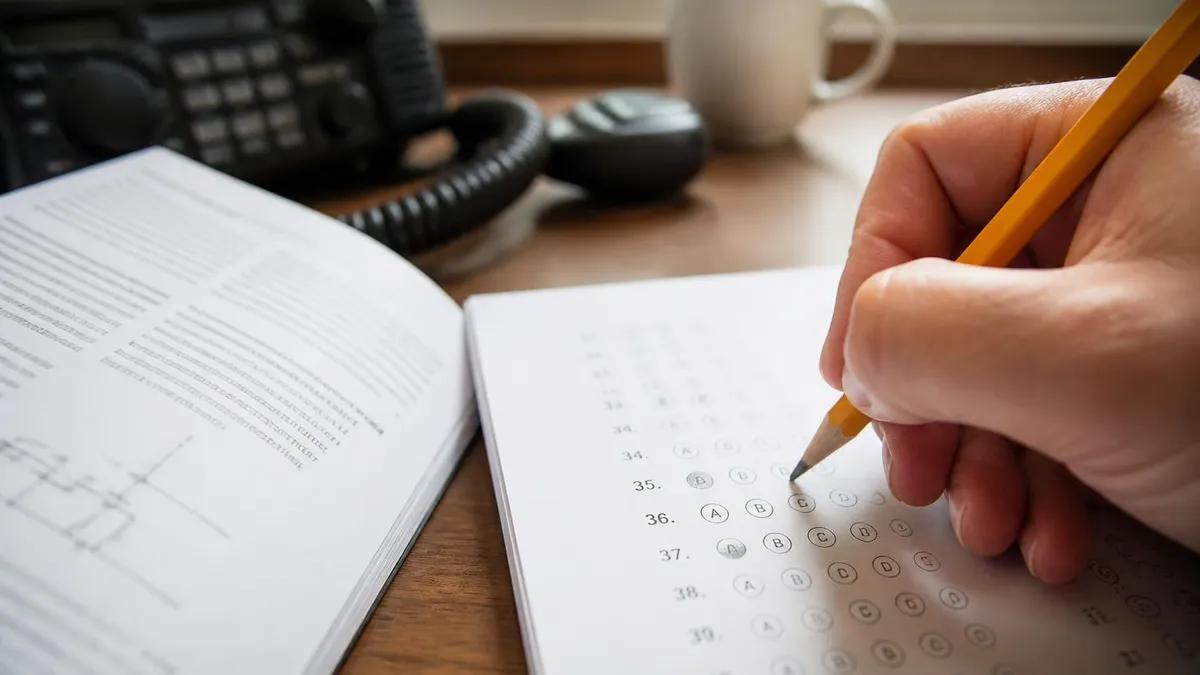
Control Operator Compliance Checklist for Ham Radio Operations
- ✓Verify your FCC amateur radio license is current and not expired before every operating session.
- ✓Confirm you are transmitting only on frequencies authorized for your specific license class.
- ✓Identify your station with your assigned call sign at least every ten minutes and at the end of each contact.
- ✓Use the minimum transmitter power necessary to maintain reliable communication with the other station.
- ✓Ensure a licensed control operator is designated and present whenever the station is actively transmitting.
- ✓Maintain a current copy of FCC Part 97 rules accessible at your operating position for quick reference.
- ✓Verify third party communications are only conducted with countries that hold valid agreements with the US.
- ✓Check that your transmitter is properly calibrated and not exceeding authorized bandwidth for the mode in use.
- ✓Log contacts including date, time, frequency, mode, and call signs for personal records and contest submissions.
- ✓Confirm your station does not cause harmful interference to other authorized radio services or nearby electronics.
The Control Operator Is Always Legally Responsible
Under FCC Part 97 regulations, the control operator bears personal legal responsibility for every transmission made from the station, regardless of who originates the communication. If a third party or guest operator causes a rules violation while using your station, you as the designated control operator can face FCC enforcement action including fines, license suspension, or revocation. Always supervise all station operations carefully and never allow unsupervised access to your transmitting equipment by unlicensed individuals.
Selecting the right ham radio equipment is one of the most exciting parts of getting started in amateur radio operations, and the choices available today are more diverse and affordable than at any previous point in the hobby's long history.
For a new Technician class operator, the most practical first radio is typically a dual band handheld transceiver capable of operating on both the two meter and seventy centimeter bands. These compact units range in price from approximately 30 dollars for basic Chinese manufactured models to over 500 dollars for feature rich Japanese transceivers from established manufacturers like Yaesu, Icom, and Kenwood.
A quality ham radio antenna system is arguably more important than the radio itself when it comes to achieving reliable communications across meaningful distances. The rubber duck antenna included with most handheld transceivers is designed for convenience and portability rather than performance, and upgrading to an aftermarket whip antenna or connecting to an external base station antenna can dramatically improve your signal strength. For home station use, a simple ground plane antenna or slim jim antenna mounted at modest height will outperform any handheld antenna configuration by a substantial margin in most operating scenarios.
Beyond the basic transceiver and antenna, several accessories enhance your ham radio operations and overall operating experience significantly. A quality headset reduces fatigue during extended operating sessions, while an external speaker with noise filtering improves audio clarity in noisy environments. A standing wave ratio meter, commonly called an SWR meter, allows you to verify that your antenna system is properly tuned and efficiently transferring power from your transmitter to the antenna. Many modern transceivers include built in SWR meters, but an external unit provides more detailed measurements for antenna experimentation.
Power supply considerations become important when you move beyond handheld operations to a mobile or base station configuration. Most amateur radio base station transceivers require a regulated 13.8 volt DC power supply capable of delivering 20 to 30 amperes of continuous current. Switching power supplies have largely replaced heavier linear supplies due to their lighter weight and improved efficiency, though some operators prefer linear supplies for their lower electrical noise characteristics. Portable operators often use lithium iron phosphate batteries for field operations and emergency preparedness situations where commercial power is unavailable.
Digital mode operations have become increasingly popular among Technician operators and represent one of the fastest growing segments of the amateur radio hobby worldwide. Modes like FT8 and JS8Call use computer sound card interfaces to encode and decode signals well below the noise floor that would be completely inaudible to the human ear. Setting up for digital operations requires a computer running free software such as WSJT-X, an audio interface connecting the computer to your transceiver, and a basic understanding of the software configuration. Many new operators make their first HF contacts using FT8 on the ten meter band.
For operators interested in emergency communications and public service, additional equipment considerations include battery backup systems, portable antenna solutions, and go kits that can be rapidly deployed to emergency operations centers. Organizations like the Amateur Radio Emergency Service and Radio Amateur Civil Emergency Service train volunteers to provide critical communication links when commercial infrastructure fails during major disasters. Building a reliable portable station kit is an excellent project that combines technical skills with practical emergency preparedness planning.
As your interest and experience grow, you will likely expand your station with additional equipment such as a dedicated VHF or UHF base station, an HF transceiver for worldwide communications after upgrading to General class, antenna rotators for directional beam antennas, and test equipment for station maintenance and experimentation. The modular nature of amateur radio stations means you can build your capability incrementally over time, investing in new equipment as your operating interests evolve and your budget allows for additional purchases and technical upgrades.
The FCC Enforcement Bureau actively investigates amateur radio violations reported by other operators and detected through automated monitoring systems. Penalties for operating without proper license authority, causing intentional interference, or failing to properly identify your station can include monetary forfeitures exceeding ten thousand dollars and permanent license revocation. Always operate within your authorized privileges and maintain awareness of current FCC rules to protect your license and your reputation within the amateur radio community.
Proper operating procedures and on air etiquette form the backbone of effective ham radio operations, and mastering these practices distinguishes experienced operators from beginners. When initiating a contact on a repeater, the standard procedure is to state your call sign and indicate that you are listening for a response. For example, you might say your call sign followed by the word monitoring or listening. On simplex frequencies, calling CQ followed by your call sign is the traditional method for soliciting contacts from any station that might be listening on that frequency at that moment.
The NATO phonetic alphabet is used universally in amateur radio to ensure accurate communication of call signs, names, locations, and other critical information over voice modes. Learning this alphabet thoroughly is essential for clear communications, especially during weak signal conditions, contest operations, or emergency situations where accuracy matters greatly. Each letter has a standard phonetic equivalent, such as Alpha for A, Bravo for B, and Charlie for C. Using non standard phonetics is considered poor operating practice and can cause confusion during important communications exchanges.
Signal reports in amateur radio follow the RST system, where R represents readability on a scale of one to five, S represents signal strength on a scale of one to nine, and T represents tone quality on a scale of one to nine for CW and digital modes. During a typical voice contact, operators exchange RS reports such as five nine, indicating perfect readability and the strongest signal strength. Honest signal reports help other operators evaluate their station performance and make informed decisions about antenna and equipment improvements for future operating sessions.
Operating through repeaters requires understanding specific procedures including proper use of CTCSS tone squelch codes, time out timer awareness, and courtesy tone protocols. Most repeaters require a specific sub audible tone to access the system, and your transceiver must be programmed with the correct frequency offset and tone for each repeater you wish to use. Many modern ham radios can store hundreds of repeater memories with all necessary settings, allowing you to quickly switch between different repeater systems as you travel through various coverage areas across your region.
Emergency communications procedures deserve special attention because amateur radio operators frequently provide critical backup communications during natural disasters, severe weather events, and community emergencies. The standard emergency calling frequency on two meters is 146.520 megahertz simplex, commonly known as the national calling frequency. During declared emergencies, specific frequencies may be designated for emergency traffic only, and all other operators should avoid those frequencies to keep them clear. Participation in regular emergency preparedness nets and exercises helps operators develop the skills needed for effective emergency communication response.
Contest operating represents another popular aspect of ham radio operations that challenges operators to make as many contacts as possible within a defined time period. Major contests include Field Day, which emphasizes emergency preparedness and portable operations, Sweepstakes for domestic contacts, and numerous international contests that attract participants from every country with amateur radio activity. Contest operating builds your proficiency with quick and accurate exchange handling, efficient use of operating time, and effective station technical performance under demanding conditions.
Net operations provide structured on air activities where operators check in with a net control station and pass traffic or discuss specific topics relevant to the group. Many local ham radio clubs operate weekly nets on area repeaters that serve as social gatherings, training sessions, and emergency communication practice. Participating in nets regularly helps new operators build confidence with on air speaking, learn proper communication protocols, and become familiar with the operating practices of their local amateur radio community and fellow enthusiasts.
Effective ham radio prep for the Technician exam requires a structured approach that covers all ten exam subelements systematically while building genuine understanding rather than simple memorization of answers. Start by obtaining a current copy of the ARRL Ham Radio License Manual or a similar study guide that covers the complete question pool with detailed explanations. Dedicate specific study time each day, even if only thirty minutes, and use online practice exams to track your progress and identify topics where additional review is needed before your scheduled test date.
One of the most effective study strategies for the control operator and station operation questions involves connecting FCC rules to practical scenarios you will actually encounter on the air. Rather than memorizing that the control operator must be present for third party communications as an isolated fact, visualize a specific situation where a family member wants to speak on your radio during a contact with a station in another country. This contextual approach makes the rules memorable and helps you apply them correctly in real operating situations rather than just on the exam.
Joining a local amateur radio club through resources like ham radio prep communities provides invaluable hands on learning that supplements textbook study. Many clubs offer Technician license classes led by experienced Volunteer Examiners who can explain complex topics in accessible terms and share real world operating examples. These classes typically run six to eight weeks and conclude with an on site exam session, providing a complete path from beginner to licensed operator within a manageable timeframe that fits around work and family schedules.
Practice exams are absolutely essential for building confidence and ensuring readiness for the actual Technician test. Take multiple full length practice exams under realistic testing conditions, timing yourself and working through all thirty five questions without referring to study materials. Aim for consistent scores of eighty five percent or higher before scheduling your actual exam session, as this margin provides a comfortable buffer above the seventy four percent minimum passing threshold. Most online practice exam platforms draw questions directly from the current official NCVEC question pool.
Understanding the practical applications of control operator rules helps reinforce your exam preparation and prepares you for successful on air operations from day one. Practice programming repeater frequencies into a borrowed or inexpensive handheld transceiver before your exam, even though you cannot legally transmit until licensed. Listening to local repeater activity helps you learn proper procedures, common terminology, and the operating culture of your local ham radio community. Many experienced operators are happy to answer questions from aspiring hams who identify themselves as studying for their license exam.
The technical sections of the Technician exam covering basic electronics, antenna theory, and radio wave propagation require careful attention because these topics build upon each other in ways that become apparent during actual station operations. Understanding why a quarter wave ground plane antenna works at a specific length connects directly to understanding wavelength calculations, which connects to understanding frequency and its relationship to the electromagnetic spectrum. Building these conceptual connections transforms isolated facts into an integrated understanding of amateur radio technology that serves you throughout your entire ham radio career.
On exam day, arrive early with your government issued photo identification, exam fee payment, and your FCC Registration Number if you have already registered in the FCC CORES system. Take your time reading each question carefully, as many exam questions include plausible distractors designed to test genuine understanding rather than surface level memorization.
If you pass the Technician exam and feel confident, most exam sessions allow you to attempt the General class exam at no additional charge during the same sitting, which can immediately expand your operating privileges to include full HF access on all amateur bands available to General licensees.
Sample Ham Radio Technician Test Practice Questions
Try these questions from our free Ham Radio Technician Test practice tests. The correct answer and an explanation follow each question.
When is a Technician class licensee allowed to operate as a control operator on frequencies above 30 MHz?
- A. Only under supervision of a General class or higher operator
- B. Whenever operating within Technician class privileges
- C. Only after passing a written endorsement exam
- D. Never — Technicians are VHF/UHF only with a special waiver
Answer: B. Whenever operating within Technician class privileges
Technician licensees may act as control operators at any time on frequencies within their class privileges above 30 MHz.
Can a Technician class licensee be a control operator for a repeater that operates on 2 meters?
- A. No, repeater control requires General class or higher
- B. Yes, because 2 meters is within Technician privileges
- C. Only if the repeater owner holds an Extra class license
- D. Yes, but only during daylight hours
Answer: B. Yes, because 2 meters is within Technician privileges
Technicians have full privileges on the 2-meter band (144–148 MHz), including acting as control operator for repeaters on that band.
Which of the following is a valid reason for an amateur operator to use a 'tactical call sign' during emergency operations?
- A. To avoid FCC identification requirements entirely
- B. To identify a station's function or location clearly during a rapidly changing situation
- C. To operate anonymously for security purposes
- D. To use a shorter call sign than the FCC assigned
Answer: B. To identify a station's function or location clearly during a rapidly changing situation
Tactical call signs (e.g., 'Command Post' or 'Red Cross Shelter') identify a station's role during emergencies but do not replace FCC ID requirements.
Who is in charge of seeing that the station is run properly when the control operator is not the station licensee?
- A. Only the station licensee
- B. All licensed amateurs who are present at the operation
- C. The control operator and the station licensee are equally responsible
- D. Only the control operator
Answer: C. The control operator and the station licensee are equally responsible
When the control operator is not the station licensee, both the control operator and the station licensee are equally responsible for seeing that the station is run properly. The control operator has immediate responsibility for the station's operation at the time of transmission, while the station licensee holds ultimate responsibility for ensuring the station is always operated in compliance with FCC rules.
Ham Radio Technician Questions and Answers
Ham Radio License Practice Test: Free Technician Exam Prep & Question Pool
Ham Radio Antenna Guide: Types, Towers, Portable, and Satellite Antennas
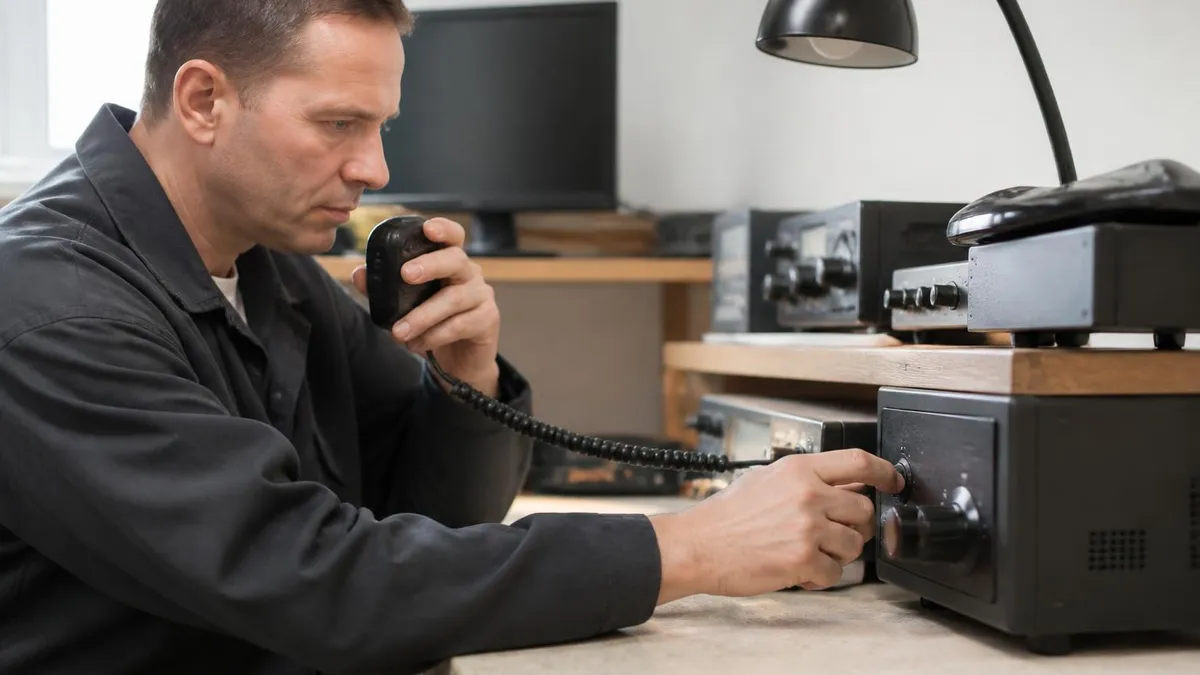
Ham Radio Handheld: Complete Guide to HT Selection, Programming, and Technician License Use
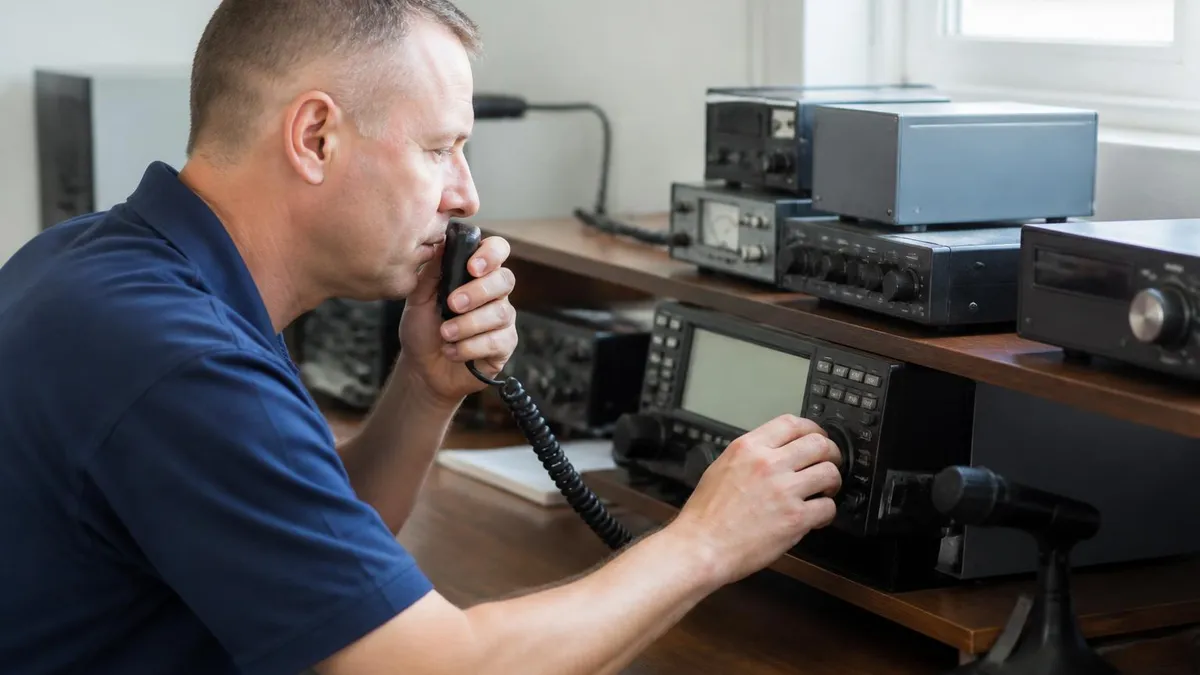
Ham Radio Clubs in My Area: How to Find, Join, and Thrive in Local Amateur Radio Communities
Ham Radio Technician
About the Author

Educational Psychologist & Academic Test Preparation Expert
Columbia University Teachers CollegeDr. Lisa Patel holds a Doctorate in Education from Columbia University Teachers College and has spent 17 years researching standardized test design and academic assessment. She has developed preparation programs for SAT, ACT, GRE, LSAT, UCAT, and numerous professional licensing exams, helping students of all backgrounds achieve their target scores.
Join the Discussion
Connect with other students preparing for this exam. Share tips, ask questions, and get advice from people who have been there.
View discussion (3 replies)