
Ham Radio Base Station Setup: Complete Guide for Technician License Holders 2026
Learn how to set up a ham radio base station, choose equipment, antennas, and frequencies. Complete guide for Technician license holders. 🎓

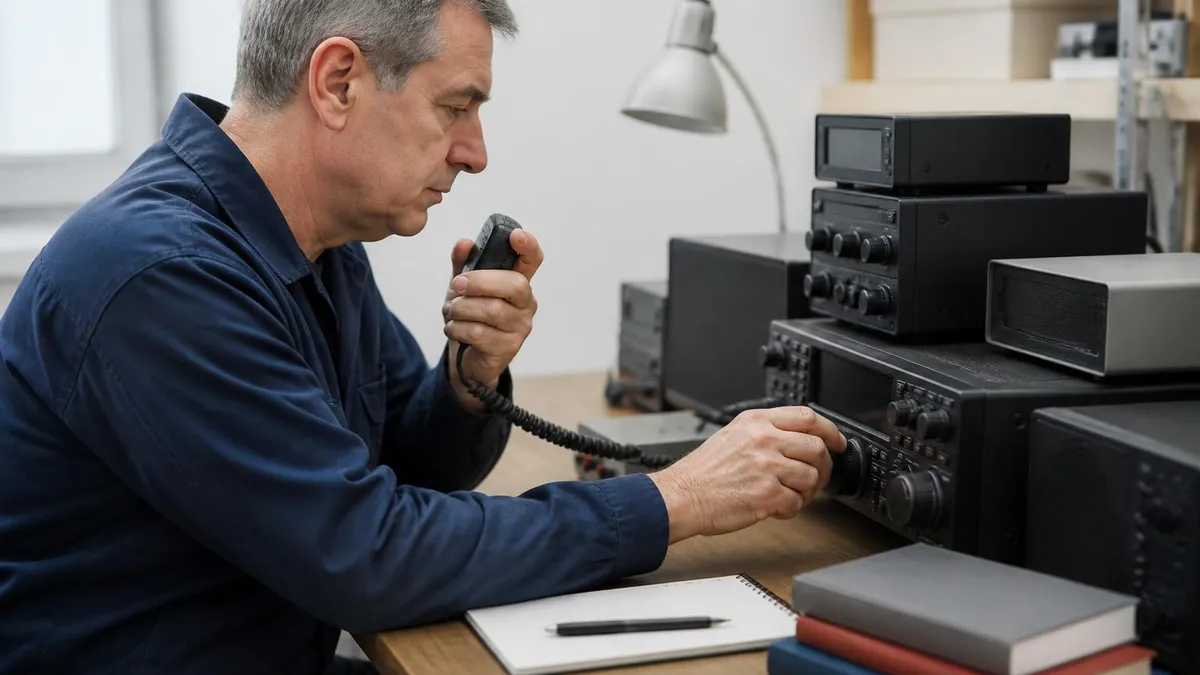
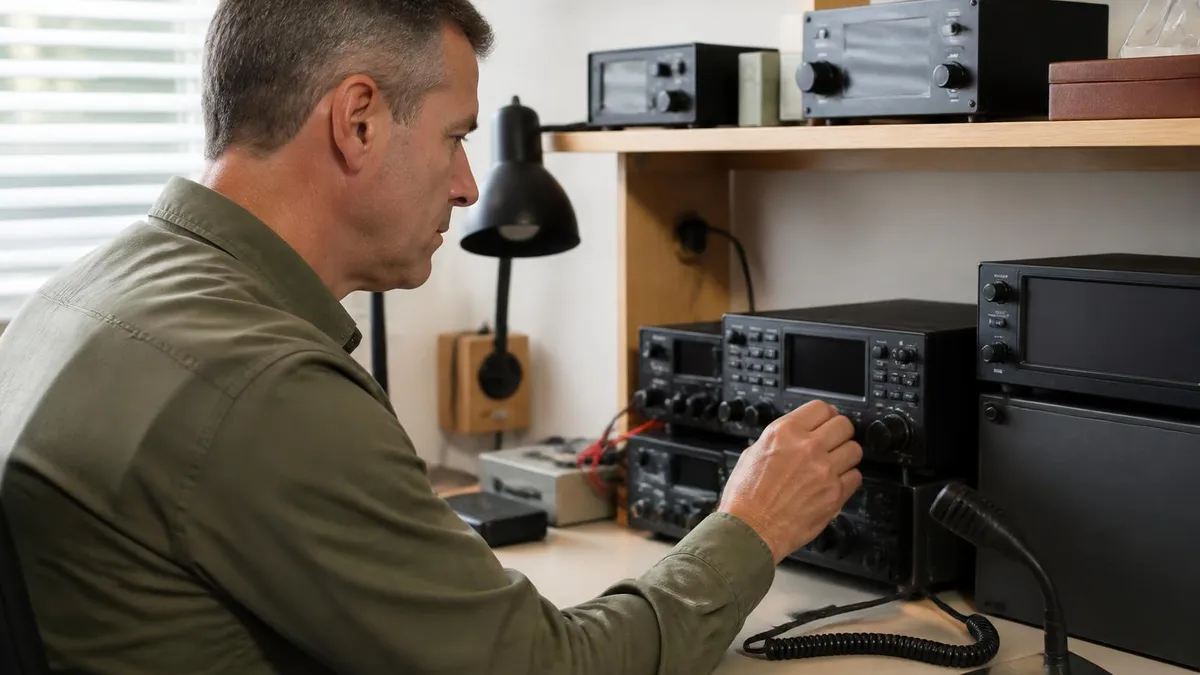
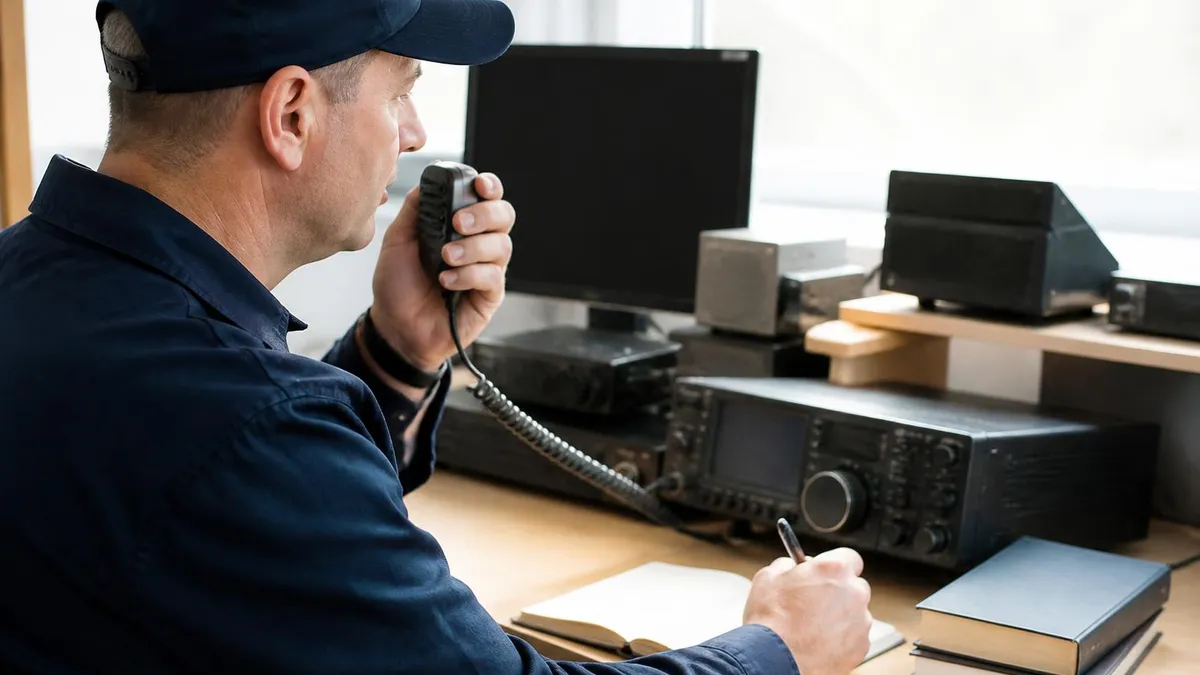
A ham radio base station is the cornerstone of any serious amateur radio operator's shack, providing a permanent, high-performance hub for communication across local, regional, and even international frequencies. Unlike handheld or mobile rigs, a properly configured ham radio base station lets you run higher power output, connect superior antennas, and operate digital modes that simply aren't possible with portable equipment. Whether you're eyeing your first ham radio prep session or you've already earned your Technician ticket, understanding base station fundamentals will shape every equipment decision you make.
Setting up a base station begins long before you buy your first radio. You need to evaluate your operating location, understand which ham radio frequencies you're licensed to use, and budget realistically for a transceiver, antenna system, feedline, and accessories. Many new operators underestimate the cumulative cost: a quality VHF/UHF all-mode radio, a decent yagi or vertical antenna, low-loss coaxial cable, and a proper grounding system can easily run $500–$1,500 before you make your first contact.
The ham radio license you hold determines exactly which frequencies and power levels are available to you. Technician licensees in the United States have full privileges on all amateur bands above 30 MHz, giving them access to the popular 2-meter (144–148 MHz) and 70-centimeter (420–450 MHz) bands. These VHF and UHF ranges are ideal for local simplex communication, repeater access, satellite work, and weak-signal digital modes. A well-designed base station on these bands can reach 50 to 150 miles under normal conditions — and much farther during tropospheric ducting events.
Ham radio equipment selection is both exciting and overwhelming for newcomers. The market offers everything from entry-level dual-band transceivers in the $150–$300 range to full-featured all-mode radios capable of SSB, CW, FM, and digital operation that can cost $800 or more. Major manufacturers including Yaesu, Icom, Kenwood, and Alinco all produce reliable base station radios, and the ham radio outlet network of dealers — both brick-and-mortar and online — provides a competitive marketplace for new and used gear alike.
Antenna selection may be the single most impactful decision you make for your base station. Even a modest transceiver running 50 watts will dramatically outperform a 100-watt radio connected to a poor antenna. For VHF and UHF base stations, the most popular choices include omnidirectional verticals for general use and directional yagi or beam antennas for weak-signal work or contesting. Antenna height matters enormously: every doubling of antenna height above ground extends your line-of-sight radio horizon by roughly 41 percent.
Feedline losses deserve careful attention when planning your base station installation. Standard RG-8X coaxial cable loses about 3.9 dB per 100 feet at 144 MHz — meaning nearly 60 percent of your transmitter power is wasted as heat before it even reaches the antenna. Upgrading to low-loss LMR-400 cable cuts that figure to roughly 1.5 dB per 100 feet, effectively doubling your effective radiated power. For runs exceeding 75 feet, premium feedline almost always pays for itself in improved performance.
Grounding and lightning protection are non-negotiable safety requirements for any permanently installed base station. The FCC's Part 97 rules and the National Electrical Code both address proper bonding of antenna systems. At minimum, your coaxial cable shield should be bonded to a dedicated ground rod at the antenna base, and again where the feedline enters your shack. Surge protectors rated for RF use, available from suppliers like Polyphaser, provide an additional layer of protection against the devastating effects of nearby lightning strikes on your ham radios and associated electronics.
Ham Radio Technician Test: upcoming dates and official changes
- Jul 1, 2026: The revised 2026–2030 Technician Class question pool became mandatory for Ham Radio Technician examinations on July 1, 2026. (Federal Communications Commission (FCC); examinations administered by Volunteer Examiner Coordinators, including ARRL VE)
Facts verified Oct 18, 2026 against Federal Communications Commission (FCC); examinations administered by Volunteer Examiner Coordinators, including ARRL VE. Dates that have passed are removed automatically.
- The Ham Radio Technician examination contains 35 multiple-choice questions. (Federal Communications Commission (FCC); examinations administered by Volunteer Examiner Coordinators, including ARRL VE)
- Passing the Ham Radio Technician examination requires at least 26 correct answers out of 35 questions. (Federal Communications Commission (FCC); examinations administered by Volunteer Examiner Coordinators, including ARRL VE)
- A new Ham Radio Technician license application costs $35 payable to the FCC, separately from the administering VEC's examination fee. (Federal Communications Commission (FCC); examinations administered by Volunteer Examiner Coordinators, including ARRL VE)
- Retaking a failed Ham Radio Technician examination element at an ARRL VEC session requires an additional examination fee. (Federal Communications Commission (FCC); examinations administered by Volunteer Examiner Coordinators, including ARRL VE)
- A Ham Radio Technician examination retake cannot reuse the same question set previously administered to that examinee. (Federal Communications Commission (FCC); examinations administered by Volunteer Examiner Coordinators, including ARRL VE)
- The FCC Ham Radio Technician license is normally granted for a 10-year term. (Federal Communications Commission (FCC); examinations administered by Volunteer Examiner Coordinators, including ARRL VE)
- An expired Ham Radio Technician license may be renewed during a two-year filing grace period, but operating privileges cease until renewal. (Federal Communications Commission (FCC); examinations administered by Volunteer Examiner Coordinators, including ARRL VE)
- The Ham Radio Technician examination can be taken in person or online. (Federal Communications Commission (FCC); examinations administered by Volunteer Examiner Coordinators, including ARRL VE)
- Anyone who qualifies by examination may apply for a Ham Radio Technician license except a representative of a foreign government. (Federal Communications Commission (FCC); examinations administered by Volunteer Examiner Coordinators, including ARRL VE)
Facts verified Oct 18, 2026 against Federal Communications Commission (FCC); examinations administered by Volunteer Examiner Coordinators, including ARRL VE. Dates that have passed are removed automatically.
Ham Radio Technician Test Exam at a Glance
Facts verified Oct 18, 2026 against Federal Communications Commission (FCC); examinations administered by Volunteer Examiner Coordinators, including ARRL VE. Dates that have passed are removed automatically.
Free Ham Radio Technician Test Study Tools
Interactive Ham Radio Technician Test resources on PracticeTestGeeks, free to start:
- Free Ham Radio Technician Amateur Questions and Answers — 16 questions with instant scoring and answer explanations
- Ham Radio Technician Test flashcards — review key terms and concepts card by card
- Ham Radio Technician Test study guide — topic-by-topic overview of what the exam covers
- Ham Radio Technician Test cheat sheet — one-page printable summary for last-minute review
Ham Radio Base Station by the Numbers

Essential Components of a Ham Radio Base Station
The heart of your station. Base station transceivers offer higher power output (25–100W typical), superior filtering, and full-mode capability compared to handheld radios. Popular choices include the Yaesu FT-991A and Icom IC-9700 for VHF/UHF operation.
Your single biggest performance multiplier. Choices range from omnidirectional verticals for all-direction coverage to directional yagi beams for maximum gain toward a specific target. Height and quality of construction determine real-world range more than transmitter power.
Low-loss coaxial cable (LMR-400 or equivalent) connects transceiver to antenna. Quality PL-259 or N-type connectors properly installed prevent water ingress and signal loss. Measure your run carefully — every foot of feedline costs you signal.
Most base station transceivers require a regulated 13.8V DC supply at 20–25 amps. A quality linear or switching power supply is mandatory — cheap supplies introduce noise that degrades receive performance across all ham radio bands.
Proper RF grounding reduces noise and protects equipment from lightning. Bond your feedline shield to a dedicated ground rod at the antenna base and at the shack entry point. Install coaxial surge arrestors at both locations.
Choosing the right ham radio antenna for your base station is arguably more important than the transceiver itself. Radio engineers often say that the best amplifier you can buy is a better antenna — and the numbers bear that out. A 3-element yagi antenna provides roughly 7 dBd of gain over a simple dipole, which is equivalent to increasing your transmitter power from 50 watts to nearly 250 watts. That kind of performance improvement is impossible to achieve through transmitter upgrades alone within legal power limits.
For most Technician-class operators starting their first base station, an omnidirectional vertical antenna on 2 meters and 70 centimeters represents the best balance of performance, cost, and ease of installation. A quality fiberglass vertical like the Diamond X50A covers both bands, requires no rotator, and can be mounted on a chimney, rooftop mast, or even a heavy-duty wall bracket. Gain figures of 4–6 dBi are typical for these antennas, providing noticeably better coverage than the rubber duck antennas used on handheld radios.
Feedline selection becomes critical once antenna runs exceed about 30 feet. The physics are unforgiving: at 144 MHz, standard RG-8X cable loses approximately 3.9 dB per 100 feet, while the superior LMR-400 cable loses only about 1.5 dB per hundred feet. A 100-foot run of RG-8X costs you roughly 60 percent of your transmitted power before the signal even reaches the antenna. For a 50-watt transceiver, that means only about 20 watts reaches the antenna — a significant degradation that proper feedline selection completely avoids.
Connector installation quality directly affects both performance and longevity of your antenna system. Poorly soldered or mechanically weak PL-259 connections are one of the most common causes of intermittent performance problems and elevated SWR readings in amateur stations. For outdoor use, all connectors should be weatherproofed using self-amalgamating tape, not ordinary electrical tape. Many experienced operators use N-type connectors instead of PL-259s for permanent outdoor installations because their threaded coupling provides superior moisture exclusion and lower contact resistance at VHF and UHF frequencies.
Standing Wave Ratio (SWR) measurement is an essential skill for any base station operator. An SWR of 1.5:1 or lower is acceptable for most installations and means approximately 96 percent of your power reaches the antenna. An SWR above 3:1 indicates a serious problem — possibly a damaged cable, corroded connector, or antenna tuned far from its design frequency — and can cause your transceiver's protective circuits to reduce output power automatically. Every well-equipped shack should have at least a basic SWR/power meter in line between the transceiver and feedline.
Antenna polarization is a concept that many new operators overlook when setting up their base station. On VHF and UHF FM and repeater operation, vertical polarization is the universal standard. Mixing polarizations — connecting a vertically polarized base station antenna to a horizontally polarized yagi, for example — results in approximately 20 dB of cross-polarization loss, effectively reducing your signal by a factor of 100. For weak-signal SSB and CW work on 2 meters and higher bands, horizontal polarization is the convention used by the serious weak-signal community.
Installing your antenna at the correct height has a compounding effect on your base station's range. At 144 MHz, the radio horizon for a station whose antenna is at 30 feet above ground extends to about 9 miles for another station at the same height. Doubling the antenna height to 60 feet increases the radio horizon to roughly 12.7 miles — a 41 percent improvement. Getting your antenna above nearby terrain obstructions, trees, and buildings is far more valuable than doubling transmitter power, and it costs nothing more than a taller mast or tower.
Ham Radio Frequencies for Base Station Operation
The 2-meter band (144–148 MHz) is the most popular VHF frequency range for Technician-class base station operators. It supports FM repeater access, simplex contacts, weak-signal SSB work, satellite communication, and the APRS packet network. Most repeaters operate between 144.600 and 148.000 MHz using standard ±600 kHz offsets. The national calling frequency for FM simplex is 146.520 MHz, and the national weak-signal SSB calling frequency is 144.200 MHz.
Propagation on 2 meters is primarily line-of-sight, but several enhanced propagation modes dramatically extend range. Tropospheric ducting can carry 2-meter signals 500 to 1,000 miles during certain weather conditions, particularly along coastlines and in the Midwest. Sporadic-E propagation, though rare on 2 meters compared to 6 meters, can occasionally produce coast-to-coast contacts. Meteor scatter communication is also possible, with specific digital modes like MSK144 designed specifically for short-duration meteor trail ionization contacts.

Base Station vs. Mobile/Portable Ham Radio Setup
- +Higher power output (50–100W) dramatically extends range and reliability
- +Superior antenna systems possible — larger, higher, more directional
- +Better receiver performance with larger, more selective front-end filters
- +All-mode operation including SSB, CW, AM, FM, and digital modes
- +Permanent grounding and lightning protection improves safety
- +Comfortable operating position with dedicated desk, logging, and computer integration
- −Higher upfront cost: transceiver, antenna, feedline, power supply, and accessories
- −Installation work required: antenna mounting, feedline routing, grounding rods
- −HOA and neighborhood restrictions may prohibit outdoor antennas
- −Fixed location limits operating flexibility compared to mobile rigs
- −Potential for RF interference with household electronics if not properly shielded
- −Ongoing maintenance needed: inspect feedline connections, check antenna hardware annually
Pros and Cons at a Glance
| Pros | Cons |
|---|---|
| Superior antenna systems possible — larger, higher, more directional | Higher upfront cost: transceiver, antenna, feedline, power supply, and accessories |
| Better receiver performance with larger, more selective front-end filters | Installation work required: antenna mounting, feedline routing, grounding rods |
| All-mode operation including SSB, CW, AM, FM, and digital modes | HOA and neighborhood restrictions may prohibit outdoor antennas |
| Permanent grounding and lightning protection improves safety | Fixed location limits operating flexibility compared to mobile rigs |
| Comfortable operating position with dedicated desk, logging, and computer integration | Potential for RF interference with household electronics if not properly shielded |
Ham Radio Base Station Setup Checklist
- ✓Obtain your Technician or higher ham radio license before transmitting on any amateur frequency.
- ✓Select a base station transceiver rated for the bands and modes you plan to operate.
- ✓Purchase a regulated 13.8V power supply rated at least 20% above your radio's peak current draw.
- ✓Choose an antenna appropriate for your primary operating bands and available mounting location.
- ✓Calculate feedline loss for your installation and select cable with acceptable dB-per-100-foot rating.
- ✓Install a dedicated ground rod at the antenna base and bond feedline shield to it.
- ✓Add an RF-rated coaxial surge arrestor at both the antenna base and shack entry point.
- ✓Weatherproof all outdoor connector connections with self-amalgamating tape.
- ✓Measure and record your antenna's SWR across the band to confirm proper resonance.
- ✓Program your transceiver with local repeater frequencies, PL/CTCSS tones, and offsets.
Antenna Height Beats Transmitter Power Every Time
Doubling your antenna height above ground increases your radio horizon by approximately 41 percent — completely free. By contrast, doubling transmitter power increases your effective range by only about 41 percent as well, but costs money and burns extra electricity. If you have a choice between a 100-watt radio with a low antenna or a 50-watt radio with an antenna twice as high, choose the higher antenna every time. For VHF and UHF base stations, antenna height is the single most cost-effective performance upgrade available.
Earning your ham radio license is the essential first step before any base station becomes operational. In the United States, the Federal Communications Commission issues amateur radio licenses through a volunteer examiner system administered by organizations like the American Radio Relay League (ARRL) and the W5YI Group. The Technician class license requires passing a 35-question multiple-choice exam drawn from a publicly available pool of 423 questions. The passing score is 26 correct answers — 74 percent — and the license is valid for 10 years with free renewal.
The ham radio license test covers five main subject areas: FCC rules and regulations, operating procedures, radio wave characteristics, electrical principles, and station equipment. Many candidates find the rules and operating sections straightforward, while the electronics and radio wave propagation questions require more focused study. Free online resources including the ARRL's technician study guide, the Ham Study website, and the did ed gein talk to ilse on a ham radio video Q&A series make exam preparation accessible even for people with no electronics background.
Study strategies vary widely among successful candidates. Some people prefer to read a complete study manual cover to cover before attempting practice questions. Others dive straight into practice exams and learn from their mistakes, a flashcard-style approach that works well for memorization-heavy sections like band privileges and power limits. Most successful candidates combine both approaches: read through the material once, then grind practice questions until consistently scoring 85 percent or above before scheduling the actual exam.
Exam sessions are held regularly throughout the country at ham radio club meetings, community centers, and occasionally online via remote testing platforms approved by the FCC. To find a session near you, the ARRL's exam session locator at arrl.org/find-an-amateur-radio-license-exam-session is the most comprehensive resource. Walk-in candidates are typically welcome at most in-person sessions, though online sessions require advance registration. Bring a government-issued photo ID, your FRN (FCC Registration Number) if you have one, and the $15–$35 exam fee that goes to the volunteer examiner team.
After passing your Technician exam, your license typically appears in the FCC's Universal Licensing System database within 1–3 business days. Once it shows there — even before your physical license card arrives — you are legally authorized to transmit. Most new hams monitor their ULS status online and get on the air immediately. Your call sign is assigned sequentially from available call signs in your district, though you can apply for a vanity call sign through the FCC for a nominal administrative fee after your initial license is granted.
Upgrading beyond Technician is a natural progression for base station operators who want HF privileges. The General class license unlocks the majority of HF phone privileges, opening bands from 80 meters through 10 meters for worldwide communication. The Extra class license, requiring the most challenging exam, grants full operating privileges on all amateur bands and all modes. Many ham radio operators find that setting up and operating a base station on VHF and UHF sparks enough enthusiasm for the hobby that upgrading to General becomes a natural next step within the first year of licensing.
The ham radio prep resources available today are far superior to those from even a decade ago. Digital flashcard apps, interactive practice exam websites, YouTube tutorial channels, and active online communities on platforms like Reddit's r/amateurradio and the QRZ Forums provide immediate answers to any question a new operator might have. Local ham radio clubs also offer elmering programs — one-on-one mentoring from experienced operators — that can compress your learning curve dramatically. Many clubs even loan equipment to new members while they build up their own stations, making the entry barrier lower than ever before.

Transmitting on amateur frequencies before your license is officially listed in the FCC's Universal Licensing System database is a federal violation, even if you've passed the exam. Processing typically takes 1–3 business days after your exam session submits the paperwork electronically. Monitor your FRN in the ULS system at wireless2.fcc.gov/UlsApp/UlsSearch — once your call sign appears and shows 'Active' status, you are authorized to operate.
Advanced base station configuration opens up operating modes and capabilities that transform your ham radio experience. Once your basic VHF/UHF station is running reliably, consider adding digital mode capability through a sound-card interface. Programs like WSJT-X enable FT8, FT4, and MSK144 operation — digital modes so sensitive they can complete contacts at signal levels 10–15 dB below what the human ear can detect. FT8 has revolutionized HF operation and is increasingly used on 2 meters for long-distance contacts during enhanced propagation events.
APRS (Automatic Packet Reporting System) is another compelling addition to a 2-meter base station. By connecting a TNC (Terminal Node Controller) or sound-card interface to your transceiver and running free software like Direwolf or APRS32, your station becomes part of a nationwide network that tracks GPS positions, relays weather data, and passes short messages between stations. Many base station operators run a digipeater — an APRS relay node — that automatically repeats packets from mobile stations, extending coverage in their local area and contributing to the broader APRS network infrastructure.
Exploring ham radio bands beyond VHF and UHF reveals a rich world of propagation modes unique to each frequency range. The 6-meter band (50–54 MHz) is called the 'magic band' because it combines VHF line-of-sight reliability with occasional HF-like ionospheric propagation that produces worldwide contacts. The 1.25-meter band (222–225 MHz) is a quiet, underutilized band with excellent repeater infrastructure in some regions. The 33-centimeter band (902–928 MHz) and higher microwave bands attract experimentally minded operators interested in moonbounce (EME) communication and high-bandwidth digital links.
Satellite operation is accessible to Technician-class operators and requires only a modest investment beyond a standard base station. The most popular amateur satellites, including the AMSAT linear transponder satellites in low Earth orbit, pass overhead multiple times per day and provide 10–15 minute windows for SSB and CW contacts with other operators worldwide. A pair of handheld yagi antennas, a dual-band transceiver capable of full-duplex operation, and free tracking software like Gpredict are all you need to get started. Many operators start with the easy-access FM satellites before moving to the linear transponder birds.
Remote station operation has become increasingly practical with modern internet-connected transceivers and remote control software. Platforms like RemoteHams.com and proprietary manufacturer solutions from Icom, Yaesu, and Kenwood allow you to control your base station from anywhere in the world using a laptop, tablet, or smartphone. This capability is particularly valuable for operators who travel frequently but want to maintain an active presence on their home station. The FCC's rules permit third-party remote control of amateur stations, provided the control operator is licensed and responsible for all transmissions.
Station logging software completes a professional base station setup and serves important practical purposes beyond simple record-keeping. Logs are required for some operating activities and are essential for award tracking programs like ARRL's Worked All States (WAS) and the prestigious DX Century Club (DXCC). Free logging programs like Log4OM, N1MM+ (contest-focused), and Ham Radio Deluxe integrate with many modern transceivers via CAT control, automatically capturing frequency, mode, and time for each contact. Cloud-based logging through services like QRZ.com's logbook or LoTW (Logbook of the World) enables electronic confirmation of contacts for award purposes.
Contesting is the motorsport of amateur radio and provides an excellent structured framework for improving your base station operating skills rapidly. During a 24- or 48-hour contest, you attempt to contact as many stations as possible, exchanging brief standardized information.
Contests like the ARRL June VHF Contest and the CQ World Wide VHF Contest specifically target the 2-meter and 70-centimeter bands that Technician operators have full access to. Participating in even one major contest will teach you more about antenna pointing, propagation, operating efficiency, and logging than months of casual operating, and the competitive feedback loop is enormously motivating for new station builders.
Practical troubleshooting skills are essential for any base station operator, and developing them early saves significant frustration. The most common problem new operators encounter is elevated SWR, which can result from a connector installed with a cold solder joint, feedline damaged during installation, an antenna knocked out of resonance by ice or wind loading, or simply a mismatch between antenna design frequency and the frequency being used. Systematic troubleshooting — disconnecting the feedline at the antenna and measuring SWR with a short known-good cable — quickly isolates whether the problem is in the antenna or the feedline.
Receive noise is the second most common complaint from new base station operators and is almost always traceable to a specific noise source rather than a fundamental limitation of the equipment. Common noise sources include switching power supplies (from computers, LED lighting drivers, and phone chargers), plasma TVs, cable TV amplifiers, and solar panel inverters. A battery-powered AM broadcast radio used as a direction-finding tool can help locate noise sources by listening for increased noise level as you approach the source. Installing snap-on ferrite chokes on the power cords of offending devices often provides dramatic noise reduction at negligible cost.
Interference to your neighbors' electronics, while uncommon with properly operating equipment, is a responsibility every base station operator must take seriously. FCC Part 97 rules require amateur operators to use the minimum power necessary and to take steps to mitigate interference when it occurs. Common solutions include installing RF chokes on the interfered equipment's power and signal cables, using lower power when full power is unnecessary, and avoiding operation on frequencies close to harmonics of the interfered equipment's operating frequency. Your local ARRL Technical Information Service can provide expert guidance for persistent interference situations.
Upgrading your station incrementally over time is smarter than attempting to build the ultimate station immediately. Start with a solid dual-band VHF/UHF transceiver and a basic omnidirectional antenna — a setup that can be operational for under $400 — and get on the air. Operating experience will reveal what capabilities matter most to you personally.
Some operators discover a passion for repeater operation and invest in better omnidirectional antennas and a gateway node. Others find weak-signal contesting compelling and save for a high-gain yagi system on a rotator. Let your actual operating interests guide your equipment investments rather than buying speculatively.
Community involvement through local ham radio clubs accelerates both skill development and enjoyment of the hobby enormously. Clubs provide access to experienced Elmers who have already solved problems you will eventually encounter, opportunities to borrow test equipment and specialty tools, organized operating events like Field Day that test your station's emergency readiness, and a social community of people who share your enthusiasm. The ARRL's club finder at arrl.org/find-a-club lists thousands of active clubs across the United States, and most welcome new operators warmly regardless of experience level.
Emergency communication (EMCOMM) is one of the most valued public service contributions that amateur radio operators make, and a well-designed base station is the foundation of any serious EMCOMM capability. Organizations like ARES (Amateur Radio Emergency Service) and RACES (Radio Amateur Civil Emergency Service) coordinate with government agencies to provide backup communication when commercial infrastructure fails during disasters.
Many counties and municipalities have formal memoranda of understanding with ARES groups, and maintaining a capable, reliable base station means you can contribute meaningfully when it matters most. Ensuring your station has battery backup or generator capability for at least 72 hours of operation is a key preparedness goal for any EMCOMM-focused operator.
The investment in a properly designed and installed ham radio base station pays dividends that extend far beyond simple communication capability. You develop practical skills in electronics, antenna theory, RF propagation, and digital communication that have direct applications in professional fields from telecommunications engineering to emergency management.
The community of licensed amateur operators worldwide represents one of the most technically knowledgeable and public-spirited volunteer communities in existence, and becoming an active part of it — starting with your Technician license and your first base station — opens doors to experiences and friendships that many operators describe as among the most rewarding of their lives.
Sample Ham Radio Technician Test Practice Questions
Try these questions from our free Ham Radio Technician Test practice tests. The correct answer and an explanation follow each question.
What is the term for the person named on an amateur radio license who is responsible for the proper operation of the station?
- A. Station manager
- B. Control operator
- C. Trustee
- D. Station licensee
Answer: D. Station licensee
The station licensee is the individual named on the license and is ultimately responsible for proper station operation.
Which HF/MF bands are all amateur frequency privileges available to General class license holders?
- A. 60 meters, 20 meters, 17 meters, and 12 meters
- B. 160 meters, 80 meters, 40 meters, and 10 meters
- C. 160 meters, 60 meters, 30 meters, 17 meters, 12 meters, and 10 meters
- D. 160 meters, 30 meters, 17 meters, 15 meters, 12 meters, and 10 meters
Answer: C. 160 meters, 60 meters, 30 meters, 17 meters, 12 meters, and 10 meters
General class licensees have full amateur privileges across the entire amateur allocation on 160, 60, 30, 17, 12, and 10 meters, while bands like 80, 40, 20, and 15 meters are only partially available to them. The other lists either omit qualifying bands or include 15 meters, where General access is restricted to portions of the band rather than the whole segment.
What is required for an amateur operator to act as a control operator for a station with higher privileges than their license class?
- A. Written permission from the FCC
- B. Supervision by a licensed operator of the appropriate class
- C. It is not permitted — a control operator may only use privileges of their own license class
- D. Payment of a higher license fee
Answer: C. It is not permitted — a control operator may only use privileges of their own license class
A control operator may only transmit using the privileges authorized by their own license class, regardless of what the station is capable of.
What is the minimum age to obtain a Technician Class amateur radio license?
- A. 16
- B. 18
- C. 21
- D. No age limit
Answer: D. No age limit
There is no minimum age limit to obtain a Technician Class amateur radio license in the United States. Anyone, regardless of age, who can pass the required written examination is eligible to become a licensed amateur radio operator.
Take the full Ham Radio Technician Test practice test
Ham Radio Technician Questions and Answers
How this page was made: written with AI tools. Exam facts are checked against the official sources listed below. Not reviewed by a subject-matter expert. Editorial policy
Sources & references
Exam facts on this page (fees, format, dates, passing scores) are checked against these official sources; the date is our last check. Editorial policy
- arrl.org — Eligibility, passing score, renewal, retake policy, score release, score validity, test delivery, test dates, fees, retake fee · verified Oct 2026
- home.arrl.org — Exam format · verified Oct 2026