
Ham Radio Test Online: Complete Study Guide for the Technician License Exam
Pass the ham radio test online with free practice questions, 🎯 study schedules, and expert tips for the Technician license exam. Start preparing today.
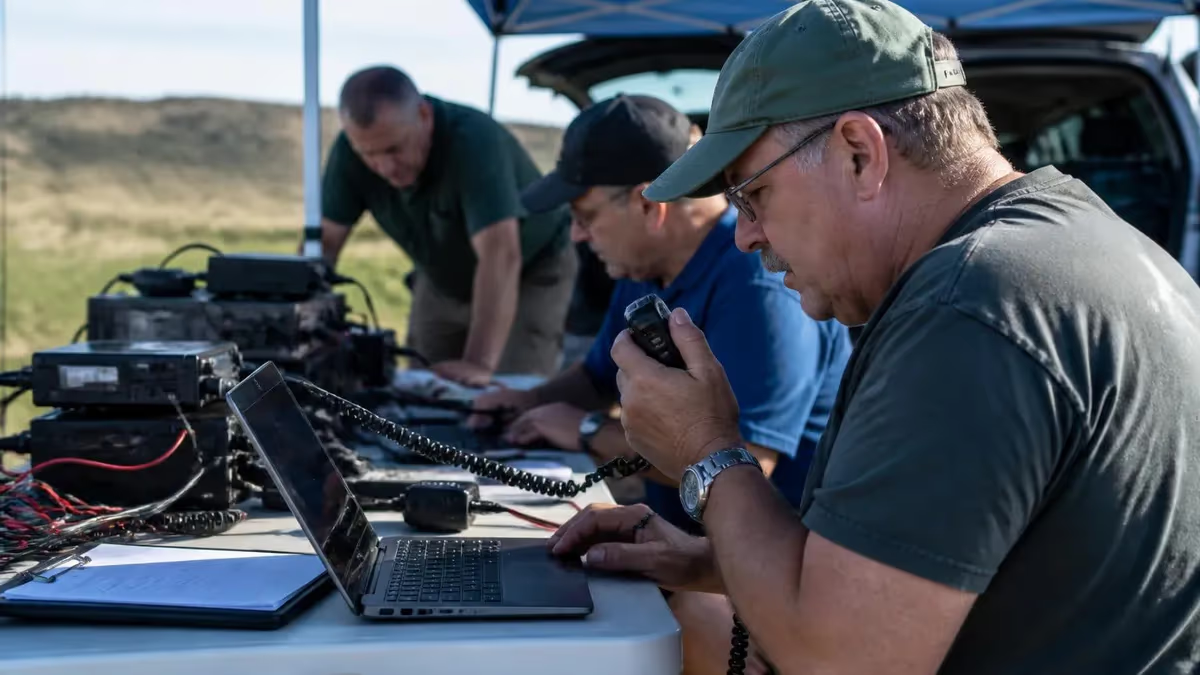
Taking the ham radio test online is the first major milestone on your path to earning a ham radio license in the United States. The Technician class exam is administered by volunteer examiner teams across the country, and with modern online proctored sessions now available, you can sit for the test from the comfort of your own home.
Thousands of new operators earn their license every month, making amateur radio one of the fastest-growing technical hobbies in North America. Whether you are drawn by emergency communications, satellite work, or simply the thrill of talking to someone across the continent, this guide will walk you through every step of the process.
The Technician license is the entry-level credential issued by the Federal Communications Commission (FCC), and it unlocks access to all amateur radio frequencies above 30 MHz. That means you can operate on VHF and UHF bands used for local repeater networks, weather spotting, and public service events. The exam consists of 35 multiple-choice questions drawn from a published question pool of approximately 411 questions, and you need to answer at least 26 correctly — a 74 percent passing score — to earn your license. Most dedicated students pass on their first attempt after two to four weeks of focused preparation.
Many test-takers are surprised to learn that the FCC publishes the entire question pool in advance. That means every single question on your actual exam will come word-for-word from that pool. This is enormously helpful because it allows you to study with real exam questions rather than guessing what might appear. Free resources, including the practice tests available here at PracticeTestGeeks, mirror the exact format and difficulty of the official exam so you can build confidence before exam day arrives. Starting your ham radio prep with structured practice tests dramatically shortens study time.
Ham radios come in dozens of form factors — from compact handheld units that fit in a shirt pocket to base station rigs capable of reaching around the world on HF frequencies. As a Technician licensee, you will primarily operate on VHF and UHF bands, though limited HF privileges on the 10-meter band and a few others are included. Understanding the basic theory behind ham radio equipment, antennas, and propagation is not just an exam requirement — it is foundational knowledge that will make you a more effective and safer operator once your license is in hand.
This guide is organized to take you from zero knowledge to exam-ready in a logical sequence. You will find an overview of the exam structure, a breakdown of the topic areas tested, a recommended study schedule, and dozens of practice opportunities built right into the page.
The goal is not simply to help you pass a test — it is to help you understand why amateur radio operates the way it does, so you can get on the air with confidence and start enjoying one of the most rewarding technical hobbies available to anyone with a curious mind and a little determination.
Preparation matters more than raw intelligence when it comes to this exam. Students who use structured study materials, take timed practice tests, and review their mistakes systematically almost always outperform those who simply read a textbook once and hope for the best. The question pool is publicly available, the passing bar is achievable, and the community of licensed amateur radio operators is famously welcoming to newcomers. By the end of this guide, you will know exactly what to study, how to find an exam session, and what to expect on test day — whether you sit online or in person.
Ham Radio Technician License by the Numbers
4-Week Technician License Study Schedule
- ▸Read FCC Part 97 rules summary for Technician operators
- ▸Study phonetic alphabet and Q-codes
- ▸Learn band privileges for Technician class
- ▸Take 2 full 35-question practice exams to establish baseline
- ▸Review Ohm's Law, power formulas, and basic circuit concepts
- ▸Study electrical safety: RF exposure, grounding, tower climbing
- ▸Learn component types: resistors, capacitors, inductors, diodes
- ▸Take 3 timed practice exams focused on electronics questions
- ▸Study VHF/UHF propagation modes: line-of-sight, tropospheric, sporadic-E
- ▸Learn antenna types: dipole, vertical, Yagi, and their gain characteristics
- ▸Understand SWR, feed lines, and impedance matching
- ▸Review transceiver controls and repeater operation
- ▸Take one full practice exam every day under timed conditions
- ▸Review every wrong answer and read the explanation
- ▸Focus extra study time on your two weakest topic areas
- ▸Register for your exam session and gather required documents
The Technician class exam covers ten major topic areas drawn from the current question pool, which is updated on a four-year cycle. Understanding what each area tests — and roughly how many questions you can expect from each — allows you to allocate your study time wisely rather than spending equal effort on every chapter.
FCC regulations and station operation together account for the largest portion of the exam, so mastering those areas first gives you the biggest return on your study investment. The pool is maintained by the National Conference of Volunteer Examiner Coordinators (NCVEC) and is freely downloadable from their website.
Electrical principles and circuit components make up another significant chunk of the exam. You do not need to be an electrical engineer to pass — the questions test conceptual understanding rather than advanced mathematics. You should be comfortable with Ohm's Law (V = IR), the power formula (P = IV), and the relationships between frequency, wavelength, and the speed of light. Knowing how to calculate antenna length for common VHF and UHF frequencies is also tested, and the formula is straightforward once you practice it a few times with real numbers from the question pool.
Radio wave propagation is a fascinating topic area that explains why signals travel the way they do at different frequencies. VHF signals above 30 MHz generally require line-of-sight paths, which is why repeaters — elevated radio stations that receive and rebroadcast signals — are so important to the ham radio ecosystem.
Understanding how terrain, atmospheric conditions, and even meteor showers can affect propagation helps you become a better operator. Questions about the ham radio bands covered in the Technician pool focus primarily on 2 meters and 70 centimeters, which are the most commonly used VHF and UHF amateur bands. For deeper dives into those frequencies, explore our guide to ham radio bands and propagation concepts.
Antenna theory is tested at a practical level appropriate for a new operator. You need to understand what a half-wave dipole is, how antenna gain works in simple terms, and what standing wave ratio (SWR) measures and why it matters. A high SWR indicates an impedance mismatch between your transmitter and antenna system, which can reduce efficiency and potentially damage equipment. Feed line types — including coaxial cable and open-wire ladder line — are also covered, along with the losses associated with each and the connectors most commonly used in amateur radio installations.
Safety is woven throughout the Technician exam because amateur radio inherently involves both electrical hazards and radio frequency (RF) exposure. You will encounter questions about proper grounding techniques, lightning protection, tower climbing safety, and the FCC's Maximum Permissible Exposure (MPE) limits for RF radiation. These are not trick questions — the correct answers align with common sense and established electrical safety practices. The exam also tests knowledge of safe practices for handling batteries, particularly lithium and lead-acid types commonly used in portable ham radio equipment and emergency communications deployments.
Operating procedures cover a wide range of practical knowledge, from how to make your first radio contact to the proper way to handle emergency traffic. You will be tested on the meaning of phonetic alphabet letters, the correct use of Q-codes like QSL (acknowledgment) and QRM (interference), and the procedures for accessing repeaters including the use of CTCSS tone squelch codes.
Understanding how to identify your station properly using your FCC-assigned call sign — required at the end of every transmission and at least every ten minutes during extended contacts — is both a regulatory requirement and a heavily tested topic area on the exam.
Amateur radio licensing in the United States has a clear upgrade path: Technician, General, and Amateur Extra. Each successive license level expands your HF band privileges, opening up longer-distance communication modes including single sideband voice, digital modes, and Morse code contacts. Many new Technicians are motivated to upgrade within their first year of licensing. Starting your journey with a thorough understanding of the Technician material not only helps you pass the first exam — it also builds the conceptual foundation that makes the General class exam significantly easier to tackle when you are ready.
Ham Radio Frequencies and Band Privileges for Technicians
The 2-meter band (144–148 MHz) is the most popular VHF frequency range for Technician licensees. It supports local repeater networks, emergency communications nets, and simplex contacts across distances of 20 to 50 miles under typical conditions. Most handheld transceivers sold to new hams are dual-band units covering 2 meters and 70 centimeters simultaneously, making these frequencies the natural starting point for new operators building their first station on a modest budget.
The 6-meter band (50–54 MHz) is nicknamed the Magic Band because of its unpredictable propagation behavior. During sporadic-E events, which occur most frequently in late spring and early summer, 6-meter signals can travel thousands of miles with no special equipment required. Technicians have full operating privileges on 6 meters for all amateur modes including FM voice, SSB, and digital. Many experienced operators consider 6-meter DX one of the most exciting aspects of VHF amateur radio operating.
Online vs. In-Person Ham Radio Exam: Which Should You Choose?
- +Take the exam from home with no travel required to an exam site
- +Sessions available almost every day of the week through multiple VEC organizations
- +Immediate scheduling flexibility — find a session that fits your calendar
- +Results often confirmed within minutes after completing the online proctored session
- +Eliminates geographic barriers for rural candidates far from exam locations
- +Multiple online VEC providers compete, keeping fees at or near the $15 standard rate
- −Requires a computer with working camera, microphone, and stable internet connection
- −Technical glitches during the session can disrupt the exam experience
- −Proctors may require a full room scan and strict desktop clearing before starting
- −Some examinees find the online proctoring environment more stressful than a familiar room
- −Identity verification requirements can add complexity for candidates without government ID
- −In-person sessions allow immediate question clarification from volunteer examiners on site
Ham Radio License Test Online: Complete Exam Day Checklist
- ✓Register with an approved Volunteer Examiner Coordinator (VEC) such as ARRL, W5YI, or Laurel VEC at least 48 hours before your session
- ✓Complete your FCC Registration Number (FRN) application at fcc.gov/apply so examiners can submit your results electronically
- ✓Download and install any required proctoring software well before exam day and test your camera and microphone
- ✓Prepare a valid government-issued photo ID — driver's license, passport, or military ID are all acceptable
- ✓Clear your desk of all notes, books, electronic devices, and prohibited materials before the session begins
- ✓Test your internet connection speed and switch to a wired Ethernet connection if your Wi-Fi is unreliable
- ✓Have a simple non-scientific calculator ready — basic arithmetic is permitted during the exam for formula-based questions
- ✓Allow 90 minutes in your schedule even though the exam itself typically takes 30 to 45 minutes to complete
- ✓Log in to the exam platform 10 to 15 minutes early to complete identity verification without rushing
- ✓After passing, monitor your FCC license grant status using the ULS license search tool — most licenses appear within 24 to 48 hours
The Entire Question Pool Is Public — Use It
Every question on the Technician exam comes verbatim from the published NCVEC question pool. Candidates who complete at least 10 full timed practice exams before their test session pass at dramatically higher rates than those who only read study guides. Free practice tests on PracticeTestGeeks mirror the real exam format exactly — use them early and often to build the pattern recognition that makes exam questions feel familiar rather than frightening on test day.
One of the most common questions from prospective ham radio operators is how online testing actually works and whether it is as rigorous as showing up to a physical exam session. The short answer is yes — online proctored exams administered by approved Volunteer Examiner Coordinators (VECs) are fully recognized by the FCC and result in the identical license grant as in-person testing. The difference is logistical rather than substantive. Laurel VEC, ARRL VEC, and several other organizations now offer regular online sessions, and the competition among providers has kept session fees reasonable and scheduling flexibility high.
For the online exam, you will typically be required to join a video call with a team of at least three volunteer examiners. Before the exam begins, you will need to display your government-issued photo ID to the camera, complete a room scan to show that your testing area is free of unauthorized materials, and confirm that no other people are present in the room.
The exam itself is delivered through a secure web interface — you will not be able to navigate away from the exam window or use any other applications during the session. Proctors monitor your camera feed throughout the entire examination period.
The technical requirements for online testing are straightforward but non-negotiable. You need a device with a working camera and microphone — a laptop with a built-in webcam is ideal. Your internet connection should be stable enough to sustain a video call without dropping. Most VECs recommend a minimum of 10 Mbps upload and download speed, though the actual bandwidth consumed by the proctoring session is well below that threshold. If you have any doubt about your connection quality, run a speed test and consider borrowing a more reliable connection from a library, community center, or friend's home if necessary.
Identity verification has become more sophisticated in recent years. Most online VEC sessions now require you to display both the front and back of your photo ID to the camera and to hold it steady long enough for examiners to verify the name, photo, and document number.
Some organizations also request a secondary identifier such as your FCC Registration Number (FRN) or the last four digits of your Social Security number. Obtaining your FRN before your exam session is strongly recommended — it is a free, permanent identifier that the FCC uses for all amateur license transactions and takes only a few minutes to create through the online Commission Registration System (CORES).
What happens immediately after you pass is one of the most satisfying moments in the licensing process. The volunteer examiners will tell you right away whether you passed or failed. If you passed, they collect your personal information and submit your results electronically to the FCC through the VEC's reporting system.
The FCC typically processes exam results and grants new licenses within one to two business days, though the Laurel VEC — which charges no exam fee and submits results electronically — often sees grants appear within hours of the session. You can monitor your application status in the FCC's Universal Licensing System (ULS) database, which is updated in near real time.
If you do not pass on your first attempt, you are not disqualified from retrying. Most in-person exam sessions allow same-day retakes if additional exam copies are available, though you will need to pay the exam fee again. Online sessions vary by VEC — some allow same-day retakes while others require scheduling a new session.
The good news is that seeing the specific questions you missed provides immediate feedback about which topic areas need more review. Most candidates who fail by a small margin pass on their second attempt within one to two additional weeks of focused study on their weak areas, making the overall path to licensure very achievable for anyone who commits to the preparation process.
Understanding the broader context of the ham radio license test online also means recognizing what the license unlocks. With a Technician license in hand, you gain immediate legal authority to transmit on VHF and UHF amateur frequencies, participate in local repeater networks, join public service and emergency communications teams, and experiment with digital modes and satellite communications.
The license is issued for a ten-year term and is renewable for free through the FCC's online system. Many licensed amateurs renew for decades, continuing to learn and operate as the hobby evolves alongside technology. The investment of a few weeks of study pays dividends in a lifetime of legal operating privileges and community connection.
The Technician question pool is updated on a four-year cycle by the NCVEC. If you are using study materials or practice tests created before the most recent pool release date, some questions may no longer appear on the actual exam and new questions may not be covered. Always verify that your practice resources reference the current active question pool before scheduling your exam session to avoid studying outdated material.
Once you have your Technician license, the question of what equipment to buy becomes front and center. The ham radio equipment market ranges from budget-friendly Chinese-manufactured handhelds under $30 to professional-grade base stations costing thousands of dollars. For most new Technicians, a dual-band handheld transceiver covering 2 meters and 70 centimeters is the ideal first radio. Models from Yaesu, Kenwood, Icom, and Baofeng all have strong followings in the amateur community, and each manufacturer has entry-level options that offer solid performance without overwhelming a beginner with complex features or a steep price tag.
Beyond the radio itself, your antenna choice has a larger impact on your signal quality than almost any other factor. The rubber duck antenna that ships with most handheld transceivers is adequate for close-range use but underperforms compared to aftermarket options. Upgrading to a longer flexible antenna or a dedicated dual-band whip can dramatically improve your range, especially in areas with marginal repeater coverage.
For home or vehicle installations, a proper external antenna mounted as high as possible with low-loss coaxial cable will outperform even an expensive radio paired with a mediocre antenna installation. For guidance on where to buy gear and get hands-on advice, visit our article on ham radio antenna selection and accessories.
Programming your new radio to access local repeaters is one of the first practical skills you will develop after getting licensed. Modern transceivers can store hundreds of memory channels, each pre-programmed with the repeater's output frequency, offset, and CTCSS access tone. Applications like CHIRP — a free, open-source programming tool — make it straightforward to load repeater data from the RepeaterBook database directly into your radio via a programming cable. Before diving in, confirm that your chosen radio is supported by CHIRP, as compatibility varies by model and firmware version. Most popular radios have community-maintained CHIRP support files available online.
Emergency communications is one of the most respected and socially valuable roles that amateur radio operators fill. Organizations like ARES (Amateur Radio Emergency Service) and RACES (Radio Amateur Civil Emergency Service) coordinate with local emergency management agencies to provide backup communications when commercial infrastructure fails during disasters. Technician licensees are welcome in both organizations, and many local groups actively recruit new operators to build their volunteer roster. Participating in emergency communications exercises is also an excellent way to build practical operating skills in a structured environment while contributing something meaningful to your community beyond personal hobby enjoyment.
Digital modes have exploded in popularity among Technician and General class operators alike. FT8 — developed by Nobel Prize-winning physicist Joe Taylor (K1JT) and Steve Franke (K9AN) — allows worldwide contacts using just a few watts of power by using sophisticated error-correction algorithms to decode signals far below the noise floor.
While FT8 is primarily an HF mode that Technicians access most fully after upgrading to General, digital modes on VHF and UHF bands are also active and growing. APRS (Automatic Packet Reporting System) is a particularly popular Technician-accessible digital mode that uses packet radio to share GPS position data, weather readings, and short messages across a networked infrastructure of digipeaters and internet gateways.
Satellite communications represent another exciting dimension of ham radio that falls entirely within the Technician band privileges. AMSAT — the Radio Amateur Satellite Corporation — has launched dozens of amateur satellites since the 1960s, and several are active today. Making your first contact through a satellite using a handheld radio and a simple hand-held Yagi antenna is an achievable goal for any motivated Technician, and the experience is genuinely memorable.
Passes occur multiple times daily at most latitudes, last between eight and twelve minutes, and require no special equipment beyond what many new operators already own. The AMSAT website provides real-time tracking tools and pass prediction calendars to help you plan satellite operating sessions.
The ham radio community is organized through clubs, which exist in virtually every city and county across the United States. Joining a local club connects you with experienced Elmers — the ham radio term for mentors — who can help you set up your first station, troubleshoot technical problems, and introduce you to operating events like Field Day, fox hunts, and on-the-air contests.
The ARRL maintains a searchable club directory on its website, and most clubs welcome new and prospective licensees at their meetings regardless of license status. Many clubs also host their own exam sessions, eliminating the scheduling uncertainty of finding an available online session and allowing you to test in a familiar, supportive environment surrounded by people who want you to succeed.
Practical study habits separate candidates who pass on the first try from those who need multiple attempts. The single most effective technique is active recall — forcing yourself to retrieve information from memory rather than passively rereading notes. Taking practice exams under timed conditions achieves this automatically because the exam format requires you to answer questions from memory without referring to study materials.
After each practice session, review every question you answered incorrectly and read the explanation carefully before moving on. Over time, your error rate on specific question types will drop as the correct answers become automatic rather than effortful.
Spaced repetition is the scientific complement to active recall. Instead of studying the same topic for hours in a single session, distribute your study across multiple shorter sessions over several days. Your brain consolidates memories during sleep, so a thirty-minute study session followed by a night's rest is more effective than three consecutive hours of studying immediately before bed.
Apps like Anki allow you to create digital flashcards that use a spaced repetition algorithm to show you cards at the optimal moment — right before you are about to forget them. Ham radio-specific Anki decks are freely available online and can be customized to focus on your weak topic areas.
Understanding the formula-based questions rather than memorizing answers is particularly important for the electronics and antenna sections. The exam may present the same mathematical concept in different numerical arrangements — for example, asking you to calculate frequency given wavelength, or power given voltage and resistance. If you understand the underlying formula and can rearrange it algebraically, you can solve any variation of the question rather than needing to memorize dozens of specific answer combinations. Practice working through calculations with pencil and paper to build the muscle memory for formula manipulation that will serve you on exam day.
Group study is underutilized by many candidates but highly effective when done well. Studying with one or two other people preparing for the same exam creates accountability, provides opportunities to explain concepts to each other (which deepens your own understanding), and makes the preparation process more socially enjoyable. Many local amateur radio clubs organize study groups in the weeks leading up to exam sessions, and online forums including the Reddit community r/amateurradio regularly host study partner matching threads. Even a single virtual study session with another candidate can identify knowledge gaps you were not aware of in your solo preparation.
The night before your exam, resist the temptation to cram new material. Your brain needs consolidation time, not more input. Instead, do a single light review of your most consistently missed question types — just enough to refresh the patterns without overwhelming yourself. Prepare everything you need for the exam: your ID, your FRN, your calculator, and your login credentials for the exam platform if testing online.
Get a full night of sleep and eat a normal breakfast before the session. Cognitive performance degrades significantly with sleep deprivation, and exam anxiety tends to compound that effect. Going in well-rested is one of the most concrete performance advantages available to any test-taker regardless of subject matter.
Time management during the actual exam deserves deliberate attention. With 35 questions and a generous time limit, most candidates have ample time to work through every question and review their answers at least once. Read each question carefully and eliminate obviously wrong answers before selecting your best choice.
If a question seems unfamiliar, mark it and continue — returning to it with fresh eyes after completing the rest of the exam often makes the correct answer more apparent. Avoid changing answers unless you have a specific reason — your initial instinct is usually correct, and second-guessing without new information typically hurts rather than helps your score.
After you pass your exam and receive your FCC call sign, the real learning begins. Everything covered in the Technician question pool becomes more meaningful when you apply it to an actual radio station and real contacts on the air. Keep your study materials accessible as a reference while you are getting started — the concepts covered in the exam relate directly to the practical decisions you will make every day as an operator.
And when you are ready to expand your privileges, the General class upgrade builds on exactly the foundation you built during Technician preparation, making your continued journey through the amateur radio licensing system feel like a natural and rewarding progression rather than starting over from scratch.
Ham Radio Technician Questions and Answers
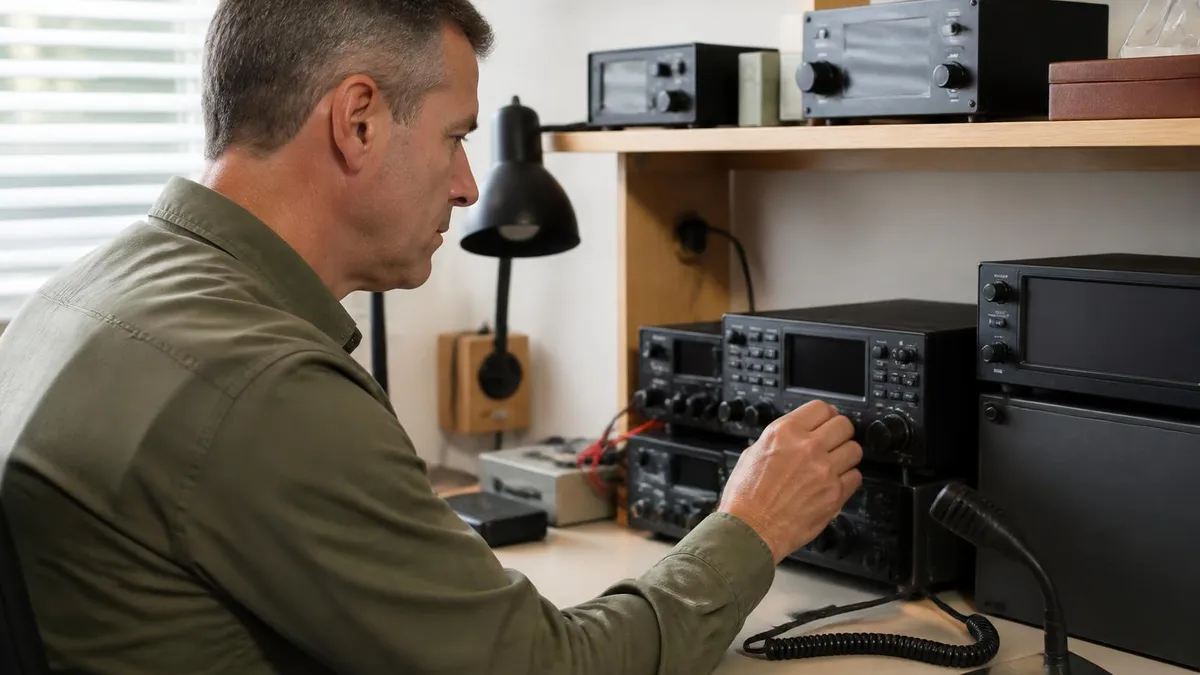
Ham Radio License Online: The Complete Guide to Getting Licensed in 2026
Ham Radio Technician
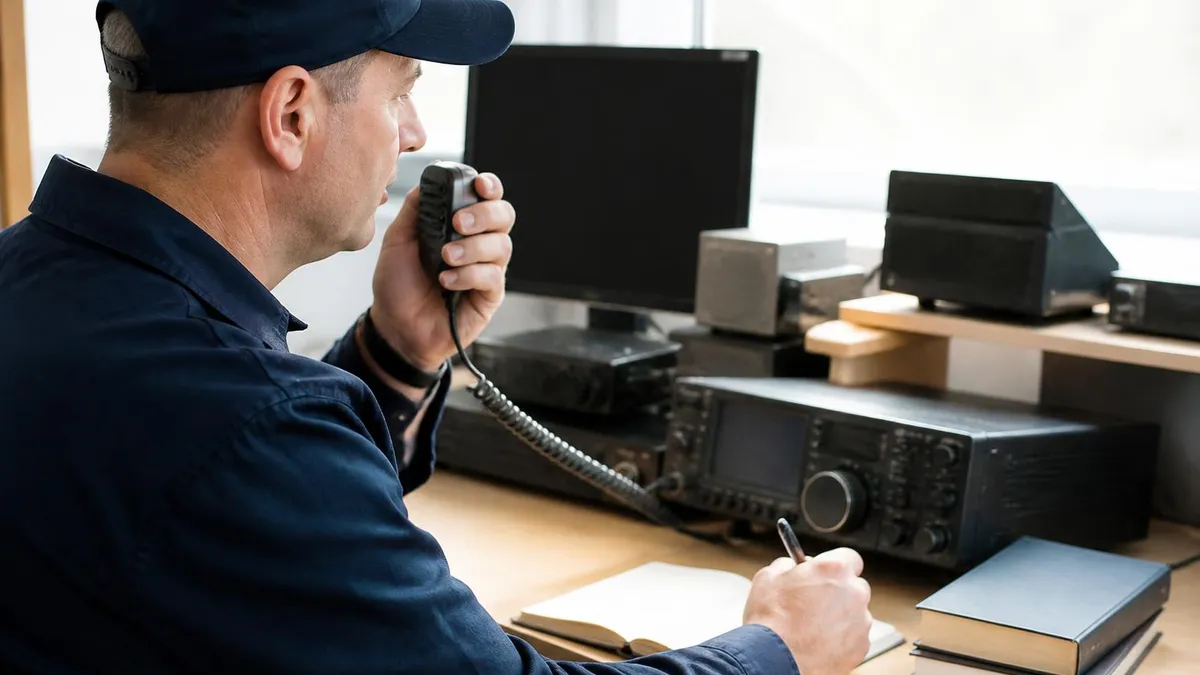
Ham Radio Repeaters: Complete Guide for Technician License Holders
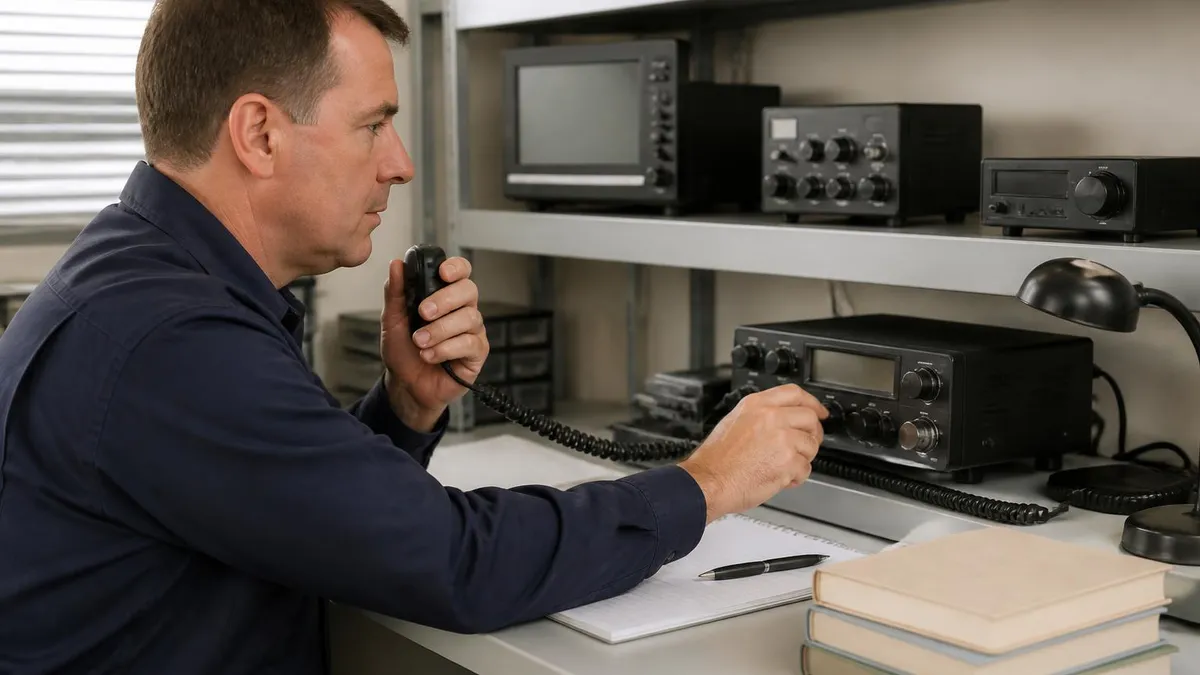
Ham Radio Stores: Where to Buy Ham Radio Equipment, Gear, and Get Your License
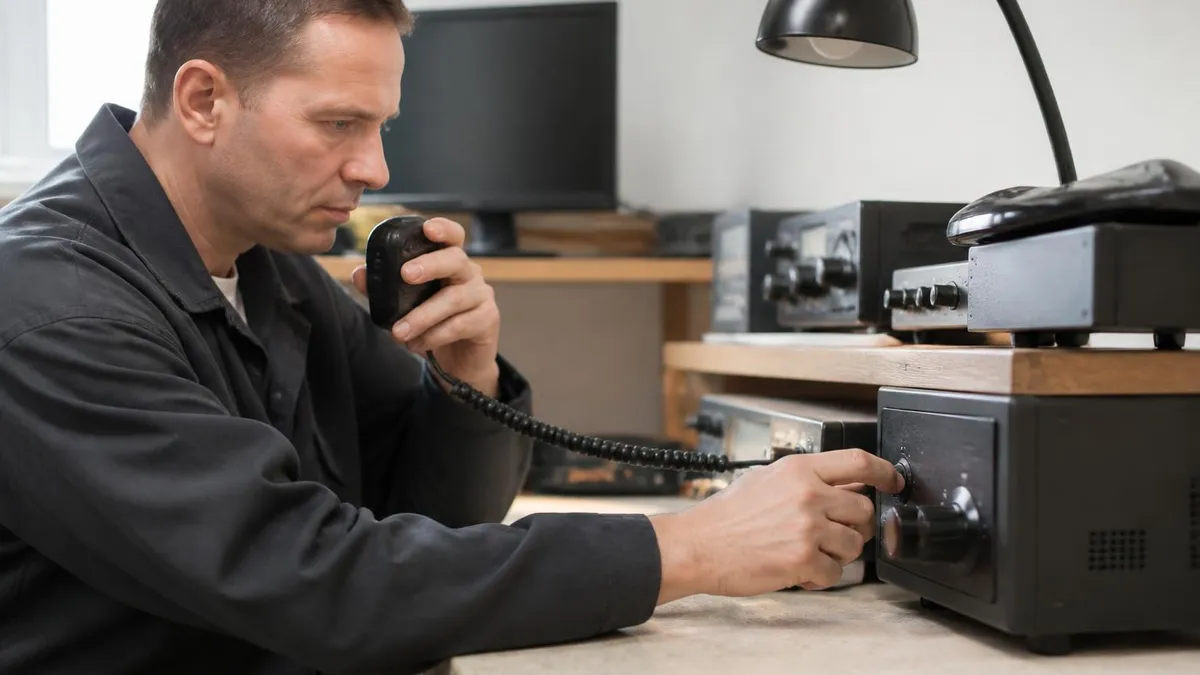
Ham Radio Handheld: Complete Guide to HT Selection, Programming, and Technician License Use
About the Author

Educational Psychologist & Academic Test Preparation Expert
Columbia University Teachers CollegeDr. Lisa Patel holds a Doctorate in Education from Columbia University Teachers College and has spent 17 years researching standardized test design and academic assessment. She has developed preparation programs for SAT, ACT, GRE, LSAT, UCAT, and numerous professional licensing exams, helping students of all backgrounds achieve their target scores.
Join the Discussion
Connect with other students preparing for this exam. Share tips, ask questions, and get advice from people who have been there.
View discussion (3 replies)