
Ham Radio Stores: Where to Buy Ham Radio Equipment, Gear, and Get Your License
Find the best ham radio stores for equipment, antennas, and gear. Learn where to shop, what to buy, and how to prep for your ham radio license test. 📝
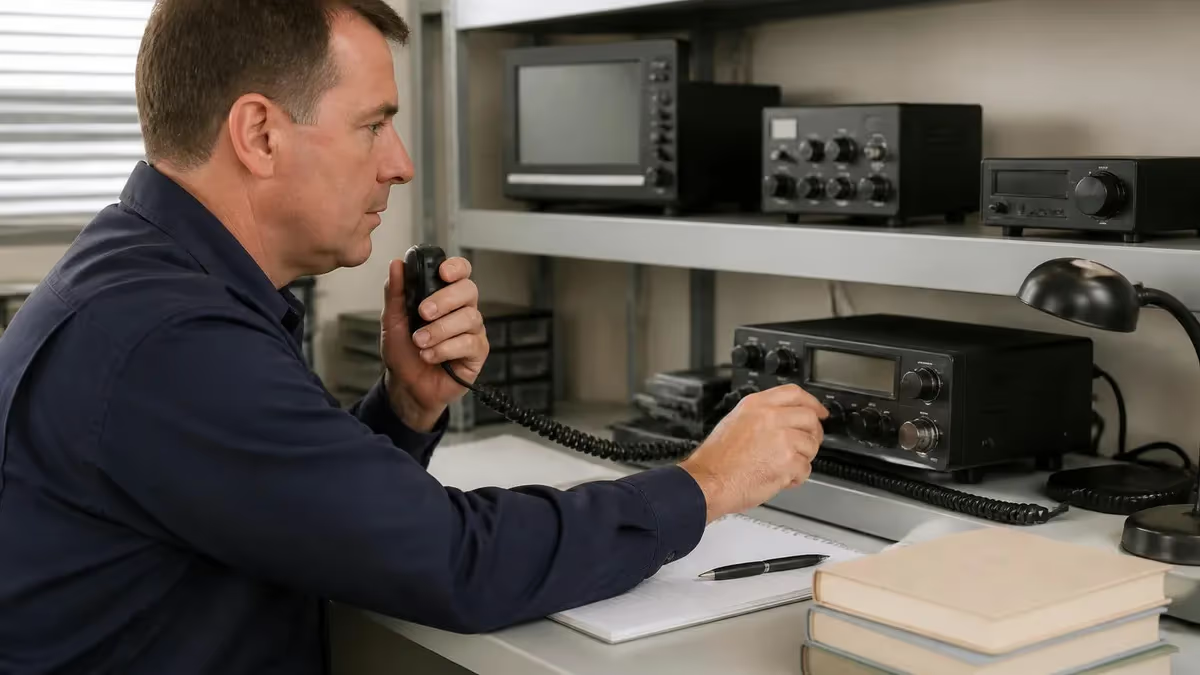
Finding the right ham radio stores is one of the first practical steps after deciding to pursue your ham radio license. Whether you are shopping for a handheld transceiver to use on local repeaters, a base station for HF operations, or a yagi antenna for VHF weak-signal work, knowing where to buy quality ham radios and equipment can save you hundreds of dollars and hours of frustration. The amateur radio market includes dedicated specialty retailers, large online marketplaces, and regional dealers, each with distinct advantages depending on what you need.
The landscape of ham radio outlet retailers has changed dramatically over the past two decades. Brick-and-mortar stores once dominated the market, with knowledgeable staff who could demonstrate radios and help new operators select their first equipment. Today, most purchasing happens online, but several major specialty retailers still operate physical showrooms across the United States. Understanding which stores cater to beginners versus experienced operators can help you spend your budget wisely from day one of your amateur radio journey.
Ham radio equipment spans an enormous price range. A basic handheld dual-band radio for a new Technician licensee can cost as little as $25 from budget Chinese manufacturers or upward of $500 for professional-grade models from Yaesu, Kenwood, or Icom. HF transceivers capable of operating on the lower ham radio bands used by General and Amateur Extra licensees routinely cost between $700 and $3,000 or more. Knowing what you actually need before walking into a store or clicking add to cart prevents expensive missteps that new hams commonly make.
Before spending a single dollar on equipment, most experienced operators recommend completing your ham radio outlet study and passing the Technician exam. Your license determines which ham radio frequencies you are legally permitted to transmit on, which in turn dictates what equipment is actually useful to you. Buying an HF radio before earning at least a General class license means purchasing gear you cannot fully use, a mistake that wastes money and can discourage newcomers before they ever make their first contact.
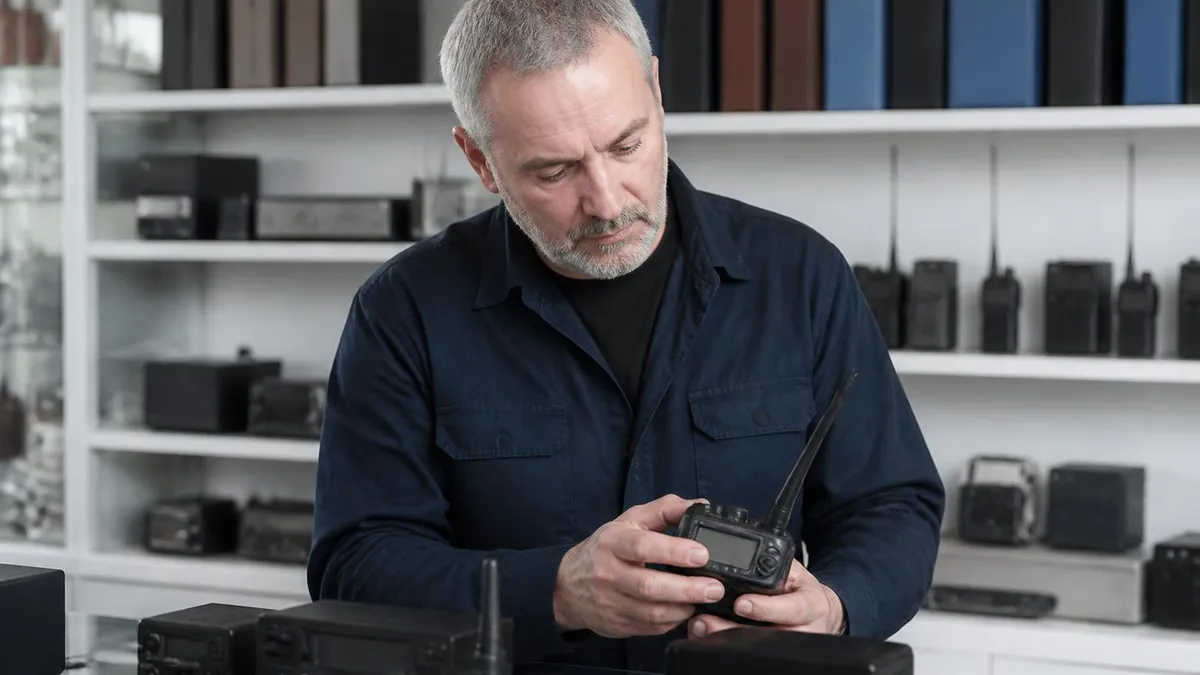
The major online ham radio retailers include Ham Radio Outlet (HRO), DX Engineering, and GigaParts. Each carries thousands of products ranging from handheld radios to tower hardware and coaxial cable. HRO operates over a dozen physical store locations in states including California, Georgia, and New Hampshire, making it one of the few national chains where you can actually handle equipment before buying. DX Engineering specializes heavily in antennas, feedlines, and accessories favored by contest operators and DXers chasing rare entities on the air.
Local ham radio clubs and hamfests represent another valuable shopping channel that online retailers cannot replicate. Hamfests are swap meets where amateur radio operators buy, sell, and trade used equipment at significant discounts compared to retail prices. A used Icom IC-7300 that retails for $1,200 new might sell for $800 to $900 at a well-attended hamfest in good condition. Club members can also vouch for sellers, reducing the risk of purchasing gear with hidden problems. The American Radio Relay League (ARRL) maintains a hamfest calendar on their website updated year-round.
International retailers and gray-market importers also serve the ham radio community, particularly for budget-conscious beginners. Brands like Baofeng, Radioddity, and TYT manufacture inexpensive dual-band handhelds that meet FCC Part 97 requirements for amateur use when transmitting on authorized ham radio frequencies. These radios often cost under $50 and are perfectly adequate for a new Technician licensee learning to use local repeaters. More experienced operators typically gravitate toward Japanese-made equipment from Yaesu, Kenwood, or Icom for their superior receiver performance, build quality, and long-term manufacturer support.
Ham Radio Stores & Licensing by the Numbers
Types of Ham Radio Stores and Where to Shop
Ham Radio Outlet, DX Engineering, and GigaParts offer the widest selection of transceivers, antennas, accessories, and support. HRO has physical showrooms in 12+ states where you can demo equipment before purchasing.
Amazon, eBay, and AliExpress carry ham radio gear at competitive prices. eBay is particularly strong for used and vintage equipment. Always verify seller ratings and confirm FCC Part 97 compliance before purchasing budget radios.
Annual regional events where operators trade used gear at 20–40% below retail prices. The ARRL hamfest calendar lists events nationwide. Ideal for finding quality used HF transceivers, amplifiers, and antenna hardware at significant discounts.
Many ARRL-affiliated clubs maintain loaner equipment for new members and help peer-to-peer sales within a trusted community. Club members can verify equipment condition and answer technical questions that online listings cannot address.
Choosing your first ham radio equipment wisely requires understanding what the Technician class license actually authorizes. As the entry-level amateur radio license in the United States, the Technician ticket grants full operating privileges on all amateur frequencies above 50 MHz. This includes the popular 2-meter band (144–148 MHz) and the 70-centimeter band (420–450 MHz), both of which are home to thousands of repeaters that extend the range of handheld radios dramatically in urban and suburban environments across the country.
For most new Technician licensees, the single most useful first purchase is a dual-band handheld transceiver (HT) capable of operating on both 2 meters and 70 centimeters. These compact radios fit in a shirt pocket, run on rechargeable batteries, and allow you to access local repeaters immediately after receiving your license. Budget options from Baofeng, such as the UV-5R series, cost under $35 and are adequate for getting started. Mid-range options from Yaesu, including the FT-65 or FT-70D, cost between $80 and $130 and offer meaningfully better receiver selectivity and audio quality.
If you plan to complete your ham radio license test study and upgrade to General class within a year of getting your Technician license, considering a transceiver with some HF capability from the start can be cost-effective. The Yaesu FT-991A is an all-band, all-mode radio covering HF through 70cm that retails around $800 to $900. Purchasing one radio that covers your future operating needs prevents the common cycle of buying starter gear, then selling it at a loss to fund an upgrade six months later when your licensing and interests evolve.
Antennas deserve equal attention to the radio itself, yet beginners frequently under-invest in this critical component. A $400 radio connected to a poor antenna will consistently outperform a $1,500 radio connected to a marginal one. For home stations, a simple ground-plane antenna or a commercially made vertical covering 2 meters and 70 centimeters provides excellent performance for repeater use. For HF operations once you hold a General license, a dipole cut for the 40-meter band (7.0–7.3 MHz) offers outstanding performance at minimal cost and is often the first antenna experienced Elmers recommend to newly upgraded operators.
Coaxial cable selection matters more than many new operators realize. Budget coax such as RG-58 works adequately for short runs up to about 25 feet at VHF frequencies, but losses mount quickly on longer cable runs or at UHF frequencies. LMR-400 or equivalent low-loss coaxial cable is the industry standard for runs exceeding 50 feet, particularly when connecting a radio to a rooftop or tower-mounted antenna. Ham radio stores like DX Engineering stock extensive coax inventories and can cut custom lengths with factory-quality connectors installed, which is well worth the modest premium over DIY termination for most new operators.
Power supplies represent another often-overlooked equipment category for new ham operators setting up home stations. Most base station transceivers require a regulated 13.8-volt DC power supply rather than running directly from a wall outlet. A quality switching power supply rated for at least 20 amperes is necessary to support even modest HF transceivers during transmit. Astron and MFJ manufacture linear power supplies widely respected for their stability and low RF noise floor, while modern switching supplies from brands like Samlex offer excellent performance at lower cost and weight than older linear designs.
Accessories can quickly inflate your initial equipment budget if you are not careful. Necessary accessories include a microphone (usually included with the transceiver), a speaker for base stations, a key or paddle if you plan to operate CW, and a logging program for your computer. Nice-but-optional additions include an antenna tuner, a linear amplifier, a software-defined radio dongle for monitoring, and a headset for contest or net operations. Prioritize the essentials first and add accessories as your operating activities clarify which capabilities actually matter for how you enjoy the hobby.
Ham Radio Technician Practice Test Questions
Prepare for the Ham Radio Technician Test exam with our free practice test modules. Each quiz covers key topics to help you pass on your first try.
Ham Radio Technician Antennas & Feedlines
Ham Radio Technician Exam Questions covering Antennas & Feedlines. Master Ham Radio Technician Test concepts for certification prep.
Ham Radio Technician Basic Electronics & C...
Free Ham Radio Technician Practice Test featuring Basic Electronics & Circuitry. Improve your Ham Radio Technician Exam score with mock test prep.
Ham Radio Technician Equipment & Tools Usage
Ham Radio Technician Mock Exam on Equipment & Tools Usage. Ham Radio Technician Study Guide questions to pass on your first try.
Ham Radio Technician Amateur
Ham Radio Technician Test Prep for Amateur. Practice Ham Radio Technician Quiz questions and boost your score.
Ham Radio Technician General
Ham Radio Technician Questions and Answers on General. Free Ham Radio Technician practice for exam readiness.
Ham Radio Technician III
Ham Radio Technician Mock Test covering III. Online Ham Radio Technician Test practice with instant feedback.
Ham Radio Technician II
Free Ham Radio Technician Quiz on II. Ham Radio Technician Exam prep questions with detailed explanations.
Ham Radio Technician I
Ham Radio Technician Practice Questions for I. Build confidence for your Ham Radio Technician certification exam.
Ham Radio Technician License
Ham Radio Technician Test Online for License. Free practice with instant results and feedback.
Ham Radio Technician Licensing Regulations...
Ham Radio Technician Study Material on Licensing Regulations & Standards. Prepare effectively with real exam-style questions.
Ham Radio Technician Operating Procedures ...
Free Ham Radio Technician Test covering Operating Procedures & Etiquette. Practice and track your Ham Radio Technician exam readiness.
Ham Radio Technician Radio Wave Propagatio...
Ham Radio Technician Exam Questions covering Radio Wave Propagation & Modulation. Master Ham Radio Technician Test concepts for certification prep.
Ham Radio Technician Safety Procedures & R...
Free Ham Radio Technician Practice Test featuring Safety Procedures & Risk Management. Improve your Ham Radio Technician Exam score with mock test prep.
Ham Radio Bands and Frequencies by License Class
Technician licensees enjoy full privileges on all amateur bands above 50 MHz, including the 6-meter band (50–54 MHz), the 2-meter band (144–148 MHz), and the 70-centimeter band (420–450 MHz). These ham radio frequencies host an enormous variety of activity including local FM repeaters, digital modes, satellite uplinks, and weak-signal SSB operations on the band edges. Most new Technicians begin by programming local 2-meter repeater frequencies into their handheld radios and checking into local nets to practice on-air procedures.
On HF, Technician licensees receive limited phone privileges in a small segment of the 10-meter band (28.300–28.500 MHz) and CW privileges on portions of 80, 40, 15, and 10 meters. The 10-meter phone allocation is particularly valuable because it opens during solar cycle peaks and allows Technicians to make intercontinental contacts with modest equipment and simple wire antennas. When the sun is active, 10 meters can carry signals from the US to Europe or Japan using just 100 watts and a dipole antenna hung between two trees in a suburban backyard.
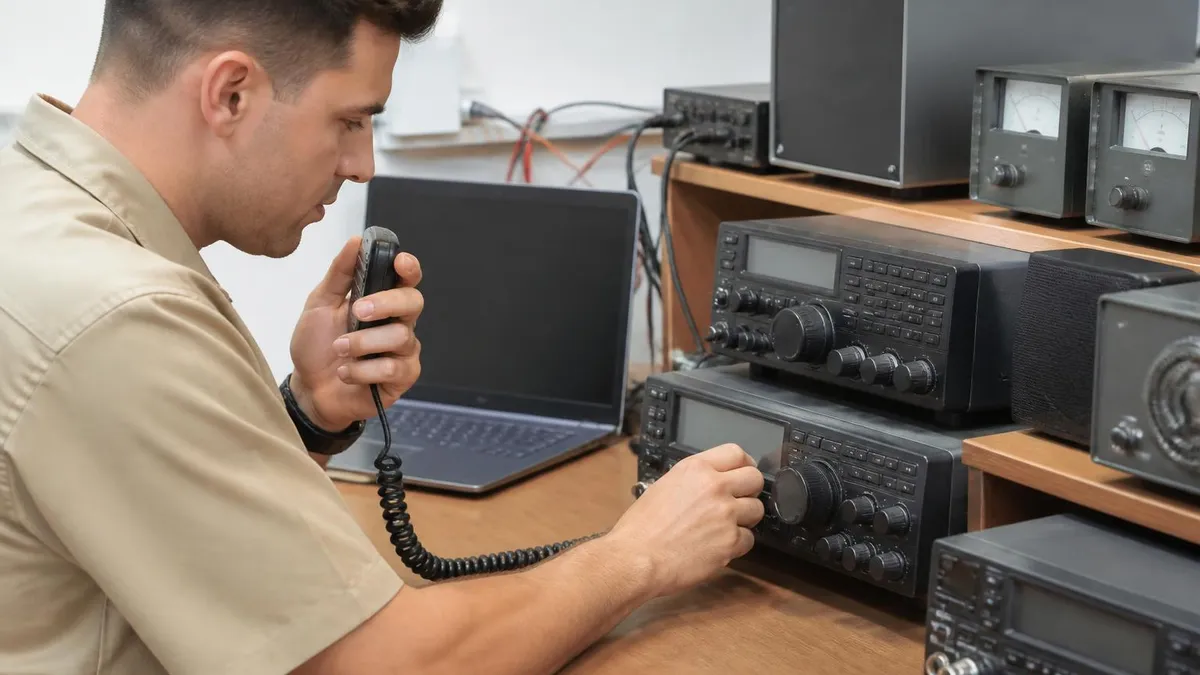
Online Ham Radio Stores vs. Local Dealers: Which Is Better?
- +Online stores offer dramatically lower prices due to reduced overhead and national competition among retailers
- +National online retailers stock thousands of products unavailable at local dealers with limited shelf space
- +24/7 shopping availability lets you research and purchase equipment at your own pace without sales pressure
- +User reviews and YouTube unboxing videos help you evaluate equipment before purchasing online
- +Price comparison across multiple online stores is effortless and often reveals significant savings on identical products
- +Specialty online retailers like DX Engineering offer expert phone and chat support rivaling any local store
- −You cannot physically handle or hear the audio quality of a transceiver before committing to an online purchase
- −Return shipping costs for heavy equipment like power supplies or transceivers can be expensive and time-consuming
- −Local experts at physical stores can diagnose specific installation problems that online chat support cannot replicate
- −Immediate availability is impossible online — shipping delays can delay your first on-air experience by days
- −Hamfest and local club connections that accelerate learning are absent from purely online purchasing experiences
- −Budget online retailers may sell non-compliant equipment that creates interference and FCC regulatory issues
Ham Radio Equipment Shopping Checklist for New Operators
- ✓Pass your Technician exam first — confirm which frequencies you can legally use before buying any radio
- ✓Research local repeater activity in your area using RepeaterBook.com before selecting a radio's frequency coverage
- ✓Compare prices across Ham Radio Outlet, DX Engineering, and GigaParts for any radio over $100
- ✓Check hamfest calendars for upcoming swap meets where used equipment sells for 20–40% below retail
- ✓Buy LMR-400 or equivalent low-loss coax for any cable run longer than 25 feet to avoid signal loss
- ✓Purchase a regulated 13.8V DC power supply rated at least 20 amps for any base station transceiver setup
- ✓Verify that budget radios meet FCC Part 97 spurious emission standards before transmitting on ham frequencies
- ✓Join a local ARRL-affiliated club for access to Elmers who can advise on equipment choices for your goals
- ✓Factor in antenna cost — budget at least 25% of your total equipment spend on antenna and feedline hardware
- ✓Register your new equipment's serial number and keep purchase receipts for warranty and insurance documentation
Ask an Elmer Before You Spend a Dollar
In amateur radio culture, an Elmer is an experienced operator who mentors newcomers. Before purchasing any equipment, connecting with an Elmer through your local club or an online forum like QRZ.com can save you from the most common and costly beginner mistakes. A 30-minute conversation with an experienced ham who knows your local propagation conditions, active repeaters, and club activities is worth more than hours of online research alone.
Earning your ham radio license is a prerequisite for operating, and the process is more straightforward than most newcomers expect. The FCC administers three license classes: Technician, General, and Amateur Extra. The Technician exam consists of 35 multiple-choice questions drawn randomly from a published question pool of approximately 423 questions. You must answer at least 26 questions correctly to pass, which represents a 74% score. The exam is administered by volunteer Examiner sessions organized by ARRL-affiliated Volunteer Examiner Coordinators (VECs) throughout the country and is available online through several remote testing providers.
The Technician question pool covers six broad subject areas: Commission Rules, Operating Procedures, Radio Wave Propagation, Amateur Radio Practices, Electrical Principles, and Circuit Components. Prospective licensees who spend two to four weeks with quality study materials consistently pass the exam on their first attempt. The question pool is publicly available, meaning every possible exam question and its correct answer can be reviewed before sitting for the actual test. This transparency makes the Technician exam highly passable for anyone willing to invest genuine preparation time using practice tests and study guides.
Effective ham radio prep typically combines reading a study guide with taking multiple timed practice exams. Popular study resources include the ARRL Ham Radio License Manual, the Gordon West Technician Class book, and free online platforms that generate randomized practice exams from the official question pool. Ham radio prep websites and apps allow you to practice on a smartphone during commutes or lunch breaks, making it easy to squeeze in study sessions around a busy schedule. Most test-takers report that 20 to 40 hours of active study spread over two to four weeks is sufficient preparation for the Technician exam.
Exam sessions are held at locations across every US state, including libraries, community centers, club meeting rooms, and hamfest venues. Session fees are capped by FCC regulation and typically range from $15 to $35 depending on the administering VEC. Many clubs offer free or discounted exam sessions to encourage new operator participation. Once you pass, your call sign typically appears in the FCC Universal Licensing System (ULS) within 24 to 72 hours, and you may legally transmit on authorized ham radio frequencies immediately upon the license appearing in the database — no waiting for a paper license.
For those who want to accelerate their licensing journey, same-day multiple-exam sitting is permitted. You can take the Technician exam and, if you pass, immediately attempt the General exam at the same session for a single combined fee at many VEC-sponsored testing events. Operators who study both question pools simultaneously sometimes earn General class privileges on their very first exam day, skipping the Technician-only period entirely and opening HF operating privileges from the start of their amateur radio career. This strategy requires significantly more preparation but can be well worth the investment for motivated newcomers.
The General class exam adds 35 more questions covering HF operating procedures, propagation modes, antenna theory, and additional electrical principles. Upgrading from Technician to General typically requires another two to six weeks of focused study for candidates who are already comfortable with the Technician material. Many operators find the General exam actually easier to pass than they anticipated, particularly those who have been active on VHF repeaters and have accumulated practical operating experience since earning their Technician ticket. Field experience reinforces the textbook concepts in ways that make the General material more intuitive and memorable.
The Amateur Extra class examination is the most comprehensive, adding 50 questions covering advanced topics including antenna design, transmission line theory, digital signal processing, and advanced operating techniques. Earning the Extra class license requires passing all three exam elements but is also achievable without any previous electronics background given sufficient study time.
Many Extra class operators report spending three to six months on deliberate preparation, though technically inclined candidates with engineering or electronics backgrounds often achieve it more quickly. The Extra class call sign assignment also grants access to shorter, more desirable call sign formats including one-by-two and two-by-one combinations prized by contest operators.
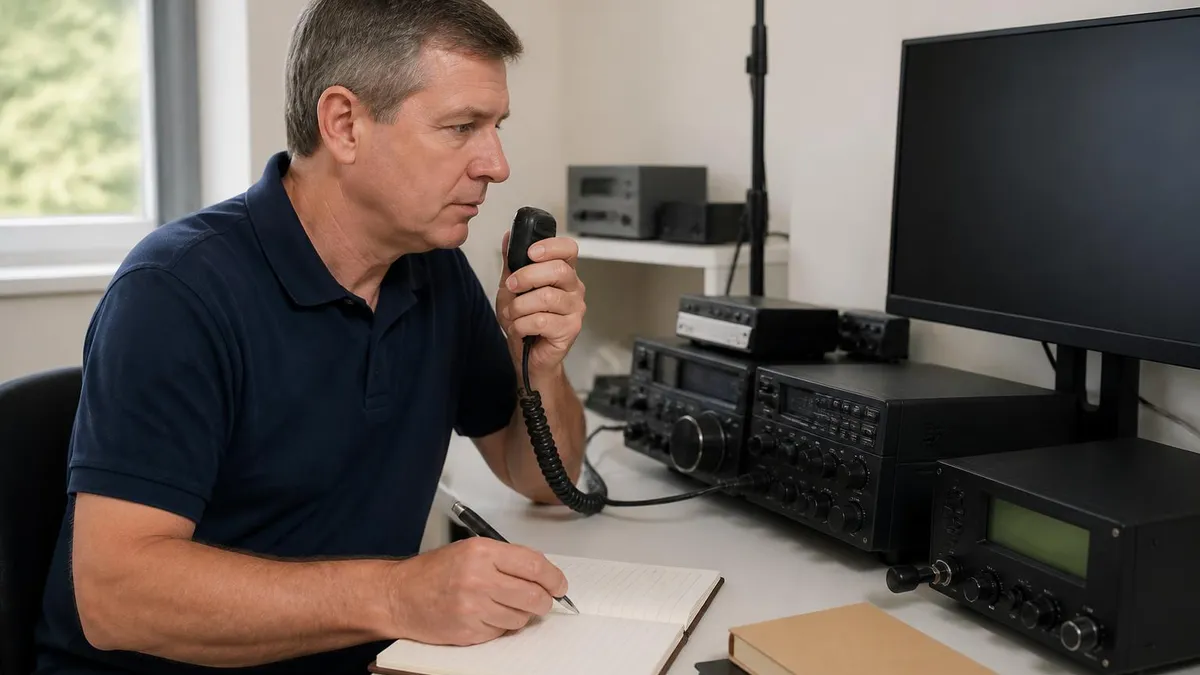
The FCC-mandated Technician question pool is updated on a four-year cycle. Always confirm that your study guide and practice test platform are using the currently active question pool before investing significant study time. Using an outdated question pool means memorizing questions and answers that will not appear on your actual exam, wasting preparation time and creating false confidence about your readiness to pass.
Once you have earned your license and selected your first radio, building a functional station requires attention to installation details that significantly affect performance. Antenna placement is the single most impactful variable in any amateur radio station.
For VHF and UHF work, height above surrounding terrain matters more than almost any other factor — a half-wave dipole at 40 feet will dramatically outperform the same antenna at 10 feet on 2-meter FM, all else being equal. Rooftop mounting of even modest commercial antennas typically yields 10 to 20 dB improvement in signal strength compared to indoor or attic-mounted alternatives at VHF frequencies.
Grounding and lightning protection deserve serious attention before you put up any outdoor antenna system. The National Electrical Code (NEC) and ARRL antenna grounding guidelines specify how coaxial feedlines should be grounded at the point they enter the building and how towers and mast-mounted antennas should be bonded to the station ground system.
Proper grounding protects your equipment from static buildup, reduces received noise on HF, and provides meaningful (though not complete) protection against nearby lightning strikes. Installing a polyphaser or similar coaxial surge protector at the point of entry into your shack is an inexpensive insurance policy for your radio investment.
Operating on HF with a General or Amateur Extra class license opens the world of DX (long-distance) contacts, contesting, and participation in the extensive network of HF nets that serve as informal gathering points for operators with shared interests. The ham radio bands from 40 meters through 10 meters experience dramatically different propagation characteristics depending on time of day, season, and solar activity.
Learning to predict band conditions using tools like the DX cluster network, propagation apps like VOACAP, and the real-time solar data published by NOAA's Space Weather Prediction Center gives you a significant operating advantage and is an intellectually rewarding aspect of the hobby in its own right.
For those interested in emergency communications, ham radio preparation extends beyond just licensing and equipment into training and organizational commitment. The Amateur Radio Emergency Service (ARES) and the Radio Amateur Civil Emergency Service (RACES) both provide structured emergency communications training through local clubs and serve as valuable resources for new operators wanting to contribute to community preparedness efforts. Emergency communication operators typically need reliable VHF mobile or portable equipment, familiarity with standard net procedures, and the ability to operate for extended periods under field conditions using battery or generator power sources.
For more in-depth study of antenna systems and installation techniques, exploring dedicated ham radio prep resources that cover antenna modeling, installation best practices, and feedline selection can dramatically improve your station's performance. Understanding basic antenna theory — including concepts like SWR, radiation patterns, gain versus directivity, and impedance matching — helps you make better purchasing decisions at ham radio stores and avoid common setup errors that limit your station's effectiveness from the start.
Digital modes have created new entry points for operators who prefer computer-assisted operating to traditional voice communication. FT8 in particular has democratized DX operating by allowing contacts to be made under band conditions that would have been impossible using SSB voice modes just a decade ago.
Getting started with FT8 requires only a computer, an audio interface cable or device, and the free WSJT-X software developed by the amateur radio community. Many operators make their first transcontinental HF contact within hours of configuring FT8, which provides immediate positive reinforcement that sustains engagement with the hobby through the sometimes steeper learning curve of voice operating on crowded HF bands.
Station documentation is a practice that experienced operators recommend from day one. Keeping a logbook — either physical or digital using software like Ham Radio Deluxe or the free N3FJP logger — creates a permanent record of your contacts that has practical value for confirming award credits, troubleshooting recurring interference problems, and simply enjoying the nostalgia of reviewing your operating history years later.
The FCC does not require amateur radio operators to maintain logs, but logging is universally recommended by experienced operators and is specifically required for special event stations and some contest operations. Many ham radio stores sell pre-formatted paper logbooks, or you can download free printable log sheets from the ARRL website.
As your operating interests develop beyond the basics, specialty ham radio stores become increasingly valuable resources for finding equipment matched to specific activities. Contest operators seeking top scores in national events like Field Day, CQ WW, or ARRL DX contests often invest in high-gain directional antennas, bandpass filters, and automatic antenna switches that allow rapid frequency changes during high-rate operating periods. DX Engineering and Array Solutions cater specifically to this competitive segment of the amateur radio market with products designed to maximize station performance in multi-transmitter contest environments.
Satellite operating represents a technically fascinating and globally accessible operating mode available to Technician class licensees because satellite uplinks and downlinks occur on VHF and UHF frequencies. The amateur radio satellite organization AMSAT maintains a fleet of educational satellites in low Earth orbit that can be worked using a modest dual-band handheld radio and a directional Yagi antenna hand-tracked across the sky during the 10 to 15 minute overhead passes.
For operators interested in did ed gein talk to ilse on a ham radio style historical and popular culture connections to amateur radio, the hobby's deep roots in American cultural history make for fascinating reading alongside technical study.
The used equipment market through online platforms deserves special mention for budget-conscious operators building complete stations. QRZ.com's classifieds section, eHam.net's swap shop, and the r/hamfest subreddit community all help peer-to-peer sales of used amateur radio equipment with the added benefit of seller reputation systems and community accountability. When buying used HF transceivers online, always request the seller's FCC call sign (easily verified in the ULS database), ask for photos of the front panel in receive mode showing frequency display, and inquire about the radio's service history and any known issues before committing to a purchase.
Portable and mobile operating has grown significantly in popularity, driven partly by the Parks on the Air (POTA) and Summits on the Air (SOTA) award programs that incentivize operating from parks, wilderness areas, and mountain summits. These operating styles have created a vibrant market for lightweight, efficient portable transceivers from manufacturers like Elecraft, Icom, and Xiegu.
The Elecraft KX3, for example, weighs under two pounds while covering all HF bands with excellent receive performance, making it a favorite among backpacking operators who want to combine outdoor recreation with amateur radio activation of remote sites that may never have been on the air before.
Software-defined radio (SDR) technology has democratized radio monitoring and has also found a home in serious amateur radio stations as panadapters — spectrum displays that show band activity across hundreds of kilohertz simultaneously while the main transceiver operates on a specific frequency.
Low-cost SDR dongles based on the RTL-SDR chipset, available from many online retailers for under $30, allow new operators to listen across the VHF and UHF spectrum, receive weather satellite images, decode ADS-B aircraft transponders, and explore digital modes without any transmit capability. These inexpensive devices are excellent for learning about radio propagation and signal types before investing in more expensive transmitting equipment.
Power line interference and man-made radio frequency interference (RFI) are persistent challenges for amateur radio operators in suburban and urban environments. Plasma televisions, LED light bulbs, switching power supplies, and solar panel inverters all generate broadband noise that can severely degrade HF receive performance. Diagnosing and mitigating RFI requires systematic investigation, often involving a portable battery-powered receiver and a directional antenna to locate interference sources. Many ham radio stores stock ferrite chokes, snap-on cores, and RF filters specifically designed for amateur radio RFI mitigation, and experienced club members can often help diagnose problems that stymie new operators working alone.
The ham radio community's tradition of technical experimentation and homebrewing — building equipment from scratch or modifying commercial gear — remains alive and well despite the prevalence of inexpensive manufactured radios. QRP (low power, typically 5 watts or less) homebrewing has a particularly dedicated following, with kit manufacturers like Elecraft, QRP Labs, and 4SQRP offering well-documented transceiver and accessory kits that new builders can assemble successfully without previous electronics construction experience.
Building your own equipment builds deep understanding of how radios work and creates a personal connection to the station that purchased gear simply cannot replicate. Many experienced operators consider their homebuilt rigs among their most prized possessions, regardless of their market value compared to commercial alternatives available at major ham radio stores.
Ham Radio Technician Questions and Answers
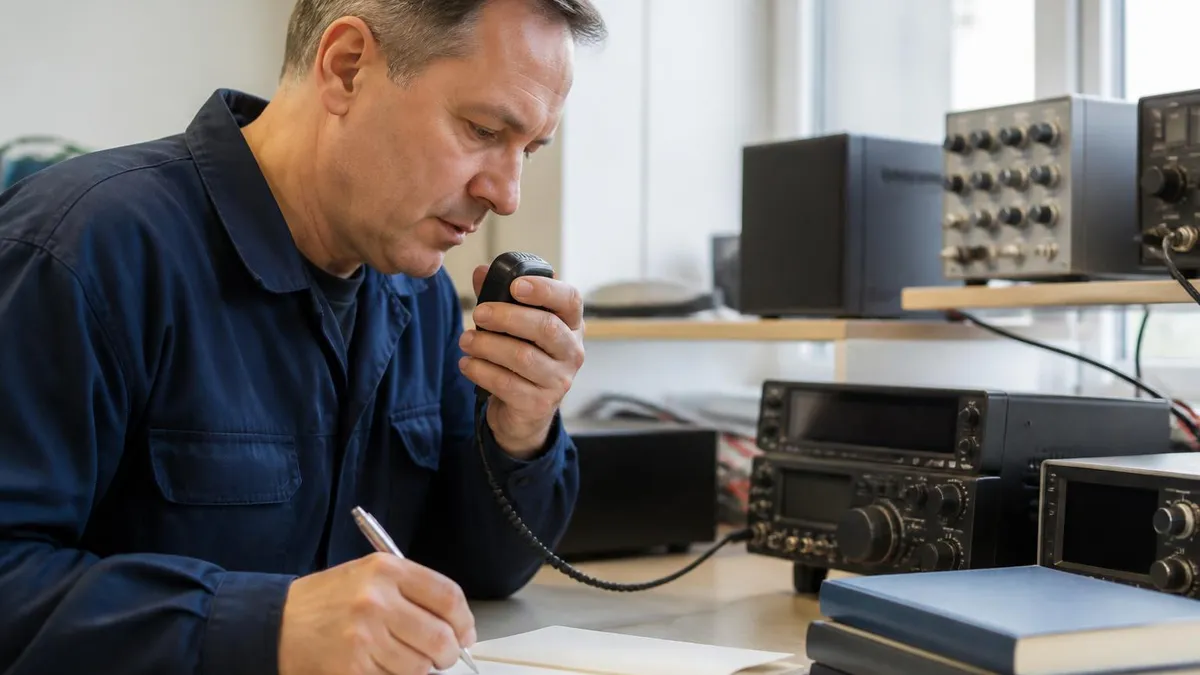
Ham Radio License Practice Test: Free Technician Exam Prep & Question Pool
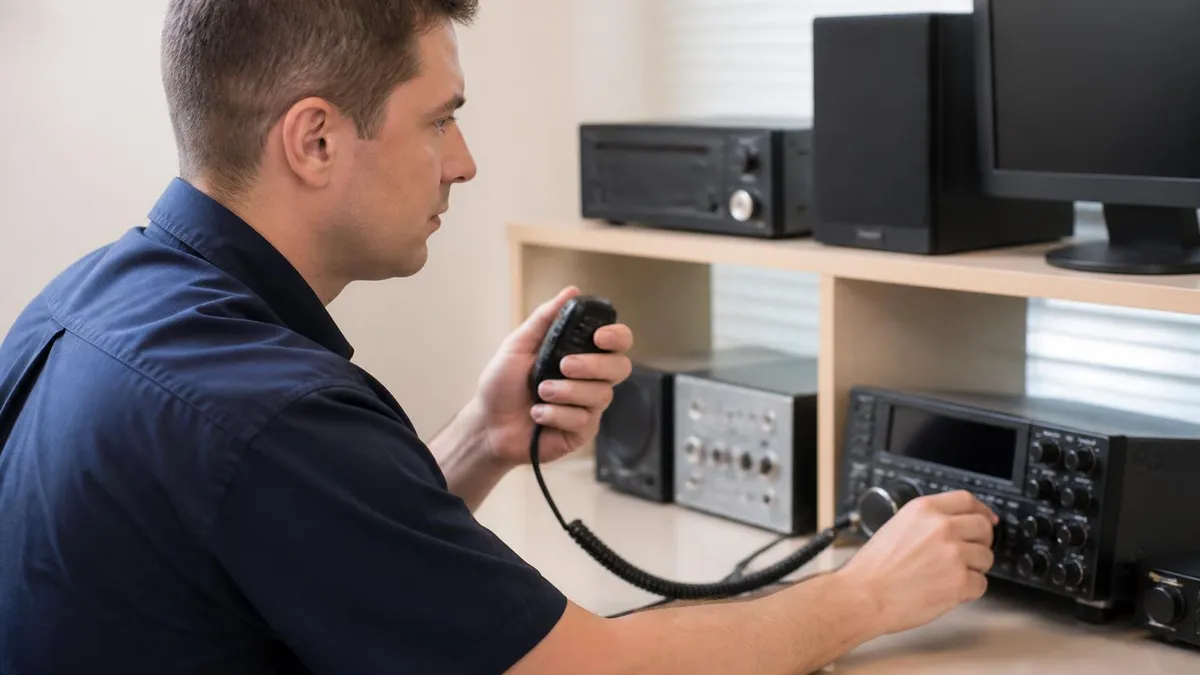
Ham Radio Antenna Guide: Types, Towers, Portable, and Satellite Antennas
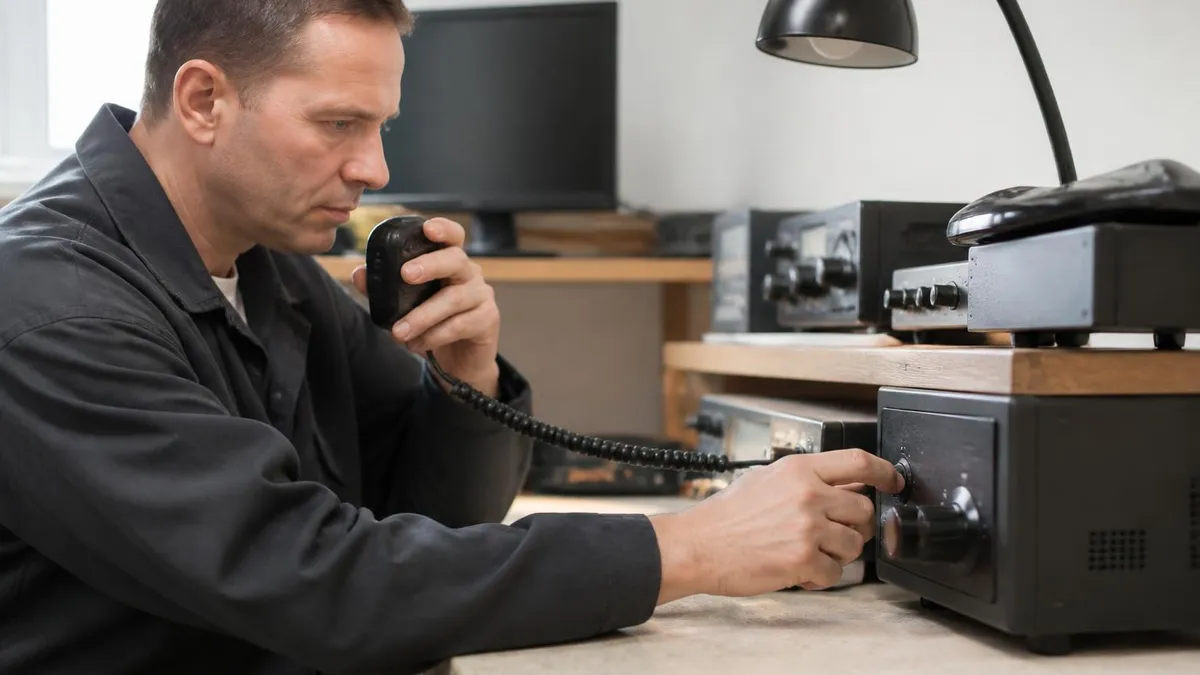
Ham Radio Handheld: Complete Guide to HT Selection, Programming, and Technician License Use
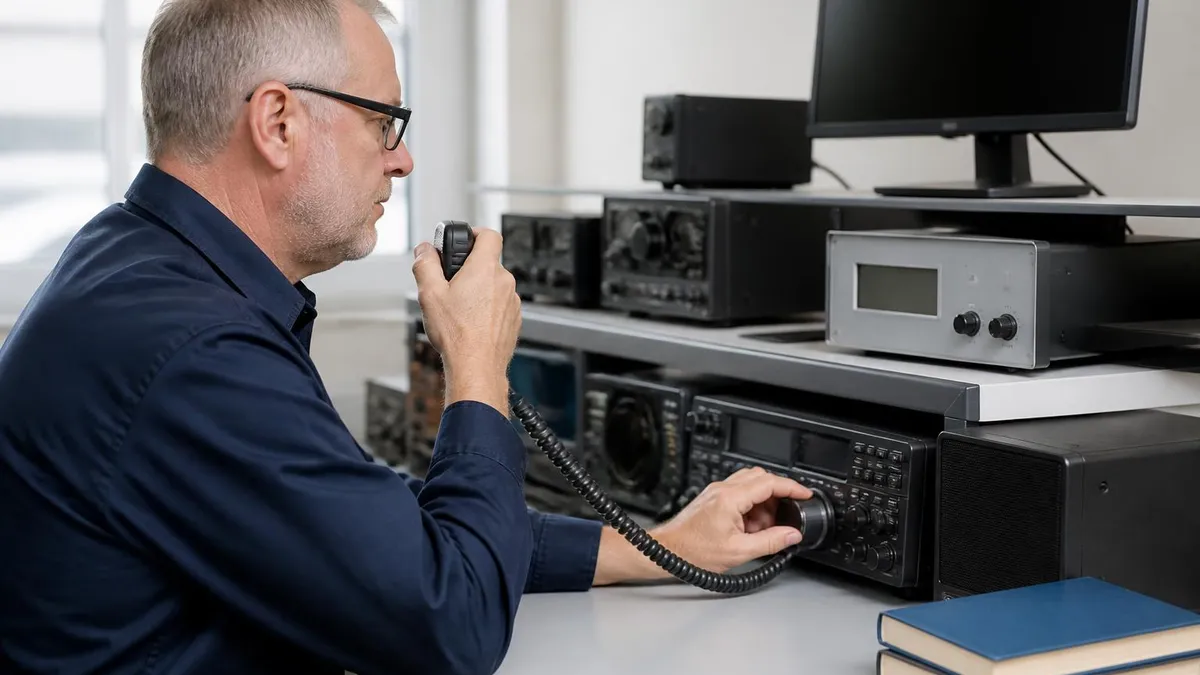
Control Operator Ham Radio: Complete Guide to Ham Radio Operations, Licensing, and On-Air Procedures
Ham Radio Clubs in My Area: How to Find, Join, and Thrive in Local Amateur Radio Communities
How this page was made: written with AI tools. Exam facts are checked against the official sources listed below. Not reviewed by a subject-matter expert. Editorial policy
Sources & references
Exam facts on this page (fees, format, dates, passing scores) are checked against these official sources; the date is our last check. Editorial policy
- arrl.org — Eligibility, passing score, renewal, retake policy, score release, score validity, test delivery, test dates, fees, retake fee · verified Oct 2026
- home.arrl.org — Exam format · verified Oct 2026