
Ham Radio License Practice Test: Free Technician Exam Prep & Question Pool
Free ham radio license practice test with full Technician question pool, instant scoring, explanations, and study tools to pass on your first try. 🧠
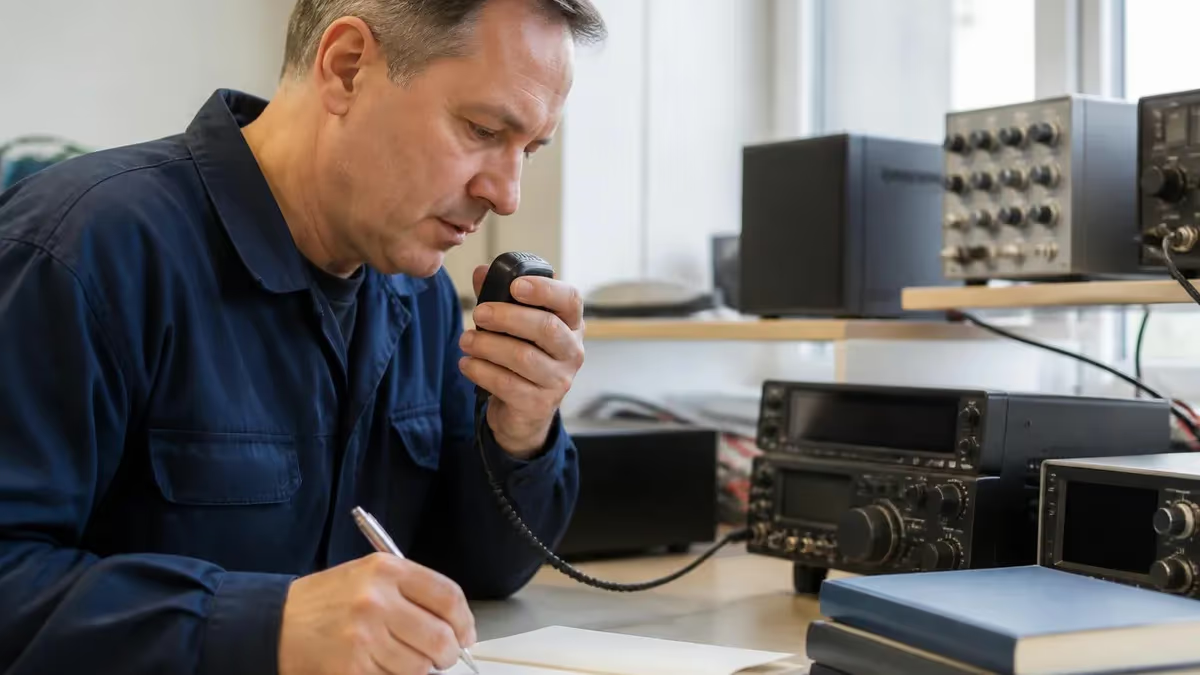
The ham radio license practice test is the single most effective tool for passing the FCC Technician exam on your first attempt, and most candidates who use one consistently score higher than those who only read manuals. The Technician test pulls 35 questions from a public pool of roughly 411 questions, which means every question you might face is already published. A quality practice test mirrors that pool exactly, randomizes answer choices, and shows you instant explanations so you understand the underlying radio theory rather than memorizing letters.
If you are starting from zero, do not panic. Thousands of people earn their ham radio license every month, and the vast majority have no engineering background. The exam covers basic electronics, FCC rules, operating procedures, antennas, and safety, but every concept is testable through specific multiple-choice questions you can drill repeatedly. With 10 to 15 hours of focused practice testing spread over two to three weeks, the average adult learner walks into the exam session and passes comfortably.
This page is built as your central hub for free Technician class practice exams. You will find category-specific question banks for antennas and feedlines, basic electronics, equipment usage, FCC regulations, and operating procedures. Each quiz pulls live from the current 2022 to 2026 question pool, so you are never studying outdated content. You can take a full 35-question simulation, or drill weak areas like Ohm's Law or band privileges until you reach 85 percent accuracy.
The FCC Volunteer Examiner Coordinators require 26 correct answers out of 35 to pass, which is 74 percent. Aim for 85 percent on practice tests before scheduling your exam. That buffer accounts for nerves, oddly worded questions, and the few topics you might guess on. Track your scores across at least 10 full-length practice sessions to confirm you are consistently in the safe zone, not just hitting passing once after multiple attempts.
What sets a good practice test apart is the explanation behind each answer. Knowing that the answer to a question about RF safety MPE limits is option C does not help you when the wording changes slightly. Knowing that maximum permissible exposure depends on frequency, duty cycle, and antenna gain lets you reason through any variation. Every quiz linked from this page includes plain-English explanations written by licensed operators, not boilerplate text.
Beyond passing, the Technician license opens doors to two-meter and 70-centimeter repeaters, GMRS-style local communication with far better range, severe weather spotting through SKYWARN, satellite contacts, digital modes like DMR and Fusion, and emergency communication groups like ARES and RACES. Your call sign is yours for ten years and is renewable for free. The 35-dollar FCC application fee plus the 15-dollar VE session fee is the only cost between you and a lifetime hobby.
Use this page as a roadmap. Start with the full diagnostic quiz to identify weaknesses, drill the specific subelements where you scored below 80 percent, and finish with three back-to-back full practice exams in test conditions. By the time you book your session, the real exam will feel like another practice round.
Ham Radio Technician Exam by the Numbers
Key Facts at a Glance
| Item | Value | Details |
|---|---|---|
| Questions in Pool | 411 | Current 2022-2026 pool |
| Questions on Exam | 35 | Randomly selected |
| Passing Score | 74% | 26 correct out of 35 |
| Time Allowed | 60 min | Most finish in 20 |
| Total Cost | $50 | $15 VE + $35 FCC |

Technician Exam Format: Subelements at a Glance
| Section | Questions | Time | Weight | Notes |
|---|---|---|---|---|
| T1 — Commission's Rules | 6 | 10 min | 17% | FCC Part 97 basics |
| T2 — Operating Procedures | 3 | 5 min | 9% | Repeaters, simplex, nets |
| T3 — Radio Wave Propagation | 3 | 5 min | 9% | VHF/UHF behavior |
| T4 — Amateur Radio Practices | 2 | 4 min | 6% | Station setup, interference |
| T5 — Electrical Principles | 4 | 8 min | 11% | Ohm's Law, units |
| T6 — Electrical Components | 4 | 8 min | 11% | Resistors, capacitors, schematics |
| T7 — Station Equipment | 4 | 8 min | 11% | Transmitters, receivers, modes |
| T8 — Modulation Modes | 4 | 8 min | 11% | FM, SSB, digital, satellites |
| T9 — Antennas & Feedlines | 2 | 4 min | 6% | SWR, coax, dipoles |
| T0 — Electrical Safety | 3 | 6 min | 9% | RF exposure, grounding, lightning |
| Total | 35 | 60 minutes | 100% |
Using a ham radio license practice test correctly is the difference between barely passing and walking out of the VE session confident enough to teach the material. The most common mistake is treating the question pool like flashcards and memorizing answer letters. This works for about three days, then collapses under exam stress when answer choices are reshuffled. Instead, treat every wrong answer as a learning trigger. Read the explanation, then write the underlying concept in your own words before moving on.
Start with a cold diagnostic. Take a full 35-question practice exam before opening any study guide. Your raw score tells you the gap between current knowledge and the 26-correct threshold. If you score 15, you have meaningful work ahead. If you score 22, you are likely two weekends from licensed. The diagnostic also reveals which of the ten subelements are strongest. Most newcomers crush operating procedures and rules but stumble on electrical principles and components, so plan accordingly.
Next, build a category rotation. Spend each study session on a single subelement, drilling 20 to 30 questions in that area until you hit 90 percent. Then move on. Returning to a topic three days later in a mixed-mode quiz cements long-term recall through spaced repetition. Research on the Technician question pool shows that learners who drill in focused blocks of 20 to 30 questions retain material substantially better than those who attempt all 411 questions in a single sitting.
The ham radio outlet question category and the equipment section reward learners who have actually held a radio. If possible, borrow or buy an inexpensive handheld like a Baofeng UV-5R or a higher-quality Yaesu FT-4XR. Programming a real frequency, listening to a local repeater, and identifying the parts of a feedline turns abstract questions into muscle memory. Vocabulary about PL tones, offsets, simplex, and squelch makes immediate sense once you have pressed the PTT button.
Track your scores in a simple spreadsheet or notebook. Date, subelement, raw score, percentage, and one note on what tripped you up. Patterns appear within a week. Maybe RF safety always drops your score five points. Maybe schematic symbols are the persistent weak spot. Visible data prevents the false confidence that comes from passing one easy quiz and assuming you are ready. Aim for three consecutive full-length scores at 85 percent or higher before you book the exam.
Finally, simulate the real environment. The Technician exam is 35 questions in a quiet room with no notes. Run at least three practice sessions in those exact conditions, ideally at the same time of day you plan to test. Phone away, timer running, no second guessing. This rehearses the test-taking state of mind that catches most candidates off guard. The questions are not harder on exam day, but the room is unfamiliar and adrenaline is high.
One overlooked tip is to read every word of every question on practice tests. The pool contains carefully written distractors, and answers often hinge on a single word like always, never, only, or except. Train yourself now to underline these qualifiers mentally so the habit transfers to the live exam.
Ham Radio Technician Practice Test Questions
Prepare for the Ham Radio Technician Test exam with our free practice test modules. Each quiz covers key topics to help you pass on your first try.
Ham Radio Technician Antennas & Feedlines
Ham Radio Technician Exam Questions covering Antennas & Feedlines. Master Ham Radio Technician Test concepts for certification prep.
Ham Radio Technician Basic Electronics & C...
Free Ham Radio Technician Practice Test featuring Basic Electronics & Circuitry. Improve your Ham Radio Technician Exam score with mock test prep.
Ham Radio Technician Equipment & Tools Usage
Ham Radio Technician Mock Exam on Equipment & Tools Usage. Ham Radio Technician Study Guide questions to pass on your first try.
Ham Radio Technician Amateur
Ham Radio Technician Test Prep for Amateur. Practice Ham Radio Technician Quiz questions and boost your score.
Ham Radio Technician General
Ham Radio Technician Questions and Answers on General. Free Ham Radio Technician practice for exam readiness.
Ham Radio Technician III
Ham Radio Technician Mock Test covering III. Online Ham Radio Technician Test practice with instant feedback.
Ham Radio Technician II
Free Ham Radio Technician Quiz on II. Ham Radio Technician Exam prep questions with detailed explanations.
Ham Radio Technician I
Ham Radio Technician Practice Questions for I. Build confidence for your Ham Radio Technician certification exam.
Ham Radio Technician License
Ham Radio Technician Test Online for License. Free practice with instant results and feedback.
Ham Radio Technician Licensing Regulations...
Ham Radio Technician Study Material on Licensing Regulations & Standards. Prepare effectively with real exam-style questions.
Ham Radio Technician Operating Procedures ...
Free Ham Radio Technician Test covering Operating Procedures & Etiquette. Practice and track your Ham Radio Technician exam readiness.
Ham Radio Technician Radio Wave Propagatio...
Ham Radio Technician Exam Questions covering Radio Wave Propagation & Modulation. Master Ham Radio Technician Test concepts for certification prep.
Ham Radio Technician Safety Procedures & R...
Free Ham Radio Technician Practice Test featuring Safety Procedures & Risk Management. Improve your Ham Radio Technician Exam score with mock test prep.
Ham Radio Frequencies, Bands & Equipment You Need to Know
Technician class privileges focus heavily on VHF and UHF, where the two-meter band (144 to 148 MHz) and the 70-centimeter band (420 to 450 MHz) dominate everyday activity. These bands carry FM voice through repeaters, digital modes like DMR and System Fusion, and even satellite operation. The exam will ask you to identify band edges, common simplex frequencies like 146.520 MHz, and repeater offsets such as plus or minus 600 kHz on 2m.
The 1.25-meter band (222 to 225 MHz) and the 33-centimeter band (902 to 928 MHz) also fall under Technician privileges but see less traffic outside specific regions. Knowing the ham radio frequencies available at each license level is critical because Technicians have full voice privileges above 30 MHz but limited HF access on 10 meters and small CW segments below 30 MHz.
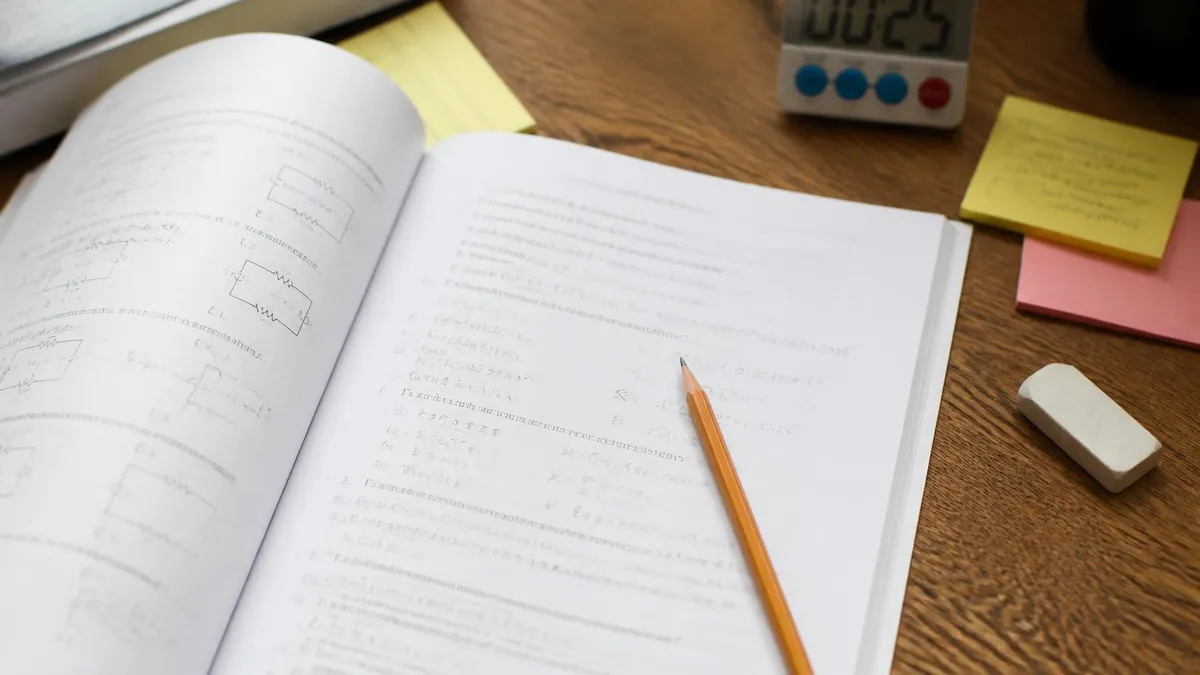
Practice Tests vs. Reading the Study Guide Only
- +Instant feedback identifies weak topics in minutes, not hours
- +Exposes you to actual exam wording and answer-choice format
- +Builds time-management instincts for the 60-minute test window
- +Tracks measurable progress through repeated scoring
- +Free, unlimited, and available 24/7 from any device
- +Reduces test anxiety by making the format familiar
- +Forces active recall, which research shows outperforms passive reading
- −Risk of memorizing answer letters instead of concepts
- −Can create false confidence after a single high score
- −Does not replace hands-on experience with a real radio
- −Some free sites use outdated question pools
- −Mobile interfaces can feel cramped for schematic questions
- −No human to clarify confusing topics like RF safety math
Pre-Exam Readiness Checklist for the Ham Radio License Test
- ✓Scored 85 percent or higher on three consecutive full-length practice exams
- ✓Reviewed every question I have ever answered incorrectly at least twice
- ✓Memorized Ohm's Law and basic power formulas (P = I × E)
- ✓Know the band edges for 2m, 70cm, 6m, and 10m by heart
- ✓Identified two valid forms of photo identification for the VE session
- ✓Located the nearest VE exam session or registered for an online ARRL/Laurel/W5YI exam
- ✓Created an FCC FRN (Federal Registration Number) in advance
- ✓Reviewed the current RF safety MPE limits and grounding requirements
- ✓Practiced reading schematic symbols for resistors, capacitors, and inductors
- ✓Slept at least seven hours the night before the test
- ✓Have $15 cash for the VE fee and credit card ready for the $35 FCC fee
- ✓Brought a non-programmable calculator and two sharpened pencils

Run your final practice exam at the same time of day as your scheduled test.
Cognitive performance varies by circadian rhythm. If your VE session is at 9 a.m. Saturday, your last three practice exams should happen at 9 a.m. on weekend mornings. This trains alertness and recall to peak at the moment that actually matters and eliminates the surprise of feeling foggy in an unfamiliar environment.
Certain question categories dominate the Technician exam pool, and understanding their weight helps you allocate practice time efficiently. The Commission's Rules subelement (T1) carries six questions, the highest single subelement count. This covers basic FCC Part 97 regulations including station identification every ten minutes, prohibited transmissions, third-party traffic rules, and the privileges granted at each license class. Memorize the call sign format, the meaning of 1x2, 2x2, and 2x3 call signs, and the rules about identifying at the end of a transmission.
Electrical principles (T5) and electrical components (T6) together account for eight questions, nearly a quarter of the exam. This is where most non-technical candidates lose points. The math is not complex, but the volume of formulas and unit conversions can overwhelm. Focus on Ohm's Law in all three forms, the difference between voltage, current, resistance, and power, and how to convert between watts, milliwatts, and microvolts. Schematic symbol recognition is pure memorization but only covers about a dozen common components.
Modulation modes (T8) tests four questions on FM, SSB, AM, CW, and digital modes. Technicians use FM almost exclusively on VHF and UHF, but the exam still expects you to know that SSB requires less bandwidth than AM, that CW is the most efficient mode for weak signals, and that digital modes like FT8 and Winlink occupy specific portions of the band. Satellite operation also falls under T8, including the difference between linear transponders and FM repeater satellites in low Earth orbit.
Antennas and feedlines (T9) carry only two questions but appear deceptively easy. The pool includes specific numbers you must know: a half-wave dipole for 146 MHz is approximately 38 inches, a quarter-wave ground plane is roughly half that length, and feedline loss increases with frequency. Higher SWR causes reflected power, which can damage transmitters in extreme cases. Practical knowledge of ham radios with detachable antennas pays off here because you can visualize the relationships rather than memorize them.
Electrical safety (T0) carries three questions covering RF exposure, electrical shock, and lightning protection. The Maximum Permissible Exposure (MPE) calculations involve frequency, duty cycle, and antenna gain, but the exam typically presents simplified scenarios rather than full math. Know that 50 volts can be lethal under wet conditions, that grounding rods should be at least eight feet long, and that lightning arrestors belong outside the building on the entry point of any feedline.
Operating procedures (T2) and radio wave propagation (T3) round out the practical knowledge sections with three questions each. Procedures cover repeater offsets, CTCSS tones, simplex versus duplex operation, and proper net check-in etiquette. Propagation tests sporadic E, tropospheric ducting, line-of-sight VHF behavior, and the basics of why 2-meter signals do not reflect off the ionosphere the way HF does.
Allocate your study hours proportionally to subelement weight. Six hours on T1, four hours each on T5 through T8, two hours each on T2 through T4 and T9, and three hours on T0. This 35-hour plan, broken into 30-minute daily sessions, has produced consistent first-time passes across thousands of documented learners.
Many candidates dismiss T0 (Electrical Safety) as common sense and lose easy points. The questions on Maximum Permissible Exposure (MPE) require specific knowledge about duty cycle calculations, antenna gain factors, and minimum safe distances. These three questions can be the difference between passing and retaking the exam, so dedicate at least one full study session to the T0 subelement.
Exam day strategy starts the night before. Pack your bag with a non-programmable calculator (no phones, no smartwatches), two government-issued IDs, your FCC FRN, the $15 VE session fee in cash, and a printed copy of any prior license documentation if you hold one. Eat a real breakfast. Arrive 30 minutes early to handle paperwork without rushing. The Volunteer Examiners are unpaid hobbyists who run sessions professionally, but late arrivals create stress that bleeds into the testing itself.
During the exam, work in three passes. First pass: answer every question you know instantly, skip anything that requires thought. This builds momentum and locks in your easy points. Second pass: tackle the questions requiring calculation or careful reading. Use scratch paper liberally. Third pass: address the questions you completely guessed. By this stage, your brain has warmed up and patterns from earlier questions sometimes reveal the answer. Never leave a question blank; there is no penalty for guessing and a 25 percent chance you are right.
Use the elimination method aggressively. Most Technician questions have one obviously wrong answer, one plausible-but-wrong distractor, and two competing correct-sounding answers. Eliminate the throwaway first to improve your odds from 25 percent to 33 percent, then look for the qualifier word (always, never, only, except) that tips the remaining two. The official question pool is written with consistent patterns once you have seen 200 to 300 questions, and your practice tests train this pattern recognition automatically.
If you finish in 20 minutes, do not turn in your sheet immediately. The exam is yours for a full 60 minutes. Use that time to review every answer at least once. Catch transcription errors where you marked B but meant C. Re-examine questions where you felt uncertain. Studies of multiple-choice exam takers show that thoughtful review changes 3 to 5 percent of answers, and roughly two-thirds of those changes are from wrong to right when the candidate had a specific reason to reconsider.
After you submit, the VE team grades your test on the spot. Within minutes you will know your score. Pass with 26 or more correct out of 35 and the team helps you complete FCC Form 605, which transmits to the FCC for license issuance. Your call sign typically appears in the FCC ULS database within seven to ten business days, sometimes faster. You cannot legally transmit until that call sign is officially assigned, but you can listen, learn local repeater habits, and program your radio while you wait.
If you do not pass, you can usually retest the same day for another $15 fee, and the VE team will generate a fresh 35-question exam from the pool. About 15 percent of Technician candidates retest at the same session, and most of those pass on the second attempt. The remaining candidates leave with a clear sense of which subelements need work and typically return within two to four weeks to a different VE session.
Pass rates for the Technician exam hover around 75 to 80 percent first-time, but candidates who complete at least 10 full-length practice exams before testing exceed 95 percent pass rates. The data is unambiguous: practice testing is the highest-ROI activity in your prep cycle. Treat this ham radio outlet of free practice tools as a complete course, not a supplement, and the exam becomes a formality rather than an obstacle.
The final week before your exam should look different from the previous weeks. Stop introducing new material. Instead, run one full 35-question practice exam every morning and one focused subelement quiz every evening. This dual-format approach keeps full-test endurance sharp while cleaning up any lingering weak areas. Resist the temptation to cram more pool questions in the 48 hours before the exam. Sleep and confidence outperform last-minute panic studying every time.
Program your radio in advance. Even though you cannot transmit until licensed, programming local 2-meter and 70-centimeter repeaters into a handheld teaches frequency, offset, and PL tone in a way no textbook can. Use a free tool like CHIRP for Baofeng and many Yaesu radios. Listen to your local repeater during evening commute hours. You will hear actual operators using the terminology the exam asks about, which makes vocabulary questions trivially easy by exam day.
Join your local club before testing. Most clubs welcome unlicensed visitors and offer mentoring, sometimes pairing newcomers with an Elmer, the traditional term for a ham radio mentor. Clubs run Volunteer Examiner sessions on regular schedules and often include the VE fee in club membership. Knowing the people who will administer your exam removes a layer of intimidation and gives you a built-in community for after you pass. ARRL (American Radio Relay League) maintains a club finder at arrl.org/find-a-club.
Online VE sessions through GLAARG, W5YI, and Laurel Amateur Radio Club have made testing radically more accessible. You sit at home with two cameras (one on your face, one over your shoulder showing the room) and complete the exam through a proctored video session. Cost ranges from $5 to $15 and sessions run multiple times daily. If no in-person session is available within a reasonable drive, online testing is the modern standard and carries identical legal weight.
Once you pass and your call sign appears in the FCC ULS, your real learning begins. The Technician license is a starting point, not a finish line. Most operators upgrade to General class within their first year because HF privileges open worldwide communication on 20 meters, 40 meters, and beyond. Practice tests for General class follow the same format with 35 questions from a 432-question pool, so the study technique you mastered here transfers directly.
Build a habit of monthly on-air activity. Check into a local net once a week. Attempt one new mode each quarter, whether that is APRS digital position reporting, EchoLink internet-linked repeaters, or a satellite contact through SO-50. Hams who become active within 90 days of licensing renew their license at much higher rates than those who let the radio sit on a shelf. The hobby rewards engagement, and your investment in passing the exam pays dividends only when the radio is actually used.
Document your journey. Keep a logbook from your very first contact. Apps like HAMRS, Log4OM, and N3FJP make logging painless, and your future self will treasure looking back at QSO number one a decade from now. The ham radio community values continuity, history, and mentorship, so consider returning to help future candidates pass the same exam you are about to conquer. Every licensed operator was once exactly where you are right now, refreshing a practice test page hoping for a higher score.
Ham Radio Technician Questions and Answers
About the Author

Educational Psychologist & Academic Test Preparation Expert
Columbia University Teachers CollegeDr. Lisa Patel holds a Doctorate in Education from Columbia University Teachers College and has spent 17 years researching standardized test design and academic assessment. She has developed preparation programs for SAT, ACT, GRE, LSAT, UCAT, and numerous professional licensing exams, helping students of all backgrounds achieve their target scores.
Join the Discussion
Connect with other students preparing for this exam. Share tips, ask questions, and get advice from people who have been there.
View discussion (3 replies)