
Custom Ham Radio Hats, Gear & Merchandise: The Complete Guide for Licensed Operators
Custom ham radio hats, gear & merch for licensed operators. Learn about ham radio license, equipment & frequencies. 🎯 Start here!
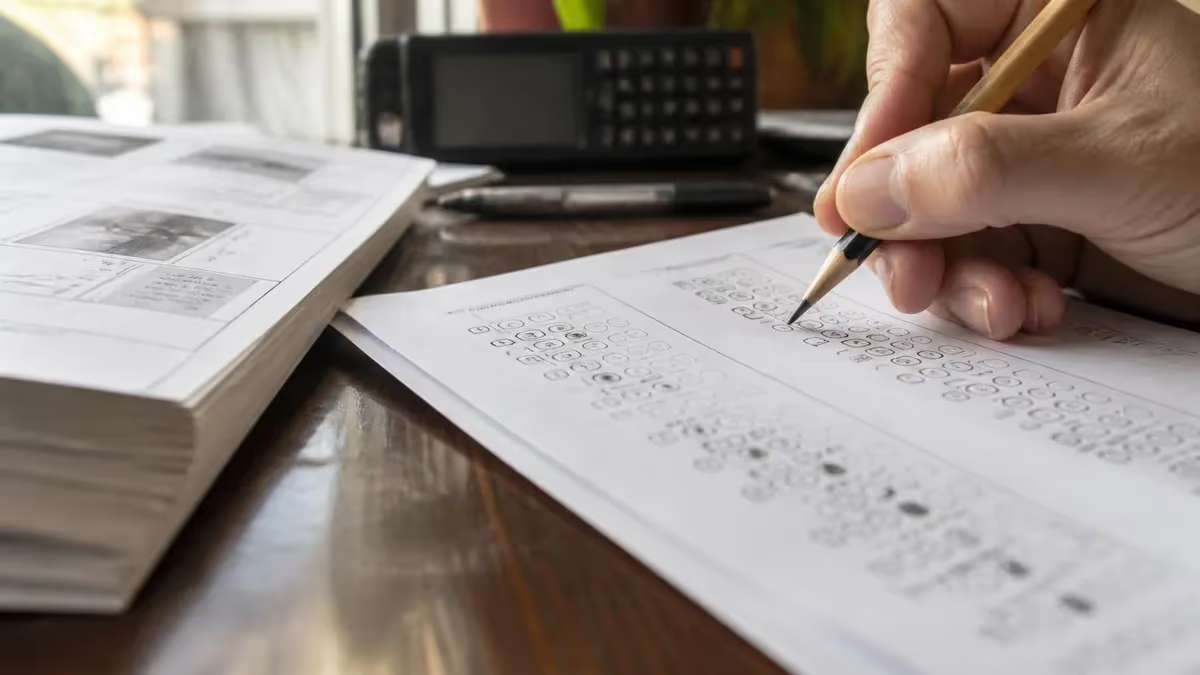
Custom ham radio hats and branded merchandise have become a beloved tradition in the amateur radio community, offering operators a way to display their passion, callsign, and club affiliation with pride. Whether you are shopping at your local hro ham radio outlet or browsing online stores, you will find everything from embroidered caps to license-plate frames celebrating the hobby. But before you can truly call yourself part of this community, you need to earn your ham radio license — and that journey is just as rewarding as the gear itself.
The ham radio license is the essential gateway to legally transmitting on amateur frequencies in the United States. Issued by the Federal Communications Commission, the Technician class license is the entry-level credential that opens access to VHF and UHF bands, local repeaters, and even some HF frequencies when paired with the right privileges. Millions of operators across the country wear their callsign proudly on hats, shirts, and jackets as a symbol of the effort they put into passing their exam.
Ham radios come in an enormous variety of configurations — from handheld handie-talkies you can clip to a belt to sophisticated base stations that fill an entire room. Understanding the range of ham radio equipment available helps new operators make smart purchasing decisions and choose gear that matches their operating goals. The merchandise world mirrors this diversity, with products designed for everything from DXers chasing contacts on distant continents to local net operators who check in every week.
Ham radio frequencies span an astonishing range, from 1.8 MHz at the bottom of the high-frequency spectrum all the way up through microwave bands above 300 GHz. Each portion of the spectrum has its own propagation characteristics, licensing requirements, and community culture. Hats and patches featuring specific band designations — like the popular 2-meter or 70-centimeter designs — are a quick way for operators to signal their favorite slice of the radio dial to fellow enthusiasts.
Ham radio bands are organized by wavelength and frequency range, with each band governed by an international frequency allocation table managed by the International Telecommunication Union and implemented domestically by the FCC. The Technician license grants full privileges on bands above 50 MHz, making VHF and UHF the playground for new operators. Many merchandise designs incorporate specific band designations or the iconic Q-codes that veteran operators use to communicate efficiently on the air.
Ham radio prep is a critical phase for anyone pursuing their license, and the community around exam preparation has spawned its own culture of study groups, club meetings, and — yes — themed merchandise. Study guides, practice exam booklets, and even coffee mugs bearing the phrase "73 de [your callsign]" can be found at hamfests and online shops nationwide. Understanding the exam structure, the question pool, and effective study strategies will set you up for success on test day.
This guide explores the intersection of ham radio culture and merchandise, helping you understand the licensing pathway, the equipment ecosystem, and the rich tradition of branded gear that unites operators across every state and territory. Whether you are a brand-new Technician studying for the ham radio license test or a seasoned Extra class operator looking to add to your collection, there is something here for every level of enthusiasm and experience.
Ham Radio Technician Test: upcoming dates and official changes
- Jul 1, 2026: The revised 2026–2030 Technician Class question pool became mandatory for Ham Radio Technician examinations on July 1, 2026. (Federal Communications Commission (FCC); examinations administered by Volunteer Examiner Coordinators, including ARRL VE)
Facts verified Oct 18, 2026 against Federal Communications Commission (FCC); examinations administered by Volunteer Examiner Coordinators, including ARRL VE. Dates that have passed are removed automatically.
- The Ham Radio Technician examination contains 35 multiple-choice questions. (Federal Communications Commission (FCC); examinations administered by Volunteer Examiner Coordinators, including ARRL VE)
- Passing the Ham Radio Technician examination requires at least 26 correct answers out of 35 questions. (Federal Communications Commission (FCC); examinations administered by Volunteer Examiner Coordinators, including ARRL VE)
- A new Ham Radio Technician license application costs $35 payable to the FCC, separately from the administering VEC's examination fee. (Federal Communications Commission (FCC); examinations administered by Volunteer Examiner Coordinators, including ARRL VE)
- Retaking a failed Ham Radio Technician examination element at an ARRL VEC session requires an additional examination fee. (Federal Communications Commission (FCC); examinations administered by Volunteer Examiner Coordinators, including ARRL VE)
- A Ham Radio Technician examination retake cannot reuse the same question set previously administered to that examinee. (Federal Communications Commission (FCC); examinations administered by Volunteer Examiner Coordinators, including ARRL VE)
- The FCC Ham Radio Technician license is normally granted for a 10-year term. (Federal Communications Commission (FCC); examinations administered by Volunteer Examiner Coordinators, including ARRL VE)
- An expired Ham Radio Technician license may be renewed during a two-year filing grace period, but operating privileges cease until renewal. (Federal Communications Commission (FCC); examinations administered by Volunteer Examiner Coordinators, including ARRL VE)
- The Ham Radio Technician examination can be taken in person or online. (Federal Communications Commission (FCC); examinations administered by Volunteer Examiner Coordinators, including ARRL VE)
- Anyone who qualifies by examination may apply for a Ham Radio Technician license except a representative of a foreign government. (Federal Communications Commission (FCC); examinations administered by Volunteer Examiner Coordinators, including ARRL VE)
Facts verified Oct 18, 2026 against Federal Communications Commission (FCC); examinations administered by Volunteer Examiner Coordinators, including ARRL VE. Dates that have passed are removed automatically.
Ham Radio Technician Test Exam at a Glance
Facts verified Oct 18, 2026 against Federal Communications Commission (FCC); examinations administered by Volunteer Examiner Coordinators, including ARRL VE. Dates that have passed are removed automatically.
Ham Radio Community by the Numbers

Ham Radio License Classes & What They Unlock
The entry-level license granting full privileges on all amateur bands above 30 MHz, plus limited HF phone and CW access. Requires passing a 35-question written exam covering regulations, operating practices, and basic electronics theory.
The intermediate license that unlocks the majority of HF band privileges, enabling worldwide communication on shortwave frequencies. Requires passing an additional 35-question exam after holding a Technician license.
The top-tier license granting full operating privileges on all amateur frequencies. Requires a 50-question exam covering advanced topics including electronics, antenna theory, and operating regulations.
Licensed operators can apply for a vanity callsign reflecting their initials or a memorable sequence, and clubs can hold their own licenses. These callsigns often appear on custom hats, patches, and other personalized merchandise.
Understanding what is ham radio in its full scope is the foundation for appreciating both the equipment and the culture that surrounds it. Amateur radio is a two-way communication service that allows licensed individuals to experiment with radio technology, communicate with other operators around the world, and provide emergency communications support during disasters. The hobby spans a remarkable range of activities, from casual chatting on local repeaters to bouncing signals off the moon using Earth-Moon-Earth techniques.
Ham radio equipment encompasses an enormous ecosystem of transceivers, amplifiers, antennas, feedlines, tuners, and accessories. At the entry level, a handheld transceiver — commonly called an HT — can be purchased for under $30, making amateur radio one of the most accessible technical hobbies available today. Mid-range mobile radios suitable for vehicle installation typically run $150 to $400, while serious base station HF transceivers from manufacturers like Yaesu, Icom, and Kenwood can cost $700 to well over $5,000 depending on features.
Ham radio frequencies are divided into allocations managed by the FCC, with each band carrying specific power limits, emission types, and license class requirements. The 2-meter band (144–148 MHz) and the 70-centimeter band (420–450 MHz) are the bread and butter of Technician class operation, supporting voice repeaters, digital modes like D-STAR and DMR, and amateur satellite communication. These bands are so popular that merchandise featuring their designations — particularly the iconic "2m/70cm" dual-band label — is a staple at hamfest vendor tables.
Ham radio bands on the HF spectrum, covering roughly 1.8 MHz to 30 MHz, enable long-distance skywave propagation that allows contacts with operators on other continents without any repeater infrastructure. The ionosphere reflects HF radio waves back to earth, with different layers active at different times of day and in different seasons. General and Extra class operators who have unlocked these bands often proudly display their HF capabilities on merchandise, sometimes featuring the specific band where they achieved their most memorable contacts.
Ham radio antenna design is a deeply technical and creative discipline that significantly impacts station performance. Antennas range from simple wire dipoles that can be built for a few dollars to elaborate Yagi arrays and vertical antenna systems that cost thousands. The ham radio antenna you choose determines which directions you can communicate, how much of your transmitted power actually radiates, and how well you receive weak signals from distant stations. Many operators display miniature antenna replicas or antenna-themed designs on their merchandise to honor the technical artistry involved.
Ham radio prep resources have expanded dramatically in the digital age, with apps, websites, and video courses making it easier than ever to study the question pool. The National Council of Volunteer Examiner Coordinators (NCVEC) updates the question pool every four years, ensuring that exam content stays current with evolving technology and regulations. Study groups organized by local clubs, online forums like Reddit's r/amateurradio, and practice exam platforms all contribute to a thriving prep ecosystem that many operators credit with building lifelong friendships.
Ham radio outlets and specialty retailers play a key role in the merchandise ecosystem, stocking everything from callsign-embroidered hats to club-branded jackets at their physical locations and online stores. Major hamfests — amateur radio conventions held throughout the year across the United States — feature enormous flea markets and vendor halls where merchandise vendors set up alongside equipment dealers. The Dayton Hamvention, held annually in Ohio, is the largest gathering of amateur radio operators in North America and a premier destination for both equipment purchases and hobby merchandise.
Ham Radio Bands, Equipment & Merchandise Culture
The HF bands — spanning 1.8 MHz through 30 MHz — are where long-distance DX (distance) communication happens. Operators on these bands can contact every country in the world using nothing more than a wire antenna and modest power levels when band conditions are favorable. Merchandise themed around DX achievements, like DXCC (DX Century Club) award plaques and country-counter hats, are prestigious symbols of dedication in the amateur radio world.
Band openings on 10 meters (28–29.7 MHz) and 15 meters (21–21.45 MHz) during high solar cycle years can produce extraordinary propagation, allowing contacts with stations thousands of miles away using only a few watts. Operators often keep detailed logs of these contacts and celebrate milestone totals with commemorative patches, pins, and custom apparel. The culture around HF operating is deeply tied to achievement and recognition, making branded merchandise a natural extension of the hobby's competitive and celebratory spirit.

Pros and Cons of Buying Ham Radio Merchandise
- +Builds community identity and helps operators recognize fellow enthusiasts in public settings
- +Custom callsign merchandise makes an excellent personalized gift for newly licensed friends and family members
- +Club-branded gear supports local amateur radio organizations and their public service mission
- +Hamfest commemorative items serve as lasting souvenirs that document your history in the hobby
- +Wearing your callsign on a hat or shirt can spark conversations that introduce new people to amateur radio
- +High-quality embroidered hats and jackets provide durable, everyday-use items that last for years
- −Custom embroidery and printing minimums can make small orders expensive on a per-item basis
- −Callsign merchandise becomes outdated if you upgrade your license class and receive a new callsign
- −Cheap screen-printed items from low-quality vendors may fade quickly with repeated washing
- −Oversized merchandise collections can accumulate clutter if you attend many hamfests annually
- −Some generic ham radio merchandise uses incorrect terminology or symbols that experienced operators notice
- −Shipping costs for bulky items like jackets and hats can significantly increase the total purchase price
Pros and Cons at a Glance
| Pros | Cons |
|---|---|
| Builds community identity and helps operators recognize fellow enthusiasts in public settings | Custom embroidery and printing minimums can make small orders expensive on a per-item basis |
| Custom callsign merchandise makes an excellent personalized gift for newly licensed friends and family members | Callsign merchandise becomes outdated if you upgrade your license class and receive a new callsign |
| Club-branded gear supports local amateur radio organizations and their public service mission | Cheap screen-printed items from low-quality vendors may fade quickly with repeated washing |
| Hamfest commemorative items serve as lasting souvenirs that document your history in the hobby | Oversized merchandise collections can accumulate clutter if you attend many hamfests annually |
| Wearing your callsign on a hat or shirt can spark conversations that introduce new people to amateur radio | Some generic ham radio merchandise uses incorrect terminology or symbols that experienced operators notice |
| High-quality embroidered hats and jackets provide durable, everyday-use items that last for years | Shipping costs for bulky items like jackets and hats can significantly increase the total purchase price |
Ham Radio Merchandise & License Checklist for New Operators
- ✓Pass the 35-question Technician written exam with a score of 74% or higher (26 correct answers)
- ✓Register for an FCC Registration Number (FRN) at the FCC website before your exam session
- ✓Pay the $35 FCC application fee within 10 days of passing your exam to activate your license
- ✓Look up your new callsign in the ULS database and confirm the license is active before transmitting
- ✓Order a custom hat or patch with your callsign within the first week to celebrate your achievement
- ✓Join your local amateur radio club and purchase club-branded merchandise to show your affiliation
- ✓Add your callsign to your vehicle's license plate frame or window decal for mobile station identification
- ✓Pick up a logbook — printed or digital — and begin recording all your contacts with date, time, and frequency
- ✓Attend your first hamfest and budget for at least one commemorative event item from the vendor hall
- ✓Upgrade your study materials for the General class exam and set a target date to earn expanded HF privileges
Your Callsign Is Your Identity — Wear It Proudly
In the amateur radio community, your callsign is more than just a regulatory requirement — it is your unique identity on the air and in the broader hobby community. Custom ham radio hats and merchandise bearing your callsign are the fastest way to build recognition at local club meetings, hamfests, and public service events. Many veteran operators say that wearing their callsign sparked their first conversation with a mentor who changed their entire operating trajectory.
Ham radio prep is not just about memorizing answers from the question pool — it is about building a genuine understanding of radio theory, FCC regulations, and operating procedures that will serve you throughout your amateur radio career. The Technician exam question pool contains 423 questions across ten subelements, but only 35 are selected for any given exam. Effective study means rotating through all the pool questions multiple times until you can correctly answer at least 90% before sitting for the real test.
The ham radio license test is administered by Volunteer Examiner teams authorized by coordinating organizations like the ARRL VEC, W5YI VEC, and others. Exam sessions are held in-person at club meetings, hamfests, and libraries across the country, as well as online through remote proctoring options that became widely available after 2020. Finding an exam session near you is straightforward through the ARRL's online session finder, and most sessions charge a nominal fee of $15 or less to cover administrative costs.
Study timelines vary significantly depending on your background in electronics and radio technology. A complete beginner with no prior technical experience typically needs four to eight weeks of consistent study — roughly 30 to 60 hours total — to be well-prepared for the Technician exam. Someone with an electronics, engineering, or IT background may be ready in as little as one to two weeks. The key is not rushing; understanding the material deeply makes you a better, safer operator and prepares you for the General and Extra upgrades.
Ham radio frequencies and band plans are a significant portion of the Technician exam, covering topics like frequency privileges by license class, proper calling frequencies, and the importance of checking band plans before transmitting. The ARRL band plan is the standard reference for US operators, laying out not just the legal limits but the voluntary conventions that keep different modes and user groups from interfering with each other. Learning these conventions early will prevent common operating mistakes that frustrate experienced operators.
Ham radio antenna theory is another major exam topic, covering resonance, SWR (standing wave ratio), gain, and the practical differences between omnidirectional and directional antenna types. Questions about antenna height, polarization, and the effect of antenna length on operating frequency appear regularly in the Technician pool. Mastering this section not only helps you pass the exam but prepares you to make smart equipment decisions when you start building your first station.
Many successful Technician candidates supplement practice exams with hands-on experience before their test date. Attending a local club meeting, listening on a scanner or software-defined radio, or participating in a club's public service event as an observer all provide context that makes abstract exam questions feel concrete. Some clubs offer formal Elmering programs — named after the traditional term for a mentor in amateur radio — that pair new students with experienced operators who guide them through the learning process.
The reagan weinberger achille lauro conversation ham radio episode in 1985 is a famous example of ham radio's real-world significance, demonstrating how amateur radio operators can provide communication links that official channels cannot. Stories like this inspire many new operators to pursue their license with a sense of purpose beyond the hobby itself. Emergency communication training through programs like ARES (Amateur Radio Emergency Service) and RACES gives licensed operators the skills to serve their communities during natural disasters and other crises.
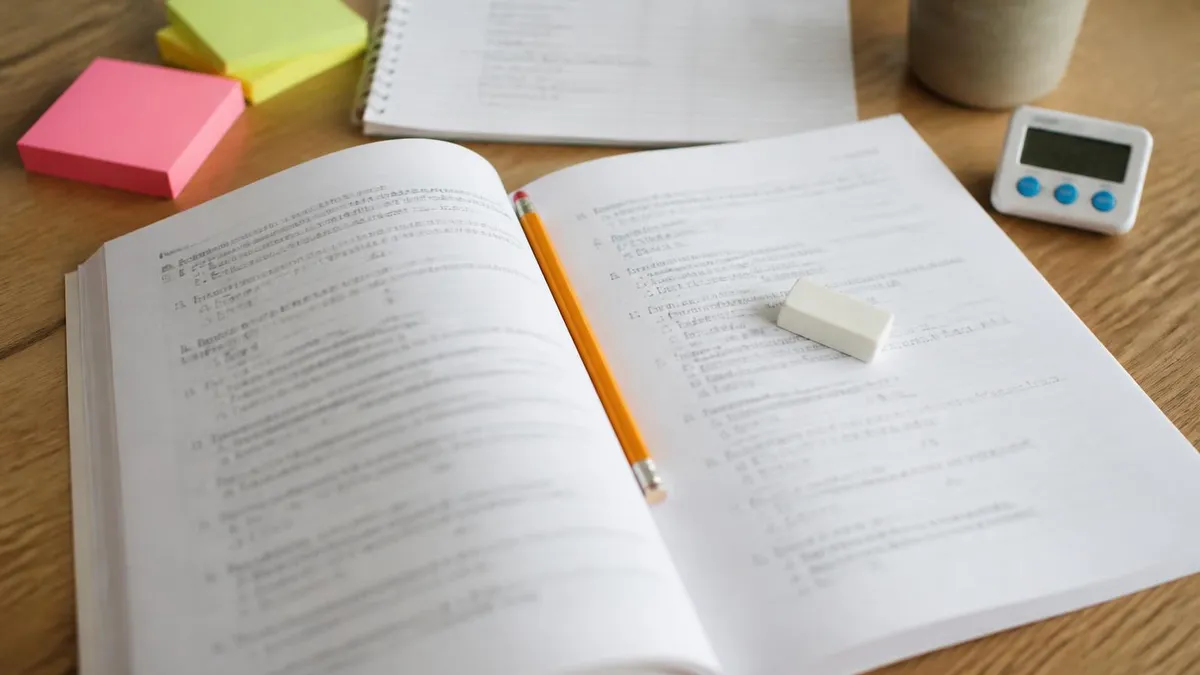
After passing your Technician exam, you have exactly 10 calendar days to pay the $35 FCC application fee through the FCC's CORES payment system. If you miss this window, your application will be dismissed and you will need to retake the exam. Make sure you have an active FCC Registration Number (FRN) set up before your exam date so you can complete the payment process quickly after you pass.
Choosing the right custom ham radio hats and merchandise starts with identifying what aspects of the hobby mean most to you. Are you primarily a VHF/UHF local net operator, a dedicated DXer hunting rare countries on the HF bands, or an emergency communications volunteer who deploys during disasters? Each of these operating identities has its own rich merchandise tradition, from repeater-club baseball caps to ARES reflective vests bearing your callsign and contact information.
The quality of custom embroidery matters enormously for longevity and appearance. Look for vendors who use at least 300,000-stitch-rated machines and high-denier polyester thread rather than cheaper rayon alternatives. A well-embroidered callsign hat will maintain crisp, readable lettering through dozens of washes without fraying or color fading. Many amateur radio operators report that poorly embroidered hats from budget vendors look noticeably worn within just a few months of regular use.
Hat style selection should account for your typical operating environment. A structured baseball cap with a flat or curved brim works well for outdoor events and public service operations, while a knit beanie bearing your club logo is perfect for winter emergency communication deployments. Bucket hats and boonie hats have gained popularity among portable operators who spend long hours outdoors at parks on the air (POTA) activations, where sun protection is as important as radio operating.
Callsign customization options have expanded significantly with modern printing and embroidery technology. Beyond basic text, operators can now include their state, club logo, favorite operating mode, or even a small representation of their antenna system. Some vendors offer QR codes that link to the operator's QRZ.com profile page, allowing anyone with a smartphone to instantly learn more about the operator's station and operating history simply by scanning the hat or shirt.
The andy's ham radio linux iso and other community-created software tools reflect the maker spirit that pervades amateur radio culture, and that same spirit extends to merchandise creation. Many clubs use DIY heat-transfer vinyl cutters, embroidery machines, and 3D printers to produce their own branded items at dramatically lower cost than commercial vendors. Learning to create your own merchandise using these tools can be a rewarding extension of the technical experimentation that defines amateur radio.
Ham radio outlet stores, both physical locations and e-commerce platforms, often carry ready-made merchandise alongside equipment. Companies like Ham Radio Outlet (HRO) stock branded apparel and accessories at their retail locations and on their website, giving new operators a one-stop shopping experience. Specialty vendors at major hamfests like Dayton Hamvention, Orlando Hamcation, and Pacificon offer the widest selection of custom and commemorative merchandise, with prices typically running $20 to $50 for quality embroidered hats and $25 to $75 for branded jackets.
Building a merchandise wardrobe over time — rather than buying everything at once — allows you to accumulate items that each represent a meaningful milestone or memory in your amateur radio journey. Your first hat might celebrate passing the Technician exam; a second marks your General upgrade; a third commemorates your first POTA activation or your first contact on the 20-meter band. Each piece tells a story, and collectively they document a hobby life filled with learning, community, and radio waves.
Practical preparation for the ham radio license test involves more than passive reading — it requires active recall practice using real exam questions from the official question pool. The question pool for the Technician class license is publicly available from the NCVEC and is updated on a four-year cycle, with the current pool valid through June 2026. Using only up-to-date pool questions ensures you are studying material that will actually appear on your exam rather than outdated content from a previous cycle.
Spaced repetition is the most evidence-backed method for memorizing the large volume of exam questions required for the Technician test. Apps and websites that implement spaced repetition algorithms — showing you questions more frequently when you answer incorrectly and less frequently as you demonstrate mastery — dramatically improve retention compared to simple random shuffling. Aim to complete at least five full-length practice exams, each under realistic conditions, before scheduling your actual test session.
Understanding the reasoning behind correct answers, rather than simply memorizing which letter to select, pays dividends both on the exam and in your actual operating life. For example, understanding why a half-wavelength dipole is 468 divided by the frequency in megahertz — rather than just memorizing the formula — helps you calculate antenna lengths for any band you might work with in the future. This deeper comprehension is what separates operators who pass once and forget the material from those who carry the knowledge throughout their ham radio career.
Ham radio prep groups offered by local clubs provide structured study sessions, practice exams, and direct access to licensed operators who can answer questions and share real-world experience. Many clubs run licensing classes multiple times per year, particularly in the spring and fall, and offer the exam immediately upon completion of the course. Some clubs even provide loaner equipment so new students can listen on amateur frequencies before committing to their own equipment purchase.
After passing your exam and receiving your callsign, the real education begins on the air. Making your first contact — even a simple voice exchange on a local repeater — consolidates everything you learned in a way that no amount of study can fully replicate. Many new Technicians describe their first on-air contact as a profoundly exciting moment, the culmination of weeks of study and preparation finally realized in a real radio signal transmitted under their own callsign.
Emergency communication preparedness is a core value of amateur radio that gives the hobby a public-service dimension beyond personal enjoyment. Organizations like ARES (Amateur Radio Emergency Service) train licensed operators to provide communication support during disasters when commercial infrastructure fails. Participating in ARES and similar groups often means acquiring specialized equipment and branded gear — reflective vests, ID badges, and go-bag patches — that identify you as part of a coordinated emergency communication team.
The combination of technical knowledge, practical operating experience, and community involvement creates a hobby experience that grows richer with every year of participation. Custom ham radio hats and merchandise are just one visible expression of a deep commitment to a hobby that serves both personal enrichment and the broader public good. As you grow from a newly licensed Technician into an experienced operator, the gear you accumulate — both electronic and sartorial — tells the story of a journey that never really ends.
Sample Ham Radio Technician Test Practice Questions
Try these questions from our free Ham Radio Technician Test practice tests. The correct answer and an explanation follow each question.
Under FCC rules, which bands are shared between amateur operators and other licensed services, requiring amateurs to avoid causing interference?
- A. All amateur bands are exclusive to amateur use
- B. Some amateur bands are secondary allocations where amateurs must not interfere with primary users
- C. Amateur operators always have primary status on all bands
- D. Sharing only applies to HF bands above 20 MHz
Answer: B. Some amateur bands are secondary allocations where amateurs must not interfere with primary users
In many amateur allocations, amateurs are secondary users who must not cause interference to and must accept interference from primary users.
What is the correct term for an amateur radio operator who is licensed but not yet holding General or Amateur Extra privileges?
- A. Technician
- B. Novice
- C. Conditional
- D. Limited
Answer: A. Technician
Technician is the entry-level FCC amateur radio license class currently in use, granting VHF/UHF privileges and limited HF access.
Which of the following is a valid reason for an amateur operator to use a 'tactical call sign' during emergency operations?
- A. To avoid FCC identification requirements entirely
- B. To identify a station's function or location clearly during a rapidly changing situation
- C. To operate anonymously for security purposes
- D. To use a shorter call sign than the FCC assigned
Answer: B. To identify a station's function or location clearly during a rapidly changing situation
Tactical call signs (e.g., 'Command Post' or 'Red Cross Shelter') identify a station's role during emergencies but do not replace FCC ID requirements.
What does it mean when an amateur operator says a contact was made 'via EME'?
- A. Communication was made through an emergency mesh network
- B. The signal was reflected off the Moon to reach the other station
- C. The contact used an Ethernet Modulation Encoder
- D. The transmission was relayed via a geostationary satellite
Answer: B. The signal was reflected off the Moon to reach the other station
EME (Earth-Moon-Earth), also called 'moonbounce,' is a propagation technique where signals are reflected off the lunar surface to communicate over extreme distances.
Take the full Ham Radio Technician Test practice test
Ham Radio Technician Questions and Answers

How Far Can Ham Radio Reach? Complete Guide to Ham Radio Range, Frequencies, and Getting Your License

Ham Radio Mobile: Complete Guide to Getting Your Ham Radio License and Operating on the Go
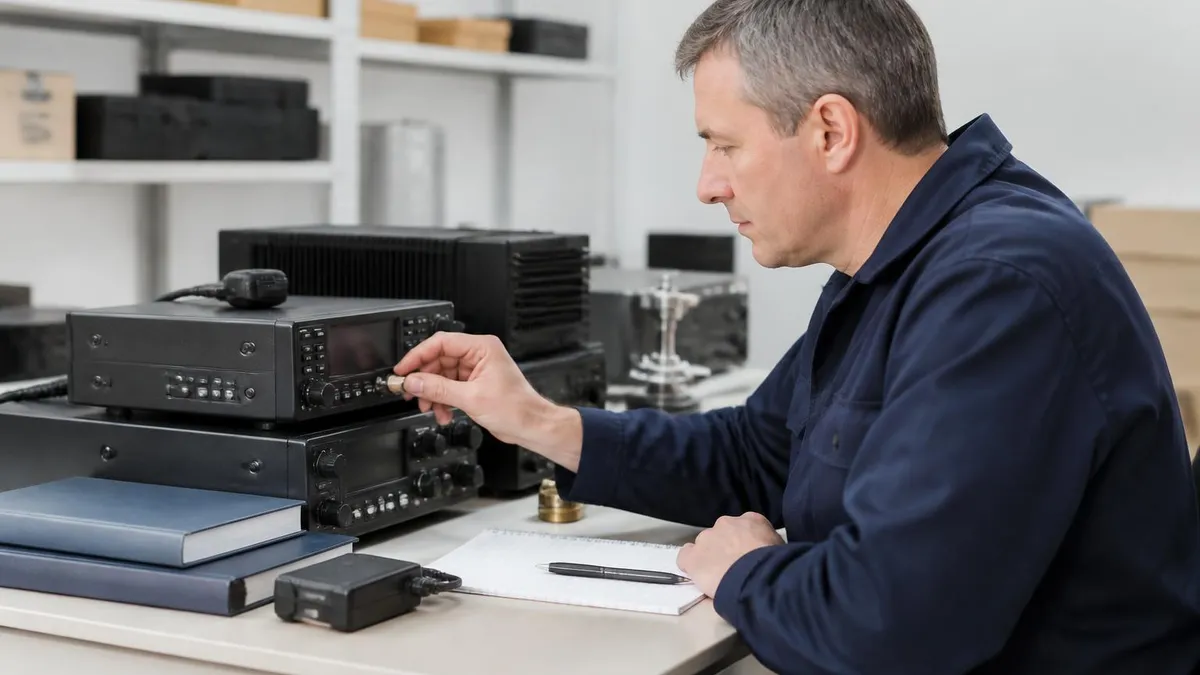
Ham Radio License Renewal: How to Keep Your Technician License Active, Avoid the Grace Period, and Renew Through the FCC
Ham Radio Technician

Do Ham Radios Need Electricity? Complete Guide to Ham Radio Power Requirements
How this page was made: written with AI tools. Exam facts are checked against the official sources listed below. Not reviewed by a subject-matter expert. Editorial policy
Sources & references
Exam facts on this page (fees, format, dates, passing scores) are checked against these official sources; the date is our last check. Editorial policy
- arrl.org — Eligibility, passing score, renewal, retake policy, score release, score validity, test delivery, test dates, fees, retake fee · verified Oct 2026
- home.arrl.org — Exam format · verified Oct 2026