
How Far Can Ham Radio Reach? Complete Guide to Ham Radio Range, Frequencies, and Getting Your License
How far can ham radio reach? From 5 miles to worldwide — discover range by band, antenna, and license class. 🎯 Start your ham radio prep today.

One of the most common questions new operators ask before earning their ham radio license is exactly how far can ham radio reach. The honest answer is remarkable: depending on the band, antenna, power output, and atmospheric conditions, ham radios can reliably communicate anywhere from a few miles across a city to literally the other side of the planet. A handheld radio on VHF might connect you to a repeater 50 miles away, while a high-frequency (HF) station can bounce signals off the ionosphere and reach operators in Japan, Australia, or Europe with no infrastructure at all.
The range of ham radio equipment depends on several intersecting variables that every new technician needs to understand. First is the frequency band you are operating on — different ham radio bands behave in fundamentally different ways. VHF and UHF signals travel mostly in straight lines, making terrain and antenna height critical. HF signals can refract off layers of the ionosphere, a phenomenon called skip propagation, enabling contacts thousands of miles away with surprisingly modest power levels and equipment.
Power output is another major factor in determining range. The FCC allows Technician class licensees to use up to 1,500 watts on some frequencies, though most operators communicate effectively with far less. A 5-watt handheld radio using a local repeater can reach dozens of miles, while a 100-watt HF transceiver under good propagation conditions can span continents. Understanding the relationship between power, antenna gain, and effective radiated power is a core concept covered in the ham radio license test.
Antennas matter enormously — often more than raw wattage. A well-designed directional Yagi antenna can add 10 to 15 decibels of gain over a simple wire dipole, which translates to dramatically increased range in a specific direction. Height above ground also plays a pivotal role for VHF and UHF work: an antenna mounted on a hilltop or tall building can extend your radio horizon by dozens of miles compared to the same antenna at ground level. This is why repeater stations are typically placed on high terrain or towers.
Propagation conditions introduce a time-of-day and seasonal dimension to ham radio range that makes the hobby endlessly fascinating. The ionosphere's ability to reflect HF signals changes with solar activity, time of day, and season. During periods of high solar flux, the 10-meter and 15-meter bands can open up for worldwide contacts with minimal power. During solar minimums or nighttime hours, lower bands like 40 meters and 80 meters become more reliable for medium to long-distance work. Experienced operators learn to predict these openings using propagation tools and forecasts.
Even before studying for the ham radio license test, many newcomers are surprised to learn that amateur radio operators have communicated with the International Space Station, bounced signals off the moon in a technique called Earth-Moon-Earth (EME) or moonbounce, and made contacts via amateur satellites orbiting hundreds of miles overhead.
These modes represent the extreme upper end of range potential, but they illustrate the fundamental principle: ham radio is not bound by the limitations people associate with consumer walkie-talkies or CB radio. If you are curious about what is a ham radio and how it compares to other communication tools, the answer starts with understanding its extraordinary range versatility.
This guide breaks down the realistic ranges you can expect at each license class, across different frequency bands, using various types of equipment. Whether you are preparing for your Technician exam or simply exploring whether amateur radio fits your needs for emergency preparedness, outdoor adventure, or long-distance communication, understanding range fundamentals will help you make informed decisions about which ham radio bands and equipment to pursue first.
Ham Radio Range by the Numbers

How Ham Radio Range Scales With Your Setup
Handheld Radio (HT) — Local Range
Mobile Radio in a Vehicle — Regional Range
Base Station with VHF/UHF — Metro and Beyond
HF Transceiver — Continental Range
DX Operation — Global Range
Satellite and EME — Space-Level Range
Understanding how a ham radio antenna affects range is arguably more important than understanding transmitter power, yet it is the factor most often overlooked by newcomers exploring ham radio equipment. The fundamental principle is that antenna gain is reciprocal — a directional antenna that concentrates transmitted energy in a specific direction also improves the receiver's sensitivity in that same direction. This means a good antenna investment improves both outgoing range and incoming signal clarity simultaneously, effectively multiplying the performance of your entire station.
The most basic antenna for VHF and UHF work is a quarter-wave vertical, which radiates signals in a roughly omnidirectional pattern around its base. These are the standard antennas found on handheld radios and many mobile rigs. While convenient and simple, a quarter-wave vertical has no gain over an isotropic radiator — it simply spreads power equally in all horizontal directions. Upgrading to a 5/8-wave vertical adds approximately 3 decibels of gain by compressing the vertical radiation pattern and pushing more energy toward the horizon, meaningfully extending range.
Directional antennas like Yagi-Uda arrays represent a significant leap in performance. A three-element Yagi on 2 meters provides roughly 7–8 dBd of gain, which translates to your signal appearing approximately five times stronger to a distant station compared to a dipole. Longer Yagis with more elements can achieve 15 dBd or more. The tradeoff is that the antenna must be pointed in the direction of the desired station, making them ideal for working specific repeaters or distant stations during contests. Many serious operators mount their VHF Yagis on motorized rotators controlled from inside the shack.
For HF work, the dipole antenna remains the workhorse of amateur radio. A half-wave dipole cut for 40 meters is approximately 66 feet long and can be strung between trees or supported by a simple mast. Despite its simplicity and zero cost, a properly installed dipole performs surprisingly well on its design frequency.
Height above ground matters significantly for HF antennas: a 40-meter dipole at 50 feet behaves very differently from the same antenna at 25 feet, with the higher installation generally favoring lower takeoff angles that reach farther stations via skip propagation. This is why experienced HF operators always recommend getting antennas as high as practically possible.
Wire antennas offer budget-conscious operators enormous flexibility. An end-fed half-wave (EFHW) antenna can be deployed in a variety of configurations including inverted-V, sloper, or horizontal straight wire, making it adaptable to different yard layouts and structures. Multi-band trap dipoles allow operation on multiple HF bands from a single feedpoint, which is valuable when you want to explore different propagation conditions without switching antennas. The ham radio antenna you choose will ultimately depend on your operating goals, available space, local zoning rules, and budget — but almost any antenna is better than no antenna.
Feedline selection also affects the signal that actually reaches your antenna. Coaxial cable losses increase with frequency, so a cable that works acceptably on 40 meters may waste a significant fraction of your signal as heat on 2 meters or 70 centimeters. High-quality low-loss coax like LMR-400 is recommended for VHF and UHF runs longer than about 20 feet.
Some operators use open-wire ladder line for HF multi-band antennas because its losses are dramatically lower than coax, though it requires an antenna tuner and is less convenient to route through walls and connectors. Every decibel of loss in feedline is a decibel less of effective radiated power, directly reducing range.
Antenna polarization is a more subtle consideration that matters primarily on VHF and above. Vertical polarization is standard for FM voice work through repeaters, while horizontal polarization is preferred for weak-signal SSB and CW work on VHF.
Using the wrong polarization relative to the station you are trying to contact can result in 20 or more decibels of signal loss — equivalent to the difference between a clear contact and an unreadable signal. Understanding these antenna fundamentals is not just academic knowledge for the license exam; it is practical skill that determines whether your radio actually reaches as far as it theoretically could.
Ham Radio Frequencies: What Range Can You Expect?
VHF frequencies (144–148 MHz) and UHF frequencies (420–450 MHz) are the bread and butter of new Technician licensees. These bands operate primarily line-of-sight, meaning signals travel in essentially straight lines from antenna to antenna without significant bending over the horizon. In practical terms, a typical 5-watt handheld on VHF can reach 2–5 miles directly to another handheld, or 20–75 miles when accessing a well-placed repeater. Terrain, buildings, and vegetation all reduce range significantly.
The strength of VHF and UHF for new operators is the extensive repeater infrastructure that exists across the United States. Repeaters are automatically controlled relay stations typically located on hilltops, towers, or tall buildings. They receive your signal on one frequency (the input) and simultaneously retransmit it on another frequency (the output) at much higher power and from a much better antenna location. This effectively multiplies your handheld's range by a factor of 10 or more, making local and regional communication very accessible even with modest ham radio equipment.

Ham Radio vs. Other Communication Methods: Range and Reliability
- +HF ham radio can reach worldwide distances with no infrastructure or subscription fees
- +VHF/UHF repeater networks provide reliable regional coverage for Technicians
- +Ham radios function completely independently during internet and cell tower outages
- +Antenna improvements can dramatically extend range without additional licensing costs
- +Multiple propagation modes (ground wave, skip, satellite) provide range flexibility
- +Digital modes like FT8 and JS8Call enable contacts at extremely low signal levels, extending effective range
- −HF privileges require upgrading beyond the Technician license class
- −Skip propagation is weather and solar-cycle dependent — range varies unpredictably
- −Effective HF antennas require significant space and sometimes run into HOA restrictions
- −VHF/UHF range is limited by line-of-sight without access to repeaters
- −Learning propagation, antenna theory, and operating procedures takes dedicated study time
- −Initial ham radio equipment costs can be significant for a complete HF station
Maximize Your Ham Radio Range: 10 Essential Steps
- ✓Choose the right frequency band for your distance goal — VHF/UHF for local, HF for continental and global contacts.
- ✓Mount your antenna as high as physically possible to extend the radio horizon and reduce terrain blockage.
- ✓Use low-loss coaxial feedline, especially for VHF and UHF frequencies where cable losses are highest.
- ✓Upgrade from a rubber duck antenna to a gain vertical or directional Yagi to multiply effective radiated power.
- ✓Access local VHF/UHF repeaters to extend handheld radio range from a few miles to 50+ miles regionally.
- ✓Study solar flux index (SFI) and band condition reports before attempting HF long-distance contacts.
- ✓Use digital modes like FT8 on HF to make contacts at signal levels far below what voice communication requires.
- ✓Obtain your General class license to unlock full HF band privileges for continental and worldwide operation.
- ✓Experiment with antenna orientation and polarization to find the configuration that best reaches target stations.
- ✓Join a local amateur radio club to learn from experienced operators about the best local repeaters and propagation patterns.
The Repeater Multiplier Effect
A 5-watt handheld radio transmitting directly in a city might reach only 2–3 miles. That same radio accessing a hilltop VHF repeater running 100 watts from a 300-foot tower can suddenly communicate with anyone within 75 miles. The repeater network across the United States means that obtaining a Technician license gives you access to regional communication capability far beyond what the raw output power of your handheld suggests. Always locate your local repeaters through resources like RepeaterBook before assuming your range is limited to direct simplex operation.
Propagation is the science — and art — of predicting how radio signals travel from one point to another, and it is the hidden variable that makes ham radio range both exciting and unpredictable. While VHF and UHF signals mostly follow straight-line paths limited by the horizon, HF signals interact with the ionosphere in ways that can produce miraculous long-distance contacts one hour and complete silence on the same frequency just hours later. Mastering propagation knowledge is what separates casual operators from those who consistently make impressive long-distance contacts.
The ionosphere consists of several distinct layers — D, E, and F — that form at different altitudes due to solar radiation ionizing the upper atmosphere. During daylight hours, the D layer absorbs lower HF frequencies (below about 7 MHz), limiting their range. At night, the D layer largely disappears, allowing 40-meter and 80-meter signals to travel much farther before being absorbed. The F layer, which sits highest in the ionosphere at 100–300 miles altitude, is responsible for the most dramatic long-distance skip propagation and tends to support worldwide contacts primarily on 14–28 MHz bands during the day.
Solar activity drives the ionosphere's ability to reflect radio signals. The sun operates on approximately an 11-year cycle of activity, with solar maximum bringing dramatically improved HF propagation on higher bands like 10, 12, and 15 meters. During solar minimum, these bands may be largely silent for months at a time, shifting successful long-distance communication to lower bands like 40 and 80 meters. The years around a solar maximum are often described by experienced operators as the best time to be a new HF licensee, because worldwide contacts become achievable with minimal equipment and power.
Sporadic E propagation is a fascinating phenomenon that occurs primarily in the spring and early summer months, when dense clouds of ionized gas form unexpectedly in the E layer at 60–90 miles altitude. These sporadic E clouds reflect VHF signals — particularly on 6 meters (50 MHz) and sometimes even 2 meters (144 MHz) — over distances of 500–1,500 miles.
A 6-meter FM or SSB contact spanning half the continent might be completely impossible one day and trivially easy the next due to a sporadic E opening. The 6-meter band is sometimes called the Magic Band precisely because of these unpredictable propagation events that produce contacts well beyond normal VHF range.
Tropospheric ducting is another propagation mode worth understanding for VHF and UHF enthusiasts. Under certain atmospheric conditions — typically when a warm air mass overrides cooler air near the ground — a temperature inversion forms that acts like a waveguide, trapping VHF and UHF signals and allowing them to travel hundreds or even thousands of miles along the surface of the Earth.
Tropospheric ducting events on 2 meters and 70 centimeters are particularly exciting for operators along coastal areas and in flat terrain regions like the Gulf Coast, where contacts spanning 500–1,000 miles become possible during strong duct events. Weather apps and VHF propagation beacons help operators spot these openings.
Meteor scatter is a daytime phenomenon used by VHF operators to make contacts via the ionized trails left by meteors burning up in the upper atmosphere. Every day, hundreds of thousands of small meteors enter Earth's atmosphere and briefly ionize the air behind them. For a fraction of a second, that ionized trail reflects VHF signals, enabling rapid bursts of communication between stations that would otherwise be completely out of range. Modern digital modes like MSK144 are specifically optimized for meteor scatter, using fast symbol rates to pack entire callsign exchanges into the brief propagation windows that meteor ionization provides.
Understanding these propagation modes is not just intellectually interesting — it directly determines when and where you can reach with your station. Many new operators become frustrated when they cannot make distant contacts on HF, not realizing that the bands they are trying are simply closed due to propagation conditions at that moment.
Learning to read propagation forecasts, check band conditions via tools like DXMaps or PSKReporter, and understand which bands open during which times of day and season dramatically increases the number of successful contacts you will make. This knowledge is part of what makes the journey toward an advanced ham radio license so rewarding and educational.

Many people assume you need an advanced license to communicate beyond local distances, but the Technician class license already grants privileges on VHF and UHF bands where satellite operation, digital meteor scatter, and tropospheric ducting can produce contacts hundreds or thousands of miles away. With the right ham radio equipment and a basic understanding of propagation, Technician operators regularly achieve remarkable range well before upgrading to General class.
Getting your ham radio license is the essential first step toward legally operating on any amateur radio frequency in the United States. The FCC requires all amateur radio operators — except those operating under the supervision of a licensed control operator — to hold a current license. There are three license classes in the US amateur radio system: Technician, General, and Amateur Extra. Each class grants progressively broader operating privileges, including access to additional HF bands that dramatically expand the range of stations you can reach.
The Technician class license is the entry-level credential and the most popular starting point for new operators. The exam consists of 35 multiple-choice questions drawn from a published question pool of around 400 questions, and you must answer at least 26 correctly (74%) to pass.
The exam covers operating procedures, radio theory, regulations, safety, and basic electronics — all of the knowledge a new operator needs to operate responsibly. The ham radio license test is administered by volunteer examiner (VE) teams affiliated with Volunteer Examiner Coordinators (VECs) like the ARRL. Exams are offered at club meetings, hamfests, and online through remote testing sessions.
Technician licensees receive full privileges on VHF and UHF amateur bands, including the popular 2-meter (144–148 MHz) and 70-centimeter (420–450 MHz) bands. They also receive limited HF privileges: voice (phone) operation on the 10-meter band (28.300–28.500 MHz) and code-free access to certain portions of 40, 15, and 10 meters for CW operation. These privileges are sufficient for local and regional communication via repeaters, satellite operation, and occasional long-distance contacts on 10 meters during solar maximum periods. A handheld ham radio with a Technician license opens up far more capability than most beginners initially realize.
The General class license unlocks the majority of HF operating privileges, adding phone and digital mode access on 40, 20, 15, and 10 meters along with portions of other HF bands. This is the license class that transforms you into a true HF operator with the ability to make reliable continental and intercontinental contacts.
The General exam adds 35 more questions focusing on operating procedures unique to HF, propagation, and more advanced electronics. Most active ham radio operators who want worldwide capability hold at least the General class license, and many describe upgrading from Technician to General as the moment their involvement in the hobby truly accelerated.
The Amateur Extra class license is the highest level of amateur radio authorization in the United States and grants access to exclusive frequency segments on multiple HF bands that are not available to Technician or General licensees. These Extra-only segments are particularly valuable on popular bands like 20 and 40 meters because they tend to be less crowded, making it easier to find operating room during contests and periods of high activity.
The Extra exam is considerably more challenging, covering advanced electronics theory, antenna design, propagation mathematics, and operating procedures in depth. Earning the Extra class license is a significant achievement that demonstrates comprehensive knowledge of amateur radio.
Beyond the three license classes, the FCC issues each licensed amateur a unique call sign that identifies their station in every transmission. Call signs follow a standardized format indicating the license class and geographic region of the licensee. In the United States, Technician licensees typically receive call signs with two-letter suffixes (like W5AB) while newer Extras may receive one-letter suffixes (like K5A) if they request them through the vanity call sign system.
Your call sign becomes your identity in the amateur radio world — many operators keep the same call sign for decades and it becomes closely associated with their reputation and operating style on the air. Understanding call signs, repeater etiquette, and proper identification procedures is covered thoroughly in ham radio prep materials for all license classes.
Preparing for the ham radio license test has never been easier than it is today. Online question pool databases, smartphone apps, video courses, and practice exam simulators allow new operators to study on any schedule and track their progress toward exam readiness. Many candidates report being ready to pass the Technician exam after two to four weeks of consistent study, particularly those who already have some background in electronics or communications.
The exam fee is modest — typically around $15 through most VEC groups — and the license itself is free from the FCC and valid for ten years. If the popular cultural question of did ed gein talk to ilse on a ham radio drew you to research this hobby, the real-world capabilities of licensed amateur radio operators are far more impressive than any fictional portrayal.
For operators focused on emergency preparedness, understanding the practical range of ham radio equipment in disaster scenarios is especially important. When cell towers are overloaded, internet infrastructure is damaged, and commercial repeaters may be offline on backup power, ham radio operators become critical communication links for emergency management agencies. ARES (Amateur Radio Emergency Service) and RACES (Radio Amateur Civil Emergency Service) volunteers train regularly to operate in exactly these conditions, providing communication support that no other technology can reliably deliver.
In a local emergency covering a county or metropolitan area, VHF simplex operation on standard calling frequencies like 146.520 MHz allows nearby operators to communicate directly without any infrastructure. Range in simplex mode in an urban environment might be 2–5 miles between handhelds, but mobile and base stations with better antennas can extend this to 15–20 miles or more. For regional emergencies requiring communication across multiple counties or states, HF nets on frequencies like 7.285 MHz (40-meter voice) and 14.300 MHz (20-meter voice) provide robust coverage that functions even when local infrastructure is destroyed.
Digital modes have transformed emergency communication capabilities in recent years. Winlink, a system that uses ham radio frequencies to send email-like messages via radio gateways, allows operators to send formal traffic including health-and-welfare messages, resource requests, and situation reports without internet connectivity. JS8Call enables keyboard-to-keyboard text communication across HF bands at extremely low signal levels, making it possible to establish contact even under poor propagation conditions. These digital modes extend the effective communication range well beyond what voice modes can achieve under challenging conditions.
Ham radio prep for the Technician exam includes specific content about emergency communication procedures, the National Incident Management System (NIMS), and proper radio discipline during emergencies. Understanding when and how to use simplex versus repeater operation, how to handle third-party message traffic, and when to yield the frequency to emergency traffic are all tested concepts. This knowledge is not just academic — it prepares new operators to be genuinely useful contributors during disasters and public service events where reliable communication literally saves lives.
Power supply considerations become critical for emergency communication. Most ham radio equipment operates from 12-volt DC power, making it naturally compatible with car batteries, solar charging systems, and portable battery packs. A 100-watt HF transceiver draws approximately 20 amperes at full power, meaning a 100 amp-hour deep-cycle battery provides roughly five hours of continuous transmitting or considerably longer at typical duty cycles. Many serious emergency operators maintain dedicated power systems with solar panels, charge controllers, and battery banks that can sustain operation for days without grid power, creating truly independent communication capability regardless of what other infrastructure is functioning.
For those new to ham radio bands and equipment who are considering the hobby primarily for emergency preparedness, the path is clear: earn the Technician license, acquire a quality dual-band handheld radio and a better antenna, identify local repeaters and emergency nets, and begin participating in regular nets and drills. The investment of time to study for the exam and the modest cost of entry-level equipment pay dividends not only in emergency preparedness capability but in access to a global community of technically skilled, public-service-oriented individuals who represent the best traditions of the amateur radio hobby.
As you build your station and experience over time, the range available to you expands almost without limit. Starting with a simple handheld working local repeaters, you can progress to a mobile radio providing regional coverage, then to an HF station capable of worldwide contacts, and eventually to specialized modes that communicate via satellite, meteor scatter, or even moonbounce.
Each step in this progression builds on the foundation of knowledge and practice established at the previous level, making amateur radio one of the most scalable technical hobbies available to anyone willing to invest the effort to earn their ham radio license and get on the air.
Ham Radio Technician Questions and Answers

Ham Radio Mobile: Complete Guide to Getting Your Ham Radio License and Operating on the Go
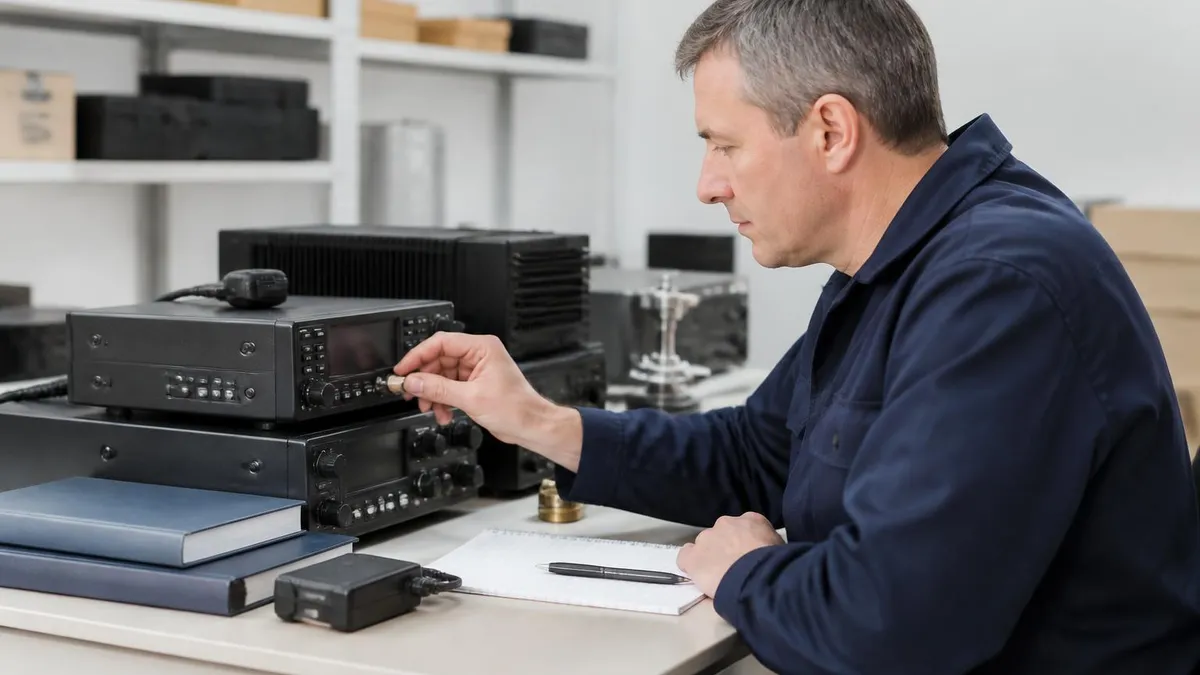
Ham Radio License Renewal: How to Keep Your Technician License Active, Avoid the Grace Period, and Renew Through the FCC
Ham Radio Technician

Ham Radio Cost: Complete Guide to Licensing, Equipment, and Getting Started
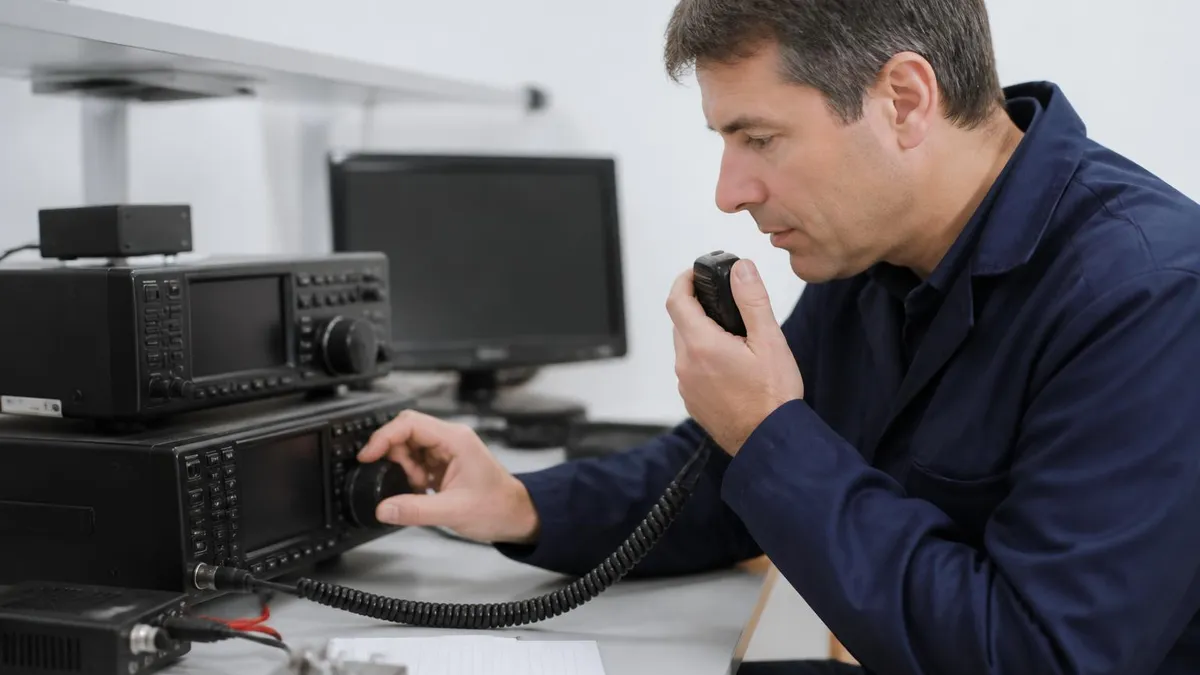
Ham Radio Callsign Lookup: How to Find, Verify, and Use Amateur Radio Call Signs
About the Author

Educational Psychologist & Academic Test Preparation Expert
Columbia University Teachers CollegeDr. Lisa Patel holds a Doctorate in Education from Columbia University Teachers College and has spent 17 years researching standardized test design and academic assessment. She has developed preparation programs for SAT, ACT, GRE, LSAT, UCAT, and numerous professional licensing exams, helping students of all backgrounds achieve their target scores.
Join the Discussion
Connect with other students preparing for this exam. Share tips, ask questions, and get advice from people who have been there.
View discussion (3 replies)