
Ham Radio Groups: How to Find Your Community, Get Your Ham Radio License, and Join the Amateur Radio World
Get your ham radio license and find local groups, clubs & nets. 🎯 Learn frequencies, equipment, and how to join the amateur radio community today.
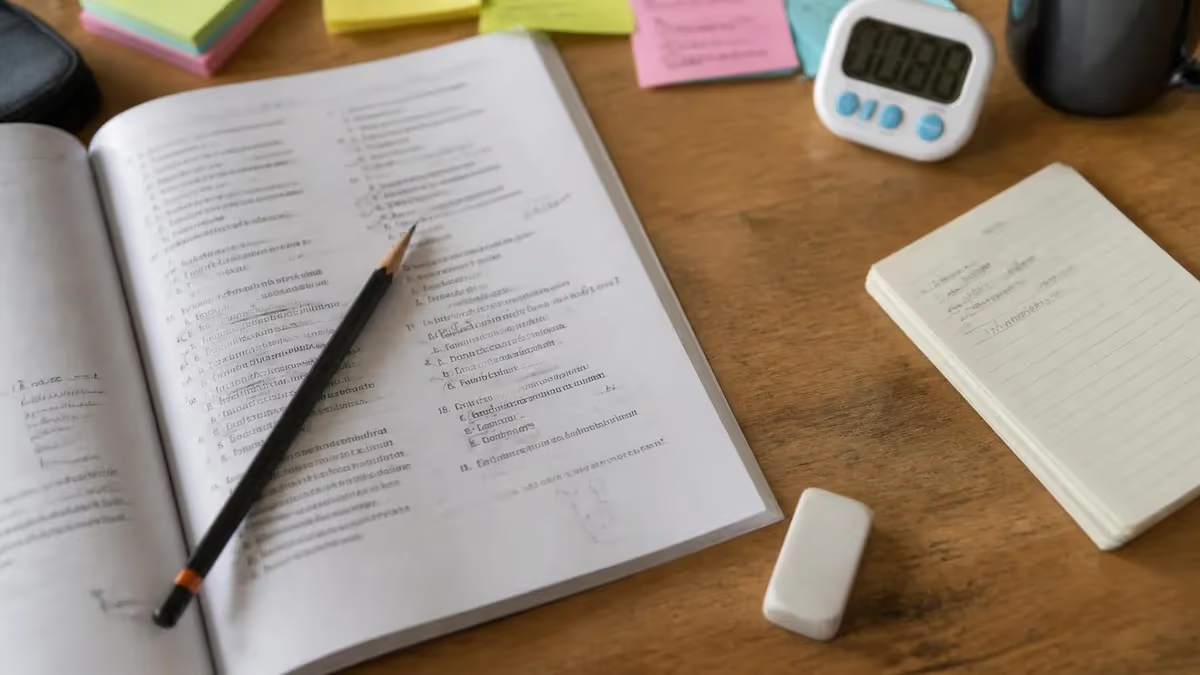
A ham radio group is one of the fastest ways to go from a curious newcomer to a confident operator. Whether you call it a club, a net, or a repeater community, joining a ham radio group gives you mentors who have already passed the ham radio license exam, access to shared equipment, and a built-in support network that helps you understand ham radio frequencies, antenna theory, and on-air etiquette far faster than studying alone ever could. The amateur radio world is built on community, and that community starts with your local club.
The American Radio Relay League (ARRL) estimates that there are more than 2,000 affiliated amateur radio clubs across the United States, with hundreds of thousands of licensed operators who are eager to welcome new hams. These clubs range from small groups meeting in a church basement to large organizations that operate emergency communication networks, host public events, and sponsor multiple repeaters on different ham radio bands. Every club has its own culture, but they all share one common goal: helping more people discover the joy of amateur radio.
Finding the right ham radio group matters because your club will shape how quickly you learn. A good club runs regular training sessions, organizes operating events like Field Day, and provides Elmers — experienced hams who volunteer to mentor newcomers one-on-one. If you want to understand what is ham radio at a deeper level than the license exam requires, sitting next to a seasoned operator during a real contact is worth a hundred hours of reading textbooks. That kind of hands-on learning is simply unavailable outside a club environment.
Ham radio groups also connect you to organized on-air gatherings called nets. A net is a scheduled group of stations that check in on a specific frequency at a specific time. Some nets are purely social, while others are dedicated to traffic handling, emergency management, or technical discussions. Joining a local net is often the first on-air experience a new Technician has, and it is an excellent way to practice operating procedures in a structured, low-pressure setting where experienced operators are on hand to guide you.
Beyond local clubs, national and regional organizations play a major role in the amateur radio community. The ARRL provides advocacy, educational resources, and a massive library of technical publications. Organizations like the Radio Amateur Civil Emergency Service (RACES) and the Amateur Radio Emergency Service (ARES) coordinate with government agencies to deploy ham radio operators during disasters. Specialty groups focus on digital modes, satellite operation, contesting, and DXing — making contact with distant stations around the world. No matter your interest, there is a group that matches it.
Getting your ham radio license is the entry ticket to all of this. The Technician class license is the entry-level credential, and it grants access to all amateur frequencies above 30 MHz, including the popular 2-meter and 70-centimeter bands where most local repeaters operate. The license exam covers ham radio equipment, safety, regulations, and operating procedures. Most clubs offer free license classes, practice exams, and exam sessions — meaning your club membership can pay for itself before you even transmit your first syllable.
This guide walks you through everything you need to know about ham radio groups: how they are structured, how to find one near you, what to expect at your first meeting, and how to use group resources to pass your ham radio license test on the first try. Whether you are drawn to emergency communications, long-distance contacts, or simply the social side of the hobby, the right group will accelerate your journey from licensed novice to confident operator.
Ham Radio Technician Test: upcoming dates and official changes
- Jul 1, 2026: The revised 2026–2030 Technician Class question pool became mandatory for Ham Radio Technician examinations on July 1, 2026. (Federal Communications Commission (FCC); examinations administered by Volunteer Examiner Coordinators, including ARRL VE)
Facts verified Oct 18, 2026 against Federal Communications Commission (FCC); examinations administered by Volunteer Examiner Coordinators, including ARRL VE. Dates that have passed are removed automatically.
- The Ham Radio Technician examination contains 35 multiple-choice questions. (Federal Communications Commission (FCC); examinations administered by Volunteer Examiner Coordinators, including ARRL VE)
- Passing the Ham Radio Technician examination requires at least 26 correct answers out of 35 questions. (Federal Communications Commission (FCC); examinations administered by Volunteer Examiner Coordinators, including ARRL VE)
- A new Ham Radio Technician license application costs $35 payable to the FCC, separately from the administering VEC's examination fee. (Federal Communications Commission (FCC); examinations administered by Volunteer Examiner Coordinators, including ARRL VE)
- Retaking a failed Ham Radio Technician examination element at an ARRL VEC session requires an additional examination fee. (Federal Communications Commission (FCC); examinations administered by Volunteer Examiner Coordinators, including ARRL VE)
- A Ham Radio Technician examination retake cannot reuse the same question set previously administered to that examinee. (Federal Communications Commission (FCC); examinations administered by Volunteer Examiner Coordinators, including ARRL VE)
- The FCC Ham Radio Technician license is normally granted for a 10-year term. (Federal Communications Commission (FCC); examinations administered by Volunteer Examiner Coordinators, including ARRL VE)
- An expired Ham Radio Technician license may be renewed during a two-year filing grace period, but operating privileges cease until renewal. (Federal Communications Commission (FCC); examinations administered by Volunteer Examiner Coordinators, including ARRL VE)
- The Ham Radio Technician examination can be taken in person or online. (Federal Communications Commission (FCC); examinations administered by Volunteer Examiner Coordinators, including ARRL VE)
- Anyone who qualifies by examination may apply for a Ham Radio Technician license except a representative of a foreign government. (Federal Communications Commission (FCC); examinations administered by Volunteer Examiner Coordinators, including ARRL VE)
Facts verified Oct 18, 2026 against Federal Communications Commission (FCC); examinations administered by Volunteer Examiner Coordinators, including ARRL VE. Dates that have passed are removed automatically.
Ham Radio Technician Test Exam at a Glance
Facts verified Oct 18, 2026 against Federal Communications Commission (FCC); examinations administered by Volunteer Examiner Coordinators, including ARRL VE. Dates that have passed are removed automatically.
Ham Radio Groups by the Numbers

Types of Ham Radio Groups You Can Join
The most common type, these clubs welcome operators of all license classes and skill levels. They hold monthly meetings, sponsor license exam sessions, run club repeaters, and participate in national events like ARRL Field Day. Most towns with more than 50,000 residents have at least one.
ARES and RACES groups train for disaster response. Members coordinate with county emergency managers and practice rapid deployment drills. Joining one puts you at the intersection of amateur radio and real public service, which many hams find deeply rewarding.
These clubs focus on a single aspect of the hobby: contesting, DX (long-distance) operating, digital modes like FT8, satellite work, or QRP (low-power) operation. They attract experienced operators and offer deep technical knowledge in a narrow domain.
Many high schools, colleges, and youth organizations like Boy Scouts sponsor amateur radio clubs that introduce young people to electronics and communication technology. These clubs often tie into science and engineering curricula.
Forums, Discord servers, subreddits, and remote-base clubs let operators participate regardless of location. These communities are especially valuable for hams in rural areas or those with antenna restrictions who need remote access to shared infrastructure.
Finding a local ham radio group is easier than most newcomers expect. The ARRL maintains a searchable club directory at arrl.org where you can enter your zip code and instantly see every affiliated club within a chosen radius. The listing shows the club's name, meeting location, contact email, and whether it offers license classes or exam sessions. This directory is updated regularly and covers clubs in every US state, including Alaska and Hawaii, so no matter where you live, you are unlikely to be more than an hour's drive from at least one active group.
Another reliable discovery method is the repeater directory. Clubs almost always operate at least one repeater — a shared radio station that receives your signal and retransmits it at higher power, dramatically extending the range of handheld and mobile radios. The website repeaterbook.com lists repeaters by location and frequency, and most repeater entries include the sponsoring club's name and contact information. If you can hear a repeater in your area, the club that runs it is almost certainly active and welcoming to new operators.
Many hams discover their club through a ham radio outlet or local radio shop. Dealers who specialize in ham radio equipment — including the well-known hro ham radio outlet chain — often have bulletin boards or staff who know the local club landscape. They can point you toward active groups, upcoming exam sessions, and local nets. Building a relationship with a local dealer gives you access to informal community knowledge that no website can fully replicate.
Social media has become an increasingly important discovery tool. Facebook groups organized by state or metropolitan area connect thousands of hams who share news about upcoming events, announce net schedules, and help newcomers find clubs. Searching for your city plus the phrase amateur radio on Facebook or Reddit will usually surface active local communities within minutes. The r/amateurradio subreddit has a weekly thread specifically for newcomers asking where to find their local club.
Once you have identified a candidate club, attend a meeting before committing to membership. Most clubs hold monthly meetings that are open to guests, and you will quickly get a feel for whether the group fits your interests and personality. Pay attention to whether experienced members take time to speak with newcomers, whether the club runs active programs like license classes or operating events, and whether the meeting agenda reflects a range of interests or focuses narrowly on a single aspect of the hobby.
Public service events are another excellent entry point. Clubs frequently provide communication support at marathons, bicycle races, parades, and community festivals. These events are open to non-members who want to observe or help, and they give you a realistic look at how club members operate under real-world conditions. You will meet members in a relaxed setting, see ham radio equipment in action, and get a clear picture of whether emergency or public service communication is something you would enjoy doing yourself.
If you live in a rural area where no local club is active, consider starting a small informal group with other interested people in your area. The ARRL provides organizational resources and startup guides for new clubs, and even a group of three or four newly licensed operators can create a valuable local presence. Online platforms let your small club connect with larger regional organizations for technical support, training resources, and participation in national events without requiring physical proximity to an established club.
Ham Radio Frequencies, Bands, and Group Operating Culture
The 2-meter band (144–148 MHz) and the 70-centimeter band (420–450 MHz) are the heartbeat of local ham radio group activity. These VHF and UHF ham radio frequencies are where club repeaters operate, where local nets check in each week, and where new Technician licensees make their first contacts. Most clubs coordinate at least one 2-meter repeater, and many larger clubs run linked repeater systems that extend coverage across an entire county or region, giving members reliable communication even when traveling by car or on foot during a public service event.
Understanding how to access a repeater requires knowing the offset — the difference between the frequency you transmit on and the frequency the repeater retransmits on. On 2 meters, the standard offset is plus or minus 600 kHz; on 70 centimeters it is plus or minus 5 MHz. Most modern ham radios handle offsets automatically once you program the repeater frequency, but new operators benefit from having an Elmer walk them through the process in person. Your club's technical committee can provide a list of local repeater frequencies, CTCSS tones, and offset directions so you are on the air from day one.

Joining a Ham Radio Club: Pros and Cons
- +Access to experienced Elmers who can answer questions faster than any book or forum
- +Free or low-cost license classes that dramatically increase your pass rate on the ham radio license test
- +Use of club-owned repeaters that extend your radio's range across the entire region
- +Participation in organized events like Field Day, JOTA, and public service activities
- +Shared access to expensive ham radio equipment like HF rigs, antennas, and test gear
- +Built-in social network of people who share your interests and can become long-term friends
- −Monthly dues typically range from $25 to $75 per year, adding to startup costs
- −Club meeting schedules may not align with your availability, especially evening weeknight sessions
- −Some clubs are dominated by a narrow age range or technical focus that may not match your interests
- −Politics and interpersonal conflicts exist in clubs just like any volunteer organization
- −Rural clubs may be inactive or have very few members, limiting mentorship opportunities
- −Highly active clubs may create a feeling of obligation to volunteer for events and committee work
Pros and Cons at a Glance
| Pros | Cons |
|---|---|
| Access to experienced Elmers who can answer questions faster than any book or forum | Club meeting schedules may not align with your availability, especially evening weeknight sessions |
| Free or low-cost license classes that dramatically increase your pass rate on the ham radio license test | Some clubs are dominated by a narrow age range or technical focus that may not match your interests |
| Use of club-owned repeaters that extend your radio's range across the entire region | Politics and interpersonal conflicts exist in clubs just like any volunteer organization |
| Participation in organized events like Field Day, JOTA, and public service activities | Rural clubs may be inactive or have very few members, limiting mentorship opportunities |
| Shared access to expensive ham radio equipment like HF rigs, antennas, and test gear | Highly active clubs may create a feeling of obligation to volunteer for events and committee work |
Ham Radio License Exam Prep Checklist for Club Members
- ✓Download the current FCC Technician question pool from the NCVEC website and confirm it matches your exam date
- ✓Sign up for your club's license class if offered — most clubs run sessions in 6–8 weekly installments
- ✓Create a free account on HamStudy.org or ham radio prep platform and practice at least 20 questions daily
- ✓Ask your club Elmer to quiz you verbally on regulations sections — speaking answers out loud reinforces memory
- ✓Study the ham radio bands chart until you can identify every amateur frequency allocation from memory
- ✓Practice identifying ham radio antenna types from diagrams, including dipoles, verticals, and Yagis
- ✓Learn the phonetic alphabet (Alpha, Bravo, Charlie) so you can spell your call sign confidently on the air
- ✓Attend at least one club net as a listener before your exam so you understand real operating procedures
- ✓Take three full 35-question practice exams in a timed setting and aim for a score of 80% or higher
- ✓Register for an exam session through your club's VE team at least two weeks before your target test date
Club Members Pass at Higher Rates
Studies of Technician exam outcomes consistently show that candidates who study with a club or use structured resources pass at significantly higher rates than self-studiers. The question pool has 423 questions, and your 35-question exam is drawn randomly from it — systematic practice with fellow club members is the single most reliable way to ensure you have covered every topic before test day.
Walking into your first ham radio club meeting can feel intimidating, but the experience is almost universally welcoming. Amateur radio attracts people who genuinely enjoy explaining things, and most clubs make a deliberate effort to include newcomers in every aspect of the meeting. Arrive a few minutes early so you can introduce yourself to whoever greets guests at the door — that person will almost always connect you with an Elmer or club officer who can give you a quick orientation before the meeting starts.
A typical club meeting lasts 60 to 90 minutes and follows a predictable structure. The presiding officer opens with a call to order, then handles housekeeping items like dues reminders and event signups. A technical presentation or educational segment usually follows — topics range from antenna building to software-defined radio to emergency preparedness. After the presentation, there is often an open discussion period where members share recent contacts, report on propagation conditions, and discuss upcoming events. The meeting closes with a brief question-and-answer session that is particularly valuable for newcomers.
Most clubs conclude their formal meeting with informal socializing over coffee or a potluck dinner. This social hour is arguably more valuable than the meeting itself for a newcomer, because it is when you can ask specific questions in a one-on-one setting without feeling like you are slowing down the group. Bring a notepad and write down the call signs of people who offer to help you — those are your future Elmers, and following up with them by email or on the club repeater will accelerate your learning dramatically.
Expect to encounter some jargon at your first meeting. Hams use a specialized vocabulary that includes Q-codes, phonetics, mode names, and frequency designations that can sound like a foreign language to the uninitiated. Do not hesitate to ask for clarification — experienced operators remember being new and are almost always happy to explain. The history of the hobby includes a historic moment referenced by many operators: the reagan weinberger achille lauro conversation ham radio, a famous real-world example of how amateur and government radio communications intersect, which your club history buffs will likely enjoy discussing.
Many clubs run a formal mentorship or Elmer program where new members are paired with experienced operators. These programs vary in structure — some involve scheduled weekly check-ins, while others are simply a standing invitation to call or email your assigned Elmer with any question. If your club has such a program, opt in immediately. Having a specific person whose job it is to help you removes the social friction of asking for help and gives you a reliable human resource throughout your first year on the air.
Your first year with a club should include at least one Field Day participation. Field Day is the ARRL's annual operating event held on the fourth full weekend of June, where clubs set up portable stations in parks and public spaces and attempt to make as many contacts as possible over 24 hours using emergency power. It combines operating practice, antenna building, emergency preparedness training, and community outreach into a single weekend event that is simultaneously fun, educational, and exhausting. Most veterans describe Field Day as the single experience that best captures what amateur radio is all about.
Beyond Field Day, look for opportunities to participate in on-the-air contests, public service events, and special event stations. Contests develop your operating speed and efficiency. Public service events like marathon communication support build real-world skills and community goodwill. Special event stations — temporary call signs issued for significant occasions — attract contacts from around the world and give your club a moment of visibility that draws in prospective members. Each of these activities deepens your skills and widens your network within the amateur radio community.
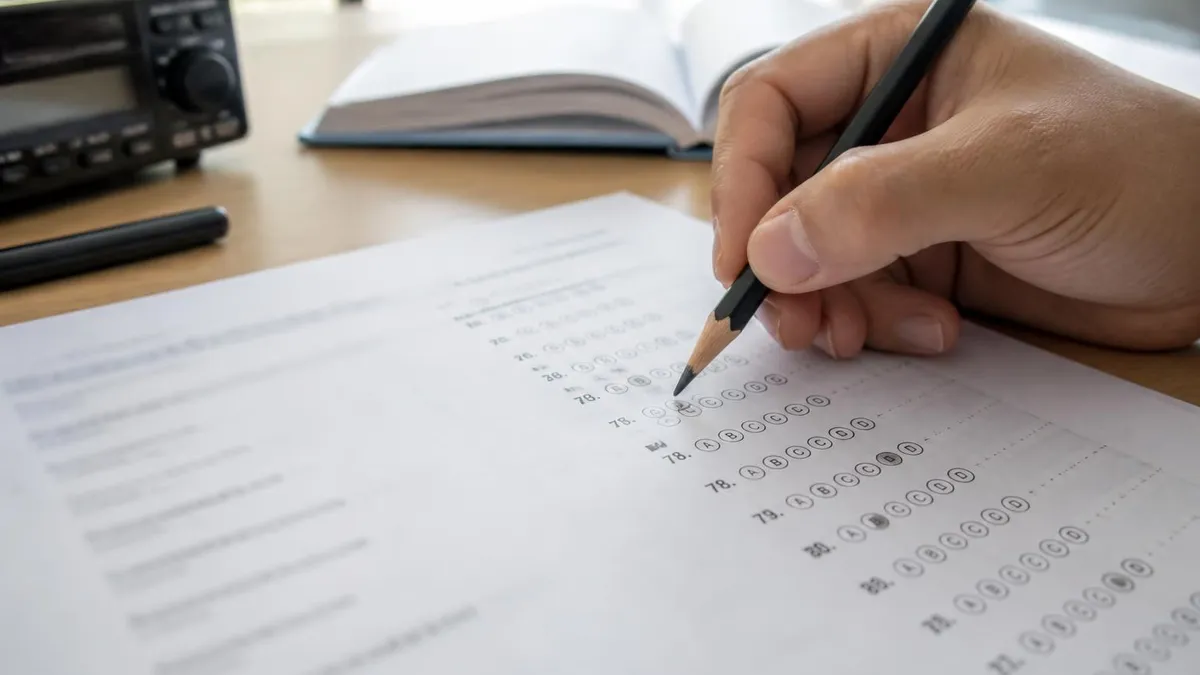
You must hold a valid FCC amateur radio license before transmitting on any amateur frequency. Your club can help you study, but you cannot legally operate a ham radio — even under a club call sign — until your Technician license appears in the FCC's Universal Licensing System database, which typically happens within 10 business days of passing your exam. Many clubs allow new students to listen on club repeaters and attend nets as observers during this waiting period.
Getting the most out of your ham radio club membership requires active participation, not passive attendance. The operators who advance fastest are the ones who volunteer for event committees, help set up antennas for Field Day, check into weekly nets consistently, and take on small leadership responsibilities like managing the club website or coordinating the license class schedule. Clubs are volunteer organizations, and the value you extract from membership is directly proportional to the value you contribute. Showing up consistently and helping with whatever needs doing earns you goodwill, mentorship time, and access to the club's best resources.
One of the most concrete resources your club offers is access to a ham radio antenna installation at the club station. Many new hams face antenna restrictions from HOAs or apartment leases that make home installation difficult or impossible. The club station gives you a place to operate on HF bands with a full-size antenna, experience propagation on frequencies you cannot access from home, and develop operating skills before investing in your own equipment. Some clubs even loan transceivers and antenna tuners to members who are building their station over time.
Club libraries and equipment pools are underutilized gems. Many established clubs have accumulated decades worth of ARRL Handbooks, antenna reference books, back issues of QST magazine, and technical manuals that members can borrow. Some clubs maintain a pool of loaner equipment — handheld transceivers, portable antennas, power supplies — that members can check out for events or experimentation. Asking your club officer about these resources early in your membership can save you hundreds of dollars in equipment purchases during your first year.
Technical upgrade paths are another area where club membership pays dividends. After earning your Technician license, upgrading to General class opens the HF bands and dramatically expands your operating privileges. Upgrading further to Amateur Extra class grants maximum operating privileges and is a badge of technical accomplishment in the hobby.
Most clubs run upgrade classes alongside their Technician courses, and the club exam team can test you for multiple license classes on the same day. For those serious about deepening their technical knowledge, platforms like andy's ham radio linux iso resources and video-based study tools complement the in-person mentorship that clubs provide.
Emergency communication preparedness is one of the most socially valuable things your club does. When a hurricane, earthquake, or severe winter storm disrupts commercial communications infrastructure, amateur radio operators activated through ARES and RACES provide backup voice and data communications for emergency managers, hospitals, and relief organizations. Clubs that are active in emergency communications conduct regular training exercises, maintain go-kits with portable stations ready for rapid deployment, and participate in statewide and national emergency drills. Being part of this network means your hobby has real-world impact when it matters most.
International operating opens up once you hold a General or Extra class license, and clubs with active DX programs can accelerate your entry into global contacts. Many clubs hold DX nets where members report on propagation and share strategies for contacting specific regions of the world. Club members with large antenna arrays sometimes host informal operating parties where less-equipped members can use their station to chase coveted DX contacts. The social aspect of sharing rare contacts with clubmates creates bonds that last for decades within the amateur radio community.
Long-term involvement in a ham radio group often leads to leadership roles — net control operator, club officer, technical committee chair, or VE team member. These roles develop real skills in communication, organization, and technical problem-solving that transfer beyond the hobby. Many hams report that their club experience improved their professional communication skills, expanded their professional network, and gave them confidence in public speaking and group facilitation. The hobby's reputation for producing technically skilled, community-minded individuals is well-earned, and it starts with your first club meeting.
Practical preparation for your ham radio license test benefits enormously from the structured resources your club and the broader amateur radio community provide. Start by downloading the official question pool from the National Conference of Volunteer Examiner Coordinators (NCVEC) website. The Technician pool contains 423 questions organized into ten topic groups, and your 35-question exam will be drawn proportionally from all ten groups. Knowing the pool's structure helps you allocate study time efficiently — some groups like electrical safety and FCC regulations contain more exam questions than others, so weight your practice sessions accordingly.
Spaced repetition is the most efficient memorization strategy for the question pool. Instead of reading through all 423 questions in sequence, use a flashcard-style app that surfaces questions you are getting wrong more frequently than questions you are answering correctly. HamStudy.org implements this approach automatically and tracks your readiness score across all ten topic groups. Aim for a readiness score above 85% before scheduling your exam session — candidates who reach that threshold almost always pass, while those who test at 70% readiness fail at rates that make a second exam session necessary.
Understanding why answers are correct — not just memorizing which letter to select — makes your preparation more durable and makes you a better operator. When you encounter a question about ham radio frequencies and bands, look up the actual FCC frequency allocation chart and study it.
When you encounter a question about ham radio antenna gain, sketch the radiation pattern being described. When you encounter an Ohm's Law question, work through the arithmetic by hand rather than just recognizing the answer pattern. This deeper engagement takes more time but produces knowledge that serves you on the air rather than evaporating the day after your exam.
Practice exams under realistic conditions are essential in the final week of preparation. The actual exam is 35 questions with no reference materials and a passing score of 74% — you need 26 correct answers. Take your practice exams with a timer set to 20 minutes, in a quiet environment without your notes, and score yourself honestly.
If you cannot consistently hit 30 or more correct answers on practice exams, you need additional study time before sitting for the real test. The cost of failing is only the $15 exam fee plus the delay in getting on the air, but passing on the first attempt is more satisfying and lets you join your club's on-air activities sooner.
The exam session itself is straightforward. You will need a government-issued photo ID, your FCC Registration Number (FRN) from the FCC website, the exam fee in cash, and a pen or pencil. Your club's Volunteer Examiner team will handle the rest. The exam is administered on paper or sometimes on a computer, depending on the VE team's equipment. Results are typically announced within minutes of completing the exam, and successful candidates receive a Certificate of Successful Completion of Examination (CSCE) on the spot. Your license then appears in the FCC database within a few business days.
After passing, your first purchase as a licensed ham should fit your intended operating style. If you plan to use club repeaters and local nets, a dual-band handheld radio covering 2 meters and 70 centimeters is the most versatile starting point. Brands like Yaesu, Kenwood, and ICOM offer entry-level handhelds in the $80 to $150 range that include all the features a new Technician needs. Your club's Elmer can help you program local repeater frequencies and CTCSS tones, which can otherwise be confusing for first-time radio owners.
As you gain experience, your club community will help you evaluate upgrades and additions to your station. A mobile transceiver for your car, a base station for home HF operation after upgrading to General, or a digital interface for computer-based modes — each expansion of your station opens new operating opportunities and new conversations with fellow club members. The gear matters less than the relationships, though. The hams who get the most out of the hobby are not necessarily those with the most sophisticated equipment, but those who are most engaged with their local and regional community of operators.
Sample Ham Radio Technician Test Practice Questions
Try these questions from our free Ham Radio Technician Test practice tests. The correct answer and an explanation follow each question.
Which agency issues amateur radio licenses in the United States?
- A. The FCC (Federal Communications Commission)
- B. The ITU (International Telecommunication Union)
- C. ARRL (American Radio Relay League)
- D. The Department of Commerce
Answer: A. The FCC (Federal Communications Commission)
The FCC is the U.S. government agency responsible for regulating and licensing amateur radio operators.
What is required for an amateur operator to act as a control operator for a station with higher privileges than their license class?
- A. Written permission from the FCC
- B. Supervision by a licensed operator of the appropriate class
- C. It is not permitted — a control operator may only use privileges of their own license class
- D. Payment of a higher license fee
Answer: C. It is not permitted — a control operator may only use privileges of their own license class
A control operator may only transmit using the privileges authorized by their own license class, regardless of what the station is capable of.
What information is included on an amateur radio license grant in the FCC ULS database?
- A. Call sign, operator class, and expiration date only
- B. Call sign, operator class, expiration date, and licensee's mailing address
- C. Call sign and a photo ID of the licensee
- D. Only the call sign — all other data is private
Answer: B. Call sign, operator class, expiration date, and licensee's mailing address
The ULS record includes the call sign, license class, expiration date, and licensee name and mailing address, all of which are public.
An amateur radio operator wants to help during a community disaster. Which FCC authorization allows amateur radio operators to communicate on behalf of non-amateur entities during emergencies?
- A. Emergency Use License (EUL)
- B. Third-party traffic provisions and Part 97 emergency rules
- C. Special Temporary Authority (STA) only
- D. No authorization exists — amateurs may not act on behalf of others
Answer: B. Third-party traffic provisions and Part 97 emergency rules
Part 97 emergency provisions and third-party traffic rules allow amateurs to pass communications on behalf of others during emergencies.
Take the full Ham Radio Technician Test practice test
Ham Radio Technician Questions and Answers

How Far Can Ham Radio Reach? Complete Guide to Ham Radio Range, Frequencies, and Getting Your License

Ham Radio Mobile: Complete Guide to Getting Your Ham Radio License and Operating on the Go
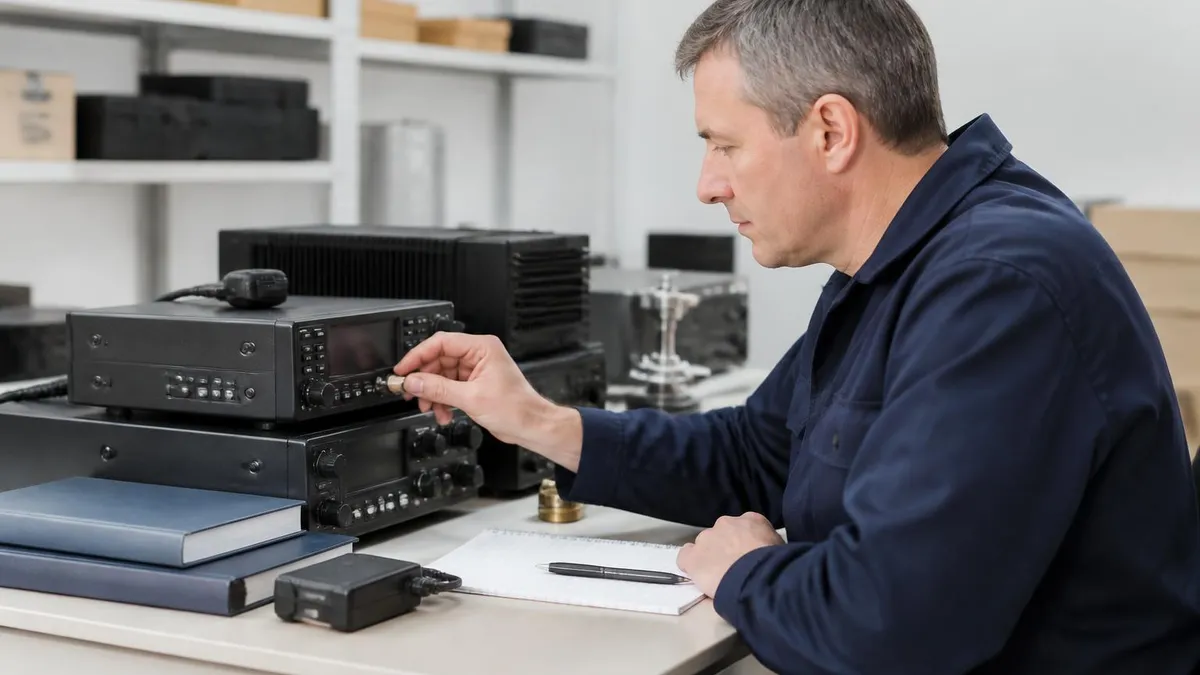
Ham Radio License Renewal: How to Keep Your Technician License Active, Avoid the Grace Period, and Renew Through the FCC
Ham Radio Technician

Ham Radio Q Codes: The Complete Guide to QTH, QSL, QRZ and Every Q Signal Operators Use
How this page was made: written with AI tools. Exam facts are checked against the official sources listed below. Not reviewed by a subject-matter expert. Editorial policy
Sources & references
Exam facts on this page (fees, format, dates, passing scores) are checked against these official sources; the date is our last check. Editorial policy
- arrl.org — Eligibility, passing score, renewal, retake policy, score release, score validity, test delivery, test dates, fees, retake fee · verified Oct 2026
- home.arrl.org — Exam format · verified Oct 2026