
Ham Radio Q Codes: The Complete Guide to QTH, QSL, QRZ and Every Q Signal Operators Use
Learn ham radio Q codes like QTH, QSL, and QRZ with plain-English meanings, ❓ real on-air examples, and study tips for your ham radio license test.

Ham radio Q codes are three-letter shorthand signals that operators use to communicate common phrases quickly and clearly across noisy bands. When you key up and hear someone say "QTH" or "QSL," they are using a compact code that means "my location is" or "I confirm receipt." Originally created for Morse code telegraphy in 1909, these codes survived into voice operation because they save time, cut through static, and work even when two operators speak different native languages. Anyone pursuing a ham radio license will encounter them on day one. Practice with the free Ham Radio Technician practice test on PracticeTestGeeks (450+ questions with answer explanations).
The beauty of Q codes is that each one carries a fixed meaning recognized worldwide. A ham in Tokyo and a ham in Texas both understand that "QRM" means man-made interference and "QRN" means natural static. This universal vocabulary is part of what makes amateur radio such a powerful global hobby. You do not need to memorize all hundred-plus official Q signals, but learning the two dozen used daily on the air will make you sound confident and competent the very first time you transmit.
Q codes originated in maritime and aeronautical radio long before amateur operators adopted them. The International Telecommunication Union standardized the QRA through QUZ range, with the QRA-QRZ block reserved specifically for amateur and general service use. That is why nearly every Q code you hear on the ham bands starts with QR, QS, or QT. Understanding this structure helps you guess at the meaning of an unfamiliar code, because related signals tend to cluster together within the same alphabetical neighborhood.
Beginners sometimes worry that Q codes make the hobby sound like a secret club with a private language. In reality, the opposite is true: Q codes lower the barrier to entry because they replace long fumbling sentences with crisp, repeatable phrases. Once you know that "QSY" means "change frequency," you can move a conversation off a crowded channel in under two seconds. If you want to practice the language before your exam, a free ham radio antenna question set will expose you to the terms in context.
This guide walks through every Q code you realistically need, organized by how often you will actually hear it. We start with the absolute essentials like QTH, QSL, QRZ, and QSO, then move to interference and signal-report codes, and finally cover the operational codes used during nets, contests, and emergency traffic. Each entry includes a plain-English meaning and a real example sentence so you can hear how operators string them together in normal conversation.
We will also connect Q codes to the broader skills you need as a new operator, including reading signal reports, logging contacts, and understanding band conditions. By the end, you will not just recognize Q codes when you hear them; you will use them naturally and know which ones belong in casual ragchews versus formal traffic handling. Whether you are studying for your Technician exam or just got your call sign, this is the reference you will return to again and again.
Ham Radio Technician Test: upcoming dates and official changes
- Jul 1, 2026: The revised 2026–2030 Technician Class question pool became mandatory for Ham Radio Technician examinations on July 1, 2026. (Federal Communications Commission (FCC); examinations administered by Volunteer Examiner Coordinators, including ARRL VE)
Facts verified Oct 18, 2026 against Federal Communications Commission (FCC); examinations administered by Volunteer Examiner Coordinators, including ARRL VE. Dates that have passed are removed automatically.
- The Ham Radio Technician examination contains 35 multiple-choice questions. (Federal Communications Commission (FCC); examinations administered by Volunteer Examiner Coordinators, including ARRL VE)
- Passing the Ham Radio Technician examination requires at least 26 correct answers out of 35 questions. (Federal Communications Commission (FCC); examinations administered by Volunteer Examiner Coordinators, including ARRL VE)
- A new Ham Radio Technician license application costs $35 payable to the FCC, separately from the administering VEC's examination fee. (Federal Communications Commission (FCC); examinations administered by Volunteer Examiner Coordinators, including ARRL VE)
- Retaking a failed Ham Radio Technician examination element at an ARRL VEC session requires an additional examination fee. (Federal Communications Commission (FCC); examinations administered by Volunteer Examiner Coordinators, including ARRL VE)
- A Ham Radio Technician examination retake cannot reuse the same question set previously administered to that examinee. (Federal Communications Commission (FCC); examinations administered by Volunteer Examiner Coordinators, including ARRL VE)
- The FCC Ham Radio Technician license is normally granted for a 10-year term. (Federal Communications Commission (FCC); examinations administered by Volunteer Examiner Coordinators, including ARRL VE)
- An expired Ham Radio Technician license may be renewed during a two-year filing grace period, but operating privileges cease until renewal. (Federal Communications Commission (FCC); examinations administered by Volunteer Examiner Coordinators, including ARRL VE)
- The Ham Radio Technician examination can be taken in person or online. (Federal Communications Commission (FCC); examinations administered by Volunteer Examiner Coordinators, including ARRL VE)
- Anyone who qualifies by examination may apply for a Ham Radio Technician license except a representative of a foreign government. (Federal Communications Commission (FCC); examinations administered by Volunteer Examiner Coordinators, including ARRL VE)
Facts verified Oct 18, 2026 against Federal Communications Commission (FCC); examinations administered by Volunteer Examiner Coordinators, including ARRL VE. Dates that have passed are removed automatically.
Ham Radio Technician Test Exam at a Glance
Facts verified Oct 18, 2026 against Federal Communications Commission (FCC); examinations administered by Volunteer Examiner Coordinators, including ARRL VE. Dates that have passed are removed automatically.
Free Ham Radio Technician Test Study Tools
Interactive Ham Radio Technician Test resources on PracticeTestGeeks, free to start:
- Free Ham Radio Technician Amateur Questions and Answers — 16 questions with instant scoring and answer explanations
- Ham Radio Technician Test flashcards — review key terms and concepts card by card
- Ham Radio Technician Test study guide — topic-by-topic overview of what the exam covers
- Ham Radio Technician Test cheat sheet — one-page printable summary for last-minute review
Ham Radio Q Codes by the Numbers
The Most Common Ham Radio Q Codes
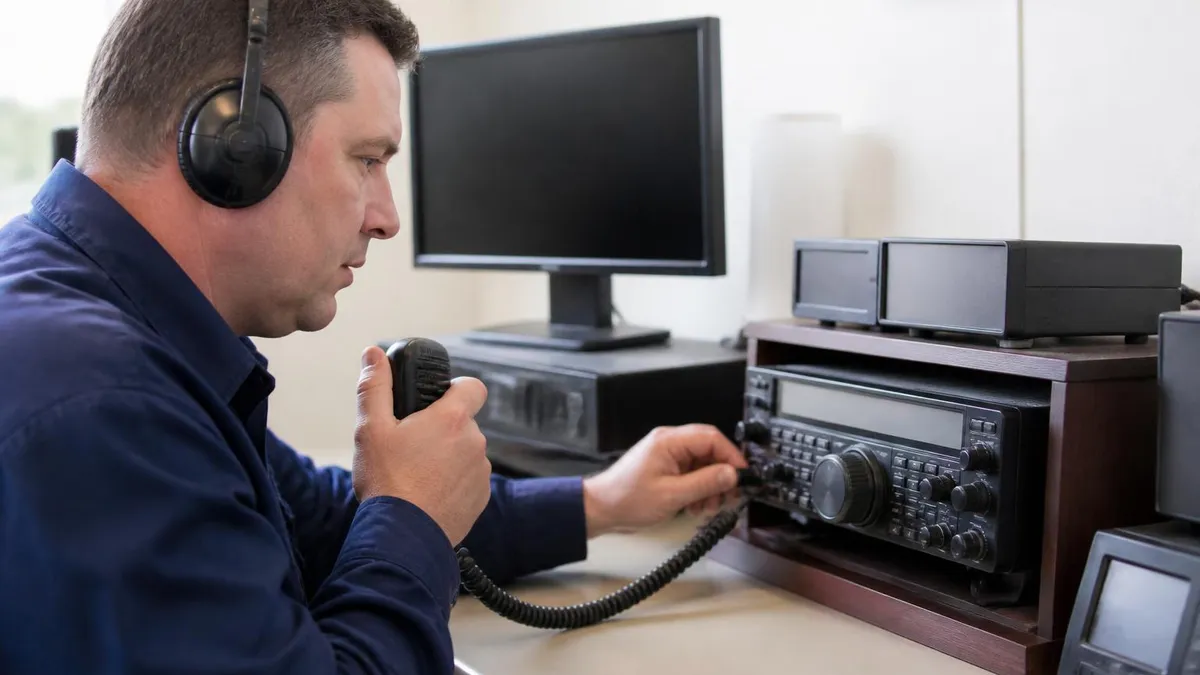
Used to state or ask for a station's geographic location. "My QTH is Denver, Colorado." It is one of the very first Q codes new operators learn and appears in almost every casual contact you will ever make on the air.
Means acknowledgment or confirmation of receipt. "QSL, I copied your report." It also gives its name to QSL cards, the postcards hams exchange to confirm a contact happened for awards and record-keeping purposes worldwide.
Asks who is trying to reach you. After a CQ call, you might hear "QRZ?" meaning the operator wants you to repeat your call sign. It also names the popular callsign-lookup website QRZ.com.
Refers to a two-way contact or conversation between stations. "I had a great QSO with a station in Italy last night." Logging your QSOs is how you track contacts and qualify for operating awards.
A request to move to a different frequency. "Let's QSY up five kilohertz, this channel is busy." It is the fastest way to relocate a conversation off a crowded or interference-laden part of the band.
To understand how Q codes work on the air, it helps to know they can be both statements and questions. The exact same three letters change meaning depending on whether they are followed by a question mark in writing or a rising tone in speech. "QTH?" means "What is your location?" while "QTH Boston" means "My location is Boston." This dual nature makes Q codes extremely efficient, since one short signal handles both halves of an exchange that would otherwise require full sentences on a busy band.
On voice modes like FM and single sideband, operators often blend Q codes with plain English rather than speaking entirely in code. A typical exchange might sound like, "Thanks for the call, your QTH is breaking up, please QSY to 146.52." Nobody talks purely in Q signals during voice contacts; that would actually slow things down. The codes serve as precise shortcuts inserted where they add clarity, especially for location, confirmation, and frequency changes that occur in nearly every conversation.
In Morse code and digital modes, Q codes carry far more weight because every keystroke costs time and effort. A CW operator working a weak DX station will lean heavily on QRS (send slower), QRZ (who is calling), and QSL (confirmed) because spelling out those phrases letter by letter would be painfully slow. This is the original reason Q codes exist, and CW remains the mode where mastering them pays the biggest dividends in speed and accuracy.
Signal reports often travel alongside Q codes, and the two systems work hand in hand. When an operator gives you a report like "5 by 9," they are using the RST system for readability and signal strength, then may add "QSB" if your signal is fading. Learning to pair the RST report with the right Q code tells the other station exactly how well you are hearing them and whether conditions are stable enough to continue the conversation comfortably.
New operators frequently ask whether using Q codes on FM repeaters is considered correct or old-fashioned. The honest answer is that some are perfectly normal and some sound out of place. "QSY" and "QSL" are common everywhere, but using "QRM" to describe repeater interference is fine while using rare CW-only codes on a local 2-meter machine can come across as showing off. Match your Q-code usage to the mode and the local culture of the repeater you are on.
Equipment also shapes how you encounter Q codes, since modern radios display frequency, mode, and signal strength right on the screen. Visiting a ham radio outlet to compare rigs will show you transceivers with built-in CW decoders that print Q codes as text, which is a fantastic learning aid for beginners. Even so, knowing the codes by heart means you can operate confidently with any radio, including a basic handheld that offers no on-screen decoding help at all.
Q Codes Grouped for the Ham Radio License Test
The contact-management group covers the codes you use to find, identify, and locate other stations. QTH states your location, QRZ asks who is calling you, and QSO names the conversation itself. These appear in virtually every exchange, from a quick repeater check-in to a long high-frequency ragchew with a distant station, so they earn the top spot on any new operator's study list.
QSL belongs here too, since confirming a contact is the natural end of locating and identifying each other. When you say "QSL on your QTH," you are confirming you copied the other station's location. Mastering this cluster first gives you enough vocabulary to handle a complete basic contact from initial call to final confirmation, which is exactly what examiners and experienced mentors expect from beginners.
Should Beginners Memorize Every Q Code?
- +Universal meaning works across language barriers worldwide
- +Saves transmission time on crowded or weak-signal bands
- +Essential and expected for Morse code and CW operation
- +Makes you sound competent during your first contacts
- +Many codes appear on the ham radio license test pool
- +QSL cards and QRZ.com reinforce the codes you use daily
- −Memorizing all 100-plus codes is unnecessary for most hams
- −Overusing rare codes on FM repeaters sounds pretentious
- −Some codes have subtly different meanings in voice versus CW
- −Question-versus-statement distinction confuses new operators
- −A handful of codes are nearly obsolete in modern operation
- −Relying only on radio decoders can slow real memorization
Pros and Cons at a Glance
| Pros | Cons |
|---|---|
| Universal meaning works across language barriers worldwide | Overusing rare codes on FM repeaters sounds pretentious |
| Saves transmission time on crowded or weak-signal bands | Some codes have subtly different meanings in voice versus CW |
| Essential and expected for Morse code and CW operation | Question-versus-statement distinction confuses new operators |
| Makes you sound competent during your first contacts | A handful of codes are nearly obsolete in modern operation |
| Many codes appear on the ham radio license test pool | Relying only on radio decoders can slow real memorization |
Ham Radio Q Codes Study Checklist
- ✓Memorize the five core codes: QTH, QSL, QRZ, QSO, and QSY.
- ✓Learn the interference pair QRM (man-made) and QRN (natural).
- ✓Understand QSB means signal fading from propagation changes.
- ✓Know QRP means low power and QRO means high power.
- ✓Practice QRL? to ask if a frequency is busy before calling.
- ✓Recognize QRT (closing down) and QRX (stand by) for nets.
- ✓Distinguish the question form from the statement form of each code.
- ✓Listen to live HF contacts to hear codes used naturally.
- ✓Pair each Q code with an RST signal report in practice.
- ✓Take a free practice quiz to confirm your recall before the exam.
Group the codes you actually hear, not the whole list
Most new hams complete their first hundred contacts using fewer than a dozen Q codes. Focus your memory on QTH, QSL, QRZ, QSO, QSY, QRM, QRN, QSB, QRT, and QRL. Once those feel automatic, the rare codes will stick easily because you will only meet them occasionally and in clear context.
Q codes truly shine during organized nets and emergency communications, where dozens of stations must share a single frequency without descending into chaos. A net control operator opens the session, calls for check-ins, and uses QRX to ask waiting stations to stand by while existing traffic is handled. This disciplined structure is exactly why emergency-management agencies value amateur radio operators: the same Q codes that organize a casual evening net also organize disaster relief communications when cell networks and the internet have failed completely.
During a formal traffic net, you will hear QTC, which asks "do you have messages to send?" or states "I have messages for you." Stations relaying formal written messages, called radiograms, use QTC to announce traffic and QSL to confirm each message was received correctly. This precise vocabulary prevents the dangerous ambiguity that could cause a relief request or welfare message to be lost or garbled as it passes through several relay stations across a wide geographic area.
Emergency operations also lean on QRT and QSK in important ways. QRT signals that a station is going off the air, which matters when net control needs to know exactly who remains available to relay messages. QSK, meaning "break-in" operation, lets an operator interrupt a transmission to report urgent information, such as a station with priority health-and-welfare traffic that cannot wait for the normal rotation. These codes turn a crowded frequency into an orderly, predictable communication channel under real pressure.
Public-service events like marathons, parades, and bike races are where many new operators first put Q codes to work outside of casual conversation. Volunteers stationed along a route use QTH to report their exact position, QSY to move to a tactical frequency, and QRX to hold while net control coordinates a response. These low-stakes events are ideal training grounds because the consequences of a mistake are minor, yet the operating discipline closely mirrors genuine emergency activations later on.
Joining a local club is the fastest way to learn net procedure and Q codes through hands-on practice rather than memorization alone. Many clubs run weekly training nets specifically to help newcomers get comfortable on the microphone. Finding a group through a ham radio license test resource or a club locator connects you with experienced mentors, called Elmers, who will gently correct your usage and build your confidence one check-in at a time until the codes feel completely natural.
It is worth noting that not every net uses Q codes heavily, and some emphasize plain language instead, especially served-agency emergency nets where outside officials must understand every word. Skilled operators read the room and match their style to the situation: heavy Q codes on a CW DX pileup, light Q codes on a casual FM ragchew, and almost none when relaying instructions to a non-ham emergency coordinator. This adaptability marks the difference between a beginner reciting codes and a seasoned operator communicating effectively.
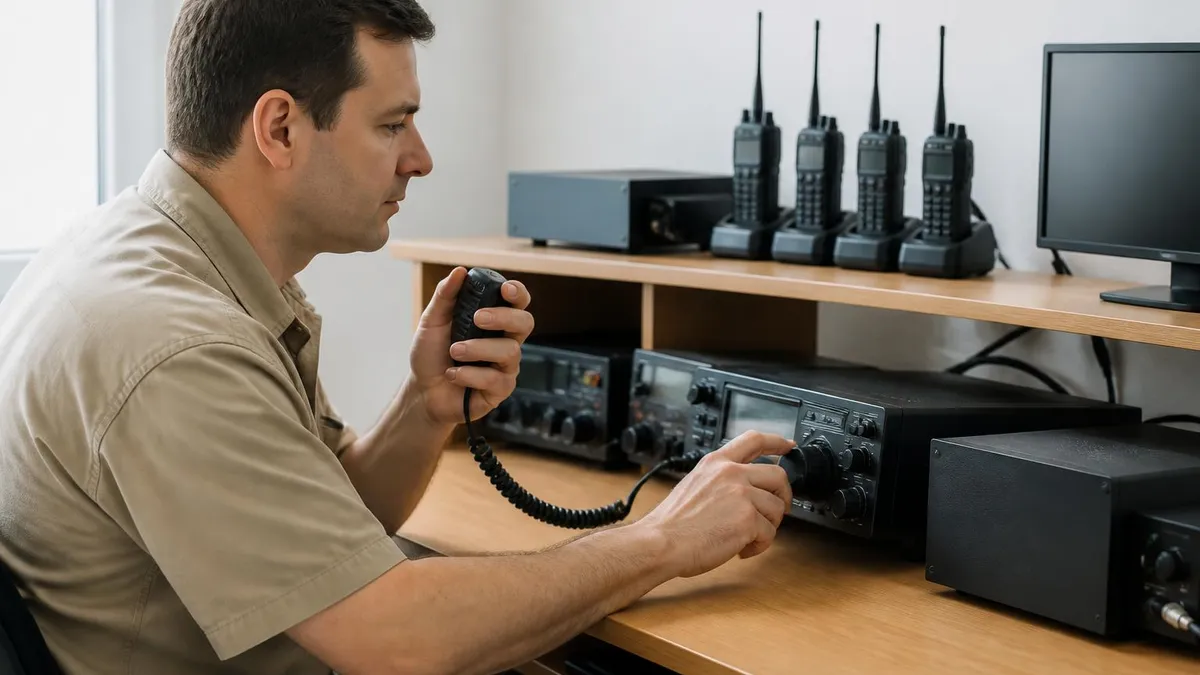
FCC rules require you to identify with your call sign in plain English every ten minutes and at the end of a contact, regardless of Q codes. Q signals are a convenience, never a substitute for proper identification or for clear communication during emergencies when non-hams may be listening.
Mastering Q codes for your ham radio license is less about brute memorization and more about meaningful exposure. The Technician exam question pool touches on operating procedures, and while it does not demand that you recite every Q code, recognizing the common ones helps you answer questions about good amateur practice. More importantly, the codes you learn for the test are the same ones you will use the moment you receive your call sign and make that exciting first contact on a local repeater or HF band.
The single best way to internalize Q codes is to listen actively to real on-air activity before and after you pass your exam. Tune a receiver or an online WebSDR to a busy HF band during a contest weekend and you will hear QRZ, QSL, and QSY hundreds of times in an hour. This repetition cements the codes far more effectively than flashcards alone, because you hear them in the natural rhythm of actual conversations between operators chasing contacts around the world.
Pairing Q-code study with practice questions accelerates your progress dramatically. Free question banks let you test recall under exam-like conditions, and the immediate feedback shows you which codes you still confuse. Many candidates find that QRP versus QRO and QRM versus QRN are the pairs most likely to trip them up, simply because the letters look similar. Drilling those specific pairs until they are automatic eliminates the most common source of beginner errors on both the exam and the air.
Your choice of first radio also affects how quickly you become fluent. A handheld transceiver is the most popular starting point because it is affordable, portable, and perfect for local repeater contacts where you will practice QTH, QSL, and QSY in real conversations. As you grow, an HF rig opens the door to long-distance contacts where the full range of Q codes comes alive. Studying gear options early helps you plan a station that matches your operating goals.
Do not overlook the cultural side of Q codes, including the curious internet questions that sometimes surface around amateur radio history. A frequently searched example asks did ed gein talk to ilse on a ham radio, a piece of true-crime folklore unrelated to actual operating practice. While such trivia is interesting, your study time is far better spent on the codes and procedures that will genuinely help you pass the exam and operate responsibly once you are licensed and on the air.
Finally, remember that fluency comes from use, not perfection. Nobody expects a brand-new operator to deploy obscure Q codes flawlessly. Experienced hams are overwhelmingly welcoming and will happily explain anything you miss. Get on the air, make contacts, ask questions, and let the common codes become second nature through daily operation. Within a few weeks of regular activity, QTH, QSL, and QSY will roll off your tongue as naturally as your own call sign, and the rare codes will fill in steadily over time.
With the fundamentals covered, here are the practical habits that turn Q-code knowledge into real on-air confidence. First, build a small cheat sheet of the ten codes you use most and tape it near your radio. Glancing at it during your first contacts removes the panic of forgetting a code mid-transmission. Within a couple of weeks the sheet becomes unnecessary, but it provides a crucial safety net while you are still building the muscle memory that experienced operators take for granted.
Second, practice the question-versus-statement distinction out loud before you transmit. Say "QTH?" with a clear rising inflection and "QTH Denver" with a falling one. On voice modes this tone change is how the other operator instantly knows whether you are asking or telling. Rehearsing this aloud at your operating desk feels slightly silly, but it prevents the common beginner mistake of confusing a question for a statement and leaving the other station unsure how to respond.
Third, always listen before you transmit, and use QRL? to confirm a frequency is clear on the HF bands. Calling CQ on top of an existing conversation you simply could not hear is the most common rookie error, and it irritates seasoned operators. Sending "QRL?" twice and waiting a few seconds is universal courtesy that marks you as a thoughtful operator. This single habit will earn you respect on the air faster than almost anything else you can do as a newcomer.
Fourth, log your contacts and note the Q codes used in each one. Reviewing your log reinforces the codes you used and highlights ones you avoided out of uncertainty. Modern logging software even decodes many signals automatically, but writing a quick note about an unfamiliar code you heard prompts you to look it up later. This active review loop is how casual exposure becomes durable knowledge that sticks long after you pass your exam.
Fifth, lean on your local club and weekly nets for low-pressure practice. Checking into a net requires only your call sign and location, giving you a perfect chance to use QTH in a friendly, forgiving environment. Net control operators are patient with newcomers and will model correct usage every time the net runs. Regular check-ins build both your confidence and your relationships with operators who can mentor you toward more advanced operating modes and contests.
Finally, choose study tools that match how you learn best. Some candidates thrive on audio drills they can play in the car, while others prefer timed practice quizzes that mimic the exam. Combining a couple of methods covers your blind spots better than relying on any single approach. The goal is steady, low-stress repetition so that by exam day the common Q codes feel obvious, freeing your mental energy to focus on the rules and electronics questions that demand more careful thought.
Put these habits together and Q codes stop being a list to memorize and become a natural part of how you operate. The investment is small, the payoff is immediate, and the skills transfer directly from your study desk to your first real contact. Pass your Technician exam, get on the air, and within a month you will wonder why the codes ever seemed intimidating at all, because daily use makes them as familiar as the call sign you will soon be proud to announce.
Sample Ham Radio Technician Test Practice Questions
Try these questions from our free Ham Radio Technician Test practice tests. The correct answer and an explanation follow each question.
An amateur radio operator wants to help during a community disaster. Which FCC authorization allows amateur radio operators to communicate on behalf of non-amateur entities during emergencies?
- A. Emergency Use License (EUL)
- B. Third-party traffic provisions and Part 97 emergency rules
- C. Special Temporary Authority (STA) only
- D. No authorization exists — amateurs may not act on behalf of others
Answer: B. Third-party traffic provisions and Part 97 emergency rules
Part 97 emergency provisions and third-party traffic rules allow amateurs to pass communications on behalf of others during emergencies.
What is the recommended action if you are mobile and your signal is causing interference to a repeater due to multipath or poor signal?
- A. Increase transmitter power to overcome the interference
- B. Move to a different location or use a different repeater
- C. Switch to a higher deviation setting on your radio
- D. Ask the repeater trustee to adjust the repeater's sensitivity
Answer: B. Move to a different location or use a different repeater
Moving to a different location can resolve multipath interference; using a different repeater is the courteous option when you cannot achieve a clean signal.
How soon can you transmit on amateur radio bands after passing the test for your first amateur radio license?
- A. As soon as you receive your license in the mail from FCC
- B. Immediately on receiving your Certificate of Successful Completion of Examination (CSCE)
- C. As soon as your operator/station license grant appears on the ARRL website
- D. As soon as your operator/station license grant appears in the FCC's license database
Answer: D. As soon as your operator/station license grant appears in the FCC's license database
Explanation: As soon as your identity and call sign show in the ULS database of the FCC, you are eligible to operate a transmitter on an amateur service frequency after passing the test necessary for your first amateur radio license.
Which instrument is used to visualize signal waveforms in ham radio diagnostics?
- A. Frequency counter
- B. Oscilloscope
- C. SWR meter
- D. Spectrum analyzer
Answer: B. Oscilloscope
An oscilloscope is an electronic test instrument used to visualize and analyze the waveforms of electrical signals. In ham radio diagnostics, it allows operators to observe the shape, amplitude, frequency, and phase of radio signals, helping to troubleshoot issues with transmitters, receivers, and modulation. It provides a real-time graphical representation of voltage changes over time.
Take the full Ham Radio Technician Test practice test
Ham Radio Technician Questions and Answers
Ham Radio Stores: Where to Buy Ham Radio Equipment, Gear, and Get Your License
Ham Radio Clubs Near Me: How to Find Local Amateur Radio Groups in 2026
Ham Radio License Practice Test: Free Technician Exam Prep & Question Pool
Ham Radio Antenna Guide: Types, Towers, Portable, and Satellite Antennas
Ham Radio Handheld: Complete Guide to HT Selection, Programming, and Technician License Use
How this page was made: written with AI tools. Exam facts are checked against the official sources listed below. Not reviewed by a subject-matter expert. Editorial policy
Sources & references
Exam facts on this page (fees, format, dates, passing scores) are checked against these official sources; the date is our last check. Editorial policy
- arrl.org — Eligibility, passing score, renewal, retake policy, score release, score validity, test delivery, test dates, fees, retake fee · verified Oct 2026
- home.arrl.org — Exam format · verified Oct 2026