
Ham Radio Callsign Lookup: How to Find, Verify, and Use Amateur Radio Call Signs
⏳ Learn ham radio callsign lookup using FCC ULS and QRZ. Find, verify, and understand amateur call signs while you prep for your ham radio license test.
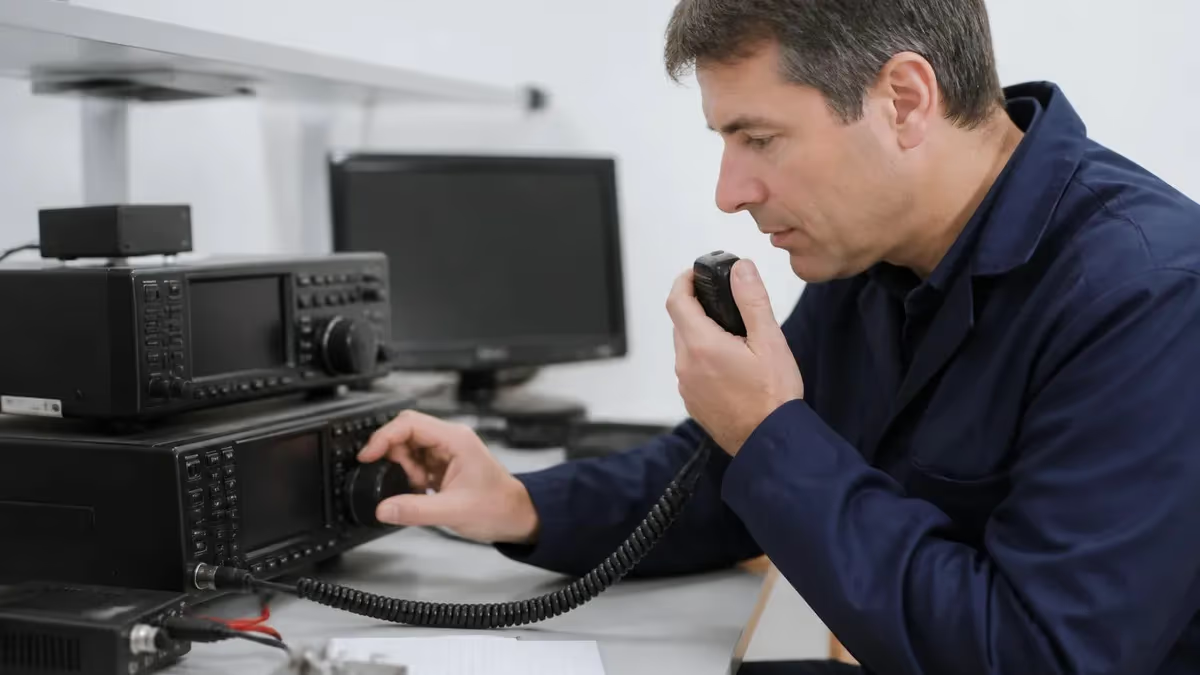
A ham radio callsign lookup is the simplest, fastest way to turn a string of letters and numbers heard on the air into a real, verifiable identity. Whether you just earned your ham radio license or you are still studying for the exam, knowing how to look up a call sign helps you confirm who you are talking to, find a mailing address for QSL cards, and learn an operator's license class and grant date. The skill takes minutes to learn and pays off every single time you key up the microphone. Practice with the free Ham Radio Technician practice test on PracticeTestGeeks (450+ questions with answer explanations).
Every licensed operator in the United States receives a unique call sign issued by the Federal Communications Commission. That call sign is public record, which means anyone can search for it in seconds. The FCC Universal Licensing System, commonly shortened to ULS, is the official government database, while community-run directories like QRZ.com and HamCall.net layer extra features on top of the same federal data. Together these tools form the backbone of every ham radio callsign lookup you will ever perform.
Understanding how call signs are structured also tells you a surprising amount about the person behind them. The prefix reveals the country and sometimes the region, the single digit hints at the geographic district where the license was originally granted, and the suffix length often signals license class or how long the operator has held a ticket. A two-letter suffix like W1AW is rare and prized, while a longer call such as KD9XYZ is typical for a newer Technician-class licensee.
For newcomers, the lookup process doubles as a learning exercise. When you search a call sign and see fields for license class, expiration date, and FRN, you are reinforcing the same regulatory concepts the exam tests. If you are shopping for your first radio at a ham radio outlet, you can even verify the seller's call sign before meeting up, adding a layer of trust to a used-gear transaction that other hobby marketplaces simply cannot offer.
This guide walks through every reliable way to perform a ham radio callsign lookup, from the official FCC ULS portal to mobile apps that work in the field without cell service. We will cover how to read the results, how to spot a vanity call sign, how to find your own call sign after you pass, and how the lookup ecosystem connects to the broader world of amateur radio licensing, equipment, and on-air etiquette that defines the hobby.
By the end, you will be able to identify any station you hear, confirm its grant status, and even research the history behind famous call signs. You will also understand why these public records exist, what privacy protections do and do not apply, and how the same databases support emergency communications, contesting, and the daily ragchews that keep the bands alive across thousands of frequencies every hour of the day.
Ham Radio Technician Test: upcoming dates and official changes
- Jul 1, 2026: The revised 2026–2030 Technician Class question pool became mandatory for Ham Radio Technician examinations on July 1, 2026. (Federal Communications Commission (FCC); examinations administered by Volunteer Examiner Coordinators, including ARRL VE)
Facts verified Oct 18, 2026 against Federal Communications Commission (FCC); examinations administered by Volunteer Examiner Coordinators, including ARRL VE. Dates that have passed are removed automatically.
- The Ham Radio Technician examination contains 35 multiple-choice questions. (Federal Communications Commission (FCC); examinations administered by Volunteer Examiner Coordinators, including ARRL VE)
- Passing the Ham Radio Technician examination requires at least 26 correct answers out of 35 questions. (Federal Communications Commission (FCC); examinations administered by Volunteer Examiner Coordinators, including ARRL VE)
- A new Ham Radio Technician license application costs $35 payable to the FCC, separately from the administering VEC's examination fee. (Federal Communications Commission (FCC); examinations administered by Volunteer Examiner Coordinators, including ARRL VE)
- Retaking a failed Ham Radio Technician examination element at an ARRL VEC session requires an additional examination fee. (Federal Communications Commission (FCC); examinations administered by Volunteer Examiner Coordinators, including ARRL VE)
- A Ham Radio Technician examination retake cannot reuse the same question set previously administered to that examinee. (Federal Communications Commission (FCC); examinations administered by Volunteer Examiner Coordinators, including ARRL VE)
- The FCC Ham Radio Technician license is normally granted for a 10-year term. (Federal Communications Commission (FCC); examinations administered by Volunteer Examiner Coordinators, including ARRL VE)
- An expired Ham Radio Technician license may be renewed during a two-year filing grace period, but operating privileges cease until renewal. (Federal Communications Commission (FCC); examinations administered by Volunteer Examiner Coordinators, including ARRL VE)
- The Ham Radio Technician examination can be taken in person or online. (Federal Communications Commission (FCC); examinations administered by Volunteer Examiner Coordinators, including ARRL VE)
- Anyone who qualifies by examination may apply for a Ham Radio Technician license except a representative of a foreign government. (Federal Communications Commission (FCC); examinations administered by Volunteer Examiner Coordinators, including ARRL VE)
Facts verified Oct 18, 2026 against Federal Communications Commission (FCC); examinations administered by Volunteer Examiner Coordinators, including ARRL VE. Dates that have passed are removed automatically.
Ham Radio Technician Test Exam at a Glance
Facts verified Oct 18, 2026 against Federal Communications Commission (FCC); examinations administered by Volunteer Examiner Coordinators, including ARRL VE. Dates that have passed are removed automatically.
Free Ham Radio Technician Test Study Tools
Interactive Ham Radio Technician Test resources on PracticeTestGeeks, free to start:
- Free Ham Radio Technician Amateur Questions and Answers — 16 questions with instant scoring and answer explanations
- Ham Radio Technician Test flashcards — review key terms and concepts card by card
- Ham Radio Technician Test study guide — topic-by-topic overview of what the exam covers
- Ham Radio Technician Test cheat sheet — one-page printable summary for last-minute review
Ham Radio Callsign Lookup by the Numbers
Where to Perform a Ham Radio Callsign Lookup
The official Universal Licensing System at wireless2.fcc.gov is the authoritative source. Search by call sign, name, FRN, or licensee ID to confirm grant status, expiration, and class. This is the legal record of record.
The most popular community lookup adds operator bios, photos, QSL preferences, grid squares, and logbook links on top of FCC data. Free basic search; a paid tier unlocks bulk lookups and extra detail fields.
A long-running directory by Buckmaster that supports international call signs and offers a clean API. Useful when you need data beyond US records or want lookups built directly into your logging software.
Apps like RepeaterBook, HamLookup, and the QRZ app let you search call signs from a phone, sometimes offline using cached databases. Ideal for Field Day, POTA activations, or mobile operating without internet.
Once you run a ham radio callsign lookup, the results screen can look intimidating at first, but every field has a clear purpose. The most important line is the license status, which should read "Active" for any station legally on the air. If you see "Expired," "Cancelled," or "Terminated," that operator's authorization has lapsed, and they should not be transmitting. The grant date and expiration date bracket the ten-year license term that the FCC assigns to every amateur ticket issued in the United States.
The license class field tells you whether the operator holds a Technician, General, or Amateur Extra license. This matters on the air because privileges differ dramatically between classes. A Technician is limited mostly to VHF and UHF plus small HF segments, while an Extra enjoys access to the entire amateur allocation. If you are studying, this is exactly the regulatory knowledge the ham radio license test rewards, so practicing lookups builds genuinely exam-ready familiarity.
You will also see the operator's name and mailing address, which are part of the public record by federal rule. Many newcomers are surprised that home addresses appear, but this transparency dates back to the earliest days of radio regulation and supports accountability on shared airwaves. The FRN, or FCC Registration Number, is a ten-digit identifier that ties a person to all their FCC licenses, useful when an operator holds multiple call signs or commercial authorizations alongside their amateur ticket.
QRZ and HamCall enrich these basics with optional fields supplied by the operator. You might find a grid square locator like FN31, a preferred QSL method, a biography, equipment photos, and even links to social media or a personal website. These voluntary additions turn a dry government record into a living profile, and they are why most hams reach for QRZ first when they hear an interesting call sign during a contact and want to learn a little more.
Pay attention to the "previous call sign" field when it appears. Operators frequently upgrade to a vanity call or trade a long sequential call for a shorter, snappier one. Seeing a chain of prior calls can reveal an operator's history in the hobby, including how long they have been licensed and whether they upgraded their class over time. This history is harmless trivia but adds context that makes on-air conversations friendlier and far more personal.
Finally, remember that the FCC ULS is always the tiebreaker. Community databases occasionally lag behind by a few days when new licenses post or renewals process, so if QRZ and ULS disagree, trust the federal record. Cross-checking is good practice before you rely on a lookup for anything important, such as confirming a contact for an award, verifying a contest log, or buying used gear from a stranger you met on a local repeater net last week.
Understanding Ham Radio Bands and Call Sign Prefixes
The prefix is the leading letter or letters in a call sign and identifies the issuing country. US amateurs use prefixes beginning with A, K, N, or W, a block assigned to the United States by international treaty through the ITU. So a call like W1AW, N0CALL, or KD9XYZ instantly signals a station that is licensed in America.
Other nations have their own prefixes: G for the United Kingdom, VE for Canada, JA for Japan, and DL for Germany. When you hear an unfamiliar prefix on the ham radio bands, a quick lookup or a glance at an ITU prefix chart tells you which country the operator is calling from, which is honestly half the fun of working DX stations.
FCC ULS vs. QRZ.com for Callsign Lookups
- +FCC ULS is the official, legally authoritative source of record
- +ULS is completely free with no account or registration required
- +ULS shows exact grant, expiration, and renewal dates
- +QRZ adds operator bios, photos, and grid square locators
- +QRZ links to logbooks and QSL preferences for easy contacts
- +Both tools are free for basic single call sign searches
- −ULS interface is dated and harder to navigate for beginners
- −ULS lacks operator photos, bios, or community features
- −QRZ data can lag a few days behind official FCC updates
- −QRZ bulk lookups and XML access require a paid subscription
- −Neither tool guarantees an operator is currently on the air
- −Community profiles depend on operators choosing to fill them in
Pros and Cons at a Glance
| Pros | Cons |
|---|---|
| FCC ULS is the official, legally authoritative source of record | ULS interface is dated and harder to navigate for beginners |
| ULS is completely free with no account or registration required | ULS lacks operator photos, bios, or community features |
| ULS shows exact grant, expiration, and renewal dates | QRZ data can lag a few days behind official FCC updates |
| QRZ adds operator bios, photos, and grid square locators | QRZ bulk lookups and XML access require a paid subscription |
| QRZ links to logbooks and QSL preferences for easy contacts | Neither tool guarantees an operator is currently on the air |
| Both tools are free for basic single call sign searches | Community profiles depend on operators choosing to fill them in |
Ham Radio Callsign Lookup Checklist
- ✓Open the FCC ULS license search at wireless2.fcc.gov
- ✓Enter the exact call sign with no spaces or punctuation
- ✓Confirm the license status reads Active before trusting it
- ✓Note the license class to understand operating privileges
- ✓Check the grant and expiration dates for the ten-year term
- ✓Cross-reference QRZ.com for the operator bio and grid square
- ✓Record the FRN if you need to track multiple licenses
- ✓Watch for a previous call sign field showing upgrade history
- ✓Trust FCC ULS over community sites if the records disagree
- ✓Bookmark a mobile lookup app for field operating without cell service
Look up your own call sign the day you pass
After you pass your exam, your new call sign usually appears in the FCC ULS within one to two business days. Searching for it is a satisfying milestone and confirms your license is officially active. You cannot legally transmit until your call sign shows up in ULS, so check daily until it posts.
Vanity call signs are where the lookup hobby gets genuinely fun. Through the FCC vanity program, licensed operators can apply for a specific call sign of their choosing, subject to availability and their license class. An Amateur Extra can request the most coveted short formats, including 1-by-2 and 2-by-1 calls like K1AB or AB1C, while Technicians and Generals have access to longer formats. Looking up a vanity call often reveals a story, an operator who waited years for a particular sequence to finally free up.
Many hams choose vanity calls that spell something meaningful, match their initials, or honor a Silent Key, the affectionate term for a deceased amateur. When you perform a ham radio callsign lookup and notice an unusually elegant call, there is a good chance it was hand-picked rather than sequentially assigned. The vanity system runs on a small filing fee and a public availability database that you can search before applying, so you can verify a call is free before committing to it.
Getting your own first call sign, by contrast, is automatic. When you pass the Technician exam administered by a Volunteer Examiner team, the FCC assigns the next available sequential call sign in your region. You do not choose it, though you can apply for a vanity replacement later. Studying ahead of time with a quality course and a good ham radio antenna setup at home means you will be ready to operate the moment your call posts to ULS.
The vanity process also intersects with club stations and special event calls. Radio clubs can hold a license with a trustee, and special 1-by-1 calls like W9X are issued temporarily for events, contests, and commemorations. When you hear one of these during a special event, a lookup will often point you to the sponsoring organization and explain what the operation is celebrating, turning a mysterious call into a memorable and meaningful contact.
For operators climbing the license ladder, a lookup is a quiet record of progress. You can watch your own grant history accumulate as you upgrade from Technician to General to Extra, each step unlocking more bands and more vanity options. The same public database that lets you research others also documents your personal journey through the hobby, a small but meaningful piece of amateur radio heritage that future operators may one day look up themselves.
If you are still preparing for that first exam, treat every lookup as a study aid. Notice how license classes map to privileges, how dates reflect the renewal cycle, and how prefixes connect to international rules. These are exactly the topics the question pool covers, and familiarity built through real-world searching tends to stick far better than rote memorization, giving you a practical edge when you finally sit down to take the test at your local club.
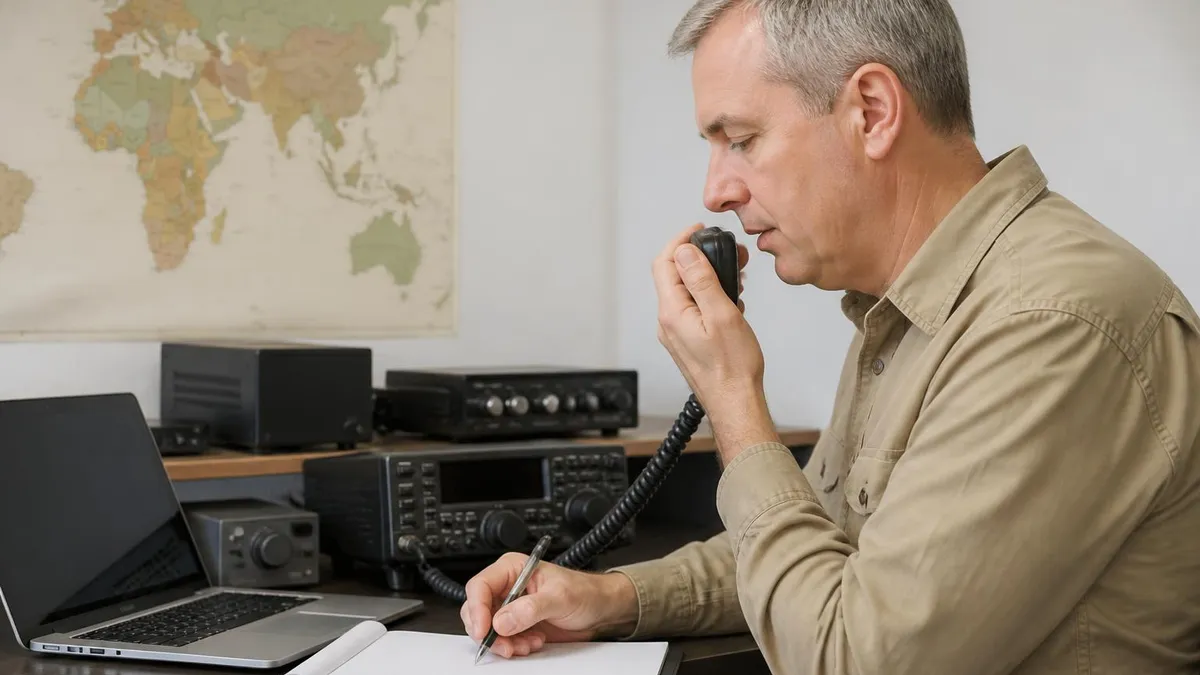
An amateur license that has expired still appears in ULS, but the operator may not legally transmit until it is renewed. The FCC allows a two-year grace period to renew without retesting, after which the call sign is forfeited. Always confirm Active status before assuming a station is authorized to be on the air.
Callsign lookups sit at the intersection of public accountability and personal privacy, and it is worth understanding the balance. Because amateur radio operates on shared public airwaves, the FCC requires that licensee names and addresses remain part of the public record. This transparency lets anyone verify that a station is licensed, discourages malicious interference, and supports the self-policing culture that has kept the hobby healthy for over a century. The tradeoff is that your information becomes searchable the moment you are licensed.
Operators concerned about privacy do have options. The FCC permits using a post office box or a club address rather than a home address, and many hams take advantage of this. Some community sites also let you control which optional profile fields appear publicly, though the underlying FCC name and address cannot be hidden. Understanding these rules before you apply lets you make informed choices about how much personal detail you expose through a routine ham radio callsign lookup.
The lookup ecosystem also powers practical, everyday parts of the hobby. Logging software automatically pulls call sign data to fill in contact details during a contest or casual ragchew. Award programs verify claimed contacts against the database. Emergency communications groups confirm that volunteers are properly licensed before deploying them on served-agency nets. When you buy used gear, checking a seller's call sign adds a layer of trust you rarely get on general marketplaces, especially for higher-value radios and amplifiers.
Lookups even satisfy plain curiosity about radio history. Famous calls carry stories: W1AW belongs to the American Radio Relay League's Hiram Percy Maxim Memorial Station and is recognized worldwide. Searches for unusual historical questions also surface here, such as the persistent online query about whether the infamous Ed Gein ever talked to someone named Ilse on a ham radio, a piece of true-crime folklore that illustrates how deeply amateur radio is woven into American cultural memory and storytelling.
For your own operating, lookups become second nature quickly. You will reach for one to confirm a weak-signal contact, to find a QSL route, or simply to put a face to a friendly voice you talk to every week on a local net. The habit also reinforces good operating practice, because knowing that anyone can look you up encourages courteous, lawful behavior on the air, exactly the conduct the licensing system is designed to promote among all operators.
As you build your station, the lookup tools naturally connect to the wider hobby. Researching antennas, planning your ham radio prep schedule, and comparing radios all benefit from the same community sites that host call sign data. QRZ forums, club rosters, and equipment reviews live alongside the directories, making a single bookmark a gateway to the entire amateur radio world, from your first contact to your hundredth country confirmed on the DX Century Club honor roll.
With the fundamentals covered, here are practical tips to make every ham radio callsign lookup faster and more reliable as you finish your exam prep and get on the air. First, bookmark all three major tools, the FCC ULS, QRZ.com, and HamCall.net, so you can cross-check instantly. Each loads differently and excels at different tasks, and having them one click away saves time when you are mid-contact and want to confirm a call sign before logging it or replying to a CQ.
Second, learn the keyboard shortcuts and search fields. ULS lets you search by name, FRN, and state, not just call sign, which is invaluable when you remember an operator's name but not their exact call. QRZ supports partial matches and wildcard-style browsing through its callsign database, helping you locate a station even when atmospheric noise garbled a letter or two during a difficult contact on a crowded band over a busy contest weekend.
Third, install a mobile lookup app before your next outdoor activation. Parks on the Air, Summits on the Air, and Field Day all happen where cell coverage is spotty, so an app that caches the database offline keeps you productive. Pair this with a reliable handheld and a portable antenna, and you can verify contacts in real time even from a mountaintop far from any cell tower or home internet connection at all.
Fourth, use lookups to study smarter. Each time you search a call, quiz yourself on what the license class permits, what the prefix indicates, and how close the expiration date is. This active recall reinforces the exact concepts the question pool tests, turning idle curiosity into genuine exam preparation. Many successful candidates credit this habit of constant, low-pressure practice with cementing the regulatory knowledge that intimidates newcomers most before test day finally arrives.
Fifth, respect the data you find. Public records exist to support accountability, not stalking or harassment. Use lookups to confirm licenses, route QSL cards, and build friendly connections, never to pressure or intimidate another operator. The amateur community polices itself partly through this shared transparency, and treating the information responsibly keeps the system trusted and intact for the next generation of operators joining the hobby every single year.
Finally, do not forget to keep your own record current. Update your address with the FCC when you move, renew before your license expires, and consider filling out a QRZ profile so other operators can put a face to your voice. A complete, accurate profile makes your contacts warmer and your station easier to confirm, and it reflects the welcoming spirit that has always defined amateur radio at its very best.
Master these habits and a callsign lookup becomes effortless, a natural reflex woven into every contact you make. Combined with solid study, proper equipment, and active participation in your local club, the simple act of searching a call sign opens a window into a worldwide community that spans every continent, language, and generation, all connected by the public records that make trust on the airwaves possible.
Sample Ham Radio Technician Test Practice Questions
Try these questions from our free Ham Radio Technician Test practice tests. The correct answer and an explanation follow each question.
An amateur radio operator wants to help during a community disaster. Which FCC authorization allows amateur radio operators to communicate on behalf of non-amateur entities during emergencies?
- A. Emergency Use License (EUL)
- B. Third-party traffic provisions and Part 97 emergency rules
- C. Special Temporary Authority (STA) only
- D. No authorization exists — amateurs may not act on behalf of others
Answer: B. Third-party traffic provisions and Part 97 emergency rules
Part 97 emergency provisions and third-party traffic rules allow amateurs to pass communications on behalf of others during emergencies.
What is a 'vanity call sign' in the U.S. amateur radio system?
- A. A call sign automatically assigned by the FCC based on license class
- B. A specific call sign requested by an amateur, subject to FCC availability and rules
- C. A temporary call sign used during special events
- D. A call sign assigned to club stations only
Answer: B. A specific call sign requested by an amateur, subject to FCC availability and rules
A vanity call sign is a specific call sign that an amateur may request from the FCC, provided it is available and the applicant meets eligibility rules.
What does the term 'vanity call sign' mean in amateur radio?
- A. A call sign issued automatically by the FCC to new licensees
- B. A call sign chosen by the licensee and applied for through the FCC ULS
- C. A temporary call sign used during contests
- D. A call sign issued only to Amateur Extra class operators
Answer: B. A call sign chosen by the licensee and applied for through the FCC ULS
A vanity call sign is one that a licensee specifically requests through the FCC ULS, such as a family call sign or one with a memorable pattern.
What is the significance of the number in a US amateur radio call sign (e.g., the '9' in KD9XYZ)?
- A. It indicates the operator class level
- B. It historically indicated a call district region, though portability is now allowed
- C. It shows how many years the operator has been licensed
- D. It is randomly assigned with no geographic meaning
Answer: B. It historically indicated a call district region, though portability is now allowed
The numeral originally designated one of ten FCC call districts, but licensees may now keep their call sign when moving to another district.
Take the full Ham Radio Technician Test practice test
Ham Radio Technician Questions and Answers
Ham Radio Stores: Where to Buy Ham Radio Equipment, Gear, and Get Your License
Ham Radio Clubs Near Me: How to Find Local Amateur Radio Groups in 2026
Ham Radio License Practice Test: Free Technician Exam Prep & Question Pool
Ham Radio Antenna Guide: Types, Towers, Portable, and Satellite Antennas
Ham Radio Handheld: Complete Guide to HT Selection, Programming, and Technician License Use
How this page was made: written with AI tools. Exam facts are checked against the official sources listed below. Not reviewed by a subject-matter expert. Editorial policy
Sources & references
Exam facts on this page (fees, format, dates, passing scores) are checked against these official sources; the date is our last check. Editorial policy
- arrl.org — Eligibility, passing score, renewal, retake policy, score release, score validity, test delivery, test dates, fees, retake fee · verified Oct 2026
- home.arrl.org — Exam format · verified Oct 2026