
Ham Radio Store Guide: Where to Buy Equipment, Antennas, and Technician License Gear in 2026 October
Find the best ham radio store for your technician license journey. ⏳ Compare retailers, equipment, antennas, and frequencies with our expert buying guide.
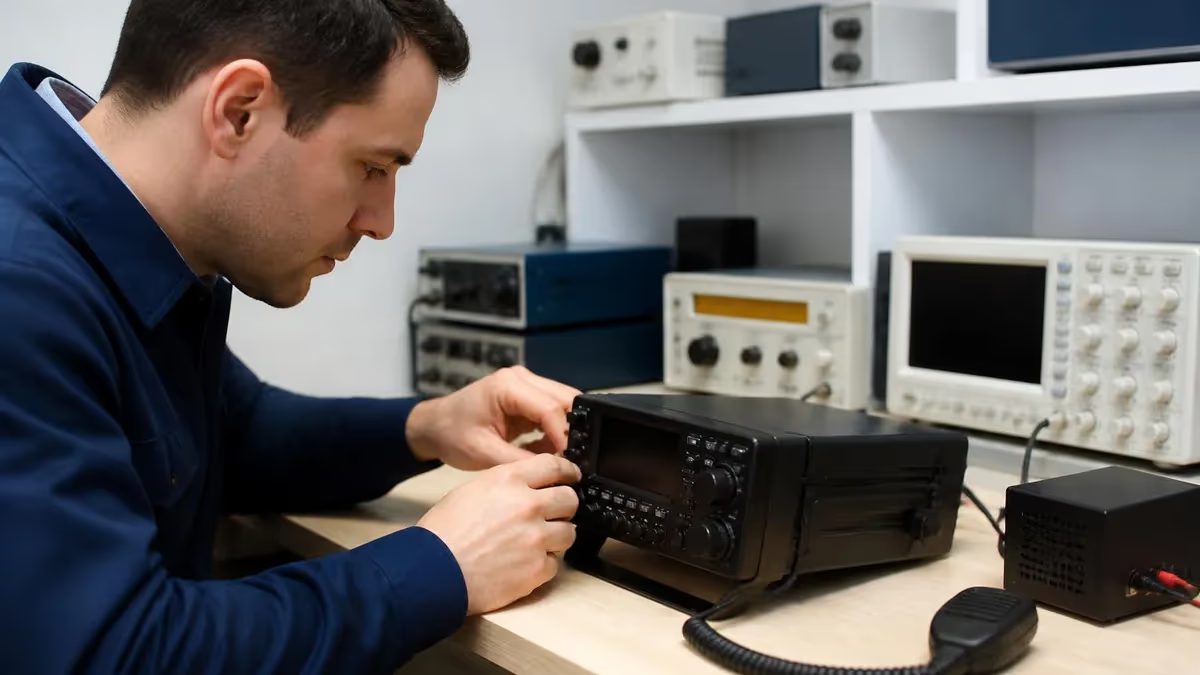
Choosing the right ham radio store is one of the most important early decisions you will make on your path to earning a ham radio license and becoming an active operator. Whether you walk into a brick-and-mortar location, browse an online catalog, or pick up gear at a regional hamfest, the store you choose shapes the equipment you buy, the support you receive, and the price you pay. A good store does more than ring up purchases — it educates, guides, and helps you avoid the most common rookie mistakes.
New technicians often start their shopping journey searching for a single handheld transceiver, but quickly realize that antennas, coax, power supplies, batteries, programming cables, and accessories add up fast. A knowledgeable retailer can package those items together, recommend compatible parts, and save you from buying something that will not work with your radio. That kind of curated experience is hard to find on generic marketplaces, which is why dedicated amateur radio shops still thrive in the internet era.
The American market is served by a mix of national chains, regional specialists, online-only retailers, manufacturer direct stores, and used-equipment dealers. Each category has its strengths. National chains like ham radio outlet stock nearly every major brand and offer storefronts in multiple states. Regional shops often provide tighter community ties and local repair services. Online-only sellers usually compete on price, while used-gear dealers help newcomers stretch a budget without sacrificing quality.
Knowing what to expect from each type of store helps you walk in prepared. You should understand the basic equipment categories — handhelds, mobile rigs, base stations, antennas, power, and accessories — before you spend a dollar. You should also know which bands your technician privileges cover, so you do not accidentally buy a radio that only operates on frequencies you cannot legally use yet. A little homework before shopping protects your wallet and your operating future.
This guide walks through the entire ham radio shopping landscape. We compare the biggest national retailers, explain what makes a good local dealer, break down realistic price ranges for technician-class equipment, and outline the accessories you will actually need on day one. We also cover return policies, warranty support, used markets, hamfest etiquette, and the difference between buying from a hobby-focused shop versus a general electronics outlet that happens to carry radios.
By the end of this article you will know how to evaluate any ham radio store, what questions to ask before purchase, how to spot fair pricing, and which features matter most for a brand-new technician licensee. You will also have a clear sense of which retailers are best suited to your goals — whether that is mobile operation, portable activations, repeater work, satellite contacts, or simply chatting on the local 2-meter machine after dinner.
Above all, remember that the best store is the one that supports you after the sale. Amateur radio is a lifelong hobby, and the relationship with your dealer can last decades. Choose carefully, ask plenty of questions, and treat your first purchase as the beginning of a long conversation rather than a one-time transaction.
Ham Radio Store Market by the Numbers

Major Ham Radio Retailers in the United States
The largest dedicated amateur retailer in the country with multiple storefronts across the US. HRO carries Yaesu, Icom, Kenwood, and accessories, offers phone consultations, and ships nationwide. Best for hands-on demos and full-line selection.
Online-focused retailer with deep antenna, coax, and station accessory inventory. Known for technical support staff who are themselves licensed hams. Excellent for building a complete station from feedline to grounding kit.
Alabama-based retailer with strong online presence, frequent sales, and broad brand coverage. Often competitive on handheld pricing and bundles items like programming cables with new radios at checkout.
Ohio-based family-owned shop serving the Midwest with both walk-in and mail-order service. Smaller than HRO but offers personalized attention and competitive pricing on popular technician gear.
Regional shops often run by working hams who know the local repeaters, propagation conditions, and antenna restrictions. Worth seeking out for personalized advice, used inventory, and ongoing community support.
Before you walk into a ham radio store you need a clear picture of what your technician license actually authorizes. Technicians have full privileges on all amateur bands above 30 MHz, which means 6 meters, 2 meters, 1.25 meters, 70 centimeters, and several microwave bands. You also get limited HF privileges on portions of 10, 15, 40, and 80 meters. Understanding these ham radio frequencies determines which radios make sense for your first purchase.
For most new technicians, the practical starting point is a dual-band handheld covering 2 meters (144-148 MHz) and 70 centimeters (420-450 MHz). These are the bands where local repeaters live, where the majority of weekend nets meet, and where you can reach across town with as little as five watts. A handheld is portable, inexpensive, and forgiving while you learn radio etiquette and how to navigate menus.
The next logical step is a mobile dual-band radio installed in your vehicle or used as a base station with a 13.8 volt power supply. Mobile rigs typically output 25 to 50 watts, drive larger antennas, and offer better receivers than handhelds. Many new hams buy a handheld first, then add a mobile within six to twelve months once they know they will stay active in the hobby.
Antennas are where many newcomers underspend, and where a good store earns its keep. A quality dual-band antenna mounted as high as possible will outperform an expensive radio with a poor antenna every single time. Whether you choose a magnetic mount for the car, a J-pole for the attic, or a vertical for the roof, plan to spend roughly the same amount on antenna and feedline as you do on the radio itself.
Power is the third pillar. Handhelds use proprietary lithium-ion battery packs that last roughly a day of moderate use. Mobile rigs need a 12-volt source — either the vehicle battery or a dedicated bench supply rated for at least 25 amps. Cheap power supplies introduce noise into your receiver, so do not skimp here. Linear supplies are quietest; quality switching supplies have improved dramatically and now suit most stations.
Accessories round out the kit. A programming cable lets you load repeater frequencies, tones, and offsets from a computer rather than entering them one button-press at a time. A speaker microphone clips to your shirt for hands-free operation. A spare battery extends field time. A simple SWR meter confirms your antenna is tuned properly before you transmit at full power, protecting both your radio and the rules of good operating practice.
Finally, do not forget the intangibles a store provides — guidance on local repeaters, lists of nearby clubs, recommendations for your first contest or activation, and follow-up support when something does not work. The right retailer treats your first sale as the start of a relationship, not the end of a transaction.

Ham Radio Technician Practice Test Questions
Prepare for the Ham Radio Technician Test exam with our free practice test modules. Each quiz covers key topics to help you pass on your first try.
Ham Radio Technician Antennas & Feedlines
Ham Radio Technician Exam Questions covering Antennas & Feedlines. Master Ham Radio Technician Test concepts for certification prep.
Ham Radio Technician Basic Electronics & C...
Free Ham Radio Technician Practice Test featuring Basic Electronics & Circuitry. Improve your Ham Radio Technician Exam score with mock test prep.
Ham Radio Technician Equipment & Tools Usage
Ham Radio Technician Mock Exam on Equipment & Tools Usage. Ham Radio Technician Study Guide questions to pass on your first try.
Ham Radio Technician Amateur
Ham Radio Technician Test Prep for Amateur. Practice Ham Radio Technician Quiz questions and boost your score.
Ham Radio Technician General
Ham Radio Technician Questions and Answers on General. Free Ham Radio Technician practice for exam readiness.
Ham Radio Technician III
Ham Radio Technician Mock Test covering III. Online Ham Radio Technician Test practice with instant feedback.
Ham Radio Technician II
Free Ham Radio Technician Quiz on II. Ham Radio Technician Exam prep questions with detailed explanations.
Ham Radio Technician I
Ham Radio Technician Practice Questions for I. Build confidence for your Ham Radio Technician certification exam.
Ham Radio Technician License
Ham Radio Technician Test Online for License. Free practice with instant results and feedback.
Ham Radio Technician Licensing Regulations...
Ham Radio Technician Study Material on Licensing Regulations & Standards. Prepare effectively with real exam-style questions.
Ham Radio Technician Operating Procedures ...
Free Ham Radio Technician Test covering Operating Procedures & Etiquette. Practice and track your Ham Radio Technician exam readiness.
Ham Radio Technician Radio Wave Propagatio...
Ham Radio Technician Exam Questions covering Radio Wave Propagation & Modulation. Master Ham Radio Technician Test concepts for certification prep.
Ham Radio Technician Safety Procedures & R...
Free Ham Radio Technician Practice Test featuring Safety Procedures & Risk Management. Improve your Ham Radio Technician Exam score with mock test prep.
Ham Radio Equipment Categories at a Typical Store
Handheld transceivers, often called HTs, are the entry point for nearly every new technician. Most operate on the 2-meter and 70-centimeter bands at five watts, weigh under a pound, and slip into a backpack. Budget Chinese-built models start around 35 dollars, while flagship Japanese units from Yaesu, Icom, and Kenwood range from 200 to 500 dollars with rugged cases, larger displays, and crystal-clear audio.
When shopping for an HT, prioritize ease of programming, battery quality, audio clarity, and a strong stock antenshooting. A good store will demonstrate the menu system, load a few local repeaters before you leave, and recommend a programming cable that actually fits the model. The cheapest radio is not always the best value once you factor in poor receivers and frustrating menus.
Buying from a Dedicated Ham Radio Store vs. General Online Marketplaces
- +Knowledgeable staff who are often licensed hams themselves
- +Tested and verified equipment with full manufacturer warranty
- +Phone and email support from real technicians after the sale
- +Bundled accessories like programming cables included at checkout
- +Access to current manufacturer firmware and rebate programs
- +Repair services and parts availability for older equipment
- +Honest advice on which radio fits your goals and budget
- −Prices may be slightly higher than gray-market online sellers
- −Limited storefront locations require shipping for most customers
- −Some smaller dealers carry only select brands or models
- −Stock can fluctuate when popular radios go on backorder
- −Less aggressive discounting compared to anonymous marketplaces
- −Specialty items may need to be special-ordered with longer lead times
Pros and Cons at a Glance
| Pros | Cons |
|---|---|
| Knowledgeable staff who are often licensed hams themselves | Prices may be slightly higher than gray-market online sellers |
| Tested and verified equipment with full manufacturer warranty | Limited storefront locations require shipping for most customers |
| Phone and email support from real technicians after the sale | Some smaller dealers carry only select brands or models |
| Bundled accessories like programming cables included at checkout | Stock can fluctuate when popular radios go on backorder |
| Access to current manufacturer firmware and rebate programs | Less aggressive discounting compared to anonymous marketplaces |
| Repair services and parts availability for older equipment | Specialty items may need to be special-ordered with longer lead times |
Pre-Purchase Checklist Before Visiting Any Ham Radio Store
- ✓Confirm your FCC technician license has been issued and your call sign appears in the ULS database
- ✓Identify the local VHF and UHF repeaters in your area along with their offsets and tones
- ✓Decide whether your first radio will be a handheld, a mobile, or a base station
- ✓Set a realistic total budget including radio, antenna, feedline, and power supply
- ✓Research the big-three brands (Yaesu, Icom, Kenwood) versus budget alternatives
- ✓Ask if the store includes a programming cable or charges extra for it
- ✓Verify the return policy and warranty length on the specific model you want
- ✓Check that the antenna you choose covers the bands your radio transmits on
- ✓Confirm coax length and connector type before leaving the counter
- ✓Schedule time to program local repeaters into the radio before your first transmission
Spend Equal Dollars on Antenna and Radio
Experienced operators almost universally agree that the biggest mistake new technicians make is overspending on the radio and underspending on the antenna. A 500-dollar HT connected to a stock rubber duck reaches less than a 50-dollar radio connected to a properly mounted outdoor vertical. Plan your budget so antenna, feedline, and mounting hardware roughly equal the cost of the radio itself.
Accessories often determine whether your new ham radio brings daily joy or sits in a drawer. Walking into a store with a list prevents the cashier from upselling items you do not need while also ensuring you do not leave without the small parts that make the radio actually usable. A good shopping list starts with power, antennas, programming tools, and audio accessories — the four categories that quietly turn a basic transceiver into a complete station.
For handhelds, the first accessory most new technicians appreciate is a spare battery pack or an alkaline battery tray. Lithium-ion packs lose capacity over years, and a backup ensures you are never caught silent at a public service event. A drop-in desktop charger is often more convenient than the wall-wart trickle charger that ships in the box, restoring a depleted pack in under three hours.
Programming cables and software are non-negotiable. Manual entry of fifty repeater frequencies, offsets, tones, and band plans takes hours and invites typos. A 25-dollar cable paired with free software like CHIRP lets you load a complete code plug in five minutes. Many stores will program a basic local repeater list into the radio for free if you ask politely at the counter — a service well worth the trip.
Speaker microphones and earpieces drastically improve usability. A speaker mic clipped to your shirt collar keeps the radio on your belt while putting clear audio at ear level. Earpieces preserve privacy in public spaces and add range when the speaker is held closer to your ear than the body of the radio. Both accessories cost 25 to 75 dollars and last for years.
For mobile installations, plan on a fused power cable run directly to the vehicle battery, a magnetic-mount or permanent-mount antenna, and a noise-suppression kit if you operate a hybrid or electric vehicle. Many stores sell pre-built installation kits that include everything needed for a clean install. Ask whether the technicians on staff can help diagnose RFI issues if you run into them after installation.
Test gear separates serious operators from occasional users. An SWR meter for VHF and UHF costs 50 to 150 dollars and verifies your antenna is properly tuned before you transmit. A power meter confirms your radio actually puts out rated wattage. A dummy load lets you test transmit functions without radiating into the air. These tools quickly pay for themselves in protected equipment and avoided fines.
Finally, remember accessories you cannot hold — the printed band plan, the local repeater directory, the club roster, and the upcoming hamfest schedule. Many stores keep stacks of these materials near the register. They cost nothing, weigh nothing, and connect you instantly to the broader amateur community that ultimately makes the hobby worthwhile.
Several budget transceivers sold online are not properly type-accepted for Part 97 amateur use and can transmit outside authorized bands. Buying from a reputable ham radio store dramatically reduces the risk of unknowingly purchasing non-compliant equipment. Always confirm FCC certification, and never modify a radio to transmit outside the bands your license authorizes — fines can exceed 10,000 dollars per violation.
Smart shopping means more than chasing the lowest sticker price. The best ham radio stores compete on knowledge, post-sale support, and inventory depth. Before committing to a purchase, evaluate the retailer the same way you would evaluate any major service provider — ask about return windows, warranty handling, repair turnaround, technical support hours, and how they treat customers six months after the sale. These questions reveal far more than a one-time discount ever will.
Hamfests deserve a special mention. These weekend swap meets bring together hundreds of operators selling used ham radios, antennas, parts, and oddities at deeply discounted prices. Walking the aisles is also a crash course in equipment history — you will see decades of radios from every major manufacturer laid out on folding tables. Bring cash, bring questions, and bring a fellow ham who knows how to spot a deal versus a problem.
Used equipment is a legitimate path for budget-conscious technicians. A ten-year-old Yaesu or Icom often outperforms today's budget radios and may sell for less than half its original price. Look for clean cosmetics, original accessories, smooth menu operation, and clear audio on both transmit and receive. Reputable used dealers test every radio before listing, offer 30-day return windows, and stand behind the gear they sell.
Pricing varies less than newcomers expect among reputable dealers. The big three brands maintain minimum advertised pricing, so most stores sell the same radio for within a few dollars of each other. Where stores differ is in bundles, shipping, sales tax, and how they handle accessories. A radio priced 20 dollars higher that includes a free programming cable and one year of priority phone support is almost always the better deal.
Watch out for too-good-to-be-true pricing on social media marketplaces, classified ad sites, and overseas drop-shippers. Counterfeit accessories, gray-market imports, and stolen equipment all circulate at the bargain end of the market. If a deal sits 40 percent below the standard retail price across all reputable dealers, treat it as suspect until you can verify the seller's reputation, original purchase receipt, and serial number history.
Online reviews provide useful but imperfect guidance. Read the negative reviews carefully — they reveal failure modes, weak points, and customer service experiences that glowing five-star praise often hides. Visit forums like eHam, QRZ, and Reddit's amateur radio community to ask about specific stores. Working hams are remarkably generous with recommendations and warnings, especially for newcomers preparing to spend their first few hundred dollars.
Above all, remember that your local club is one of the best resources in your shopping journey. Members will tell you which stores treat newcomers well, which mobile installers know their craft, and which used dealers stand behind their inventory. A single club meeting can save you hundreds of dollars and weeks of frustration as you build your first complete amateur radio station.
Once your first equipment arrives from the ham radio store, the real learning begins. Unbox carefully, save every cable and accessory, and read the manual before pressing any buttons. Modern transceivers have dozens of menu options, and a few minutes of reading prevents weeks of frustration trying to reverse a setting you accidentally changed. Spend the first hour simply listening on local repeaters before transmitting, so you understand the rhythm of operating in your area.
Programming the radio is the next milestone. If you bought a programming cable, install the driver software, download the latest version of CHIRP or the manufacturer's official utility, and read the radio's existing memory first to create a backup file. Then load a fresh code plug with your local repeaters, simplex frequencies, and any national calling channels you want quick access to. Save the file with a clear name so you can reload it after firmware updates.
Test transmissions on a simplex frequency or through a repeater your club operates. Ask another licensed operator to confirm your audio sounds clear and your deviation is set correctly. Many radios ship with default audio settings that are either too loud or too quiet, and a quick adjustment dramatically improves how others hear you. This is also the moment to check that your call sign is being announced correctly if your radio supports automatic identification.
Your ham radio prep does not stop with the technician test. Most stores carry study guides for general and extra class upgrades, antenna theory books, and operating manuals that go far deeper than the license exam. Pick one new topic each month — propagation, satellites, digital modes, contesting, public service — and use store resources to learn it. The hobby rewards continuous learning, and your retailer can become a lifelong educational partner.
Keep careful records of every purchase. Save invoices, serial numbers, firmware versions, and warranty cards in a single folder, whether physical or digital. When something needs repair years later, having the original documentation speeds up service and proves ownership. It also makes selling or upgrading equipment far easier, since serious buyers always ask about original packaging and documentation.
Plan your next purchase before you finish setting up the current one. Most technicians follow a predictable upgrade path: handheld first, then mobile, then base station with HF capability after upgrading to general class. Knowing what comes next helps you choose accessories that will carry forward — a quality power supply, a good antenna analyzer, and a sturdy desk microphone will all serve you across multiple radios over many years.
Finally, give back to the store community that helped you get started. Leave honest reviews, recommend the shop to fellow club members, and return for accessories rather than chasing tiny online discounts. The dealers who survive in this niche industry do so because of loyal customers who value expertise. Supporting them ensures that the next generation of technicians has the same knowledgeable guidance you received on your first visit.
Sample Ham Radio Technician Test Practice Questions
Try these questions from our free Ham Radio Technician Test practice tests. The correct answer and an explanation follow each question.
What should you do if you feel a tingling sensation while touching radio equipment that is plugged in?
- A. Ignore it — tingling is normal from RF fields
- B. Increase the RF ground connection and continue
- C. Stop touching the equipment immediately and have an electrician check for a ground fault
- D. Wear rubber gloves and continue operating
Answer: C. Stop touching the equipment immediately and have an electrician check for a ground fault
Tingling indicates current is flowing through your body, signaling a ground fault or wiring defect that must be corrected before further use.
Which of the following is a common use for a signal generator in amateur radio equipment maintenance?
- A. Charging battery packs
- B. Injecting a known RF signal to align or troubleshoot receivers
- C. Measuring antenna height
- D. Calculating feedline velocity factor
Answer: B. Injecting a known RF signal to align or troubleshoot receivers
A signal generator produces a calibrated RF signal that technicians inject into a receiver's input to test sensitivity, selectivity, and alignment.
A Technician licensee wants to operate a remote station where the transmitter is in another state. What is required?
- A. A separate license for each state where equipment is located
- B. The licensee must be the control operator and follow rules for the transmitter's location
- C. This is not permitted under Technician class privileges
- D. Special remote operating authorization from the FCC
Answer: B. The licensee must be the control operator and follow rules for the transmitter's location
Remote operation is allowed; the control operator must follow all FCC rules applicable to the transmitter's location regardless of where the operator is.
How long is an amateur radio license valid once issued?
- A. 5 years
- B. 7 years
- C. 10 years
- D. 15 years
Answer: C. 10 years
Once issued, an amateur radio license in the United States is valid for a period of 10 years. Operators must renew their license before it expires, or within a two-year grace period, to maintain their operating privileges.
Ham Radio Technician Questions and Answers
Ham Radio License Practice Test: Free Technician Exam Prep & Question Pool
Ham Radio Handheld: Complete Guide to HT Selection, Programming, and Technician License Use
Ham Radio Technician
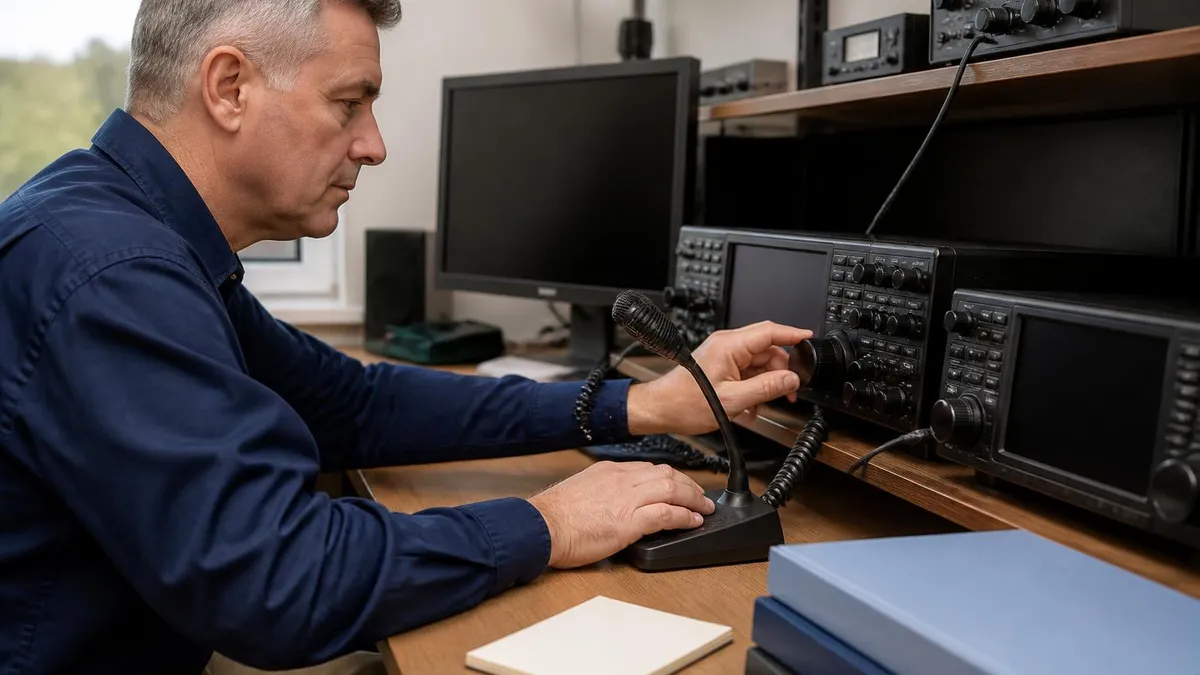
Ham Radio License: What It Is and How to Get One
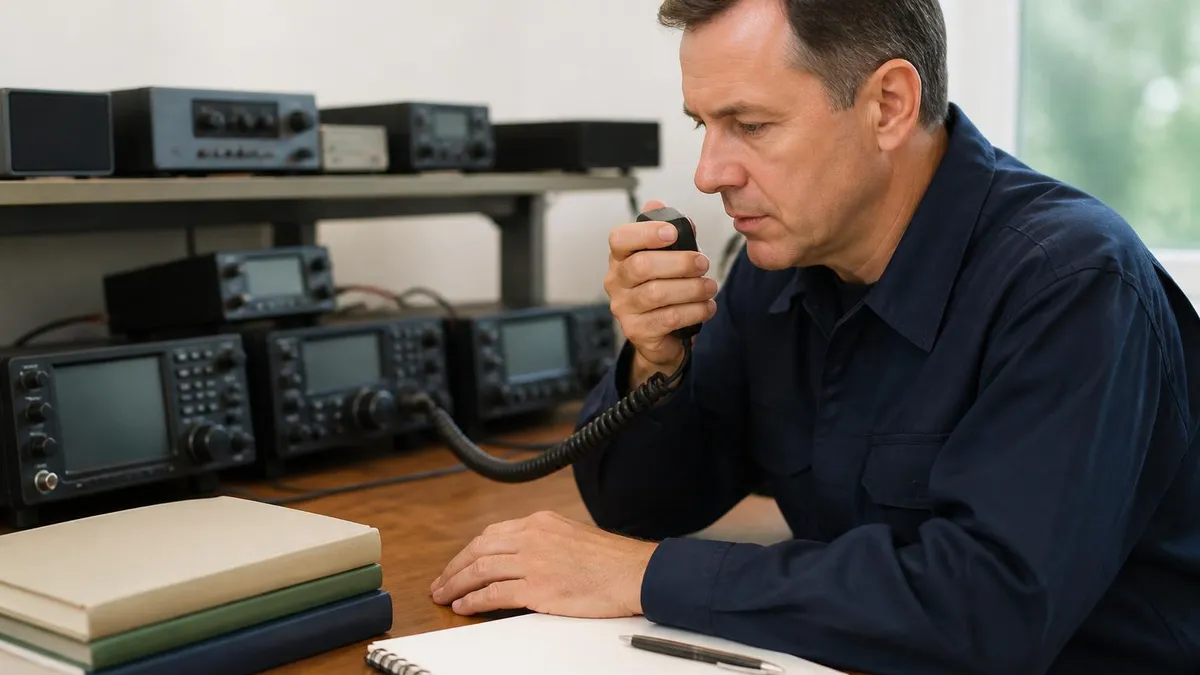
Ham Radio Modes: Complete Guide to RTTY, FT8, SSB, CW, and Digital Operating for Technicians
About the Author

Educational Psychologist & Academic Test Preparation Expert
Columbia University Teachers CollegeDr. Lisa Patel holds a Doctorate in Education from Columbia University Teachers College and has spent 17 years researching standardized test design and academic assessment. She has developed preparation programs for SAT, ACT, GRE, LSAT, UCAT, and numerous professional licensing exams, helping students of all backgrounds achieve their target scores.
Join the Discussion
Connect with other students preparing for this exam. Share tips, ask questions, and get advice from people who have been there.
View discussion (3 replies)