
Ham Radio Test Questions: Complete Practice Guide for the Technician License Exam
Master ham radio test questions with free practice quizzes, study tips, and exam breakdowns for the Technician license. Start preparing today. 💯
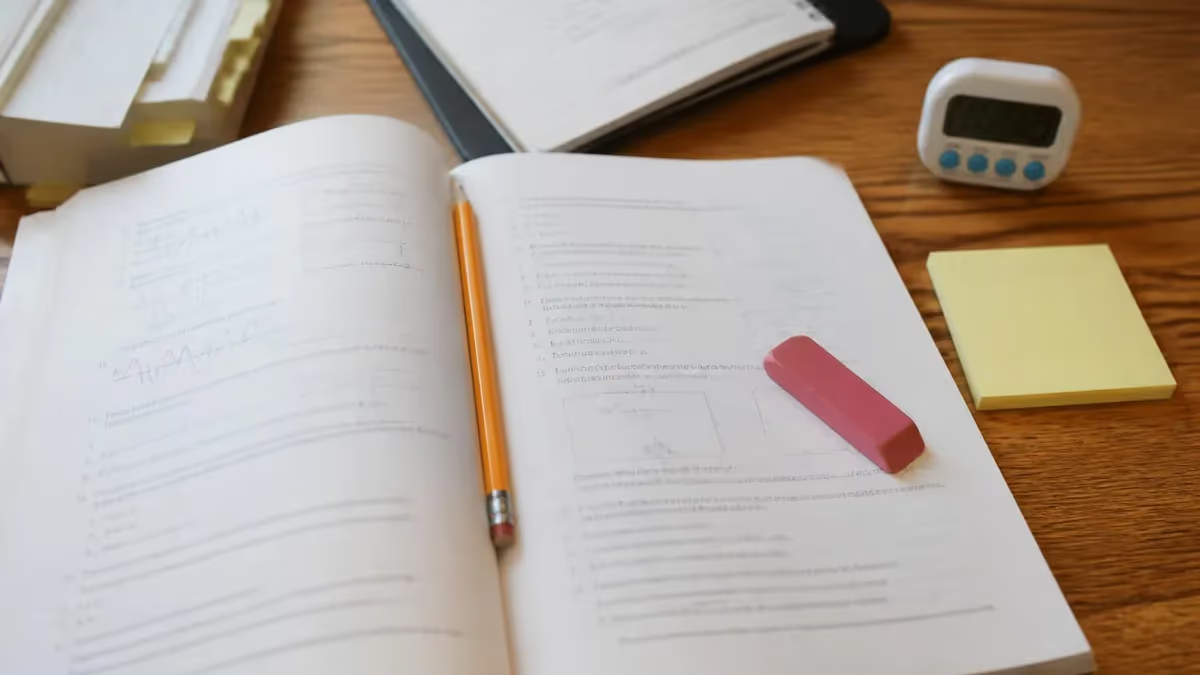
Preparing for the ham radio license exam starts with understanding what kinds of ham radio test questions actually appear on the Technician class examination. The FCC-required test draws from a question pool maintained by the ARRL and the National Conference of Volunteer Examiner Coordinators, and every question you will face on exam day already exists in that published pool. That means there are no surprises — only preparation. Knowing the pool inside and out is the single most reliable path to passing on your first attempt.
The Technician license is the entry-level credential for amateur radio operators in the United States, and it opens access to a wide range of ham radio frequencies spanning HF, VHF, and UHF bands. Once licensed, you can operate handheld ham radios for local emergency communication, experiment with satellite contacts, connect to repeater networks, and explore digital modes — all without any additional license upgrade. The test itself consists of 35 multiple-choice questions drawn randomly from a pool of 423 questions, and you must answer at least 26 correctly to pass.
Many candidates feel overwhelmed when they first browse the question pool. Topics range from basic electrical theory and ham radio equipment operation to FCC regulations, operating procedures, and RF safety. But the breadth of the pool is actually an advantage: because the questions are publicly available in advance, you can focus your study time precisely on the areas where you are weakest rather than guessing at what might appear. Strategic practice test sessions are far more efficient than reading a textbook cover to cover.
One of the most effective strategies is to simulate real exam conditions as often as possible. That means timed 35-question sessions, random question order, and immediate review of any question you got wrong. The goal is not just to memorize answers but to build genuine understanding, especially for topics like ham radio antenna fundamentals, electrical safety, and band privileges. Understanding the why behind an answer makes it stick far longer than rote memorization, and it helps you handle questions that are phrased slightly differently than the version you studied.
This guide covers everything you need to know: the structure of the Technician exam, the major topic categories, how to use practice tests efficiently, and the specific skills that separate first-time passers from repeat test-takers. You will also find direct links to free practice quizzes organized by subject so you can dive straight into the material most relevant to your study plan. Whether you are brand new to amateur radio or returning after a lapse, this resource is designed to get you exam-ready as efficiently as possible.
A common question among new students is whether the ham radio license test is genuinely difficult. The honest answer is that it is challenging but very passable with focused preparation. Most candidates who study consistently for two to four weeks using practice questions and a study guide report feeling confident on test day. The key is not to cram the night before but to build comprehension gradually, revisiting difficult topics multiple times and tracking your progress with timed practice sessions until your scores reliably exceed the 74% passing threshold.
Understanding what is a ham radio at a conceptual level — including how repeaters, frequencies, propagation, and equipment all interrelate — gives you a mental framework that makes individual test questions far easier to answer. Rather than treating each question as an isolated fact, you start to see how the pieces connect, which dramatically reduces the total study time needed to reach exam-ready proficiency.
Ham Radio Technician Exam by the Numbers
Key Facts at a Glance
| Item | Value | Details |
|---|---|---|
| Questions in Pool | 423 | Published by ARRL/NCVEC |
| Questions per Exam | 35 | Randomly drawn each sitting |
| Passing Score | 74% | 26 of 35 correct required |

Technician License Exam Format
| Section | Questions | Time | Weight | Notes |
|---|---|---|---|---|
| Regulations & Station Operation | 9 | ~10 min | 26% | FCC rules, license classes, privileges |
| Operating Procedures & Practices | 7 | ~8 min | 20% | Phonetics, repeaters, nets, emergency ops |
| Electrical & Circuit Principles | 6 | ~8 min | 17% | Ohm's Law, components, power formulas |
| Antennas, Feedlines & Propagation | 5 | ~6 min | 14% | Dipoles, SWR, wave propagation |
| RF Safety & Hazards | 4 | ~5 min | 11% | MPE limits, station safety practices |
| Equipment & Digital Modes | 4 | ~5 min | 11% | Transceivers, digital modes, APRS |
| Total | 35 | No time limit (typically 45 min) | 100% |
The Technician exam question pool is divided into ten subelements, labeled T1 through T0. Each subelement covers a distinct knowledge domain, and the exam draws a fixed number of questions from each one. Understanding this structure helps you allocate study time proportionally. The subelements covering FCC rules and regulations (T1 and T2) together contribute roughly nine questions, making them the single largest slice of the exam. Candidates who skip the regulatory sections in favor of purely technical topics often find themselves failing by a narrow margin on test day.
Subelement T3 covers radio wave characteristics and antenna principles — arguably the most conceptually rich portion of the exam. Questions here address topics like the relationship between frequency and wavelength, how the ionosphere affects signal propagation, and why antenna height influences radiation patterns. A solid grasp of these fundamentals also pays dividends when you begin actually operating, since understanding propagation helps you choose the right band and mode for a given contact. Many technicians find this section the most intellectually rewarding part of their study journey.
Electrical principles form the core of subelements T5 and T6. You will encounter questions about Ohm's Law, power calculations, basic circuit components like capacitors and inductors, and semiconductor devices. The math involved is straightforward — mostly multiplication and division — but it is easy to make errors under pressure if you have not practiced enough. A good approach is to work through every formula-based question in the pool at least three times, writing out each calculation by hand so that the process becomes automatic before exam day.
The RF safety subelement (T0) consistently surprises candidates who underestimate it. The FCC takes RF exposure limits seriously, and the exam reflects that. Questions cover Maximum Permissible Exposure (MPE) guidelines, how to evaluate whether a station setup complies with RF safety rules, and practical precautions for operating near antennas. Because these questions are often scenario-based rather than purely factual, they reward candidates who understand the underlying principles of RF hazard rather than those who simply memorized answer letters from a study sheet.
Operating procedures covered in subelement T2 include phonetic alphabet usage, proper identification requirements, how to make and respond to distress calls, and the etiquette of joining an active frequency. These questions are generally among the most accessible in the pool because they mirror real-world radio practices. Spending time actually listening to amateur radio nets — either on a radio or through online streaming receivers — before your exam can make these questions feel intuitive rather than abstract. Passive listening is an underrated study technique.
Digital modes and modern ham radio equipment are covered in subelement T4 and parts of T7. Questions address equipment like transceivers, power supplies, and test instruments, as well as digital operating modes such as FT8, APRS, and packet radio. While these topics may feel intimidating to newcomers, the exam questions are generally straightforward and focus on recognizing correct terminology and basic operating parameters rather than deep technical proficiency. Reviewing the glossary of common ham radio terms before taking practice tests makes this section much more approachable.
Understanding ham radio bands is essential not just for passing the exam but for effective operating once you earn your license. The Technician class license grants full privileges on all VHF and UHF amateur bands and limited privileges on several HF bands, including 10 meters and portions of 40 and 80 meters. Knowing which frequencies you are authorized to use, what modes are permitted, and what power limits apply in different band segments will help you answer regulatory questions confidently and set you up for success as a new amateur operator.
Ham Radio Frequencies: What You Need to Know for the Exam
VHF (Very High Frequency, 30–300 MHz) and UHF (Ultra High Frequency, 300 MHz–3 GHz) are the primary playground for Technician licensees. The 2-meter band (144–148 MHz) is the most popular VHF band in North America, hosting thousands of local repeaters that make it easy for new hams to make their first contacts. The 70-centimeter band (420–450 MHz) is equally popular and supports both voice and digital operations including APRS tracking and linked repeater systems.
Exam questions on VHF and UHF focus on band limits, repeater offset conventions, and propagation characteristics. VHF and UHF signals generally travel in straight lines and are blocked by terrain and buildings — a property called line-of-sight propagation. However, atmospheric ducting can occasionally allow VHF signals to travel hundreds or even thousands of miles under the right weather conditions. Understanding these propagation modes helps you answer scenario questions about when unusual contacts are possible and why local communication is typically reliable on 2 meters.

Self-Study vs. Structured Ham Radio Prep Course: Which Is Right for You?
- +Self-study is completely free using the published question pool and online practice tests
- +You can study at your own pace and focus extra time on your weakest topic areas
- +The exam question pool is publicly available, so thorough practice directly mirrors real exam content
- +Online study tools and mobile apps make practice accessible anytime and anywhere
- +Many candidates pass within two to three weeks of consistent self-directed study sessions
- +You can schedule your exam immediately once you feel confident rather than waiting for a course schedule
- −Self-study requires discipline and consistent effort without external accountability
- −Conceptually difficult topics like RF safety and propagation may be hard to grasp without guided instruction
- −Without a course, you may miss practical tips that experienced operators consider common knowledge
- −Study resources vary widely in quality, and some free materials contain outdated information
- −No live instructor means no immediate answers when you encounter a confusing question
- −Candidates who struggle with electrical math may find self-study slower and more frustrating than guided courses
Technician License Exam Prep Checklist
- ✓Download the current Technician question pool from the ARRL or NCVEC website to ensure you have the most up-to-date version.
- ✓Complete at least one full 35-question timed practice test to establish your baseline score before studying.
- ✓Identify your three weakest subelements and allocate double study time to those specific topic areas.
- ✓Work through all Ohm's Law and power calculation questions by hand at least three times each.
- ✓Study the FCC Part 97 privileges table so you can instantly recall Technician band and mode authorizations.
- ✓Memorize the phonetic alphabet (Alpha, Bravo, Charlie…) and practice spelling your call sign phonetically aloud.
- ✓Review the RF safety MPE guidelines and practice applying them to scenario-based questions in the pool.
- ✓Take at least five full practice exams in timed conditions and review every incorrect answer immediately afterward.
- ✓Register with a Volunteer Examiner Coordinator (VEC) and schedule your exam session at a convenient location.
- ✓Bring valid government-issued photo ID and any required fees to your exam session on test day.

The Entire Question Pool Is Public — Use That Advantage
Unlike most standardized tests, the FCC Technician exam draws exclusively from a published pool of 423 questions. Every single question you will face on exam day is already available for free online. Candidates who take at least 10 full practice exams before their test date and review every wrong answer pass at dramatically higher rates than those who read study guides without testing themselves. Simulation is your most powerful preparation tool.
Passing on your first attempt comes down to three fundamentals: understanding the exam structure, practicing under realistic conditions, and targeting your weakest areas with focused review. Most candidates who fail do so not because the material is too difficult but because they misjudged their own readiness. Taking practice tests that feel easy because you have seen the same questions repeatedly creates false confidence. The solution is to randomize question order in every practice session and to track your accuracy on each subelement separately rather than looking only at your overall score.
Time management during the actual exam is rarely a problem for prepared candidates — most people finish well within 45 minutes — but anxiety can cause careless errors on questions you genuinely know. A useful technique is to answer every question you are confident about first, flagging any question that gives you pause, and then returning to flagged questions with fresh attention. On multiple-choice questions where you are uncertain, eliminate obviously wrong answers first and then reason through the remaining options. Partial knowledge is often enough to identify the correct answer.
The regulations subelement consistently trips up candidates who focus exclusively on technical topics. FCC Part 97 rules cover everything from third-party communications and prohibited transmissions to station identification requirements and the proper use of the emergency frequencies. These questions are rule-based rather than conceptual, which means that for this section, careful memorization really is the right approach. Flashcards or spaced-repetition apps work particularly well for internalizing the specific numerical values — frequencies, identification intervals, power limits — that appear in regulatory questions.
One underrated aspect of exam preparation is understanding how the multiple-choice distractors are constructed. The wrong answers in the Technician pool are not random — they are carefully designed to reflect common misconceptions or errors. For example, a question about band limits might offer four choices that are all plausible-sounding frequencies, with three of them corresponding to limits on adjacent bands or license classes. Recognizing these patterns trains you to read questions more carefully and avoid the most common mistakes that well-prepared but inattentive candidates make.
Group study sessions can be surprisingly effective for Technician candidates, especially when the group includes at least one experienced amateur who can explain concepts in practical terms. Online ham radio communities, local radio clubs, and ARRL affiliated groups often organize exam prep sessions that combine instruction with practice testing.
Even a single study session with an Elmer — the term amateur radio operators use for a mentor — can clarify concepts that hours of solo study left murky. The investment of time to find and engage with the local amateur radio community pays off before the exam and long after you are licensed.
When reviewing practice test results, resist the temptation to re-read a question and immediately look up the right answer. Instead, try to reconstruct why the correct answer is correct from first principles before checking. This active recall approach strengthens memory formation far more than passive review. If you cannot reconstruct the reasoning, note the subelement and specific topic, then return to a study resource that explains the underlying principle. The goal is to understand well enough to answer a paraphrased version of the question, not just to recognize the memorized answer letter.
There is a notable curiosity in ham radio internet culture: the question "did ed gein talk to ilse on a ham radio" appears in search data with surprising frequency alongside genuine exam prep queries. While this is a pop-culture reference unrelated to the FCC exam, it illustrates how widely ham radio topics have penetrated mainstream awareness. Whether your interest in amateur radio comes from emergency preparedness, technology curiosity, or simply hearing the phrase in an unexpected context, the Technician exam is the universally recognized starting point for every licensed amateur operator in the United States.
The Technician question pool is updated on a cycle established by the NCVEC, and exams administered after a transition date draw exclusively from the new pool. Always verify that your study materials reference the currently active pool before investing hours in preparation. Using an expired pool could mean studying questions that will never appear on your actual exam — and missing new questions that will. The current pool version and its expiration date are always listed on the ARRL and NCVEC websites.
Ham radio equipment knowledge is tested throughout the Technician pool, and understanding the gear you will actually use makes these questions much easier to answer correctly. The most common entry-level setup is a dual-band handheld transceiver (HT) covering 2 meters and 70 centimeters. These radios are compact, battery-powered, and capable of accessing most local repeaters right out of the box. Questions about HTs cover their typical power output (usually 4–8 watts), battery types, programming basics, and the importance of keeping the antenna clear of obstructions during transmission.
Mobile transceivers for vehicle installations represent the next tier of ham radio equipment, offering higher power output (typically 50 watts on VHF) and a more comfortable operating experience for extended sessions. Exam questions on mobile installations address proper grounding techniques, power supply connections, antenna placement for maximum performance, and coaxial cable selection. Understanding why a good ground connection matters — both for RF performance and electrical safety — helps you answer these questions confidently while also preparing you to set up your first station correctly.
Base station setups introduce additional equipment considerations: external antennas mounted on masts or rooftops, feedlines running from the radio to the antenna, SWR meters for tuning, and antenna tuners for optimizing the match between transceiver and antenna. The exam tests knowledge of Standing Wave Ratio (SWR) as a measure of how efficiently power is transferred from the feedline into the antenna. A perfect match produces an SWR of 1:1, while mismatches above 2:1 begin to cause measurable power loss and can stress the final amplifier stage of sensitive transceivers.
Power supplies are another equipment topic covered on the exam. Most ham transceivers operate on 13.8 volts DC, which matches a fully charged 12-volt lead-acid or lithium battery. When operating from household AC power, a regulated linear or switching power supply converts 120V AC to the required DC voltage. Questions may ask about the characteristics of regulated versus unregulated supplies, the importance of adequate current capacity (rated in amperes), and the difference between float charging and fast charging for station backup batteries used in emergency communication deployments.
Test instruments — particularly the multimeter and the SWR meter — appear in several exam questions. A multimeter measures voltage, current, and resistance and is essential for diagnosing problems in any station installation. An SWR meter (or antenna analyzer) measures the impedance match between the transmitter and antenna system. Understanding what each instrument measures, how to interpret its readings, and when to use it gives you both exam-ready knowledge and practical troubleshooting skills you will rely on throughout your amateur radio career.
Understanding a ham radio antenna at a deeper level separates operators who simply purchase equipment from those who can optimize it. Antenna questions on the Technician exam cover dipoles, verticals, Yagi beams, and ground planes.
You will need to know that a half-wave dipole for 2 meters is approximately 19 inches per element, that antenna gain is measured in dBd (relative to a dipole) or dBi (relative to an isotropic radiator), and that directional antennas like Yagis provide gain in specific directions at the expense of coverage in other directions. These concepts connect directly to practical operating decisions about which antenna suits a given application.
Coaxial cable selection is a topic that bridges equipment knowledge and antenna theory. The exam pool includes questions about common coax types such as RG-58, RG-8X, and LMR-400, their relative loss characteristics, and the importance of matching impedance (typically 50 ohms for amateur radio applications). Higher-quality, larger-diameter coax like LMR-400 has lower signal loss per foot than thinner cables like RG-58, which becomes important when feedline runs are long. Choosing the right coax is one of the most cost-effective ways to improve station performance, and the exam rewards candidates who understand the tradeoffs involved.
The final weeks before your exam should be focused on consolidation rather than learning new material. By this point you should have covered every subelement at least once and have a clear picture of where your remaining weak spots lie. Use this period to take full practice exams daily, review only the questions you missed, and reinforce your understanding of the specific concepts those questions test. Avoid the temptation to start new study resources at this stage — consistency and repetition with material you already know will serve you better than introducing new information that competes for memory space.
Sleep and physical state matter more than most candidates acknowledge. Cognitive performance drops measurably when you are fatigued, and a well-rested mind processes multiple-choice logic significantly faster and more accurately than a tired one. In the two days before your exam, prioritize sleep over cramming. A brief review of the areas where you felt least confident the morning of the exam is fine, but avoid intense study sessions the night before. Arriving at the exam site rested, hydrated, and having eaten a normal meal puts you in the optimal physiological state for peak performance.
On exam day, read every question carefully before selecting an answer. The Technician pool includes several questions where a single word changes the correct answer — particularly in regulatory questions where the distinction between what is permitted and what is required, or between amateur and commercial stations, determines the right choice. Pace yourself to read each question fully rather than pattern-matching to a memorized answer based on the first few words. This discipline catches careless errors and ensures that your actual knowledge translates into correct answers on the score sheet.
After passing your exam, the Volunteer Examiner team submits your results to the FCC, and your new call sign typically appears in the FCC ULS database within a few business days. You are legally authorized to transmit immediately upon appearance in the database — you do not need to wait for a physical license certificate. Your first QSO (contact) on the local repeater is usually an exciting milestone, and most experienced operators remember their first successful contact vividly. The skills you built during exam preparation provide a solid foundation for everything that follows.
Upgrading to General class after earning your Technician license dramatically expands your operating privileges, particularly on HF bands where worldwide contacts are routine. The General exam draws from a separate 462-question pool and requires passing a 35-question test with the same 74% threshold. Many Technicians pursue their General upgrade within six months to a year of initial licensing, motivated by the desire to explore the full range of amateur radio frequencies and modes. The study process is similar to Technician preparation, and the core skills you developed preparing for the Technician exam transfer directly.
Ham radio prep resources have never been more abundant or accessible. The ARRL publishes comprehensive study guides updated for each question pool cycle. Dozens of websites offer free randomized practice tests that simulate real exam conditions. Mobile apps allow you to study during commutes or spare moments throughout the day.
YouTube channels hosted by experienced amateurs provide visual explanations of concepts that are hard to grasp from text alone. The combination of free online practice tests, community support from local clubs, and the publicly available question pool makes earning your Technician license one of the most accessible technical certifications available to any motivated adult.
The ham radio outlet for purchasing your first radio, antenna, and accessories is also an important part of the journey. Having equipment in hand before your exam allows you to listen to amateur frequencies, understand what repeater operations actually sound like, and build excitement for the hobby that sustains motivation through the study process. Many new hams report that hearing real conversations on a 2-meter repeater while studying made abstract exam topics feel concrete and relevant, significantly improving both retention and enthusiasm for earning their license.
Ham Radio Technician Questions and Answers
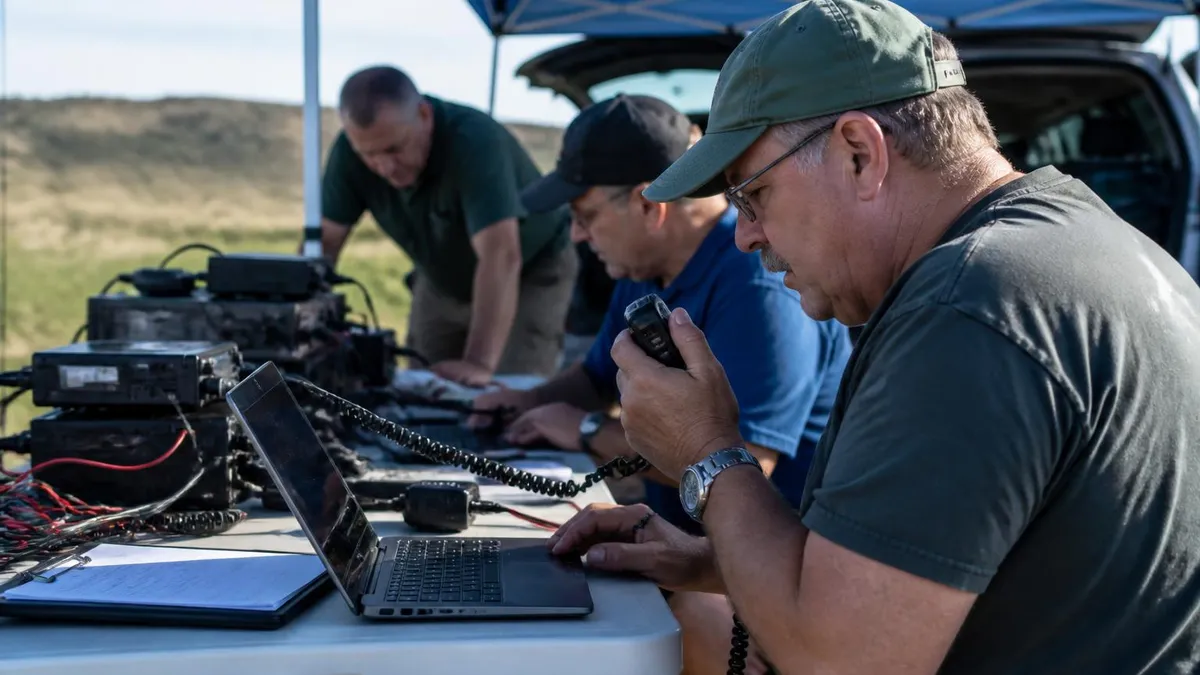
Ham Radio Test Online: Complete Study Guide for the Technician License Exam
Ham Radio License Online: The Complete Guide to Getting Licensed in 2026
Ham Radio Technician

Ham Radio Repeaters: Complete Guide for Technician License Holders
Ham Radio Stores: Where to Buy Ham Radio Equipment, Gear, and Get Your License
About the Author

Educational Psychologist & Academic Test Preparation Expert
Columbia University Teachers CollegeDr. Lisa Patel holds a Doctorate in Education from Columbia University Teachers College and has spent 17 years researching standardized test design and academic assessment. She has developed preparation programs for SAT, ACT, GRE, LSAT, UCAT, and numerous professional licensing exams, helping students of all backgrounds achieve their target scores.
Join the Discussion
Connect with other students preparing for this exam. Share tips, ask questions, and get advice from people who have been there.
View discussion (3 replies)