
CPR Facts: 50+ Surprising Statistics, History, and Life-Saving Truths Every American Should Know in 2026 September
CPR facts every American should know: survival rates, history, acls algorithm basics, infant CPR steps, AED meaning, and bystander myths debunked. ✍🏼
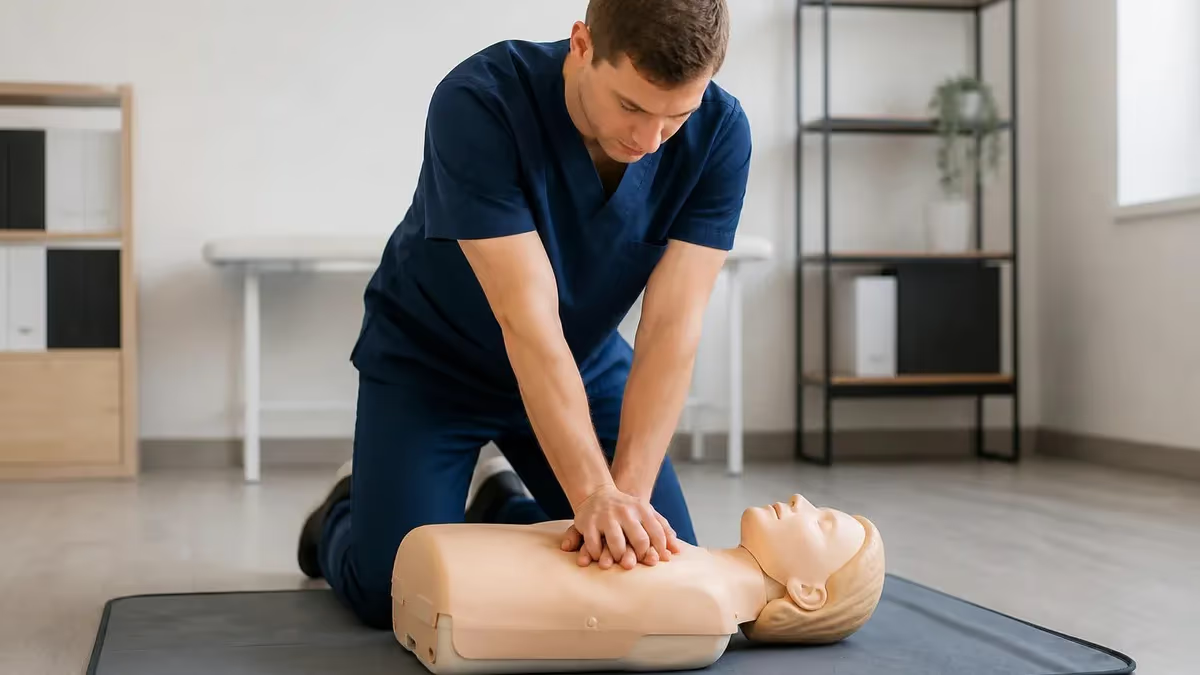
The most sobering of all cpr facts is this: roughly 350,000 cardiac arrests happen outside hospitals in the United States every year, and fewer than one in ten victims survive. Bystander CPR can double or even triple that survival rate, yet only about 40 percent of victims receive it before paramedics arrive. Behind those numbers lives a story of science, courage, and surprisingly recent innovation — CPR as we know it is younger than the Beatles, and it continues to evolve with every new resuscitation study published.
What began in 1960 as a controversial experimental technique pioneered by Drs. Kouwenhoven, Jude, and Knickerbocker at Johns Hopkins is now taught to millions of laypeople, lifeguards, teachers, and first responders worldwide. The acls algorithm used in modern emergency rooms grew out of that original chest-compression discovery, layered with decades of pharmacology, defibrillation research, and rhythm analysis. Most Americans, however, still believe CPR works the way television portrays it — and that misconception costs lives every single day.
This article collects the most important, surprising, and clinically accurate facts about cardiopulmonary resuscitation, drawn from the American Heart Association, the European Resuscitation Council, and peer-reviewed survival registries. You will learn why hands-only CPR is now preferred for untrained bystanders, why infant CPR uses two fingers rather than two hands, what does aed stand for, and why the question of life support during cardiac arrest is more nuanced than most people realize.
You will also discover the lesser-known history: the rib-cracking realities, the dog experiments that proved compressions could circulate blood, the disco song that taught a generation the correct compression rate, and the dramatic rise of public-access defibrillators in airports, schools, and gyms. Each fact is paired with the practical action it should inspire — because knowing CPR statistics is meaningless unless that knowledge translates into confidence when seconds count.
Whether you are renewing a pals certification, considering enrollment with the national cpr foundation, teaching a community class, or simply curious why a CPR mannequin is named Anne, this guide will give you a complete picture. We have organized the information so a casual reader can scan the highlights, while clinicians and instructors can dig into the deeper physiology, the chain-of-survival breakdown, and the algorithm-level details that matter in real codes.
By the end, you will understand exactly why every adult in America should know how to push hard, push fast, and use an AED — and you will have practical, evidence-based answers to the questions friends and family ask whenever the topic of sudden cardiac arrest comes up at a dinner table, in a workplace, or, most painfully, after losing someone too soon.
Bookmark this page, share it with a colleague, and treat it as a living reference. CPR guidelines refresh every five years, the next major update is expected in 2025–2026, and the facts that save lives are facts worth reviewing more than once.
CPR by the Numbers
A Brief History of CPR: From Bellows to Hands-Only
1740 — Paris Academy Endorses Rescue Breathing
1891 — First Successful Closed-Chest Compressions
1960 — Modern CPR Born at Johns Hopkins
1963 — AHA Endorses CPR for Physicians
2008 — Hands-Only CPR Recommended for Bystanders
2020–2025 — AED Integration and Telephone CPR
The statistics around sudden cardiac arrest are stark, but they also reveal exactly where lives can be saved. According to the American Heart Association, about 90 percent of people who experience out-of-hospital cardiac arrest die before reaching definitive care. Yet survival climbs dramatically — sometimes from under 10 percent to nearly 45 percent — in communities where bystander CPR rates are high and public-access AEDs are placed within a three-minute walk of high-traffic areas like airports, casinos, and large gyms.
The most important variable is time. For every minute that passes without CPR and defibrillation, the chance of survival drops by roughly 7 to 10 percent. After ten minutes, meaningful neurological recovery becomes vanishingly rare. This is why dispatcher-assisted telephone CPR — where 911 operators coach callers through compressions before paramedics arrive — has become one of the highest-impact interventions in modern emergency medicine, raising bystander CPR rates by 20 to 30 percent in cities that adopt aggressive protocols.
Bystander hesitancy remains the biggest obstacle. Surveys consistently show that fewer than half of Americans feel confident performing CPR, and women are 27 percent less likely to receive bystander CPR in public settings — a documented disparity linked to discomfort with chest exposure for defibrillator pad placement. Public education campaigns and CPR-anatomically-correct female mannequins are slowly changing that, but the gap remains stubborn and worth confronting in every training class.
Children present a different statistical picture. Pediatric cardiac arrest is most often caused by respiratory failure rather than primary cardiac events, which means rescue breaths matter more in pediatric CPR than in adult CPR. Around 7,000 children experience out-of-hospital cardiac arrest each year in the United States, and survival rates are slightly higher than for adults — about 11 percent — partly because children's hearts respond well when oxygen is restored quickly through effective ventilation.
Workplace and home statistics tell their own story. Roughly 70 percent of cardiac arrests happen at home, which means the life you are most likely to save with CPR is that of a family member. Despite this, most CPR training is delivered through workplace or school programs, leaving many older adults — the highest-risk population — without trained caregivers nearby. Closing this gap is a stated public-health priority for the next decade.
Finally, the cost-benefit of widespread training is overwhelming. The investment in a four-hour community CPR class is trivial compared to the lifetime value of even one prevented death, and studies estimate that doubling US bystander CPR rates could save 50,000 additional lives every year. For a deeper look at certification options and how training translates into measurable competence, our AHA CPR guide breaks down exactly which course matches which job requirement and skill level.
These survival numbers should not feel discouraging — they should feel actionable. Every confident, trained bystander shifts the statistics in the right direction, and every workplace that installs an AED meaningfully changes the survival odds for everyone who walks through its doors.

CPR Practice Test Questions
Prepare for the CPR Cardiopulmonary Resuscitation Practice exam with our free practice test modules. Each quiz covers key topics to help you pass on your first try.
CPR Basic CPR
CPR Exam Questions covering Basic CPR. Master CPR Test concepts for certification prep.
CPR and First Aid
Free CPR Practice Test featuring and First Aid. Improve your CPR Exam score with mock test prep.
CPR (Cardiopulmonary Resuscitation) Adult ...
CPR Mock Exam on (Cardiopulmonary Resuscitation) Adult CPR and AED Usage. CPR Study Guide questions to pass on your first try.
CPR (Cardiopulmonary Resuscitation) Airway...
CPR Test Prep for (Cardiopulmonary Resuscitation) Airway Obstruction and Choking. Practice CPR Quiz questions and boost your score.
CPR (Cardiopulmonary Resuscitation) Cardio...
CPR Questions and Answers on (Cardiopulmonary Resuscitation) Cardiopulmonary Emergency Recognition. Free CPR practice for exam readiness.
CPR (Cardiopulmonary Resuscitation) Child ...
CPR Mock Test covering (Cardiopulmonary Resuscitation) Child and Infant CPR. Online CPR Test practice with instant feedback.
CPR (Cardiopulmonary Resuscitation) High-P...
Free CPR Quiz on (Cardiopulmonary Resuscitation) High-Performance Team Dynamics. CPR Exam prep questions with detailed explanations.
CPR (Cardiopulmonary Resuscitation) Legal ...
CPR Practice Questions for (Cardiopulmonary Resuscitation) Legal and Ethical Considerations. Build confidence for your CPR certification exam.
CPR for Specific Populations
CPR Test Online for for Specific Populations. Free practice with instant results and feedback.
CPR Airway & Breathing Management
CPR Exam Questions covering Airway & Breathing Management. Master CPR Test concepts for certification prep.
CPR Assessment & Recognition of Cardiac Ar...
Free CPR Practice Test featuring Assessment & Recognition of Cardiac Arrest. Improve your CPR Exam score with mock test prep.
CPR Chest Compressions & Defibrillation
CPR Mock Exam on Chest Compressions & Defibrillation. CPR Study Guide questions to pass on your first try.
CPR Post-Resuscitation Care & Recovery
CPR Test Prep for Post-Resuscitation Care & Recovery. Practice CPR Quiz questions and boost your score.
Infant CPR vs Child vs Adult: Key Differences
For adults and adolescents who have reached puberty, the standard is 30 chest compressions followed by 2 rescue breaths, with compressions delivered at 100 to 120 per minute and a depth of at least 2 inches but not more than 2.4 inches. Hands are placed on the lower half of the sternum, with the heel of one hand and the second stacked on top, fingers interlaced and lifted away from the ribs to concentrate force on the breastbone.
Untrained bystanders are encouraged to perform hands-only CPR, focusing exclusively on high-quality compressions while awaiting the arrival of a defibrillator. The normal adult respiratory rate is 12 to 20 breaths per minute, but during CPR ventilation slows dramatically because circulating any blood at all is the higher priority. Pausing compressions for more than 10 seconds is a documented predictor of worse outcomes.
Hands-Only CPR vs Standard CPR with Rescue Breaths
- +Easier to remember in a high-stress emergency
- +Eliminates hesitation around mouth-to-mouth contact
- +Maintains continuous chest compressions, which improves coronary perfusion
- +Recommended by AHA for untrained bystanders responding to adult arrests
- +Equally effective for the first several minutes of witnessed adult cardiac arrest
- +Dispatcher coaching is faster and clearer for compression-only instructions
- −Not appropriate for drowning, drug overdose, or pediatric arrests where oxygen is critical
- −Provides no ventilation, which becomes important after the first 4–6 minutes
- −Less effective for asphyxial arrests caused by choking or asthma
- −Pediatric and infant patients almost always need rescue breaths
- −Long downtime victims benefit from combined compressions and ventilation
- −Healthcare providers are still expected to deliver full 30:2 standard CPR

Quick-Reference CPR Facts Checklist
- ✓Adult compressions: 100–120 per minute, 2 to 2.4 inches deep
- ✓Compression-to-ventilation ratio for single rescuer is always 30:2
- ✓Infant compressions use two fingers, 1.5 inches deep, just below the nipple line
- ✓Allow full chest recoil between every compression — no leaning
- ✓Hands-only CPR is appropriate for untrained adult bystander responders
- ✓Minimize compression interruptions to less than 10 seconds at a time
- ✓Switch compressors every 2 minutes to prevent fatigue-related quality loss
- ✓Attach an AED as soon as one arrives — do not wait for paramedics
- ✓Pediatric AED pads preferred for children under 8 years old
- ✓Continue CPR until EMS arrives, the patient revives, or you cannot continue safely
Push hard, push fast, and do not stop until help arrives.
If you remember nothing else, remember this: imperfect CPR delivered immediately is dramatically better than perfect CPR delivered too late. Brain cells begin dying within four to six minutes of arrested circulation, so the bystander who acts within the first minute — even with technique that would not pass an exam — is statistically the person most likely to save a life. Confidence and speed beat precision every single time.
One of the most consequential developments in modern resuscitation is the public-access defibrillator program. So what does aed stand for? AED is short for Automated External Defibrillator — a portable, battery-powered device that analyzes a victim's heart rhythm and, if a shockable rhythm is detected, delivers a measured electrical pulse designed to reset the heart. Modern AEDs are deliberately designed for untrained users, with voice prompts, pictograms, and automatic rhythm analysis built into every model sold in the United States.
The science is striking. Ventricular fibrillation, the most common initial rhythm in sudden cardiac arrest, responds best to defibrillation delivered within the first three to five minutes. When a witnessed arrest occurs in a casino, an airport terminal, or a school with an AED program, survival rates routinely exceed 50 percent — five to ten times the national average. That single device, used by a trained or even untrained bystander, often makes the difference between a funeral and a homecoming.
AEDs are now legally required in many US states for schools, fitness centers, government buildings, and large workplaces. Federal Good Samaritan laws and the Cardiac Arrest Survival Act protect lay rescuers who use an AED in good faith, even if the outcome is not survival. Despite this, only about half of Americans report knowing where the nearest AED is at work, at the gym, or in the buildings they visit every day — a knowledge gap worth closing during your next walk through any public space.
Pad placement matters more than most people realize. Standard anterior-lateral placement puts one pad on the upper-right chest and the other on the lower-left ribs, sandwiching the heart in the electrical pathway. For very small children or infants, anterior-posterior placement — one pad on the chest and one on the back — prevents the pads from touching, which would short-circuit the shock and waste a critical opportunity.
One frequently misunderstood fact: an AED cannot restart a heart that has flatlined into asystole. AEDs only shock specific rhythms — ventricular fibrillation and pulseless ventricular tachycardia — which is why continuing CPR between rhythm checks is essential. The compressions keep some oxygenated blood circulating, which can convert asystole into a shockable rhythm, giving the AED something to actually defibrillate. The combination of CPR plus AED is greater than the sum of its parts.
The advanced version of these principles is captured in the acls algorithm, which expands the basic adult cardiac arrest response into a layered protocol involving IV access, advanced airway management, epinephrine timing, reversible-cause identification (the Hs and Ts), and post-resuscitation care. Healthcare professionals learn ACLS as the framework that organizes a code team's actions, and the algorithm is updated by the AHA every five years based on the latest International Liaison Committee on Resuscitation evidence reviews.
For anyone working in healthcare or wanting to advance beyond bystander competence, pals certification adds pediatric-specific algorithms, drug dosing by weight, and the recognition of impending arrest in children before it occurs. Together, BLS, ACLS, and PALS form the educational backbone of professional resuscitation practice in the United States and most of the world.
Searches for cpr cell phone repair and cpr phone repair are extremely common because CPR is also the name of a well-known device repair franchise. If you came here looking for a broken screen fix, this is not the right page — but if you came here to learn life-saving skills, you are exactly where you should be. Bookmark this guide and pass it along to a friend who needs the medical kind of CPR.
Beyond the core technical facts, there are several lesser-known truths about cardiopulmonary resuscitation that deserve attention. The recovery position, for instance — sometimes spelled position recovery in search queries — is the side-lying technique used after a victim regains spontaneous breathing and circulation but remains unconscious. It keeps the airway open, prevents aspiration of vomit, and stabilizes the spine while waiting for EMS, but it is never used during active CPR.
Another widely misunderstood concept is life support. In a hospital, life support encompasses everything from a mechanical ventilator to extracorporeal membrane oxygenation, and CPR itself is technically a form of basic life support. The phrase "taken off life support" usually refers to the withdrawal of long-term ventilation rather than the cessation of CPR, and the distinction matters in conversations with families during the worst moments of their lives.
The CPR mannequin most American students train on — known as Resusci Anne — has the most-kissed face in history, with billions of practice breaths delivered into her plastic lips since Norwegian toymaker Åsmund Lærdal designed her in 1960. Her serene expression was famously modeled on a death mask known as L'Inconnue de la Seine, recovered from the Paris river in the late 19th century. Every CPR student in the world has, in a sense, kissed the same mysterious woman.
Rib fractures during CPR are extremely common and are not a sign of poor technique. Studies of survivors show that about 30 percent of adults who receive effective CPR sustain at least one rib fracture or sternal injury, and the rate is higher in elderly patients. Healthcare providers consistently emphasize that broken ribs heal — dead patients do not — and bystanders should never let fear of injury hesitate them into ineffective shallow compressions.
CPR is also evolving in unexpected directions. Mechanical compression devices like the LUCAS system now deliver perfectly consistent chest compressions in ambulances and emergency departments, freeing human rescuers for other tasks during transport. Real-time CPR feedback devices clip onto the chest and tell the rescuer if compressions are too shallow, too fast, or too slow — a simple innovation that measurably improves outcomes when adopted in hospitals.
If you want to formally certify, organizations like the national cpr foundation, the American Red Cross, the American Heart Association, and the American Safety and Health Institute all offer recognized courses ranging from a 90-minute laypersonal class to multi-day instructor certifications. Most healthcare employers will specify exactly which provider and which course level (BLS, ACLS, PALS) they accept, so always confirm with your employer before enrolling. Our companion Adult CPR guide walks through the step-by-step technique your instructor will assess on the day of class.
Finally, remember that CPR is a skill that decays. Studies show measurable skill loss within three to six months of training and substantial decay by twelve months, which is why annual refreshers — not just biennial renewals — are now strongly recommended for anyone whose job might require resuscitation in the field.
Knowing the facts is one thing; translating them into action under pressure is another. The single most important practical tip is to train your reflex response: when you see an unresponsive adult, call 911 (or have someone else call), grab an AED if one is nearby, and start compressions. That sequence — check, call, compress, shock — should become muscle memory for every adult in your household, your workplace, and your friend group. Practice it verbally with your family the way you practice fire drills.
Build situational awareness for AEDs the same way you note exit signs. The next time you walk into a gym, an airport, a school, or a large office building, take fifteen seconds to scan for the AED cabinet and note its location. The PulsePoint AED app, used in many US cities, lets you crowdsource and register publicly accessible defibrillators on a shared map — an exceptional volunteer contribution that takes only minutes to learn and use confidently.
Refresh your training on a schedule. Even if your employer only requires a two-year renewal, set a personal annual reminder to watch a short refresher video or run through the steps with a friend on a sofa cushion. Hands-only CPR is short enough that the entire technique can be reviewed in under five minutes, and skill confidence — not just skill knowledge — is the variable most predictive of whether a bystander will actually intervene when the moment comes.
Have honest conversations about cardiac risk with the older adults in your life. Sudden cardiac arrest is not the same as a heart attack, though one can trigger the other, and family members of high-risk patients benefit enormously from being CPR-trained. If a grandparent has a known cardiac history, the highest-leverage thing the family can do is make sure at least one person in the household feels confident performing chest compressions and using an AED.
Teach kids early. Children as young as nine can be taught the hands-only CPR concept and the importance of calling 911, and many school districts now require CPR education for high school graduation. Studies show that early exposure produces lifelong willingness to act, and a fifteen-year-old trained today is a competent bystander for the next sixty years. The return on a single ninety-minute class taught well is genuinely generational.
For workplaces, advocate for an AED program if your building doesn't have one. The cost of a quality AED is roughly $1,200 to $2,000, with a useful life of eight to ten years. Spread across hundreds of employees and visitors, the per-person investment is trivial — and the legal protections for businesses that install AEDs in good faith are robust under federal and state law in every US jurisdiction. Many manufacturers will help train staff for free as part of the purchase.
Finally, normalize talking about death and resuscitation. Knowing CPR is not morbid — it is one of the most quietly heroic skills any ordinary person can carry through their life. The cab driver, the teacher, the retiree on the cruise ship, the grandparent at the family reunion: each of them can be the reason another family stays whole. The next time someone asks why you took a Saturday morning to sit through a CPR class, that is the answer.
CPR Questions and Answers
CPR Card Lookup: How to Verify, Replace, and Access Your CPR Certification in 2026
AHA CPR: What It Is, Which Course You Need, and How to Get Certified
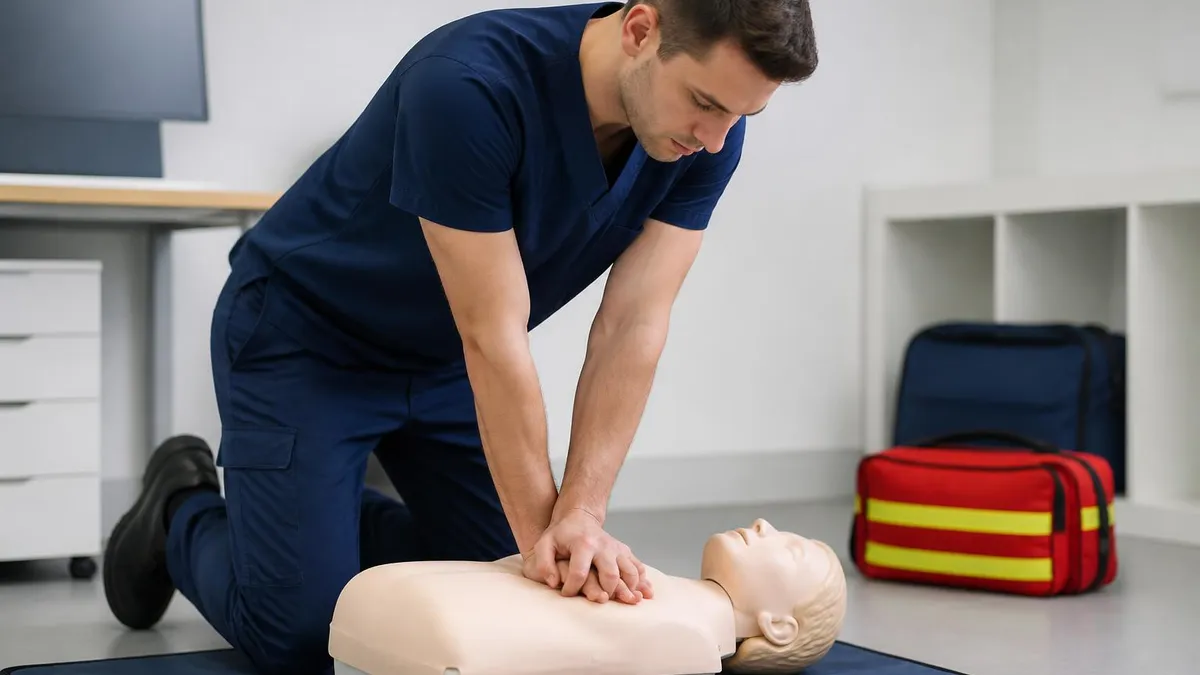
Adult CPR: Complete Step-by-Step Guide to Hands-Only and Standard CPR in 2026
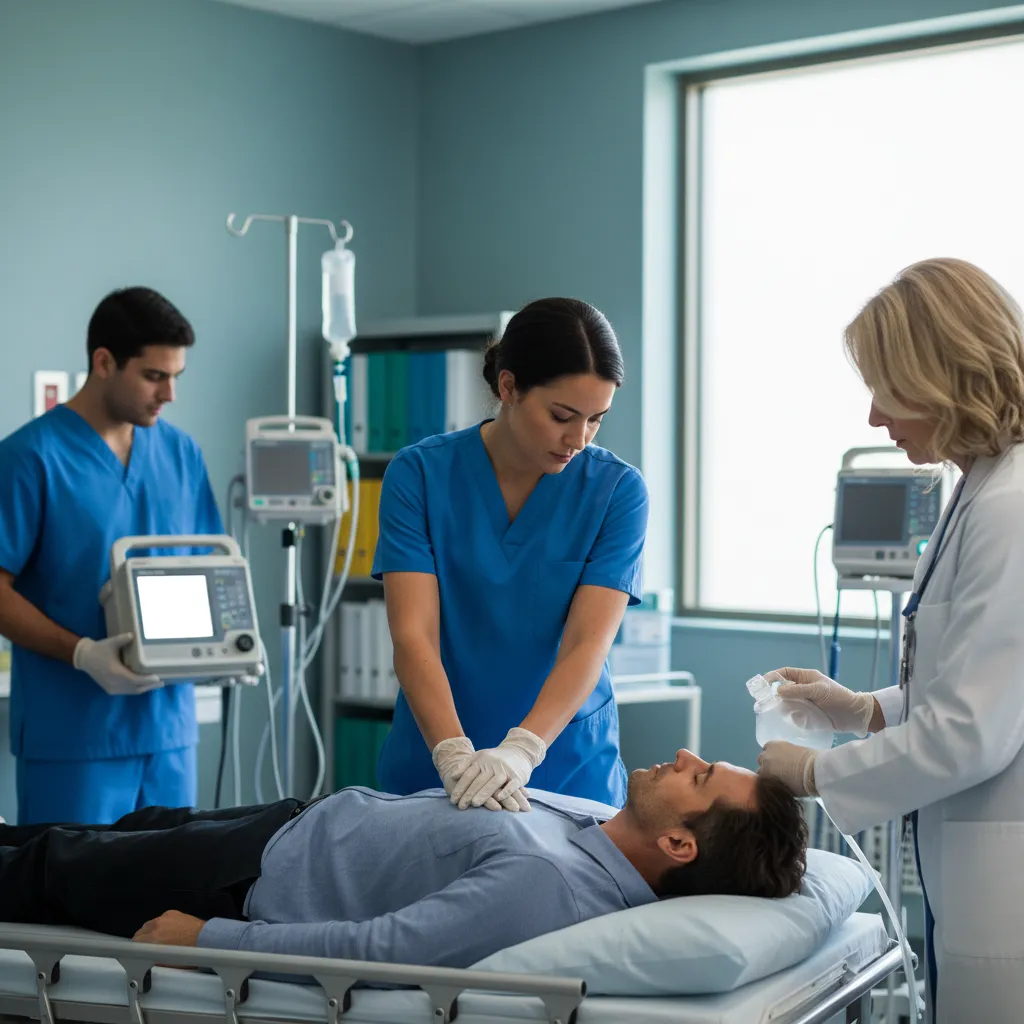
CPR - Cardiopulmonary Resuscitation: Complete Study Guide 2026
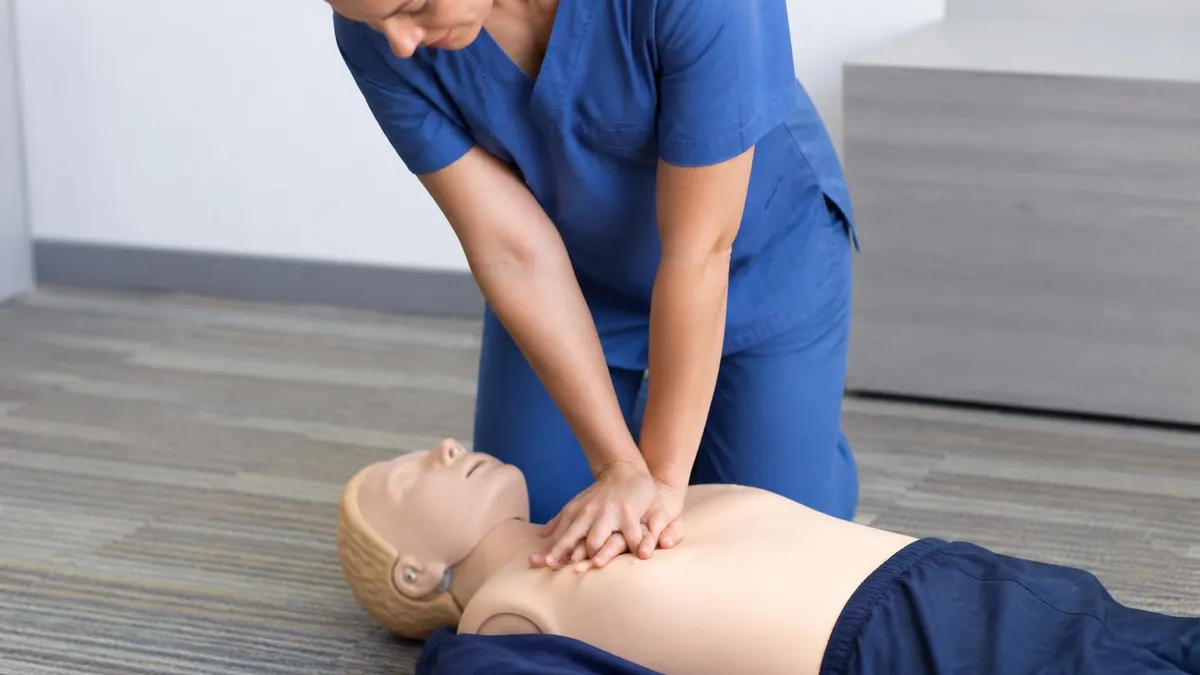
Inappropriate CPR Songs: What Not to Play, Why It Matters, and Better Beat-Per-Minute Alternatives
About the Author

Registered Nurse & Healthcare Educator
Johns Hopkins University School of NursingDr. Sarah Mitchell is a board-certified registered nurse with over 15 years of clinical and academic experience. She completed her PhD in Nursing Science at Johns Hopkins University and has taught NCLEX preparation and clinical skills courses for nursing students across the United States. Her research focuses on evidence-based exam preparation strategies for healthcare certification candidates.
Join the Discussion
Connect with other students preparing for this exam. Share tips, ask questions, and get advice from people who have been there.
View discussion (5 replies)