
CPR Certification en Español: Complete Guide to ACLS Algorithm, PALS Certification, and Life Support Training in Spanish
Get CPR certification en español with our complete guide. Learn the ACLS algorithm, infant CPR, PALS certification, and AED training. 🏆 Start free practice...

Obtaining your cpr certification en español has never been more accessible for Spanish-speaking communities across the United States. Whether you are a healthcare professional seeking to master the ACLS algorithm, a parent learning infant CPR, or a community responder pursuing basic life support, training in your native language dramatically improves skill retention and confidence during real emergencies. Spanish-language CPR programs follow the same American Heart Association and Red Cross standards as English courses, ensuring your certification is equally recognized by employers and credentialing bodies nationwide.
The demand for Spanish-language emergency training has grown significantly over the past decade. With more than 42 million native Spanish speakers living in the United States, the gap between community need and available bilingual instruction has prompted major certifying organizations — including the National CPR Foundation, the American Heart Association, and the American Red Cross — to invest heavily in translated materials, bilingual instructors, and fully Spanish-language course formats. From community health centers in Los Angeles to hospitals in Miami and Chicago, Spanish CPR classes now serve millions of learners each year.
Understanding the full scope of CPR training in Spanish means knowing which certifications are available, what the ACLS algorithm covers, how infant CPR differs from adult technique, and what role devices like the AED play in cardiac arrest response. Many learners ask what does AED stand for — it stands for Automated External Defibrillator, a portable device that analyzes heart rhythm and delivers an electric shock when needed. Learning AED operation in Spanish alongside compressions and ventilations gives you a complete emergency response toolkit that can genuinely save lives.
Spanish CPR courses typically follow the same structured curriculum as their English counterparts. You will learn to assess scene safety, recognize the signs of cardiac arrest, activate the emergency medical system, perform high-quality chest compressions at the correct rate and depth, deliver rescue breaths, and use an AED. Advanced pathways cover the ACLS algorithm for healthcare providers, which includes rhythm recognition, medication protocols, and team dynamics during a resuscitation. PALS certification, designed for pediatric emergencies, is also available in Spanish for nurses, physicians, and emergency technicians.
One important consideration for Spanish-speaking learners is the difference between online and in-person Spanish CPR courses. Online blended courses allow you to complete the cognitive portion — including respiratory rate guidelines, position recovery technique, and cardiac chain of survival — in Spanish at your own pace. You then complete a brief in-person skills session with a bilingual instructor. Fully in-person Spanish CPR classes offer the added advantage of hands-on practice from start to finish, which research consistently shows leads to better skill acquisition and longer retention of proper technique.
This guide covers everything you need to know to earn your cpr certification spanish — from choosing the right course level to understanding renewal timelines and practicing with free online quizzes. Whether you are pursuing a basic heartsaver card or an advanced ACLS or PALS credential, the information here will help you find accredited Spanish-language training, prepare effectively, and walk into your course with confidence. Your certification card will carry the same authority regardless of the language in which you completed your training.
It is worth noting that CPR training carries real statistical weight. The American Heart Association reports that approximately 350,000 out-of-hospital cardiac arrests occur in the United States each year, and bystander CPR can double or even triple survival rates. When Spanish-speaking bystanders receive training in their primary language, they are significantly more likely to initiate CPR before emergency services arrive. Investing a few hours in a bilingual certification course is one of the highest-impact public health actions any community member can take.
CPR Certification en Español — By the Numbers

Spanish CPR Certification Levels: Which Course Is Right for You?
The entry-level certification for community members, workplace responders, and childcare providers. Covers adult, child, and infant CPR, AED operation, and relief of choking. Available fully in Spanish from the AHA and Red Cross. Ideal for non-healthcare professionals who need a recognized card for employment.
Basic Life Support certification for nurses, EMTs, medical assistants, and clinical staff. Covers high-quality CPR for all age groups, two-rescuer technique, bag-mask ventilation, and AED use in clinical settings. Several AHA training centers offer this course entirely in Spanish with bilingual instructors.
Advanced Cardiovascular Life Support targets physicians, advanced practice nurses, paramedics, and respiratory therapists. Students learn the complete ACLS algorithm including rhythm interpretation, drug dosing, and team leadership during resuscitation. Spanish-language ACLS courses are available from the National CPR Foundation and select AHA centers.
Pediatric Advanced Life Support focuses on recognition and management of life-threatening conditions in children and infants. PALS certification in Spanish prepares pediatric nurses, pediatricians, and emergency physicians to manage respiratory distress, shock, and cardiac arrest in young patients using evidence-based protocols.
Combined courses bundle CPR, AED, and first aid skills into a single certification session. These courses are popular for schools, construction sites, and community organizations. Spanish-language combined courses often run four to six hours and provide a single card covering all three skill areas.
The ACLS algorithm is the cornerstone of advanced cardiovascular life support training, and learning it in Spanish ensures that bilingual and Spanish-dominant healthcare providers can internalize these critical decision trees in the language they think and work in most fluently. The ACLS algorithm provides a systematic, evidence-based framework for responding to cardiac arrest, stroke, acute coronary syndrome, and other life-threatening cardiovascular emergencies. Mastering it requires understanding both the cognitive content and the team communication protocols that make resuscitation efforts effective.
At the core of the ACLS algorithm is the cardiac arrest algorithm itself, which begins with confirming unresponsiveness and pulselessness, activating the emergency response system, and initiating high-quality CPR immediately. The algorithm then branches based on the patient's cardiac rhythm as identified by a cardiac monitor: shockable rhythms such as ventricular fibrillation (FV in Spanish — fibrilación ventricular) and pulseless ventricular tachycardia receive immediate defibrillation, while non-shockable rhythms such as pulseless electrical activity (AESP — actividad eléctrica sin pulso) and asystole (asistolia) are managed with CPR and reversible cause identification.
Spanish-language ACLS courses also cover the post-cardiac arrest algorithm, the tachycardia algorithm, the bradycardia algorithm, and the acute stroke algorithm. Each of these decision pathways is presented in Spanish terminology, with instructors helping students practice verbal communication in Spanish — a crucial skill when leading a resuscitation team in a Spanish-speaking clinical environment. The National CPR Foundation offers ACLS recertification courses in Spanish that allow experienced providers to refresh their algorithm knowledge without having to navigate English-language materials.
PALS certification is equally important for providers who work with pediatric populations. Spanish-language PALS courses teach participants to recognize early signs of respiratory distress, respiratory failure, and shock in infants and children — before the child deteriorates into cardiac arrest. The PALS systematic approach includes the initial impression, primary assessment, secondary assessment, and diagnostic tests. Students learn to calculate pediatric drug doses in kilograms, manage the pediatric airway, and apply the appropriate PALS algorithm based on the child's rhythm and clinical presentation.
One area where Spanish-language training makes a particularly meaningful difference is in monitoring and interpreting respiratory rate. Normal respiratory rates differ significantly by age group: adults breathe 12 to 20 times per minute, children breathe 18 to 30 times per minute, and infants breathe 30 to 60 times per minute. In PALS and ACLS training, Spanish-speaking providers learn to rapidly assess respiratory rate and quality as a key indicator of physiologic deterioration. When a child's respiratory rate rises above normal or falls below it, this signals impending respiratory failure requiring immediate intervention.
Advanced Spanish CPR courses also teach the recovery position — known in Spanish as the posición de recuperación or posición lateral de seguridad — which is used for unresponsive patients who are breathing normally and have a detectable pulse. The recovery position keeps the airway open and allows fluids to drain from the mouth, preventing aspiration. Learning proper position recovery technique in Spanish is particularly valuable for community responders who may encounter unconscious individuals in non-clinical settings such as parks, homes, or workplaces where professional equipment is unavailable.
For those pursuing Spanish-language advanced certifications, it is important to understand that both ACLS and PALS certifications require renewal every two years, identical to the standard English-language versions. Some providers choose to complete their initial certification in Spanish and their renewal in English, or vice versa — both are fully valid as long as the certifying organization is accredited. Organizations such as the National CPR Foundation and AHA-authorized training centers issue the same credential regardless of the language of instruction, making Spanish CPR training fully interchangeable with English-language equivalents for employment and licensing purposes.
Infant CPR and Life Support Training in Spanish
Infant CPR technique differs from adult CPR in several critical ways that Spanish-language training covers in detail. For infants under one year of age, rescuers use two fingers placed on the center of the chest just below the nipple line, compressing approximately 1.5 inches deep at a rate of 100 to 120 compressions per minute. Rescue breaths for infants use only a gentle puff of air — enough to see the chest rise — rather than a full breath, because infant lungs are much smaller than adult lungs and can be injured by excessive air volume.
Spanish CPR courses for infant CPR also teach the two-thumb-encircling technique used by healthcare providers when a second rescuer is present. This method delivers more consistent compressions and is the preferred approach in clinical settings such as neonatal units and pediatric emergency departments. Bilingual instructors demonstrate both techniques on infant manikins and guide students through hands-on practice until they achieve the correct depth, rate, and hand placement consistently — skills that are much harder to learn from a translated manual alone.

Spanish CPR Training vs. English-Only Training: Key Tradeoffs
- +Higher skill retention when learning complex techniques in your primary language
- +Reduced cognitive load during practice scenarios allows focus on hands-on performance
- +Better communication during team resuscitations in Spanish-speaking clinical environments
- +Increased community willingness to initiate bystander CPR after bilingual training
- +Same accreditation and employer recognition as English-language equivalent courses
- +Wider availability of Spanish materials from National CPR Foundation and AHA
- −Fewer Spanish-language instructor-led courses available in rural or small-town areas
- −Some advanced specialty courses (ACLS, PALS) have limited Spanish in-person options
- −Online Spanish blended courses still require an in-person skills session, often in English
- −Translated written materials may lag behind updated English guidelines by several months
- −Not all employers are familiar with Spanish-language certification cards — verification may be needed
- −Spanish medical terminology for cardiac rhythms and drugs differs by country of origin, causing occasional confusion
Pros and Cons at a Glance
| Pros | Cons |
|---|---|
| Higher skill retention when learning complex techniques in your primary language | Fewer Spanish-language instructor-led courses available in rural or small-town areas |
| Reduced cognitive load during practice scenarios allows focus on hands-on performance | Some advanced specialty courses (ACLS, PALS) have limited Spanish in-person options |
| Better communication during team resuscitations in Spanish-speaking clinical environments | Online Spanish blended courses still require an in-person skills session, often in English |
| Increased community willingness to initiate bystander CPR after bilingual training | Translated written materials may lag behind updated English guidelines by several months |
| Same accreditation and employer recognition as English-language equivalent courses | Not all employers are familiar with Spanish-language certification cards — verification may be needed |
| Wider availability of Spanish materials from National CPR Foundation and AHA | Spanish medical terminology for cardiac rhythms and drugs differs by country of origin, causing occasional confusion |
CPR Certification en Español — Complete Preparation Checklist
- ✓Confirm the course is accredited by AHA, Red Cross, or the National CPR Foundation before registering.
- ✓Verify the instructor is bilingual or the course materials are fully translated into Spanish.
- ✓Review the ACLS algorithm or BLS primary survey in Spanish before your class date.
- ✓Practice infant CPR hand placement and compression depth on a practice surface at home.
- ✓Memorize the normal respiratory rate ranges for adults, children, and infants.
- ✓Learn what AED stands for and how to operate the device using Spanish audio prompts.
- ✓Study the position recovery (posición lateral de seguridad) steps before your skills session.
- ✓Complete at least two full-length practice quizzes to prepare for the written assessment.
- ✓Bring a valid photo ID and any prerequisite certification cards (BLS for ACLS/PALS courses).
- ✓Confirm your email address for same-day digital certificate delivery after successful completion.
Most AEDs in the US offer Spanish audio prompts — know how to activate them.
Modern AEDs from leading manufacturers including Philips, Zoll, and Cardiac Science offer Spanish-language voice prompts that guide rescuers through pad placement, compressions, and shock delivery step by step. When training for CPR certification en español, ask your instructor specifically how to switch an AED to Spanish mode — this single skill can dramatically reduce hesitation and improve response speed for Spanish-speaking bystanders during a real cardiac arrest event.
Understanding what does AED stand for — Automated External Defibrillator — is a foundational element of every CPR certification course, including those taught in Spanish. The AED is a battery-powered, portable device designed to analyze a patient's cardiac rhythm and deliver a controlled electrical shock when it detects a shockable rhythm such as ventricular fibrillation or pulseless ventricular tachycardia.
AEDs are intentionally designed to be used by untrained bystanders, with clear voice and visual prompts guiding every step of the process. In Spanish-language CPR courses, students learn the Spanish voice prompts, the correct pad placement on the bare chest, and the critical safety step of standing clear before shock delivery.
The integration of AED training with CPR certification is a core component of the Chain of Survival — the sequence of actions that maximizes cardiac arrest survival. The five links in the adult out-of-hospital Chain of Survival are: recognition and activation of the emergency response system, early high-quality CPR, rapid defibrillation, advanced resuscitation, and post-cardiac arrest care and recovery. Spanish CPR courses teach this chain as the cadena de supervivencia, helping Spanish-speaking providers and community members understand why each step is equally important and why delays at any link reduce the patient's chance of survival.
The position recovery — or posición de recuperación — is a technique that CPR courses often introduce after the core compression and ventilation skills. It is used for patients who are unresponsive but breathing normally and have a detectable pulse. To place a patient in the recovery position, you kneel beside the person, extend the arm nearest you at a right angle to the body with the elbow bent and palm facing up.
You then bring the far arm across the chest and hold the back of the hand against the near cheek. Next, use your free hand to bend the far knee up while keeping the foot flat on the ground, then gently roll the person toward you until they are on their side.
Once in the recovery position, the patient's top knee acts as a stabilizer to prevent them from rolling onto their stomach. The head should be tilted slightly back to keep the airway open, and the mouth should be positioned to allow any fluid to drain freely. Spanish CPR instructors use the phrase posición lateral de seguridad (lateral safety position) as a mnemonic, emphasizing that the two primary goals are maintaining an open airway and preventing aspiration of vomit or blood. Learners practice this technique on manikins and sometimes on each other in partner exercises during in-person Spanish CPR classes.
AED placement in communities across the United States has expanded dramatically over the past two decades. Federal and state laws now require AEDs in schools, large public buildings, airports, sports facilities, and workplaces above certain employee thresholds. Many of these AEDs are located in bilingual or Spanish-dominant communities where having Spanish audio prompts is not just a convenience but a critical safety feature. Spanish CPR certification courses teach participants to locate AEDs using public registries and apps, inspect AED readiness indicators, and document AED use after a cardiac event for quality improvement purposes.
Beyond the technical skills, Spanish CPR courses address the psychological barriers that sometimes prevent bystanders from acting during an emergency. Studies show that fear of performing CPR incorrectly, concern about causing harm, and anxiety about interacting with strangers are common reasons that trained bystanders hesitate.
Spanish-language training directly addresses these fears in culturally relevant ways, reassuring participants that any attempt at CPR is better than no attempt, that Good Samaritan laws protect rescuers who act in good faith, and that AEDs are designed to prevent shocks from being delivered unless a shockable rhythm is actually present. This confidence-building component is one of the most valuable aspects of training in one's primary language.
For healthcare providers working in Spanish-speaking communities, CPR certification in Spanish also strengthens patient education capacity. A nurse who learned CPR in Spanish can more effectively teach a cardiac patient's family members how to respond if the patient arrests at home. A community health worker certified in Spanish can confidently run CPR education sessions at health fairs, schools, and community events. In this way, Spanish-language CPR certification creates a multiplier effect: each certified provider becomes a potential teacher who can expand community preparedness well beyond the walls of any single training course.

Not all Spanish-language CPR courses available online are accredited by recognized organizations such as the American Heart Association, American Red Cross, or National CPR Foundation. Unaccredited certificates are typically not accepted by hospitals, schools, or licensing boards. Always confirm that the issuing organization's name appears on the certificate and that your employer or licensing body recognizes that specific accreditor before paying for any course.
Knowing when and how to renew your CPR certification in Spanish is just as important as earning it in the first place. Standard CPR certifications — whether at the Heartsaver, BLS, ACLS, or PALS level — are valid for two years from the date of completion. After two years, the certification expires and must be renewed through a full recertification course or, in some cases, a shorter renewal course offered by the same certifying organization.
The two-year renewal cycle is set by the American Heart Association and the International Liaison Committee on Resuscitation (ILCOR) based on research showing that CPR skills decay significantly within 12 to 24 months without practice. For a detailed breakdown of how long each certification level stays current, see our guide on cpr certification spanish renewal timelines.
Spanish-language recertification courses are increasingly available, though the selection is generally narrower than for initial certification. Many National CPR Foundation and AHA-affiliated training centers that offer initial Spanish CPR courses also offer renewal courses in Spanish, often in a shorter format — typically two to three hours for BLS renewal versus four to five hours for initial BLS certification.
Some blended online renewal courses allow the cognitive refresher portion to be completed in Spanish online, followed by a brief in-person skills check that may be conducted by a bilingual instructor. This flexibility makes renewal more convenient for Spanish-speaking providers with demanding schedules.
Employers in healthcare settings are often required to track and verify employee CPR certifications as part of Joint Commission accreditation standards and state licensing requirements. Human resources departments in bilingual hospitals and community health centers have become increasingly proficient at verifying Spanish-language certification cards from major accrediting bodies. If you present a Spanish-language CPR card from an AHA-authorized training center or the National CPR Foundation, your employer's HR or credentialing staff can verify its authenticity using the issuing organization's online verification portal — the same portal used for English-language cards.
One common question from Spanish-speaking healthcare workers is whether they can complete their initial CPR certification in Spanish and then renew in English, or vice versa. The answer is yes — each certification stands on its own, and there is no requirement to use the same language for renewal as for initial certification.
What matters is that each certification was issued by an accredited organization and is current at the time of verification. Some providers choose to alternate languages to reinforce their skill set in both languages, which can be particularly useful for bilingual providers who work in teams that include both English-dominant and Spanish-dominant colleagues.
The cost of Spanish CPR certification varies depending on the level of certification, the format (in-person versus blended online), and the geographic location. Basic Heartsaver CPR/AED courses in Spanish typically cost between $30 and $80. BLS Healthcare Provider courses in Spanish range from $50 to $120. ACLS certification in Spanish typically costs $150 to $300, and PALS certification in Spanish is similarly priced.
Some community organizations, employer wellness programs, and government workforce development grants subsidize CPR training costs for Spanish-speaking workers in high-priority sectors such as healthcare, childcare, and construction — making it worth checking with your employer or local health department before paying full price.
Digital certification cards have simplified the documentation process for Spanish-speaking CPR graduates. Most accredited certifying organizations now issue digital cards immediately upon course completion via email, allowing providers to share their credentials electronically with employers, licensing boards, and credentialing committees without waiting for a physical card to arrive by mail.
Digital cards typically include a QR code that links to a verification page, the provider's name, the certification level, the issue date, the expiration date, and the name of the certifying organization — all the information needed to confirm validity. Some organizations provide both Spanish and English versions of the digital card upon request.
Looking ahead, the availability of Spanish CPR certification is expected to continue expanding as healthcare workforce demographics shift and community health initiatives prioritize bilingual training. The American Heart Association's Diverse Communities Initiative and the Red Cross's multicultural outreach programs are actively working to increase the number of certified bilingual CPR instructors, translate updated guidelines into Spanish more rapidly, and partner with Spanish-language media to promote CPR awareness. For Spanish-speaking learners, this means more choices, more accessible pricing, and more community-based training opportunities in the years ahead.
Preparing effectively for your Spanish CPR certification course goes beyond simply showing up on the scheduled day. The most successful candidates combine advance study with deliberate physical practice, giving themselves the best possible foundation before the instructor-led skills session begins. Start by reviewing the current AHA or Red Cross guidelines in Spanish — both organizations publish their core guidelines documents and summary cards in Spanish, and reading these materials before class helps you walk in already familiar with key concepts like compression rate, compression depth, and the sequence of steps in the adult cardiac arrest response algorithm.
One of the most effective study strategies is to use free online CPR practice quizzes in English or Spanish to test your knowledge before and after class. Practice questions reinforce the written portion of the certification exam and help you identify knowledge gaps early. Topics commonly covered on the written assessment include the correct compression-to-ventilation ratio for adult, child, and infant CPR (30:2 for single rescuers, 15:2 for two healthcare providers working with a child or infant), the maximum interval between rhythm checks, the indications for AED use, and the signs that distinguish respiratory arrest from cardiac arrest.
Physical practice is equally important and often underestimated by learners who focus exclusively on written content. If you have access to a CPR manikin before your class — many libraries, firehouses, and community health centers lend them — spend 20 to 30 minutes practicing your compression depth and rate.
Research shows that compressions delivered at the correct rate of 100 to 120 per minute and correct depth of at least 2 inches for adults feel more tiring and faster than most untrained people expect. Developing muscle memory before your class makes it much easier to perform correctly under the scrutiny of the skills assessment.
For learners pursuing ACLS or PALS certification in Spanish, additional preparation is strongly recommended beyond what basic CPR courses require. The ACLS written exam tests knowledge of cardiac rhythms, the ACLS algorithm decision trees, drug dosages and indications, and team communication principles. Consider purchasing or borrowing the official AHA ACLS Provider Manual in Spanish and working through the case studies in each chapter. Many AHA training centers also offer ACLS pre-course self-assessments in Spanish that identify which topics you need to study most intensively before attending the two-day course.
Managing stress during the skills assessment portion of Spanish CPR certification is a practical concern that instructors rarely discuss explicitly. Performance anxiety is common, especially for learners who are not accustomed to being evaluated on physical tasks.
Remembering a few key principles can help: instructors want you to succeed and will guide you if you hesitate; making a confident attempt is always better than freezing; and the skills you are being assessed on are the same skills you have just practiced multiple times with instructor feedback. Breathing slowly before beginning the scenario, verbalizing each step aloud as you perform it, and trusting your preparation will all help you perform your best when it counts.
After earning your certification, the best way to maintain your skills is to practice regularly — even without a manikin. Review the algorithm cards that come with your certification materials. Watch brief refresher videos in Spanish. Use a firm pillow to practice your compression technique. Some employers schedule quarterly or annual CPR drills that allow certified staff to practice in a simulated environment, which research shows significantly slows the natural decay in CPR skill quality that occurs between certification and renewal. The more you practice, the more automatic your response will be if you ever face a real cardiac emergency.
Finally, consider sharing what you have learned with your family, friends, and community. The Hands-Only CPR program from the American Heart Association is designed to be passed from one person to another in just a few minutes, and teaching the technique to even one or two people in your circle multiplies the safety net available in your community.
For Spanish-speaking families, having a family member who is CPR certified — and who can explain the technique in Spanish to other family members — creates a meaningful layer of protection against the tragic outcome of untreated cardiac arrest at home. Your certification is not just a credential; it is a skill that can change or save a life.
CPR Questions and Answers
How Long Does CPR Certification Last? 2026 Renewal Guide
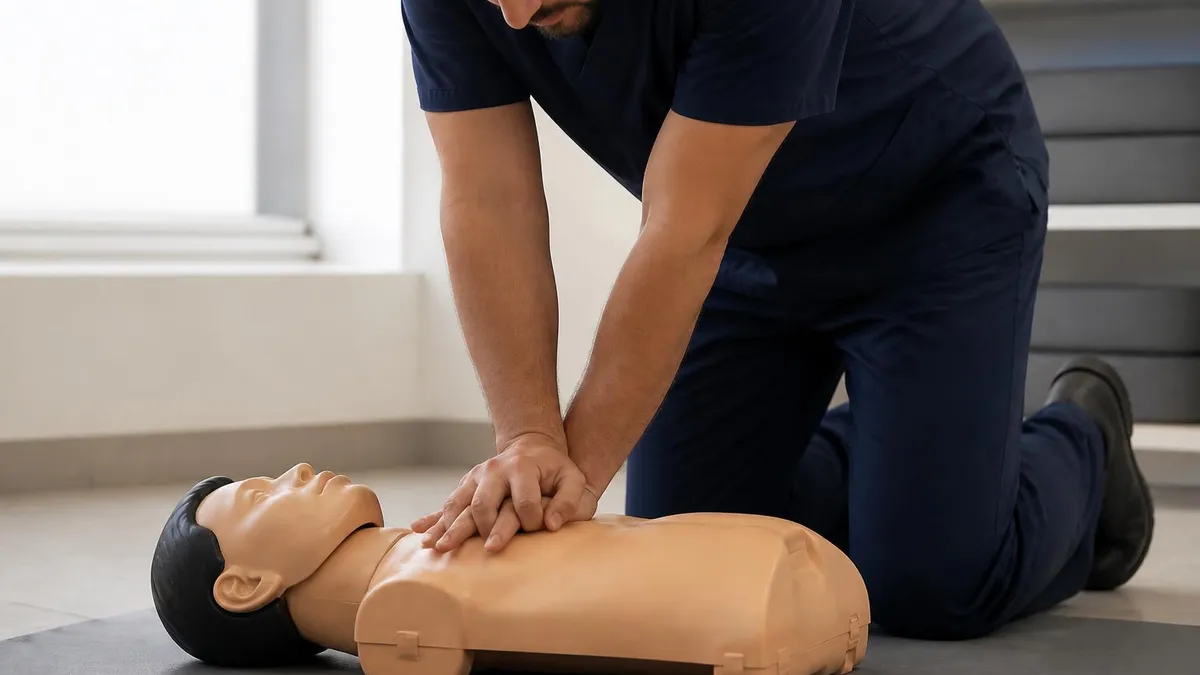
Extracorporeal CPR (ECPR): Complete Guide to Mechanical Circulatory Support During Cardiac Arrest in 2026
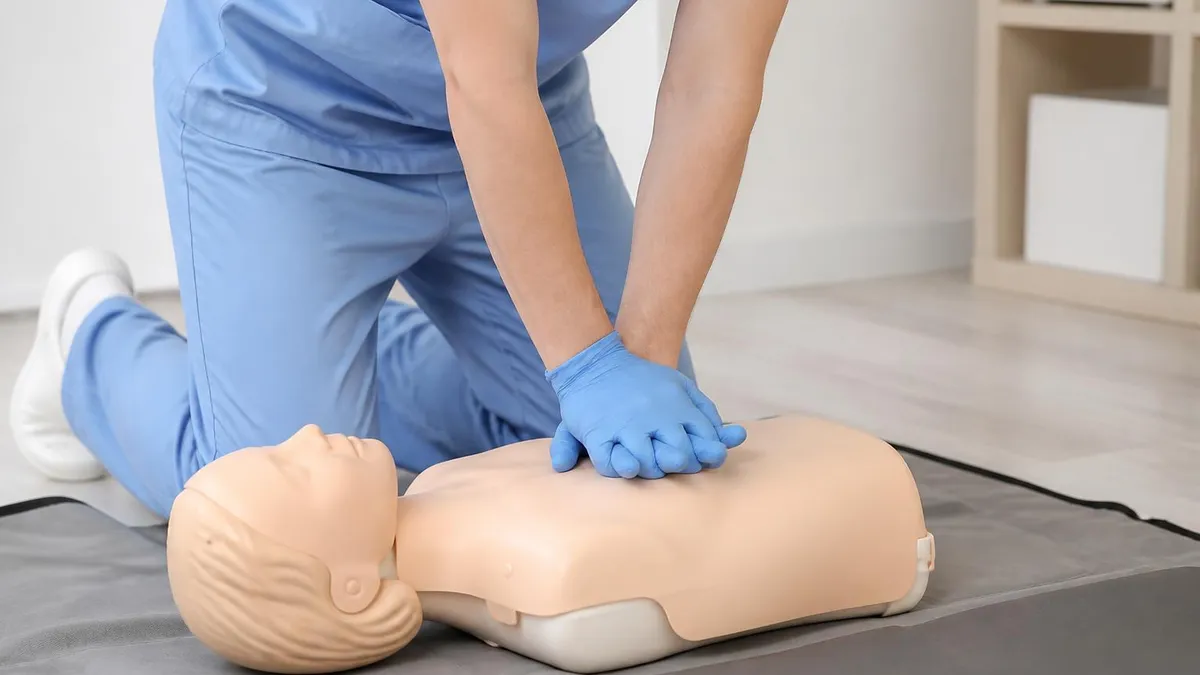
CPR Classes in Person: Complete 2026 Guide to Hands-On Training, Certification, and Costs
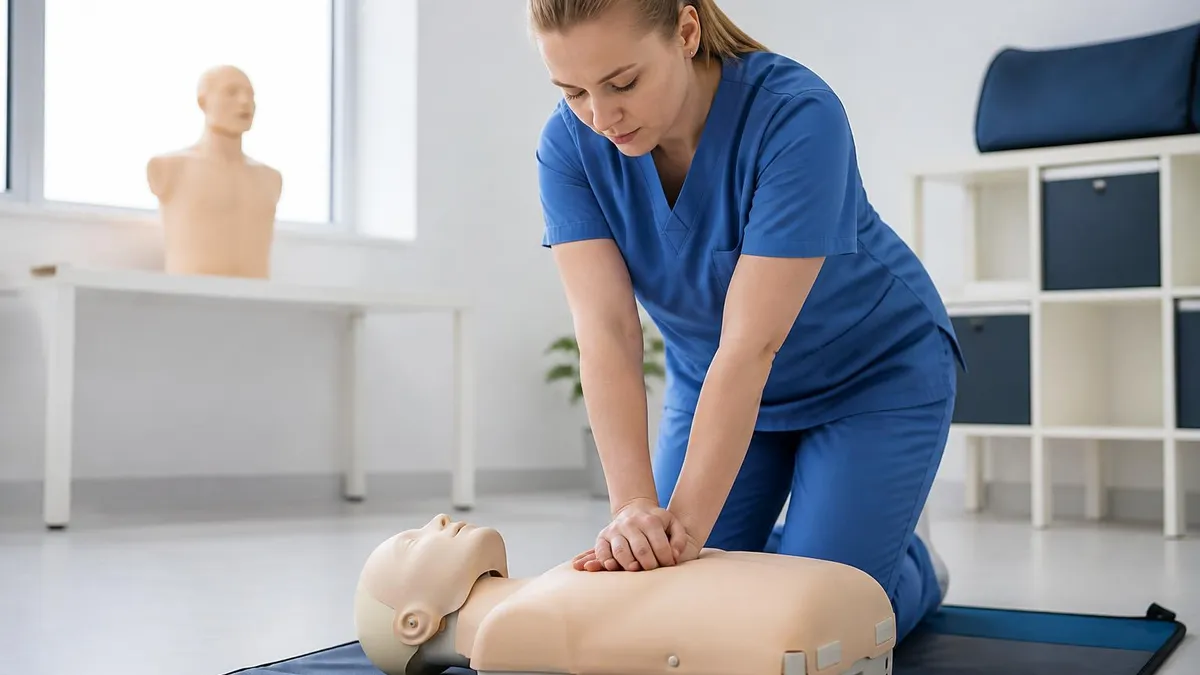
Free CPR Training: Complete Guide to ACLS Algorithm, PALS Certification, and Life Support Skills in 2026
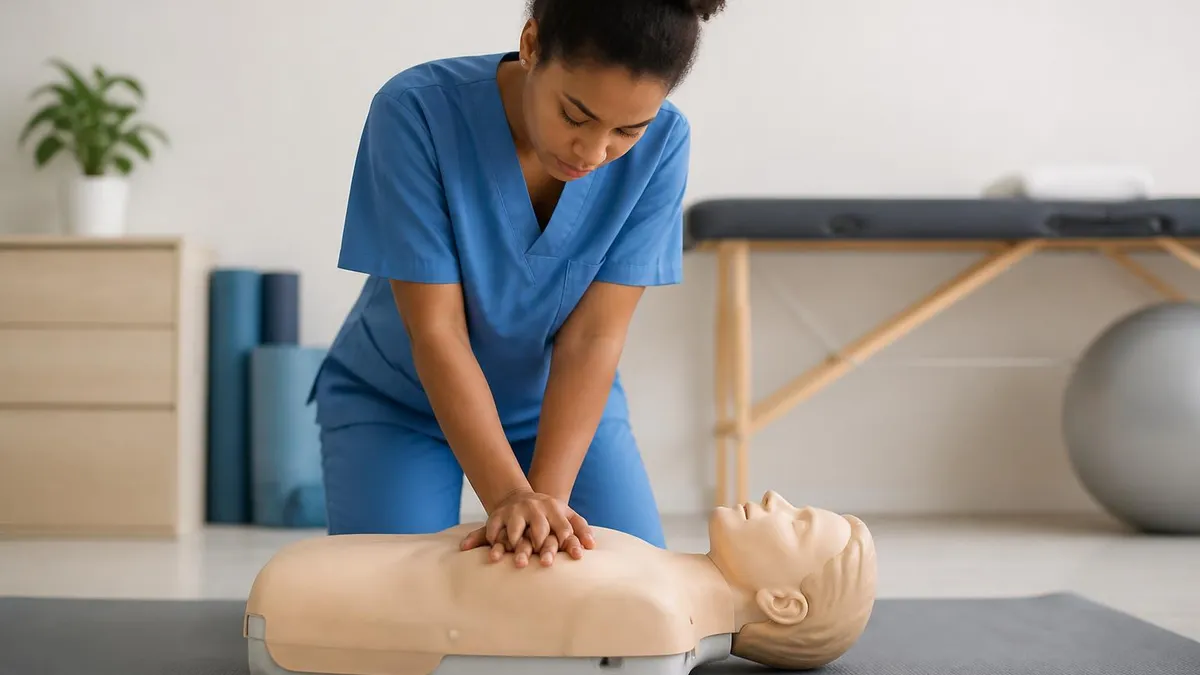
CPR AED First Aid Certification: Complete Guide to ACLS Algorithm, PALS Certification, and Life Support Training
About the Author

Registered Nurse & Healthcare Educator
Johns Hopkins University School of NursingDr. Sarah Mitchell is a board-certified registered nurse with over 15 years of clinical and academic experience. She completed her PhD in Nursing Science at Johns Hopkins University and has taught NCLEX preparation and clinical skills courses for nursing students across the United States. Her research focuses on evidence-based exam preparation strategies for healthcare certification candidates.
Join the Discussion
Connect with other students preparing for this exam. Share tips, ask questions, and get advice from people who have been there.
View discussion (5 replies)