
BLS Steps: Complete 2026 September Guide to Basic Life Support Sequence, Certification & Skills
Master the BLS steps with our complete 2026 September guide covering the AHA chain of survival, CPR sequence, certification requirements, and exam prep tips. 💯
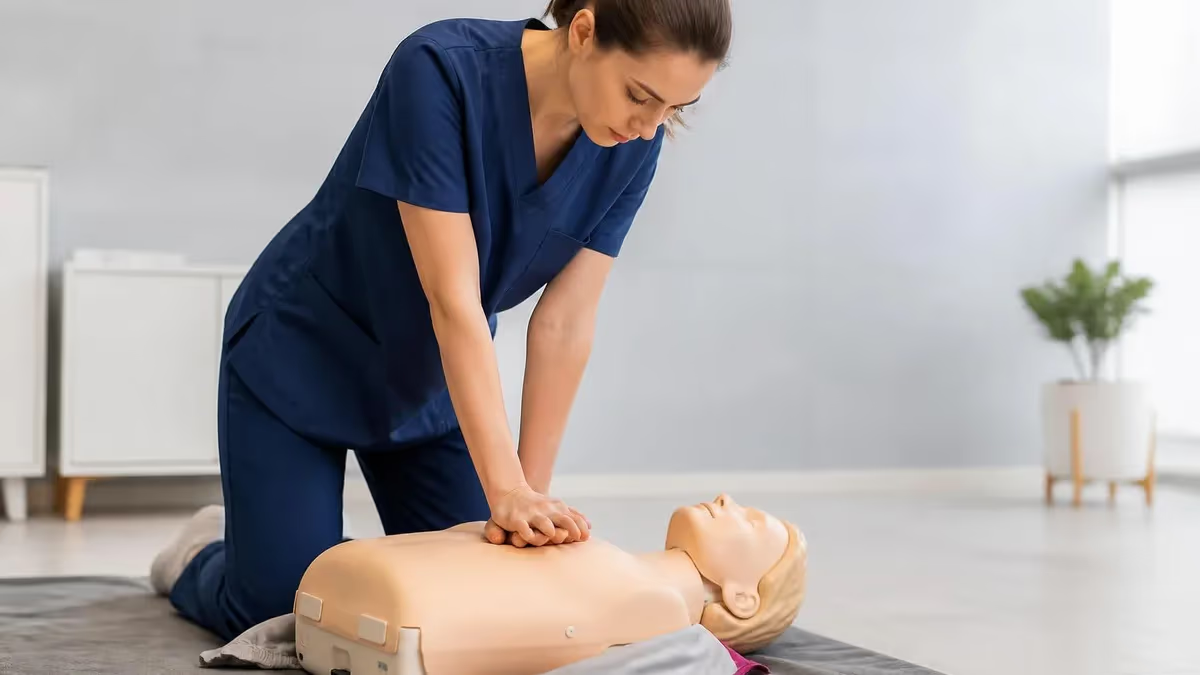
The bls steps form the backbone of every emergency response taught in healthcare today, and understanding them correctly can mean the difference between life and death within the first critical minutes of cardiac arrest. Whether you are a nurse refreshing your skills, a new paramedic preparing for certification, or a lifeguard learning the sequence for the first time, the structured order of scene safety, assessment, activation of emergency response, high-quality compressions, ventilations, and AED use never changes. This guide walks through every step in the order the American Heart Association teaches it.
So what is a bls certification, and why does it matter so much in clinical and community settings? Basic Life Support certification is a credential that verifies you can perform the recognized resuscitation sequence on adults, children, and infants according to the most current emergency cardiovascular care guidelines. Hospitals, dental offices, ambulance services, dialysis centers, and many gyms require it as a condition of employment. It is the foundation skill that every advanced provider builds upon before moving into ACLS or PALS pathways.
Many people confuse the abbreviations, asking whether BLS is just another name for CPR. The short answer is no — CPR is one component within the broader BLS framework. BLS includes CPR but also covers airway management, AED operation, choking relief, team-based resuscitation dynamics, and recognition of cardiac arrest versus respiratory arrest. CPR alone refers specifically to the compression-and-ventilation cycle, while BLS encompasses the complete provider response from scene arrival to handoff at advanced care.
The 2020 AHA guideline update, still in effect through the 2025 cycle, simplified the adult sequence to C-A-B: Compressions first, then Airway, then Breathing. This was a major change from the older A-B-C order and reflects research showing that early chest compressions produce better neurological outcomes than delayed compressions while a rescuer fumbles with airway maneuvers. The infant and child sequences follow similar logic but with adjusted depth, rate, and ratio considerations covered later in this article.
Modern BLS providers also need to know how to integrate technology into their response. Public access defibrillators are now in airports, schools, casinos, gyms, and corporate lobbies, and the AHA emphasizes that bystanders and trained rescuers alike should use them within three to five minutes of collapse whenever possible. The aha basic life support exam covers all of these technology integration points along with the core hands-on skills you will demonstrate during the practical test.
This article will walk you through each step in detail, explain the differences between adult, child, and infant protocols, compare the American Heart Association and American Red Cross course options, break down what to expect on the certification exam, and offer practical tips for memorizing the sequence under pressure. You will also find practice quiz tiles throughout so you can test your recall before your skills check or written exam.
By the end, you should feel comfortable explaining the sequence aloud, demonstrating the depth and rate of compressions, walking through AED pad placement for each age group, and recognizing the signs of return of spontaneous circulation. These are the same competencies tested by every major certifying body in the United States in 2026.
BLS Steps by the Numbers

The Core BLS Steps in Order
Verify Scene Safety
Assess Responsiveness & Breathing
Activate Emergency Response
Begin High-Quality Compressions
Deliver Rescue Breaths
Attach & Use the AED
So what is a bls certification in practical terms? It is a two-year credential issued after you complete a recognized course, pass a written exam typically scored at 84 percent or higher, and successfully demonstrate hands-on skills to a certified instructor. The card you receive lists your name, the issuing organization, the certification date, and the expiration date. Employers verify these cards before hiring or during annual compliance audits, and many digital cards now include QR codes that link to a verification database.
The most common providers are the American Heart Association, the American Red Cross, the National Safety Council, and the Health and Safety Institute. All four meet OSHA workplace safety guidelines, but the AHA is the most widely accepted in hospital settings because it aligns directly with the same scientific guidelines that drive ACLS and PALS curricula. If you plan to work in a hospital, ask your employer which provider they prefer before enrolling.
People often ask is bls and cpr the same, and the answer matters because the wrong certification can disqualify you from a job. A community CPR card from a weekend Red Cross class does not satisfy hospital BLS requirements. BLS for healthcare providers includes two-rescuer scenarios, bag-mask ventilation, team dynamics, and infant protocols that community CPR courses skip or cover only briefly. Always confirm the course title includes the words "healthcare provider" or "BLS."
Cost varies based on format and provider. A traditional in-person AHA BLS course runs $60 to $110 in most metropolitan areas, while blended learning options that combine online modules with an in-person skills session typically cost $80 to $130. Red Cross courses fall in the same range. Group rates through hospitals or nursing schools can drop the per-person cost to as low as $40. Renewal courses are usually $10 to $20 cheaper than initial certification.
The exam itself contains 25 to 35 multiple-choice questions covering the chain of survival, compression rates and depths, AED operation, choking management, and team-based resuscitation. Most students complete it in 20 to 30 minutes. The skills portion requires you to perform adult, child, and infant CPR, demonstrate AED use, and respond to a choking scenario while an instructor evaluates technique against a standardized checklist.
Eligibility is broad — there are no prerequisites for entry-level BLS certification beyond being able to physically perform the skills. High school students, EMT candidates, nursing students, dental assistants, physical therapy aides, lifeguards, and personal trainers all enroll regularly. Some advanced healthcare programs require BLS before clinical rotations begin, so check program admission requirements at least three months in advance to leave time for scheduling.
Once you pass, your card is typically issued electronically within 24 to 72 hours, and most providers offer a printed replacement for a small fee. Save the digital version to your phone and a cloud drive, because losing your card and waiting for a replacement during a job application crunch is a frustrating but completely avoidable situation.

BLS Practice Test Questions
Prepare for the BLS - Basic Life Support exam with our free practice test modules. Each quiz covers key topics to help you pass on your first try.
BLS High-Quality CPR & Provider Skills
BLS Exam Questions covering BLS High-Quality CPR & Provider Skills. Master BLS Test concepts for certification prep.
BLS Special Situations & Scenarios
Free BLS Practice Test featuring BLS Special Situations & Scenarios. Improve your BLS Exam score with mock test prep.
BLS Adult, Child & Infant Resuscitation
BLS Mock Exam on Adult, Child & Infant Resuscitation. BLS Study Guide questions to pass on your first try.
BLS Airway Management & Ventilation
BLS Test Prep for Airway Management & Ventilation. Practice BLS Quiz questions and boost your score.
BLS Automated External Defibrillator (AED)...
BLS Questions and Answers on Automated External Defibrillator (AED) Use. Free BLS practice for exam readiness.
BLS Certification: Cardiac Arrest
BLS Mock Test covering Certification: Cardiac Arrest. Online BLS Test practice with instant feedback.
BLS Certification: Choking
Free BLS Quiz on Certification: Choking. BLS Exam prep questions with detailed explanations.
BLS Certification: Respiratory Arrest
BLS Practice Questions for Certification: Respiratory Arrest. Build confidence for your BLS certification exam.
BLS Chain of Survival
BLS Test Online for Chain of Survival. Free practice with instant results and feedback.
BLS CPR Techniques & Procedures
BLS Study Material on CPR Techniques & Procedures. Prepare effectively with real exam-style questions.
BLS Legal & Ethical Considerations
Free BLS Test covering Legal & Ethical Considerations. Practice and track your BLS exam readiness.
BLS Post-Resuscitation Care
BLS Exam Questions covering Post-Resuscitation Care. Master BLS Test concepts for certification prep.
AHA vs Red Cross Basic Life Support Course Options
The American Heart Association is the most widely recognized provider in US hospitals, with credentials accepted at virtually every major health system. The basic life support for healthcare providers course covers two-rescuer CPR, bag-mask ventilation, and team-based dynamics across adult, child, and infant patients. Courses run approximately four hours for new providers and two hours for renewal candidates, with both classroom and blended HeartCode options available.
AHA uses the basic life support exam american heart association format with 25 questions scored at 84 percent passing. Instructors evaluate hands-on skills using a detailed performance checklist, and the digital eCard is issued through the AHA portal within 20 days. The card includes a QR code so employers can instantly verify authenticity, which has reduced fraudulent certifications significantly since the system launched in 2018.
In-Person vs Blended Online BLS Training
- +Blended courses cut classroom time roughly in half by moving lecture content online
- +You can complete online modules at your own pace from home or work
- +Cost is often $10 to $25 lower than full in-person versions
- +Digital certificates issue faster, sometimes within 24 hours of skills check
- +Skills sessions are more focused since theory is already learned
- +Easier scheduling for shift workers and parents of young children
- −Self-paced learning requires discipline — some students fall behind
- −You still must attend an in-person skills session; fully online cards are not valid
- −Technical issues with the online platform can delay completion
- −Less time with an instructor to ask conceptual questions during lecture
- −Some learners absorb material better in a group classroom environment
- −Not ideal for first-time providers who benefit from full instructor walkthroughs

BLS Skills Checklist for Exam Day
- ✓Confirm scene safety within 5 seconds of arrival before touching the patient
- ✓Check responsiveness with shoulder tap and shout while simultaneously assessing breathing
- ✓Activate emergency response and request an AED before starting compressions
- ✓Locate landmark on lower half of sternum and lock elbows over the patient
- ✓Compress at 100-120 per minute with 2-2.4 inch depth in adults
- ✓Allow full chest recoil between every compression without leaning
- ✓Open airway with head-tilt chin-lift and deliver breaths over one second each
- ✓Achieve visible chest rise with each rescue breath using barrier device
- ✓Apply AED pads to bare dry skin and clear patient before shock delivery
- ✓Switch compressor every two minutes or sooner if fatigued to maintain quality
Compression fraction must stay above 60 percent
The AHA emphasizes that chest compression fraction — the percentage of resuscitation time spent actively compressing — should exceed 60 percent and ideally reach 80 percent. Every pause for breaths, pulse checks, or AED analysis chips away at perfusion. Train yourself to resume compressions within 10 seconds of any interruption to maximize neurologic survival.
Adult, child, and infant BLS steps follow the same overall framework but differ in compression depth, hand position, ventilation ratios, and AED pad placement. Knowing these differences cold is essential because the basic life support exam american heart association tests all three patient populations, and confusing them on the skills station is one of the most common reasons candidates fail their first attempt.
For adults, you use two hands stacked on the lower sternum, compress at least two inches but no more than 2.4 inches, and deliver 30 compressions followed by 2 breaths whether you are alone or with another rescuer. The ratio stays 30:2 because adult cardiac arrests are most often cardiac in origin and depend heavily on uninterrupted compressions to maintain coronary perfusion pressure.
For children from age one to puberty, you can use one or two hands depending on the size of the child, compress to approximately two inches or one-third the depth of the chest, and use a 30:2 ratio when alone or 15:2 when a second rescuer arrives. The lower ratio in two-rescuer pediatric scenarios reflects the higher likelihood of respiratory arrest as the original cause, making ventilation proportionally more important than in adults.
For infants under one year of age, you use two fingers just below the nipple line if alone, or the two-thumb encircling hands technique when a second rescuer is present. Compressions are approximately 1.5 inches or one-third the chest depth, and the ratio mirrors the pediatric protocol — 30:2 solo, 15:2 with two rescuers. Always use a brachial pulse check rather than carotid because the infant neck is too short and soft for reliable carotid palpation.
AED pad placement also varies by age. Adults and children over eight use standard adult pads in the anterolateral position — one on the upper right chest, one on the lower left ribs. Children one to eight should ideally receive pediatric pads or a pediatric attenuator; if unavailable, adult pads are still better than no defibrillation. Infants under one receive pediatric pads when possible, placed front-to-back if the pads would otherwise touch each other on the small chest.
Choking response is also patient-specific. Conscious adults and children over one receive abdominal thrusts, while infants receive five back blows alternating with five chest thrusts. Pregnant patients in late pregnancy receive chest thrusts instead of abdominal thrusts to avoid uterine injury. If the patient becomes unresponsive, transition immediately to CPR starting with compressions and check the mouth before each set of breaths for the dislodged object.
Special populations require modifications you should rehearse before your skills exam. Opioid overdose victims receive standard CPR plus naloxone if available. Drowning victims should receive five initial rescue breaths before compressions because hypoxia is the primary cause of arrest. Pregnant patients in the third trimester benefit from manual left uterine displacement during CPR to relieve aortocaval compression and improve cardiac output during resuscitation efforts.
The most frequent reason students fail BLS skills testing is inadequate compression depth or rate. Use a metronome app set to 110 beats per minute during practice and ask a partner to verify your depth reaches the full two inches. Shallow compressions are an automatic fail regardless of how perfect the rest of your sequence is.
Your BLS certification is valid for exactly two years from the date of issue, and the renewal process is faster than your initial certification because instructors assume you already know the foundational material. Most providers offer abbreviated renewal courses ranging from two to three hours instead of the full four-to-five-hour initial class. You still complete the same written exam and skills check, but the lecture content is condensed into a guideline-update review.
The renewal window is generally a 60-day grace period after your expiration date during which some employers will accept your old card while you complete the renewal, though policies vary widely. Letting your card lapse beyond that window typically requires retaking the full initial course rather than the abbreviated renewal, which costs more and takes longer. Set a calendar reminder 90 days before expiration to give yourself plenty of scheduling flexibility.
Online renewal options have expanded dramatically since 2020, and the AHA HeartCode BLS course allows you to complete the cognitive portion entirely online before scheduling an in-person skills check at any approved training center. The american red cross basic life support renewal pathway works similarly, with online modules followed by a brief skills verification session that can usually be completed in under an hour.
Be cautious about fully online certifications that promise instant cards without any in-person skills verification. These cards are explicitly not accepted by hospitals, OSHA-regulated employers, or any reputable healthcare organization. If a website offers BLS certification for $20 with no hands-on component, it is essentially worthless for professional purposes regardless of how official the printable card may look.
When renewing, bring your current card, a government-issued photo ID, and any specific documentation your employer requires. Some hospitals require renewals to be completed through their internal training department rather than external providers, so always confirm with your HR or employee health office before paying for an outside course. Reimbursement is often available if you submit receipts through your continuing education benefits.
Track your renewal date in multiple places — your phone calendar, your employer's compliance system, and a personal spreadsheet. Healthcare employers regularly audit credential expiration dates, and a lapsed BLS card can result in being pulled from clinical duties until renewed. Some organizations charge a fee or require remedial training when employees allow credentials to expire, so proactive tracking pays for itself many times over.
Finally, consider whether you want to expand your training when you renew. Many providers bundle BLS renewal with ACLS, PALS, or NRP courses at a reduced rate, which is convenient if your role requires multiple certifications. Stacking renewals into a single multi-day session saves travel time and often qualifies for combined continuing education credit reporting.
Practical preparation for your BLS exam should begin at least two weeks before your scheduled test date, and the most effective approach combines reading the provider manual, watching the official skills demonstration videos, and rehearsing on a manikin or pillow at home. The provider manual is included in your course fee for AHA and Red Cross courses, and you should read it cover to cover at least once before walking into class, not after. Instructors expect students to arrive familiar with the material.
Practice your compressions on a firm surface like a folded towel on a hardwood floor while counting aloud at 110 per minute. This builds the muscle memory you need to maintain rate and depth under the pressure of a skills exam. Many students underestimate how physically demanding two minutes of high-quality compressions actually is, and the only way to build endurance is to practice repeatedly. Switch arms periodically during practice to develop ambidexterity.
Visualize the entire sequence from scene arrival to AED shock delivery in your mind several times per day during the week before your exam. Mental rehearsal has been shown in sports psychology research to be nearly as effective as physical practice for procedural memory, and it costs nothing. Walk through the steps while commuting, during breaks, or before sleep. The goal is for the sequence to become automatic so you can focus on quality during the actual test.
On exam day, arrive 15 to 20 minutes early to settle nerves and review your notes one final time. Wear comfortable clothes that allow you to kneel and reach across a manikin without restriction. Avoid heavy meals immediately before, but make sure you have eaten enough to maintain blood sugar and concentration. Bring water, your photo ID, and any pre-course completion certificates the instructor requested.
During the skills check, narrate your actions aloud as you perform them. Instructors appreciate hearing you say "scene is safe," "no normal breathing," "activating emergency response," and so on, because it demonstrates you are following the correct sequence even if your hand placement is momentarily imperfect. Verbal narration also slows your thinking just enough to prevent skipping steps, which is the most common pitfall under exam stress.
If you make a mistake, do not panic or stop the sequence. Calmly correct it and continue. Most instructors will pass students who self-correct quickly because that mirrors real clinical performance where rescuers must adapt on the fly. Stopping cold and asking to start over usually counts against you and demonstrates poor scene management. Treat the manikin like a real patient from the first second to the last.
After passing your exam, save your digital card to multiple locations and add the expiration date to your calendar with a 90-day reminder. Then look ahead — if your career path includes advanced certifications, your fresh BLS foundation is the perfect launching point for ACLS or PALS within the next six to twelve months while the basic concepts remain sharp.
BLS Questions and Answers
Pediatric BLS Algorithm: Complete 2026 Guide for Healthcare Providers
How Long Does BLS Certification Last? Complete 2026 Renewal Guide
American Heart Association BLS: Certification, Renewal, Cost & What to Expect
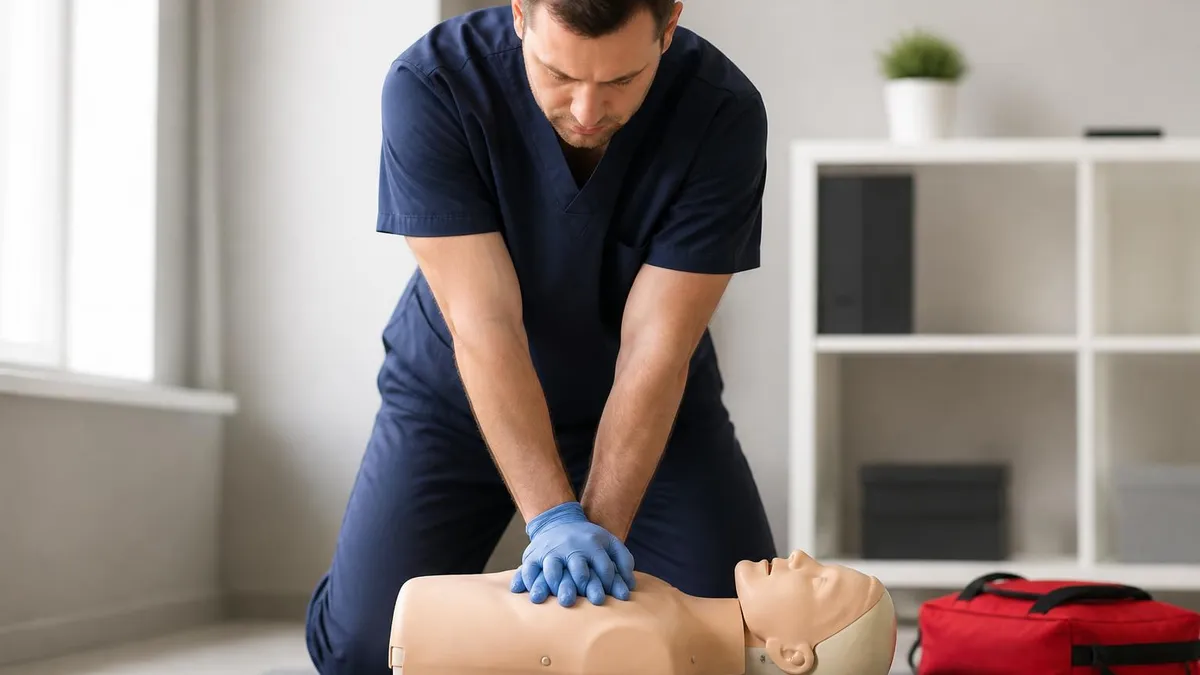
Online BLS Renewal: Complete 2026 Guide to Recertifying Your Basic Life Support Card
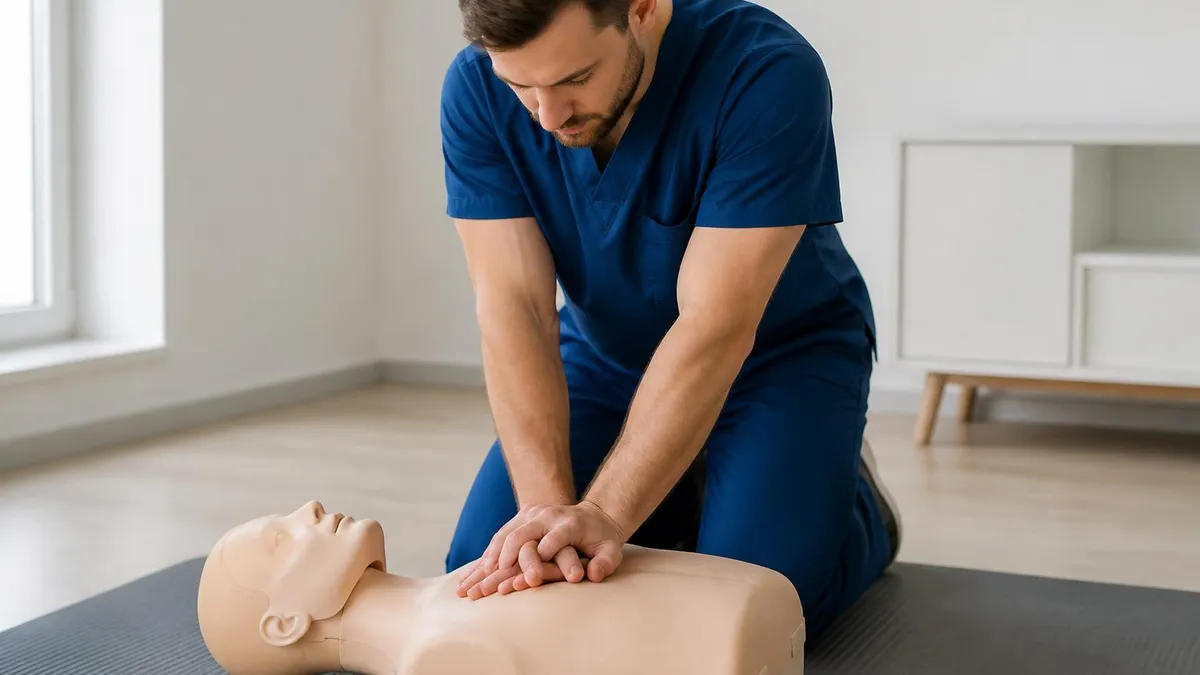
BLS vs ALS: Complete Comparison of Basic and Advanced Life Support
About the Author

Registered Nurse & Healthcare Educator
Johns Hopkins University School of NursingDr. Sarah Mitchell is a board-certified registered nurse with over 15 years of clinical and academic experience. She completed her PhD in Nursing Science at Johns Hopkins University and has taught NCLEX preparation and clinical skills courses for nursing students across the United States. Her research focuses on evidence-based exam preparation strategies for healthcare certification candidates.
Join the Discussion
Connect with other students preparing for this exam. Share tips, ask questions, and get advice from people who have been there.
View discussion (8 replies)