
ServSafe Florida: Complete Training Guide & Certification Requirements
ServSafe Florida requirements, costs, exam tips & practice tests. Get certified as a food handler or manager. ✅ Everything you need in one guide.
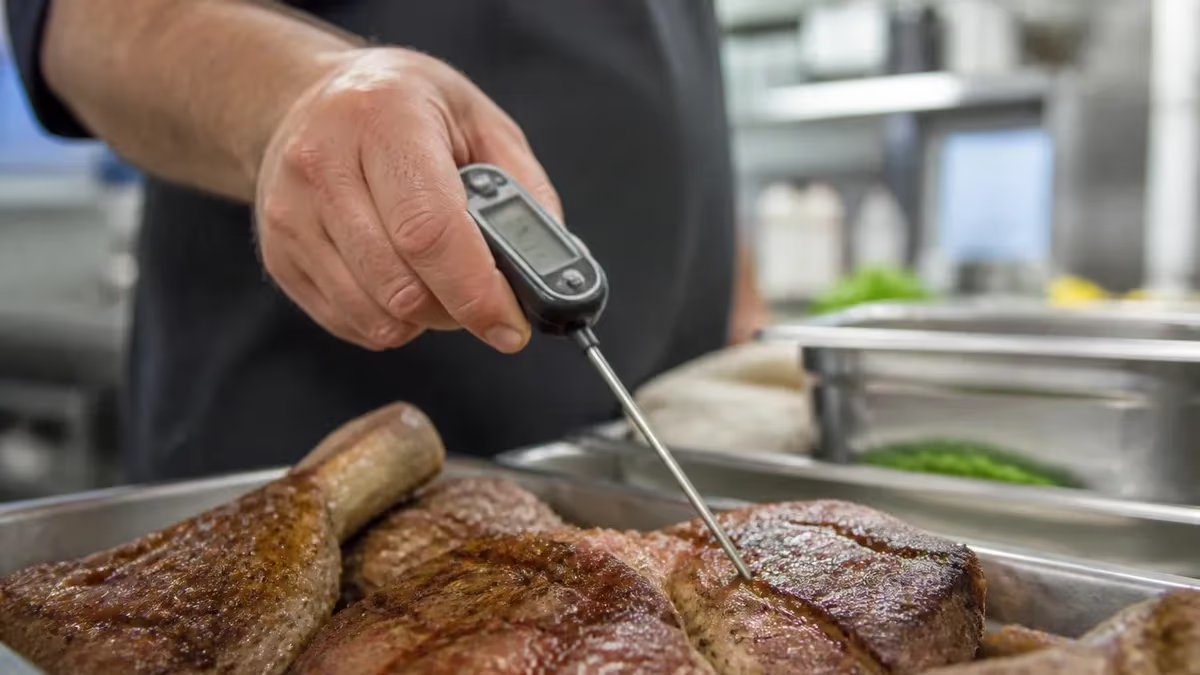
ServSafe Florida is one of the most recognized food safety certification programs available to food service workers across the Sunshine State. Whether you're a line cook in Miami, a restaurant manager in Orlando, or a catering supervisor in Tampa, earning your ServSafe certification signals to employers and health inspectors alike that you take food safety seriously. Florida's Division of Hotels and Restaurants requires that licensed food service establishments employ at least one certified food protection manager on-site — and ServSafe is the industry's go-to credential for satisfying that requirement.
The ServSafe program is administered by the National Restaurant Association Educational Foundation (NRAEF) and covers everything from foodborne illness prevention to proper temperature controls and cross-contamination protocols. In Florida, the certification is accepted statewide and is recognized by local county health departments as proof that a manager or food handler has received accredited food safety education. If you're wondering what is servsafe certified and what it truly means for your career, the short answer is that it's a credential that can open doors, satisfy state compliance requirements, and protect the public from preventable illness.
Florida's food service industry is enormous — the state hosts more than 45,000 licensed food establishments, from theme park concession stands to fine dining restaurants along the Gulf Coast. With so many establishments competing for qualified staff, holding a current ServSafe certification can give you a meaningful edge during the hiring process. Employers often pay for or reimburse the cost of the exam, recognizing the direct business value of having certified managers on their payroll.
There are two main ServSafe credential pathways relevant to Florida workers: the ServSafe Food Handler certificate and the ServSafe Manager certification. These credentials differ significantly in terms of scope, exam format, and regulatory weight. The Food Handler program is a shorter, non-proctored online course designed for front-line employees, while the Manager certification requires a proctored 90-question exam and carries far greater authority under Florida's food safety statutes. Understanding which credential applies to your role is the essential first step before you invest time and money into any preparation program.
Preparing for the ServSafe exam doesn't have to be overwhelming. Thousands of Florida food service workers pass the test each year by using structured study plans, official NRAEF study materials, and online ServSafe practice tests to build familiarity with the question formats. The ServSafe manager practice test, in particular, is an invaluable tool because it mirrors the difficulty and phrasing of real exam questions, helping candidates identify weak spots in their knowledge before exam day arrives.
This guide covers everything you need to know about ServSafe Florida — from the specific regulatory requirements and accepted certification types, to exam formats, prep strategies, cost breakdowns, and tips for renewing or replacing a lost certificate. Whether you're pursuing your very first food handler certification or aiming to upgrade to the full ServSafe manager certification, you'll find actionable, up-to-date information in every section below. Let's start with the numbers that frame just how important this credential really is in Florida's food service landscape.
ServSafe Florida by the Numbers

Florida's Food Safety Certification Requirements Explained
Florida Statute 509.039 requires at least one CFPM per licensed food service establishment. The CFPM must be on-site during all hours of operation, though some jurisdictions allow a reasonable grace period if the manager steps out briefly.
Florida accepts certifications from ANSI-accredited programs, including ServSafe Manager. This means your ServSafe credential earned in another state is typically recognized in Florida as long as it remains current and was issued by an accredited provider.
While Florida does not mandate a specific food handler card for all employees statewide, many counties — including Miami-Dade and Broward — have additional local requirements. The ServSafe Food Handler certificate satisfies most of these local-level training expectations.
ServSafe Manager certifications expire after five years. Florida's Division of Hotels and Restaurants expects establishments to maintain a current, unexpired CFPM credential on file. Failure to do so can result in inspection citations and potential fines.
Understanding the cost structure and exam format of ServSafe programs is critical before you register, because choosing the wrong product — or an unauthorized third-party provider — can leave you with a certificate that Florida health inspectors won't accept. The National Restaurant Association Educational Foundation offers several purchasing options, and prices vary depending on whether you need just the exam, a textbook bundle, or an online course with an instructor-proctored session built in.
The ServSafe Food Handler online course and assessment typically costs between $15 and $20 when purchased directly through the NRAEF website. It covers five core food safety areas: foodborne microorganisms and allergens, personal hygiene, cross-contamination prevention, time-temperature control, and cleaning and sanitation. The assessment is a 40-question non-proctored test that you complete online after viewing the course videos.
Once you achieve a passing score of 75% or higher, you can print or download your food handler certificate immediately. If you're exploring servsafe food handlers requirements across different states, you'll find that Florida's county-level variations make it especially important to verify local rules before assuming a certificate from one jurisdiction transfers cleanly to another.
The ServSafe Manager exam is a more substantial investment. The proctored 90-question exam alone costs approximately $36 when purchased as a standalone voucher, but most candidates opt for a textbook-plus-exam bundle that runs between $100 and $125. The 8th edition textbook is the current standard and aligns directly with the exam content outline. Some community colleges and culinary schools in Florida offer in-person ServSafe Manager classes that include the exam fee, typically priced between $89 and $150 total — a competitive option if you prefer structured classroom instruction over self-study.
The exam itself consists of 90 questions, of which only 75 are actually scored. The remaining 15 are unscored pilot questions that the NRAEF uses to evaluate potential future exam items. You won't know which questions are the pilot ones, so you should answer every question with the same level of care. The time limit is two hours, which most candidates find generous — the average test-taker finishes in about 75 to 90 minutes. The passing score is 75%, meaning you need to answer at least 56 of the 75 scored questions correctly.
Exam delivery options in Florida include computer-based testing at designated proctoring centers and paper-based testing administered at in-person training sessions. The computer-based option offers more scheduling flexibility since candidates can book a seat at a Pearson VUE-affiliated testing location on dates that fit their schedule. Paper-based exams are typically offered at the conclusion of in-person ServSafe Manager courses and must be proctored by a registered ServSafe instructor or proctor. Both formats produce the same official credential once the exam is scored and submitted through the NRAEF system.
If cost is a barrier, it's worth knowing that many Florida counties offer subsidized ServSafe training through workforce development programs, hospitality industry associations, and local restaurant associations. The Florida Restaurant and Lodging Association (FRLA) periodically offers discounted training events across the state. You can also look into a servsafe certification online free options or promotional voucher programs that periodically reduce the exam cost by $10 to $25, which can make a meaningful difference if you're paying out of pocket.
After passing the exam, your score report and certification are processed through the NRAEF system. Official certificates are typically mailed within four to six weeks of exam completion, though digital certificates are increasingly available for immediate download through your ServSafe.com account. Florida food establishments are advised to keep a copy of the CFPM certificate on-site at all times, ideally laminated and posted in the manager's office or food preparation area, where health inspectors can verify it easily during routine inspections.
ServSafe Manager Practice Test Strategies by Experience Level
If this is your first ServSafe exam, start by reading the official 8th edition ServSafe Manager textbook from cover to cover before attempting any practice questions. The textbook is organized into chapters that map directly to the exam content areas: food safety regulations, foodborne illness risk factors, purchasing and receiving, storage, preparation, service, and facility maintenance. Reading actively — taking notes, highlighting key temperature thresholds, and summarizing each chapter in your own words — builds the foundational knowledge needed to answer scenario-based questions confidently rather than guessing.
Once you've completed the textbook, shift to timed ServSafe manager practice tests to simulate exam conditions. Aim to complete at least three to five full-length practice exams before your scheduled test date. Review every incorrect answer thoroughly, identifying the specific textbook section that covers that concept. First-time candidates who score consistently above 80% on practice tests tend to pass the actual exam on their first attempt. Budget at least three to four weeks of study time if you're working full-time, dedicating 45 to 60 minutes per day to study sessions.

Is ServSafe Certification Worth It for Florida Food Workers?
- +Satisfies Florida's mandatory CFPM requirement for licensed food service establishments statewide
- +Recognized by ANSI-CFP and accepted in virtually every U.S. state, enabling career mobility
- +Demonstrates professional competency to employers, often resulting in higher starting wages
- +Five-year validity period reduces the frequency and cost of recertification compared to shorter credentials
- +Comprehensive curriculum covers HACCP, allergen management, and regulatory compliance in one course
- +Digital certificate delivery allows immediate proof of certification for new employers or inspections
- −Manager exam fee ($36–$125) can be a barrier for low-wage food service workers without employer support
- −Proctored exam requirement means scheduling and travel to a testing center or in-person class session
- −The 8th edition textbook is dense (over 300 pages), requiring significant study time for unprepared candidates
- −Certification does not replace hands-on food safety training — knowledge gaps can persist even after passing
- −Some Florida county health departments have additional local requirements beyond the state ServSafe mandate
- −Certificate replacement for lost documents involves a fee and can take several weeks to process through NRAEF
ServSafe Florida Exam Day Preparation Checklist
- ✓Confirm your exam date, time, and location at least 48 hours in advance through your registration confirmation email.
- ✓Bring a valid, government-issued photo ID (driver's license, passport, or state ID) that exactly matches your registration name.
- ✓Arrive at the testing center at least 15 minutes early to complete check-in procedures without rushing.
- ✓Review your critical temperature ranges one final time the morning of the exam: 41°F (cold holding), 135°F (hot holding), 165°F (poultry).
- ✓Complete one final 20-question ServSafe manager practice test the evening before to warm up your test-taking mindset.
- ✓Avoid cramming new material the night before — sleep deprivation impairs recall more than any last-minute study session.
- ✓Eat a balanced meal before the exam to maintain focus throughout the full two-hour testing window.
- ✓Read every exam question twice before selecting an answer, paying attention to qualifiers like 'most,' 'best,' and 'first.'
- ✓Flag questions you're uncertain about and revisit them after completing the rest of the exam — your first instinct is often correct.
- ✓After the exam, ask the proctor about score reporting timelines so you know when to expect results in your ServSafe account.
The 'One CFPM Per Establishment' Rule Has Real Teeth in Florida
Florida Statute 509.039 isn't a suggestion — inspectors from the Division of Hotels and Restaurants can issue an immediate citation if your establishment cannot produce proof of a current, on-site Certified Food Protection Manager during an inspection visit. A single violation can result in a fine of up to $1,000 and a negative inspection report that becomes public record. Keep a laminated copy of your ServSafe Manager certificate posted in your office and a digital backup stored in your phone's photos or cloud drive.
Passing the ServSafe Manager certification exam on the first attempt requires more than memorizing a list of facts — it demands that you understand the reasoning behind food safety principles well enough to apply them to novel scenarios you haven't seen before. The exam is heavily scenario-based, meaning a significant portion of questions present a food service situation and ask you to identify the correct managerial response. This format tests applied knowledge, not rote recall, which is why simply reading the textbook once is rarely sufficient preparation on its own.
The exam's 90 questions are organized around eight content domains defined by the Conference for Food Protection (CFP): employee health and hygiene, avoiding cross-contamination and allergen cross-contact, time and temperature control, preventing contamination from chemicals and physical hazards, cleaning and sanitizing, pest control, food safety management systems, and safe food practices from purchasing through service. Questions from the HACCP (Hazard Analysis Critical Control Points) domain tend to be among the most difficult, because they require candidates to distinguish between critical control points, monitoring procedures, and corrective actions in multi-step food preparation processes.
One of the most reliable strategies for improving ServSafe manager practice test scores is to practice active elimination. When you encounter a difficult question, start by ruling out answers that are clearly wrong, even if you're unsure which remaining option is correct. This approach increases your odds of selecting the right answer and prevents you from second-guessing yourself into switching from a correct answer to an incorrect one. Research on multiple-choice testing consistently shows that test-takers who stick with their first response perform better overall than those who frequently change answers without a clear reason.
Temperature-related questions appear throughout the exam and are frequently the deciding factor between a passing and failing score. You should be able to recall — without hesitation — the minimum internal cooking temperatures for poultry (165°F for 15 seconds), ground beef (155°F for 17 seconds), seafood and pork (145°F for 15 seconds), and commercially processed, ready-to-eat food that will be held hot (135°F). The cold holding threshold is 41°F or below.
Cooling requirements are equally important: cooked food must be cooled from 135°F to 70°F within two hours and from 70°F to 41°F within the following four hours, for a total maximum cooling window of six hours.
Allergen management has grown into a significant exam content area in recent years, reflecting heightened public awareness and stronger regulatory expectations around the nine major food allergens recognized under federal law: milk, eggs, fish, shellfish, tree nuts, peanuts, wheat, soybeans, and sesame.
Exam questions often present scenarios involving a customer with a declared allergy and ask candidates to select the correct restaurant protocol — which typically involves direct communication between the server, manager, and chef, separate preparation surfaces and utensils, and verification that no cross-contact occurred before the dish is served. These questions are designed to test whether managers understand that even trace allergen exposure can trigger life-threatening reactions in sensitive individuals.
Florida's climate presents unique food safety challenges that experienced food service managers in the state should be especially prepared to discuss on the exam. The combination of high ambient temperatures and humidity accelerates bacterial growth, particularly during outdoor events, food truck operations, and catering at venues without controlled climate conditions.
ServSafe exam scenarios involving temperature abuse are especially realistic for Florida-based candidates because the risk is a daily operational reality. If you've ever worked a summer catering event in Jacksonville or Orlando, you already understand intuitively why time-temperature monitoring is non-negotiable — and that intuition translates directly into exam performance when it's grounded in specific regulatory thresholds.
After passing the exam, your score is submitted electronically to the NRAEF, and your certification is processed within approximately 10 business days. You'll receive an email with access to your digital certificate through your ServSafe.com account, and a physical certificate will be mailed to your address on file. Florida food service establishments should immediately update their CFPM records when a new certificate is received, noting the expiration date five years from the exam date and setting a calendar reminder to initiate renewal no later than 60 days before that deadline.
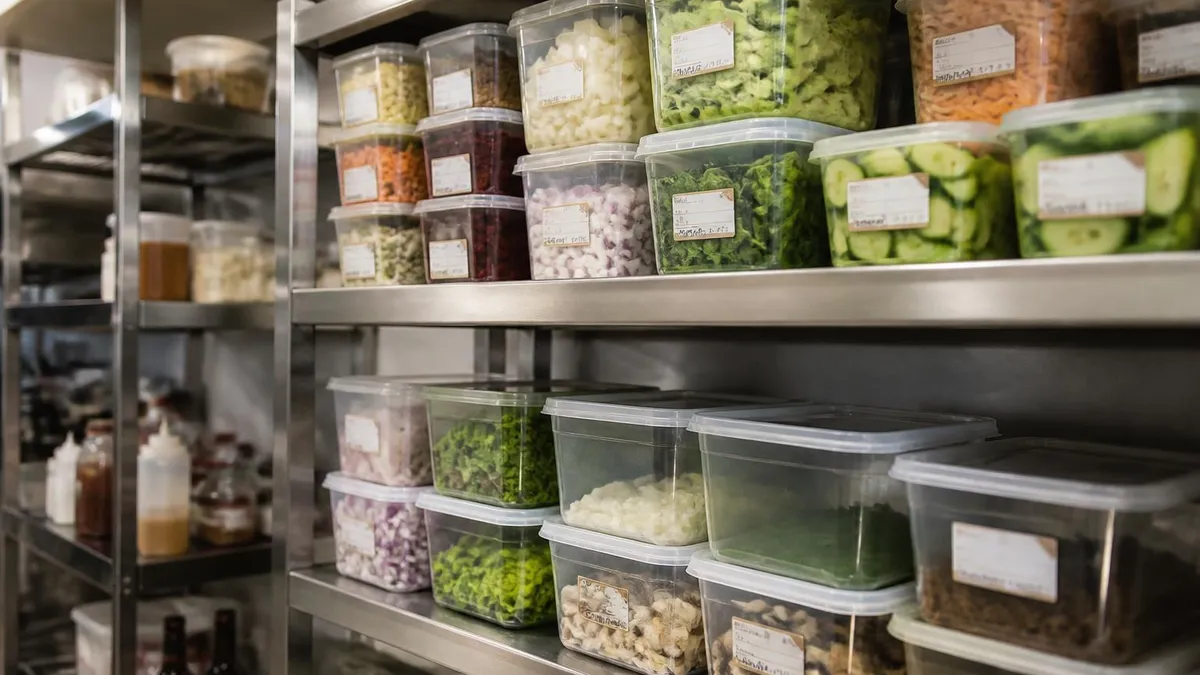
ServSafe Manager certifications are valid for exactly five years from the date of exam passage — not from the date you receive your certificate. Florida's Division of Hotels and Restaurants treats an expired CFPM credential the same as having no certified manager on staff, which can trigger a citation during any routine health inspection. Mark your expiration date in multiple places and begin the renewal process at least 60 days before expiration to allow time for a possible retake if needed.
Losing your ServSafe certificate, relocating from another state, or needing to verify your credential for a new employer are all common situations that Florida food service workers encounter — and each has a straightforward resolution through the NRAEF's administrative systems. Certificate replacement requests can be submitted through your ServSafe.com account, typically at a nominal fee of $10 to $20 depending on the format you need.
Digital replacements are generally processed within 24 to 48 hours, while mailed physical replacements take four to six weeks. If you earned your certification before the ServSafe online account system was widely adopted, you may need to contact NRAEF customer support directly with your name, exam date, testing location, and any confirmation numbers you have saved.
For food service workers who earned their ServSafe certification in another state and are moving to Florida, the transition is generally seamless as long as the credential is current and was issued by an ANSI-accredited program. Florida health inspectors recognize the ServSafe Manager certification regardless of which state administered the exam, because the credential is a national standard rather than a state-specific one.
If your out-of-state certification is within its five-year validity window, you can begin work as a CFPM in Florida immediately without retesting. If it has expired, you'll need to complete the full ServSafe Manager exam before taking on CFPM responsibilities at a licensed establishment.
Employers in Florida who want to train multiple employees simultaneously often find it cost-effective to host a private ServSafe Manager training class at their facility or a conference room. ServSafe-registered instructors and proctors can be contracted to deliver the full training course and administer the proctored exam on-site, which eliminates travel costs and scheduling conflicts for employees.
Group rates for exam vouchers are available through the NRAEF for organizations purchasing five or more seats, and some local restaurant association chapters in Florida negotiate additional volume discounts for member businesses. This employer-sponsored approach is especially practical for hotel groups, hospital food service departments, and large restaurant chains with multiple managers requiring simultaneous certification or renewal.
The ServSafe Food Handler certificate, while less formally regulated at the state level than the Manager certification, is increasingly expected by Florida employers as a baseline credential for all front-of-house and back-of-house staff. Many large hotel chains, hospital food service departments, and corporate dining operators now include completion of the ServSafe Food Handler course as a condition of employment for all food-handling roles, regardless of whether local health codes specifically mandate it. This employer-driven demand has created a practical reality where having your food handler certificate — even if technically optional in your county — meaningfully expands your job prospects.
For workers pursuing advancement into management roles, the progression from ServSafe Food Handler to ServSafe Manager certification is a logical and valuable career step. The two credentials are not interchangeable — the Food Handler certificate demonstrates basic food safety awareness, while the Manager certification demonstrates the supervisory knowledge and decision-making capability required to oversee food safety systems in a licensed establishment. Many Florida community colleges and culinary programs include the ServSafe Manager course as a component of their food service management curriculum, allowing students to earn the credential as part of a broader professional qualification.
If you're unsure whether your current ServSafe credential is still on file with the NRAEF or want to verify that a prospective hire's certification is legitimate, the NRAEF maintains an online certificate verification database that Florida employers and health inspectors can query using the certificate holder's name and certificate number.
This verification tool is particularly useful when hiring managers want to confirm a job applicant's claimed credentials without requesting a physical copy of the certificate upfront. Understanding how to use this system — and how to present your own credential for verification — is a practical skill that every ServSafe-certified food service professional in Florida should have in their toolkit.
Finally, it's worth noting that ServSafe isn't the only path to CFPM certification in Florida, though it is by far the most widely recognized and available option. The state also accepts certifications from other ANSI-accredited providers such as the National Registry of Food Safety Professionals (NRFSP) and Prometric's food safety programs. However, because ServSafe is the most universally recognized brand in the industry and has the broadest network of instructors, testing locations, and study resources across Florida, it remains the default choice for the overwhelming majority of food service workers and establishments in the state.
Building an effective study routine for the ServSafe manager certification exam starts with an honest self-assessment of how much time you have available and where your current food safety knowledge is strongest and weakest.
Most candidates who work full-time in food service find that a three to four week study plan with 45 to 60 minutes of dedicated study per day is sufficient to prepare thoroughly for the exam. If you're starting with little prior food safety training or working in a non-cooking role, allow yourself five to six weeks to ensure you can cover all eight content domains without feeling rushed.
Week one of an effective study plan should focus on foundational concepts: understanding how foodborne illness occurs, the major pathogens and their associated symptoms and food vehicles, and the physical and chemical contamination risks that food managers must control. ServSafe practice questions on foodborne illnesses are an excellent way to test whether you've internalized the specific details — for example, distinguishing between Norovirus (most common cause of foodborne illness outbreaks in the U.S.), Salmonella (most common cause of hospitalizations), and Listeria (most dangerous for pregnant women and immunocompromised individuals). These distinctions appear frequently in exam questions.
Week two should shift to operational food safety: proper receiving and storage procedures, temperature monitoring protocols, cooling and reheating requirements, and the proper use and maintenance of food safety equipment like thermometers, sanitizer test strips, and temperature logs. This is where Florida's climate considerations become particularly relevant in study scenarios — candidates preparing in Florida should pay special attention to questions involving hot weather catering, outdoor food service, and the accelerated rate of bacterial growth at ambient temperatures above 70°F, which is a near-constant condition during Florida summers.
Week three is the ideal time to focus on HACCP (Hazard Analysis Critical Control Points) principles, which are tested more heavily on the ServSafe Manager exam than most candidates expect. HACCP questions require you to understand the seven HACCP principles, identify critical control points in multi-step recipes, set appropriate critical limits (which are typically the same temperature thresholds you've already memorized), and describe corrective actions when a critical limit is exceeded. The good news is that once you understand the HACCP framework conceptually, these questions become some of the most predictable on the exam.
Week four should be devoted almost entirely to full-length timed practice exams and targeted review of weak areas. Take a complete 90-question ServSafe manager practice test under exam conditions — no phone distractions, timed to two hours — at the start of each study session in week four. After each practice test, categorize your wrong answers by content domain. If you consistently miss questions about cleaning and sanitizing, spend 20 to 30 minutes reviewing that chapter before your next practice session. This targeted feedback loop is far more efficient than re-reading chapters you've already mastered.
On the topic of study resources: the official ServSafe 8th edition textbook is non-negotiable as your primary reference. The NRAEF also offers an online study guide that mirrors the textbook content and includes interactive activities, videos, and self-assessment quizzes. Third-party study apps and flashcard decks can be useful supplements but should never substitute for the official materials, as some third-party resources contain outdated information or temperature thresholds from older editions of the exam that are no longer current. Always verify that any supplementary study material specifies that it aligns with the current ServSafe 8th edition exam content outline.
One often-overlooked study tip is to form or join a study group with colleagues who are also preparing for the ServSafe Manager exam. Florida's large food service workforce means that study groups are easy to organize through local restaurant association chapters, culinary school alumni networks, or even informal workplace arrangements. Explaining concepts to a study partner reinforces your own understanding and often reveals gaps in knowledge you hadn't noticed when studying alone. Group study sessions also create accountability, which is especially valuable for candidates who struggle with self-directed study after long shifts in a busy kitchen or restaurant.
ServSafe Questions and Answers

How to Print Your ServSafe Certificate: Complete Step-by-Step Guide

ServSafe Certification by State: Acceptance and Rules Explained

ServSafe Certification Lookup: How to Verify, Find, and Renew Your Food Safety Credential in 2026

ServSafe Promo Code 2026: Real Discounts (Not Coupon Scams)

ServSafe Manager Practice Test 2026: Free Exam Prep & Study Guide
About the Author

Registered Sanitarian & Food Safety Certification Expert
Cornell University College of Agriculture and Life SciencesThomas Wright is a Registered Sanitarian and HACCP-certified food safety professional with a Bachelor of Science in Food Science from Cornell University. He has 17 years of experience in food safety auditing, regulatory compliance, and foodservice management training. Thomas prepares food industry professionals for ServSafe Manager, HACCP certification, and state food handler examinations.
Join the Discussion
Connect with other students preparing for this exam. Share tips, ask questions, and get advice from people who have been there.
View discussion (7 replies)