
Temperature Danger Zone ServSafe: The Complete 41°F–135°F Food Safety Guide
🗨️ Master the temperature danger zone servsafe concept. Learn the 41°F–135°F range, 2-hour rule, and TCS foods to pass your ServSafe certification exam.
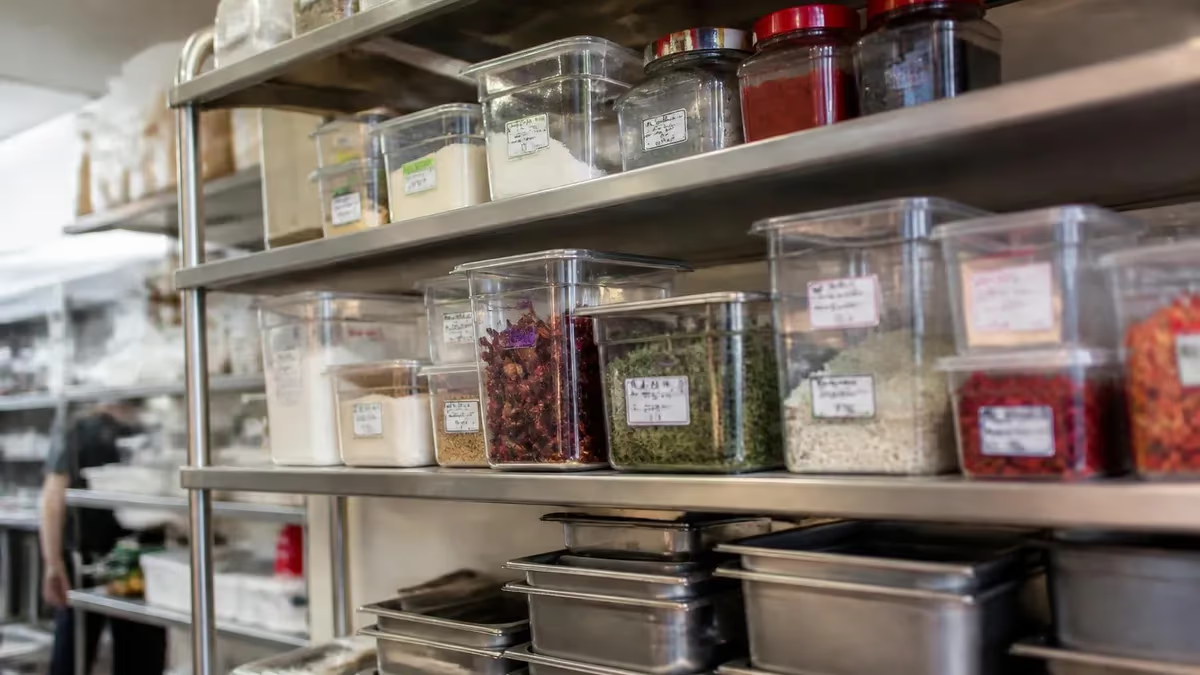
Understanding the temperature danger zone ServSafe defines is one of the most critical concepts you will encounter on your ServSafe certification exam and apply throughout your entire food service career. The danger zone spans from 41°F to 135°F (5°C to 57°C), and it represents the temperature range where harmful bacteria multiply most rapidly on food. Pathogenic organisms like Salmonella, E. coli, and Listeria can double in number every 20 minutes when food sits in this zone, turning a safe meal into a serious health hazard within hours.
ServSafe, developed by the National Restaurant Association Educational Foundation, is the gold standard for food safety training in the United States. Hundreds of thousands of food service professionals pursue servsafe certification every year because health departments, employers, and regulatory agencies rely on it to verify that workers understand fundamental food safety principles. The temperature danger zone is central to nearly every section of the ServSafe curriculum, from receiving deliveries to proper storage, cooking, cooling, and reheating.
The 2-hour rule is where many food handlers make their first dangerous mistake. ServSafe teaches that TCS foods — Time/Temperature Control for Safety foods — must not remain in the temperature danger zone for more than a cumulative 4 hours total. However, best practice and many health department standards call for a much stricter 2-hour window before corrective action is taken. Once food has been in the danger zone for 4 hours or more, it must be discarded, regardless of how it looks or smells, because pathogens produce toxins that are not destroyed by subsequent cooking.
TCS foods are the category of ingredients most vulnerable to rapid bacterial growth. They include cooked meats, poultry, seafood, dairy products, eggs, cut melons, sliced tomatoes, leafy greens, cooked rice, cooked beans, sprouts, and garlic-in-oil mixtures. Each of these foods provides the moisture, protein, and neutral pH that bacteria need to thrive. If you are preparing for the servsafe manager exam, memorizing the full TCS food list and understanding why each item is high-risk will strengthen your answers across multiple question categories.
ServSafe also draws a sharp distinction between the danger zone and safe holding temperatures. Hot food must be held at 135°F or above, while cold food must be held at 41°F or below. These are not guidelines — they are requirements. Operations that allow food to drift between these boundaries during service, transport, or storage are creating the exact conditions ServSafe training is designed to prevent. Commercial food warmers, steam tables, refrigerators, and freezers must all be monitored and calibrated regularly to maintain compliance.
Many test-takers find temperature management questions among the most straightforward on the exam precisely because the numbers are fixed and specific. Knowing that 41°F is the maximum cold holding temperature, that 135°F is the minimum hot holding temperature, and that 165°F is the required minimum internal temperature for poultry gives you reliable anchors for multiple-choice questions. If you want to build on this foundation before exam day, explore servsafe certification online options that let you complete the course at your own pace with built-in review modules covering temperature control.
This guide will walk you through every dimension of the temperature danger zone as tested on the ServSafe exam: the exact thresholds, the science behind them, the two-hour rule, proper cooling and reheating procedures, real-world applications for restaurants and catering operations, and practical tips for answering temperature questions correctly under exam pressure. Whether you are studying for your first ServSafe food handler card or preparing for the full ServSafe Manager certification, mastering this topic will pay dividends on test day and in your daily kitchen work.
Temperature Danger Zone ServSafe: Key Numbers at a Glance
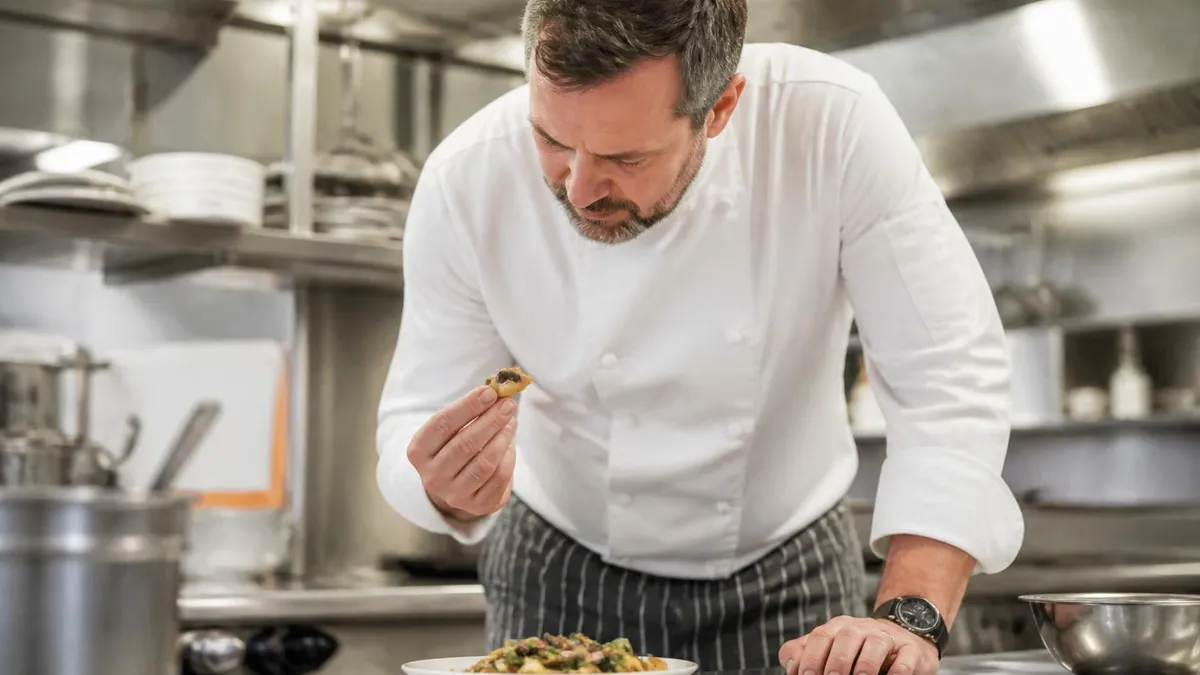
What Is the Temperature Danger Zone?
ServSafe defines the danger zone as 41°F to 135°F (5°C to 57°C). Bacteria reproduce most aggressively between 70°F and 125°F, but the entire range is considered unsafe for extended food storage. Any TCS food held within these boundaries for too long becomes a biological hazard.
Bacteria need warmth, moisture, protein, and time to grow. The middle of the danger zone — roughly body temperature — provides the ideal environment. Pathogens like Staphylococcus aureus produce heat-stable toxins that survive even after cooking, making prevention the only reliable control.
Safe holding means staying out of the danger zone entirely. Hot TCS foods must be held at 135°F or above using warmers or steam tables. Cold TCS foods must be stored at 41°F or below in refrigerators or on ice. Neither end of the spectrum permits any drift into the danger zone.
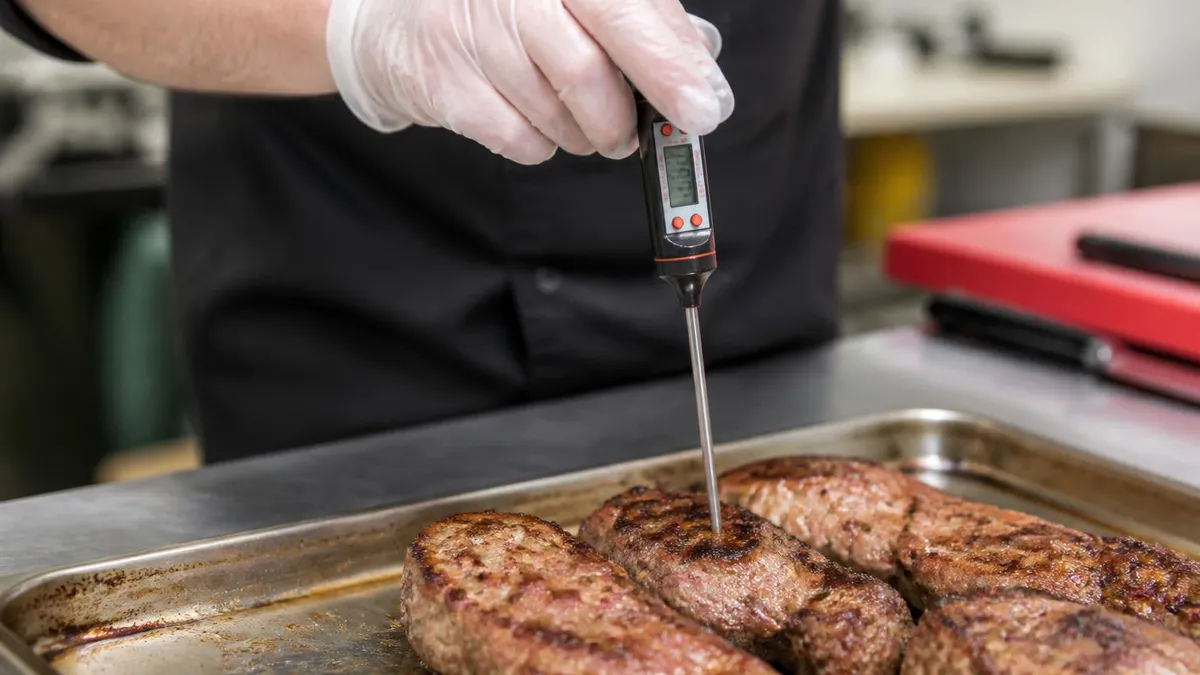
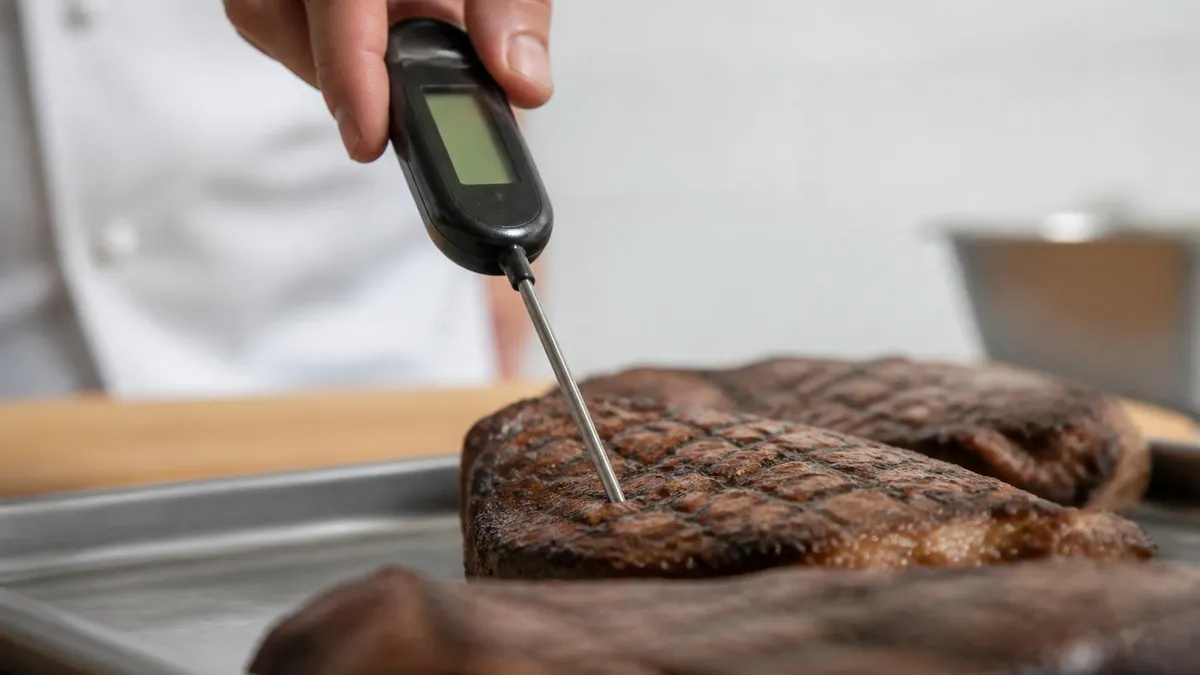
ServSafe requires food handlers to use calibrated thermometers to verify temperatures. A bimetallic stemmed thermometer can be calibrated using the ice-point method (32°F in ice water) or the boiling-point method (212°F at sea level). Uncalibrated equipment creates false confidence and real food safety risk.
The FDA Food Code, which most state health codes adopt or adapt, aligns with ServSafe's danger zone standards. This means the 41°F–135°F range is not just a training standard — it is enforceable law in most jurisdictions. Violations can trigger failed inspections, fines, or temporary closure.
The 2-hour rule and 4-hour rule are the practical enforcement mechanisms that ServSafe uses to translate the temperature danger zone from an abstract concept into a concrete kitchen protocol. The 4-hour cumulative rule states that TCS food must not remain in the temperature danger zone for a total of 4 hours or more across its entire preparation and service lifecycle. This is a cumulative clock, not a per-event clock — time spent cooling, thawing, holding, and displaying all counts toward that total.
Understanding how the cumulative clock works is essential for both the ServSafe exam and real-world operations. Suppose a tray of sliced turkey is removed from the refrigerator during prep and sits at room temperature for 45 minutes. It is then placed in a hot holding unit that runs slightly low, holding the turkey at 128°F for another 90 minutes before the error is caught. That turkey has already accumulated 2 hours and 15 minutes in the danger zone. It has under 2 hours remaining before it must be discarded, even if it is now moved to a properly functioning unit.
The 2-hour rule, while not an official separate standard in the FDA Food Code, is widely taught as a practical safety buffer. Many ServSafe instructors and health departments recommend treating 2 hours as the action threshold — the point at which you should evaluate whether to rapidly reheat above 165°F or rapidly chill below 41°F before additional time elapses. This buffer is especially valuable in busy service environments where losing track of time is easy. It also provides extra margin against temperature measurement error.
Cooling procedures are among the most complex temperature management tasks covered on the SerSafe manager practice test. ServSafe prescribes a two-stage cooling method: cooked food must be cooled from 135°F to 70°F within 2 hours, and then from 70°F to 41°F or below within an additional 4 hours, for a total cooling window of 6 hours. The 135°F-to-70°F stage is the most dangerous and must be completed first because bacterial growth is most explosive in that range. Failing to complete either stage within the required time requires discarding the food.
Acceptable rapid-cooling methods recognized by ServSafe include ice baths, blast chillers, ice paddles stirred through the food, dividing large portions into smaller shallow pans, and adding ice as an ingredient during preparation. A full hotel pan of hot chili sitting uncovered on a prep table will not cool fast enough to meet the 6-hour standard. The mass of food, insulation from the container walls, and ambient kitchen temperatures all slow the cooling process dramatically compared to shallow pans immersed in an ice bath.
Reheating is the mirror image of cooling and carries its own ServSafe requirements. TCS foods that have been cooked, cooled, and are being reheated for hot holding must reach an internal temperature of 165°F within 2 hours. This rapid reheating requirement ensures that any bacteria that may have grown during storage or slow cooling are destroyed before the food re-enters the service cycle. Reheating on a steam table or in a slow cooker is explicitly prohibited by ServSafe because those devices are designed to maintain temperature, not to rapidly raise it.
For students pursuing servsafe food handlers credentials or the full manager certification, temperature time-tracking is a skill that bridges the gap between memorizing numbers and applying them under real kitchen conditions. Practice exam questions often present scenarios where you must calculate cumulative danger-zone time, identify whether food is still safe, and choose the correct corrective action. Developing this situational reasoning — not just rote temperature memorization — is what separates passing scores from near misses on the ServSafe manager exam.
ServSafe Certification: TCS Foods, Cooling & Reheating Rules
TCS foods are ingredients that require Time/Temperature Control for Safety because they support rapid bacterial growth. The full list includes raw and cooked meat, poultry, and seafood; dairy products like milk, cheese, and yogurt; shell eggs and liquid eggs; cooked starches such as rice, pasta, and beans; cut melons, sliced tomatoes, cut leafy greens, and raw sprouts. Garlic-in-oil mixtures are also TCS because the anaerobic environment inside the oil can support Clostridium botulinum growth even without obvious spoilage signs.
Understanding why each food is classified as TCS helps ServSafe exam candidates answer scenario questions more confidently. The key variables are water activity (aw above 0.85), pH (above 4.6), and protein content. Whole intact fruits and vegetables are generally not TCS because their skin provides a protective barrier and their pH is often lower. Once cut, that barrier is broken and the pH neutralizes at the cut surface, making them vulnerable. Knowing these underlying principles lets you reason through unfamiliar items on the exam rather than relying on memorization alone.
Strict Temperature Control: Benefits vs. Operational Challenges
- +Prevents foodborne illness outbreaks that can harm customers and devastate a restaurant's reputation
- +Ensures compliance with FDA Food Code and state health department inspection requirements
- +Reduces food waste by catching temperature abuse early before food becomes unsafe and unsalvageable
- +Builds staff confidence and creates a culture of food safety accountability across the entire team
- +Protects the operation from liability in the event of a customer illness complaint or health inspection
- +Directly supports passing the ServSafe manager certification exam with high scores on temperature questions
- −Requires consistent thermometer use and calibration, which adds time during busy service periods
- −Cooling TCS foods to 41°F within 6 hours demands ice baths or blast chillers that small operations may lack
- −Temperature logging creates paperwork burden that staff may resist or complete inaccurately under pressure
- −Strict discarding rules for food in the danger zone too long can increase food costs significantly
- −Hot holding equipment failures during service can force immediate discard of large food batches
- −Staff turnover in food service means temperature training must be repeated frequently for new hires
ServSafe Temperature Safety Checklist: Daily Kitchen Protocols
- ✓Calibrate all probe thermometers using the ice-point method (32°F) at the start of every shift.
- ✓Verify refrigerator and freezer unit temperatures are 41°F or below and 0°F or below respectively before service.
- ✓Check hot holding equipment is maintaining 135°F or above before transferring cooked TCS foods.
- ✓Record the time TCS foods leave refrigeration so cumulative danger-zone exposure can be tracked accurately.
- ✓Cool all cooked TCS foods from 135°F to 70°F within 2 hours using approved rapid-cooling methods.
- ✓Complete the second cooling stage from 70°F to 41°F within 4 hours for a total cooling time of 6 hours.
- ✓Reheat all previously cooked TCS foods to 165°F within 2 hours using a rapid-heating appliance before hot holding.
- ✓Discard any TCS food that has exceeded 4 cumulative hours in the temperature danger zone without exception.
- ✓Use separate calibrated thermometers for raw meats and ready-to-eat foods to prevent cross-contamination.
- ✓Document temperature checks and corrective actions in a temperature log sheet for health department review.
The 4-Hour Clock Never Resets
One of the most commonly missed points on the ServSafe manager exam is that the 4-hour danger-zone clock is cumulative across the food's entire history — it does not reset each time the food is moved to a safe temperature. If chicken has spent 90 minutes in the danger zone during prep, it only has 2.5 hours remaining, even after being properly refrigerated and brought back out again. Always track total accumulated time, not per-event time.
Approaching the ServSafe exam with a strategic mindset for temperature questions significantly improves your score. Temperature-related content appears across multiple sections of the ServSafe Manager exam, including the chapters on purchasing and receiving, storage, preparation, cooking, serving, and food safety management systems. Recognizing that temperature control is a cross-cutting theme — not a single isolated chapter — helps you anticipate where these questions will appear and how they will be framed in scenario format.
The ServSafe Manager exam consists of 90 questions, with 80 scored and 10 unscored pretest items. You need a score of 75% or higher to pass, which means you can miss no more than 20 scored questions. Temperature questions are some of the most reliably answerable questions on the exam if you have memorized the key thresholds and practiced applying them in scenario contexts. Unlike questions that require nuanced judgment about facility design or employee health policies, temperature questions typically have one unambiguously correct answer based on specific numerical standards.
The most important temperature benchmarks to memorize for the servsafe manager certification exam include: 41°F (maximum cold holding), 70°F (midpoint cooling target at 2 hours), 135°F (minimum hot holding and the top of the danger zone), 145°F (minimum cook temp for whole muscle beef, pork, veal, lamb, and fish with 15-second rest time), 155°F (minimum cook temp for ground meats and injected meats), 165°F (minimum cook temp for poultry, stuffed meats, and reheating), and 41°F-to-135°F as the full danger zone span.
Writing these out in a simple chart before exam day and drilling them repeatedly is the fastest path to full temperature question mastery.
ServSafe practice exams are one of the most effective study tools available for temperature content. Practice questions test not just your ability to recall the correct temperature but also your ability to apply it correctly in context.
For example, a question might describe a scenario where salmon is received at 46°F — you need to know that 41°F is the maximum receiving temperature for most TCS fish, and 46°F is a violation requiring rejection. Or a question might describe soup being held at 130°F and ask what corrective action is required — the answer is to immediately reheat to 165°F, not to simply turn up the holding unit.
Exam scenario questions about cooling often include distractors that present plausible but incorrect cooling timelines. A common distractor is a question stating that food was cooled from 135°F to 70°F in 3 hours — this exceeds the 2-hour requirement and the food must be discarded, even though it might still be warm and look perfectly fine. Training yourself to check both the temperature achieved and the time taken to achieve it is the key analytical habit for cooling questions. Many test-takers get these wrong because they focus only on the final temperature without evaluating whether the time constraint was met.
Understanding the science behind why these temperatures matter also helps candidates who find pure memorization difficult. At 41°F, bacterial metabolism slows dramatically but does not stop entirely — that is why refrigerated food still has a finite shelf life. At 135°F, most common foodborne pathogens are killed quickly enough to make food safe for hot holding. At 165°F, even heat-resistant pathogens and the toxins from some organisms are neutralized within the mandated rest time. Framing each threshold in terms of what biological event it controls makes the numbers more memorable and the reasoning behind them clearer.
If you are planning your study schedule, consider dedicating one full study session specifically to temperature management. Use that session to write out all key thresholds from memory, work through at least 20 scenario-based practice questions focused on temperature, and review at least one case study involving a foodborne illness outbreak traced to temperature abuse. The CDC and FDA publish real outbreak reports that make the consequences of temperature failures concrete and vivid, which is more memorable than abstract definitions. Pair this study session with servsafe test prep resources tailored to your state's specific health code requirements.
Food that has spent too long in the temperature danger zone may look, smell, and taste completely normal. ServSafe emphasizes that sensory evaluation is not a reliable safety check for temperature-abused food. Bacteria and their toxins are invisible and odorless until contamination is severe. If the cumulative 4-hour limit has been reached or exceeded, the food must be discarded — no exceptions, regardless of appearance. This is one of the most important principles tested on the ServSafe certified exam.
Applying temperature danger zone principles in real food service operations requires more than knowing the numbers — it demands building systems and habits that make temperature control automatic and consistent across every shift and every employee. Restaurant managers and food safety supervisors who hold servsafe manager credentials are expected to design these systems, train their teams to follow them, and monitor compliance as an ongoing operational priority rather than a one-time training event.
Temperature logging is the backbone of a compliant food safety management system. ServSafe recommends maintaining written temperature logs that record the time, food item, measured temperature, corrective action taken, and employee initials for every temperature check. These logs serve multiple purposes: they provide a contemporaneous record that health inspectors can review during an inspection, they help managers identify patterns such as a refrigerator that consistently runs warm in the afternoon, and they create accountability that makes staff more diligent about actually taking and recording readings rather than estimating or skipping them during busy periods.
Delivery receiving is one of the most overlooked opportunities for temperature control. ServSafe standards require that cold TCS foods be received at 41°F or below and hot TCS foods at 135°F or above. Frozen food must arrive frozen solid with no signs of thawing and refreezing such as large ice crystals or liquid pooling at the bottom of packaging.
Inspecting deliveries with a probe thermometer rather than relying on the driver's documentation is a standard ServSafe receiving procedure. Accepting a product at an out-of-temperature range and placing it in refrigeration does not reset the clock on that product — it has already accumulated danger-zone time during transport.
Catering and off-site food service operations face uniquely difficult temperature control challenges that the ServSafe food handler certification curriculum specifically addresses. Transporting hot food in insulated carriers that maintain 135°F or above over long distances, setting up cold buffet displays with sufficient ice to keep foods at 41°F or below, and managing the clock during extended service where food is repeatedly accessed are all more complex in catering contexts than in a controlled kitchen environment. Catering operations must plan temperature control into every logistical detail, from transport container selection to the timeline between food preparation and guest service.
Employee training is the single greatest lever for improving temperature compliance in a food service operation. ServSafe manager-certified supervisors are responsible for ensuring that all staff — including part-time workers and new hires — understand the basic principles of the temperature danger zone, know how to use and calibrate thermometers, and can identify TCS foods that require strict time and temperature monitoring. Regular refresher training, visible posted temperature charts in prep areas, and a kitchen culture where questioning unsafe temperatures is encouraged and rewarded all contribute to better compliance outcomes and lower foodborne illness risk.
Technology is increasingly being integrated into temperature monitoring in commercial kitchens. IoT temperature sensors connected to cloud-based monitoring systems can log refrigerator and holding unit temperatures automatically every few minutes, send alerts when temperatures drift out of safe ranges, and generate compliance reports for health inspectors. While these tools do not replace the need for probe thermometer checks on individual food items, they provide continuous monitoring that manual checks every few hours cannot match. ServSafe-certified managers who understand these technologies and integrate them with their traditional protocols create the most robust food safety environments possible.
For individuals currently studying for their ServSafe credentials, understanding how to apply temperature principles on the job is just as important as passing the exam. Employers who require what is servsafe certified status from their managers and supervisors are investing in a team that can prevent the kind of temperature-related foodborne illness incidents that cost the restaurant industry billions of dollars annually and cause immeasurable harm to consumers.
Your ServSafe certification is not just a piece of paper — it is evidence that you understand how to protect the public, and the temperature danger zone is the foundation of that protection.
Building a comprehensive study plan for the ServSafe exam around temperature danger zone mastery starts with understanding how the topic connects to every other area of food safety. Temperature control is not a standalone subject — it intersects with personal hygiene (sick workers who contaminate food that then sits in the danger zone), cross-contamination prevention (raw meats stored above ready-to-eat foods that drip contaminants during temperature fluctuations), facility design (refrigerator placement away from heat-generating equipment), and HACCP (Hazard Analysis Critical Control Points) principles where temperature control points are critical limits.
HACCP integration is a significant part of the ServSafe Manager curriculum and exam. In a HACCP plan, Critical Control Points (CCPs) are the specific steps in food production where temperature controls are applied to prevent, eliminate, or reduce food safety hazards to acceptable levels. Cooking is a CCP where temperature kills pathogens.
Cooling is a CCP where rapid temperature reduction prevents pathogen regrowth. Hot holding is a CCP where sustained high temperature prevents pathogen accumulation during service. Understanding how each temperature standard fits within the HACCP framework demonstrates the level of systems-level thinking that ServSafe manager certification is designed to develop and verify.
Time-as-a-public-health-control is an advanced concept introduced in later editions of the ServSafe curriculum. This approach allows food service operations to intentionally hold TCS food without temperature control for up to 4 hours, provided that the food was at a safe temperature when removed from control, the food is labeled with the time it must be discarded, and the food is either served or discarded by that time — never returned to temperature control.
This system is permitted under the FDA Food Code and is covered on the ServSafe Manager exam, but it requires detailed written procedures and staff training to implement legally and safely.
Foodborne illness statistics make the importance of temperature control viscerally clear. The CDC estimates that approximately 48 million Americans experience foodborne illness each year, resulting in 128,000 hospitalizations and 3,000 deaths. Temperature abuse — leaving food in the danger zone too long — is identified as one of the most common contributing factors in foodborne illness outbreaks investigated by public health authorities. Norovirus, Salmonella, Clostridium perfringens, and Campylobacter together account for the majority of illnesses, and all of them are either transmitted through food held at improper temperatures or amplified in foods that are not heated or cooled correctly.
Practical temperature monitoring skills that you should develop before your ServSafe exam include: inserting a probe thermometer to the correct depth in different food types (at least 2 inches into food or to the dimple on a bimetallic thermometer), taking multiple readings in different locations in a large batch to ensure even temperature distribution, allowing adequate stabilization time (approximately 15 seconds) before reading the thermometer, sanitizing thermometers between uses to prevent cross-contamination, and recording temperatures accurately rather than rounding to a more convenient number. Each of these practices may appear in exam scenarios testing whether you understand proper technique.
The relationship between ServSafe temperature standards and local health department requirements is important to understand before taking the exam. While ServSafe is based on the FDA Food Code, individual states and municipalities may adopt modified versions with stricter requirements. For example, some jurisdictions require cold holding at 38°F instead of 41°F, or specify shorter maximum holding times for certain vulnerable populations such as those served in healthcare or eldercare settings. ServSafe certification teaches the federal baseline, but food service professionals working in states with stricter codes must know and follow those local requirements as well.
As you approach your exam date, consolidate your temperature knowledge by working through scenario-based practice questions that require multi-step reasoning. The best ServSafe practice questions force you to evaluate a situation, identify the temperature violation, determine whether corrective action is possible, and choose the appropriate response — all within the same problem.
This type of applied reasoning is exactly what the ServSafe Manager exam tests and what makes the difference between a food handler who knows the rules and a manager who can implement them under real operational pressure. Use every available study resource, take multiple practice exams, and review every wrong answer until you understand not just the correct response but the principle behind it.
ServSafe Questions and Answers
ServSafe Promo Code 2026: Real Discounts (Not Coupon Scams)
ServSafe Certification Online 2026 — Cost, Time & How to Pass
ServSafe Manager Practice Test: Free 2026 Exam Prep
ServSafe Certification by State: Acceptance and Rules Explained
ServSafe Temperature Danger Zone: The Complete 41°F–135°F Food Safety Guide for Certification
About the Author

Registered Sanitarian & Food Safety Certification Expert
Cornell University College of Agriculture and Life SciencesThomas Wright is a Registered Sanitarian and HACCP-certified food safety professional with a Bachelor of Science in Food Science from Cornell University. He has 17 years of experience in food safety auditing, regulatory compliance, and foodservice management training. Thomas prepares food industry professionals for ServSafe Manager, HACCP certification, and state food handler examinations.
Join the Discussion
Connect with other students preparing for this exam. Share tips, ask questions, and get advice from people who have been there.
View discussion (7 replies)