
ServSafe Temperature Danger Zone: The Complete 41°F–135°F Food Safety Guide for Certification
⏳ Master the temperature danger zone for food servsafe exam: 41°F-135°F rules, 4-hour limits, cooling steps, and reheating temps for certification.
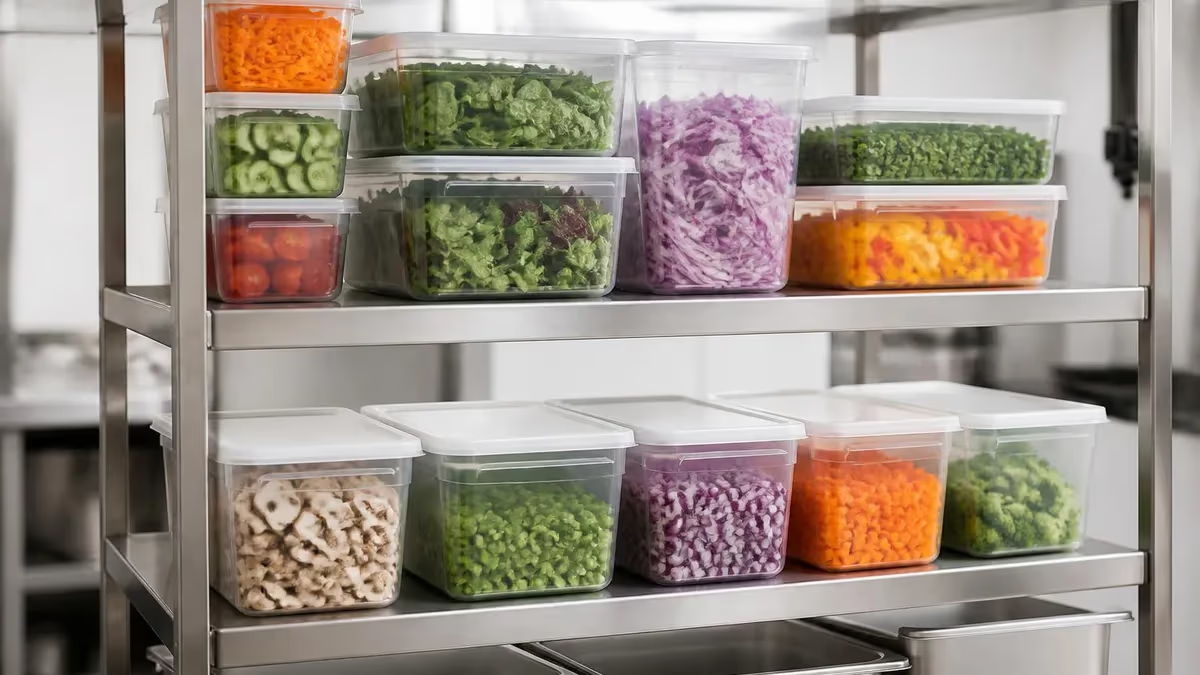
Understanding the temperature danger zone for food servsafe candidates need to memorize is the single most tested concept on every exam version, and it shows up in nearly every operational decision you will make in a commercial kitchen. The ServSafe danger zone is defined as the range between 41°F and 135°F, a 94-degree window in which pathogenic bacteria like Salmonella, Listeria, and E. coli multiply rapidly enough to cause foodborne illness within hours. Every aspiring servsafe certified manager or food handler must internalize this range cold.
The reason this temperature window matters so intensely is biological. Most bacteria that make humans sick double their population every 20 minutes when conditions sit between 70°F and 125°F, which is the hottest part of the danger zone. A single bacterium left on a chicken breast at room temperature can multiply to over one million cells in just seven hours, far exceeding the infectious dose for most pathogens. This is why ServSafe builds an entire framework of time and temperature controls around keeping food out of this range.
The exam tests this concept from multiple angles: cold holding minimums, hot holding minimums, the four-hour rule, the two-stage cooling method, reheating endpoints, and thawing procedures. If you only remember one number going into your test, make it 41°F to 135°F. Candidates studying for servsafe food handler certification typically see between eight and twelve questions tied directly to this temperature range across the 90-question exam.
What makes the danger zone tricky is that it intersects with nearly every other food safety topic. Cross-contamination prevention, personal hygiene, allergen management, and HACCP planning all rely on understanding how time and temperature interact. A kitchen that nails cooking temperatures but mishandles cooling will still produce sick customers. The danger zone is the connective tissue holding the entire ServSafe curriculum together.
This guide walks through every angle the exam tests: the exact temperature boundaries, the time limits, the cooling procedures, the reheating standards, and the documentation requirements. You will also find common test questions, memory tricks for the numbers, and a breakdown of how the topic appears differently on the Food Handler exam versus the Manager exam. By the end, the 41°F–135°F range will be second nature.
If you are preparing for either certification level, treat this article as your temperature reference sheet. Print the numbers, drill the time limits, and run through the practice questions at the end. The danger zone is not a topic you can fake your way through on test day, but it is also one of the most learnable sections of the ServSafe curriculum once you commit the framework to memory.
One more thing before we dive in: the 41°F–135°F range is the ServSafe standard, but the FDA Food Code and some local jurisdictions may phrase it slightly differently (such as 40°F or 45°F for cold holding). For the exam, always default to 41°F and 135°F unless the question explicitly references another regulation. This consistency is what makes ServSafe a national standard.
The Temperature Danger Zone by the Numbers
Key Facts at a Glance
| Item | Value | Details |
|---|---|---|
| Max Cumulative Time in Zone | 4 hours | TCS foods |
| Bacteria Doubling Time | 20 min | At room temperature |
| Cells Possible in 7 Hours | 1M+ | From single bacterium |
The Four Critical Temperature Boundaries
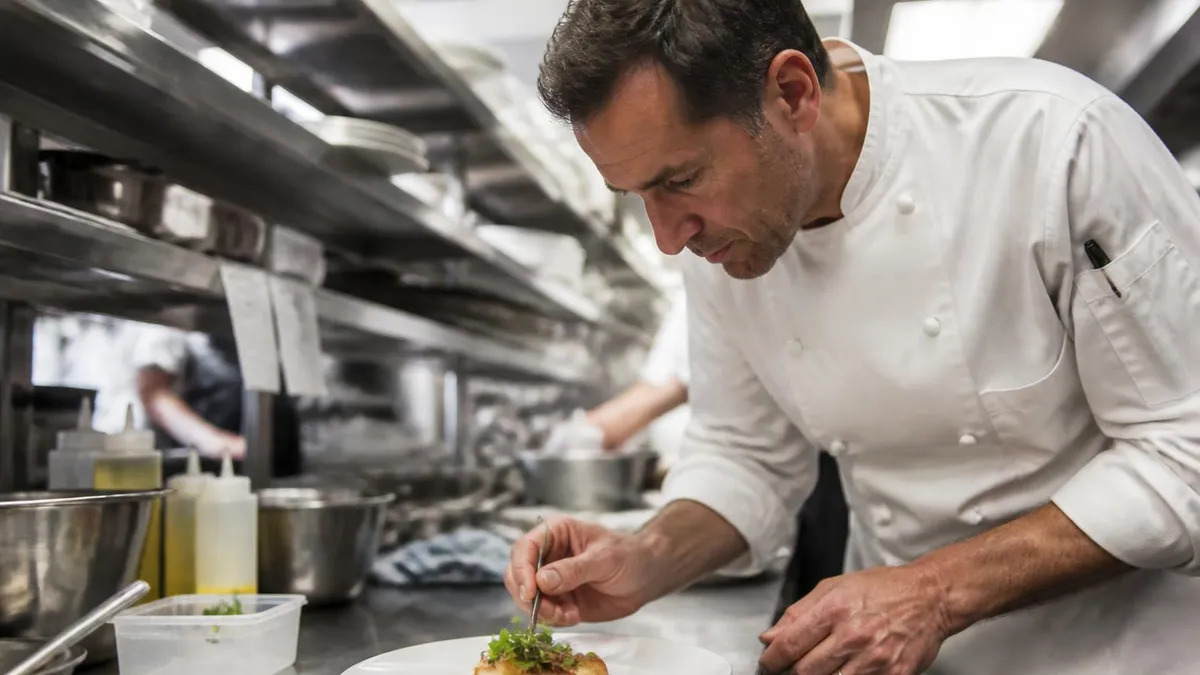
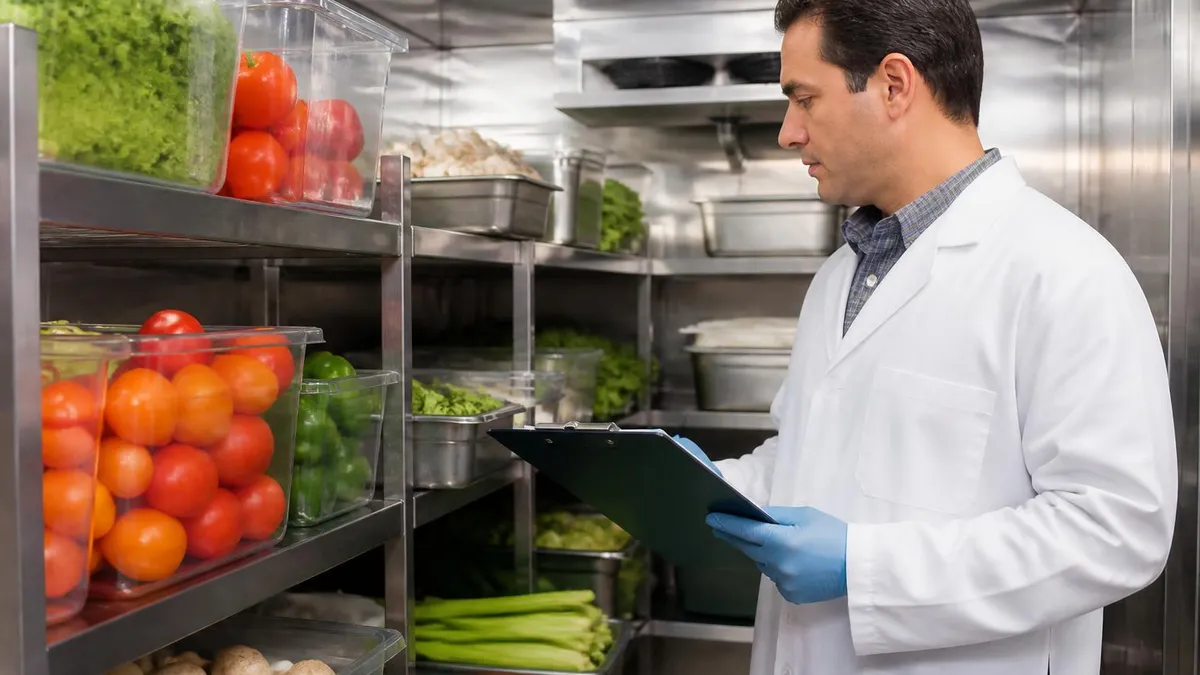
Refrigerated TCS foods must stay at 41°F or colder at all times. This includes deli meats, cut leafy greens, dairy, cooked rice, and prepared salads. Walk-in coolers should be set to 38°F to maintain product at 41°F.
Cooked TCS foods being held for service must remain at 135°F or hotter. Steam tables, soup wells, and warming drawers must be checked at least every four hours and ideally every two hours using a calibrated thermometer.
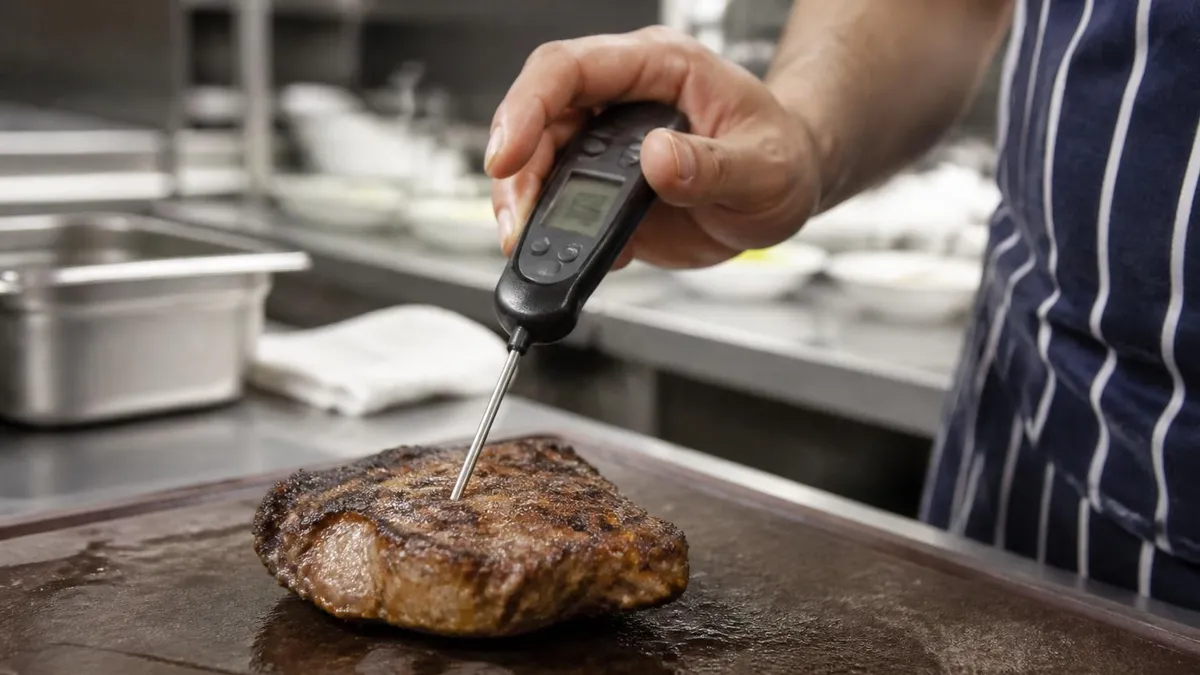
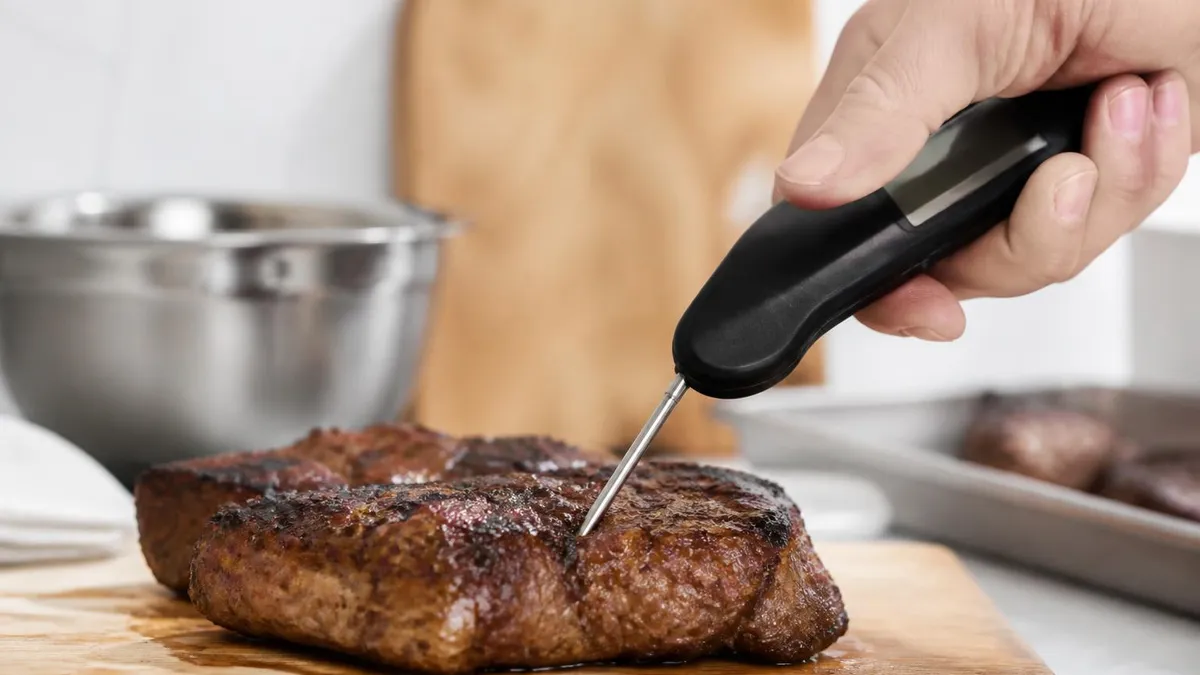
Different foods require different internal cooking temperatures: 135°F for fruits and vegetables, 145°F for whole cuts of beef and fish, 155°F for ground meats, and 165°F for poultry, stuffed dishes, and reheated leftovers.
Previously cooked TCS food being reheated for hot holding must reach 165°F internal temperature within two hours. Reheating in steam tables or warming units alone is not acceptable per ServSafe standards.
Two-stage cooling requires going from 135°F to 70°F within two hours, then from 70°F to 41°F within four more hours. Total cooling time cannot exceed six hours from start to finish.
The temperature danger zone exists because of microbiology, not arbitrary regulation. Pathogenic bacteria are mesophiles, meaning they grow best at moderate temperatures roughly matching the human body. The sweet spot for most foodborne pathogens is between 70°F and 125°F, which falls squarely within the ServSafe danger zone. At these temperatures, bacterial enzymes function at peak efficiency, reproduction accelerates, and toxin production can begin within hours. Understanding this biology helps you remember why the boundaries exist.
Below 41°F, bacterial growth slows dramatically. Most pathogens cannot multiply meaningfully at refrigerator temperatures, though they do not die. Cold is a pause button, not a kill switch. This is why ServSafe emphasizes that refrigeration extends shelf life but never makes already-contaminated food safe. The same logic applies above 135°F: heat denatures the proteins bacteria need to reproduce, but spores of organisms like Clostridium perfringens and Bacillus cereus can survive cooking and germinate as food cools through the danger zone.
The exam loves to test edge cases here. Questions often describe a food sitting at 50°F or 130°F and ask whether it is safe. The answer depends on time. ServSafe uses a cumulative four-hour rule for TCS foods exposed to danger zone temperatures: once the total time in the zone exceeds four hours, the food must be discarded regardless of how the time accumulated. Two hours during prep plus three hours during holding equals five total hours, which fails the rule even though no single exposure exceeded the limit.
TCS stands for Time/Temperature Control for Safety, and the list includes meat, poultry, seafood, dairy, eggs, cooked rice, cooked beans, cut tomatoes, cut leafy greens, cut melons, sprouts, untreated garlic-in-oil mixtures, and tofu. Memorizing this list is essential because the danger zone rules apply specifically to these foods. Non-TCS items like dry pasta, whole produce, bread, and shelf-stable canned goods do not require the same temperature controls because they lack the moisture, protein, or pH conditions bacteria need to thrive.
Another biological factor worth knowing is the FAT TOM acronym, which ServSafe uses to teach the six conditions bacteria need to grow: Food, Acidity, Temperature, Time, Oxygen, and Moisture. Temperature and time are the two factors a food handler can most directly control, which is why the danger zone framework dominates the curriculum. You cannot easily change a food's pH or moisture mid-service, but you can absolutely monitor a thermometer and a timer.
The danger zone also matters because of toxin production. Some bacteria, like Staphylococcus aureus, produce heat-stable toxins that survive cooking. Once these toxins are in food, reheating to 165°F will kill the bacteria but not destroy the toxin. This is why preventing growth in the first place is more important than relying on cooking to fix mistakes. ServSafe-trained managers emphasize prevention over remediation throughout their kitchens, and the exam reflects this philosophy heavily.
Finally, the danger zone interacts with cross-contamination prevention, a topic you will see tested alongside temperature questions. Even properly temperature-controlled food becomes unsafe if contaminated by raw meat juices, dirty hands, or unsanitized surfaces. Earning your servsafe certificate requires understanding that temperature is necessary but not sufficient for food safety. The full framework includes hygiene, sanitation, allergen awareness, and supplier controls working together.
ServSafe Practice Test Questions
Prepare for the ServSafe Food Safety Practice Test exam with our free practice test modules. Each quiz covers key topics to help you pass on your first try.
ServSafe Foodborne Illnesses and Allergens
ServSafe Exam Questions covering Foodborne Illnesses and Allergens. Master ServSafe Test concepts for certification prep.
ServSafe Personal Hygiene and Health
Free ServSafe Practice Test featuring Personal Hygiene and Health. Improve your ServSafe Exam score with mock test prep.
ServSafe Preventing Cross-Contamination
ServSafe Mock Exam on Preventing Cross-Contamination. ServSafe Study Guide questions to pass on your first try.
ServSafe Safe Food Handling Practices
ServSafe Test Prep for Safe Food Handling Practices. Practice ServSafe Quiz questions and boost your score.
ServSafe Alcohol Test - Primary and Advanced
ServSafe Questions and Answers on Alcohol Test - Primary and Advanced. Free ServSafe practice for exam readiness.
ServSafe Cleaning and Sanitizing Procedures
ServSafe Mock Test covering Cleaning and Sanitizing Procedures. Online ServSafe Test practice with instant feedback.
ServSafe Food Contamination and Allergens
Free ServSafe Quiz on Food Contamination and Allergens. ServSafe Exam prep questions with detailed explanations.
ServSafe HACCP System Implementation
ServSafe Practice Questions for HACCP System Implementation. Build confidence for your ServSafe certification exam.
ServSafe Manager Exam
ServSafe Test Online for Manager Exam. Free practice with instant results and feedback.
ServSafe Proper Personal Hygiene
ServSafe Study Material on Proper Personal Hygiene. Prepare effectively with real exam-style questions.
Time and Temperature Controls Tested on the ServSafe Practice Test
The four-hour rule is the simplest test of whether food has been compromised. Any TCS food held in the temperature danger zone for more than four cumulative hours must be discarded. This is not a one-time exposure limit—it tracks the food's total time in the zone across prep, transport, holding, and service. Smart kitchens use timestamp labels on every prepared container to make tracking objective rather than guesswork.
The exam frequently presents scenarios where food spends an hour at room temperature during prep, then sits in a malfunctioning steam table for three hours. The total exposure equals four hours, which is the cutoff. Any additional minute in the zone requires discarding the product. Students often miss these questions by treating each exposure separately rather than summing them, so always add up every minute described in the scenario before answering.
Memorizing the 41°F–135°F Range: Strengths and Weaknesses of Common Study Methods
- +Single memorable range applies to every TCS food without exceptions
- +Numbers are easy to drill with flashcards and repetition
- +Range matches FDA Food Code language used in most jurisdictions
- +Concept ties directly to cooking, holding, cooling, and reheating questions
- +Visual thermometer posters reinforce the boundaries during shifts
- +Repeated exposure during practice tests cements the numbers permanently
- −Students confuse 41°F with 40°F from older food safety materials
- −135°F is easy to mix up with 145°F cooking minimum for beef
- −Cumulative time tracking requires more than just memorizing the range
- −Some questions phrase the range in Celsius, which trips up American test takers
- −Local health codes may differ slightly, creating real-world confusion
- −Memorization alone fails without understanding why the range matters
Temperature Danger Zone Compliance Checklist for Every Shift
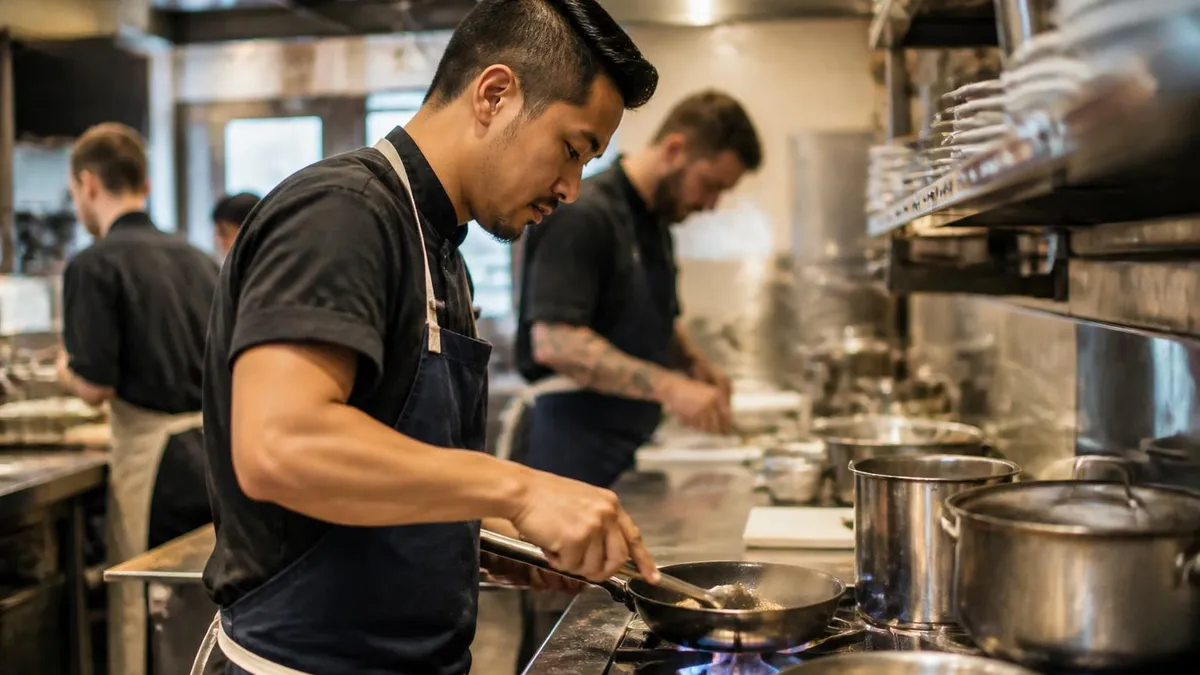
- ✓Calibrate thermometers daily using the ice-point method at 32°F
- ✓Verify walk-in cooler reads 38°F or colder before service starts
- ✓Confirm all hot holding equipment maintains 135°F or hotter
- ✓Label every TCS prep container with date, time, and discard time
- ✓Check hot held food temperatures at minimum every two hours
- ✓Reheat all leftover TCS food to 165°F within two hours
- ✓Use two-stage cooling: 135°F to 70°F in two hours maximum
- ✓Complete cooling from 70°F to 41°F within four additional hours
- ✓Discard any TCS food exceeding four cumulative danger zone hours
- ✓Document all temperature checks in a written log throughout the day
41°F and 135°F—Burn These Into Memory
If you only remember one fact for your ServSafe exam, make it the temperature danger zone of 41°F to 135°F. This range appears in roughly 10–15% of all exam questions, either directly or as the foundation for cooling, reheating, and holding scenarios. Mastering this number first unlocks faster comprehension of every other temperature-related concept on the test.
Cooling and reheating are where most kitchen failures happen, and consequently where the ServSafe exam concentrates many of its toughest questions. The two-stage cooling method is the gold standard, and you must know it perfectly. Stage one requires cooling food from 135°F down to 70°F within two hours. Stage two requires continuing from 70°F down to 41°F within four additional hours. Total cooling time cannot exceed six hours, and if stage one fails the food must be discarded or fully reheated to 165°F before restarting.
The reason for the two-stage approach is bacterial growth speed. The portion of the danger zone between 70°F and 125°F is where bacteria multiply fastest. Spending too long in this hot zone allows pathogens to reach dangerous populations even if final cooling succeeds. By forcing the first stage to be the fastest, ServSafe ensures food spends the minimum possible time in the most dangerous temperatures. This is why a single-stage cooling time of six total hours is not acceptable—the distribution of time within those hours matters.
Practical cooling techniques that pass exam questions include using shallow pans no more than two inches deep, placing containers in ice baths with stirring, using ice paddles inserted into liquids, dividing large batches into smaller portions, and using blast chillers when available. Covering hot food before cooling traps heat and prevents air circulation, which the exam will mark as incorrect. Always vent or leave food uncovered until it reaches 41°F, then cover for storage.
Reheating questions test whether candidates understand the difference between reheating for immediate service versus reheating for hot holding. Food reheated for immediate consumption can technically be served at any temperature the customer requests, though most operations standardize on 165°F for safety. Food reheated for hot holding must reach 165°F internal temperature within two hours, then be held at 135°F or hotter until served. Reheating in steam tables or warming drawers alone is forbidden because these units cannot reliably reach 165°F fast enough.
Thawing is another danger zone topic the exam covers heavily. ServSafe approves four thawing methods: refrigeration at 41°F or below, submerged under running water at 70°F or cooler, microwave with immediate cooking, and as part of the cooking process. Thawing at room temperature is never acceptable because the outer surface enters the danger zone hours before the interior thaws. Questions often present a chef leaving frozen chicken on a counter, expecting candidates to identify the violation.
Hot holding requires equipment that maintains 135°F minimum continuously. Steam tables must be preheated before food goes in, never used to reheat cold food. Soups should be stirred frequently to distribute heat. Lids reduce evaporation but can trap moisture that drips back and causes uneven temperatures. Smart operators check temperatures at the coldest point of each pan, usually the center surface, because heat sources warm edges first.
Cold holding is equally critical. Salads, sandwiches, and desserts sitting on display lines must stay at 41°F. Ice baths can hold cold food temporarily during service but require ice contact halfway up the container sides. Refrigerated display cases must be checked for temperature, not just appearance—a case set to 38°F may actually run at 45°F if doors are opened constantly during busy periods. Use a probe thermometer to verify, not just the unit's digital display.
The biggest single cause of cooling failures is putting large pots of hot food directly into a walk-in cooler. The cooler cannot remove heat fast enough, and the food spends six to twelve hours in the danger zone. Always divide into shallow pans before cooling, and never stack pans during stage one. Health inspectors check this constantly.
Approaching the temperature danger zone section on your ServSafe exam strategically can mean the difference between a comfortable pass and a stressful retake. The exam typically presents danger zone questions in three formats: direct recall (what is the temperature range?), application (this food sat at X°F for Y hours, is it safe?), and scenario-based (a manager observes the following situation, what action should be taken?). Each format requires a slightly different approach. Direct recall is purely memorization. Application requires quick math. Scenarios require understanding the hierarchy of food safety priorities.
For application questions, develop a mental flowchart. First, identify whether the food is TCS. If not, danger zone rules may not apply. Second, identify the temperature mentioned in the question. Is it inside or outside 41°F–135°F? Third, calculate cumulative time in the zone. If under four hours, the food may still be salvageable through immediate cooling or cooking to 165°F. If over four hours, the only correct answer is discard. Walking through this flowchart in your head takes about ten seconds and prevents impulsive wrong answers.
For scenario questions, always prioritize discarding contaminated or compromised food over any other action. The exam writers want to see that you will protect customers even at the cost of waste. If a question offers options like "continue holding," "reheat to 165°F," "add ice," or "discard," choose discard when cumulative time exceeds four hours. When time is under four hours, immediate corrective action like rapid reheating or chilling is typically the right answer. Servsafe candidates who treat the exam like a real safety audit consistently score higher.
Memorization tricks help with the numbers. Some students use "41 and 135, food stays alive" as a rhyme. Others picture a thermometer with red zones above and below the danger band. Visual learners benefit from drawing the thermometer once and labeling every key temperature: 0°F for freezing storage, 32°F for water freezing, 41°F for cold holding maximum, 70°F for room temperature midpoint, 135°F for hot holding minimum, 145°F for whole muscle cooking, 155°F for ground meat, and 165°F for poultry and reheating.
Practice tests are non-negotiable preparation. Take at least three full-length servsafe practice test exams before your real test date, and review every wrong answer in detail. Pay special attention to questions you guessed correctly—those represent knowledge gaps that could fail you on a similarly worded question. Most successful candidates report taking five or more practice tests, with scores improving from the low 70s to the high 80s over a one to two-week study period. The official servsafe.com materials align closely with what the actual exam tests.
On exam day, manage your time carefully. The Food Handler exam gives you 90 minutes for 40 questions, and the Manager exam gives 2 hours for 90 questions. Temperature questions are typically among the fastest to answer once you have the framework memorized, so use them to build momentum at the start. If a question feels confusing, mark it and move on—you can return after answering easier items. Time pressure causes more wrong answers than knowledge gaps for most candidates.
Finally, remember that the ServSafe certification is just the beginning, not the end, of your food safety education. The temperature danger zone framework you memorize for the test becomes the foundation for every operational decision you will make as a culinary professional. Inspectors, insurance auditors, and corporate food safety teams will hold you to these standards for the rest of your career. Treat the studying as career investment, not exam-cramming, and the knowledge will pay dividends long after you receive your certificate in the mail.
For a fuller set of questions on this topic, see our servsafe certification lookup resource.
Practical study habits separate candidates who pass on the first try from those who need retakes. Build a study schedule that dedicates at least 30 minutes per day for two weeks before your exam date. Spend the first week absorbing concepts: read the ServSafe textbook chapters on time and temperature control, watch the official video modules, and write your own notes summarizing each section in your own words. The act of paraphrasing forces deeper processing than passive reading.
The second week shifts to active recall and practice testing. Take a full-length practice test on day one of week two and identify your weakest areas. If temperature questions are your weakness, focus daily drills there. Use spaced repetition apps like Anki to cement specific numbers: 41°F, 135°F, 145°F, 155°F, 165°F. Spaced repetition uses algorithms to show you flashcards just before you would forget them, which is dramatically more efficient than re-reading.
Form a study group if you can. Talking through scenarios with classmates exposes blind spots that solo study misses. One person might explain why immersion thawing requires water under 70°F while another adds the running water requirement. Together you build a more complete understanding than either could alone. Many community colleges and culinary schools host informal study groups specifically for ServSafe candidates—ask your instructor or check local foodservice forums online.
Pay attention to the specific phrasing the exam uses. ServSafe writers are precise about words like "must," "should," "may," and "can." A question asking what a manager "must" do is asking about a regulatory requirement. A question asking what a manager "should" do is asking about best practice. Recognizing this distinction prevents you from choosing a technically optional answer when the question demands a mandatory one, and vice versa.
Hands-on experience supercharges memorization. If you currently work in a foodservice operation, deliberately practice temperature taking, cooling procedures, and reheating during your shifts. Volunteer to do the daily temperature log. Ask your chef or manager to explain why specific procedures exist. Connecting the textbook material to real workflows creates memory anchors that survive test anxiety. Candidates who have never worked in kitchens can shadow at a restaurant or volunteer at community meal programs to build the same intuitions.
The night before the exam, do not cram new material. Instead, review your summary notes, take one final practice test in untimed mode, and get a full night of sleep. Sleep consolidates memory in ways that last-minute studying actively damages. Eat a normal breakfast, arrive at the testing center 30 minutes early, and bring your required identification. For online proctored exams, test your webcam and internet connection the day before to avoid technical surprises. Confidence at the testing station starts with logistical readiness.
If you do not pass on the first attempt, do not panic. Most certifications allow retakes, and many successful food safety managers needed two tries to clear the Manager-level exam. Use your score report to identify weak categories, schedule a retake for two to three weeks out, and use that window for focused targeted study rather than starting over from scratch. Failure on a practice test or even the real exam is feedback, not a verdict on your career potential.
Sample ServSafe Food Safety Practice Questions
Try these questions from our free ServSafe Food Safety practice tests. The correct answer and an explanation follow each question.
Which temperature range is considered the Temperature Danger Zone (TDZ)?
- A. 32°F to 140°F (0°C to 60°C)
- B. 41°F to 135°F (5°C to 57°C)
- C. 40°F to 165°F (4°C to 74°C)
- D. 50°F to 145°F (10°C to 63°C)
Answer: B. 41°F to 135°F (5°C to 57°C)
The Temperature Danger Zone is 41°F to 135°F (5°C to 57°C), where most foodborne pathogens grow most rapidly.
What is the maximum time TCS food can remain in the temperature danger zone during preparation before it must be cooked or refrigerated?
- A. 30 minutes
- B. 1 hour
- C. 2 hours
- D. 4 hours
Answer: C. 2 hours
TCS food should spend no more than a cumulative total of 4 hours in the danger zone, but best practice is to limit prep exposure to 2 hours before cooking or chilling.
What is the maximum time TCS food can remain in the temperature danger zone?
- A. 2 hours total
- B. 4 hours total
- C. 6 hours total
- D. 8 hours total
Answer: B. 4 hours total
TCS food can be in the danger zone for a maximum cumulative total of 4 hours.
What is the maximum amount of time that hot TCS food can be held in the temperature danger zone before it must be thrown out?
- A. 2 hours
- B. 4 hours
- C. 6 hours
- D. 8 hours
Answer: B. 4 hours
According to ServSafe guidelines, TCS (Time/Temperature Control for Safety) food that has been in the temperature danger zone (41°F to 135°F) for four hours or more must be discarded. This is because bacteria can multiply to unsafe levels within this timeframe.
ServSafe Questions and Answers
Pearson VUE Flushing Queens Location ServSafe Exam: Complete Testing Center Guide
ServSafe Knowledge Questions: Core Concepts You Have to Lock In
ServSafe Food Manager Certification: Complete 2026 Study Guide, Exam Prep & Pass Strategy
ServSafe Administrative — Complete Guide (2026)

ServSafe Manager Online Course: What's Included, How Long It Takes, and How to Pass
About the Author

Registered Sanitarian & Food Safety Certification Expert
Cornell University College of Agriculture and Life SciencesThomas Wright is a Registered Sanitarian and HACCP-certified food safety professional with a Bachelor of Science in Food Science from Cornell University. He has 17 years of experience in food safety auditing, regulatory compliance, and foodservice management training. Thomas prepares food industry professionals for ServSafe Manager, HACCP certification, and state food handler examinations.