
BPCC Phlebotomy Program: Complete Training Guide for Aspiring Phlebotomy Technicians
Explore the BPCC phlebotomy program — requirements, costs, certification, and salary. Find phlebotomy classes near me and launch your career. ✅

If you are searching for phlebotomy classes near me in Louisiana, Bossier Parish Community College (BPCC) offers one of the most accessible and career-focused phlebotomy programs in the state. The BPCC phlebotomy program is designed to take students with no prior healthcare experience and turn them into confident, competent phlebotomy technicians ready to enter the workforce in a matter of weeks. With flexible scheduling, affordable tuition, and hands-on clinical training, BPCC stands out as a premier option for anyone serious about entering the healthcare field quickly.
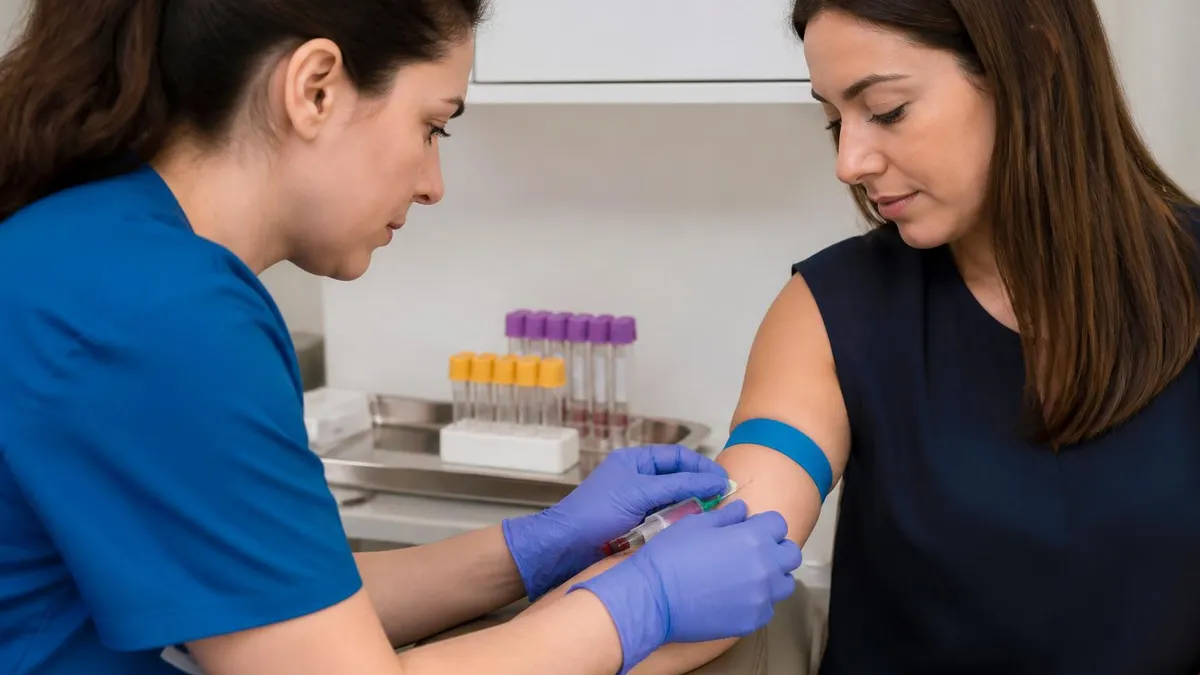
Phlebotomy is the practice of drawing blood from patients for laboratory testing, blood donations, or transfusions. It is one of the most essential functions in any clinical environment, from hospitals and urgent care centers to blood banks and physician offices. As a phlebotomy technician, you serve as the first point of contact for many patients, which means your interpersonal skills and technical accuracy directly impact patient outcomes and overall care quality. BPCC's curriculum prepares students for exactly this responsibility.
The demand for qualified phlebotomy professionals continues to grow nationwide. According to the Bureau of Labor Statistics, employment of phlebotomists is projected to grow faster than average, driven by an aging population that requires more diagnostic testing. This makes pursuing a certified phlebotomy technician credential through a reputable program like BPCC a smart career investment. You gain a nationally recognized qualification while minimizing the time and money spent on training.
One of the biggest advantages of the BPCC phlebotomy program is its affordability. Community college programs consistently cost a fraction of what for-profit schools charge, yet they deliver the same quality of clinical education and pathway to certification. Students who complete the program are eligible to sit for national certification exams through organizations such as the National Healthcareer Association (NHA) or the American Society for Clinical Pathology (ASCP), both of which are widely recognized by employers. You can also explore a online phlebotomy classes option to understand how hybrid learning might work alongside your BPCC coursework.
The BPCC phlebotomy curriculum covers everything from basic anatomy and medical terminology to venipuncture technique, capillary puncture, specimen handling, and laboratory safety. Students learn proper order of draw phlebotomy protocols, patient identification procedures, and documentation requirements — all skills that directly translate to day-one competence in a clinical setting. The program also emphasizes infection control practices, which have become even more critical in the post-pandemic healthcare landscape.
Beyond the clinical skills, the BPCC program prepares students for the real-world challenges of working in healthcare. You will learn how to manage difficult veins, work with pediatric and geriatric patients, handle specimen rejection scenarios, and communicate effectively with nurses and physicians. These soft skills, combined with technical proficiency, are what separate good phlebotomy technicians from great ones. Employers in the Shreveport-Bossier area and across Louisiana actively recruit BPCC graduates because of the program's strong reputation for producing work-ready professionals.
Whether you are making a career change, entering the workforce for the first time, or looking to add a credential to an existing healthcare role, the BPCC phlebotomy program provides a direct, efficient pathway to employment. This guide covers everything you need to know — from admission requirements and program costs to certification options and career outcomes — so you can make a confident, informed decision about your next step.
BPCC Phlebotomy Program by the Numbers
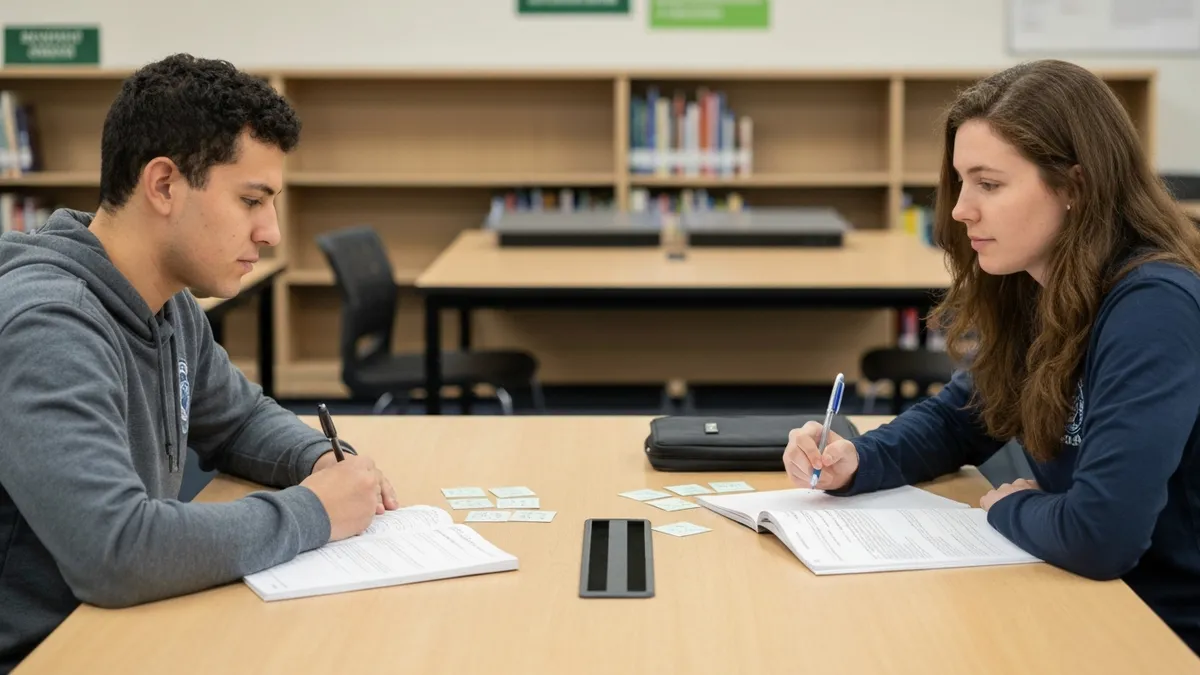
How to Enroll in the BPCC Phlebotomy Program
Meet Basic Admission Requirements
Complete BPCC Application & Register
Attend Orientation & Purchase Supplies
Complete Classroom & Lab Training
Fulfill Clinical Externship Hours
Sit for National Certification Exam
The BPCC phlebotomy curriculum is structured to give students a comprehensive foundation in both the science and the practical skills of blood collection. In the first phase of the program, students spend significant time understanding human anatomy, particularly the venous system. Knowing where veins are located, how they behave under different conditions, and why certain sites are preferred over others is fundamental knowledge that makes every subsequent clinical skill easier to master. Medical terminology is integrated throughout the coursework, ensuring students can read orders, document procedures, and communicate with clinical teams accurately from the start.
A significant portion of the classroom curriculum focuses on specimen handling and laboratory procedures. Students learn how to properly label, store, and transport blood specimens to preserve sample integrity. They study the consequences of pre-analytical errors — such as hemolysis, contamination, or improper tube selection — and develop habits that prevent those errors from occurring. Understanding the order of draw phlebotomy is a core competency that students master through repetition and testing, since drawing tubes in the wrong sequence can cross-contaminate additives and invalidate laboratory results entirely.
Infection control and safety occupy a major portion of the BPCC phlebotomy program. Students learn OSHA bloodborne pathogen standards, proper personal protective equipment (PPE) usage, sharps disposal protocols, and hand hygiene requirements. These are not optional soft skills — they are regulatory requirements that every phlebotomy technician must follow in every clinical setting. BPCC instructors are experienced healthcare professionals who model best practices and hold students accountable to clinical standards from day one of lab training.
The program also covers therapeutic phlebotomy, a specialized procedure in which blood is removed from a patient to treat certain medical conditions such as hemochromatosis or polycythemia vera. While this is an advanced skill that not all entry-level phlebotomists perform regularly, having a conceptual understanding of it makes students more versatile and better prepared for settings like hematology clinics or specialized treatment centers. BPCC's curriculum is designed to produce well-rounded professionals, not just technicians who can handle routine draws.
Patient communication is another curriculum focus that sets BPCC graduates apart. Phlebotomy technicians interact with patients who are often anxious, in pain, or medically fragile. Learning how to introduce yourself professionally, explain the procedure in plain language, obtain verbal consent, and manage a patient who becomes faint or distressed are skills that take practice. BPCC uses role-playing exercises and supervised clinical encounters to help students develop the calm, confident bedside manner that healthcare employers expect. You can also check out free phlebotomy classes near me resources for supplemental learning opportunities while enrolled.
Capillary puncture technique is covered alongside venipuncture, giving students the ability to perform fingersticks and heelsticks for point-of-care testing. This is particularly important for students who plan to work in pediatric settings, nursing homes, or clinics where full venipuncture may not always be practical or possible. BPCC lab sessions give students repeated practice on simulation arms and, under close supervision, on classmates, building muscle memory and confidence before clinical externship begins.
By the time students complete the classroom and lab phases of the BPCC phlebotomy program, they are ready to enter their clinical externship with a solid technical foundation and professional habits already in place. The externship is not a training exercise — it is real work in a real healthcare facility, and BPCC students consistently receive positive feedback from their clinical supervisors. This strong track record is one reason why local hospitals and clinics prioritize BPCC graduates when filling open phlebotomy technician positions in the Shreveport-Bossier metro area.
Phlebotomy Certification Options After BPCC
The National Healthcareer Association (NHA) offers the Certified Phlebotomy Technician (CPT) credential, which is one of the most widely recognized certifications in the United States. The NHA CPT exam consists of 100 scored questions covering blood collection, specimen processing, safety, and patient interaction. BPCC graduates who complete the required clinical hours are fully eligible to sit for this exam, and many students choose the NHA because employers throughout Louisiana and the broader South actively list it as a preferred credential in job postings.
Preparing for the NHA CPT exam is straightforward when you combine your BPCC coursework with dedicated practice testing. The exam is computer-based and can be scheduled at a Pearson VUE testing center near you. The passing score is a scaled score of 390 out of 500, and most well-prepared BPCC graduates achieve this on their first attempt. Taking a nha phlebotomy practice test before exam day is one of the single most effective preparation strategies available to you.

Is the BPCC Phlebotomy Program Right for You?
- +Affordable community college tuition — significantly lower cost than private phlebotomy schools
- +Fast program completion in 8–12 weeks, allowing quick entry into the workforce
- +Hands-on clinical externship at real healthcare facilities in the Shreveport-Bossier area
- +Curriculum prepares students for multiple national certification exams (NHA, ASCP, AMT)
- +Strong employer relationships in the local healthcare market mean better job placement opportunities
- +Program covers both venipuncture and capillary puncture, making graduates versatile
- −Limited program seats mean you must apply early — classes can fill quickly each semester
- −Strict immunization and background check requirements must be met before starting clinical hours
- −No fully online option — hands-on attendance for lab and clinical components is mandatory
- −The program is physically demanding, requiring students to be on their feet for extended periods
- −Certification exam fees are not included in tuition and add $100–$200 in additional costs
- −Entry-level phlebotomy salaries in Louisiana may be lower than the national average in some metro areas
Pros and Cons at a Glance
| Pros | Cons |
|---|---|
| Affordable community college tuition — significantly lower cost than private phlebotomy schools | Limited program seats mean you must apply early — classes can fill quickly each semester |
| Hands-on clinical externship at real healthcare facilities in the Shreveport-Bossier area | Strict immunization and background check requirements must be met before starting clinical hours |
| Curriculum prepares students for multiple national certification exams (NHA, ASCP, AMT) | No fully online option — hands-on attendance for lab and clinical components is mandatory |
| Strong employer relationships in the local healthcare market mean better job placement opportunities | The program is physically demanding, requiring students to be on their feet for extended periods |
| Program covers both venipuncture and capillary puncture, making graduates versatile | Entry-level phlebotomy salaries in Louisiana may be lower than the national average in some metro areas |
Phlebotomy Certification Exam Prep Checklist
- ✓Complete all BPCC classroom modules and review your notes for anatomy, terminology, and specimen handling.
- ✓Log every venipuncture and capillary stick you perform during externship to document your 100+ procedure count.
- ✓Take at least three full-length timed practice exams before your scheduled certification test date.
- ✓Review the order of draw for common tube types (red, gold, green, lavender, blue) until it is automatic.
- ✓Study OSHA bloodborne pathogen standards and know the steps for a post-exposure incident response.
- ✓Memorize common rejection criteria for specimens — hemolysis, clotting, insufficient volume, wrong tube.
- ✓Practice patient ID verification procedures: two identifiers, date of birth, and medical record number.
- ✓Review therapeutic phlebotomy indications so you can answer clinical scenario questions confidently.
- ✓Register for your chosen certification exam (NHA, ASCP, AMT, or NCCT) at least three weeks before your target date.
- ✓Use official study guides alongside practice tests and focus extra time on any topic where you score below 75%.
Your Clinical Log Is Your Most Important Document
Every national phlebotomy certification body requires documented proof of completed blood draws — typically 100 or more successful venipunctures. Start logging every procedure from day one of your externship using your program's official tracking form, and get your supervisor's signature promptly. A missing or incomplete log can delay your certification application by months, so treat this paperwork with the same care you give the needle.
One of the most common questions prospective students ask before enrolling in the BPCC phlebotomy program is, what is phlebotomy worth as a career in terms of earnings and job security? The answer is encouraging. According to the Bureau of Labor Statistics, the median annual phlebotomy salary in the United States is approximately $40,000 to $42,000, but this figure varies considerably by state, employer type, setting, and years of experience. In Louisiana, entry-level phlebotomy technicians typically start between $30,000 and $36,000 annually, with room to grow as they gain experience and additional certifications.
Experienced phlebotomy technicians with five or more years in the field and certifications from recognized bodies like the ASCP or NHA can earn significantly more, particularly in hospital laboratory settings, specialty clinics, or supervisory roles. Some phlebotomists also increase their earnings by taking on evening, weekend, or on-call shifts that come with differential pay. The combination of base salary and shift differentials can push total compensation well above the entry-level range in a relatively short period of time for motivated professionals.
Geographic location within Louisiana also plays a role in earnings. The Shreveport-Bossier metro area has a strong healthcare economy anchored by major employers like Willis-Knighton Health System, Ochsner LSU Health Shreveport, and Bossier Health Center. These large healthcare networks employ hundreds of phlebotomy technicians and offer competitive compensation packages that include health benefits, retirement plans, and continuing education reimbursement — benefits that significantly increase the total value of a phlebotomy position beyond the base wage.
Career advancement is another important aspect of the phlebotomy salary picture. Many phlebotomy technicians use their credential as a stepping stone into higher-paying allied health roles. Common advancement paths include medical laboratory technician (MLT), medical assistant, or clinical laboratory scientist — all of which pay significantly more and can be pursued through BPCC or other accredited programs with your phlebotomy credential already in hand. Employers often prefer candidates who have clinical experience, so your phlebotomy role becomes a resume asset as you pursue these next steps.
The demand for phlebotomy services is relatively recession-proof, which adds a dimension of job security that many other careers cannot offer. Blood draws are required for routine physicals, pre-surgical workups, chronic disease monitoring, and emergency diagnostics — regardless of the state of the economy. As the US population ages and the prevalence of conditions like diabetes, cardiovascular disease, and cancer continues to rise, the volume of laboratory testing ordered each year will only increase, sustaining demand for skilled phlebotomy technicians well into the future.
For those interested in understanding phlebotomy pay in more granular detail by region and employer type, a dedicated salary comparison tool can be invaluable. You can also review phlebotomy pay data for Louisiana specifically to benchmark what you might expect after completing the BPCC program and earning your certification. This data helps you negotiate compensation confidently during the job search process and set realistic financial expectations for your first year in the field.
Ultimately, the return on investment for the BPCC phlebotomy program is exceptional. With tuition typically under $1,500 and a program completion timeline of just two to three months, you can be employed as a certified phlebotomy technician earning $30,000 or more within six months of starting the program. That payback period is far shorter than most healthcare training programs, making phlebotomy one of the best value credentials available in allied health today.

Most national phlebotomy certification exams require you to apply within a set window after completing your training program — often within one to two years of graduation. Waiting too long to sit for the exam may require you to retake portions of your clinical training to requalify. Schedule your exam as soon as you complete your externship and meet the procedure count requirement, while the material is still fresh.
Understanding what is phlebotomy as a clinical discipline helps students appreciate why the training at BPCC is designed the way it is. Phlebotomy is far more than simply inserting a needle into a vein — it is a precise, patient-centered clinical process that begins before the needle is uncapped and ends only when the specimen is safely delivered to the laboratory. Every step in this process has a rationale rooted in patient safety, sample integrity, and regulatory compliance, and BPCC's curriculum is built to teach all of these steps in the correct sequence and context.
The pre-analytical phase of phlebotomy — everything that happens before the actual blood draw — is where most errors occur in clinical practice. Proper patient identification, correct tube selection, accurate order entry, and appropriate site selection all happen in this phase. BPCC students spend considerable time in classroom and lab sessions practicing these steps until they become automatic, because a single error in the pre-analytical phase can cascade into incorrect laboratory results, misdiagnosis, and patient harm. This attention to process is what distinguishes a trained phlebotomy technician from an untrained one.
The analytical phase includes the blood draw itself, and this is where physical technique matters most. BPCC students practice needle angle, bevel direction, tube insertion timing, and tourniquet release repeatedly in the lab before advancing to clinical settings. Instructors pay close attention to each student's technique and provide corrective feedback in real time. The goal is not just competence but consistency — the ability to perform a clean, efficient draw on a nervous patient with difficult veins under time pressure in a busy clinical environment.
Post-analytical procedures complete the phlebotomy process and are just as important as the draw itself. Proper labeling must occur immediately at the bedside or chair side, with two patient identifiers verified before any tube is marked. Specimens must be transported correctly — some requiring refrigeration, others requiring protection from light, and some needing centrifugation within a specific time window. BPCC's curriculum covers all of these requirements, and students are tested on them both in written exams and practical laboratory assessments throughout the program.
Students who plan to pursue phlebotomy training specialists roles or supervisory positions after gaining initial experience will find that their foundational knowledge from BPCC becomes even more valuable over time. Supervisory phlebotomists are expected to train new staff, audit compliance with specimen collection protocols, troubleshoot rejected specimens, and liaise with laboratory personnel about quality issues. The depth of knowledge gained at BPCC provides the intellectual foundation necessary for these advanced responsibilities.
For students who want to supplement their BPCC coursework with additional resources, there are several excellent options available between class sessions. Review books specifically designed for the NHA CPT or ASCP PBT exams are widely available and cover the same competency domains tested on the certification exams. Online flashcard decks focused on tube additive colors, order of draw, and reference ranges can help reinforce memory during commutes or breaks. The most successful BPCC phlebotomy students consistently report that consistent daily review — even just 20 to 30 minutes — makes a measurable difference in their exam performance.
If you are still evaluating whether the BPCC phlebotomy program is the right fit, consider visiting the campus in Bossier City to speak with an advisor from the Allied Health department. Advisors can answer specific questions about the current semester schedule, tuition payment plans, financial aid options, and clinical site availability. BPCC also periodically holds information sessions for prospective students where you can meet current instructors and hear directly from recent graduates about their experience in the program and their employment outcomes after certification.
Succeeding in the BPCC phlebotomy program requires more than just showing up to class — it demands active engagement, disciplined study habits, and a genuine commitment to developing clinical skills that will follow you throughout your career. Students who approach the program with the mindset of a working professional, rather than a student fulfilling requirements, consistently outperform their peers in both academic assessments and clinical evaluations. Here are the most impactful strategies that BPCC graduates report made the biggest difference in their success.
First, prioritize your attendance without exception. The BPCC phlebotomy program is compact and intensive, which means each class session covers material that builds directly on what came before. Missing a single lab session can leave you behind on a technique that every subsequent session assumes you have mastered. If a conflict arises, contact your instructor in advance, not after the fact, and arrange to make up any hands-on components as quickly as possible. Instructors are far more accommodating with students who communicate proactively.
Second, take your immunization and health documentation requirements seriously and complete them well before the program start date. Students who arrive at orientation still missing a hepatitis B dose or a TB test result risk being barred from clinical placement, which can set back their graduation timeline by an entire semester. Create a checklist of every required document and complete each item at least two weeks before the program begins, giving yourself a buffer for any delays in paperwork processing or scheduling.
Third, practice your venipuncture technique outside of supervised lab hours whenever possible. Many BPCC students form small study groups where they practice on phlebotomy training arms — inexpensive silicone simulators available online — to build hand strength and needle control. The students who arrive at their clinical externship with the most repetitions already logged consistently receive better evaluations from their supervisors, because clinical confidence is a direct product of practice volume.
Fourth, use every certification practice test resource available to you throughout the program, not just in the final week before your exam. Taking short practice quizzes after each classroom module helps you identify knowledge gaps while there is still time to address them through additional study or by asking your instructor for clarification. Students who wait until the last week to begin practice testing often discover gaps too late to fill them adequately before exam day.
Fifth, build relationships with your clinical supervisors and co-workers during your externship. The healthcare field in the Shreveport-Bossier area is a relatively tight-knit professional community, and many BPCC graduates report that their first job offer came directly from their externship site or through a referral from their clinical supervisor. Treat your externship like a month-long working interview, because in many cases, that is exactly what it is. Arrive early, volunteer for tasks beyond your minimum requirements, and demonstrate the kind of initiative and reliability that makes supervisors want to hire you permanently.
Sixth, invest time in understanding the business side of phlebotomy — billing codes, insurance requirements, and specimen rejection consequences. While this is not heavily tested on the certification exam, this knowledge makes you immediately more valuable to employers who need phlebotomy technicians who understand the downstream impact of their work. Asking your clinical supervisor to explain why a specimen was rejected or how a specific order gets processed through the laboratory system demonstrates professional curiosity that employers consistently describe as one of the most attractive qualities in a new hire.
Finally, once you pass your certification exam, do not treat your credential as a finish line. Certification bodies require continuing education hours for recertification every two to three years, and the phlebotomy field continues to evolve with new technology, updated protocols, and changing regulatory requirements. Building a habit of continuous learning from day one of your career — whether through professional association memberships, online courses, or employer-sponsored training — is what separates phlebotomy technicians who stay in entry-level roles from those who advance into supervisory, educational, or specialized clinical positions.
Sample Phlebotomy Practice Questions
Try these questions from our free Phlebotomy practice tests. The correct answer and an explanation follow each question.
Which organization specifically represents the interests of phlebotomy technicians in the UK?
- A. American Society for Clinical Pathology
- B. Association of Phlebotomy Technicians
- C. National Phlebotomy Association
- D. British Institute of Biomedical Science
Answer: B. Association of Phlebotomy Technicians
The Association of Phlebotomy Technicians (APT) is the professional body specifically dedicated to representing phlebotomists in the UK.
How many continuing education units (CEUs) must NHA-certified phlebotomy technicians complete before renewing their certification?
- A. 10 CEUs
- B. 15 CEUs
- C. 20 CEUs
- D. 25 CEUs
Answer: A. 10 CEUs
NHA CPT holders must complete 10 CEUs every two years to maintain their certification.
How should used phlebotomy needles be disposed of immediately after removal from the patient?
- A. Recap the needle using the two-handed technique and place in regular trash
- B. Place directly into an approved sharps container without recapping
- C. Bend or break the needle before disposal
- D. Place in a labeled biohazard bag for later transport to sharps disposal
Answer: B. Place directly into an approved sharps container without recapping
OSHA standards require immediate disposal of used needles into an approved sharps container without recapping, as recapping is the leading cause of needlestick injuries among healthcare workers.
Which ASCP certification is specifically designed for phlebotomy technicians who have completed an accredited phlebotomy program?
- A. MLT(ASCP)
- B. PBT(ASCP)
- C. MLS(ASCP)
- D. CLSup(ASCP)
Answer: B. PBT(ASCP)
PBT(ASCP) stands for Phlebotomy Technician certified by the American Society for Clinical Pathology.
Phlebotomy Questions and Answers
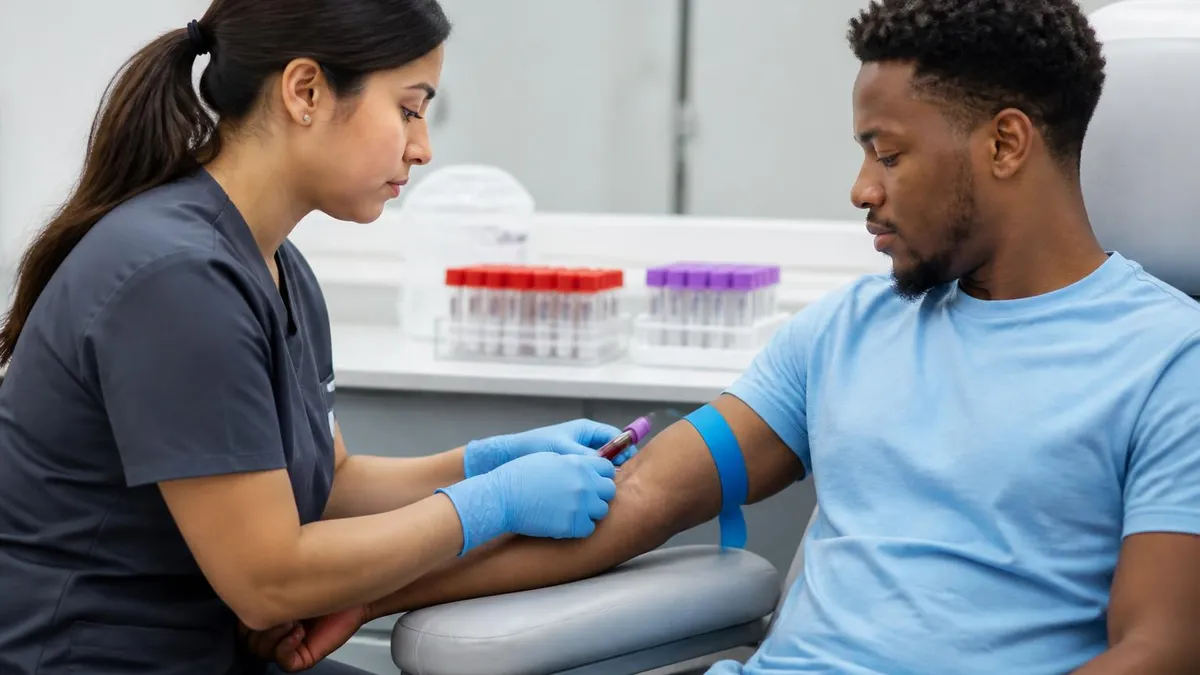
Phlebotomy Training Near Me 2026: Programs, Cost & Certification Guide
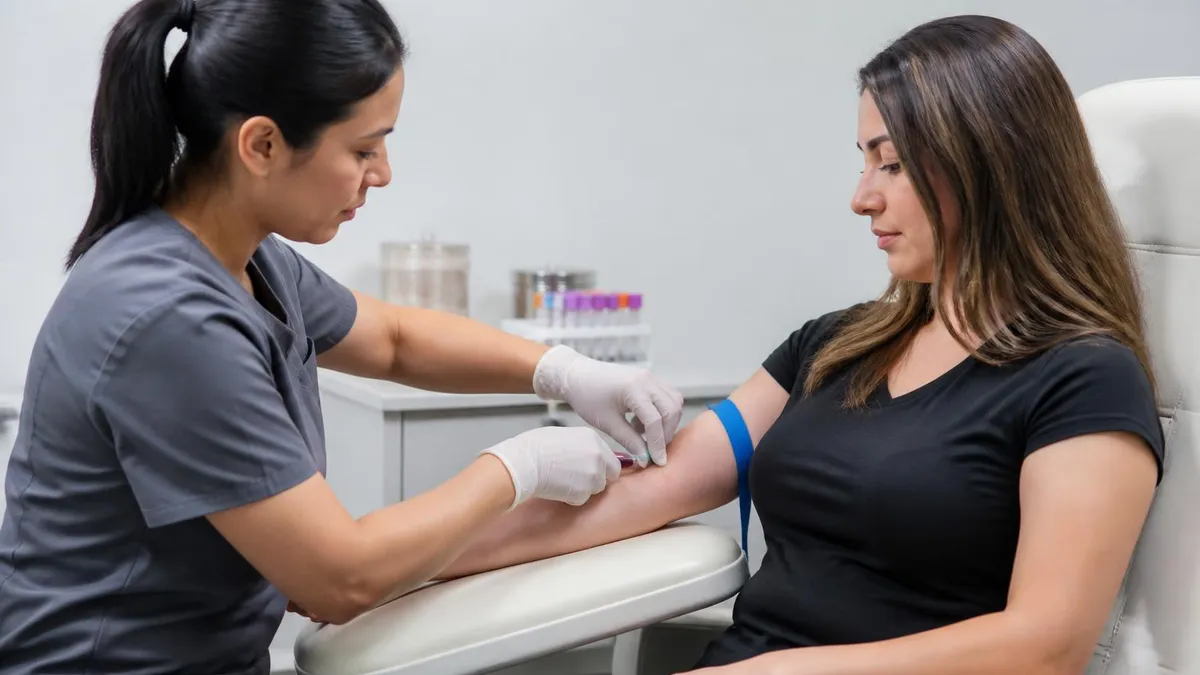
Phlebotomy Technician Program: Complete Training Guide, Curriculum, Cost, Duration, and Career Outcomes
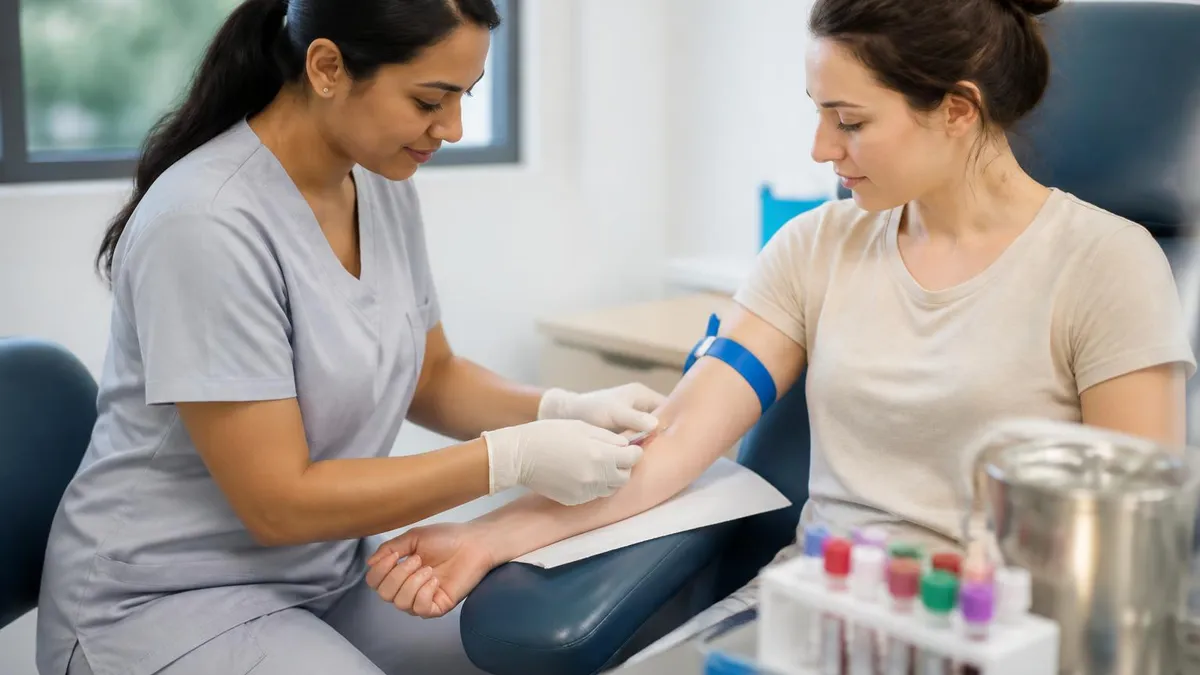
Phlebotomy Program Guide: Length, Cost, Accreditation, Outcomes
Phlebotomy Schools Near Me: How to Choose the Right Training Program in 2026

Phlebotomy Training Academy — Complete Guide (2026)
About the Author

Registered Nurse & Healthcare Educator
Johns Hopkins University School of NursingDr. Sarah Mitchell is a board-certified registered nurse with over 15 years of clinical and academic experience. She completed her PhD in Nursing Science at Johns Hopkins University and has taught NCLEX preparation and clinical skills courses for nursing students across the United States. Her research focuses on evidence-based exam preparation strategies for healthcare certification candidates.