
Accredited Phlebotomy Programs: Complete 2026 October Guide to Schools, Certification & Career Paths
Find accredited phlebotomy programs near you. Compare costs, certification options, salary data, and training requirements for 2026 October phlebotomy careers. 🏆
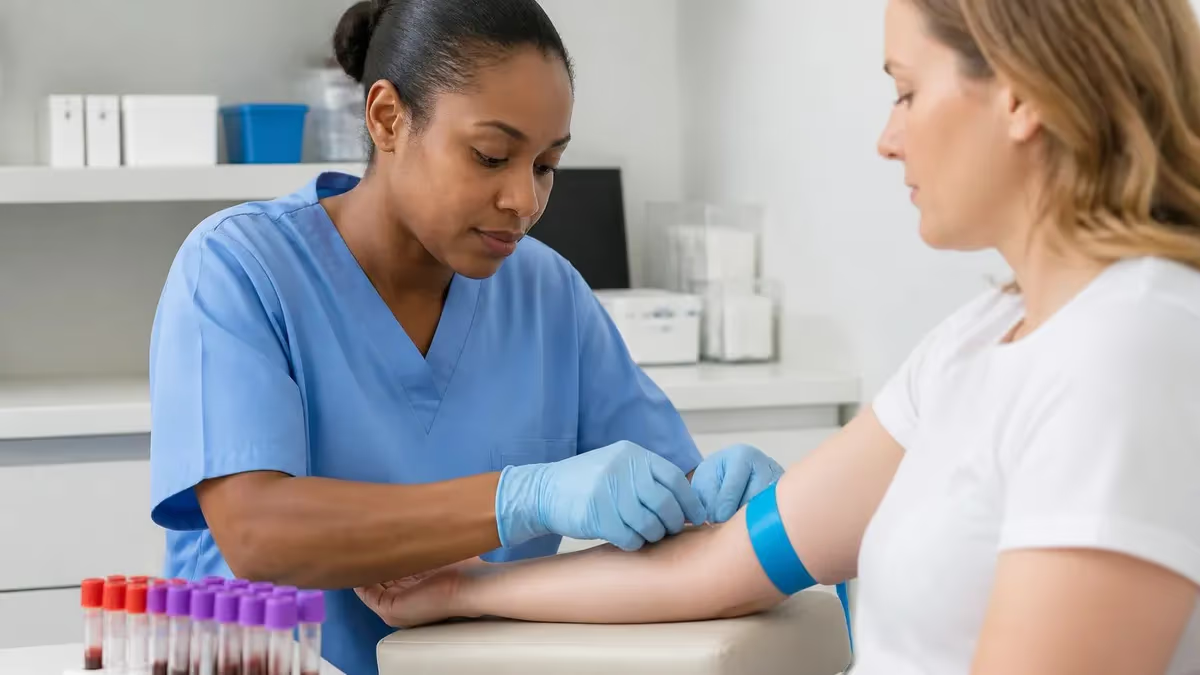
Choosing among accredited phlebotomy programs is the single most important decision you will make when entering this fast-growing healthcare field. Accreditation determines whether your training counts toward national certification, whether employers will recognize your credentials, and whether you qualify to sit for the major exams offered by the NHA, ASCP, NCCT, and AMT. With more than 135,000 phlebotomists working in the United States and the Bureau of Labor Statistics projecting an 8% growth rate through 2032, prospective students searching for phlebotomy classes near me need clear guidance on what separates a legitimate program from a diploma mill.
Accreditation in phlebotomy comes from two primary bodies: the National Accrediting Agency for Clinical Laboratory Sciences (NAACLS) and the American Society for Clinical Pathology (ASCP). NAACLS-approved programs meet rigorous standards for curriculum hours, faculty qualifications, and clinical externship requirements. Most accredited phlebotomy programs require between 80 and 240 didactic hours plus a mandatory clinical externship of 100 hours minimum, during which students must complete at least 100 successful unaided venipunctures and 25 capillary draws on live patients before graduation.
The financial investment varies dramatically by program type. Community college programs typically cost between $800 and $2,500 for a complete semester-long course, while private vocational schools and hospital-based programs range from $1,000 to $4,000. Online hybrid programs sit in the middle, usually charging $1,200 to $2,800. These figures generally include textbooks, supplies, background checks, drug screening, and the first attempt at a national certification exam, though some programs charge separately for these items.
A common misconception is that any phlebotomy course leads to employment. In reality, only graduates of accredited programs qualify for the most respected certifications and the higher-paying hospital positions. States like California, Louisiana, Nevada, and Washington legally require state-recognized certification before you can perform blood draws, and these states only accept training from approved programs. Even in unregulated states, employers increasingly screen out applicants without accredited training because liability insurance carriers prefer credentialed staff.
The phlebotomy technician role has evolved significantly over the past decade. Modern accredited programs now include training in point-of-care testing, electronic medical records, specimen processing, and basic laboratory information systems. Students learn not only the mechanics of venipuncture but also patient identification protocols, chain-of-custody procedures, infection control standards under OSHA, and the emerging area of mobile phlebotomy services that bring blood collection directly to patients at home.
This comprehensive guide walks you through every aspect of selecting, enrolling in, and completing an accredited phlebotomy program. You will learn how to verify accreditation status, compare costs and program lengths, understand the certification landscape, evaluate clinical externship quality, and project realistic salary expectations after graduation. Whether you are a high school graduate exploring healthcare careers, a career changer seeking faster entry into medicine, or an existing medical professional adding phlebotomy skills, the information here will help you make an evidence-based decision.
We will also address frequently overlooked topics: the differences between national certifications, the role of continuing education in salary growth, the realities of working night shifts and weekends, and the pathway from phlebotomy into broader medical laboratory science. By the end, you will have everything needed to enroll confidently in a program that opens doors rather than closing them.
Accredited Phlebotomy Programs by the Numbers

Program Structure & Accreditation Requirements
The gold standard for phlebotomy training. NAACLS-approved programs undergo rigorous review every 7 years covering curriculum, faculty credentials, clinical sites, and student outcomes. Graduates qualify for all major national certifications without additional documentation.
Classroom instruction covering anatomy, physiology, medical terminology, safety protocols, and venipuncture theory. Accredited programs require 40-120 didactic hours depending on certification track, with most quality programs landing at 80-100 hours of structured lecture and lab.
Hands-on training at hospitals, clinics, or reference laboratories where students perform supervised draws on real patients. Minimum 100 hours and 100 successful venipunctures required by NAACLS, though many top programs require 120+ hours.
Skills evaluations measuring proficiency in venipuncture, capillary collection, specimen labeling, and patient interaction. Accredited programs document competency through observation checklists signed by qualified instructors, creating a portfolio for employers.
Built-in review covering exam content outlines for major certifying agencies. Quality programs include practice exams, simulated testing conditions, and exam vouchers as part of tuition, dramatically improving first-attempt pass rates.
Selecting the right accredited program requires looking beyond marketing claims and tuition prices. Start by verifying accreditation directly on the NAACLS website (naacls.org) or through the ASCP Board of Certification approved programs list. A program that claims to be "accredited" without naming a specific accrediting body is a major warning sign. Legitimate programs proudly display their NAACLS approval number and renewal date on their websites. Also check whether the program is approved in your specific state, since California, Washington, and several others maintain additional state-level approval requirements beyond federal accreditation.
Geographic accessibility matters more than students often realize. Even if an online program seems convenient, you will still need to complete clinical externship hours in person at an affiliated hospital or laboratory. Before enrolling, ask the program for a list of clinical sites within commuting distance of your home. Some programs partner with major health systems like HCA, Quest Diagnostics, or LabCorp, which can lead directly to job offers upon graduation. Programs without strong clinical partnerships often leave students scrambling to find their own externship placements.
Program length should align with your life circumstances and career timeline. Traditional semester-long community college programs run 16 weeks and work well for students balancing other commitments. Accelerated programs at private schools compress the same content into 4-8 weeks of intensive full-time study, ideal for career changers who need to enter the workforce quickly. Evening and weekend programs serve working adults but typically extend over 5-6 months. Whatever the format, ensure the total contact hours meet your target certification's requirements.
Faculty qualifications directly affect training quality. Lead instructors in accredited programs should hold current certifications themselves, typically as Medical Laboratory Scientists (MLS), Medical Technologists (MT), or certified phlebotomy instructors with at least 3-5 years of clinical experience. Ask about instructor-to-student ratios in the lab; the best programs maintain ratios of 1:6 or better during venipuncture practice to ensure each student receives adequate hands-on coaching. Cattle-call programs with 30 students per instructor produce graduates who lack confidence at the chairside.
Equipment and lab facilities reveal a program's commitment to quality. Modern accredited programs use phlebotomy training arms with replaceable vein systems, real evacuated tube systems from current manufacturers (BD Vacutainer, Greiner VACUETTE), and simulated lab information systems matching what students will encounter at work. Programs still using outdated equipment from the 1990s or relying solely on practice on classmates without supervised arm models are cutting corners that affect your skill development. Pursuing phlebotomy certification near me means investigating these details before signing enrollment paperwork.
Job placement statistics provide objective evidence of program quality. Reputable accredited programs publish their three-year graduation rates, certification exam pass rates, and employment rates within six months of graduation. Look for programs with graduation rates above 75%, exam pass rates above 80%, and employment rates above 70%. Programs that refuse to share these numbers or that quote vague "high placement" without specifics may be hiding poor outcomes. The NAACLS website actually publishes these outcome data for approved programs, making verification straightforward.
Cost transparency separates ethical programs from predatory ones. Quality accredited programs provide itemized cost breakdowns including tuition, lab fees, books, supplies, scrubs, background checks, immunization documentation, drug screening, certification exam fees, and any additional clinical site fees. Hidden fees that emerge mid-program are a hallmark of for-profit schools to avoid. Federal financial aid eligibility through FAFSA is available at most accredited community college programs and some private institutions, while workforce development grants from your state may cover full tuition for qualifying career changers.

Phlebotomy Practice Test Questions
Prepare for the Phlebotomy Test exam with our free practice test modules. Each quiz covers key topics to help you pass on your first try.
Phlebotomy American Medical Certification ...
Phlebotomy Exam Questions covering American Medical Certification Association Phlebotomy. Master Phlebotomy Test concepts for certification prep.
Phlebotomy American Medical Technologists ...
Free Phlebotomy Practice Test featuring American Medical Technologists Phlebotomy. Improve your Phlebotomy Exam score with mock test prep.
Phlebotomy American Society for Clinical P...
Phlebotomy Mock Exam on American Society for Clinical Pathology Phlebotomy. Phlebotomy Study Guide questions to pass on your first try.
Phlebotomy Association of Phlebotomy Techn...
Phlebotomy Test Prep for Association of Phlebotomy Technicians. Practice Phlebotomy Quiz questions and boost your score.
Phlebotomy National Center for Competency ...
Phlebotomy Questions and Answers on National Center for Competency Testing Phlebotomy. Free Phlebotomy practice for exam readiness.
Phlebotomy National Healthcareer Associati...
Phlebotomy Mock Test covering National Healthcareer Association Phlebotomy. Online Phlebotomy Test practice with instant feedback.
Phlebotomy Order of Draw and Additives
Free Phlebotomy Quiz on Order of Draw and Additives. Phlebotomy Exam prep questions with detailed explanations.
Phlebotomy Legal and Ethics
Phlebotomy Practice Questions for Phlebotomy Legal and Ethics. Build confidence for your Phlebotomy certification exam.
Phlebotomy Safety and Infection Control
Phlebotomy Test Online for Safety and Infection Control. Free practice with instant results and feedback.
Phlebotomy Special Collection Procedures
Phlebotomy Study Material on Special Collection Procedures. Prepare effectively with real exam-style questions.
Phlebotomy Specimen Processing and Handling
Free Phlebotomy Test covering Specimen Processing and Handling. Practice and track your Phlebotomy exam readiness.
Phlebotomy Test Arterial Blood Gas Collection
Phlebotomy Exam Questions covering Test Arterial Blood Gas Collection. Master Phlebotomy Test concepts for certification prep.
Phlebotomy Test Capillary and Dermal Puncture
Free Phlebotomy Practice Test featuring Test Capillary and Dermal Puncture. Improve your Phlebotomy Exam score with mock test prep.
Phlebotomy Test Pediatric Blood Collection
Phlebotomy Mock Exam on Test Pediatric Blood Collection. Phlebotomy Study Guide questions to pass on your first try.
Phlebotomy Test Phlebotomy Anatomy and Phy...
Phlebotomy Test Prep for Test Phlebotomy Anatomy and Physiology. Practice Phlebotomy Quiz questions and boost your score.
Phlebotomy Test Phlebotomy Exam Simulation
Phlebotomy Questions and Answers on Test Phlebotomy Exam Simulation. Free Phlebotomy practice for exam readiness.
Phlebotomy Test Phlebotomy Patient Identif...
Phlebotomy Mock Test covering Test Phlebotomy Patient Identification and Communication. Online Phlebotomy Test practice with instant feedback.
Phlebotomy Test Point of Care Testing
Free Phlebotomy Quiz on Test Point of Care Testing. Phlebotomy Exam prep questions with detailed explanations.
Curriculum Components in Phlebotomy Training Specialists Programs
Classroom instruction in accredited programs covers human anatomy and physiology with emphasis on the circulatory system, vein and artery identification, and the locations of antecubital fossa structures. Students master medical terminology, abbreviations used in laboratory requisitions, and the metric system for specimen volume calculations. Coursework also addresses healthcare law including HIPAA privacy requirements, informed consent procedures, scope of practice limitations, and documentation standards that protect both patient and practitioner.
Safety training forms a substantial portion of theory hours. Students learn OSHA Bloodborne Pathogens Standard requirements, proper personal protective equipment selection, post-exposure incident protocols, and sharps disposal regulations. Infection control covers hand hygiene per CDC guidelines, transmission-based precautions for isolation patients, and disinfection of work surfaces between patients. These foundational concepts prepare students for the safety-focused questions that dominate certification exams from NHA, ASCP, and NCCT.
Accredited vs Non-Accredited Programs: Honest Comparison
- +Graduates qualify for all major national certifications including NHA, ASCP, AMT, and NCCT
- +Employers recognize accredited credentials and prioritize these candidates during hiring
- +Eligible for federal financial aid through FAFSA at most community college programs
- +Standardized curriculum ensures consistent skill development and exam readiness
- +Clinical externships provide real patient experience that builds employment-ready competency
- +Higher first-attempt certification pass rates averaging 80-90% versus 50-60% for non-accredited
- +Required by law in California, Washington, Nevada, and Louisiana for legal practice
- −Longer program duration typically 8-16 weeks versus 2-4 weeks for unaccredited courses
- −Higher upfront cost ranging from $1,000 to $4,000 versus $300-700 for weekend workshops
- −Stricter attendance requirements with most programs allowing only 1-2 absences
- −Background check and drug screening required, potentially disqualifying some applicants
- −Mandatory immunizations including Hepatitis B, MMR, and TDaP add cost and time
- −Limited evening and weekend availability at some community college programs
Pros and Cons at a Glance
| Pros | Cons |
|---|---|
| Graduates qualify for all major national certifications including NHA, ASCP, AMT, and NCCT | Background check and drug screening required, potentially disqualifying some applicants |
| Employers recognize accredited credentials and prioritize these candidates during hiring | Mandatory immunizations including Hepatitis B, MMR, and TDaP add cost and time |
| Eligible for federal financial aid through FAFSA at most community college programs | Limited evening and weekend availability at some community college programs |

Enrollment Checklist for Accredited Phlebotomy Programs
- ✓Verify NAACLS or ASCP accreditation status directly on the official accrediting body website
- ✓Confirm the program is approved in your state if you live in California, Washington, Nevada, or Louisiana
- ✓Request a complete itemized cost breakdown including tuition, fees, books, supplies, and exam vouchers
- ✓Ask for the program's three-year certification pass rate and job placement statistics in writing
- ✓Tour the facility to evaluate skills lab equipment, instructor availability, and class sizes
- ✓Obtain a list of clinical externship sites within reasonable commuting distance of your home
- ✓Complete required immunizations: Hepatitis B series, MMR, varicella, TDaP, and annual flu shot
- ✓Submit to background check and drug screening as required by clinical site partners
- ✓Apply for federal financial aid through FAFSA if attending an accredited community college
- ✓Purchase appropriate scrubs, closed-toe shoes, watch with second hand, and required textbooks
- ✓Schedule your certification exam date 2-4 weeks after program completion while material is fresh
- ✓Begin networking at clinical externship site since 40% of graduates receive offers there
Always check NAACLS.org directly before enrolling
Many for-profit schools claim "accreditation" through obscure or self-created bodies that hold no weight with employers or certification agencies. NAACLS maintains a public database of every approved phlebotomy program at naacls.org. If your prospective program is not listed there, your tuition dollars may not translate into a viable career credential.
Phlebotomy salary expectations vary considerably based on geography, certification level, work setting, and years of experience. The Bureau of Labor Statistics reports a national median annual wage of $41,810 for phlebotomists as of the most recent data, with hourly rates averaging $20.10. However, this median masks substantial variation. Entry-level phlebotomists in rural areas may start at $14-16 per hour, while certified phlebotomists with 5+ years of experience in major metropolitan areas like San Francisco, Boston, and New York frequently earn $26-32 per hour, particularly when working evening or weekend differential shifts.
Geographic location dramatically influences phlebotomy compensation. The highest-paying states include California ($49,800 median), Washington ($48,200), Massachusetts ($47,500), New York ($46,900), and Oregon ($45,800). These states generally have higher costs of living but also stronger union representation and stricter certification requirements that boost wages. Lower-paying states like Mississippi ($31,200), Alabama ($32,400), and West Virginia ($33,100) reflect lower regional healthcare wages overall, though purchasing power may be comparable when adjusted for cost of living differences.
Work setting creates another substantial pay differential. Hospital-employed phlebotomists earn the highest average wages because of comprehensive benefits, shift differentials, and union contracts at many facilities. Reference laboratories like Quest Diagnostics and LabCorp offer competitive base wages with strong benefits but typically lower hourly rates than hospitals. Physician offices and clinics pay the lowest hourly rates but offer predictable Monday-Friday daytime hours that many phlebotomists prefer. Mobile phlebotomy services and plasma donation centers represent niche opportunities with their own pay structures.
Certification level directly affects starting salary and advancement potential. Certified phlebotomists earn 8-15% more than non-certified counterparts performing the same work. Advanced certifications such as the ASCP PBT carry greater prestige and earnings potential than basic technician certifications. Pursuing additional credentials in donor phlebotomy, pediatric collection, or specimen processing can add $2-4 per hour. Many employers offer tuition reimbursement for phlebotomists pursuing advancement to medical laboratory technician (MLT) or medical laboratory scientist (MLS) roles, which pay $50,000-75,000 annually.
Career advancement opportunities extend well beyond traditional phlebotomy. Experienced phlebotomists frequently transition into lead phlebotomist positions supervising teams, laboratory assistant roles processing specimens, donor recruiter positions at blood banks, or training specialist careers educating new phlebotomists. The skills developed in phlebotomy also serve as excellent foundations for nursing school, medical laboratory technology programs, and physician assistant studies. Many healthcare professionals credit their phlebotomy experience as essential preparation for advanced clinical training.
The job market for certified phlebotomists remains strong nationwide. The aging population requires more diagnostic testing, the expansion of outpatient services increases demand for skilled blood collection, and the rise of mobile and home health services creates new employment categories. Most graduates of accredited programs receive at least one job offer within 90 days of certification, with many securing positions before they even complete their externship. The combination of low entry barriers, reasonable training duration, and strong demand makes phlebotomy an attractive healthcare entry point.
Looking ahead, automation poses both opportunities and challenges for the profession. While robotic blood draw devices exist in pilot programs, they have not replaced human phlebotomists for routine clinical work due to patient comfort preferences and the complexity of difficult draws. Phlebotomists who develop expertise in difficult populations including pediatric, oncology, and dialysis patients will remain in high demand regardless of technological advances. Continuous learning and adaptability remain the most important predictors of long-term career success in this evolving field.
California requires the Certified Phlebotomy Technician I (CPT1) credential issued by an approved state agency before performing any venipuncture. Washington requires Medical Assistant-Phlebotomist certification. Nevada and Louisiana have similar requirements. Working without proper state credentials in these states is illegal and can result in fines, employer termination, and disqualification from future healthcare licensure. Always verify your state's specific requirements before enrolling.
The certification landscape for phlebotomy includes multiple credentialing bodies, each with distinct eligibility requirements, examination formats, and industry recognition levels. Understanding these differences helps you select the program and credential that best align with your career goals. The most widely recognized certifications include the NHA Certified Phlebotomy Technician (CPT), the ASCP Phlebotomy Technician (PBT), the AMT Registered Phlebotomy Technician (RPT), the NCCT National Certified Phlebotomy Technician (NCPT), and the ACA Certified Phlebotomy Technician credential.
The National Healthcareer Association (NHA) CPT certification is the most popular phlebotomy credential in the United States, with over 50,000 active certified holders. Eligibility requires completion of an accredited training program within the past five years, plus documentation of 30 successful venipunctures and 10 capillary draws. The exam consists of 100 scored multiple-choice questions plus 20 unscored pretest items, administered in a 2-hour computer-based format at PSI testing centers. The certification fee is $135 with biannual renewal requiring 10 continuing education hours and a $79 renewal fee.
The American Society for Clinical Pathology (ASCP) Phlebotomy Technician (PBT) certification is often considered the most prestigious credential in the field, particularly favored by hospital-based employers. ASCP offers multiple eligibility routes including completion of a NAACLS-approved program, completion of an acceptable phlebotomy program plus one year of full-time experience, or one year of full-time phlebotomy experience plus a high school diploma. The exam includes 80 multiple-choice questions over 2 hours, costs $145, and requires participation in the Credential Maintenance Program every three years.
The American Medical Technologists (AMT) Registered Phlebotomy Technician credential serves as an alternative respected by many employers. Eligibility requires completion of an accredited program within four years and clinical practice documentation, or substantial work experience for the experience route. AMT charges $120 for the certification exam, which contains 200 multiple-choice questions delivered in a 2.5-hour testing window. AMT-credentialed phlebotomists must complete continuing education through the STEP program to maintain certification status.
The National Center for Competency Testing (NCCT) National Certified Phlebotomy Technician offers another credentialing pathway accepted by many employers. NCCT requires completion of an approved training program plus 50 successful venipunctures and 10 capillary collections. The exam contains 145 multiple-choice questions over a 3-hour period, with a current cost of $135 and annual renewal requirements. NCCT certification is particularly common among graduates of for-profit vocational schools that partner with NCCT for built-in testing.
Understanding the order of draw phlebotomy protocols is central to passing any of these certification exams. The standardized order prevents cross-contamination between additive tubes and ensures accurate test results. CLSI guidelines specify the order as blood culture bottles first, then light blue citrate tubes, red serum tubes, gold serum separator tubes, green heparin tubes, lavender EDTA tubes, and finally gray oxalate/fluoride tubes. Mastery of this sequence appears on every major certification exam and is essential for clinical competency.
Beyond initial certification, ongoing professional development distinguishes career phlebotomists from those who treat the role as a temporary stop. Pursuing specialty credentials in donor phlebotomy through the American Association of Blood Banks, pediatric collection certifications, or advanced training in therapeutic phlebotomy for conditions like hemochromatosis and polycythemia expands your scope and earning potential. The most successful phlebotomists view initial accredited training as the foundation of a learning journey rather than the endpoint.
Maximizing success in your accredited phlebotomy program requires strategic preparation before, during, and after enrollment. Start preparing 4-6 weeks before classes begin by reviewing basic anatomy, particularly the circulatory system and superficial vein locations. Free resources like Khan Academy's anatomy modules and the American Society for Clinical Laboratory Science website provide excellent preview content. Becoming familiar with medical terminology root words, prefixes, and suffixes through apps like Quizlet or Memrise gives you a significant head start when programs accelerate through these foundational topics.
During the program, treat your daily attendance and active participation as your job. Programs that allow only 1-2 absences mean missing even a single day can jeopardize completion. Arrive 15 minutes early to review previous material and prepare your workspace. Take detailed notes during lectures using the Cornell method, which divides pages into note areas, question prompts, and summary sections. Review notes within 24 hours of each class to consolidate learning, since neuroscience research shows information is forgotten exponentially without timely review.
Skills lab success depends on deliberate practice rather than passive repetition. When working with training arms, set specific objectives for each practice session such as needle angle consistency, tube engagement smoothness, or labeling accuracy. Record videos of yourself performing draws to identify habits invisible during the act itself. Many students develop subtle errors like leaning over the patient, inadequate site palpation, or rushing the tourniquet release that become difficult to correct after they become habits. Self-video review accelerates skill refinement remarkably.
Build strong relationships with your clinical externship preceptors from day one. Arrive early, dress professionally according to facility standards, bring a small notebook for documenting observations, and ask thoughtful questions during downtime. Volunteer for additional tasks like specimen processing or inventory management when your draw quota is met. Preceptors often write letters of recommendation and provide insider information about job openings before they post publicly. Approximately 40% of phlebotomy graduates receive job offers at their externship sites, making relationship building a critical career investment.
Develop test-taking strategies specifically tailored to your chosen certification exam. Purchase the official content outline from your certifying agency and align your study time proportionally to the topic weights. The NHA CPT exam, for instance, devotes 45% to safety, infection control, and equipment, so concentrate study efforts there. Use practice exams from the test maker rather than third-party sources, as these most accurately reflect actual exam difficulty and question structure. Aim for at least 80% on practice exams before scheduling your actual test date.
Manage test anxiety through preparation and proven techniques. Visit the testing center beforehand if possible to familiarize yourself with parking, check-in procedures, and the testing room environment. The night before the exam, avoid cramming new material and focus instead on light review and adequate sleep. On exam day, eat a balanced breakfast emphasizing protein and complex carbohydrates, arrive 30 minutes early, and use box breathing techniques (inhale 4 counts, hold 4, exhale 4, hold 4) during any moments of anxiety during the test itself.
After certification, your professional development should continue immediately. Join the American Society for Phlebotomy Technicians or similar professional organizations to access continuing education resources, networking opportunities, and job boards. Subscribe to industry publications like Medical Laboratory Observer to stay current with evolving best practices, new equipment, and regulatory changes. Set specific career goals including target salary milestones, advanced certifications, and potential transition into related fields like medical laboratory technology. The phlebotomists who advance furthest are those who view certification as a launching point rather than a destination.
Sample Phlebotomy Practice Questions
Try these questions from our free Phlebotomy practice tests. The correct answer and an explanation follow each question.
What is a primary eligibility requirement for the AMCA Phlebotomy Technician Certification exam?
- A. Completion of a formal phlebotomy training program
- B. Bachelor’s degree in a medical-related field
- C. One year of work experience in a non-medical role
- D. Supervisory experience in a clinical laboratory
Answer: A. Completion of a formal phlebotomy training program
To be eligible for the AMCA Phlebotomy Technician Certification exam, candidates must typically complete a formal phlebotomy training program. This requirement ensures they have received comprehensive instruction and practical experience in venipuncture techniques, safety protocols, and specimen handling. This foundational training is crucial for safe and effective practice.
How often must the AMCA Phlebotomy Technician Certification be renewed?
- A. Every 1 year
- B. Every 2 years
- C. Every 3 years
- D. Every 5 years
Answer: B. Every 2 years
The AMCA Phlebotomy Technician Certification (PTC) requires renewal every two years. To maintain active certification, professionals must typically complete continuing education requirements and pay a renewal fee. This regular renewal process ensures that certified phlebotomists stay updated with current best practices and advancements in the field.
What is the minimum education requirement for AMT’s Registered Phlebotomy Technician (RPT) certification?
- A. Completion of a phlebotomy training program
- B. Associate degree in medical technology
- C. High school diploma only
- D. Bachelor’s degree in health sciences
Answer: A. Completion of a phlebotomy training program
For AMT's Registered Phlebotomy Technician (RPT) certification, the minimum education requirement is the completion of an approved phlebotomy training program. This program must include both theoretical instruction and practical clinical experience. This ensures candidates have the necessary specialized knowledge and hands-on skills for the role.
Which NCCT certification is specifically designed for phlebotomy technicians?
- A. NCCT-PT
- B. NCPT
- C. NCCT-PHL
- D. NPT
Answer: B. NCPT
The NCCT offers the National Certified Phlebotomy Technician (NCPT) credential for phlebotomy professionals.
Phlebotomy Questions and Answers
About the Author

Registered Nurse & Healthcare Educator
Johns Hopkins University School of NursingDr. Sarah Mitchell is a board-certified registered nurse with over 15 years of clinical and academic experience. She completed her PhD in Nursing Science at Johns Hopkins University and has taught NCLEX preparation and clinical skills courses for nursing students across the United States. Her research focuses on evidence-based exam preparation strategies for healthcare certification candidates.