
MRI Technologist: Career Guide, Education, Salary & Certification 2026 September
❓ Become an MRI technologist: education requirements, ARRT vs ARMRIT certification, salary ranges ($55K–$130K+), job outlook, and how long it takes.
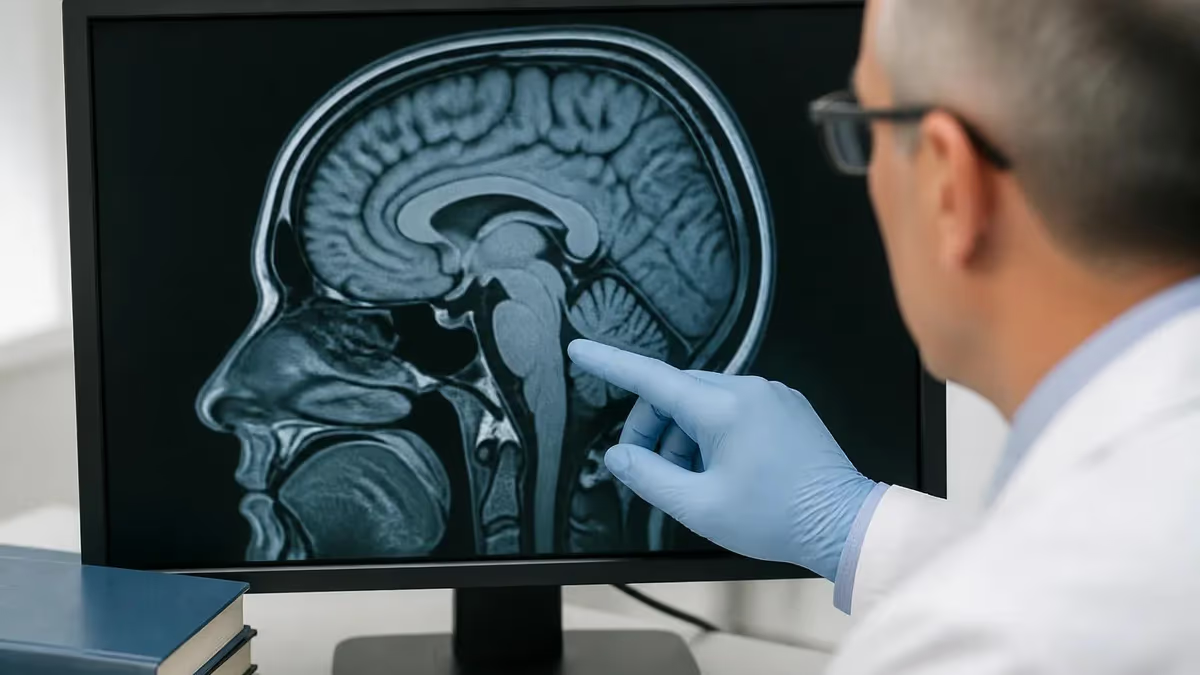
What Is an MRI Technologist?
Roughly 40 million MRI scans are performed in the United States every year — and every single one requires a credentialed MRI technologist at the controls. If you're exploring this career, you're looking at a field with strong job security, above-average pay, and genuine variety in daily work.
An MRI technologist (also called an MRI tech) is a healthcare professional who operates magnetic resonance imaging scanners to produce diagnostic images of the body's internal structures. Unlike a general radiologic technologist — who might work across X-ray, fluoroscopy, and other modalities — an MRI tech specializes specifically in magnetic resonance imaging. The terms "MRI technologist" and "MRI tech" are used interchangeably; there's no meaningful difference between them in practice.
Where the terminology gets murkier is with "radiologic technologist." That's a broader credential covering multiple imaging modalities. Many MRI techs start as radiologic technologists (RT), earning their X-ray certification first, then add MRI as a specialty. Some programs now offer direct-entry MRI tracks, letting students skip the X-ray step entirely — though employer preferences vary.
What unites all MRI technologists is deep expertise in a single imaging modality that relies on powerful magnetic fields and radio waves rather than ionizing radiation. That distinction matters to patients — and it shapes the safety protocols and screening procedures that define your daily workflow.
MRI tech = MRI technologist. Same role, same job. Radiologic technologist is broader — it covers X-ray, CT, fluoroscopy, and MRI. Most MRI techs hold both credentials: RT(R) from ARRT first, then MR specialty. Direct-entry MRI programs skip the RT step, but some hospitals still prefer dual-credentialed techs.
What MRI Technologists Do Every Day
The job description sounds simple on paper: operate an MRI scanner. The reality is considerably more demanding. Before a single image is acquired, you've already done a substantial amount of clinical work.
Patient screening comes first — always. You're checking for contraindications: cardiac pacemakers, cochlear implants, certain aneurysm clips, metallic foreign bodies in the eye, embedded shrapnel. A patient who's been cleared for an MRI in one facility needs to be screened again in yours. This isn't bureaucratic box-checking. Ferromagnetic objects in a strong magnetic field can move, heat, or malfunction, and it's your job to catch anything that shouldn't enter the scanner room.
Once screening is complete, you position the patient on the table, select the appropriate coil (surface coils, body coils, head coils — each optimized for different anatomy), and choose the imaging protocol. Protocol selection is more nuanced than it sounds. A knee protocol differs from a lumbar spine protocol differs from a brain protocol for seizure workup. You're adjusting pulse sequences, slice thickness, field of view, and other technical parameters to produce images that actually answer the clinical question the ordering physician posed.
For some studies, you'll administer gadolinium-based contrast agents intravenously. You do this under radiologist supervision, but you're the one placing the IV, monitoring the patient, and watching for adverse reactions. Significant clinical responsibility.
Image quality review happens before the patient leaves the table. Blurry images, motion artifact, inadequate coverage — those get repeated right then. Beyond scanning, you're maintaining the scanner, documenting studies, communicating with nursing staff about patient prep, and — frequently — talking anxious patients through a process many of them find frightening. Claustrophobia affects a meaningful percentage of MRI patients. Getting a panicking person through a 45-minute brain MRI without sedation requires genuine communication skill, not just technical knowledge.
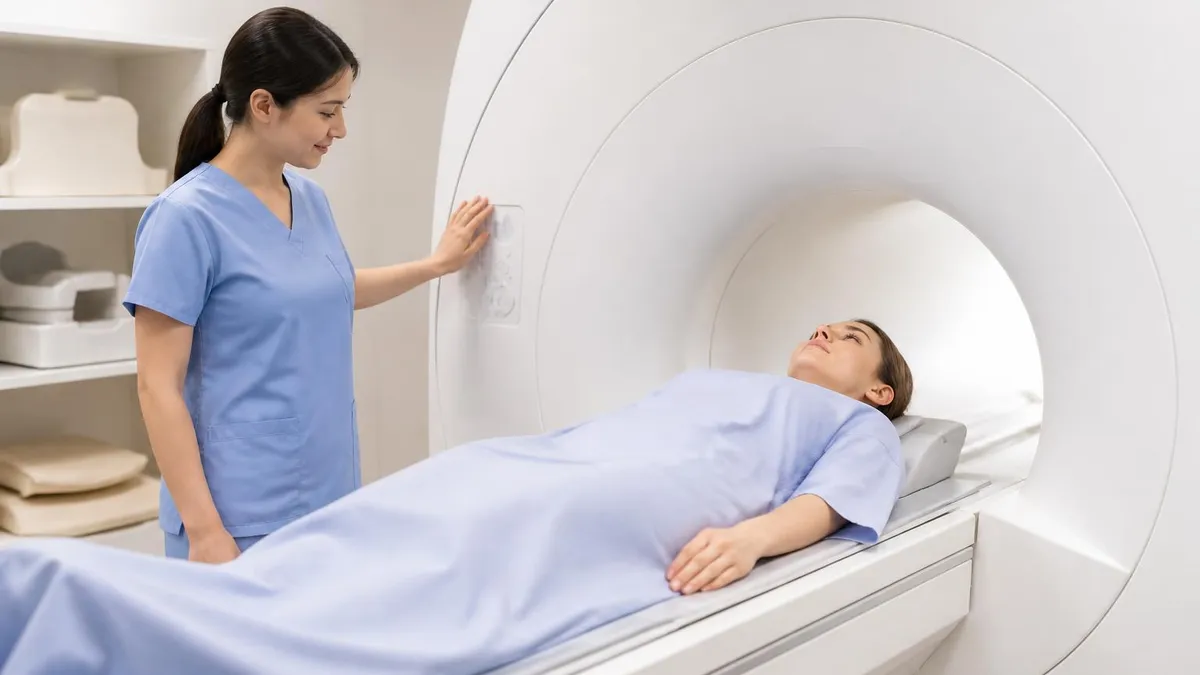
MRI Technologist: Key Statistics
Education Requirements
There are two main paths into MRI technology, and the right one depends on where you're starting and how quickly you want to get into the field.
The most common route starts with an Associate of Applied Science (AAS) in radiologic technology — a two-year program available at community colleges and hospital-based schools across the country. You graduate, pass the ARRT radiography boards, work as an X-ray tech for a year or two, then pursue MRI-specific training through a post-primary program or on-the-job training at an employer who needs MRI techs.
The second path is a Bachelor of Science in radiologic sciences — a four-year degree that covers more clinical science, management concepts, and imaging modalities. Some BS programs include dedicated MRI clinical rotations that can streamline your path to MRI specialty certification.
A third option — growing but still less common — is direct-entry MRI programs. These are associate's or bachelor's programs built specifically around magnetic resonance, skipping radiography entirely. They lead to ARMRIT certification (more on that below) rather than ARRT. The tradeoff: you specialize faster, but some hospital employers still prefer or require ARRT credentials.
Regardless of which educational path you choose, look for programs accredited by the Joint Review Committee on Education in Radiologic Technology (JRCERT). Accreditation matters for certification eligibility — ARRT requires graduation from a JRCERT-accredited program for most candidates. Learning about MRI tech school options in detail — including program length, clinical hour requirements, and what to expect in coursework — can help you pick the right fit before you commit to enrollment.
MRI Tech Education Paths Compared
Duration: 2 years
Where: Community colleges, hospital schools
Leads to: ARRT RT(R) credential, then MR specialty via post-primary program
Best for: Students who want the fastest, most affordable path to imaging careers and don't mind the two-step process to reach MRI specifically
Accreditation: JRCERT required for ARRT eligibility
Certification and Licensure: ARRT vs. ARMRIT
Certification is where MRI technologist credentials get genuinely complicated — and where getting the wrong information early can cost you months of your career timeline.
The ARRT (American Registry of Radiologic Technologists) is the dominant credentialing body in radiologic technology. For MRI, they offer the MR post-primary credential: RT(MR). To earn it, you must first hold a primary ARRT credential in a related field (most commonly radiography — RT(R)) and have at least one year of clinical experience. Then you pass the MR examination.
The ARRT also recently opened an MRI-primary pathway for graduates of ARRT-recognized MRI programs who didn't go through radiography first. This is relatively new, and not all programs qualify — check ARRT's website directly for the current list.
ARMRIT (American Registry of Magnetic Resonance Imaging Technologists) is the alternative credential — a standalone MRI certification that doesn't require prior radiography experience. ARMRIT has been around since 1997 and is accepted by a growing number of employers, particularly imaging centers and physician offices. Hospital systems, however, frequently require ARRT credentials specifically, so research your target market before choosing this path.
State licensure adds another layer. Most states require MRI techs to be licensed, but requirements vary considerably — some states accept any recognized national credential, others specify ARRT only, and a few have their own state-specific exams. Understanding MRI safety protocols is fundamental to both the ARRT and ARMRIT certification exams — zone classifications, contraindication management, and RF heating are all heavily tested domains.
MRI Tech Credential Types at a Glance
Most widely recognized; requires primary ARRT credential (usually radiography) + 1 year experience + MR exam. New MRI-primary pathway available for qualifying program graduates.
Standalone MRI certification; no prior radiography required. Accepted at imaging centers, physician offices, some hospitals. Growing but not universally equivalent to ARRT in all markets.
Required in most US states. Some accept any national credential; others require ARRT specifically. Check your state radiation control board — requirements differ significantly by state.
ARRT requires 24 CE credits every two years for credential maintenance. CE can include seminars, online courses, and manufacturer training on new pulse sequences or scanner platforms.
How Long Does It Take to Become an MRI Technologist?
The honest answer: it depends on which path you take, and "becoming an MRI technologist" means different things at different points in the process.
Via the standard ARRT route — AAS degree plus radiography credential plus MRI specialty — you're looking at approximately 2.5 to 3.5 years from starting school to working as a credentialed MRI tech. Here's the rough breakdown: two years of AAS coursework, three to four months of ARRT exam prep and testing, six to twelve months working as an X-ray tech to meet ARRT's experience requirement for MRI post-primary, then a few more months of MRI-specific study before sitting the MR exam.
Via direct-entry MRI programs, the timeline compresses. A two-year AAS program that feeds directly into ARMRIT certification gets you there faster — potentially working as a credentialed MRI tech within two to two-and-a-half years. But again, employer acceptance of ARMRIT varies by region and setting.
A few things can extend the timeline beyond these estimates. Some ARRT post-primary programs require documented MRI clinical hours on top of the experience requirement — hours you may need to arrange with an employer who has an MRI scanner. Rural areas sometimes make this harder. And ARRT exam scheduling windows may add a month or two on either end.
Standard Path: Start to Credentialed MRI Tech
Year 1–2: AAS in Radiologic Technology
Month 24–28: ARRT Radiography Exam (RT(R))
Month 28–40: Work as Radiologic Technologist
Month 36–42: MRI Post-Primary Program or Self-Study
Month 40–46: ARRT MR Exam
MRI Technologist Salary: What to Expect
The Bureau of Labor Statistics puts median MRI technologist pay at $77,100 per year — but that median hides a wide range shaped by experience, location, setting, and whether you're willing to travel.
Entry-level MRI techs, especially those working at their first imaging center job, often start in the $55,000–$65,000 range. Within three to five years of MRI-specific experience, most techs land in the $70,000–$85,000 band. Senior or lead MRI techs at large academic medical centers frequently clear $90,000–$100,000.
Geography moves the numbers substantially. California, New York, Massachusetts, and Hawaii consistently show MRI tech salaries well above the national median — California averages over $100,000 in many metro areas. States in the South and Midwest tend to run $10,000–$20,000 lower, though the cost of living difference often narrows the practical gap.
Work setting matters too. Hospital systems typically pay more than freestanding imaging centers, partly because hospitals require evening, weekend, and on-call coverage — which comes with shift differentials. Travel MRI techs represent the high end of the pay scale. Contract positions — typically 13-week assignments in high-need facilities — can pay $100,000 to $130,000 or more when you factor in housing stipends and non-taxable per diems.
The tradeoff is geographic instability and the absence of employer-sponsored benefits during contract gaps. For a detailed breakdown by state and setting, see our article on MRI tech salary — it covers 2023 BLS data alongside real-world contract pay ranges.
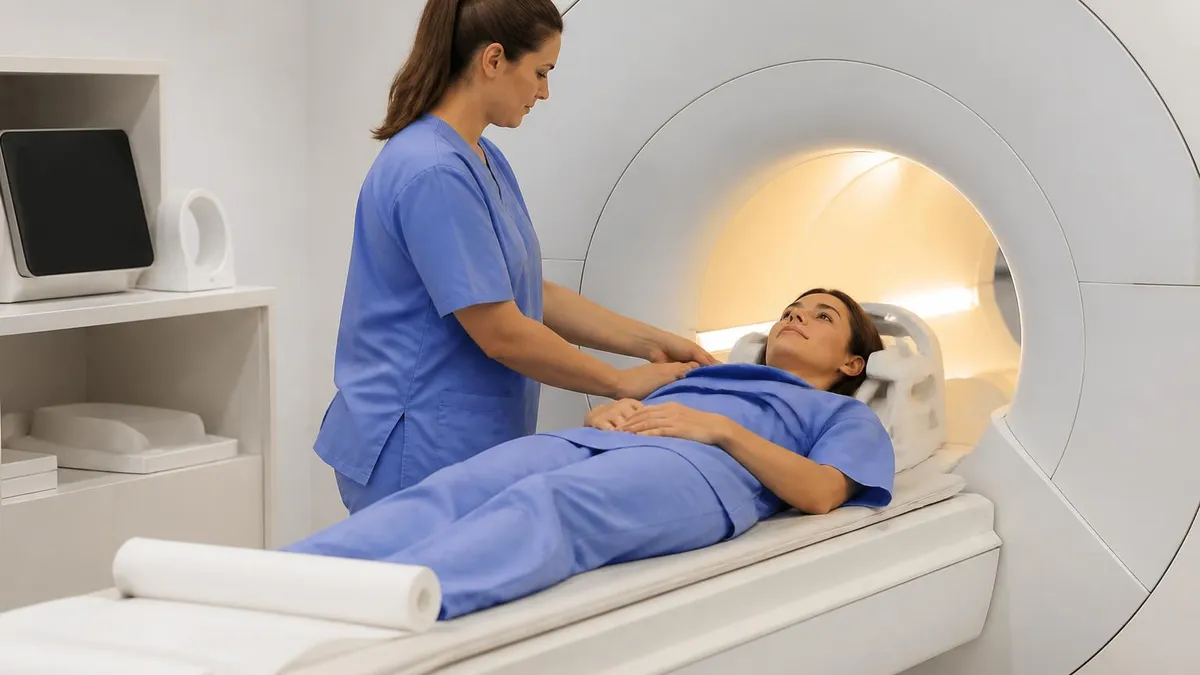
MRI Technologist: Pros and Cons
- +Strong median pay ($77K+) with clear ceiling for experienced techs
- +No ionizing radiation exposure — MRI uses magnetic fields and radio waves
- +High patient interaction — you'll genuinely help people through anxious moments
- +Growing demand: BLS projects 6% growth through 2032, faster than average
- +Multiple career advancement paths: supervisor, manager, applications specialist, educator
- +Travel opportunities pay $100K–$130K+ for those comfortable with contract work
- −Physically demanding: long shifts on your feet, patient transfers, repetitive positioning
- −Emotionally taxing: claustrophobic or confused patients require constant patience
- −Safety responsibility is significant — a screening error can injure a patient
- −Two-step credentialing (RT then MR) extends the timeline for most candidates
- −Shift work common: many positions include evenings, weekends, and on-call rotations
- −Burnout risk in high-volume imaging centers with aggressive scan-per-hour targets
Work Settings and Job Conditions
Hospital imaging departments account for the largest share of MRI technologist jobs — and they offer the broadest case mix. Inpatient hospitals scan ICU patients, trauma cases, pre-surgical planning, and complex neurology workups that smaller facilities can't handle. That variety accelerates your skills development faster than any single-setting career.
Outpatient imaging centers — freestanding facilities dedicated entirely to diagnostic imaging — represent a growing segment. They're often quieter, more predictable, and better staffed relative to scan volume than hospital radiology departments. The tradeoff: you'll see fewer rare or complex cases.
Physician offices with in-house imaging — orthopedic practices being the most common — offer a focused case mix (musculoskeletal MRI, predominantly), regular hours, and often a more intimate work environment. Pay tends to be slightly lower than hospital work.
Mobile MRI is its own specialty. You travel to small hospitals or clinics that can't justify owning a full scanner, operating a truck-mounted unit on a rotating schedule. It requires strong independent judgment since you're often working without a radiologist immediately on-site — and it pays accordingly.
Most full-time MRI technologist positions run 36–40 hours per week. That sounds normal until you factor in on-call requirements: at many hospitals, MRI techs are expected to be reachable and ready to come in for emergencies or overnight urgent studies. Understanding what an MRI scan involves from the patient's perspective is something employers increasingly value in interviews — your ability to explain the procedure clearly to anxious patients is a real differentiator.
Skills MRI Employers Actually Screen For
- ✓Contraindication screening — catching implants, devices, and foreign bodies before entry
- ✓Protocol selection — choosing and adapting sequences to match clinical questions
- ✓IV placement and contrast agent administration (gadolinium)
- ✓Image quality assessment — identifying and correcting artifact before patient leaves
- ✓Patient communication — guiding anxious or claustrophobic patients through long scans
- ✓Equipment maintenance awareness — recognizing scanner anomalies and escalating appropriately
- ✓Emergency response — managing contrast reactions, patient deterioration in the bore
- ✓Documentation accuracy — patient records, screening forms, incident logs
The MRI Registry Exam: What's Actually on It
The ARRT MR examination is 200 questions — and it's designed to be harder than you expect. Many techs who've been working in radiography for a year or two are surprised by the physics content. Pulse sequences, k-space, signal-to-noise ratio calculations — this is not the kind of material you pick up by watching someone else scan.
The exam is divided into four content domains. Patient care covers screening, contrast agent management, IV techniques, and emergency response — roughly 16% of the exam. Safety covers MRI zone classifications, RF heating, projectile risk, and acoustic noise — another 10%. Image production is the largest domain at around 38%: pulse sequences (spin echo, gradient echo, inversion recovery, EPI), acquisition parameters, artifacts and their causes, image quality optimization. Procedures covers anatomy, positioning, and protocol rationale for every major body region — the remaining 36%.
Most candidates study for two to four months before sitting the exam. Strong prep resources include the Lange MRI Q&A book, Mosby's Exam Review, and focused review courses that emphasize MRI physics since that's where most people lose points. Knowing how to interpret why an image looks the way it does — not just how to follow a protocol — is the level of understanding the exam tests.
The passing score is scaled, not fixed. Most preparation programs suggest aiming for 75%+ on practice exams before scheduling the real thing. You get three attempts per exam window. Comparing MRI vs CT scan protocols and tradeoffs is a topic that shows up in both the procedure and safety domains — understanding when each modality is preferred (and why) is testable content.
MRI Questions and Answers
Career Advancement: Where MRI Techs Go From Here
MRI technology isn't a dead-end job — it's a platform. Where you take it depends on what energizes you about the work.
The most direct path is into leadership: lead MRI tech → MRI supervisor → imaging department manager. Large radiology departments have genuine management ladders, and demand for experienced imaging managers consistently outpaces supply. This path typically requires a bachelor's degree eventually, plus several years of demonstrable clinical excellence.
Subspecialty protocols are another direction. Cardiac MRI — a genuinely complex subspecialty requiring knowledge of ECG-gating, myocardial perfusion sequences, and breath-hold technique — commands premium pay at academic medical centers. See our guide to cardiac MRI for what this specialty actually involves clinically. Functional MRI (fMRI) for presurgical brain mapping, MR spectroscopy, MR angiography — these subspecialty skills make you valuable in ways a generalist MRI tech isn't.
MRI applications specialists work for scanner manufacturers — Siemens, GE, Philips, Canon — training hospital staff on new equipment, troubleshooting scan quality issues, and supporting sales teams. The job involves heavy travel and requires deep technical knowledge, but pay is strong and benefits are typically excellent. Most applications positions require 5+ years of MRI experience before manufacturers will consider you.
Teaching is a natural fit for experienced techs — clinical coordinator positions at radiologic technology programs, adjunct faculty roles, or program director positions (which usually require a master's degree). Pay at academic institutions often runs below hospital rates, but the schedule and professional satisfaction compensate for many techs.
MRI physics — the formal academic and clinical physics track — requires advanced graduate education (MS or PhD), but it represents the highest-level technical role in the field. MRI physicists optimize scanner protocols system-wide, lead quality assurance programs, and work alongside radiologists and engineers on research applications. Understanding how much an MRI costs — and the economics behind scanner investment — is something advanced techs often need to understand for resource allocation discussions with department administrators.
About the Author

Medical Laboratory Scientist & Clinical Certification Expert
Johns Hopkins UniversityDr. Sandra Kim holds a PhD in Clinical Laboratory Science from Johns Hopkins University and is certified as a Medical Technologist (MT) and Medical Laboratory Scientist (MLS) through ASCP. With 16 years of clinical laboratory experience spanning hematology, microbiology, and molecular diagnostics, she prepares candidates for ASCP board exams, MLT, MLS, and specialist certification tests.
Join the Discussion
Connect with other students preparing for this exam. Share tips, ask questions, and get advice from people who have been there.
View discussion (8 replies)