
MRI Tech Salary 2026 October: Average Pay by State, Experience & Setting
Free MRI Tech Salary 2026 October: Average Pay by practice test with questions and answer explanations. Prepare for the 2026 October exam with instant scoring. 🗨️
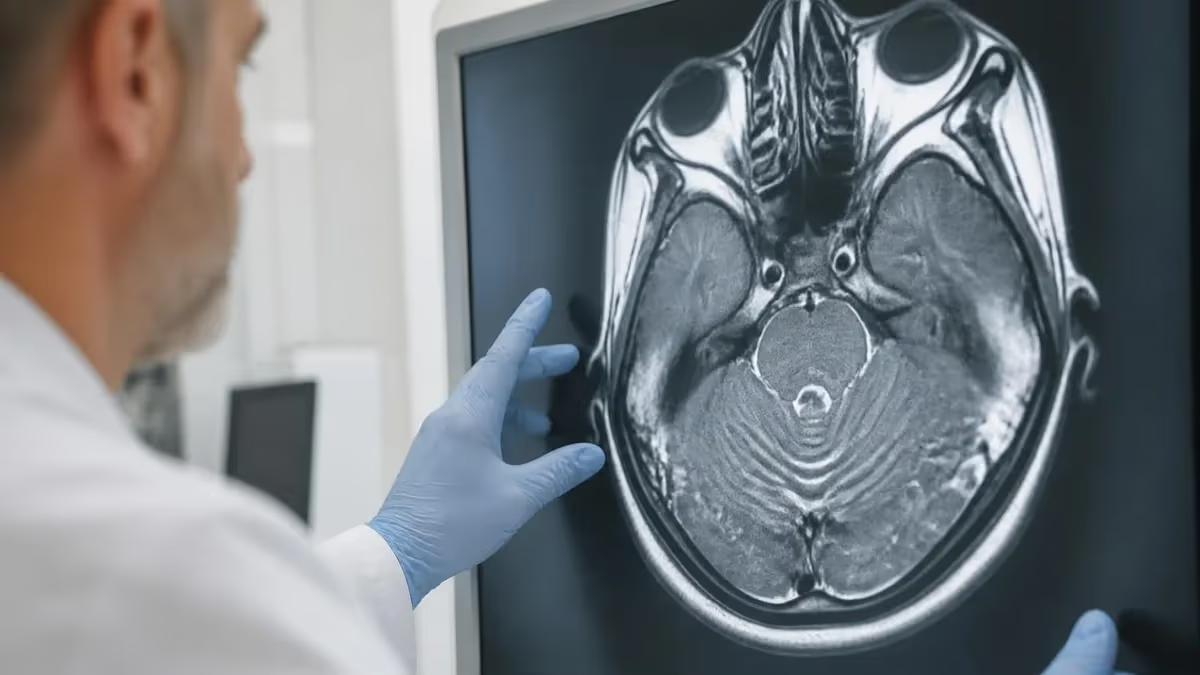
What Does an MRI Tech Earn in 2026?
If you're thinking about a career as an MRI technologist — or you're already working in the field and wondering whether you're being paid fairly — the numbers are genuinely encouraging. According to the U.S. Bureau of Labor Statistics, MRI technologists earn a national median wage of roughly $77,000 per year, or about $37 per hour. That puts MRI techs comfortably above the U.S. median for all occupations, which sits near $59,000. It's a strong return for a role that typically requires two to three years of training rather than a four-year degree.
But the headline figure only tells part of the story. Where you work, how long you've been doing it, what certifications you hold, and even whether you're willing to travel can push your salary well above — or below — that midpoint. This guide breaks down every major salary factor so you can make smart decisions about your MRI career.
MRI Tech Salary by State: Where You Live Matters Most
Geography is the single biggest lever on your MRI tech salary. Cost of living, hospital density, and local labor market competition all drive huge variation — we're talking a $50,000 gap between the highest and lowest paying states. Here's how the landscape breaks down.
Highest-Paying States for MRI Technologists
California leads the pack by a wide margin, with a mean annual wage around $108,000 — nearly 40% above the national median. High cost of living plays a role, but so does California's large hospital network and strict staffing ratios that drive up competition for qualified techs. The San Francisco Bay Area and Los Angeles metro both push salaries even higher, with experienced techs sometimes clearing $120,000.
Hawaii comes in second at roughly $101,000 per year. The island's geographic isolation means healthcare facilities can't easily recruit from neighboring states, so they pay a premium to attract and keep qualified MRI techs. Alaska follows closely at around $95,000, driven by similar isolation factors plus a higher overall cost of living. The Pacific Northwest is also strong — Washington state averages around $88,000, buoyed by major health systems in Seattle.
The Northeast rounds out the top tier. Massachusetts averages near $90,000, with Boston's concentration of academic medical centers pushing compensation up. Connecticut and New Jersey both land in the high $80,000 range. New York City specifically can exceed $95,000 for experienced techs, though cost of living offsets much of that advantage.
Lowest-Paying States for MRI Technologists
Mississippi sits at the low end, with a mean annual salary near $57,000. Alabama is similarly positioned at roughly $60,000. Arkansas, West Virginia, and parts of the rural Midwest also tend to cluster in the $60,000–$65,000 range. These states have lower costs of living, which partially explains the gap — but the adjusted purchasing power still tends to be lower than in coastal markets.
If you're early in your career and focused purely on building experience, working in a lower-cost state can still provide a comfortable lifestyle. But if maximizing your raw salary is the goal, the data clearly favors western and northeastern states.
MRI Tech Salary by Work Setting
The type of facility where you work influences your salary almost as much as your location. Different settings have different patient volumes, shift structures, and budget realities — and those differences show up directly in paychecks. Hospital positions pay the most but demand the most. Outpatient centers offer balance. Travel contracts maximize earnings for the flexible. Here's how every major setting stacks up.
Travel MRI Tech Salaries: The Full Picture
Travel MRI tech is its own category entirely, and for many experienced techs it's the most lucrative option of all. Weekly packages ranging from $2,000 to $3,500 per week are common in 2026, with hot markets — rural hospitals, crisis-level staff shortages — sometimes offering more. A 13-week contract at $3,000/week translates to $39,000 for one assignment alone. Done back-to-back, two contracts per year puts you well above $75,000 in travel pay alone before factoring in stipends.
Agencies like Aya Healthcare, AMN Healthcare, and Medical Staffing Network connect techs with assignments. Packages typically include free housing or a housing stipend, travel reimbursement, and health insurance. The trade-off is constant relocation and less schedule predictability — but financially it's hard to beat for techs who are flexible. Crisis rate contracts, available during acute staffing emergencies, can reach $4,000+ per week for experienced techs.
MRI Tech Salary by Experience Level
Experience is the most reliable predictor of salary growth across every industry, and MRI technology is no exception. Here's a realistic picture of what to expect at each career stage.
Entry-Level MRI Technologists (0–2 Years)
Fresh graduates entering the field can expect salaries in the range of $52,000–$60,000 per year, depending on location and facility type. Entry-level techs in high-cost states like California or New York often start higher — sometimes $65,000 or above. During this stage, the focus is on building speed, accuracy, and protocol knowledge. Many new techs supplement base pay by picking up extra shifts or PRN (as-needed) work at nearby facilities.
Mid-Career MRI Technologists (3–7 Years)
After a few years of solid experience, most MRI techs settle into the $70,000–$85,000 range nationally. This is also the phase where certifications, specialization, and facility type start to create meaningful divergence. A mid-career tech at a busy urban hospital with ARRT MR certification may be earning $85,000+, while a peer at a rural clinic without advanced credentials might be at $68,000. Lateral moves — switching facilities or negotiating at renewal — are one of the most reliable ways to accelerate salary growth at this stage.
Senior MRI Technologists (8+ Years)
Experienced MRI techs with eight or more years under their belt, especially those who've taken on lead or supervisory roles, typically earn $88,000–$100,000+ in competitive markets. Becoming a lead tech, chief MRI technologist, or MRI supervisor adds a meaningful bump — often $5,000–$15,000 above staff-level compensation. Some senior techs also transition into applications specialist roles with MRI vendors (Siemens Healthineers, GE Healthcare, Philips), where salaries can reach $110,000–$130,000 along with significant travel expenses covered.
Salary by Career Stage
Typical Range: $52,000–$60,000/year
- Focus on speed, protocol accuracy, and patient communication
- Pick up PRN shifts to supplement income
- Pursue ARRT MR certification as top priority
- High-cost states (CA, NY, WA) start $5k–$10k higher
Certifications That Boost MRI Tech Pay
Credentials matter — not just for getting hired, but for getting paid what you're worth. Two certifications in particular have the most direct impact on MRI technologist salaries.
ARRT MR Certification
The ARRT (American Registry of Radiologic Technologists) MR specialty certification is the gold standard in the field. It signals that you've passed a rigorous specialty exam and meet ARRT's continuing education requirements. Most hospital MRI positions list ARRT MR certification as a requirement or strongly preferred qualification. Certified techs typically earn $5,000–$10,000 more per year than non-certified counterparts, and the certification often unlocks senior and supervisory positions that aren't open to uncredentialed techs.
To sit for the ARRT MR exam, you need to hold primary certification in a related discipline (typically radiography or nuclear medicine) and complete required clinical experience hours. The exam itself covers MRI physics, safety protocols, patient care, image production, and procedures — all areas where strong preparation matters.
ARMRIT Certification
The ARMRIT (American Registry of Magnetic Resonance Imaging Technologists) offers an alternative pathway to MRI credentialing, particularly for individuals who didn't come through a traditional radiography program. Some facilities — particularly outpatient imaging centers — accept ARMRIT in place of ARRT MR. Salary impact is comparable, though ARRT MR tends to be more universally recognized in hospital and academic medical center settings where hiring managers typically prefer it.
Advanced Specialty Training
Beyond primary MRI certifications, techs who develop expertise in specific MRI subspecialties can command additional compensation. Cardiac MRI, fetal MRI, and spectroscopy are areas where specialized skill sets are genuinely scarce. Vendor-specific training — particularly on newer 3T and 7T systems from Siemens, GE, or Philips — is increasingly sought after as hospitals upgrade their scanner fleets and need techs who can optimize protocols on high-field systems.
Overtime and Per Diem Opportunities
Base salary is only one piece of an MRI tech's total compensation picture. Many techs significantly boost their annual earnings through overtime and per diem (PRN) work — often adding $5,000–$20,000 per year on top of their base. In a field where scanner demand runs around the clock at busy facilities, the opportunity to earn more by working extra hours is almost always available if you want it.
Hospitals running 24/7 MRI operations frequently need techs to cover evenings, weekends, and holidays. Overtime pay at 1.5x is standard, and some facilities offer double time on major holidays. A tech earning $37/hour who picks up 10 overtime hours per week adds over $28,000 to their annual income. That's not sustainable long-term — burnout is real in any physically demanding healthcare role — but even modest overtime of 3–5 hours per week makes a meaningful difference compounded across a full year.
PRN positions at neighboring facilities are another powerful income lever. If your primary employer allows outside work, picking up PRN shifts at an imaging center or urgent care MRI facility at $50–$60/hour can be highly lucrative. PRN rates typically run higher than staff rates because there's no benefits overhead for the hiring facility. The tradeoff is reduced schedule flexibility and physical fatigue, but many techs find it worth it during their peak earning years — especially those aggressively paying down student loans or building a down payment.
MRI Practice Test Questions
Prepare for the MRI - Magnetic Resonance Imaging exam with our free practice test modules. Each quiz covers key topics to help you pass on your first try.
MRI Knowledge
MRI Exam Questions covering Knowledge. Master MRI Test concepts for certification prep.
MRI Physics
Free MRI Practice Test featuring Physics. Improve your MRI Exam score with mock test prep.
MRI Anatomy and Pathology
MRI Test Prep for MRI Anatomy and Pathology. Practice MRI Quiz questions and boost your score.
MRI Anatomy and Positioning
MRI Questions and Answers on MRI Anatomy and Positioning. Free MRI practice for exam readiness.
MRI Contrast Agents
Free MRI Quiz on MRI Contrast Agents. MRI Exam prep questions with detailed explanations.
MRI Patient Care and Positioning
MRI Practice Questions for MRI Patient Care and Positioning. Build confidence for your MRI certification exam.
MRI Tech Job Outlook Through 2032
Salary potential is best understood in the context of job market strength — and MRI technology has a genuinely strong outlook. The BLS projects 7% employment growth for MRI technologists through 2032, which is faster than the average across all U.S. occupations (3%). That translates to roughly 2,300 new positions per decade, with additional openings from retirements and workforce attrition.
The drivers are structural and durable. The U.S. population is aging rapidly — the number of Americans over 65 will nearly double between 2020 and 2040 — and older patients use diagnostic imaging at significantly higher rates than younger populations.
MRI in particular benefits from growing preference over CT in many clinical contexts because it doesn't use ionizing radiation, making it safer for repeated imaging and pediatric patients. Advances in MRI technology — faster scan times, higher field strength systems, AI-assisted image interpretation — are also expanding the clinical use cases for MRI, driving scanner utilization rates up at many facilities.
Healthcare staffing shortages, particularly in rural and underserved markets, are expected to persist through the 2030s. That sustained shortage puts upward pressure on salaries and makes travel contract opportunities strong for the foreseeable future. Hospitals in smaller metros are increasingly offering sign-on bonuses of $5,000–$15,000 to attract qualified MRI techs — a trend that shows no signs of slowing.
How to Become an MRI Technologist
If you're drawn to MRI as a career, the path is accessible and relatively fast compared to other well-paying healthcare roles. The standard route involves two main steps, and most people complete the full journey in three to four years.
Step 1: Complete an Accredited Radiologic Technology Program
The most common entry point is an Associate of Applied Science (AAS) in Radiologic Technology — a two-year program offered at community colleges and technical schools across the country. These programs are accredited by the Joint Review Committee on Education in Radiologic Technology (JRCERT) and combine classroom instruction with clinical rotations. Coursework covers anatomy, physiology, patient care, radiation physics, and imaging techniques. Some universities offer bachelor's degree programs in radiologic sciences, which can provide more career advancement opportunities — particularly for those interested in management, education, or research roles down the line.
Step 2: Earn Your MRI Specialty Certification
After completing your radiologic technology program and earning your primary ARRT certification (usually in radiography), you'll complete additional MRI-specific clinical hours and sit for the ARRT MR specialty exam. Some programs offer an MRI technology concentration that simplifies this process. From first day of school to ARRT MR certified typically takes three to four years total. Several states also require separate state licensure — California, for example, has its own certification requirements through the California Department of Public Health. Always verify your target state's requirements before enrolling in a program.
Is an MRI Tech Career Worth It Financially?
The numbers make a compelling case. An MRI tech with 5–7 years of experience and ARRT MR certification working in a moderate-cost state earns around $80,000 — without an advanced degree, without years of residency, and with a job market that's actively competing for qualified candidates. Add travel contracts or overtime to the mix and that figure rises quickly.
The entry costs are relatively low: a two-year associate degree (average cost $10,000–$25,000), plus ARRT certification fees. The ROI on that investment — compared to, say, nursing (4+ years) or physical therapy (6+ years of schooling) — is genuinely strong.
MRI techs also tend to report high job satisfaction: the work is intellectually engaging, physically manageable compared to floor nursing, and deeply meaningful for patients navigating serious diagnoses. If you combine a stable staff position with selective PRN shifts or a travel contract stint every few years, you can realistically build significant savings without grinding through a decade of post-graduate training.
Many readers pair this guide with the cpt 72195 to check their readiness before exam day.
Many readers pair this guide with the open mri machine near me to check their readiness before exam day.
Steps to Become an MRI Technologist
- ✓Earn an Associate of Applied Science (AAS) in Radiologic Technology from a JRCERT-accredited program (2 years)
- ✓Complete clinical rotations covering MRI protocols, patient care, and safety
- ✓Pass the ARRT primary certification exam (typically in radiography)
- ✓Accumulate required MRI-specific clinical hours for specialty eligibility
- ✓Pass the ARRT MR specialty examination
- ✓Apply for state licensure if required in your state (e.g., California, New York)
- ✓Complete continuing education to maintain ARRT certification every two years
MRI Tech Career: Pros and Cons
- +Above-average salary ($77k median) without a four-year degree requirement
- +Strong job growth at 7% through 2032 — faster than most occupations
- +Travel contracts can push annual income well above $100,000
- +No ionizing radiation exposure — safer long-term than X-ray or CT roles
- +High job satisfaction scores — meaningful patient-facing work every day
- +Multiple advancement paths: lead tech, supervisor, applications specialist, educator
- −Physically demanding — prolonged standing, patient positioning, and lifting
- −On-call, overnight, and weekend shifts are common in hospital settings
- −Entry-level salaries ($52k–$60k) lag behind some other healthcare roles
- −Constant technology changes require ongoing learning and recertification
- −Emotionally taxing — many patients are anxious or seriously ill
- −State licensing requirements add complexity when relocating for better pay
MRI Questions and Answers
About the Author

Medical Laboratory Scientist & Clinical Certification Expert
Johns Hopkins UniversityDr. Sandra Kim holds a PhD in Clinical Laboratory Science from Johns Hopkins University and is certified as a Medical Technologist (MT) and Medical Laboratory Scientist (MLS) through ASCP. With 16 years of clinical laboratory experience spanning hematology, microbiology, and molecular diagnostics, she prepares candidates for ASCP board exams, MLT, MLS, and specialist certification tests.
Join the Discussion
Connect with other students preparing for this exam. Share tips, ask questions, and get advice from people who have been there.
View discussion (8 replies)