
Open MRI Near Me: Complete Patient Guide to Finding Open & Wide-Bore MRI Scanners
Find an open MRI near you. Compare open vs closed MRI, wide-bore options, stand-up scanners, cost, insurance coverage, and claustrophobia tips. ❓
MRI: upcoming dates and official changes
- Aug 17, 2026: ARRT launched a separate entry-level Imaging Assistant, Magnetic Resonance (I.A.) credential. A reduced $75 fee applied to applications made Aug. 17–Oct. 14, 2026, for testing Oct. 15–Nov. 30, 2026. Later applicants pay $225 and can test on or after Jan. 1, 2027.[4]
- The ARRT MRI exam for postprimary-pathway candidates has 220 questions: 200 scored and 20 unscored pilot items.[1]
- The ARRT MRI exam for primary-pathway candidates has 230 questions: 200 scored and 30 unscored pilot items.[2]
- Postprimary-pathway candidates get 210 minutes for the ARRT MRI exam, inside a 230-minute (3 hours, 50 minutes) appointment.[1]
- Primary-pathway candidates get 230 minutes for the ARRT MRI exam, inside a 250-minute (4 hours, 10 minutes) appointment that also covers the tutorial, the NDA and a survey.[2]
- To pass the ARRT MRI exam you need a total scaled score of 75 on ARRT's 1–99 scale. This is not a percentage.[3]
- The ARRT MRI exam through the postprimary pathway costs $225, or $450 for candidates whose supporting credential is from NMTCB or ARDMS.[4]
- The ARRT MRI certification exam costs $225 to apply for through the primary eligibility pathway.[4]
- ARRT MRI candidates have three attempts to pass the exam, all within three years of the date their first exam window opens.[2]
- ARRT MRI certification and registration lasts 10 years, even with annual renewal. After that, holders must complete Continuing Qualifications Requirements (CQR).[5]
Numbers in brackets link to the official sources listed under Sources & last verified. Dates that have passed are removed automatically.
MRI Exam at a Glance
| Item | Detail | Source · Verified |
|---|---|---|
| Number of questions (Postprimary pathway) | 220 questions (200 scored + 20 unscored pilot)[1] | assets-us-01.kc-usercontent.com · Oct 15, 2026 |
| Number of questions (Primary pathway) | 230 questions (200 scored + 30 unscored pilot)[2] | assets-us-01.kc-usercontent.com · Oct 15, 2026 |
| Time limit (Postprimary pathway) | 210 minutes test time (230-minute appointment)[1] | assets-us-01.kc-usercontent.com · Oct 15, 2026 |
| Time limit (Primary pathway) | 230 minutes test time (250-minute appointment)[2] | assets-us-01.kc-usercontent.com · Oct 15, 2026 |
| Passing score | Scaled score of 75 (scale 1–99)[3] | The American Registry of Radiologic Technologists · Oct 15, 2026 |
| Exam fee (Postprimary pathway) | $225 application fee ($450 with an NMTCB or ARDMS supporting credential)[4] | The American Registry of Radiologic Technologists · Oct 15, 2026 |
| Exam fee (Primary pathway) | $225 application fee[4] | The American Registry of Radiologic Technologists · Oct 15, 2026 |
| Retake policy | 3 attempts within 3 years of the first exam window[2] | assets-us-01.kc-usercontent.com · Oct 15, 2026 |
| Validity | 10 years, then Continuing Qualifications Requirements (CQR)[5] | assets-us-01.kc-usercontent.com · Oct 15, 2026 |
| Renewal | Annual renewal, $65/year; 24 CE credits every 2 years[5] | assets-us-01.kc-usercontent.com · Oct 15, 2026 |
| Delivery | Computer-based at Pearson VUE test centers[2] | assets-us-01.kc-usercontent.com · Oct 15, 2026 |
| Eligibility (Postprimary pathway) | Supporting ARRT credential (or NMTCB/ARDMS) + structured education + clinical experience[1] | assets-us-01.kc-usercontent.com · Oct 15, 2026 |
| Eligibility (Primary pathway) | ARRT-recognized MRI program + associate degree or higher + ethics[2] | assets-us-01.kc-usercontent.com · Oct 15, 2026 |
| Score release | Preliminary score at the test center; official results in about 10 business days[3] | The American Registry of Radiologic Technologists · Oct 15, 2026 |
| Testing window | One-year (365-day) exam window per application[2] | assets-us-01.kc-usercontent.com · Oct 15, 2026 |
Looking for an open MRI near me? You have three real options. True open MRI scanners (no tube, 0.3T-1.0T), wide-bore MRI machines (70cm opening, full 1.5T-3T strength), and stand-up MRI units for weight-bearing scans. Wide-bore is usually your best bet — it feels roomy, fits patients up to 500 lb, and gives you near-identical image quality to a standard closed scanner. Search Google with your zip code, then call ahead to confirm the magnet strength and bore size before booking. Most insurance plans cover open MRI exactly like closed MRI when medically indicated.
An open MRI is exactly what the name suggests — a scanner with open sides rather than the classic tube you picture. The magnet sits above and below you. Nothing wraps around your head or torso. You can see the room around you the entire time. A loved one can sometimes sit right next to you and hold your hand. For anyone who has ever felt the walls closing in inside a closed scanner, that difference matters enormously. The technology serves a specific need. Comfort over speed. Accessibility over absolute resolution. Real options for real anxiety.
These machines exist for specific people. Severely claustrophobic patients top the list. Larger bodies that simply will not fit through a standard 60cm bore come next. Kids who panic in tight spaces. Adults with cognitive challenges who cannot stay still in an enclosed environment. People with certain implants who need positioning flexibility for the scan.
Trauma survivors for whom tight spaces trigger memories. The two main flavors? True open (no enclosure at all — what facilities often advertise when you search "totally open MRI near me") and wide-bore (still a tube, just much bigger at 70cm versus the standard 60cm). Knowing the how MRI works basics helps you ask better questions when you call a facility to book your appointment.
Three Types of Open MRI Scanners
The classic open scanner. No tube. No enclosure. Just a flat table sandwiched between two magnet plates. Magnet strength runs 0.3T to 1.0T, which is weaker than what most hospitals use. Best for severe claustrophobia, very large patients (up to 700 lb at some sites), and pediatric scans where comfort wins over speed. The trade-off? Image quality sits at roughly 70-85% of what a closed 1.5T scanner produces. Subtle pathology can slip past. Scans also take longer because the magnet works harder.
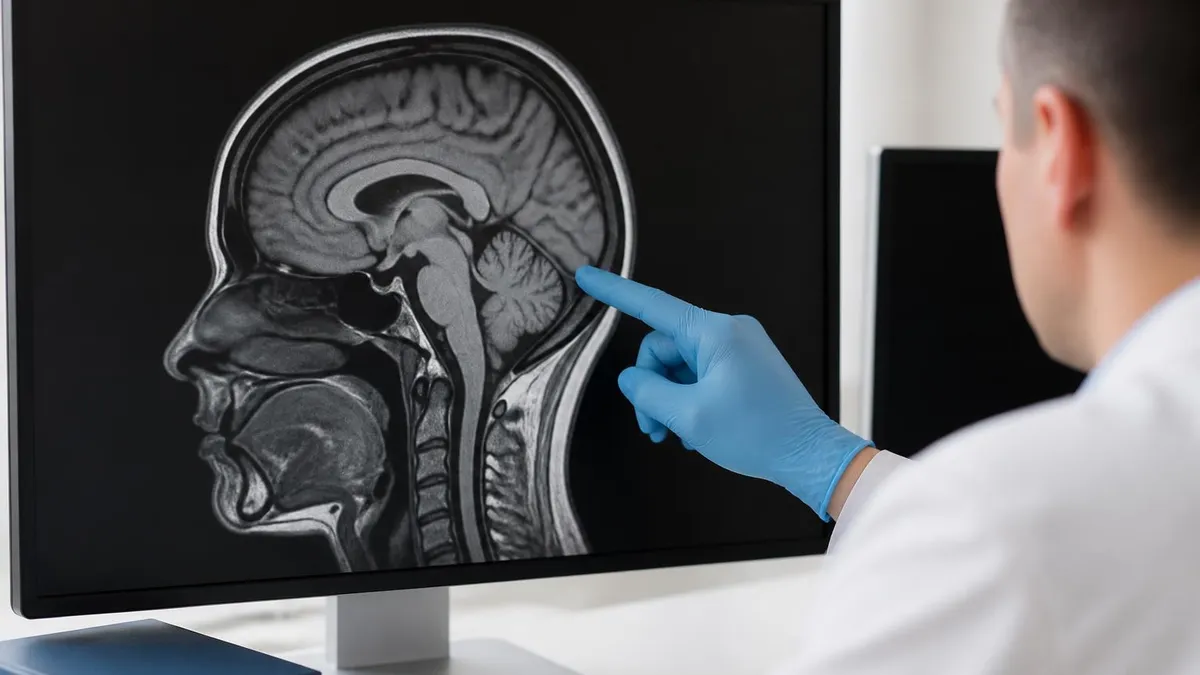
Closed MRI machines pack the strongest magnets (1.5T to 3T). Stronger magnets produce sharper images, faster. Open MRIs typically run weaker magnets (0.3T to 1.0T), which means lower resolution and longer scan times overall. Wide-bore, often sold as an open bore MRI, sits in between — closed in design but with a 70cm opening and full 1.5T or 3T magnet. So you get the comfort of more space without giving up image quality at all. That is why most radiologists steer claustrophobic patients toward wide-bore first, even before discussing true open options. The middle ground turns out to be the sweet spot for most patients seeking comfort.
Image quality ranking, plain English? Closed beats wide-bore by a hair. Wide-bore beats true open clearly. True open at 1.0T comes close to standard 1.5T closed for many scans, though not all. Below 0.7T though, you start missing things. Small lesions. Subtle MS plaques. Tiny brain tumors that need early detection. Ask your doctor what magnet strength is needed for your specific scan before you start hunting facilities. Sometimes the better answer is not an MRI at all — see CT scan vs MRI for a clear comparison of when each technology shines and which one your symptoms actually warrant.
Image Quality by Scanner Type
- Magnet: 3 Tesla
- Quality: Gold standard
- Best for: Brain, MS, tumors, cardiac
- Magnet: 1.5 Tesla
- Quality: Excellent — standard care
- Best for: Most diagnostic scans
- Magnet: 3 Tesla
- Quality: Nearly identical to 3T closed
- Best for: Claustrophobic, larger patients
- Magnet: 1.5 Tesla
- Quality: Matches 1.5T closed
- Best for: Anxious or larger patients
- Magnet: 1.0 Tesla
- Quality: 70-85% of closed
- Best for: Severe claustrophobia
- Magnet: Low field
- Quality: Screening level only
- Best for: Quick checks, very large bodies
How an Open MRI Machine Is Built
An open MRI machine replaces the long cylindrical magnet of a closed scanner with two flat poles, one above the table and one below, joined by a pillar or C-shaped frame. Because the magnetic field runs vertically between those poles instead of along the length of your body, the sides of the scanner can stay open.
Lower-field open MRI units, roughly 0.2T to 0.4T, often use permanent magnets made of rare-earth alloys that need no liquid helium cooling. Higher-field open systems around 1.0T to 1.2T use superconducting coils cooled with liquid helium, which makes them more expensive to buy and run. Field strength matters because the MRI signal grows with the magnet: a 1.2T open scanner produces noticeably cleaner images than a 0.3T unit, so it can handle more of the exams normally done on a closed scanner.
Some open MRI machines tilt or stand upright, so you can be scanned seated or standing with your spine and joints under normal body weight. When you call a facility about an open MRI, ask three things: the field strength in Tesla, whether the scanner is a true open or a wide-bore design, and whether the exam your doctor ordered is routinely done on that unit.
Open Bore MRI
Open bore MRI is the name most imaging centers and manufacturers use for a wide-bore scanner: a conventional cylindrical magnet with a 70cm opening instead of the 60cm opening on older closed units. It is not the same machine as a true open MRI, which has no tube at all and sandwiches you between two flat magnet plates.
The advantage of the open bore design is that it keeps the full 1.5T or 3T field strength. Image quality therefore matches a standard closed scan for brain, spine, joint, pelvis, and most body exams, while the extra 10cm gives your shoulders and arms more room and moves the inside of the bore farther from your face. Many open bore systems also use a shorter magnet, so for knee, ankle, and foot exams you go in feet-first and your head can stay outside the scanner for the whole study.
That combination of full field strength and more space is why radiologists usually suggest an open bore MRI before a low-field open-sided machine for claustrophobic or larger patients. When you call a facility, ask for three numbers: the bore diameter in centimeters, the field strength in Tesla, and the table weight limit. A listing that says "open" but quotes 1.5T or 3T is an open bore (wide-bore) unit, not an open-sided one.
Severe claustrophobia is reason number one. Some people simply cannot tolerate a closed tube — even with sedation, panic kicks in the moment they slide inside. Heart pounds. Breathing speeds up. The scan has to abort. Open MRI eliminates that fear at the source. Anxiety disorders triggered by enclosed spaces also benefit enormously. So do patients with PTSD where the tunnel feels threatening or triggers traumatic memories. Pediatric scans are easier when kids can see mom or dad in the room with them throughout the procedure.
Body size is another major driver of open MRI demand. Standard closed scanners cap around 350 lb and the 60cm bore squeezes anyone with broad shoulders or a larger chest. Wide-bore opens that ceiling to 500 lb with its 70cm opening. True open units handle even more, with some models rated for 700 lb.
Cognitive challenges that prevent staying still benefit from the calmer, less threatening environment of an open scanner. Specialty weight-bearing scans need stand-up units. Quick screening exams where high resolution is not critical also work fine on open scanners — they often cost less, take less prep time, and feel much friendlier to nervous patients overall.
When Open MRI Is the Right Choice
- ✓Severe claustrophobia that makes closed MRI impossible
- ✓Diagnosed anxiety disorder triggered by enclosed spaces
- ✓Body weight above 250 lb or wider than standard 60cm bore
- ✓Pediatric patients who find tube scanners scary
- ✓Adults with cognitive challenges that limit cooperation
- ✓Specialty weight-bearing positioning (stand-up MRI only)
- ✓Quick screening exams where high resolution is not critical
- ✓Situations where sedation should be avoided
- ✓Patients who need a companion in the room for comfort
- ✓Lumbar spine pain that only appears under load
Open MRI is not magic. The lower magnet strength produces lower image resolution overall. Scan times run longer because the machine has to work harder to capture usable images. Some pathology gets missed — small lesions, early-stage tumors, subtle MS plaques, tiny aneurysms. Soft tissue detail suffers compared to higher-field scanners. Cardiac imaging? Generally not feasible on open units at all. Functional brain imaging is unavailable on true open scanners. Tumor follow-up scans where radiologists compare images millimeter by millimeter need closed for consistency between sessions.
Subtle MS lesion tracking is another scan that demands the resolution only 1.5T or 3T provides. Stroke evaluation, spinal cord detail, pituitary microadenomas, and many neurological workups also push your doctor toward closed scanners. If your scan falls into one of these categories, ask about wide-bore as the smart middle ground — same 1.5T or 3T magnet, just with a 70cm opening instead of 60cm.
You get the resolution your doctor needs without the full tight tube experience. Honest conversation with your radiologist saves frustration on both sides. Bring up your concerns early in the scheduling process so the right scanner gets booked from the start, not after a failed first attempt.
Open MRI Limitations to Discuss with Your Doctor
- ✓Lower image quality than 1.5T or 3T closed scanners
- ✓Slower scan times overall due to weaker magnet strength
- ✓Some pathology may be missed, including small lesions
- ✓Less detailed soft tissue contrast in many sequences
- ✓Cardiac imaging generally not feasible on open units
- ✓Functional brain imaging (fMRI) unavailable on open MRI
- ✓Subtle MS plaques may not be visible on lower-field machines
- ✓Not the best option for tumor follow-up comparison scans
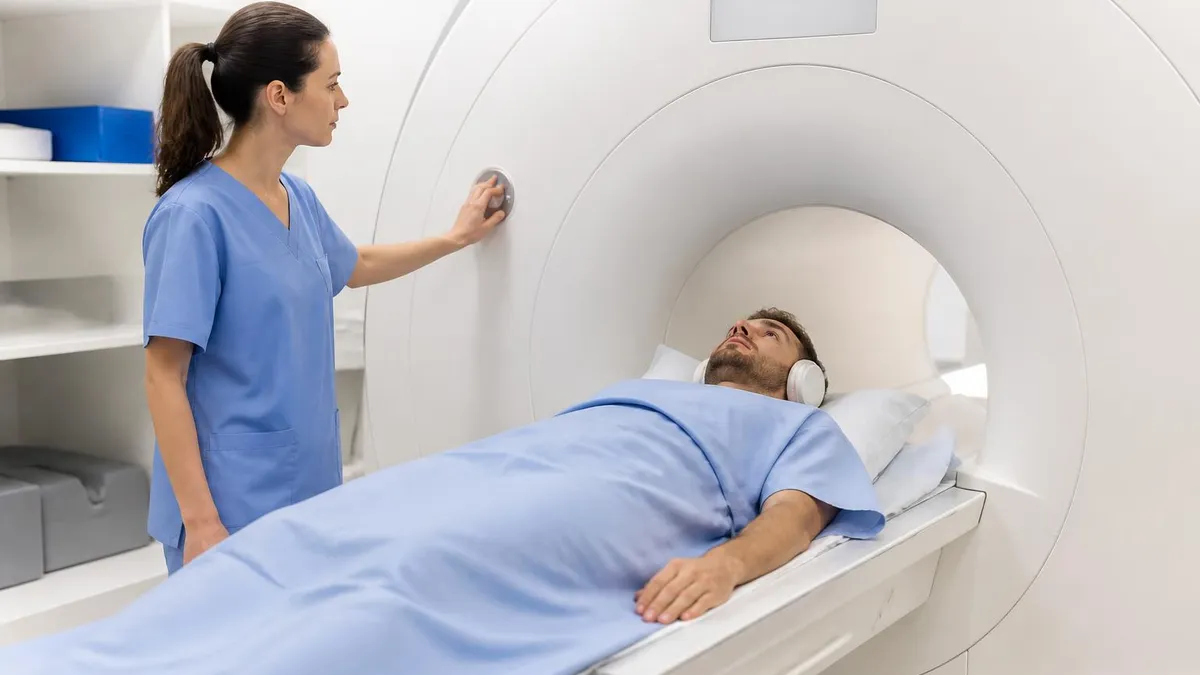
Open MRI Cost Breakdown
Open MRI costs roughly the same as closed in most markets across the country. You will see anywhere from $400 to $1,200 without insurance at a freestanding imaging center. Hospitals charge more — often 30-50% extra for the exact same scan with the exact same machine. Stand-up MRI usually runs higher, $1,000 to $1,500, because so few units exist nationwide.
With insurance, your copay typically lands between $50 and $300 depending on your plan. High-deductible plans? You pay full freight until you hit your deductible for the year. Check the full MRI cost picture and shop around before booking your scan anywhere.
Insurance almost never cares whether you choose open or closed. Both get covered the same way when there is documented medical necessity. Preauthorization is the bigger hurdle for most patients. Your doctor needs to document why an MRI is needed and which body part requires imaging.
If you require open specifically (claustrophobia, weight, anxiety, implants), have your doctor note that medical reason too. Medicare covers both options. Medicaid covers both with proper referral. HSA and FSA dollars work either way for out-of-pocket portions. Denials based on open versus closed? Rare. Denials based on missing prior auth? Extremely common — get that paperwork sorted first.
Open MRI is not always the right answer. Cardiac imaging, functional brain studies, small tumor follow-up, and subtle MS lesion tracking require the resolution that only 1.5T or 3T closed (or wide-bore) MRI can deliver. If your doctor specifies a closed scanner for medical reasons, do not push for an open one. Talk to them about wide-bore as a comfortable middle ground instead. Many wide-bore scanners run at 3T — same image quality as the most powerful closed units, just with 10cm more breathing room.
Start with Google. Type "open MRI near me" or "open MRI locations near me" plus your zip code into the search bar. You will get a map view with phone numbers, star ratings, and addresses for nearby facilities. Click through to each center's website and look for an equipment page — most list their scanners by manufacturer and magnet strength.
Call any place that does not publish that information online. Ask two simple questions. Do you have wide-bore (70cm) or true open? What is the magnet strength in Tesla? If they cannot answer those two questions confidently, call someone else who can. That basic info should be at every receptionist's fingertips.
Your insurance company also keeps an online provider directory you can search. Filter for imaging centers and MRI services in your area. Cross-reference with Google reviews from real patients. Hospital imaging departments usually have at least one wide-bore option, though they cost more than independent centers.
Specialty locators help too — GE Healthcare, Siemens Healthineers, and Philips all maintain facility lookups for their machines by model number and location. American Board of Radiology accreditation is a quality signal worth checking before you book. Yelp filters by service type as well. Even quick searches like baby MRI centers often surface family-friendly facilities with open scanner options.
How to Find Open MRI Near You: Action Steps
- ✓Search Google with "open MRI near me" plus your zip code
- ✓Filter results by reviews above 4 stars and 50+ ratings
- ✓Visit each facility's website and locate the equipment page
- ✓Confirm wide-bore vs true open with a phone call
- ✓Ask for magnet strength in Tesla (1.5T or 3T preferred)
- ✓Check your insurance provider directory for in-network status
- ✓Use GE, Siemens, and Philips facility locators online
- ✓Verify ACR (American College of Radiology) accreditation
- ✓Compare cash-pay prices if you are uninsured
- ✓Read recent reviews mentioning anxiety or claustrophobia
Open MRI Locations Near Me: How to Verify the Machine Before You Book
Most "open MRI locations near me" results fall into two very different buckets, and the listing rarely tells you which. A true open scanner uses two flat magnet plates above and below the table, runs at roughly 0.3T to 1.2T, and leaves your sides completely uncovered. A wide-bore scanner is still a tube, just 70cm across instead of 60cm, and it runs at a full 1.5T or 3T. Both get marketed as "open," so the word alone means little.
Three questions settle it in under a minute. First, is the magnet open on the sides or is it a bore? Second, what is the field strength in Tesla? Third, what is the weight limit and table width? A "totally open MRI near me" listing that quotes 1.5T or 3T is almost always a wide-bore unit; anything at 1.2T or below is a genuine open-sided magnet.
Match the answer to your scan. Extremities, lumbar spine, and routine joint work image well on either design. Brain, pelvis, small-lesion follow-up, and anything your radiologist wants at high resolution should go to 1.5T or 3T, which means wide-bore if you need the extra room. If claustrophobia or body size is the driver, the low-field open machine is the right tool. When you search "open MRI machine near me," write down the model name the receptionist gives you and confirm it is accredited by the American College of Radiology before you book.
Open MRI vs X-Ray at the Hospital: Which Scan Do You Need?
People searching for an open MRI often also look up whether a hospital X-ray department is open, because the two tests are easy to confuse. They work very differently. An X-ray passes a small dose of ionizing radiation through the body and is best at showing bones, fractures, joint alignment, and the chest. An open MRI uses a strong magnetic field and radio waves, involves no ionizing radiation, and shows soft tissue such as ligaments, tendons, cartilage, spinal discs, nerves, and the brain.
The patient experience differs too. An X-ray machine never encloses you, so claustrophobia is rarely an issue, and the exposure itself takes seconds. Many hospital imaging departments and urgent care centers take X-rays on a walk-in basis with a doctor's order. An MRI, open or closed, is normally a scheduled appointment that includes metal and implant safety screening, often needs insurance pre-authorization, and keeps you still for a much longer scan.
Doctors commonly order an X-ray first and add an MRI only when the X-ray cannot explain the symptoms, for example a suspected ligament tear or disc problem. If your order says MRI, call the hospital's imaging scheduling line rather than walking in.
Confirmation call 24 hours before your appointment. Skip caffeine the hour before — it can ramp anxiety significantly. Wear loose, metal-free clothing if you can manage it. No underwire bras for women, no metal zippers or rivets when possible for anyone. Remove all jewelry, hair clips, watches, and piercings beforehand and leave them at home if possible.
If your doctor prescribed anti-anxiety medication specifically for the scan, take it on schedule and arrange a ride home with a trusted friend or family member. You should not drive after sedation under any circumstances — it is dangerous and illegal in most states.
Bring your insurance card and a written list of any metal in your body — surgical clips, joint replacements, pacemakers, cochlear implants, embedded shrapnel from old injuries. Tell the tech everything during screening. Even a single forgotten earring can ruin the scan and require you to start over.
Notify staff immediately if pregnancy is possible — they may want to delay the scan or skip contrast. Most facilities provide earplugs and headphones, but feel free to bring your own preferred set from home. Knowing how long an MRI takes for your specific body part helps you plan childcare or work coverage. Most scans run 20-60 minutes total.
What Happens During Your Open MRI Appointment
Step 1: Arrive 30 minutes early
Step 2: Metal screening
Step 3: Change into a gown
Step 4: Position on the table
Step 5: Headphones and earplugs
Step 6: Stay still during scans
Step 7: Total scan time
Step 8: Communicate via intercom
Step 9: Discharge in 5 minutes
Step 10: Results in 1-3 days
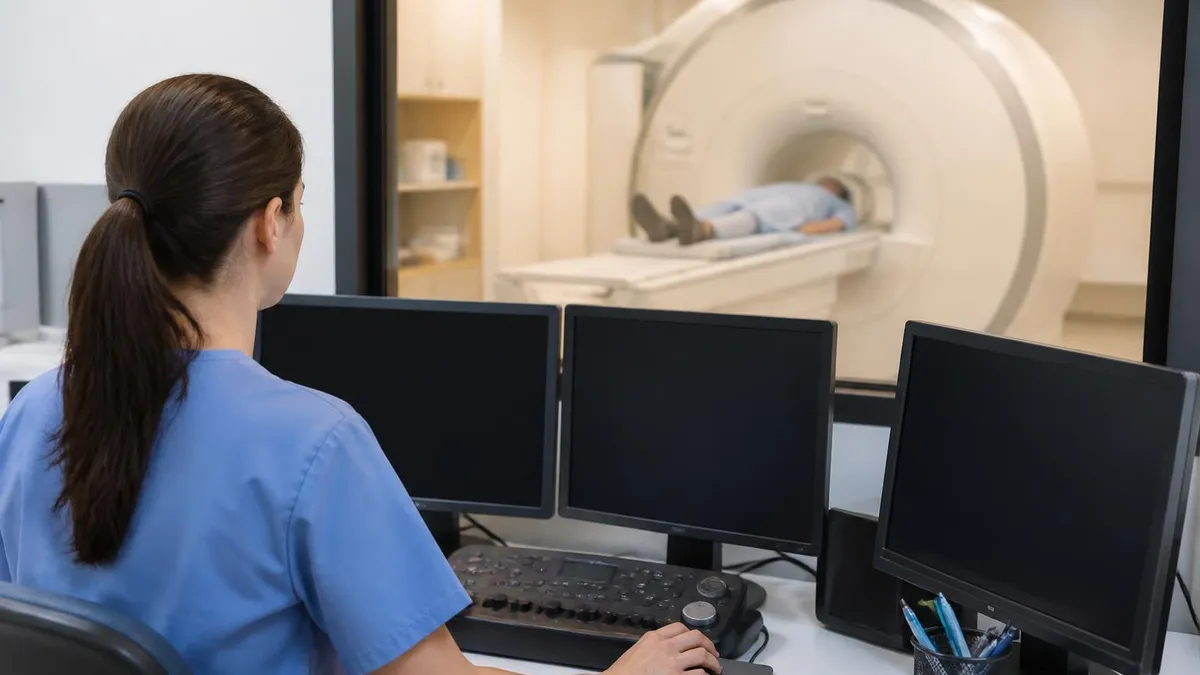
Choose a wide-bore or true open scanner from the start of your scheduling process. Do not let your doctor schedule you for a standard closed unit if claustrophobia is a known issue for you. Ask about anti-anxiety medication beforehand — small dose, big difference. Even a low-dose benzodiazepine can transform the experience for severely anxious patients.
Practice deep breathing techniques for two weeks prior to the scan. Bring your favorite calming playlist on a phone or USB drive. Cover your eyes with a washcloth so you cannot see surroundings during the exam. Use earplugs in addition to headphones for double protection from the scanner noise.
Tell the tech up front that you are claustrophobic. They have heard it many times and will pace the scan accordingly, often pausing between sequences to let you reset mentally. Bring a trusted family member if the facility allows it — many do. Schedule an early morning appointment when anxiety tends to be lower for most people. Skip food for 2 hours before the scan to reduce risk of nausea.
Wear an eye mask if light bothers you during the exam. Visualize the wide-bore opening as a doorway, not a tunnel — that mental reframe genuinely helps. Use a guided meditation app on the drive over to start calm. Small things compound into a much easier scan experience overall, and most patients are pleasantly surprised by how much these little tactics actually help once they are inside the scanner room.
You can continue preparing with the mri abdomen and pelvis cpt code, which includes answer explanations for every question.
You can continue preparing with the 70551 cpt code, which includes answer explanations for every question.
Anxiety-Reduction Tips for the Scan Room
- ✓Bring a trusted family member if the facility allows it
- ✓Schedule an early morning appointment when anxiety tends to be lower
- ✓Skip food for 2 hours before to reduce risk of nausea
- ✓Wear an eye mask if light bothers you during the scan
- ✓Bring noise-cancelling headphones from home
- ✓Ask the tech to narrate what is happening at each step
- ✓Use a guided meditation app on the drive over
- ✓Visualize the wide-bore opening as a doorway, not a tunnel
- ✓Stretch your shoulders and neck before lying down
- ✓Bring a small comfort item — many facilities allow it
Standard closed MRI scanners cap out around 350 lb. The 60cm bore also restricts patients with broad shoulders or larger torsos, even if they weigh less than the official limit. Wide-bore machines push that ceiling to 500 lb thanks to their 70cm opening. True open MRIs handle the largest patients — some manufacturers rate their machines for 500 to 700 lb.
Stand-up units typically allow 350 to 500 lb depending on the specific model. If you weigh over 300 lb or have unusually broad shoulders, call ahead and provide your measurements honestly. Do not show up hoping it will work out — measurements matter and a wasted trip wastes time.
Manufacturer matters here significantly. Siemens dominates the wide-bore market — most hospitals run a Siemens Magnetom Aera or Vida system. GE Healthcare makes the Signa Profile open scanner line and the Signa Voyager wide-bore. Philips offers the Panorama open MRI and the Ingenia wide-bore. Fonar holds the patent on stand-up scanners and remains the only manufacturer of that technology.
Toshiba (now Canon Medical) and Esaote produce lower-field open units for specialty markets. Each brand quotes different weight limits and bore dimensions. Ask the facility specifically which model they have on site. Searching "open MRI machine near me" and reading "open MRI" on a website is not enough information — model number and Tesla rating tell you what to actually expect from your scan.
Open MRI Pros and Cons
- +Comfortable for severely claustrophobic patients
- +Accommodates larger bodies up to 700 lb in some models
- +Reduces anxiety without sedation in most cases
- +No fully enclosed feeling — you can see the room
- +Better tolerated by pediatric patients
- +Often allows a companion to sit nearby
- +Sometimes cheaper at independent imaging centers
- +Available without prior anxiety medication for many people
- −Lower image quality than closed scanners (true open only)
- −Scan times run longer than 1.5T closed MRI
- −May miss subtle pathology like small MS plaques
- −Cardiac imaging is not feasible on most open units
- −Functional brain imaging unavailable on open scanners
- −Not every body part can be scanned on stand-up units
- −Fewer facilities have true open or stand-up options
- −Some scans must be repeated on closed MRI for clarity
Not every open scanner handles every scan well. For lumbar and lower spine work, wide-bore at 1.5T or 3T is excellent and matches closed-MRI quality. Stand-up MRI shines when pain only appears under load — perfect for chiropractic referrals or sports injury workups where positional information matters. Brain imaging strongly prefers closed or wide-bore at 1.5T minimum. True open units can miss small lesions, MS plaques, microbleeds, and early-stage tumors. Shoulders, knees, elbows, ankles, wrists? Wide-bore handles them all beautifully with no compromise. Pelvis scans need 1.5T or higher for adequate detail of organs and soft tissue.
Cardiac MRI is the one scan where you simply cannot use open. The technology needs the gradient strength and field uniformity that only closed 1.5T or 3T provides reliably. Same goes for functional brain imaging (fMRI), which maps real-time brain activity during specific tasks.
Tumor follow-up scans where radiologists compare images millimeter by millimeter also need closed for consistency between sessions over months or years. Pediatric brain work? Wide-bore with a child-life specialist beats sedation most of the time. Ask your radiologist which combination of scanner type and Tesla strength fits the specific diagnosis your doctor is investigating before you book.
Choosing the Right Open MRI Facility
- ✓Verify American College of Radiology (ACR) accreditation status
- ✓Read recent Google and Yelp reviews from the past 6 months
- ✓Confirm magnet strength in Tesla with a phone call
- ✓Distinguish clearly between wide-bore and true open MRI
- ✓Check that radiologists are board-certified by ABR
- ✓Ask about same-day insurance verification
- ✓Request a typical wait time for results delivery
- ✓Compare cash-pay prices across three facilities
- ✓Verify weight capacity if you are above 300 lb
- ✓Check parking, accessibility, and entrance access in advance
RadNet operates one of the largest imaging chains in the country with hundreds of locations across multiple states. Most offer wide-bore options at major sites. Akumin runs 200+ centers across multiple states with strong open MRI availability and competitive cash pricing. Imaging Healthcare Specialists serves several regional markets in the Western US. Hospital systems almost always have at least one wide-bore scanner — Mayo Clinic, Cleveland Clinic, Kaiser Permanente, HCA Healthcare, all stock them at major facilities. University medical centers tend to have research-grade 3T scanners that are also wide-bore, often staffed by fellowship-trained subspecialty radiologists.
Independent radiologists at smaller imaging centers often have true open MRI specifically as a niche service — they actively market to claustrophobic patients that other facilities turn away. Always verify accreditation through the American College of Radiology website. Read recent reviews carefully. Compare cash-pay rates if you have a high-deductible plan or no insurance.
Confirm magnet strength before booking your appointment. Many facilities will quote a transparent price over the phone if you simply ask the right way. Three quick calls can save you several hundred dollars on the exact same scan, especially if you are paying out of pocket or have not met your deductible yet for the year.
Open MRI Near Me: Quick Study Cards
🧲 What makes an MRI scanner "open"?
A true open MRI uses two flat magnet plates above and below the table instead of a surrounding tube, so your sides stay uncovered. It exists mainly for claustrophobic, pediatric, and larger patients rather than for higher image quality.
START MRI KNOWLEDGE PRACTICE TEST⚡ What field strengths do open MRI machines typically run?
Open-sided magnets usually run 0.3T to 1.2T, while standard closed and wide-bore scanners run 1.5T or 3T. Lower field strength means lower signal, so scans take longer and fine detail is reduced.
START MRI KNOWLEDGE PRACTICE TEST🔍 Wide-bore vs true open: what is the difference?
A wide-bore scanner is still a tube, just 70cm across instead of 60cm, and it keeps a full 1.5T or 3T magnet. A true open scanner has no tube at all but usually a weaker magnet. Wide-bore is the default compromise for most nervous patients.
START MRI ANATOMY PRACTICE TEST😰 Why is claustrophobia the top reason people search "open MRI near me"?
Some patients cannot stay still inside a 60cm bore even with medication, and a scan that aborts gives the radiologist nothing. Open-sided and wide-bore machines let the scan finish, which matters more than a few percent of resolution.
START MRI KNOWLEDGE PRACTICE TEST⚖️ How do weight and body size affect scanner choice?
Standard closed scanners typically cap near 350 lb and the 60cm bore limits broad shoulders. Wide-bore tables commonly allow around 500 lb, and some open-sided designs are rated higher. Always confirm the exact limit for the specific model on site.
START MRI ANATOMY PRACTICE TEST🧠 Which scans should NOT be done on a low-field open MRI?
Cardiac MRI, functional brain imaging, pituitary and small-lesion work, and MS plaque follow-up rely on the signal and gradient performance of 1.5T or 3T. For those, ask for wide-bore rather than a true open unit.
START MRI ANATOMY PRACTICE TEST🖼️ What is the image-quality trade-off with open MRI?
Signal-to-noise ratio rises with field strength, so a 0.3T to 1.2T open magnet produces coarser images or needs longer scan times to compensate. Large joints and lumbar spine tolerate this well; subtle brain findings do not.
START MRI KNOWLEDGE PRACTICE TEST🏥 What is a stand-up or upright open MRI for?
Upright scanners image you sitting or standing so weight-bearing spine and joint problems show up under load. They run at low field strength and are rare, so they suit specific positional complaints, not general imaging.
START MRI ANATOMY PRACTICE TEST💉 Does contrast work the same on open and closed MRI?
Yes. Gadolinium-based contrast behaves the same regardless of magnet design, though lower-field images show enhancement with less detail. Kidney-function screening before contrast applies to every scanner type.
START MRI CONTRAST PRACTICE TEST📞 What should you ask when calling open MRI locations near you?
Ask whether the magnet is open-sided or a wide bore, the field strength in Tesla, the weight and table limits, and whether the facility holds American College of Radiology accreditation. Those four answers tell you if the machine fits your scan.
START MRI KNOWLEDGE PRACTICE TESTOpen MRI Near Me Questions and Answers
Open MRI near you typically means one of three things. True open MRI with no tube at all, wide-bore MRI with a 70cm opening (versus the standard 60cm closed scanner), or stand-up MRI for weight-bearing imaging in specific cases. Wide-bore at 1.5T or 3T should be your default choice for most situations. You get nearly identical image quality to closed MRI plus the comfort of more space and a less threatening setup. Search Google with your zip code, verify the magnet strength on a phone call, and check your insurance directory for in-network options before committing to a facility.
Open MRI works best for severe claustrophobia, larger patients above 250 lb, anxious adults, and pediatric scans where comfort matters. Avoid open for cardiac imaging, functional brain studies, subtle pathology follow-up, and MS lesion tracking — those scans demand closed or wide-bore resolution to catch what matters clinically.
Most insurance plans cover open MRI the same way they cover closed, provided your doctor documents medical necessity and obtains prior authorization on time. Call ahead. Ask about the scanner model and Tesla rating. Confirm weight limits if relevant. And remember — wide-bore is almost always the smarter compromise than true open for the vast majority of patients seeking comfort without losing diagnostic accuracy.
Official Resources
- FDA: MRI (Magnetic Resonance Imaging) — the U.S. Food and Drug Administration explains how MRI works, its benefits and risks, and safety considerations for implants and contrast.
- NIH NIBIB: Magnetic Resonance Imaging (MRI) — the National Institute of Biomedical Imaging and Bioengineering covers the physics of MRI magnets, what the scan can show, and how field strength affects images.
- ACR Accredited Facility Search — the American College of Radiology lets you check whether a specific imaging center holds current MRI accreditation before you book.
Sources & last verified
- assets-us-01.kc-usercontent.com — number of questions, time limit, eligibility (official source). “MRI Scored Items 200 Pilot Items 20 Total Items 220 Test Time 210 min” Verified Oct 15, 2026.
- assets-us-01.kc-usercontent.com — number of questions, time limit, retake policy, delivery (official source). “MRI Scored Items 200 Pilot Items 30 Total Items 230 Test Time 230 min” Verified Oct 15, 2026.
- The American Registry of Radiologic Technologists — passing score, score release (official source). “Our exam scoring scale ranges from 1 to 99, and you’ll need a total score of 75 to pass the exam.” Verified Oct 15, 2026.
- The American Registry of Radiologic Technologists — exam fee, other (official source). “Postprimary (M, CT, MR, BD, CI, VI, VS, BS, R.R.A.): $225 Postprimary (CT, MR, BD, or VS—using NMTCB as supporting category): $450 Postprimary (MR, VS,…” Verified Oct 15, 2026.
- assets-us-01.kc-usercontent.com — validity, renewal (official source). “ARRT certification and registration—even with annual renewal—is limited to 10 years.” Verified Oct 15, 2026.
How we verify: editorial & fact-checking policy. Report an error: contact us.
How this page was made: written with AI tools and published by Nathan Beja, founder of Practice Test Geeks, who is responsible for its content. Exam facts are checked against the official sources listed below. Not reviewed by a subject-matter expert. Editorial policy
Sources & references
Exam facts on this page (fees, format, dates, passing scores) are checked against these official sources; the date is our last check. Editorial policy
- arrt.org — Passing score, score release, fees, exam information · verified Oct 2026
- assets-us-01.kc-usercontent.com — Renewal, score validity, test delivery, eligibility, exam format, test dates, time limit · verified Oct 2026