
CPT Codes for MRI: A Complete 2026 October Guide to Pelvis, Brain, Spine, and Joint MRI Billing Codes
Master the CPT code for pelvis MRI and every major MRI CPT code in 2026 October. 🧠 Learn 72195, 70551, 73721 billing rules, contrast modifiers, and

Finding the correct CPT code for pelvis MRI is one of the most common challenges facing radiologists, MRI technologists, billers, and coders in 2026. The American Medical Association assigns three distinct codes for pelvic magnetic resonance imaging — 72195 without contrast, 72196 with contrast, and 72197 without and with contrast — and choosing the wrong one can trigger denials, audits, or thousands of dollars in lost reimbursement per claim. This complete guide walks you through every major MRI CPT code — including the MRI pelvis CPT code series and the MRI abdomen and pelvis CPT code pairing — plus contrast modifiers, bundling rules, and documentation requirements you need to bill cleanly.
CPT, or Current Procedural Terminology, is the standardized five-digit coding system used to describe medical procedures for billing purposes across the United States. The MRI section of CPT spans codes 70336 through 76498, covering everything from temporomandibular joint imaging to functional brain mapping. Each code corresponds to a specific anatomical region, a specific contrast protocol, and a specific reimbursement value under the Medicare Physician Fee Schedule. Knowing these distinctions cold is essential whether you're a coder, technologist, or radiologist.
The most frequently billed MRI codes in U.S. outpatient imaging centers include 70551 (brain without contrast), 70553 (brain without and with contrast), 72148 (lumbar spine without contrast), 73721 (lower extremity joint without contrast), and the pelvic series 72195–72197. These five code families are among the most frequently billed MRI studies in U.S. outpatient imaging centers. Mastering them gives you immediate impact on revenue cycle accuracy and clean claim rates.
If you're studying for the ARRT MRI registry exam, the CRA, or a CPC coding credential, expect questions about contrast distinctions, modifier 26 (professional component), modifier TC (technical component), and the proper sequencing of MRI codes when multiple body parts are imaged in one session. Many candidates lose points on bundling questions and on the difference between 72195 and 74181 (abdomen/pelvis MR enterography).
This article covers the full landscape: pelvis MRI coding, brain and spine codes, joint and extremity codes, contrast and modifier rules, common denial reasons, 2026 reimbursement updates, documentation requirements, and how to defend your codes during a payer audit. You'll find practical examples, real reimbursement figures, and a downloadable mental checklist you can use on every exam you bill.
For background on how magnetic resonance imaging actually generates the data behind these codes, see our companion guide on the What Is an MRI Test? How Magnetic Resonance Imaging Scans Diagnose Disease in 2026 resource — it explains the imaging physics every coder should understand at a conceptual level before tackling the billing side.
Whether you're a new technologist learning the business side of imaging or a seasoned coder preparing for 2026 fee schedule changes, this guide will sharpen your accuracy, reduce your denial rate, and help you bill with confidence. Let's start with the numbers that define the landscape.
MRI CPT Coding by the Numbers
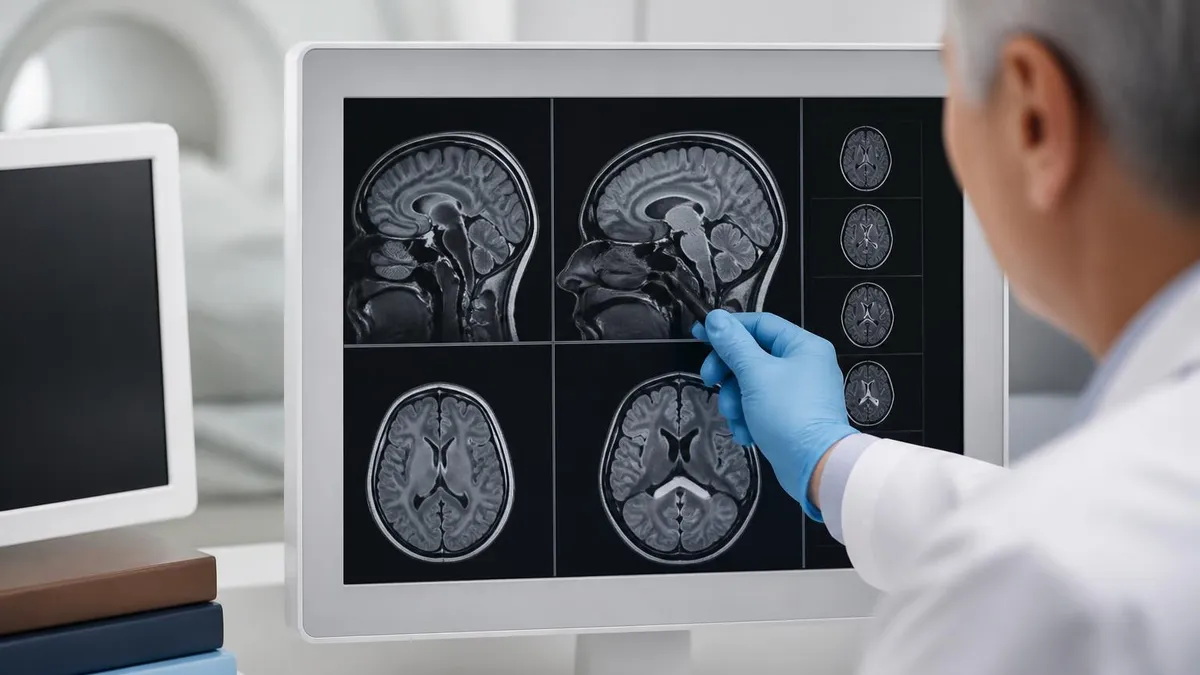
The Three Pelvis MRI CPT Codes Explained
Used when the radiologist orders pelvic imaging without any gadolinium administration. Common indications include hip pain, pelvic fracture assessment, and initial workup of pelvic masses. Requires sequences in at least two planes; Medicare and commercial reimbursement vary by locality and payer, so confirm current rates via the CMS Physician Fee Schedule Look-Up Tool.
Performed when gadolinium is administered without a prior non-contrast series. Less common than 72197 because most protocols include pre-contrast imaging. Documentation must justify why pre-contrast sequences were skipped, or payers may downcode the claim.
The gold-standard pelvis protocol for tumor characterization, endometriosis, prostate cancer staging, and fistula evaluation. Includes pre- and post-contrast sequences and typically reimburses more than either single-phase code. Requires documentation of both contrast and non-contrast acquisitions.
A separate code for magnetic resonance angiography of pelvic vessels, with or without contrast. Often used in vascular workups and pre-surgical planning. Cannot be billed simultaneously with 72195–72197 without modifier 59 and clear documentation of distinct medical necessity.
Beyond the pelvis, every region of the body has its own MRI CPT family, and understanding them collectively makes you a stronger coder. Brain MRI codes are anchored by 70551 (without contrast), 70552 (with contrast), and 70553 (without and with contrast). These are the workhorses of neuroimaging, covering stroke, tumor, multiple sclerosis, and headache workups. Stroke, tumor, multiple sclerosis, and headache workups all live in this code family, and 70553 is by far the most commonly billed of the three.
Spine MRI splits into three regions, each with its own three-code series. Cervical spine uses 72141 (without), 72142 (with), and 72156 (without and with). thoracic spine mri cpt uses 72146, 72147, and 72157. Lumbar spine — the highest-volume spine region — uses 72148, 72149, and 72158. A common coding error is reporting multiple spine regions on the same date of service without realizing that distinct medical necessity must be documented for each region, or the second code will deny.
Joint and extremity MRIs follow a slightly different pattern. Upper extremity joint MRI (shoulder, elbow, wrist) uses 73221 (without), 73222 (with), and 73223 (without and with). Upper extremity non-joint imaging uses 73218–73220. Lower extremity joint MRI (hip, knee, ankle) uses 73721, 73722, and 73723, while non-joint lower extremity uses 73718–73720. Distinguishing joint from non-joint is critical: bill the wrong family and the claim will deny.
Abdominal MRI uses 74181, 74182, and 74183, and there is no single MRI abdomen and pelvis CPT code — the two regions are reported separately (see the dedicated section below). MR cholangiopancreatography (MRCP) is bundled into the abdomen MRI code when performed in the same session and does not get a separate charge. MR enterography for inflammatory bowel disease uses 74183 with appropriate ICD-10 linkage to K50.x or K51.x codes. Breast MRI uses 77046 (unilateral without), 77047 (bilateral without), 77048 (unilateral with CAD), and 77049 (bilateral with CAD).
Cardiac MRI is its own complex family: 75557 (without contrast), 75559 (without contrast with stress), 75561 (without and with), and 75563 (without and with, with stress). Functional brain MRI uses 70554 and 70555, while MR spectroscopy uses 76390. These specialty codes are lower-volume but high-reimbursement, and they carry strict documentation requirements that many programs underestimate.
If you want to see how the original imaging technology evolved alongside these coding conventions, our piece on the History of MRI: From Discovery to Modern Medicine gives helpful context for why certain protocols — and therefore certain codes — exist the way they do today.
Across all these families, the universal rule holds: the contrast designation in the code (without, with, or both) must exactly match what was performed and documented in the radiology report. Any mismatch — even a single missed pre-contrast sequence — can convert a legitimate 72197 into a denied claim or a downcoded 72195.
MRI CPT Code Quick Reference (Verified Code Numbers)
Every body region follows the same three-code contrast pattern: without contrast, with contrast, and without-and-with contrast. Use this table to confirm the code family for the region you're billing.
| Body Region | Without Contrast | With Contrast | Without & With Contrast |
|---|---|---|---|
| Brain | 70551 | 70552 | 70553 |
| Cervical Spine | 72141 | 72142 | 72156 |
| Thoracic Spine | 72146 | 72147 | 72157 |
| Lumbar Spine | 72148 | 72149 | 72158 |
| Pelvis | 72195 | 72196 | 72197 |
| Abdomen | 74181 | 74182 | 74183 |
| Upper Extremity Joint | 73221 | 73222 | 73223 |
| Lower Extremity Joint | 73721 | 73722 | 73723 |
Source: AMA CPT radiology section (70000-79999 range), as referenced by CMS coverage and coding guidance. Always confirm against the current-year CPT code set before billing.
MRI Abdomen and Pelvis CPT Code: How to Bill Both Regions Together
Unlike CT, where 74176–74178 describe a combined abdomen and pelvis study, CPT has no single code for an MRI of the abdomen and pelvis. You report two codes: one from the abdomen family (74181 without contrast, 74182 with contrast, 74183 without and with contrast) and one from the pelvis family (72195, 72196, 72197). The contrast designation must match on both lines — a "w/wo" protocol is 74183 + 72197, a non-contrast protocol is 74181 + 72195. Each line needs its own supporting ICD-10 diagnosis, and the radiology report should describe the abdominal and pelvic findings as distinct anatomic coverage, not one continuous field of view. Payers may request modifier 59 (or the CMS X{EPSU} modifiers) on the second line; check the current NCCI PTP file rather than assuming the pair is or is not bundled.
The MRI pelvis CPT code by itself is far more common than the pairing. Gynecologic pelvis MRI (fibroids, endometriosis, adnexal masses) is almost always 72197, prostate MRI is usually 72197 with a multiparametric protocol, and sacroiliac or hip-region imaging ordered as "pelvis" is typically 72195. MR angiography is coded separately from these families: 74185 for MRA of the abdomen and 72198 for MRA of the pelvis, never 72197 with a modifier. Gadolinium itself is reported with a HCPCS J or A code per milliliter on its own claim line. One point that surprises new coders: whether a patient searching "open MRI near me" is scanned on an open-bore magnet or a closed 3T system makes no difference to the CPT code — magnet design is never a coding factor, only region and contrast are.
MRI Practice Test Questions
Prepare for the MRI - Magnetic Resonance Imaging exam with our free practice test modules. Each quiz covers key topics to help you pass on your first try.
MRI Knowledge
MRI Exam Questions covering Knowledge. Master MRI Test concepts for certification prep.
MRI Physics
Free MRI Practice Test featuring Physics. Improve your MRI Exam score with mock test prep.
MRI Anatomy and Pathology
MRI Test Prep for MRI Anatomy and Pathology. Practice MRI Quiz questions and boost your score.
MRI Anatomy and Positioning
MRI Questions and Answers on MRI Anatomy and Positioning. Free MRI practice for exam readiness.
MRI Contrast Agents
Free MRI Quiz on MRI Contrast Agents. MRI Exam prep questions with detailed explanations.
MRI Patient Care and Positioning
MRI Practice Questions for MRI Patient Care and Positioning. Build confidence for your MRI certification exam.
Contrast, Modifiers, and Billing Rules for MRI CPT Codes
Contrast designation is the single largest source of MRI coding errors. "Without contrast" codes (72195, 70551, 72148) describe studies where no gadolinium-based contrast agent is administered. "With contrast" codes (72196, 70552, 72149) describe studies where gadolinium is given but no pre-contrast sequences were performed — relatively rare. "Without and with contrast" codes (72197, 70553, 72158) describe the more typical workflow of pre-contrast imaging followed by gadolinium administration.
The radiology report must explicitly document which sequences were acquired before and after contrast injection. If the report mentions gadolinium but doesn't clearly describe pre-contrast sequences, payers will often downcode 72197 to 72196. Macrocyclic gadolinium agents like gadobutrol and gadoterate meglumine are the current standard in 2026 and don't change the CPT code — but they do affect the J-code billed separately on the claim.

Billing MRI Globally vs. Splitting Professional and Technical Components
- +Global billing simplifies revenue cycle workflow with one claim per study
- +Single payer EOB makes reconciliation faster and easier
- +Freestanding imaging centers maximize reimbursement under global model
- +Reduces administrative overhead for small practices
- +Fewer claim line items reduce data entry errors
- +Clean claim rates are typically higher for global billing
- −Hospital-based settings cannot bill globally and must split 26/TC
- −Errors on one component can hold up payment for both
- −Split billing requires precise coordination between radiologist and facility
- −Lost revenue if either component is missed on the claim
- −More complex audits when components are billed separately
- −Some commercial payers have different rules for global vs. split billing
Pros and Cons at a Glance
| Pros | Cons |
|---|---|
| Global billing simplifies revenue cycle workflow with one claim per study | Errors on one component can hold up payment for both |
| Single payer EOB makes reconciliation faster and easier | Split billing requires precise coordination between radiologist and facility |
| Freestanding imaging centers maximize reimbursement under global model | Lost revenue if either component is missed on the claim |
| Reduces administrative overhead for small practices | More complex audits when components are billed separately |
| Fewer claim line items reduce data entry errors | Some commercial payers have different rules for global vs. split billing |
Pre-Bill Checklist for Every MRI CPT Code
- ✓Verify the anatomical region matches the CPT code family (pelvis, brain, spine, joint)
- ✓Confirm contrast designation matches what the radiology report documents
- ✓Check that medical necessity ICD-10 codes support the MRI indication
- ✓Apply modifier 26, TC, or bill globally based on the practice setting
- ✓Run the claim through NCCI edits to check for bundling conflicts
- ✓Confirm pre-authorization is on file for commercial payers that require it
- ✓Verify the rendering radiologist's NPI is correctly linked to the claim
- ✓Document the contrast agent administered if a J-code is being billed
- ✓Check for modifier 59 if billing two MRIs on the same date of service
- ✓Review the date of service and place of service codes for accuracy
- ✓Confirm the patient's insurance is active and the policy covers MRI
- ✓Validate the order is signed and dated by the referring physician
Always read the impression AND the technique section of the radiology report
The technique section tells you exactly which sequences were acquired and whether contrast was administered — this is your evidence for choosing 72195, 72196, or 72197. The impression alone is not enough. Many denials stem from coders defaulting to 72197 when the report only supports 72195.
The most common reason MRI claims are denied in 2026 is mismatch between the CPT code billed and the contrast actually documented in the radiology report. Contrast coding mismatches are a well-known driver of MRI denials — typically billing 72197 when only 72195 was actually performed, or vice versa. The fix is to read the technique section of the report carefully and confirm both pre-contrast and post-contrast sequences before billing the combined code.
The second most common denial reason is lack of medical necessity. Commercial payers and Medicare both publish coverage policies — Local Coverage Determinations (LCDs) and National Coverage Determinations (NCDs) — that specify which ICD-10 diagnosis codes support which MRI CPT codes. A pelvis MRI ordered for vague "pelvic pain" without a more specific diagnosis often denies. Linking 72197 to a specific code like N80.0 (endometriosis of uterus) or C61 (malignant neoplasm of prostate) dramatically improves clean claim rates.
Third is the pre-authorization problem. Most commercial payers require prior authorization for outpatient MRI, and the authorization is typically tied to a specific CPT code. If the radiologist's protocol changes mid-scan — say, contrast is added because of an unexpected finding — and the billed code no longer matches the authorized code, the claim will deny. The solution is a real-time authorization update workflow before the patient leaves the scanner.
Fourth is bundling errors. Coders sometimes bill 72195 and 72197 together, or bill MRCP separately from 74183, not realizing NCCI edits bundle them. Always check the current NCCI Procedure-to-Procedure (PTP) edit file, which CMS publishes quarterly.
Fifth is missing or incorrect modifiers. A hospital-based radiology group that bills globally instead of with modifier 26 will see the technical component denied because the hospital already billed it under TC. Conversely, billing 26 in a freestanding center where the practice owns the equipment results in lost technical reimbursement. Setting up the correct modifier defaults in your practice management system is essential.
Sixth is duplicate claim denials, often caused when the patient has both Medicare and a Medicare Advantage plan and the claim is sent to the wrong payer first. MRI claims under Medicare Advantage are subject to different coverage rules and often require authorization through a radiology benefits manager like eviCore or HealthHelp. Always verify the primary payer before submitting.
Finally, watch for credentialing issues. If the rendering radiologist isn't properly credentialed with a particular payer, even a perfectly coded MRI claim will deny. Run a credentialing audit at least quarterly and confirm all radiologists are active with every payer you bill.
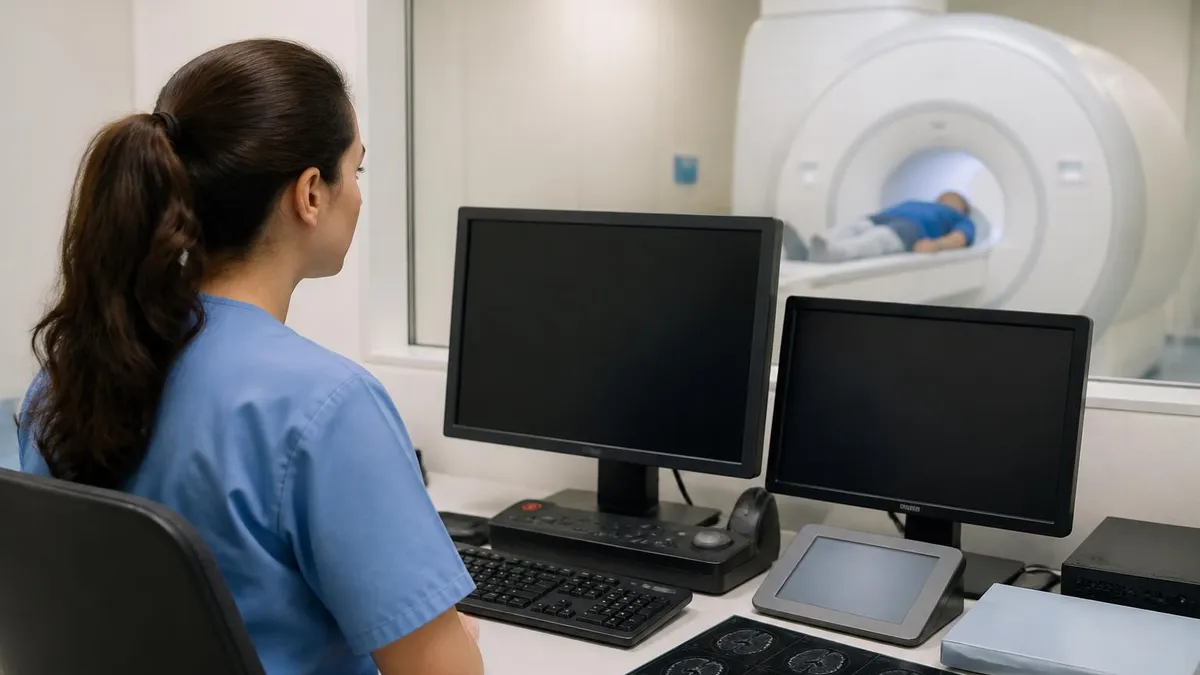
Documentation is everything for 72197: the radiology report must explicitly describe both pre-contrast and post-contrast sequence acquisition. Reports that only state "contrast was administered" without describing the pre-contrast series are a common trigger for payers to downcode the claim to 72196. Keep radiologist dictation templates explicit about both phases to avoid this.
Reimbursement rates for MRI codes shift every year with the Medicare Physician Fee Schedule, and the exact payment varies by locality, place of service, and whether the code is billed globally or split into professional (modifier 26) and technical (modifier TC) components. As a rule of thumb, codes in the "without and with contrast" family (72197, 70553, 72158) reimburse more than their "without contrast" counterparts (72195, 70551, 72148), reflecting the added imaging time and gadolinium administration. For the exact current rate in your locality, use the CMS Physician Fee Schedule Look-Up Tool rather than relying on a flat national number — non-facility, facility, professional, and technical rates all differ.
Joint and extremity MRIs (knee, shoulder, wrist) typically reimburse less than body or neuroimaging MRIs like brain or lumbar spine, largely because joint studies rarely require contrast and use shorter protocols. Brain and spine "without and with contrast" studies (70553, 72158) are generally among the higher-reimbursed common MRI codes because of their added contrast phase and interpretation complexity.
Commercial payer reimbursement varies widely by plan and contract, and is typically set as a percentage of the Medicare rate rather than a fixed national dollar figure. Blue Cross plans, UnitedHealthcare, and Aetna all publish their own fee schedules and contracted rates. Always check your specific contract before estimating reimbursement, especially for high-complexity codes like cardiac MRI.
Documentation is the bedrock of defensible coding. For every MRI claim, you should have on file: the signed and dated physician order with diagnosis, the radiology report with technique and impression sections, the contrast administration record (if applicable) with batch number and dose, the pre-authorization number from the payer, and the patient's signed consent form. Electronic medical record systems should link all of these to the date of service for easy retrieval during audits.
The radiology report itself must include: indication for the exam, MRI system field strength (1.5T vs 3T), sequences acquired (T1, T2, STIR, DWI, post-contrast T1, etc.), contrast agent name and dose if administered, findings by anatomical structure, impression, and the radiologist's signature with date. Reports lacking any of these elements may be rejected during audit even if the CPT code itself was correctly chosen.
If you're studying MRI sequences and anatomy to better support your coding accuracy — or just to understand what's happening behind the dictation — explore Knee MRI Images: A Complete Guide to Reading, Understanding, and Interpreting Knee Scans for a visual walkthrough of joint imaging that maps neatly to CPT 73721 documentation requirements.
Finally, audit your own claims monthly. Pull a random sample of 20–30 MRI claims and verify that the CPT code, contrast designation, modifiers, and diagnosis linkage all match the radiology report and the payer's coverage policy. This proactive self-audit is the single highest-ROI activity for any imaging billing team and will catch systematic errors before they become six-figure recoupments.
Mastering MRI CPT coding is a skill that compounds over time. Start by memorizing the contrast triplet pattern: every body region has a without, with, and without-and-with code. Once you internalize that 72195/72196/72197 governs the pelvis, 70551/70552/70553 governs the brain, and 72148/72149/72158 governs the lumbar spine, you'll find that 80 percent of your daily coding becomes pattern recognition rather than lookup work. Build flashcards or a personal cheat sheet during your first month and refer to it constantly.
Next, invest time in NCCI edit familiarity. The CMS NCCI edits are free, downloadable, and updated quarterly. Many coders never open them and instead rely on their software's edit engine to catch bundling errors — but software lags behind quarterly updates by weeks. Knowing the major bundling pairs (pelvis MRI codes with each other, MRCP with abdomen MRI, MRA with conventional MRI of the same region) puts you ahead of the curve.
Develop a relationship with your radiologists. The single best way to reduce denials is to ensure dictation templates capture the documentation elements that justify each CPT code. Most radiologists are happy to update macros and templates when shown specific examples of denied claims. A 30-minute meeting with your radiology group can fix template gaps that cause hundreds of denials per year.
Stay current on annual code changes. The AMA publishes new, revised, and deleted codes every November for the following calendar year. MRI codes don't change every year, but when they do — like the 2020 addition of breast MRI CAD codes or the 2023 updates to MR-guided focused ultrasound — the changes are substantial and missing them creates immediate denials. Subscribe to a coding update newsletter or attend the AMA's annual CPT symposium.
If you're preparing for the ARRT MRI registry exam, expect at least 5–8 questions on CPT coding, contrast modifiers, and billing rules. The exam doesn't require you to memorize every code, but you must understand the structure of the contrast triplet, the difference between joint and non-joint extremity codes, and the role of modifiers 26 and TC. Our free practice question banks are aligned with the current ARRT content specifications and are an excellent way to self-test.
For coders pursuing the CPC, CIRCC, or CCS credentials, MRI is a high-yield topic on every exam. Focus your study on the radiology section of CPT (codes 70000–79999), understand the difference between the radiology guidelines and the surgical guidelines, and practice with real-world chart examples. The CIRCC credential in particular is built for interventional and diagnostic radiology and pays a strong salary premium in 2026.
Finally, never stop reading. Subscribe to RBMA's billing alerts, the ACR's coding updates, and CMS transmittals. The world of medical coding changes constantly, and the coders who thrive are the ones who treat learning as a daily habit rather than an annual chore. Your accuracy, your revenue, and your professional reputation depend on it.
MRI CPT Code Flashcards
🧠 What are the three brain MRI CPT codes?
70551 is brain MRI without contrast, 70552 is with contrast, and 70553 is without and with contrast. 70553 is the most frequently billed of the three because most tumor and MS protocols acquire pre- and post-gadolinium sequences.
START MRI REGISTRY PRACTICE TEST🦴 Which MRI pelvis CPT code is used for a study without contrast?
72195 is the MRI pelvis CPT code without contrast. 72196 is with contrast only, and 72197 is without and with contrast. Choose based on what the technique section of the report documents, not what was ordered.
START MRI KNOWLEDGE PRACTICE TEST🔁 What does "without and with contrast" mean in a CPT code?
It means pre-contrast sequences were acquired, gadolinium was injected, and post-contrast sequences were then acquired in the same session. Codes like 72197, 70553, and 72158 describe that workflow. If only post-contrast images exist, the "with contrast" code applies instead.
START CONTRAST AGENTS PRACTICE TEST🩻 Cervical, thoracic, lumbar: which spine codes are which?
Cervical spine MRI is 72141, 72142, and 72156; thoracic is 72146, 72147, and 72157; lumbar is 72148, 72149, and 72158. In each triplet the order is without contrast, with contrast, then without and with contrast.
START ANATOMY PRACTICE TEST🦵 Joint or non-joint? Knee MRI versus thigh MRI codes
Lower extremity joint MRI (hip, knee, ankle) is 73721, 73722, or 73723. Non-joint lower extremity MRI such as thigh or calf is 73718, 73719, or 73720. Upper extremity follows the same split: 73221–73223 for joints and 73218–73220 for non-joint.
START POSITIONING PRACTICE TEST👨⚕️ What do modifiers 26 and TC mean on an MRI claim?
Modifier 26 is the professional component, the radiologist's interpretation. Modifier TC is the technical component covering the scanner, supplies, and technologist time. A code billed with no modifier is global and includes both.
START MRI REGISTRY PRACTICE TEST🫀 Is there one MRI abdomen and pelvis CPT code?
No. Unlike CT, MRI has no combined abdomen and pelvis code. Report an abdomen code (74181, 74182, or 74183) plus a pelvis code (72195, 72196, or 72197) with matching contrast designations and separate diagnosis support for each region.
START MRI KNOWLEDGE PRACTICE TEST🩸 How is MRA coded differently from MRI?
Magnetic resonance angiography has its own codes: 70544–70546 for the head, 70547–70549 for the neck, 74185 for the abdomen, and 72198 for the pelvis. Never report an MRI code with a modifier to describe an MRA study.
START PULSE SEQUENCES PRACTICE TEST⚠️ A pelvic MRI is stopped early because of claustrophobia. Which modifier?
Modifier 52 (reduced services) is appended when a planned study is partially completed at the physician's discretion, for example 72195-52. The report must state which sequences were acquired and why the exam was limited.
START PATIENT CARE PRACTICE TEST📚 Who publishes CPT codes, and who publishes the NCCI bundling edits?
The American Medical Association owns and publishes CPT, with new, revised, and deleted codes released each fall for the following January. CMS publishes the National Correct Coding Initiative procedure-to-procedure edits quarterly and the Physician Fee Schedule annually.
START MRI PHYSICS PRACTICE TESTMRI Questions and Answers
Official Resources
- AMA CPT® (Current Procedural Terminology) — the American Medical Association owns and maintains the CPT code set, including the 70000-series radiology codes used for every MRI study.
- CMS National Correct Coding Initiative (NCCI) for Medicare — quarterly procedure-to-procedure edit files that determine which MRI codes bundle and when modifier 59 or the X modifiers are appropriate.
- CMS Physician Fee Schedule Look-Up Tool — the official source for current global, professional (26), and technical (TC) reimbursement amounts for any MRI CPT code.

What Is an MRI Test? How Magnetic Resonance Imaging Scans Diagnose Disease in 2026

MRI Medical Abbreviation: What MRI Stands For and Why It Matters

The History of MRI: From Discovery to Modern Medicine
Knee MRI Images: A Complete Guide to Reading, Understanding, and Interpreting Knee Scans
Noise of MRI Machine: Why MRI Scanners Are So Loud and What to Expect
About the Author

Medical Laboratory Scientist & Clinical Certification Expert
Johns Hopkins UniversityDr. Sandra Kim holds a PhD in Clinical Laboratory Science from Johns Hopkins University and is certified as a Medical Technologist (MT) and Medical Laboratory Scientist (MLS) through ASCP. With 16 years of clinical laboratory experience spanning hematology, microbiology, and molecular diagnostics, she prepares candidates for ASCP board exams, MLT, MLS, and specialist certification tests.
Join the Discussion
Connect with other students preparing for this exam. Share tips, ask questions, and get advice from people who have been there.
View discussion (8 replies)