
The History of MRI: From Discovery to Modern Medicine 2026 October
Who created the MRI? Explore the complete history of MRI, 💡 from 1946 NMR discoveries to Lauterbur, Mansfield, Damadian, and today's 7T scanners.
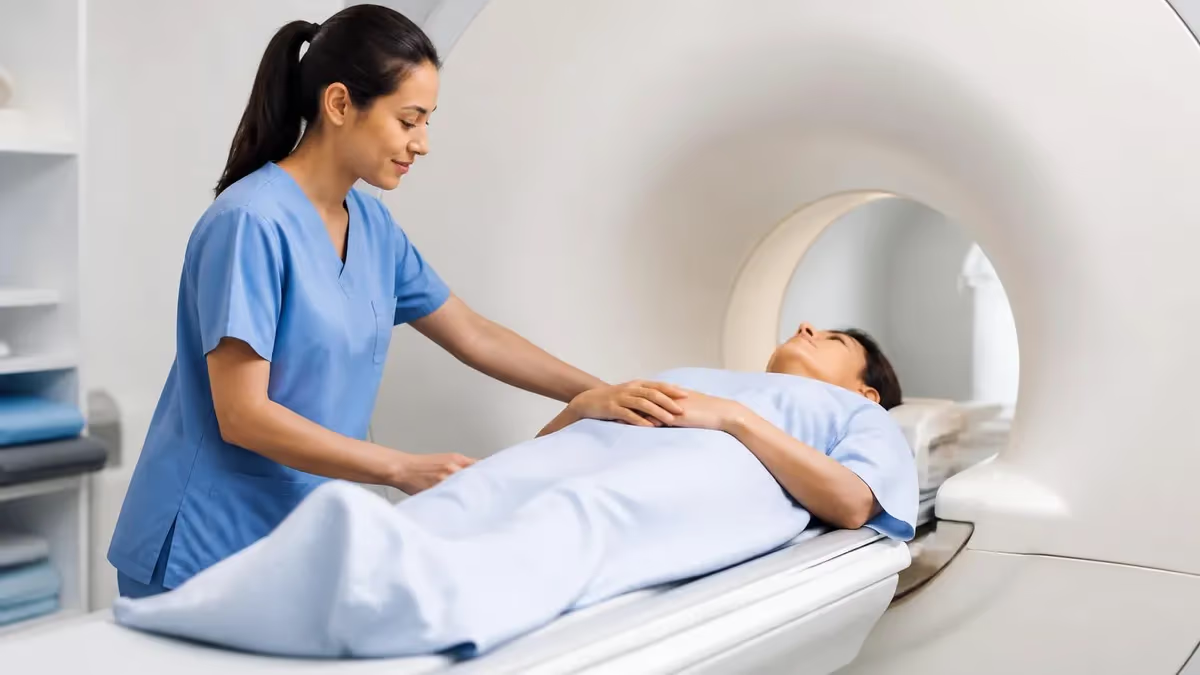
The question of who created the MRI does not have a single clean answer, because magnetic resonance imaging emerged from decades of overlapping work by physicists, chemists, and physicians. The technology we now take for granted in every major hospital traces back to 1946, when Felix Bloch at Stanford and Edward Purcell at Harvard independently described nuclear magnetic resonance, the underlying physical phenomenon. Their discovery earned them a shared 1952 Nobel Prize in Physics and laid the scientific foundation that would, three decades later, become a clinical imaging revolution transforming radiology forever.
For nearly twenty-five years after Bloch and Purcell, nuclear magnetic resonance remained a laboratory tool used by chemists to study molecular structure. The leap from spectroscopy to imaging required someone to ask whether NMR signals could be spatially encoded to produce a picture of living tissue. That conceptual jump happened in the early 1970s, driven by three remarkable scientists working in parallel on different continents, each convinced that magnetic resonance could see inside the human body without radiation, surgery, or harm.
Raymond Damadian, a physician at the State University of New York, published a landmark 1971 paper in Science showing that cancerous tissue had different relaxation times than healthy tissue. Paul Lauterbur at Stony Brook devised the gradient method that turned NMR signals into spatial maps in 1973. Sir Peter Mansfield at the University of Nottingham developed the mathematical techniques and echo-planar imaging that made fast scanning possible. Together, these three figures form the core answer to the founding question.
The story is also one of fierce controversy. The 2003 Nobel Prize in Physiology or Medicine went to Lauterbur and Mansfield, but pointedly excluded Damadian, who took out full-page newspaper ads protesting the decision. Patent disputes, priority arguments, and disagreements over what counts as the essential invention have shaped the public memory of MRI's origins. Understanding these tensions helps clarify why so many sources give different answers to the same simple question about the inventor.
Beyond the famous names, the history of MRI also involves engineers at companies like EMI, Picker, and General Electric who turned fragile laboratory prototypes into reliable clinical machines. The first human whole-body scan in 1977 took almost five hours and produced a grainy cross-section that today would be considered diagnostic noise. Within a decade, scan times had dropped to minutes, image quality had improved dramatically, and MRI had become indispensable for neurology, orthopedics, oncology, and cardiology across the developed world.
This article walks through the full arc of that history, from the physics of the 1940s through the clinical revolution of the 1980s, the functional imaging breakthroughs of the 1990s, and the ultra-high-field 7T systems of today. You will learn who contributed what, when each milestone occurred, and why the path from theory to bedside took so long. For a complementary view of modern capability, see our guide to what MRI can detect across the body.
MRI History by the Numbers
Major Milestones in MRI History
1946 — NMR Discovered
1971 — Damadian's Cancer Paper
1973 — Lauterbur's Gradients
1977 — First Human Scan
1980 — Commercial Scanners
2003 — Nobel Prize Awarded
To understand who created the MRI, we have to start with nuclear magnetic resonance, the physical phenomenon that makes the entire technology possible. In 1946, Felix Bloch at Stanford and Edward Purcell at Harvard, working completely independently and with different experimental setups, showed that the nuclei of certain atoms absorb radio frequency energy when placed in a strong magnetic field and re-emit that energy at a precise frequency. This frequency depends on the nucleus and the field strength, a relationship now known as the Larmor equation.
Bloch worked with liquid water, while Purcell used solid paraffin wax, but both observed the same fundamental signal. Their 1952 Nobel Prize in Physics confirmed that NMR was a real, measurable, and reproducible phenomenon. For the next two decades, chemists embraced NMR as a tool for determining molecular structure, because different chemical environments produced subtly different resonance frequencies, a phenomenon called chemical shift that remains central to NMR spectroscopy today in pharmaceutical and academic laboratories.
During the 1950s and 1960s, important refinements emerged that would later prove essential for imaging. Erwin Hahn discovered spin echoes in 1950, showing that radiofrequency pulses could refocus dephasing signals and reveal underlying relaxation properties. Richard Ernst developed Fourier transform NMR in the 1960s, dramatically improving sensitivity by allowing all frequencies to be measured simultaneously rather than swept one at a time. Ernst himself would win a Nobel Prize in Chemistry in 1991 for these contributions, which underpin every modern MRI pulse sequence.
The transition from chemistry tool to medical imaging method required someone to recognize that NMR signals contained biological information. Raymond Damadian made that leap in 1971 when he measured proton relaxation times in healthy and cancerous rat tissue and found that tumors had significantly longer T1 and T2 values. Although he did not yet know how to make a picture, he had established the diagnostic premise: tissue chemistry shows up in NMR signals, and disease changes that chemistry in measurable ways across organ systems.
Damadian's 1971 paper in Science is widely cited as the first proposal that NMR could be used for medical diagnosis. He filed a 1972 patent titled Apparatus and Method for Detecting Cancer in Tissue, which described scanning the body point by point and comparing signals to a baseline. This focused-field approach, sometimes called field-focused nuclear magnetic resonance, was slow and impractical compared to what came next, but it secured Damadian a legal foothold that would later support significant patent licensing revenue from competing manufacturers.
Meanwhile, Paul Lauterbur at Stony Brook was thinking about the problem differently. He realized that if a magnetic field gradient were applied across a sample, different positions would resonate at different frequencies, and the resulting signal could be mathematically reconstructed into a spatial image. His September 1973 paper in Nature, titled Image Formation by Induced Local Interactions, demonstrated this with two water tubes and effectively invented MRI as we know it. For practical examples of modern output, see what a normal MRI looks like.
MRI Practice Test Questions
Prepare for the MRI - Magnetic Resonance Imaging exam with our free practice test modules. Each quiz covers key topics to help you pass on your first try.
MRI Knowledge
MRI Exam Questions covering Knowledge. Master MRI Test concepts for certification prep.
MRI Physics
Free MRI Practice Test featuring Physics. Improve your MRI Exam score with mock test prep.
MRI Anatomy and Pathology
MRI Test Prep for MRI Anatomy and Pathology. Practice MRI Quiz questions and boost your score.
MRI Anatomy and Positioning
MRI Questions and Answers on MRI Anatomy and Positioning. Free MRI practice for exam readiness.
MRI Contrast Agents
Free MRI Quiz on MRI Contrast Agents. MRI Exam prep questions with detailed explanations.
MRI Patient Care and Positioning
MRI Practice Questions for MRI Patient Care and Positioning. Build confidence for your MRI certification exam.
The Three Founding Figures of MRI
Raymond Damadian, born in 1936 in New York, trained as a physician and biophysicist at the State University of New York Downstate Medical Center. His 1971 Science paper demonstrating that cancerous tissue has distinct relaxation times is generally credited as the foundational medical insight that motivated the development of clinical MRI. He framed NMR not as a chemistry tool but as a future diagnostic instrument capable of revealing disease without ionizing radiation.
Damadian founded FONAR Corporation in 1978 and produced the first commercial scanner. He held a key 1974 patent that earned hundreds of millions in licensing fees from General Electric and other manufacturers. His exclusion from the 2003 Nobel Prize generated lasting controversy, with supporters arguing the award ignored the physician who first envisioned MRI's medical role. He died in 2022, still widely regarded by patients as a co-creator of the technology.
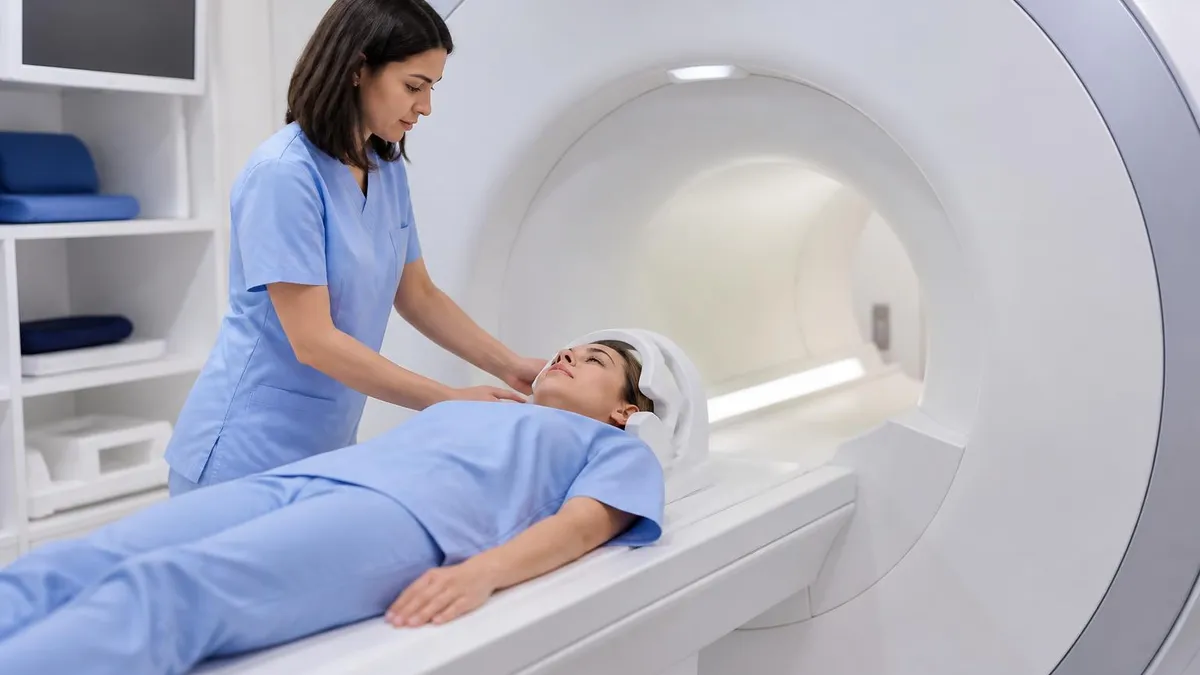
Crediting Damadian Versus the Nobel Committee
- +Damadian's 1971 Science paper first proposed NMR as a medical diagnostic tool
- +His patent claims predated Lauterbur's gradient publication by months
- +FONAR built and operated the first whole-body human MRI scanner in 1977
- +He championed the physician-driven view that MRI was a medical, not just physical, invention
- +Many radiologists and patient advocates view him as a co-creator
- +His licensing victories validated MRI's commercial significance
- −His focused-field method was impractical for full anatomical imaging
- −Lauterbur's gradient approach is the technical basis of every modern scanner
- −Mansfield's echo-planar imaging enables nearly all fast clinical sequences
- −The Nobel Committee historically rewards physical mechanisms over clinical concepts
- −Peer reviewers questioned whether Damadian's early scans were diagnostically useful
- −Most academic histories treat 1973 as MRI's true birth year
Essential Who Created the MRI Study Points
- ✓Bloch and Purcell discovered nuclear magnetic resonance independently in 1946
- ✓Their 1952 Nobel Prize in Physics established NMR as a measurable phenomenon
- ✓Erwin Hahn's 1950 spin echo discovery enabled relaxation time measurement
- ✓Damadian's 1971 Science paper linked NMR signals to cancer detection
- ✓Lauterbur's 1973 Nature paper introduced gradient-based spatial encoding
- ✓Mansfield's 1977 echo-planar imaging enabled millisecond-scale acquisition
- ✓The first human whole-body scan occurred on July 3, 1977 using FONAR Indomitable
- ✓Commercial clinical scanners reached hospitals beginning around 1980
- ✓Functional MRI emerged in 1990 through Seiji Ogawa's BOLD contrast discovery
- ✓Lauterbur and Mansfield shared the 2003 Nobel Prize in Physiology or Medicine
Three inventors, one revolution
The history of MRI is unusual because no single person can be cleanly named as its sole inventor. Damadian supplied the medical motivation, Lauterbur supplied the spatial encoding concept, and Mansfield supplied the fast acquisition mathematics. Understanding these distinct contributions clarifies registry exam questions and gives technologists deeper insight into why modern scanners operate the way they do today.
The journey from Lauterbur's 1973 two-tube image to a functional clinical scanner installed in a community hospital took roughly a decade of intense engineering. Early prototypes used resistive electromagnets, which produced weak fields around 0.1 to 0.2 Tesla and generated enormous amounts of heat that required continuous water cooling. The signal-to-noise ratio was poor, and scan times stretched into hours, making patient throughput essentially impossible. The first clinical pioneers were physicists and engineers as much as physicians.
A critical engineering breakthrough was the move to superconducting magnets in the late 1970s. By cooling niobium-titanium wire to 4 Kelvin with liquid helium, manufacturers could generate stable fields of 0.5 Tesla and above without continuous electrical power. The first superconducting clinical MRI installations appeared at hospitals like the Hammersmith in London and the University of California San Francisco in the early 1980s. These machines produced images recognizably similar to what we see today, although still slow.
The 1.5 Tesla scanner, introduced commercially around 1983 by General Electric and Siemens, became the workhorse field strength that still dominates clinical practice in the United States. At 1.5 Tesla, signal-to-noise is excellent, susceptibility artifacts remain manageable, and most body parts can be imaged in clinically acceptable times. The shift from 0.5 to 1.5 Tesla required new gradient hardware, faster electronics, and improved radiofrequency coils, all of which arrived through close collaboration between physicists and industry engineers.
Pulse sequence development progressed in parallel with hardware. Spin echo, gradient echo, and inversion recovery sequences were refined throughout the 1980s, giving radiologists tools to differentiate gray and white matter, edema, hemorrhage, and various pathologies. Gadolinium-based contrast agents received FDA approval in 1988, dramatically expanding the diagnostic value of MRI for tumors, infections, and vascular lesions. Suddenly, MRI could not just see structure but also characterize tissue behavior in ways no other imaging modality could match.
Safety standards evolved alongside the technology. The first reported serious adverse event involving a ferromagnetic object pulled into a scanner occurred in the 1980s, leading to the development of formal screening protocols. The ACR Manual on MRI Safety, first published in 2002, codified zone classifications, screening procedures, and emergency response. The history of safety practice is itself a discipline worth studying, and our guide to mri safety cpt codes covers current 2026 protocols including ferrous detection systems and quench procedures in detail.
By the early 1990s, MRI had transitioned from a research curiosity to a standard imaging modality available in virtually every major US hospital. Reimbursement codes were established, training programs proliferated, and radiologists developed specialized expertise in MRI interpretation. The technology that began with two scientists pondering radio wave absorption in 1946 had become a cornerstone of modern medical practice, with hundreds of thousands of scans performed daily across the country and increasingly used to guide surgical planning, treatment monitoring, and clinical trials.
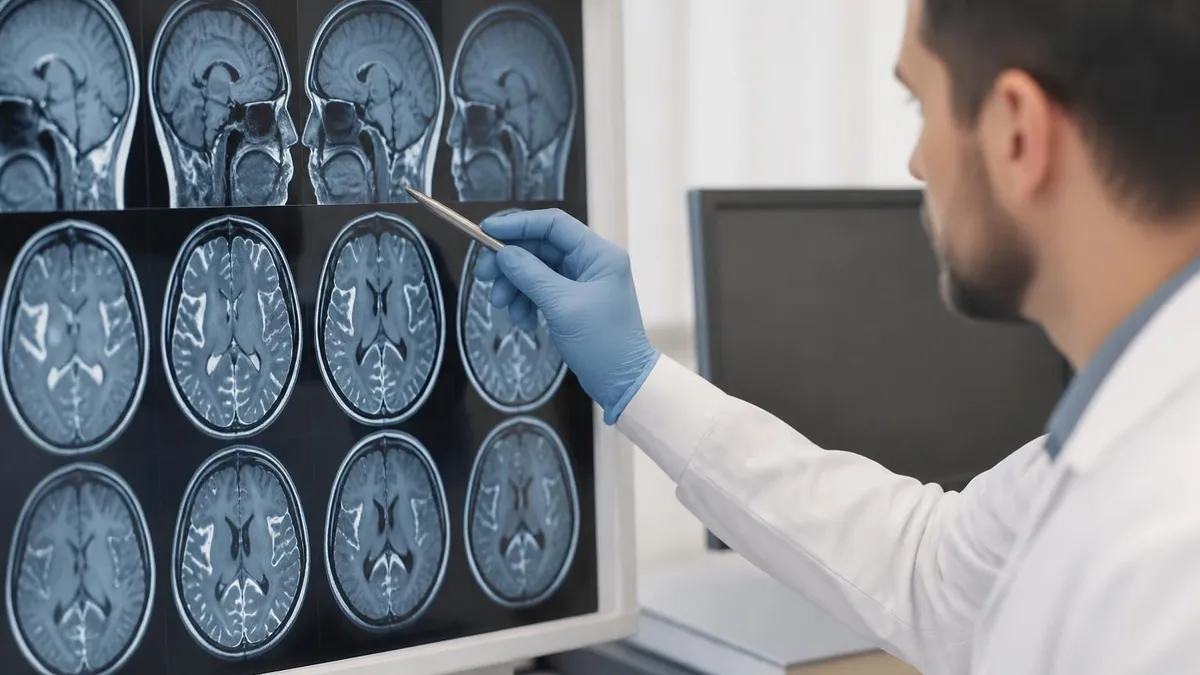
The original FONAR Indomitable scanner that produced the first human MRI image on July 3, 1977 is now part of the Smithsonian Institution's collection. The bulky apparatus reminds visitors how far MRI technology has progressed in less than fifty years, from a five-hour single-slice acquisition to whole-body scans completed in twenty minutes with submillimeter resolution.
Modern MRI bears the unmistakable fingerprints of its three founding figures, yet the technology has evolved in ways none of them could have predicted in the 1970s. Functional MRI emerged in 1990 when Seiji Ogawa at Bell Laboratories discovered the BOLD effect, showing that deoxygenated hemoglobin altered local magnetic susceptibility enough to be detected by MRI. Within five years, fMRI had become the dominant tool in cognitive neuroscience research, mapping brain activity during tasks ranging from language processing to emotional regulation across thousands of academic studies.
Diffusion-weighted imaging, developed throughout the 1980s and refined in the 1990s, gave clinicians the ability to detect acute ischemic stroke within minutes of symptom onset, long before changes appear on CT or conventional MRI sequences. This capability transformed stroke care, enabling time-sensitive treatment decisions that save brain tissue and lives. Diffusion tensor imaging, a further refinement, allows visualization of white matter tracts and has become essential for presurgical planning in patients with brain tumors located near critical pathways.
Field strength has continued to climb. 3 Tesla scanners, once exotic research tools, are now standard at academic medical centers and increasingly common in community practice. 7 Tesla systems received FDA clearance for clinical use in 2017, offering unprecedented spatial resolution for neurological and musculoskeletal applications. Research-grade 11.7 Tesla human scanners now exist at the NIH and in France, pushing the boundaries of what magnetic resonance can reveal about cellular metabolism, structure, and function in vivo without any ionizing radiation exposure.
Artificial intelligence is the latest chapter in MRI history. Deep learning reconstruction algorithms can produce diagnostic-quality images from data acquired in a quarter of the conventional scan time, dramatically improving throughput and patient comfort. Vendor-neutral AI software now assists with lesion detection, automated measurement, and protocol selection. These tools do not replace radiologists but augment their workflow, much as superconducting magnets and gradient echo sequences augmented the work of earlier generations of MRI pioneers in dramatic ways.
The clinical scope has also expanded. Cardiac MRI characterizes myocardial tissue with unmatched precision. MR enterography has become a primary tool for inflammatory bowel disease monitoring. Whole-body MRI screening protocols are gaining popularity among health-conscious consumers, despite ongoing debate about incidentalomas and overdiagnosis. For a detailed overview of current screening capability, see our article on full body MRI and what it actually detects across organ systems beyond what targeted exams reveal.
Looking forward, MRI history is far from complete. Portable bedside scanners using permanent magnets at 0.064 Tesla, such as the Hyperfine Swoop, are bringing imaging to intensive care units and rural clinics. Hyperpolarized gas and metabolic imaging are extending MRI into functional measurement of lung ventilation and tissue metabolism. Quantum sensing and cryogen-free magnets promise to make scanners smaller, cheaper, and more accessible globally. Bloch, Purcell, Damadian, Lauterbur, and Mansfield laid the foundation, but each generation of physicists, engineers, and clinicians continues to build on their work.
For students preparing for the ARRT MRI registry or technologists seeking continuing education credit, the history of MRI appears more frequently on examinations than many candidates expect. Registry questions commonly ask which scientist discovered NMR, who first imaged a human body with MRI, and what Lauterbur named his original technique. Memorizing the years 1946, 1971, 1973, and 1977 alongside the names attached to each milestone provides a solid foundation for both written exams and patient education conversations.
One useful study mnemonic links each figure to a single phrase. Bloch and Purcell discovered the signal. Damadian discovered the medical relevance. Lauterbur discovered the spatial encoding. Mansfield discovered the speed. This four-part framework captures the conceptual progression from physics to medicine to imaging to clinical practicality, and it tracks closely with how registry exam questions are typically structured around the historical evolution of the technology over its first three decades.
Pay particular attention to the distinction between NMR and MRI. The phenomenon is nuclear magnetic resonance, abbreviated NMR, and that term remains in use in chemistry and physics laboratories. Clinical practice adopted the term magnetic resonance imaging, dropping the word nuclear to avoid public association with ionizing radiation or nuclear medicine. Both terms refer to the same underlying physical process, but the rebranding around 1980 was a deliberate marketing decision by manufacturers concerned about patient acceptance of the new technology.
Another commonly tested point is the role of Erwin Hahn and his spin echo discovery in 1950. Although Hahn never received a Nobel Prize, his observation that radiofrequency pulses can refocus dephasing signals is the basis of nearly every modern MRI pulse sequence. Spin echo, fast spin echo, turbo spin echo, and half-Fourier acquisition all derive from Hahn's foundational physics work. Registry candidates should be able to identify Hahn alongside the more famous Nobel laureates in any historical question about the development of MRI.
Patent history sometimes appears on exams as well. Damadian's 1974 patent number 3,789,832 covered an apparatus for detecting cancer in tissue and became the basis for FONAR Corporation's later licensing victories against General Electric. The 1997 jury verdict awarded FONAR over 128 million dollars, a landmark in medical device patent law. While this detail rarely appears in clinical practice, it is a favorite of exam writers looking to test deeper historical knowledge beyond the surface-level inventor question.
Finally, contextualize the history within ongoing developments. MRI did not stop evolving in 1977 or 2003. Functional MRI, diffusion imaging, ultra-high-field systems, and AI-assisted reconstruction are part of the continuing story. When you encounter a clinical case, consider which historical innovation made that specific scan possible. A diffusion-weighted stroke protocol exists because of decades of physics refinement. Reflecting on this lineage deepens your appreciation for the technology and improves your performance on exam questions across all categories.
Practice questions remain the single most effective preparation strategy. Working through fifty to one hundred history-related items across multiple sessions builds the recall speed needed for timed registry exams. Combine quiz practice with reading primary source summaries, listening to podcasts featuring radiology historians, and discussing the inventors with classmates or coworkers. The names Bloch, Purcell, Damadian, Lauterbur, and Mansfield will start to feel like colleagues rather than abstract historical figures from a textbook chapter.
MRI Questions and Answers
About the Author

Medical Laboratory Scientist & Clinical Certification Expert
Johns Hopkins UniversityDr. Sandra Kim holds a PhD in Clinical Laboratory Science from Johns Hopkins University and is certified as a Medical Technologist (MT) and Medical Laboratory Scientist (MLS) through ASCP. With 16 years of clinical laboratory experience spanning hematology, microbiology, and molecular diagnostics, she prepares candidates for ASCP board exams, MLT, MLS, and specialist certification tests.
Join the Discussion
Connect with other students preparing for this exam. Share tips, ask questions, and get advice from people who have been there.
View discussion (8 replies)