
What a Normal MRI Looks Like: Brain, Spine & Knee 2026 October
Normal MRI guide — what a normal cervical spine MRI, normal brain MRI, normal knee MRI and normal abdomen MRI look like, with landmarks and report wording. 💯
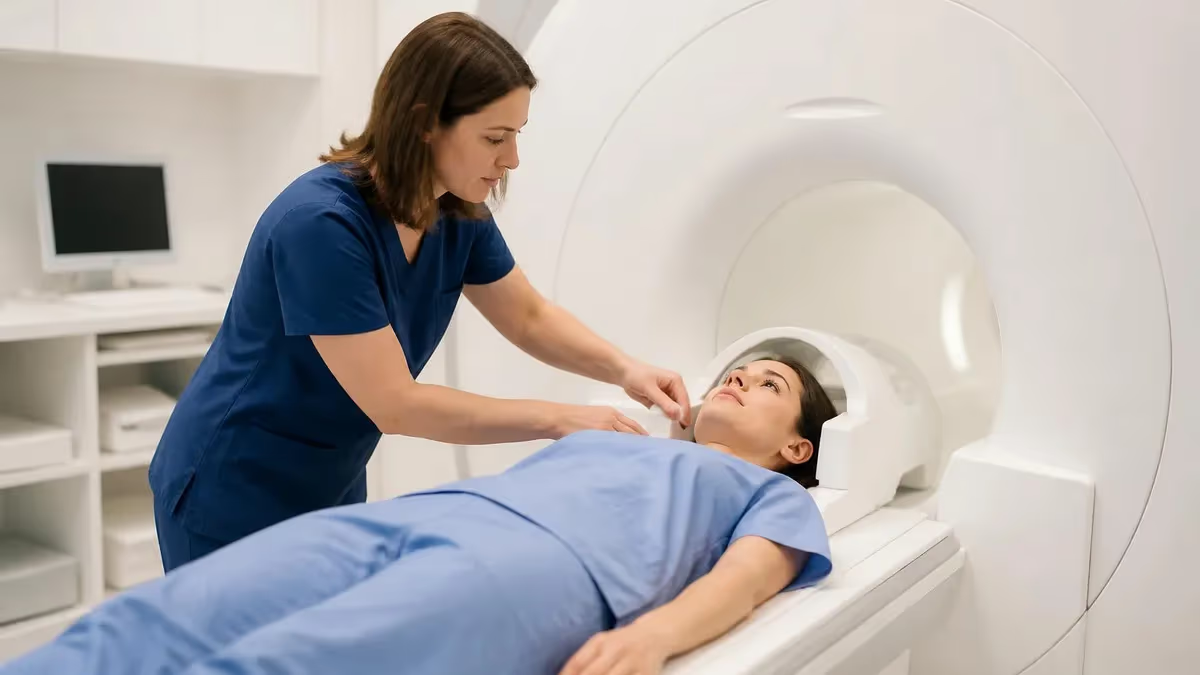
What a Normal MRI Actually Looks Like
A normal MRI is the baseline every other scan gets measured against. Before a radiologist can call something abnormal, they need a clear mental picture of what healthy anatomy looks like on each sequence.
For patients sitting in front of their own scan trying to make sense of the report, the same principle applies — knowing what a normal cervical spine MRI, a normal brain MRI, a normal knee MRI or a normal abdomen MRI looks like makes the abnormal findings far easier to put in context. This guide walks through the anatomic landmarks, the signal patterns and the report language that signal a healthy study across the most commonly imaged body parts.
Magnetic resonance imaging produces images by mapping how hydrogen atoms in tissue respond to a strong magnetic field and radio-frequency pulses. Different tissues — fat, water, muscle, bone marrow, cerebrospinal fluid — return different signals on different sequences, which is why MRI is so good at distinguishing soft tissues that look identical on x-ray or CT.
A normal MRI shows tissues with the expected signal characteristics, the expected anatomic shapes, the expected boundaries and no unexpected fluid, mass or distortion. The radiologist scans through hundreds of images, region by region, looking for the absence of any of those expected features. When everything matches the textbook, the report comes back with the phrase every patient hopes to read: no acute findings, structures appear unremarkable.
Normal MRI by the Numbers
Reading Sequences: T1, T2 and Beyond
Almost every MRI report references T1 and T2 sequences. On a T1-weighted image, fat appears bright (high signal) and water appears dark. On a T2-weighted image, water appears bright and fat is often suppressed or appears moderately bright depending on the protocol. Most pathology — edema, inflammation, cysts, acute injury — contains water and therefore appears bright on T2 sequences, which is why T2 is the workhorse sequence for finding abnormalities. T1 sequences provide the anatomical reference, showing the structural map of the body part in question.
Beyond T1 and T2, additional sequences fine-tune the diagnosis. FLAIR (fluid-attenuated inversion recovery) suppresses the bright signal of cerebrospinal fluid in the brain so that periventricular lesions stand out instead of being washed out by the bright ventricles. STIR (short tau inversion recovery) suppresses fat to make bone marrow edema and soft tissue inflammation easier to see.
Diffusion-weighted imaging (DWI) detects acute stroke and certain tumours by mapping how water molecules move through tissue. Proton density (PD) sequences with fat suppression are the workhorse for knee MRI evaluation of cartilage, menisci and ligaments. Each sequence answers a different question, and a normal MRI is one where the expected signal pattern holds across every sequence for every structure.
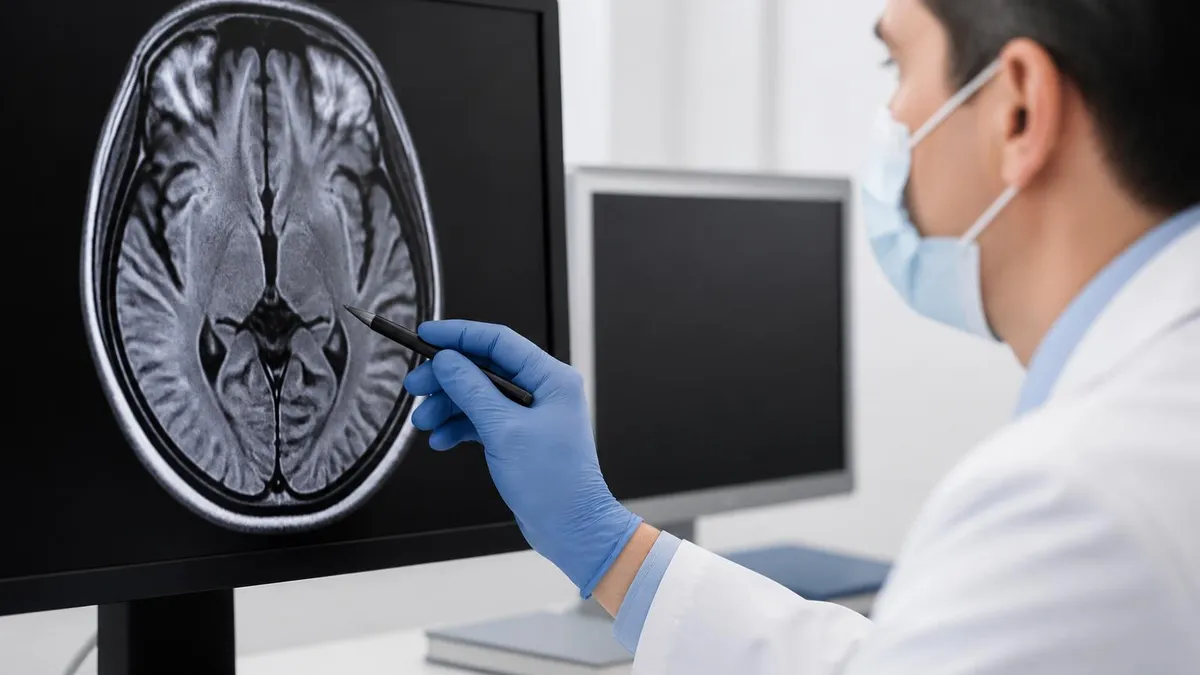
What a normal report typically says
A normal MRI report follows a predictable structure. The radiologist describes each region in turn — for a brain MRI: ventricles, sulci, gray matter, white matter, basal ganglia, brainstem, cerebellum, vasculature; for a spine MRI: vertebral bodies, intervertebral discs, spinal cord, nerve roots, paraspinal soft tissues. The phrase that signals normal varies: "unremarkable", "within normal limits", "no acute intracranial abnormality", "no significant disc bulge or herniation", "intact ligaments and menisci". The impression at the end summarises with a single line: "Normal MRI of the brain" or "No acute findings". When you see that, the structures imaged look the way they should.
Normal Brain MRI: Anatomic Landmarks
A normal brain MRI shows symmetric cerebral hemispheres separated by the falx cerebri, with gray matter forming the outer cortex and white matter forming the deeper tracts. The ventricular system — paired lateral ventricles, the third ventricle in the midline, the cerebral aqueduct, and the fourth ventricle between the brainstem and cerebellum — appears as fluid-filled spaces that are bright on T2, dark on T1 and dark on FLAIR.
The size of the ventricles is age-appropriate; mild dilation in older adults is expected and not the same as hydrocephalus. The sulci between gyri are visible but not unusually deep, and the gyri themselves are not flattened or shifted from the midline.
The basal ganglia (caudate, putamen, globus pallidus), the thalami, the brainstem (midbrain, pons, medulla) and the cerebellum all appear with their normal symmetric configurations. The corpus callosum, the C-shaped bundle of fibres connecting the hemispheres, is fully formed and intact. White matter shows the expected smooth signal without scattered bright spots on FLAIR.
The pituitary gland sits in the sella turcica with normal size and configuration. Cerebellar tonsils sit above the foramen magnum without protruding downward. Major vessels — internal carotids, vertebrals, basilar, middle cerebrals — show patent flow voids without aneurysmal dilation. A normal brain MRI captures all of this in roughly 200 to 300 images across multiple sequences, and the report addresses each region in sequence.
Normal MRI Across Body Parts
Symmetric hemispheres with intact gray-white differentiation. Ventricles age-appropriate without enlargement. No mass, no midline shift, no abnormal FLAIR signal. Brainstem and cerebellum symmetric. Vascular flow voids preserved. Pituitary, basal ganglia, thalami all unremarkable. Normal brain MRI without contrast is the standard study for routine evaluation.
Vertebral bodies aligned without compression fracture. Intervertebral discs preserved with normal T2 signal indicating healthy hydration. Spinal cord smooth and centred with no signal abnormality. Nerve roots exit cleanly through neural foramina. Normal cervical spine MRI shows lordotic curve preserved. Normal L spine MRI shows lumbar lordosis intact with no significant disc bulge.
Menisci appear as dark wedges without high-signal tears. ACL, PCL, MCL and LCL all show continuous fibres. Articular cartilage is smooth across femoral condyles, tibial plateaus and patella. No bone marrow edema, no joint effusion, no Baker cyst. Healthy knee MRI confirms all soft tissue structures intact and is the baseline image set for comparison.
Liver, spleen, pancreas, kidneys and adrenals all show normal size, contour and signal. No masses, no cysts of concern, no biliary or pancreatic ductal dilation. Bowel loops are unremarkable. Vasculature including aorta and portal vein patent. Retroperitoneal lymph nodes within normal size limits. Normal abdomen MRI rules out the most common solid-organ pathology.
Normal Spine MRI: Cervical, Thoracic and Lumbar
A normal cervical spine MRI shows seven cervical vertebrae stacked in a smooth lordotic curve. Each vertebral body has uniform marrow signal, intact cortical margins and no compression deformity. The intervertebral discs between C2-C3 down through C7-T1 show preserved height and the bright T2 signal of healthy nucleus pulposus, which indicates adequate hydration. The spinal cord runs centred through the canal with uniform calibre and no abnormal signal.
Nerve roots exit through neural foramina that are widely patent on both sides. The dens of C2 sits properly behind the anterior arch of C1, and the craniocervical junction shows no abnormality. A normal MRI C spine confirms no disc herniation, no stenosis, no cord signal abnormality and no significant degenerative change beyond age-appropriate mild changes.
A normal L spine MRI follows the same logic in the lumbar region. The five lumbar vertebrae sit in a lordotic curve with preserved heights and intact marrow signal. The L1-L2 through L5-S1 discs show bright T2 signal centrally with intact annular fibres. The conus medullaris — the tapered end of the spinal cord — terminates around T12-L1 or L1-L2 without abnormal signal. The cauda equina nerve roots float in the dural sac without clumping or compression.
Neural foramina are patent at every level. Facet joints show smooth articular surfaces. The sacrum and sacroiliac joints appear normal. A normal lumbar MRI is the baseline image when a patient with back pain undergoes evaluation — the absence of disc bulges, herniations, central canal stenosis and nerve root compression rules out the structural causes that surgery would address.
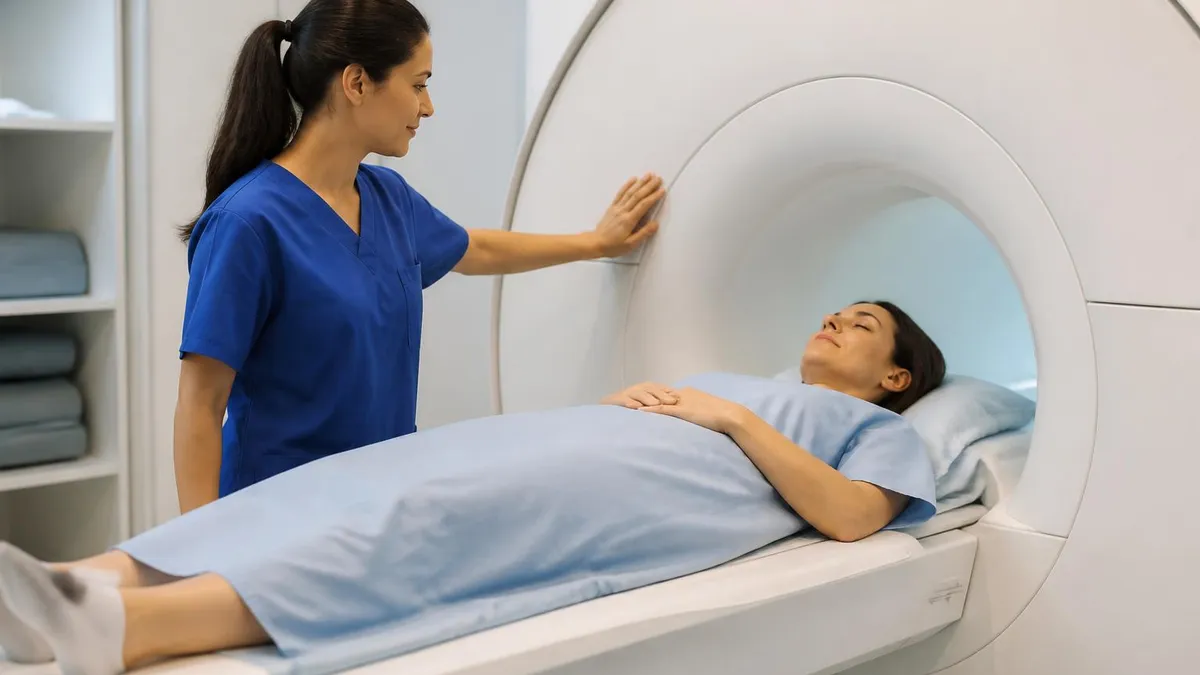
Normal MRI Anatomy by Body Part
Symmetric cerebral hemispheres with cortical gray matter outside and white matter inside. Lateral, third and fourth ventricles age-appropriate without dilation. Basal ganglia, thalami, hippocampi all symmetric. Brainstem (midbrain, pons, medulla) shows normal contours. Cerebellum symmetric with intact vermis and tonsils above foramen magnum. Pituitary gland fits within sella turcica. Major vessels show patent flow voids. Normal brain MRI without contrast covers the structural evaluation; contrast adds vascular and lesion enhancement information when ordered.
Normal Knee MRI: Menisci, Ligaments and Cartilage
A healthy knee MRI is the comparison reference for everything sports medicine imaging produces. The menisci appear as dark wedge-shaped structures sitting between the femoral condyles and tibial plateaus. Each meniscus has an anterior horn, a body and a posterior horn.
On a normal scan, the wedge shape is clean, the surfaces are smooth, and there is no bright signal extending through the substance of the meniscus to reach the articular surface. The classic teaching is that a torn meniscus shows linear high signal touching the surface, while internal signal that does not reach the surface represents intrasubstance degeneration rather than a true tear.
The four major ligaments — ACL, PCL, MCL and LCL — all appear as continuous dark bands of fibres with smooth, taut profiles. The ACL runs diagonally from the back of the femur to the front of the tibia and is best seen on sagittal images. The PCL is a thicker, gently curved structure running from the front of the femur to the back of the tibia. The MCL and LCL are best seen on coronal images, hugging the medial and lateral sides of the knee respectively.
Articular cartilage appears as a smooth, moderately bright layer on T2-weighted fat-suppressed images covering the femoral condyles, tibial plateaus and patellar facets. No bone marrow edema. No joint effusion beyond a tiny physiologic amount. No Baker cyst. No popliteal masses. The radiologist works through each structure individually and a normal report lists each one as intact or unremarkable.
A normal MRI rules out structural causes for symptoms, but it does not mean the symptoms are imagined. Pain, headache, dizziness or weakness can arise from causes that MRI does not capture — migraine, vestibular disorders, peripheral nerve issues, muscle strain, autonomic dysfunction, mental health factors. When a normal MRI returns alongside ongoing symptoms, the workup shifts toward other diagnostic tools and clinical evaluation. A normal scan is reassuring, but it is one piece of the puzzle rather than a complete answer.
Comparison Cases: Normal vs Abnormal Brain
Patients sometimes look up normal brain vs dementia brain MRI comparisons online. The visual differences are real but require expert interpretation. A normal brain MRI shows symmetric hippocampi with their characteristic seahorse shape, age-appropriate ventricles, and no significant cortical atrophy beyond what is expected for the patient's age.
A dementia brain — particularly Alzheimer's disease — typically shows hippocampal atrophy with widening of the temporal horns of the lateral ventricles, generalised cortical thinning, and sometimes increased white matter changes. Frontotemporal dementia shows more focal frontal and temporal atrophy. The radiologist measures specific structures and compares to normal ranges before calling early dementia changes on imaging.
Normal brain vs TBI MRI comparisons are similarly nuanced. A normal brain MRI shows no contusions, no diffuse axonal injury, no microhaemorrhages on gradient echo or susceptibility-weighted sequences, and no encephalomalacia. A traumatic brain injury MRI shows the residue of injury — focal areas of gliosis where contusions healed, small dark spots on SWI representing microhaemorrhages from shearing injury, or encephalomalacia where larger contusions left a fluid-filled defect.
Even severe historical concussions sometimes leave subtle findings that only specific sequences reveal. The point is that radiologists are trained to spot the abnormal pattern against the normal baseline, and the normal baseline is what this article describes in detail.
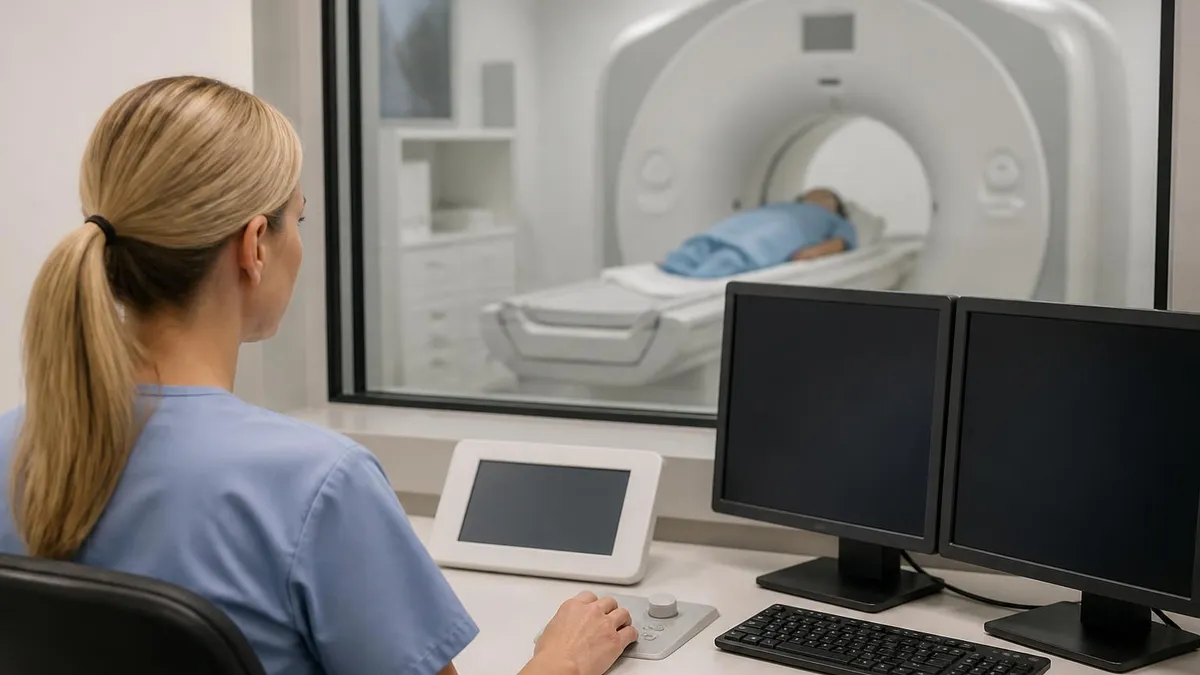
What a Normal MRI Report Should Mention
- ✓Clear statement of indication, technique and sequences performed
- ✓Region-by-region description with each anatomic structure addressed
- ✓Description of vertebral alignment, disc condition and cord morphology for spine studies
- ✓Description of ventricles, gray-white matter, brainstem and cerebellum for brain studies
- ✓Description of menisci, ligaments, cartilage and bone marrow for knee studies
- ✓Description of each solid organ for abdomen studies
- ✓Mention of comparison with prior imaging if available
- ✓Clear impression at the end summarising overall findings
Why a Normal Brainstem MRI Matters
A normal brainstem MRI confirms that the midbrain, pons and medulla — the structures connecting the cerebrum to the spinal cord — are intact and without focal lesions. The brainstem is a small space packed with critical fibres carrying cranial nerve nuclei, the corticospinal tract, the medial lemniscus and the cerebellar peduncles.
A small stroke, demyelinating lesion or tumour in the brainstem can produce dramatic symptoms — diplopia, dysarthria, dysphagia, hemiparesis, vertigo — even when much larger lesions in the cerebral cortex are clinically silent. The radiologist examines the brainstem on multiple sequences with attention to symmetry, signal characteristics and the surrounding cisterns.
A normal brainstem MRI shows symmetric pontine fibres without abnormal T2 signal, intact medullary olives, and a midbrain with a normal red-nucleus appearance. The fourth ventricle sits behind the brainstem and in front of the cerebellum without dilation. The cerebellopontine angles bilaterally are unremarkable, with no acoustic schwannomas or epidermoids displacing the cranial nerve VII-VIII complex.
The cerebellar tonsils sit above the foramen magnum without herniation. A normal brainstem MRI rules out the most clinically important posterior fossa pathologies — brainstem stroke, multiple sclerosis plaques, mass lesions — and gives the clinician confidence that the symptoms in question have an explanation elsewhere.
MRI With Contrast vs Without Contrast
- +Without contrast: faster scan, no IV line, no contrast risks, sufficient for most structural evaluations
- +Without contrast: ideal for routine spine, knee and screening brain MRI
- +With contrast: highlights vascular structures, tumours, inflammation and infection
- +With contrast: standard for cancer staging, demyelinating disease and post-surgical follow-up
- +With contrast: detects subtle lesions that non-enhanced imaging may miss
- −Without contrast: cannot fully characterise tumours, infections or active demyelinating lesions
- −Without contrast: limited evaluation of vascular structures without specialised angiographic sequences
- −With contrast: requires IV access, kidney function check and longer scan time
- −With contrast: rare risk of allergic reaction or, in severe kidney disease, nephrogenic systemic fibrosis
- −With contrast: gadolinium retention concerns in tissues with repeated dosing over many years
Pros and Cons at a Glance
| Pros | Cons |
|---|---|
| Without contrast: faster scan, no IV line, no contrast risks, sufficient for most structural evaluations | Without contrast: cannot fully characterise tumours, infections or active demyelinating lesions |
| Without contrast: ideal for routine spine, knee and screening brain MRI | Without contrast: limited evaluation of vascular structures without specialised angiographic sequences |
| With contrast: highlights vascular structures, tumours, inflammation and infection | With contrast: requires IV access, kidney function check and longer scan time |
| With contrast: standard for cancer staging, demyelinating disease and post-surgical follow-up | With contrast: rare risk of allergic reaction or, in severe kidney disease, nephrogenic systemic fibrosis |
| With contrast: detects subtle lesions that non-enhanced imaging may miss | With contrast: gadolinium retention concerns in tissues with repeated dosing over many years |
How a Normal MRI Compares Against Yours
Patients reviewing their own scans through a portal often try to compare their images to normal reference images found online. There is value in understanding the general anatomy, but interpreting your own MRI without training is unreliable. Apparent asymmetries, subtle bright spots, or normal anatomical variations can look alarming to an untrained eye and unremarkable to a radiologist who reads hundreds of similar studies each week. Use online normal MRI references for education — to understand what the radiologist is describing in the report — but rely on the formal radiology read and your treating clinician's interpretation for clinical decisions.
A normal MRI report from a reputable radiology group is more reliable than a comparison you make against a textbook image because the radiologist examines the entire study across all sequences with attention to subtle findings that single example images do not capture. If a report comes back normal but symptoms persist, the next step is a conversation with the referring physician rather than reinterpreting the imaging yourself.
Sometimes additional sequences, contrast administration or a different imaging modality (CT, ultrasound, nuclear medicine) is the right next step. Sometimes the workup shifts away from imaging entirely toward laboratory tests, specialist consultation or empirical treatment. The normal MRI is one data point that helps narrow the clinical possibilities.
The Bottom Line on Normal MRI
A normal MRI is the foundation against which abnormal scans get measured. For the brain, normal means symmetric hemispheres, age-appropriate ventricles, intact gray-white differentiation, normal brainstem and cerebellum, and no abnormal FLAIR or diffusion signal. For the cervical spine, normal means seven aligned vertebrae, preserved disc heights, bright T2 disc signal, a centred spinal cord without abnormal signal, and patent neural foramina.
For the lumbar spine, normal extends the same logic across five lumbar vertebrae with the conus terminating at the expected level and cauda equina nerve roots floating freely. For the knee, normal means intact menisci, continuous ligament fibres, smooth cartilage and no bone marrow edema. For the abdomen, normal means each solid organ shows expected size, contour and signal without masses, cysts of concern or ductal dilation.
The vocabulary radiologists use to describe normal — unremarkable, within normal limits, no significant abnormality, no acute findings — sounds dry but means exactly what it says. The structures imaged look the way they should. The differential diagnosis the imaging was ordered to address has been narrowed, sometimes substantially.
The next conversation with the referring clinician centres on what to investigate next or what reassurance the negative imaging provides. A normal MRI of the brain, a normal MRI of the head, a normal MRI of the head or a normal MRI in general carries real clinical weight, and understanding what produced that finding makes patients better partners in their own care.
One subtle but important point: a normal MRI is not always permanent. The conditions that MRI catches can develop or evolve over months or years. A normal scan today does not guarantee that future imaging will also be normal, particularly for patients with risk factors or progressive conditions under monitoring.
Sequential imaging — repeating the scan at intervals to track change — is a standard part of managing many neurological and oncological conditions, and the value of the first normal scan is that it establishes the baseline. Future scans get compared to this one, and changes that would otherwise be missed become visible because the baseline exists.
For most patients, however, a normal MRI ends a specific question rather than opening a new one. The headache that prompted the brain MRI is not a tumour. The back pain that prompted the L spine MRI is not a disc herniation pressing on a nerve. The knee pain that prompted the knee MRI is not a torn ACL.
That is the clinical value of normal imaging — narrowing the field, ruling out the worst-case scenarios, and pointing the workup toward causes that respond to treatments other than surgery. The radiology report's quiet wording — "unremarkable", "no acute findings" — is one of the better outcomes imaging can produce.
Sample MRI - Magnetic Resonance Imaging Practice Questions
Try these questions from our free MRI - Magnetic Resonance Imaging practice tests. The correct answer and an explanation follow each question.
What is the purpose of the radiofrequency (RF) pulse in an MRI sequence?
- A. To tip net magnetization away from B0
- B. To increase static magnetic field strength
- C. To suppress gradient coil noise
- D. To align hydrogen nuclei with each other
Answer: A. To tip net magnetization away from B0
The RF pulse at the Larmor frequency tips the net magnetization vector away from the longitudinal axis to induce signal.
In MRI, what does the term 'bandwidth' typically refer to in clinical practice?
- A. The range of flip angles used in a sequence
- B. The range of frequencies sampled during readout, affecting SNR and chemical shift
- C. The number of phase-encode steps acquired
- D. The RF pulse duration in milliseconds
Answer: B. The range of frequencies sampled during readout, affecting SNR and chemical shift
Receiver bandwidth is the range of frequencies digitized during readout; wider bandwidth reduces chemical shift and distortion but decreases SNR.
Multiple sclerosis (MS) plaques in the brain are classically found in which location on MRI?
- A. Basal ganglia bilaterally
- B. Periventricular white matter, corpus callosum, and juxtacortical regions
- C. Gray matter of the cortex only
- D. Cerebellum exclusively
Answer: B. Periventricular white matter, corpus callosum, and juxtacortical regions
MS demyelinating plaques characteristically occur in periventricular white matter, corpus callosum (Dawson fingers), juxtacortical, and infratentorial regions.
Which of the following is the correct management for a patient who experiences an acute severe allergic-like reaction (anaphylaxis) following GBCA injection?
- A. Administer oral Benadryl and observe for 15 minutes
- B. Stop contrast injection, call code team, administer epinephrine 0.3 mg IM (1:1000)
- C. Administer 50 mg IV diphenhydramine and continue scan
- D. Administer IV saline bolus only
Answer: B. Stop contrast injection, call code team, administer epinephrine 0.3 mg IM (1:1000)
Anaphylaxis requires immediate cessation of injection, emergency team activation, and epinephrine 0.3 mg IM (1:1000 concentration) in the lateral thigh as first-line treatment.
Take the full MRI - Magnetic Resonance Imaging practice test
MRI Questions and Answers
About the Author

Medical Laboratory Scientist & Clinical Certification Expert
Johns Hopkins UniversityDr. Sandra Kim holds a PhD in Clinical Laboratory Science from Johns Hopkins University and is certified as a Medical Technologist (MT) and Medical Laboratory Scientist (MLS) through ASCP. With 16 years of clinical laboratory experience spanning hematology, microbiology, and molecular diagnostics, she prepares candidates for ASCP board exams, MLT, MLS, and specialist certification tests.
Join the Discussion
Connect with other students preparing for this exam. Share tips, ask questions, and get advice from people who have been there.
View discussion (8 replies)