
Can I Switch Branches at MEPS? Complete MEPS Process and Rules Guide
Can I switch branches at MEPS? ✅ Learn MEPS meaning, rules, process steps, and what to expect at Military Entrance Processing Stations.

If you have ever asked yourself can I switch branches at MEPS, you are far from alone. Thousands of applicants walk into a Military Entrance Processing Station every week wondering whether the branch they initially chose is truly the best fit — and whether it is too late to change their mind.
The short answer is yes, switching branches at MEPS is possible, but the timing, your recruiter's involvement, and your medical and ASVAB scores all determine how smooth that transition will be. Understanding the full MEPS process gives you the use to make informed decisions before you raise your right hand.
MEPS — the Military Entrance Processing Station — is the federal gateway through which virtually every recruit must pass before being allowed to serve in any branch of the United States Armed Forces. The Department of Defense operates 65 MEPS locations across the country, each staffed by military personnel and civilian contractors who conduct medical examinations, administer the ASVAB, run background screenings, and process enlistment paperwork. Understanding what does meps stand for and what happens there helps you walk in confident rather than confused.
The MEPS process is standardized nationwide, meaning the same physical examination, the same height and weight standards, the same drug screening protocols, and the same moral character review apply whether you are processing in Los Angeles, Chicago, or Atlanta. This consistency ensures that every service member who enters the military has cleared an identical baseline of fitness and eligibility requirements. However, the rules around branch selection, job assignment, and timing are more nuanced, and knowing them before you show up gives you a significant advantage.
Many recruits are surprised to discover that MEPS is not a one-day affair for everyone. Some applicants complete everything in a single long day, while others — particularly those flagged for additional medical review — may need to return for follow-up appointments. First-time visitors typically arrive the evening before their processing day and stay at a contracted hotel near the station. From there, transportation is arranged early in the morning, and the clock begins on what is often one of the most mentally and physically demanding days of a young person's life.
Your MEPS meaning becomes clearer once you understand that the station serves all branches simultaneously. Army, Navy, Air Force, Marine Corps, Space Force, and Coast Guard applicants all process through the same facility on the same day. This shared environment is actually part of what makes branch switching possible — the liaison officers from competing branches are sometimes present or reachable, and your paperwork is held in a centralized Defense Manpower Data Center system that any authorized recruiter can access and update.
This guide walks you through every stage of the MEPS military process, explains the specific rules around switching branches, and gives you the preparation tools you need to succeed. We cover what documents to bring, how the physical exam works, what ASVAB scores unlock, and what happens at the oath ceremony. Whether you are processing for the first time or returning after a medical waiver, this resource is your complete reference for MEPS process and rules.
One final note before we dive in: MEPS staff are neutral federal employees — they work for the DoD, not for any individual branch. They are there to verify eligibility, not to push you toward a particular service. That means you have more agency in the branch selection process than many recruiters may let on, and knowing your rights and the official timelines is the best way to exercise that agency effectively.
MEPS by the Numbers

MEPS Process Step by Step
Pre-MEPS Hotel Check-In
Morning Arrival and Security Screening
Medical Examination
ASVAB Testing
Job Selection and Contract Signing
Oath of Enlistment
So can you actually switch branches at MEPS? Yes — but the window in which it is practical narrows quickly as you move through the process. The most important rule to understand is that before you sign any enlistment contract, you have almost complete freedom to change your mind. Up until the moment ink hits paper and a liaison officer from Branch A submits your file, you can walk across the hall and talk to a liaison officer from Branch B. MEPS staff are required by regulation to give you access to any branch you want to speak with.
The key complication is your recruiter. Most branch recruiters invest significant time preparing your file — gathering transcripts, running background checks, completing medical pre-screening — and they have performance quotas to meet. Some recruits report feeling pressure from recruiters who claim that switching branches is impossible or will void their clearance. That is not accurate. Your MEPS physical results, ASVAB scores, and background investigation results belong to the DoD and are accessible by any branch's liaison officer. You do not re-take the physical simply because you changed your preferred service branch.
The timeline becomes more complicated if you have already sworn in under a Delayed Entry Program (DEP) with one branch. DEP is a provisional enlistment — legally, you are in the military under inactive status. Leaving DEP to join a different branch requires a formal DEP discharge, which must be initiated by your current branch's recruiter and approved up the chain of command.
This process can take days to weeks, and the receiving branch cannot formally enlist you until the discharge is finalized. During that gap, your MEPS medical clearance remains valid, but your DEP position and any job guarantees from the original branch are forfeited.
Recruits processing at busy MEPS stations like tampa meps locations or high-volume East Coast facilities often find that liaison officers from multiple branches are available in the same building. This physical proximity actually makes same-day branch conversations easier than many people expect. If you are processing and feel uncertain, simply ask a MEPS staff member to connect you with a different branch's liaison before your contract appointment — that is your legal right and costs you nothing except a potential delay in your ship date.
Your ASVAB scores play a significant role in which branches will accept you and which jobs they can offer. Each branch sets its own minimum AFQT cutoff: the Army currently requires a 31, the Navy a 35, the Marine Corps a 32, and the Air Force a 36. The Space Force requires a 36 as well, while the Coast Guard sets its bar at 40.
If you scored in a range that opens more doors with one branch than another, that is an important factor in your decision — and one worth discussing with a Career Counselor at MEPS rather than making uninformed assumptions based on recruiter assurances.
One practical scenario that comes up often: an applicant enlisted with the Army expecting a specific MOS, arrives at MEPS, and discovers that the job is not available on their preferred ship date. Rather than accept an undesirable alternative, some recruits ask to speak with a Navy or Marine Corps liaison to explore whether their scores and physical profile open better options elsewhere. This is a legitimate use of the branch-switching provision, and MEPS staff handle these conversations routinely — it is not unusual or disruptive to the station's operations.
If you have already signed a contract and shipped to boot camp, your options narrow dramatically. Switching branches from active duty requires a discharge from one branch and an enlistment application to another, which is rarely approved except in extraordinary circumstances. This is why the most critical window for a branch change is before your final oath on your actual ship date — not months later after you have completed basic training.
MEPS Military Physical, ASVAB, and Background Review
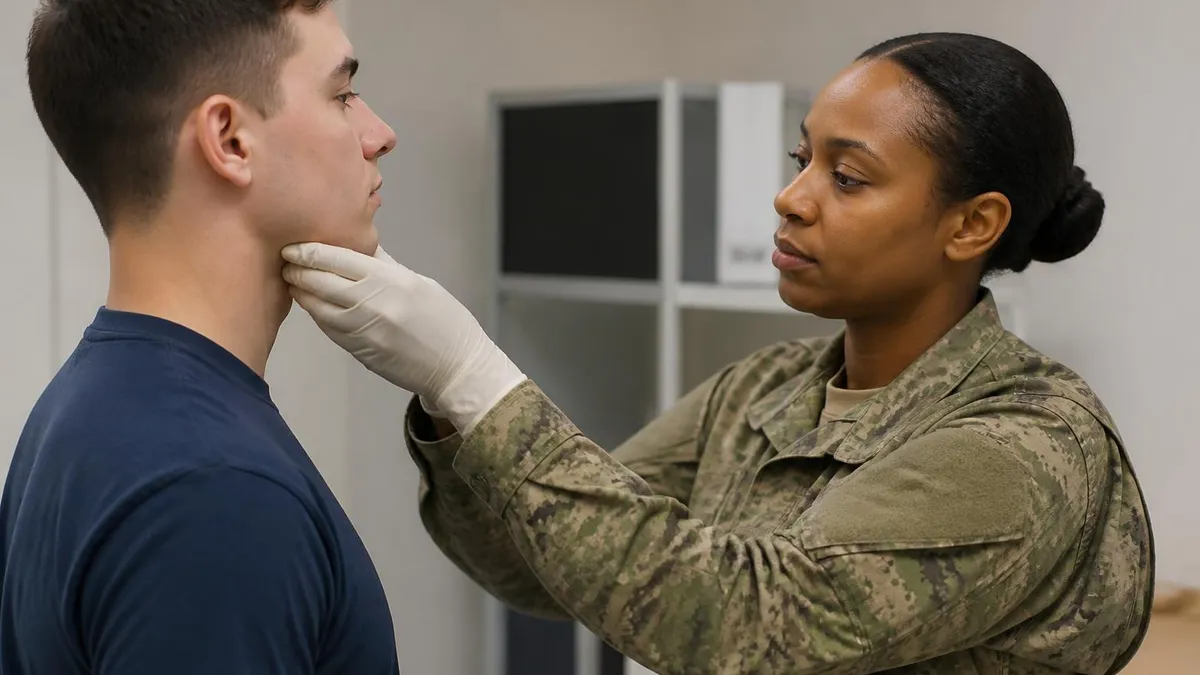
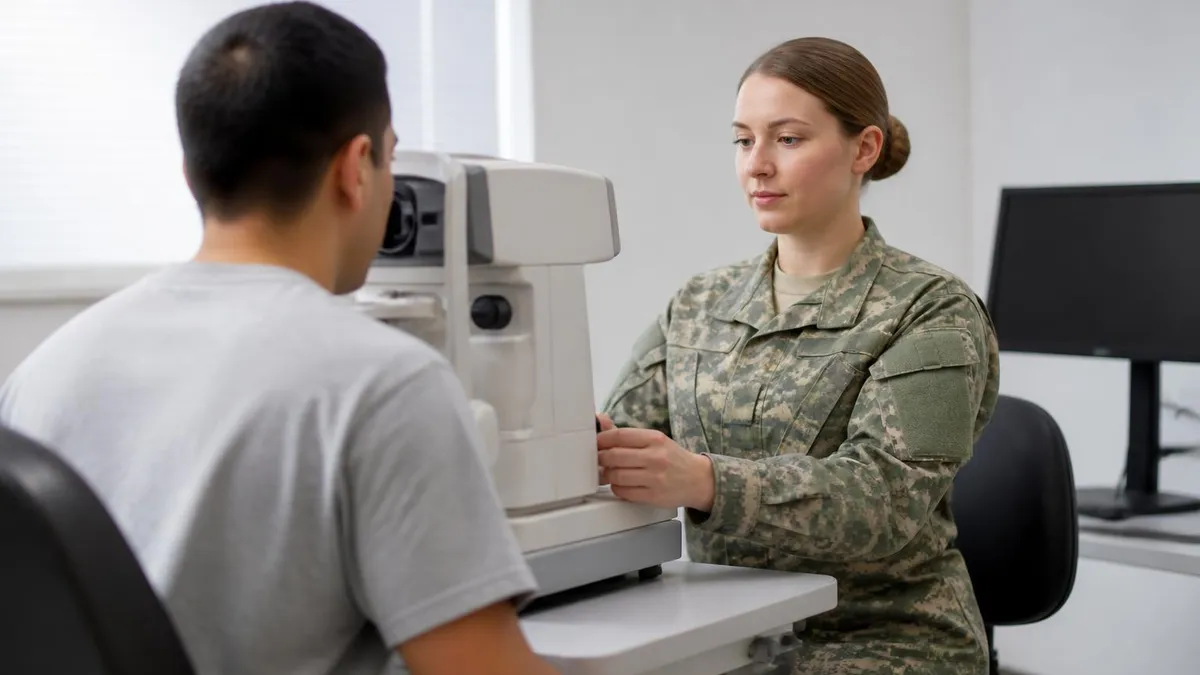
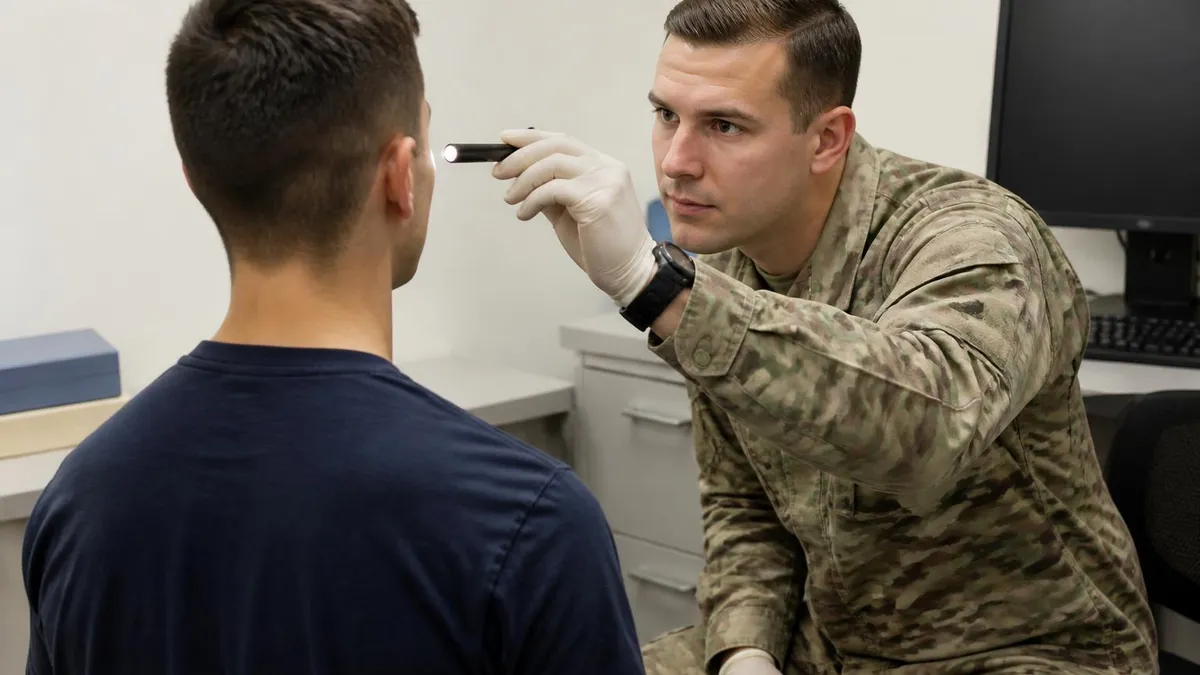
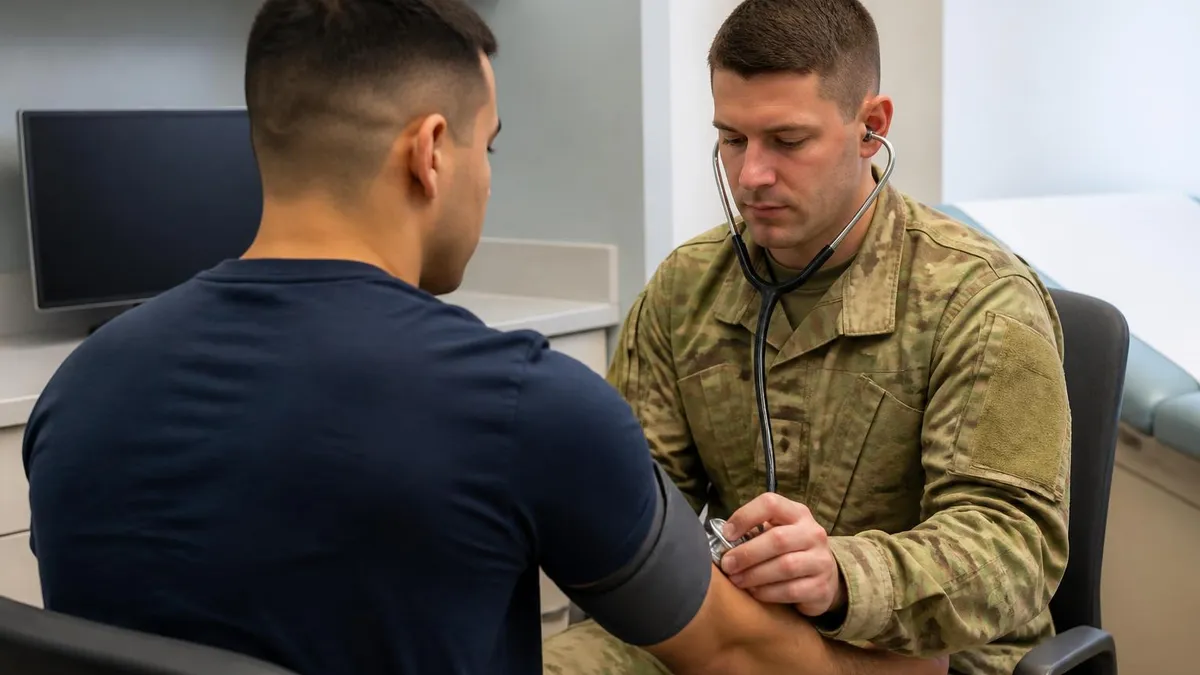
The MEPS medical examination is one of the most comprehensive physical screenings a young American will ever undergo outside of a hospital setting. Physicians and physician assistants check vision acuity (correctable to 20/20 in most cases), color vision for certain jobs, hearing thresholds via audiometry, blood pressure, pulse rate, height and weight relative to service standards, and perform an orthopedic screening that tests range of motion in joints and spine. Blood is drawn for a complete blood count and HIV screening, and urine is tested for drugs and overall kidney health.
Conditions that were previously disqualifying — such as controlled asthma, corrected vision issues, or a prior ADHD diagnosis — may now qualify for a medical waiver depending on the branch and the job type. If the examining physician flags a condition, a Temporary Profile is issued and the applicant must provide additional documentation — specialist records, surgical notes, imaging results — before a final determination is made. Applicants should bring every piece of relevant medical paperwork they possess, because incomplete records are the single most common cause of processing delays at MEPS.

Switching Branches at MEPS: Pros and Cons
- +Your MEPS physical results transfer — no need to repeat the full medical exam
- +ASVAB scores from any prior test are already in the DoD system and accepted by all branches
- +You may access better job guarantees or higher signing bonuses with a different branch
- +MEPS liaison officers from multiple branches are usually present in the same building
- +You retain the right to speak with any branch liaison before signing a contract
- +A branch switch before DEP enrollment involves minimal paperwork and zero penalty
- −Switching after DEP enrollment requires a formal DEP discharge, adding weeks of delay
- −Your original recruiter may become uncooperative or refuse to assist with DEP discharge paperwork
- −Some job guarantees and enlistment bonuses are time-limited and may expire during the switch
- −The new branch may have a longer wait for your preferred ship date or MOS availability
- −Background investigation timelines reset partially if the new branch requires additional clearance levels
- −Emotional and social pressure from recruiter relationships can make the switch feel more difficult than it is legally
Pros and Cons at a Glance
| Pros | Cons |
|---|---|
| Your MEPS physical results transfer — no need to repeat the full medical exam | Switching after DEP enrollment requires a formal DEP discharge, adding weeks of delay |
| ASVAB scores from any prior test are already in the DoD system and accepted by all branches | Your original recruiter may become uncooperative or refuse to assist with DEP discharge paperwork |
| You may access better job guarantees or higher signing bonuses with a different branch | Some job guarantees and enlistment bonuses are time-limited and may expire during the switch |
| MEPS liaison officers from multiple branches are usually present in the same building | The new branch may have a longer wait for your preferred ship date or MOS availability |
| You retain the right to speak with any branch liaison before signing a contract | Background investigation timelines reset partially if the new branch requires additional clearance levels |
| A branch switch before DEP enrollment involves minimal paperwork and zero penalty | Emotional and social pressure from recruiter relationships can make the switch feel more difficult than it is legally |
MEPS Day Preparation Checklist
- ✓Bring your original birth certificate — photocopies are not accepted at check-in.
- ✓Carry your Social Security card, a valid government-issued photo ID, and any permanent resident documentation if applicable.
- ✓Gather all medical records, surgical reports, prescription histories, and specialist letters your recruiter requested.
- ✓Get a full night's sleep — MEPS processing begins as early as 4:30 AM and can last 12 hours.
- ✓Avoid alcohol for at least 24 hours before processing to ensure accurate urinalysis and blood work results.
- ✓Wear comfortable, loose-fitting clothing and lace-up shoes — you will perform orthopedic movement tests.
- ✓Do not bring cell phones, laptops, or other electronic devices — they are collected at the security checkpoint.
- ✓Review every answer on your DD Form 2807-2 medical history form for accuracy and completeness before arrival.
- ✓Know your ASVAB scores from any prior test and bring a copy of your score report if available.
- ✓Eat a healthy breakfast — MEPS provides a meal, but processing sometimes begins before cafeteria service opens.
DoD records are branch-neutral — your physical and scores transfer automatically.
Many recruits believe they must restart the MEPS process from scratch when switching branches. This is a myth. Your ASVAB scores, physical exam results, and background investigation data are stored in the Defense Manpower Data Center and are accessible to liaison officers from any branch. A same-day branch switch at MEPS typically requires nothing more than a conversation with a different liaison officer — your paperwork is already there.
Your ASVAB scores are arguably the most powerful tool you carry into MEPS. Understanding how scores are calculated and what they unlock is essential whether you are choosing a branch for the first time or evaluating your options after considering a switch. The AFQT is expressed as a percentile ranking — a score of 65 means you scored higher than 65 percent of the reference population, a nationally representative sample of 18-to-23-year-olds tested in 1997. This percentile determines which branches will even accept your application.
Beyond the AFQT, each branch uses composite line scores to determine job eligibility. The Army uses ten composites called MEPS military line scores: Clerical (CL), Combat (CO), Electronics (EL), Field Artillery (FA), General Technical (GT), Mechanical Maintenance (MM), Operators and Food (OF), Surveillance and Communications (SC), Skilled Technical (ST), and Skilled Technical Administrative (ST is also used differently across versions of the regulation). A high GT score, for instance, opens warrant officer programs, Civil Affairs, and intelligence roles, while a high EL score unlocks signals, cyber, and electronics maintenance jobs.
The Navy uses a different composite system built around ASVAB subtests, producing scores for categories like Engineering (ENG), Administrative (ADM), Electronics (EL), and Nuclear Field (NF). The Air Force uses four composites — Mechanical (M), Administrative (A), General (G), and Electronic (E) — known collectively as MAGE. If your scores are strong in one or two areas, it is entirely possible that a branch switch opens a dramatically better career path than your original recruiter showed you. Many recruits simply do not know what their scores unlock across different branches because their recruiter only explained one branch's system.
One of the most actionable things you can do before or at MEPS is use the DoD's official ASVAB score breakdowns to cross-reference your composite scores against the job codes for every branch you are considering. Websites maintained by each branch's recruiting command list minimum score requirements by MOS, rate, AFSC, or NEC. Taking 30 minutes to research this before your MEPS appointment can save you years of regret over an MOS that felt like the only option when in fact you had several.
For recruits who scored below their target threshold, retesting is an option but comes with restrictions. You must wait at least 30 calendar days after your initial test before your first retest, and another 30 days before a second retest. After that, subsequent retests require a six-month waiting period.
Crucially, MEPS retests are conducted at the station itself on the computerized CAT-ASVAB platform, and the most recent score — not the highest — is the official score of record. Some recruits inadvertently lower their score by retesting without adequate preparation, which is why we strongly recommend completing structured practice before requesting a retest appointment.
The fort jackson meps columbia sc facility and others like it offer ASVAB retests on a first-come, first-served basis during designated testing windows. Availability varies by station and by time of year — recruiting seasons around late spring and early fall tend to be busy, which can push retest appointments out by several weeks. Build this into your timeline if a higher score is part of your branch-switching strategy, because the combination of retest waiting periods and scheduling delays can easily add 60 to 90 days to your overall processing timeline.
Ultimately, ASVAB preparation is not something to leave to chance. The difference between a 45 and a 65 on the AFQT can mean the difference between limited infantry-focused options and a full menu of technical, intelligence, and officer-track roles. Use every available resource — practice tests, study guides, and structured prep tools — to give yourself the widest possible range of choices when you sit down with a liaison officer at MEPS.

If you are enrolled in the Delayed Entry Program and want to switch branches, you must request a DEP discharge before your ship date — not after. Once you board transportation to basic training, you are legally active-duty military and subject to the Uniform Code of Military Justice. At that point, leaving your branch requires a formal administrative separation, which is far more complex, time-consuming, and career-impacting than a DEP discharge initiated months earlier.
The Oath of Enlistment ceremony at MEPS is far more significant than many recruits appreciate in the moment. Held in a designated room at the station — often decorated with flags and formal military regalia — the oath is administered by a commissioned officer and witnessed by fellow recruits, parents, and MEPS staff. The words of the oath bind you legally and morally to defend the Constitution of the United States against all enemies, foreign and domestic, and to obey the orders of the President and officers appointed above you according to the Uniform Code of Military Justice.
There are technically two oath ceremonies for DEP recruits. The first happens on your initial MEPS processing day and places you in the Delayed Entry Program. You are technically in the inactive reserves from that moment forward. The second oath — sometimes called the final swear-in — occurs on your actual ship date, typically at MEPS or at a recruiting station. This second oath is the one that activates your active-duty status and starts the clock on your enlistment term, your pay grade, and your service commitment.
The DEP period between the two oaths can last anywhere from a few days to twelve months, depending on job availability, training class dates, and individual circumstances. During DEP, you are expected to maintain your physical fitness, stay out of legal trouble, and remain in contact with your recruiter for regular check-ins and PT sessions. Failing to maintain DEP obligations — including gaining significant weight above the entry standard or being arrested — can result in DEP discharge, which may include a characterization that affects future employment and educational opportunities.
For those processing through facilities like the one serving dallas meps dallas tx regions, family members are often permitted to watch the oath ceremony, which takes place in a formal setting with a brief congratulatory address from the presiding officer. Many recruits describe the ceremony as unexpectedly emotional — it is the moment that transforms a civilian into a member of the United States military, and its gravity tends to hit harder than anticipated, especially for those who have been working toward enlistment for months or years.
After the oath, final administrative tasks are completed. You receive your enlistment packet — a sealed envelope containing your contract, ASVAB scores, medical records, and orders — that you will present to training reception at your first duty station or training installation. This packet should be guarded carefully; losing it creates delays and requires extensive administrative work to reconstruct. Store it in a waterproof bag or envelope and do not open it unless specifically instructed to do so by reception staff at your training destination.
The period immediately following your oath is also when many recruits experience what military culture calls the "recruiter handoff" — the moment your primary point of contact shifts from your branch recruiter to the training pipeline. Your recruiter's role officially diminishes after you ship, and your accountability now flows through Drill Instructors, company commanders, and the military chain of command. This transition catches some DEP recruits off guard, particularly those who developed close relationships with their recruiters and relied heavily on them for information and guidance throughout the months-long process.
Finally, recruits should know that the MEPS system tracks all processing history indefinitely. If you process today and want to reapply in five years after a DEP discharge or a medical waiver denial, your original records are still in the system. Previous disqualifications, waivers granted or denied, and even your ASVAB scores from years ago are visible to any branch that pulls your file. This cuts both ways: a previously granted waiver may smooth the path for a future application, while a prior fraud or misrepresentation on a medical form can permanently close the door.
Preparation is the single most effective thing you can do to improve your MEPS experience. Recruits who arrive knowing what to expect move through the process faster, make more informed decisions during the job selection phase, and experience far less anxiety during the medical exam and oath ceremony. The following practical tips are drawn from the common experiences of thousands of recruits who have already walked through those MEPS doors and reported back on what they wish they had known.
Start your physical preparation at least 90 days before your scheduled MEPS date. The medical exam will flag any condition that limits your mobility, so orthopedic problems, old injuries, and fitness-related issues like improved blood pressure or BMI above branch standards all need to be addressed in advance. Height and weight standards vary by branch and age group, and failing the weight screening at MEPS results in a same-day send-home with a follow-up appointment rescheduled for weeks or months later — a humiliating and entirely avoidable delay.
Organize your medical documentation into a single clearly labeled folder or binder before your MEPS appointment. Include immunization records, any specialist letters regarding past conditions, prescription drug histories with dosage information, surgical reports with dates and outcomes, and a personal summary timeline of any significant medical events in your life. The MEPS physician will review your DD Form 2807-2 responses and may ask follow-up questions — having documentation immediately on hand prevents uncertainty from triggering an automatic hold.
Practice the ASVAB before you test at MEPS. The CAT-ASVAB at the station is the official version that determines your eligibility and job options, and there is no second chance on the same day if you underperform. Use practice tests that mirror the actual subtest structure — Arithmetic Reasoning, Word Knowledge, Paragraph Comprehension, and Mathematics Knowledge are the four that feed your all-important AFQT score. Even 30 days of focused study using quality practice materials can meaningfully raise your score, and a higher score gives you more bargaining power with any branch's liaison officer.
Know your personal disqualifying factors before you arrive. This means honestly reviewing the DoD Medical Standards for Appointment, Enlistment, or Induction (DoDI 6130.03) for any conditions you have been diagnosed with or treated for. Conditions that disqualify in one branch may be waiverable in another, and conditions that were disqualifying five years ago may now be acceptable under updated standards. Research this in advance rather than discovering a potential issue for the first time during your physical examination.
On the morning of your MEPS day, eat a light but protein-rich breakfast. Avoid excessive caffeine, which can artificially improve blood pressure and trigger a re-measurement that delays your processing. Drink water throughout the morning — you will need to provide a urine sample, and the faster you can do so, the faster your processing moves. Dress simply and comfortably, and leave jewelry, excess accessories, and anything you would not want confiscated at a security checkpoint at the hotel or at home.
When you reach the job selection phase of your MEPS day, do not feel rushed. This is your career, not your recruiter's. Take time to review every MOS, rate, or AFSC that your scores qualify you for. Ask the liaison officer to explain training pipelines, duty station preferences, reenlistment bonus structures, and advancement timelines for any job that interests you.
If nothing available that day meets your expectations, ask about delayed entry options that guarantee your preferred job when a slot opens — signing for a job you do not want simply to get out of MEPS faster is one of the most common and most regretted decisions recruits make at the station.
MEPS Questions and Answers
MEPS San Antonio: Your Complete Guide to Fort Sam Houston Processing
MEPS: What to Expect at Kansas City Military Entrance Processing
MEPS Test Guide: What to Expect at Military Entrance Processing
Fort Dix MEPS Fort Dix NJ: Complete Processing Guide
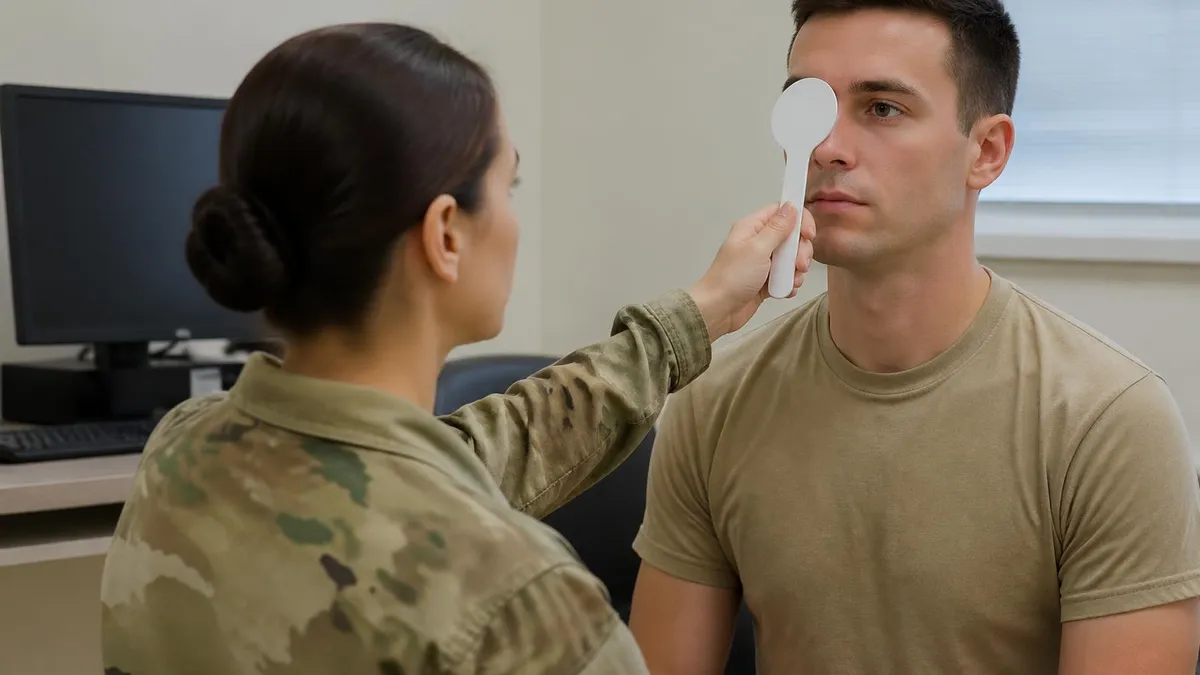
Fort Jackson MEPS: Military Processing in Columbia, SC
About the Author

Retired Military Officer & Armed Forces Test Preparation Specialist
United States Army War CollegeColonel Steven Harris (Ret.) served 28 years in the US Army, earning a Master of Arts in Military Science from the Army War College and a Bachelor of Science in Criminal Justice. He has coached thousands of military enlistment and officer candidate program applicants through the ASVAB, AFQT, AFCT, OAR, and officer selection assessment processes across all military branches.
Join the Discussion
Connect with other students preparing for this exam. Share tips, ask questions, and get advice from people who have been there.
View discussion (8 replies)